10 Options for a Dump in Douglasville GA (2026 Guide)


If you're searching for a dump in Douglasville GA for a business job, the main question usually isn't where to unload. It's what you're unloading, who has to sign off on it, and what happens if the wrong material goes to the wrong place. A roof tear-off, an office cleanout, and a server retirement project all look like "junk" on the truck, but they need very different handling.
That matters more in Douglasville than a lot of teams expect. The county and city have solid public options for trash, recycling, and bulk debris. But once computers, hard drives, TVs, network gear, batteries, or regulated materials enter the picture, the easy answer stops being the right answer.
Local infrastructure has been moving in the right direction. Douglasville broke ground on a $5 million recycling center with dedicated sorting areas for materials including electronics, glass, and cardboard, according to Waste360's report on the Douglasville recycling center project. That's useful for general diversion planning, but business operators still need to separate public dump use from secure IT asset disposition.
For contractors, facilities teams, and IT managers, the practical breakdown is simple. Use public landfill and transfer options for bulk refuse and approved debris. Use a specialist when data-bearing electronics, compliance exposure, or reuse value are involved. That's where most costly mistakes happen.
1. Atlanta Computer Recycling
For business electronics, Atlanta Computer Recycling is the strongest option on this list because it solves the part public dump sites don't solve. If you're replacing desktops, clearing out a server room, closing an office, or handling a healthcare or school refresh, you need data destruction and chain-of-custody discipline before anything leaves the building.
ACR is built around that commercial need. The company provides business-to-business IT asset disposition across metro Atlanta, including on-site pickup, de-installation, packing, logistics, free DoD 5220.22-M 3-pass wiping, and physical shredding for obsolete or non-functional media. The Douglasville area e-waste overview also notes ACR's fit for hospitals, schools, and data centers with HIPAA-focused handling in the metro market, as described by The Recycle Guide's Douglasville electronics recycling page.
Where ACR fits best
This isn't the place to compare by tipping fee alone. You're paying for risk reduction, labor savings, and a cleaner project flow.
- Best for offices and campuses: ACR handles pickup and removal so your team doesn't burn half a day loading employee cars or box trucks.
- Best for regulated environments: Healthcare, education, and government teams usually need written process clarity before assets leave the site.
- Best for decommissions: Server racks, networking gear, and mixed electronics loads often need sorting, packing, and removal in one motion.
Practical rule: If a device ever stored company data, don't treat it like general trash, and don't send it to a public dump first.
ACR aligns better with sustainability goals than simple disposal. The company's stated model prioritizes reuse where possible and certified recycling for the rest, which is the right approach when you want retired equipment diverted from landfills instead of merely moved out of sight. Their business-only model is a limitation for households, but for commercial clients it is a plus because the service is built around larger pickups and project coordination, not retail drop-off traffic.
A fair trade-off is that public pricing isn't posted. For larger jobs, I would ask for a written scope, pickup details, downstream handling notes, and any compliance documentation you'll need internally. For companies evaluating options around Atlanta-area e-waste recycling services, that's the right starting point. Teams also juggling internal capacity planning may appreciate operational ideas like AI staff augmentation from AY Automate when disposal projects compete with core IT work.
Website: Atlanta Computer Recycling
2. Douglas County Cedar Mountain Landfill & Recycling Center
A crew finishes a tenant improvement job in Douglasville at 3 p.m. and needs one more disposal run before close. If the load is drywall, lumber, packaging, and general jobsite waste, Cedar Mountain is usually the public facility to price and route first. It fits business users who need a local outlet for bulk material, predictable gate procedures, and fewer surprises for drivers.
The practical value here is operational clarity. County facilities are usually easier to plan around than private sites when you need to brief a superintendent, dispatcher, or driver on hours, fees, and load rules ahead of time. That matters if you are trying to avoid overtime, rejected loads, or a truck tied up for half a day because the material was sorted wrong.
Best fit for business use
Cedar Mountain is strongest for physical waste streams, not equipment retirement. Contractors, property managers, and facilities teams can use it for construction debris, general refuse, yard waste, and separated recyclables if the load meets county requirements. For many local businesses, that makes it a practical baseline option for cleanouts and renovation work.
It is not the right channel for devices that stored company data.
If the load includes computers, drives, network gear, or anything with storage media, route that portion to a provider focused on secure handling instead of mixing it into a landfill run. Businesses comparing disposal paths for both debris and electronics usually need separate workflows, and this Douglasville dump guide for commercial waste and electronics disposal helps clarify that split.
Trade-offs to plan for
The main advantage is cost control. Public landfill pricing is easier to forecast than specialty disposal, which helps on bid work and recurring service contracts. The trade-off is that your crew has to sort correctly, secure the load, and match the site's accepted material rules before the truck leaves.
A few points matter in practice:
- Good fit for bulk waste: Best for routine commercial trash, construction debris, and cleanup material.
- Useful for estimating disposal cost: Published county rates make budgeting simpler for project managers and estimators.
- Poor fit for IT asset disposition: There is no chain of custody, data destruction workflow, or compliance documentation for retired electronics.
- Watch the load composition: Mixed loads can change your disposal cost and slow unloading if the driver arrives with material that should have been separated.
For operations teams, the decision is straightforward. Use Cedar Mountain for legal, properly prepared bulk waste that belongs in the county solid waste system. Use a specialized electronics recycler for anything that creates a data security, audit, or downstream handling problem.
Website: Douglas County Cedar Mountain Landfill & Recycling Center
3. GFL Environmental Westside Transfer Station
GFL makes sense when your company already uses GFL hauling or roll-off service and wants fewer handoffs. That's the main value. A transfer station tied to your existing vendor can be more efficient than mixing container service from one company with disposal trips to another site.
This isn't the option I'd recommend blind. With private transfer sites, accepted materials, public access, account requirements, and unloading rules can vary by location and by load type. Call before dispatching a truck, especially if the load includes anything outside straightforward trash or contractor debris.
Best use case
GFL is usually strongest for contractor workflow, not specialty disposal. If you've got a roll-off account, recurring debris, or a west-side job where route efficiency matters, this can be a practical alternative to the county line.
A good local reality check is that searches for a dump in Douglasville GA often point people toward municipal facilities, while business users still need to sort out where electronics belong. That's why pages like Douglasville dump guidance for electronics and commercial disposal can be more useful than a basic map result.
- Use it when vendor consolidation matters: Fewer vendors usually means simpler billing and fewer scheduling gaps.
- Call first about access: Don't assume a public-style drop-off experience.
- Avoid mixed compliance loads: If hard drives, batteries, or sensitive devices are mixed in, separate them before the truck leaves the site.
Website: GFL Environmental
4. City of Douglasville Recycling Center
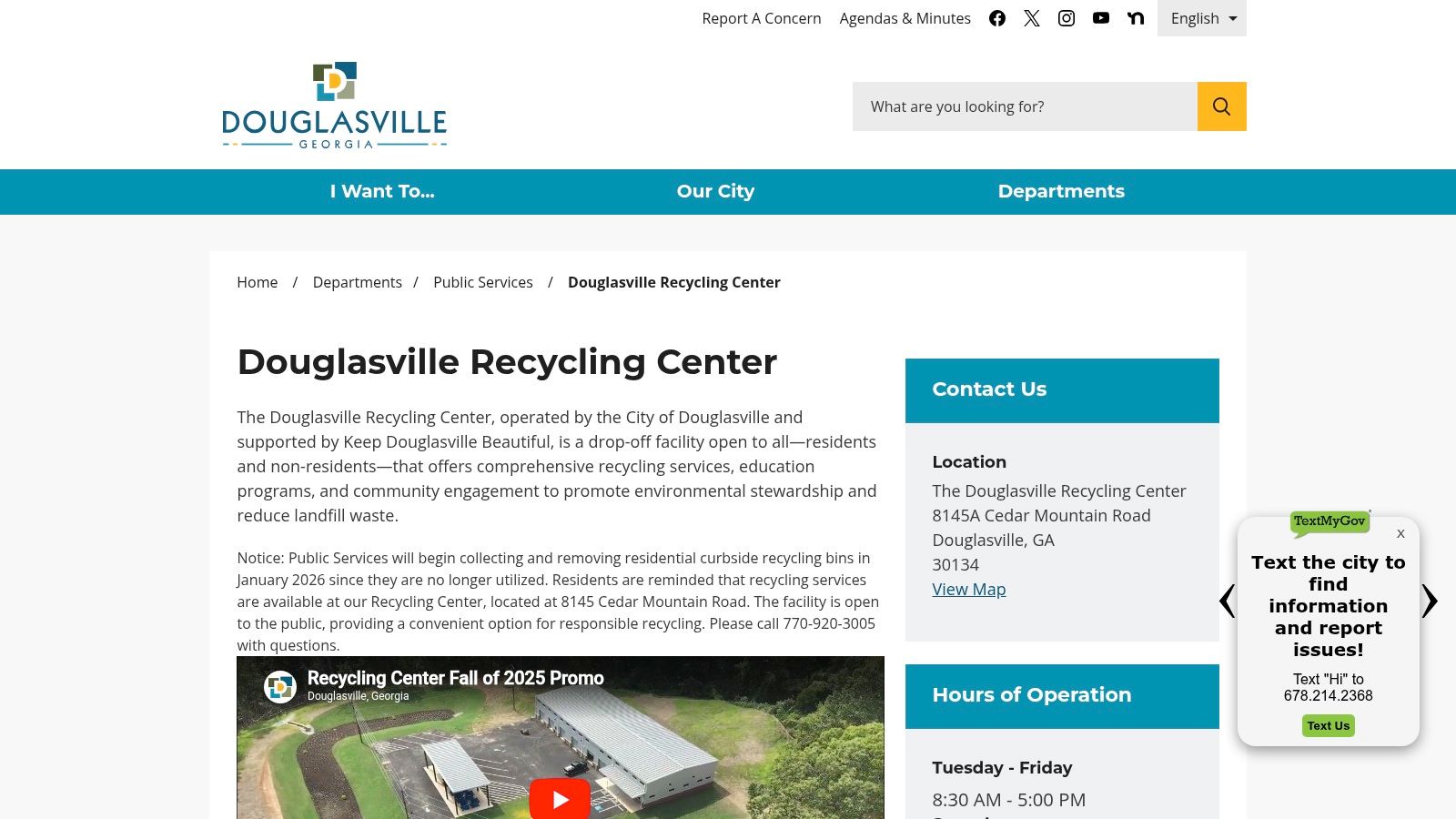
If your need is clean, sorted recyclables rather than trash disposal, the city recycling center is useful. That's an important distinction because many businesses search for a dump in Douglasville GA when what they need is a no-trash recycling drop-off for cardboard, paper, cans, and approved containers after an office move or retail reset.
The limitation is strictness. This is not a fallback site for mixed waste, appliances, construction debris, or hard-to-handle materials. If your truck is loaded like a cleanup trailer instead of a presorted recycling run, you'll lose time.
When to use the city site
The city center works best after your team has already done the sorting. Cardboard from a fixture install, office paper, approved plastic containers, and food-grade glass are all the kinds of materials that fit a controlled recycling drop.
The city has also highlighted a gap that matters to commercial operators. In its own public-facing ecosystem, guidance heavily favors residential recycling and municipal disposal, while business e-waste needs such as hard drives, network gear, and certified wiping aren't clearly handled through the standard city recycling path, as reflected in Douglasville's recycling center announcement and local service context.
If your crew has to ask whether something counts as trash, recycling, electronics, or appliance waste, sort it before arrival. That's where most failed trips start.
Website: City of Douglasville Recycling Center
5. Paulding County Landfill
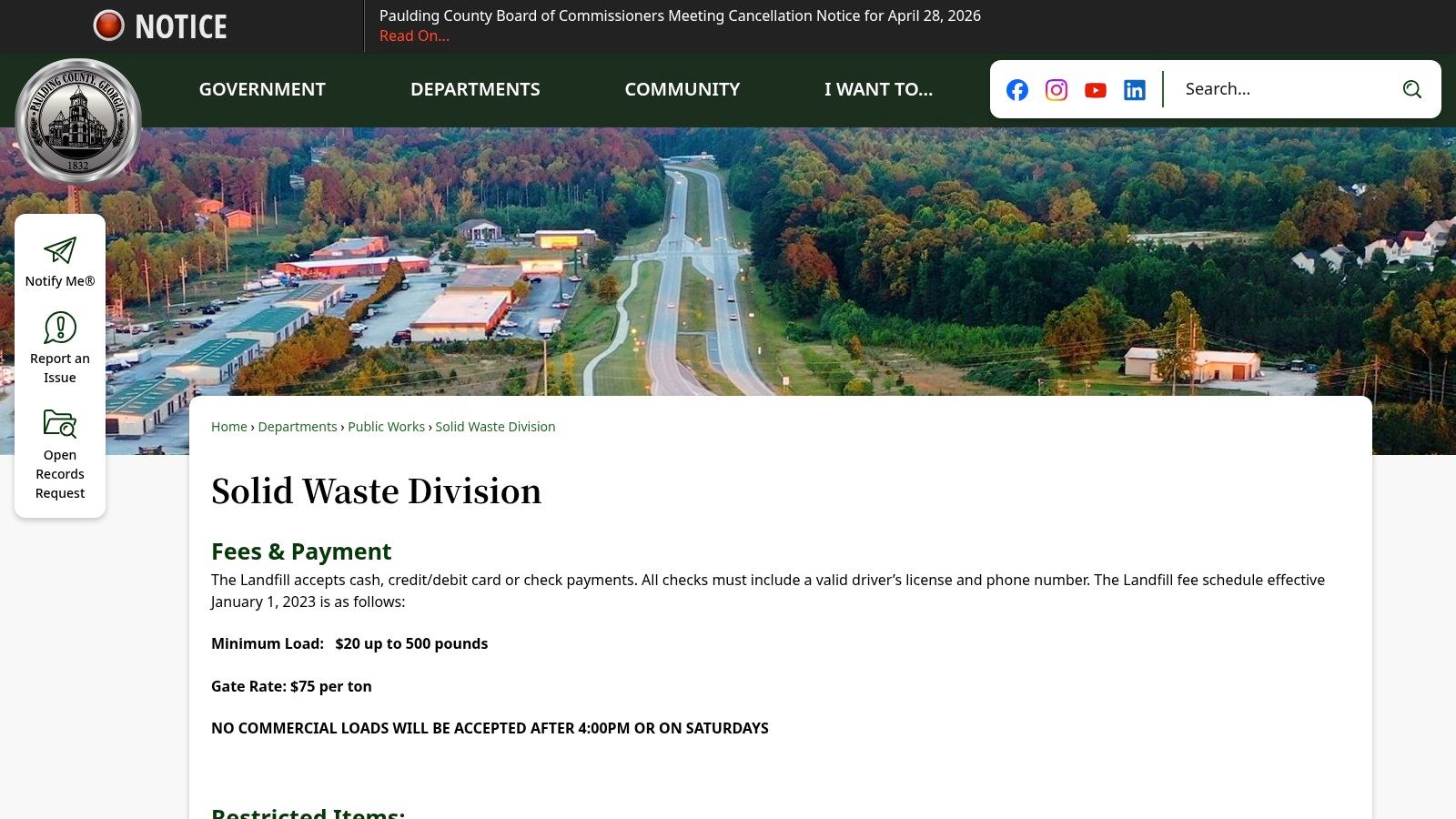
For companies working the northwest side of the metro, Paulding County can be a practical backup. I wouldn't route a Douglasville crew there by default, but if your project footprint is closer to Hiram or Dallas, or if you want an alternate when local traffic stacks up, it deserves a spot on the shortlist.
The appeal is straightforward. County facilities with posted restrictions and fee schedules let ops teams plan around reality instead of guessing at gate rules when the driver arrives.
Why businesses use it
This site is most useful as a routing option. If your truck is already headed north or your crew is balancing jobs across county lines, the extra planning can pay off in cleaner turnaround.
- Good backup for northwest jobs: Useful when your service area isn't centered on downtown Douglasville.
- Good for predictable dispatch: Public rules reduce surprises at the scale house.
- Not for electronics: Treat it like a debris and refuse option, not an IT disposal plan.
For companies comparing metro options, nearby regional recycling guides can also help when your jobs move outside Douglasville's immediate area. One example is Coweta County recycling center guidance for surrounding service routes.
Website: Paulding County Landfill
6. Cobb County Transfer Station
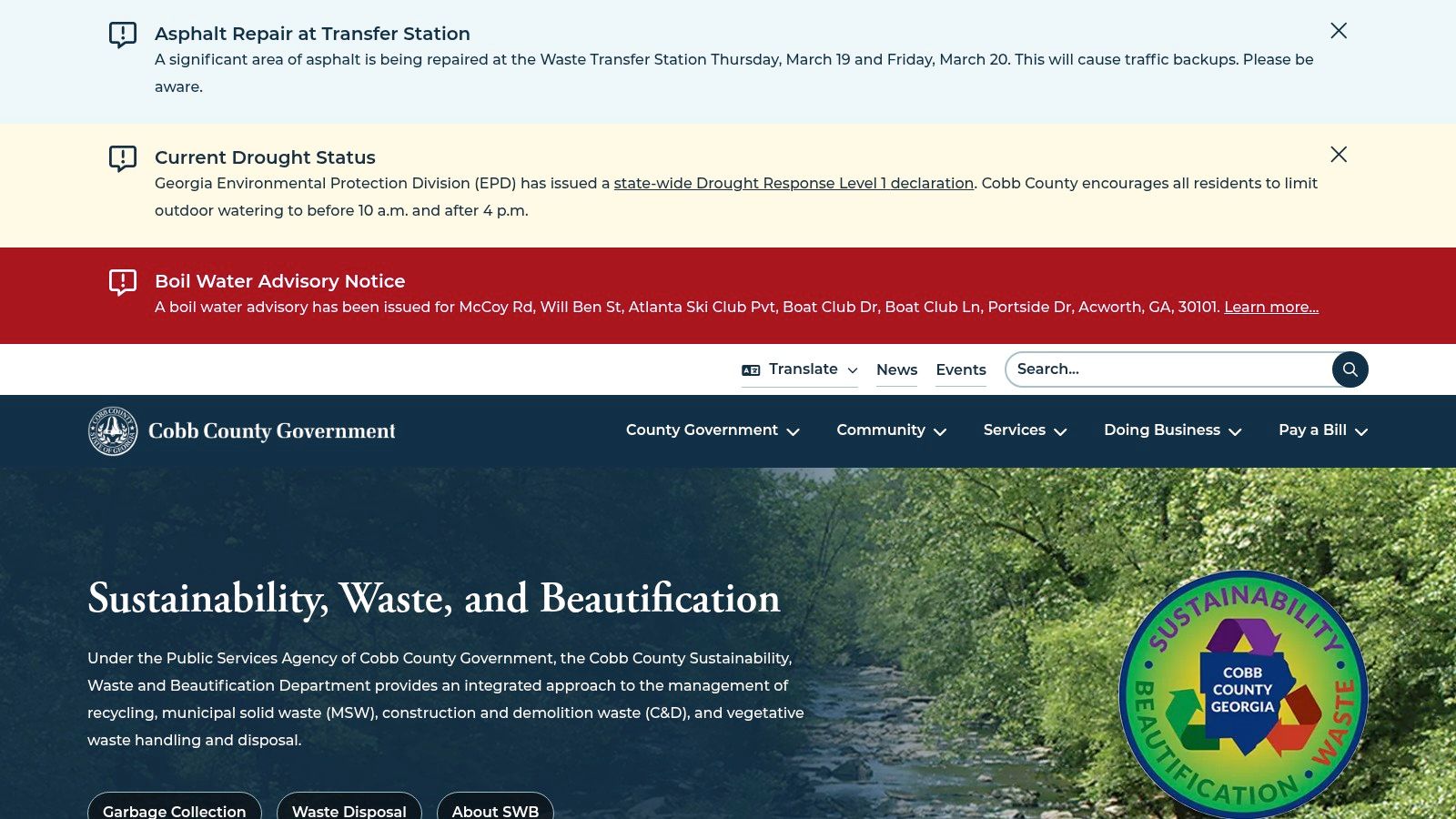
Cobb County's transfer station is less about proximity and more about reliability for companies operating across the west and northwest metro. If your crews already service Marietta, Smyrna, Austell, or Kennesaw, this can be the logical disposal point for waste generated there instead of hauling everything back toward Douglasville.
That's the primary trade-off. It may not be the nearest answer to "dump in Douglasville GA," but it can still be the right answer for a multi-city operations map.
Operational fit
This is a useful option for bulky waste, municipal solid waste, and county-linked disposal programs when your project geography leans north. It also tends to work better for companies that standardize routes by territory instead of by home office.
One caution. Resident eligibility, material-specific rules, and fee handling can vary, so dispatch should verify details before assigning a truck. If your teams regularly cross into Cobb for office liquidations or retail resets, Marietta recycling and disposal guidance can help frame where electronics should split off from general waste loads.
Website: Cobb County Solid Waste Management
7. DeKalb County Seminole Road Landfill
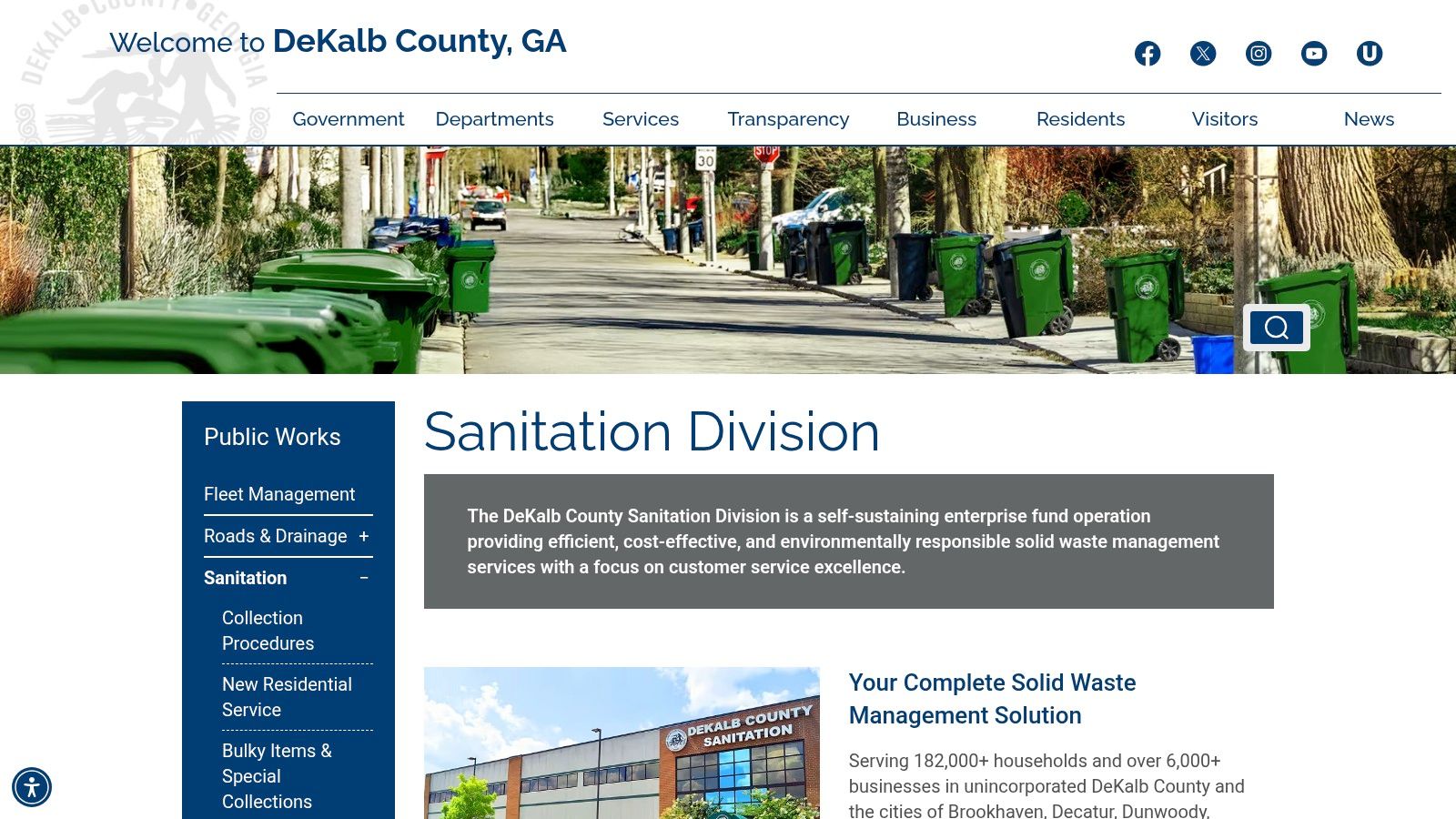
This is the regional heavy hitter on the east side. Contractors know it because it can handle broad material categories and larger-scale waste movement, and because DeKalb publishes detailed operational information that serious users can plan around.
From Douglasville, the drive is the downside. If your load originates on the west side, travel time can wipe out any operational advantage unless the destination aligns with the rest of your route.
Where it earns a place on the list
Seminole Road is the kind of site you use for a specific logistical reason. Maybe the job is east of downtown. Maybe your contractor network already runs there. Maybe you're dealing with a material category that fits DeKalb's published rules better than another county's setup.
Longer drive times only make sense when they remove a bigger problem, such as a rejected load, an unavailable service, or a bad route sequence.
For Douglasville-based businesses, I'd treat this as a regional alternative, not a primary local dump solution. Strong option for the right geography. Weak option for casual convenience.
Website: DeKalb County Seminole Road Landfill
8. Live Thrive CHaRM
Live Thrive's CHaRM is not a dump, and that's exactly why it matters. If your load includes the materials that standard landfill or transfer operators don't want, shouldn't accept, or won't process safely, CHaRM belongs in the plan.
This is the place for hard-to-recycle and household hazardous categories that can derail an otherwise simple disposal run. Paints, bulbs, batteries, chemicals, and select electronics need a different lane from general debris.
Why CHaRM saves trouble
Most failed disposal days happen because a mixed load includes a few problem items. CHaRM gives you a way to strip those out before they contaminate the rest of the trip.
- Best for problem materials: Good choice for batteries, chemicals, and other items that shouldn't ride with standard trash.
- Better for compliance discipline: Clear prep and acceptance instructions reduce on-site confusion.
- Not built for general cleanup: This won't replace your landfill or transfer station.
For electronics-adjacent loads, Atlanta CHaRM recycling guidance can help teams decide what belongs there versus what should go through dedicated IT asset disposition. That's especially useful when office cleanouts produce a mix of cords, peripherals, batteries, and data-bearing devices.
Website: Live Thrive CHaRM
9. Merk Miles Citizens Convenience Center
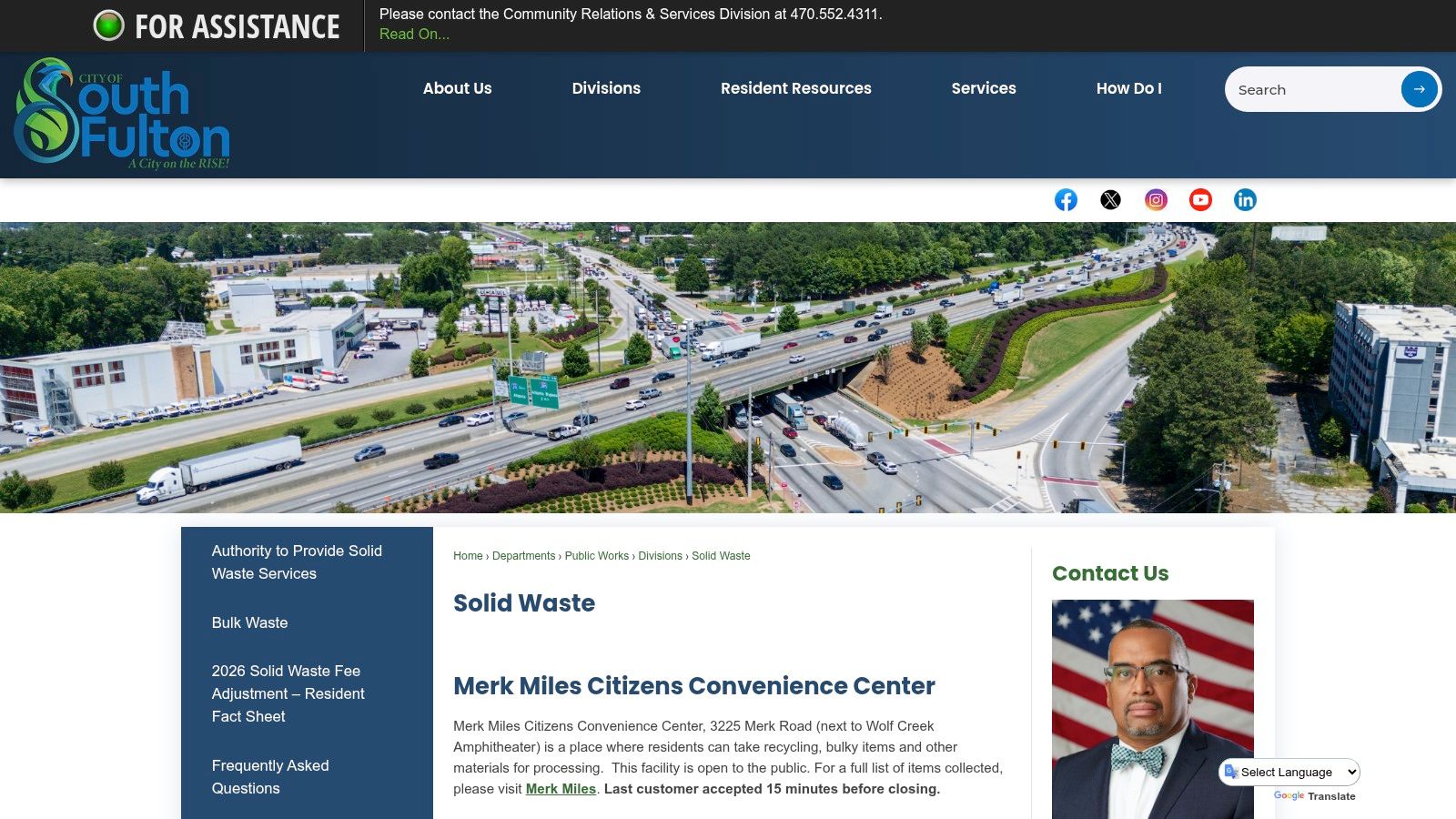
For projects near the airport, South Fulton, or the I-285 corridor, Merk Miles can be a useful municipal option. The main strength here is route positioning. If your trucks are already moving through southwest metro Atlanta, this can be more practical than dragging loads back toward Douglasville.
It isn't the broadest disposal site on the list. That's not a criticism. It just means you need to match the load to the facility instead of expecting county-landfill range from a convenience-center setup.
Good fit for corridor work
Businesses with service footprints in logistics, field service, and retail maintenance often care more about highway access than county loyalty. That's where this site has value.
Check eligibility before you go. Some city-run services may prioritize local users or define accepted materials narrowly. If your dispatcher assumes universal access, the truck may end up re-routed mid-shift.
Website: City of South Fulton Residential Solid Waste Services
10. WM Gateway Transfer Station
If your company already runs WM dumpsters, roll-offs, or hauling, Gateway is the corporate-scale option that usually fits best. You get the benefit of one network, one vendor relationship, and fewer variables between pickup and disposal.
That kind of consistency matters for larger contractors and property groups. A predictable transfer station process can be more valuable than chasing the absolute closest gate.
Who should consider it
WM Gateway is a solid fit for west-side industrial work, recurring contractor disposal, and companies that want major-vendor process discipline. It's less attractive for one-off public-style drop-offs if you haven't confirmed access rules, PPE requirements, and acceptable load types.
- Good for existing WM customers: Vendor alignment usually simplifies scheduling and billing.
- Good for industrial corridors: The location suits truck-heavy routing.
- Confirm site rules first: Transfer stations often operate differently from county public dumps.
Website: WM Gateway Transfer Station
Top 10 Douglasville-Area Dump & Recycling Facilities Comparison
| Provider | Service & Scope | Data Security / Compliance | Logistics & Convenience | Sustainability / Accepted Materials | Target Audience & Price |
|---|---|---|---|---|---|
| 🏆 Atlanta Computer Recycling | B2B ITAD, data‑center decommissions, bulk IT disposal ✨ | Free DoD 5220.22‑M 3‑pass wipe + physical shredding; HIPAA‑aware ★★★★ | On‑site de‑install, packing & pickup; local fleet, fast turnarounds | Reuse‑first; certified recycling streams; diverts e‑waste | 👥 Offices, hospitals, schools, gov; 💰 Project quotes, cost‑effective for commercial |
| Douglas County Cedar Mountain Landfill & Recycling Center (County) | Public landfill & broad recycling drop‑off | No data‑destruction services, not for secure media | Public drop‑off Mon–Sat; tiered fees; peak weekend traffic | Accepts MSW, C&D, vegetative waste; NOT TVs/monitors or Li‑ion | 👥 Residents & commercial; 💰 Published fees (resident vs. commercial) |
| GFL Environmental, Westside Transfer Station | Transfer station for municipal & commercial hauling | No secure media services | Contractor‑friendly; integrates with roll‑off; call ahead for rules | General MSW/transfer; limited recyclables processing | 👥 Contractors, haulers; 💰 Variable (call for pricing) |
| City of Douglasville Recycling Center (drop‑off) | Presorted residential recycling drop‑off | No data‑destruction services | Tue–Fri & Sat hours; staffed sorting guidance | Paper, cardboard, plastics #1–#2, aluminum, glass, free diversion | 👥 Residents (open to non‑residents); 💰 Free recycling |
| Paulding County Landfill (Dallas) | Public landfill & transfer option for NW metro | No secure media services | Weight‑based gate rates; published rules; Saturday cutoffs | Accepts residential loads; excludes electronics & liquids | 👥 Residents/contractors; 💰 Transparent gate rates |
| Cobb County Transfer Station (Marietta) | County transfer/drop‑off for MSW & bulky items | No secure media services | Broad hours; reliable alternative for west/NW metro | MSW, bulky items; linked to county recycling programs | 👥 County residents; 💰 Fees/eligibility vary by material |
| DeKalb County, Seminole Rd Landfill (Ellenwood) | Large regional landfill for contractors/residents | No secure media services | Year‑round operation; detailed fee PDF; residency rules | MSW, C&D, tires (fee), yard trimmings | 👥 Contractors & residents; 💰 Published fees; good for large loads |
| Live Thrive, CHaRM (HHW & hard‑to‑recycle) | Specialized drop‑off for HHW & hard‑to‑recycle items ✨ | Handles regulated materials safely (not full ITAD) | Appointment/slot based; handling fees or donations | Paints, bulbs, batteries, certain electronics, styrofoam | 👥 Residents with HHW; 💰 Fees/donations; safer for hazardous items |
| Merk Miles Citizens Convenience Center (South Fulton) | City convenience/transfer drop‑off | No secure media services | City‑managed hours; convenient to I‑285/I‑85 | Recycling & bulky materials; more limited than county landfill | 👥 South Fulton residents (verify); 💰 Municipal rules may limit access |
| WM, Gateway Transfer Station (Fulton Industrial) | Large WM transfer station; integrates with roll‑off services | No advertised ITAD; industrial handling only | Professional operation for heavy trucks; PPE/public access rules | MSW & contractor loads; integrates with WM hauling | 👥 Contractors/WM customers; 💰 Per‑ton pricing & minimums (confirm) |
Choosing the Right Disposal Partner for Your Business Needs
For Douglasville businesses, the best disposal decision usually comes down to one question. Are you dealing with bulk waste, or are you dealing with assets that carry data, compliance exposure, or reuse value? If it's bulk trash, construction debris, vegetative waste, or standard recyclable material, a county landfill, city recycling center, or transfer station is usually the right lane. If it's computers, servers, storage media, or mixed IT equipment, it isn't.
That's where many business cleanouts go sideways. A facilities team books a truck for a general dump run. IT adds old laptops, switches, and hard drives at the last minute. The load gets treated like junk when it should've been treated like controlled disposition. Even if nobody intended to cut corners, the process is already broken.
Douglasville has workable options for both sides of the problem. Public facilities are useful for the physical waste stream. They help with contractor cleanup, renovation debris, and approved recyclables. They also give operations teams published hours, clearer gate rules, and in some cases straightforward fee structures that make planning easier.
What they don't provide is secure data destruction, media handling, chain-of-custody confidence, or project management for office and data center retirements. That's not a knock on public sites. It's not their job.
For any technology retirement project, use a specialist. Atlanta Computer Recycling is the most practical fit on this list for businesses because the company handles the work that public dump options don't. That includes pickup, de-installation, secure wiping, physical shredding when needed, and responsible downstream recycling and reuse. For hospitals, schools, government users, and companies with internal compliance requirements, that difference matters more than convenience at the scale house.
A simple way to choose is this:
- Use county or city disposal sites for debris: Good for trash, C&D, vegetative loads, and approved recycling.
- Use transfer stations for route efficiency: Best when vendor network, geography, or account setup makes them faster.
- Use an ITAD partner for electronics: Best for anything with storage, network identity, or regulated data exposure.
If you're planning an office move, hardware refresh, or server decommission in Douglasville, don't force electronics into the general waste workflow. Separate them early, document the disposition path, and hand the job to a provider built for business equipment. That's the safer call, the cleaner operational call, and usually the one that saves the most rework.
Atlanta businesses that need secure electronics pickup, hard drive wiping, or full IT asset disposition can start with Atlanta Computer Recycling. It's a strong fit for office cleanouts, healthcare environments, school systems, and data center decommissions where general dump options aren't enough.