Douglasville GA City Dump: A Business Disposal Guide (2026)

If you searched for the douglasville ga city dump, the short answer is simple. Douglasville itself doesn't operate a city landfill. For most disposal questions, the place people mean is the Cedar Mountain Landfill in Douglas County.
That answer helps if you're dropping off ordinary waste. It doesn't solve the bigger business problem. If you're a facilities manager, office administrator, school IT lead, healthcare operations director, or anyone dealing with retired computers, servers, networking gear, or storage devices, the landfill question is only the starting point. The smarter question is this: what can safely go there, and what absolutely shouldn't?
A lot of costly mistakes happen when companies treat obsolete electronics like ordinary trash. The load gets moved, the room gets cleared, and everyone assumes the problem is solved. It isn't. Data exposure, chain-of-custody gaps, and environmental handling issues usually show up after the equipment leaves your building, not while it's still sitting in the storage room.
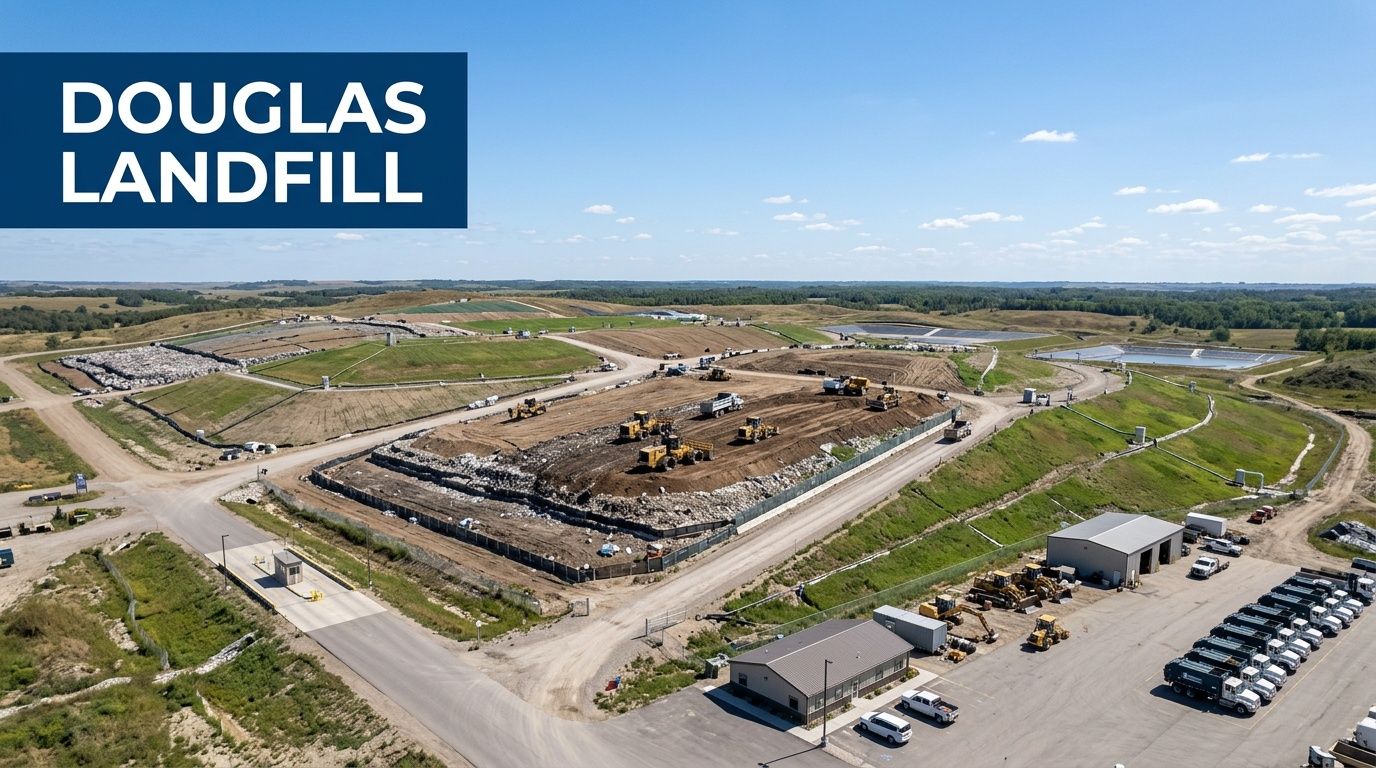
Your Guide to the Douglas County Landfill
A Douglasville office closes, the furniture is stacked by the door, and a truck is waiting. The first question is usually simple: where does this load go? For general commercial waste in this area, the answer is the Douglas County landfill. For old computers, servers, copiers, and anything that may hold company data, that answer is incomplete.
What business managers need to know first
Use the landfill for routine solid waste that does not create a data, environmental, or chain-of-custody problem. That usually includes ordinary non-sensitive debris, basic cleanout material, and approved bulk waste from facility work.
Apply a different standard to technology assets. A retired laptop is not just another piece of scrap. The same goes for servers, phones, network switches, access points, copiers, backup media, and multifunction devices. If the item ever connected to your network, stored files, cached credentials, scanned documents, or held user data, treat it as an IT asset before you classify it as waste.
That distinction saves companies from expensive mistakes during fast cleanouts. Operations teams under deadline often sort by size and convenience. Large furniture goes in one pile, small electronics go in another, and everything gets loaded together. That approach is fast, but it creates avoidable exposure.
A safer process is straightforward:
- Send ordinary, approved solid waste through the landfill disposal path.
- Pull out anything electronic before the truck is loaded.
- Review data-bearing devices separately, with an ITAD or e-waste decision instead of a trash decision.
- Keep a basic record of what left the site and who handled it.
I use one simple rule with clients. If an item ever held company information, employee records, customer files, patient data, student data, passwords, or internal documents, classify it by risk first, not by size.
That is the part many "douglasville ga city dump" searches miss. The landfill question matters, but local businesses usually have a second problem hiding inside the first one. They do not just need a disposal location. They need a disposal path that matches the risk in the load.
For companies reviewing options beyond trash service, this overview of recycling services in Atlanta helps frame where landfill disposal fits and where a secure electronics process makes more sense.
Accepted Materials and Landfill Fee Structure
If you searched for a Douglasville city dump because your team needs to clear a site this week, start with the practical answer. The city does not operate a public landfill for business drop-offs. Douglasville handles city trash through collection services, while county disposal and recycling options are handled separately. That distinction matters before you load a box truck, assign a driver, or quote a cleanout cost to finance.
For a business manager, the question is usually not "Where is the dump?" It is "What can we take there, what will it cost, and what should stay off that truck?" Landfill pricing only solves the first two parts.
Core fee categories that affect businesses
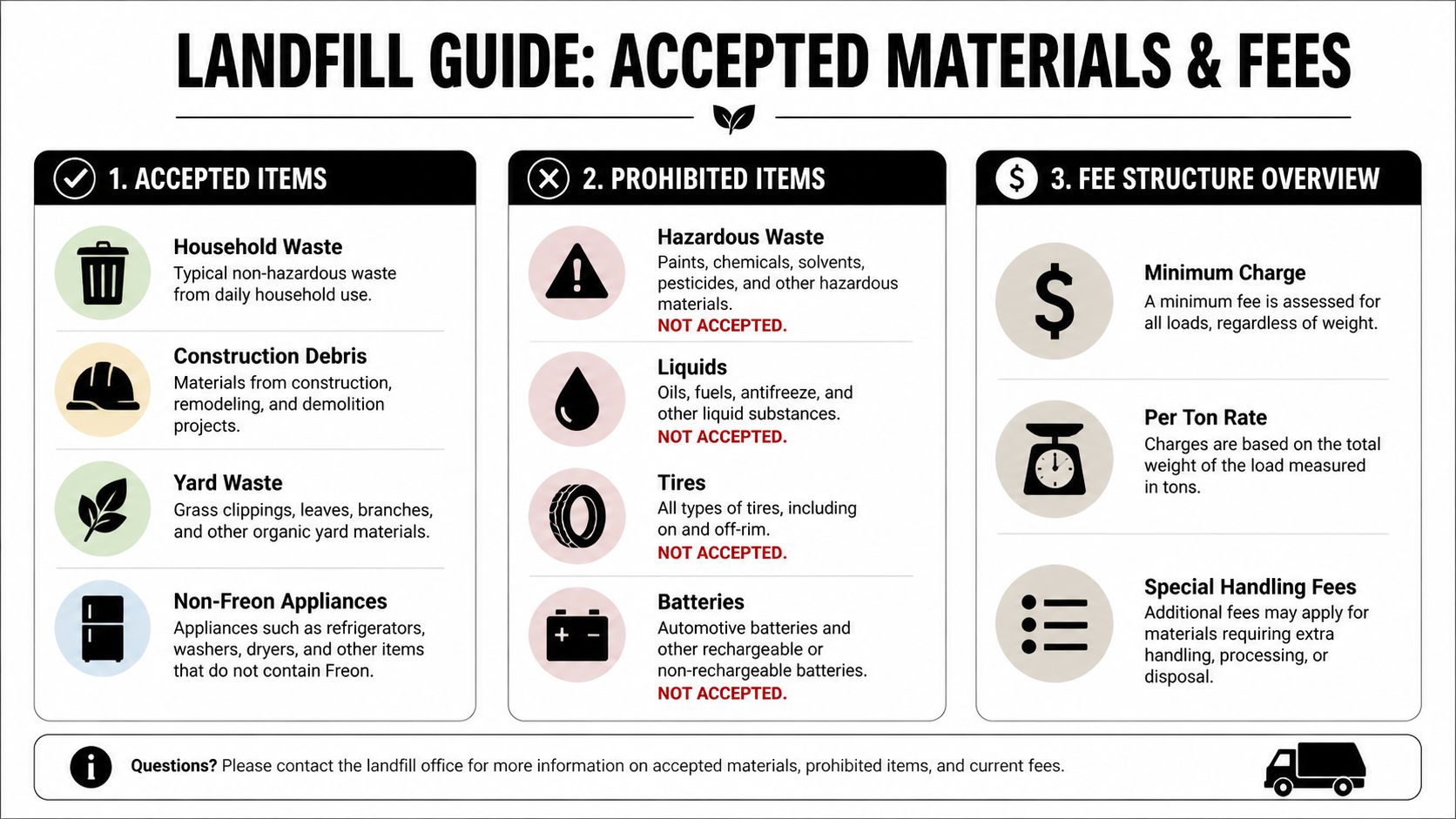
Douglas County separates disposal charges by waste type, load type, and whether the material comes from inside or outside the county. For commercial planning, that means a small mixed load can price out very differently from a construction load or a routine refuse run.
Common categories include:
- Household refuse
- Construction and demolition waste
- Commercial in-county refuse
- Out-of-county refuse
- Freon appliances
- Tires
- Recycling
Before dispatch, confirm the current rates, accepted material definitions, payment rules, and operating procedures with the county. Fee tables change, and small classification mistakes can turn a quick disposal run into a rejected load or a higher charge at the scale house.
What businesses can usually send, and what deserves a separate review
Landfill disposal works best for ordinary solid waste that is already sorted. Clean construction debris, broken fixtures, non-electronic office furniture, packaging waste, and similar materials are easier to classify and easier to budget.
Problems start when a cleanout crew mixes general trash with business equipment. I see this during office moves and warehouse resets all the time. A truck gets loaded with shelving, chairs, printers, monitors, network gear, old phones, battery backups, and loose cables because the team is trying to finish in one trip. That is fast for labor. It is poor risk control.
Electronics and battery-containing devices should be pulled out before the load is staged for landfill disposal. Some items may need recycling or special handling instead of standard trash processing. If your team is sorting mixed materials, use a universal waste management process to separate routine disposal from regulated or higher-risk items.
A low disposal fee does not make a mixed business load cheap. Extra sorting time, a refused load, return transport, and the loss of custody over retired devices can cost more than the dump run itself.
Hidden Risks of Landfilling Business Equipment
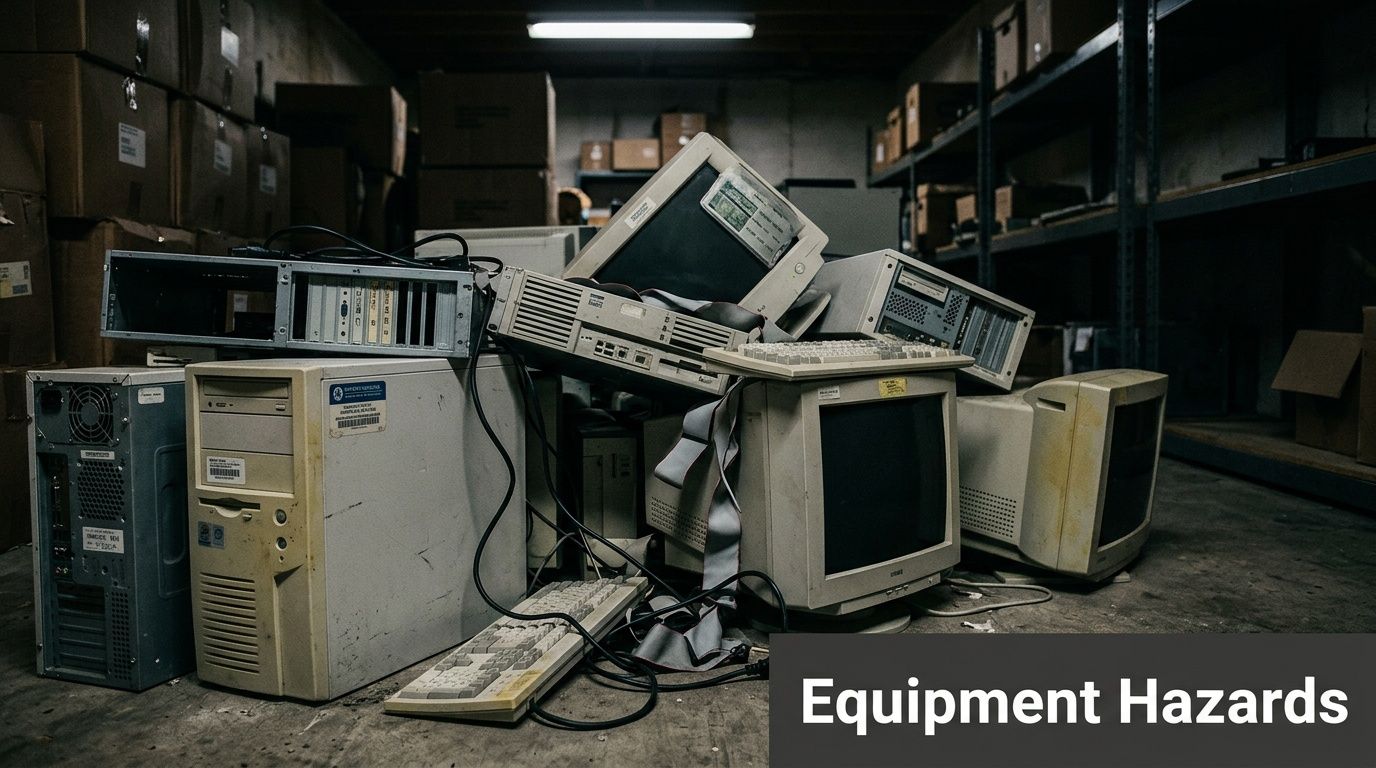
A storage room full of retired hardware looks like junk. In a business setting, it usually isn't. It is a pile of devices that may still hold customer records, employee files, network details, saved credentials, or regulated information.
That is why the “just take it to the dump” approach breaks down fast for electronics.
Environmental liability lasts longer than the cleanout
The old Douglas County Landfill operated from 1973 to 1987 and is now a CERCLIS site identified as GAD984279232 because of risks associated with unlined waste, according to the verified data drawn from this historical landfill reference. For business owners, the lesson isn't abstract. Disposal decisions can outlive the project, the contractor, and the employees who approved the load.
Electronics add a difficult layer because they are not ordinary office trash. They contain components that require more care than desks, cardboard, or shelving.
Three business risks that get missed
- Data security exposure: A hard drive doesn't need to power on in your office to remain a liability. If your team can't document wiping or destruction, you can't prove the data was handled correctly.
- Environmental handling problems: Circuit boards, batteries, and display components shouldn't be treated like mixed municipal waste.
- Internal accountability gaps: Once equipment leaves through a general trash pathway, finance, IT, legal, and operations often have different assumptions about what happened to it.
A lot of managers focus on pickup speed. They should focus on traceability.
Scrap value can distract from the real issue
Some teams try to move old hardware through a scrap channel because it feels practical. Sometimes there is commodity value in metal-bearing equipment. That still doesn't answer who wiped the drives, who documented custody, and who separated reusable assets from regulated waste streams.
If your organization is evaluating end-of-life hardware partly through a recovery lens, this guide to electronics scrap handling is useful background. The key point is that scrap logic and compliance logic are not the same thing. When they conflict, compliance wins.
If a pallet contains even one data-bearing device, treat the whole load as a controlled disposition event until proven otherwise.
Commercial Disposal Process at the Landfill
For non-sensitive commercial waste, the landfill can still be a practical tool. The process is straightforward when the load is simple and the business has prepared it correctly.
Where companies get into trouble is assuming that every commercial load is simple.
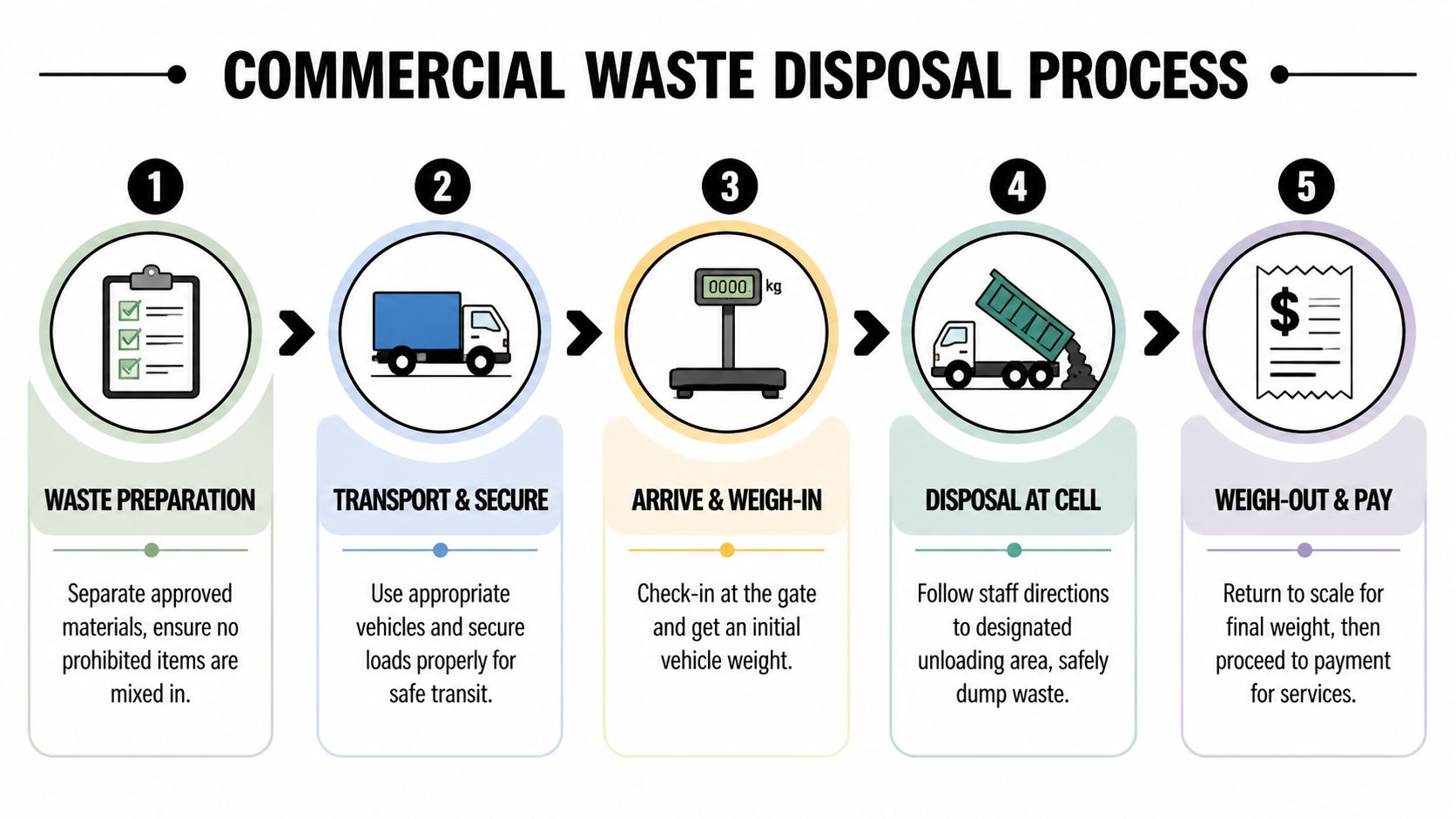
A workable process for ordinary business waste
Sort the load before it leaves your site
Keep general refuse separate from electronics, batteries, appliances, and anything that may require special handling.Check whether the load is county or out-of-county
That affects pricing and may affect how your team documents the trip internally.Secure the vehicle properly
Covered, stable loads reduce roadside issues and help avoid the appearance of careless hauling.Use the scales and follow staff direction
Commercial disposal works best when drivers arrive with a clear description of what they're carrying.Pay based on the applicable category
The economics are manageable for ordinary waste. They become less attractive when the load requires extra sorting or special handling elsewhere.
Decision point for electronics
This is the point where many businesses should stop and reroute. If the load includes computers, laptops, servers, phones, storage devices, or mixed electronics, you are no longer managing a basic hauling problem. You are managing material separation, data control, and downstream handling.
Improper electronics disposal can introduce heavy metals into leachate and can strain related environmental systems, which is why state oversight is strict, as reflected in the verified data tied to Douglasville’s wastewater and stormwater controls in the Georgia EPD permit material.
When the landfill is the right tool
Use it for:
- Renovation debris: non-sensitive build-out material and approved demolition waste
- Broken furnishings: chairs, shelving, and other non-electronic office contents
- Routine general refuse: where no data, hazardous components, or specialized recycling issues are involved
Don't use it as a shortcut for retired IT inventory. Businesses dealing with that category need a controlled pathway for IT equipment disposal, not just a truck and a dump ticket.
Secure E-Waste Recycling Alternatives for Businesses
Local city and county sources leave a clear gap on business e-waste disposal and data destruction, according to the verified data tied to the City of Douglasville’s Residential Waste Service page. That gap matters most for organizations that don't have the luxury of guessing. Hospitals, schools, public agencies, and larger private employers need disposal methods they can defend.
A professional IT asset disposition process is built around a different question than landfill disposal. The question isn't “Can this be hauled away?” It's “Can this asset be tracked, sanitized, documented, and processed responsibly?”
Disposal Method Comparison
| Feature | Douglas County Landfill | Professional ITAD Service (e.g., ACR) |
|---|---|---|
| Best use case | General solid waste and approved commercial debris | Computers, servers, laptops, storage devices, and network hardware |
| Data destruction | Not the core function | Built around wiping or physical destruction workflows |
| Chain of custody | Limited for business IT needs | Documented tracking is part of the service model |
| Compliance fit | Weak for data-bearing devices | Better suited for HIPAA and internal audit requirements |
| On-site pickup | You usually handle transport | Pickup and logistics can be coordinated |
| Asset recovery potential | Not the purpose | Reuse and component-level recovery can be evaluated |
| Environmental handling | Designed for solid waste disposal | Designed for electronics reuse and recycling streams |
| Fit for office closures and decommissions | Only for non-sensitive leftovers | Better for mixed IT retirements and larger projects |
What a better process looks like
A strong ITAD workflow usually includes:
- Inventory control: devices are counted and matched to a pickup or disposition record
- Data sanitization: drives are wiped or physically destroyed based on condition and policy
- Segregation by outcome: reusable assets are separated from true end-of-life material
- Documentation: records support compliance teams, auditors, and internal sign-off
That is a very different operating model from landfill disposal, and it should be. If your business is searching for a practical next step, start with providers that specialize in e-waste recycling near Douglasville and Atlanta.
The safest disposal plan is the one your IT manager, compliance lead, and operations team would all sign without hesitation.
Choosing the Right Disposal Path for Your Company
A well-run company doesn't need one disposal method. It needs the right method for each waste stream.
If you're clearing non-sensitive debris from a remodel, sending approved material to the county landfill is sensible. If you're replacing workstations, retiring servers, closing a branch office, or cleaning out old telecom closets, the landfill mindset is the wrong one. Those assets need control, documentation, and data handling discipline.
A simple decision framework
Use the landfill path when the material is:
- Ordinary and non-sensitive: general refuse, approved debris, broken furniture
- Clearly outside IT scope: no storage media, no batteries requiring separate handling, no electronics
- Easy to describe at the gate: the driver can state exactly what the load contains
Use a specialized electronics path when the material is:
- Data-bearing: desktops, laptops, servers, external drives, copiers, phones
- Mixed or uncertain: “old office equipment” is not a usable disposal category
- Compliance-linked: healthcare, education, government, finance, and legal environments especially need records
Small operational changes prevent expensive mistakes
Most disposal failures start upstream. Someone mixes the wrong items on a pallet. Someone assumes the drives were wiped. Someone sends facilities staff to solve an IT disposition problem.
Better staging solves a lot of that. Use clear internal labels, separate electronics from general refuse, and give teams proper containers for collection and hold areas. If you're upgrading your facility setup, it's worth reviewing practical options to shop waste bins from Material Handling USA so your general trash process doesn't get mixed with hardware awaiting secure disposition.
The search for “douglasville ga city dump” usually starts as a location question. For businesses, it ends as a risk management decision. The county landfill is a useful outlet for the right materials. It is not a substitute for secure IT asset disposition.
The companies that handle this well don't just remove waste. They classify it correctly before it moves.
If your organization in Douglasville or the Atlanta metro needs a secure path for retiring computers, servers, laptops, network gear, or storage devices, contact Atlanta Computer Recycling. They provide business-focused electronics recycling and IT asset disposition with pickup, de-installation, DoD 5220.22-M wiping, and media shredding support for companies that can't afford loose chain-of-custody or landfill-level handling for sensitive equipment.