7 Atlanta Businesses Focused on IT Cost Reduction (2026)

Shrink Your IT Budget Without Sacrificing Performance
For many Atlanta business leaders, IT costs feel like a runaway train. Cloud spend creeps up, device refreshes hit all at once, and software renewals keep stacking onto budgets that already have to carry security and compliance. The worst part is that many of these costs don't look wasteful until finance asks for a tighter plan.
Atlanta businesses focused on IT cost reduction usually don't solve this with one vendor category. They mix approaches. One partner helps control run-rate support costs, another recovers value from retired hardware, and another tightens cloud usage or procurement discipline. That's the difference between cutting spend and delaying it.
That matters even more in a market like Atlanta, where Georgia promotes a lower cost of doing business and the metro area keeps attracting major tech employers, which creates both opportunity and staffing pressure for local firms (Georgia's business-cost environment and growth positioning). Smart leaders aren't just trimming line items. They're preventing wasteful IT models before those costs become recurring.
Below are seven Atlanta-area businesses worth considering, grouped by the cost-reduction function they serve best.
1. Atlanta Computer Recycling
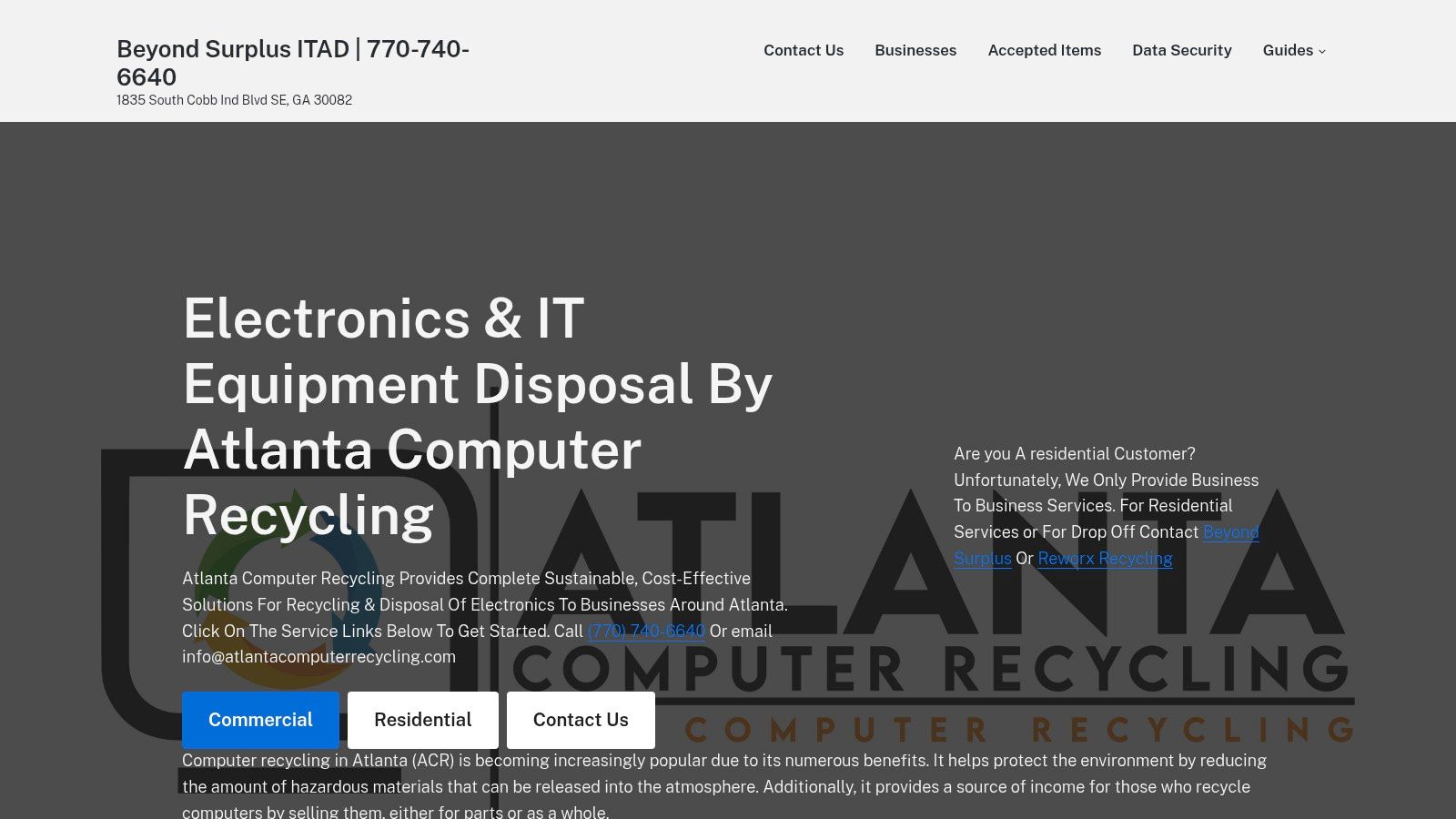
If your biggest IT cost problem shows up at the end of the lifecycle, Atlanta Computer Recycling is one of the strongest local options. A lot of companies focus only on monthly service contracts and miss the cost buried inside office closures, storage rooms full of retired gear, and rushed data destruction projects. That's where ACR fits.
ACR is built for business-to-business pickups, bulk retirements, and decommissioning work. The practical advantage is that they don't just remove equipment. They handle de-installation, packing, pickup, and logistics with their own box-truck fleet, which matters when your internal team can't spare technicians to break down racks, wrap devices, or stage pallets.
Where ACR helps reduce cost
Effective savings play isn't just disposal. It's reducing labor drag, avoiding insecure handling, and separating reusable devices from scrap so you don't treat everything as waste. That lines up with an underserved cost-reduction angle in Atlanta: asset recovery from surplus hardware after cloud migration, office consolidation, or infrastructure rationalization. The opportunity exists, but only when organizations sort reusable equipment from non-functional media and treat data destruction correctly (Atlanta's business growth and hardware-turnover context).
ACR's free hard-drive sanitization using the DoD 5220.22-M 3-pass standard is useful for organizations that need a documented process without adding another line item to the project. For obsolete or non-functional media, physical shredding closes the gap that wiping can't solve.
Practical rule: If a device can't be verified as functional, don't build your savings model around resale. Build it around secure destruction, labor efficiency, and landfill avoidance.
Another reason ACR stands out is operational simplicity. Healthcare systems, schools, municipal departments, and multi-site businesses often need one local partner that can show up, clear space fast, and keep the chain of handling straightforward. That's often more valuable than chasing the theoretical highest resale number from a distant buyer.
For teams planning refreshes, ACR's guidance on IT asset recovery strategies for Atlanta businesses is worth reviewing before you schedule pickup.
Best fit and trade-offs
ACR is a strong fit when compliance and logistics matter as much as raw scrap value.
- Best for healthcare and public sector: Free wiping plus physical shredding supports organizations that need stronger control over protected data.
- Best for large refreshes and shutdowns: On-site packing and pickup reduce the burden on internal IT staff.
- Best for local coordination: ACR is Atlanta-focused, which usually makes project communication easier than working through a national dispatch model.
The trade-offs are straightforward. Pricing isn't published, so you need a project-specific quote. The site also doesn't publicly list third-party certifications, so buyers who require specific chain-of-custody documentation or accreditation should ask for that during procurement.
You can review their service details at Atlanta Computer Recycling.
2. Cortavo
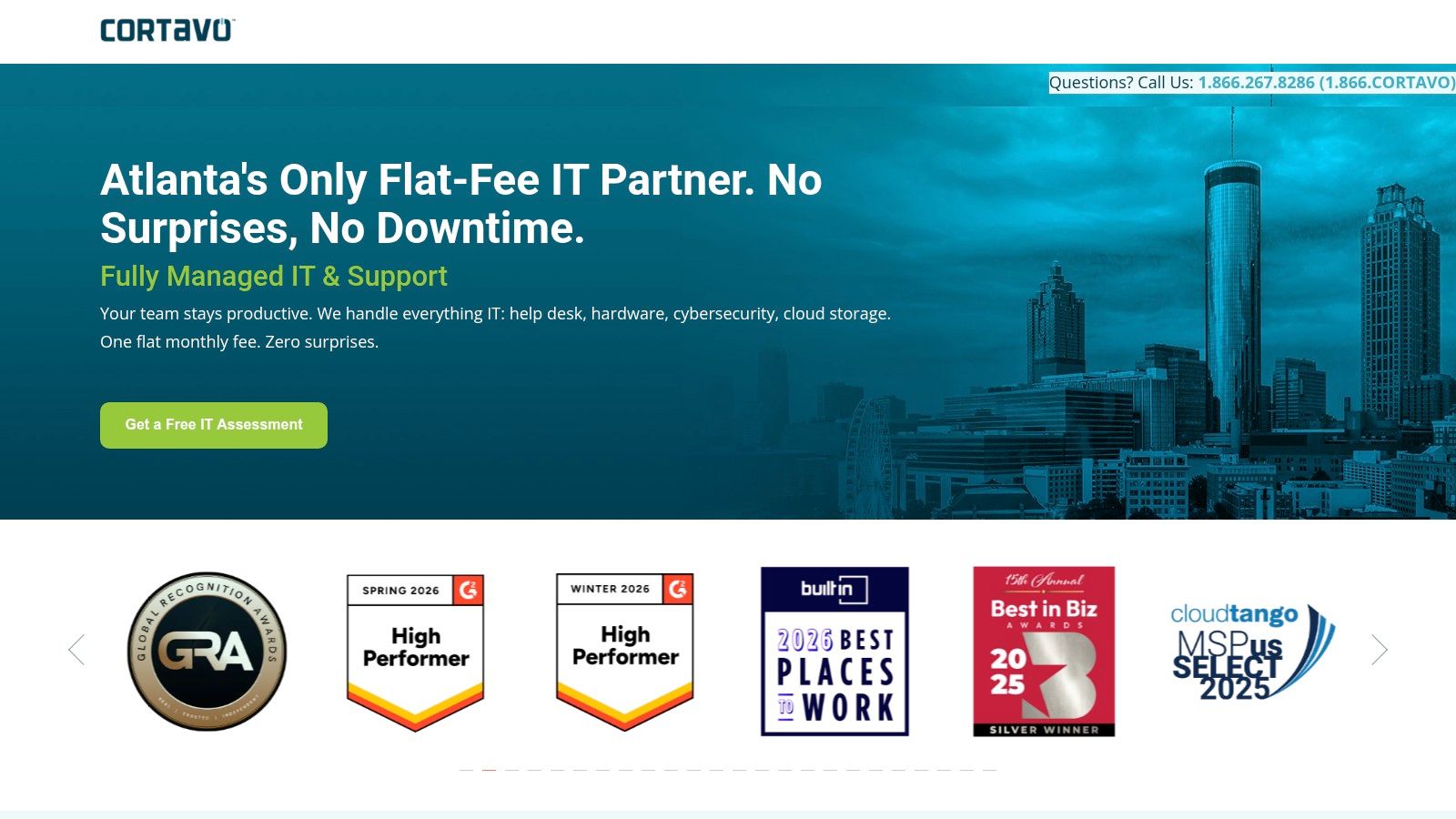
Cortavo is the pick for businesses that want predictable monthly IT operations. Their model is appealing because it bundles support, cybersecurity, backup, connectivity gear, and on some tiers, end-user hardware into a flat per-user structure. If finance wants fewer surprise invoices, this is the kind of MSP worth pricing first.
Their broader cost case lines up with a real Atlanta market dynamic. Companies looking to reduce IT costs often choose managed services instead of expanding in-house leadership because a vCIO service can cost up to 70% less than hiring a full-time CIO, and managed IT pricing in Atlanta commonly ranges from $100 to $250 per user per month (Atlanta managed IT pricing and vCIO cost comparison). For medium and large organizations, that shift turns fixed payroll into a more scalable operating expense.
What works well
Cortavo publishes entry pricing and offers an IT cost calculator, which is more useful than many MSP sales pages that force a call before giving any budget signal. That transparency helps when you're benchmarking vendors or building next year's run-rate assumptions.
The bundled model also reduces the sprawl that happens when companies buy support, backup, security tooling, and connectivity from separate providers and then spend internal time managing overlap.
Predictable IT spend isn't the same as low IT spend. Bundled contracts work best when you actually want standardization.
There is a trade-off. If your team prefers best-of-breed point tools or already has mature security and cloud vendors in place, Cortavo's all-in-one structure can feel restrictive. You need to confirm exactly what's included at your tier, especially if you're expecting hardware or connectivity to be part of the package.
Their advice on IT procurement best practices also pairs well with a managed-service evaluation, especially if you're consolidating vendors.
For direct vendor details, visit Cortavo managed IT services in Atlanta.
3. Integris
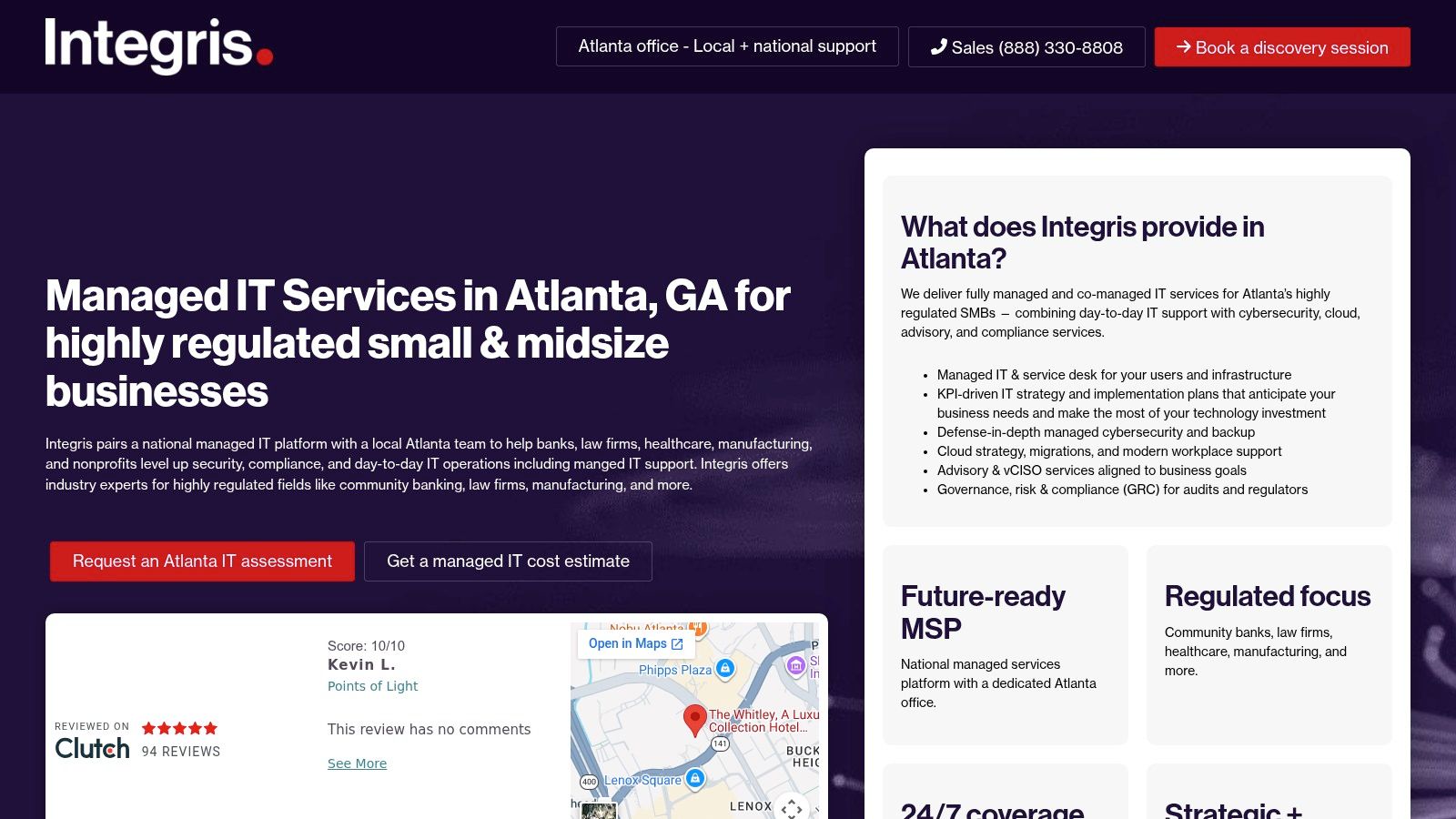
Integris makes the most sense when cost reduction has to happen inside a regulated environment. Plenty of MSPs can lower support overhead. Fewer can do it while keeping governance, risk, and compliance in view.
That's the practical appeal here. Integris combines managed and co-managed IT with cybersecurity, cloud support, and advisory services such as vCISO and GRC support. For healthcare groups, financial firms, law offices, and manufacturers, that matters because many "cheap" IT decisions become expensive once an audit, policy gap, or failed control enters the picture.
Why co-managed can be the smarter move
Not every company should outsource everything. If you already have a capable internal team, co-managed support often works better than a full handoff. Internal staff keep control over systems and business context, while the MSP absorbs after-hours support, commodity administration, and specialized security functions that would be expensive to build internally.
Integris also leans into lifecycle and asset management. That's a practical cost lever that many leaders overlook. Extending useful life where appropriate, avoiding unplanned replacement, and tying refreshes to an actual roadmap usually saves more than random budget cuts.
- Strong fit for regulated sectors: Compliance support is built into the engagement conversation, not bolted on later.
- Useful for internal IT teams: Co-managed service can fill staffing gaps without displacing your existing administrators.
- Less ideal for price shoppers: Pricing isn't published, so you need discovery before you know whether the economics work.
For organizations reviewing retirement and security controls at the same time, ACR's guidance on Atlanta businesses investing in data protection is a useful companion read.
You can review the local office and service overview at Integris Atlanta.
4. FTC-Cloud

If your cloud bill keeps climbing and nobody can explain why in plain English, an MSP won't solve the whole problem. FTC-Cloud is the more relevant kind of partner for engineering-led environments that need FinOps and DevOps discipline, not general help desk support.
They work on budgeting, multi-cloud visibility, rightsizing, architecture changes, CI/CD efficiency, and observability. That's where meaningful cloud savings usually come from. Not from broad "cut cloud waste" mandates, but from specific technical decisions about workloads, environments, and deployment habits.
Where FinOps actually changes spend
Cloud overspend usually hides in plain sight. Idle resources stay on. Teams overprovision compute. Storage grows without retention discipline. Engineering keeps convenience environments alive because nobody owns the cleanup process. FTC-Cloud's value is connecting those technical habits to financial consequences.
This is especially relevant in Atlanta's infrastructure-heavy market. Metro Atlanta is one of the densest U.S. data-center regions, with Georgia Trend reporting at least 163 data centers in Metro Atlanta and noting other counts range from about 100 to almost 200. The same report says data-center construction tripled over the last year, which signals that infrastructure investment in the region is still expanding (Metro Atlanta data-center concentration and growth). In that environment, cloud and infrastructure cost governance isn't optional.
The fastest way to waste cloud money is to treat architecture as separate from finance.
FTC-Cloud won't be the best fit for every business. If your organization has modest cloud usage, a custom FinOps engagement may be more process than payoff. But if your engineering team is running material AWS or GCP workloads and nobody owns optimization, this is exactly the kind of specialist that can create discipline quickly.
Their work also connects to a broader operational issue many firms ignore until costs spike: IT downtime risks for Atlanta companies.
You can explore the firm directly at FTC-Cloud.
5. Prime Asset Recovery
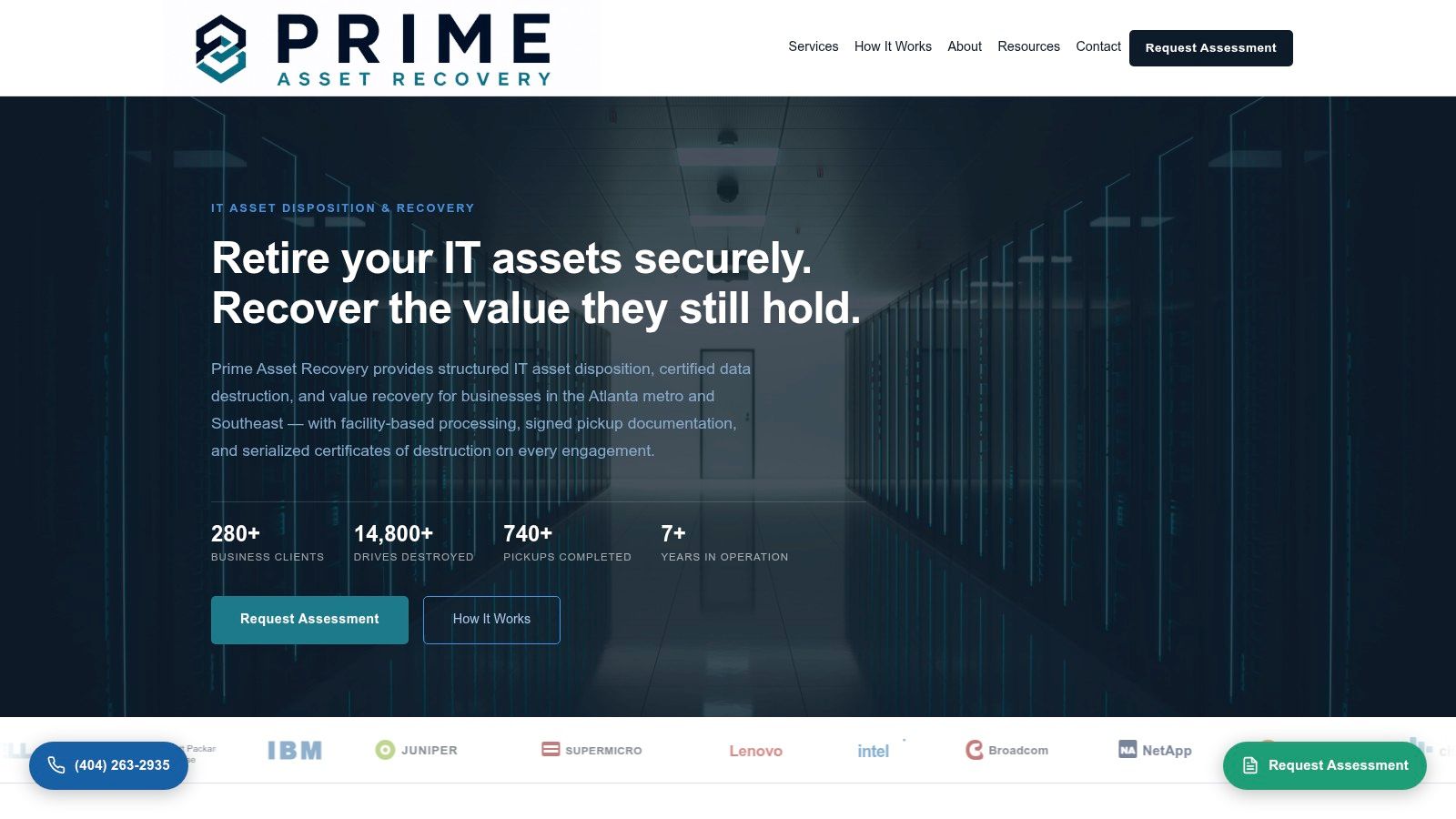
Prime Asset Recovery is for buyers who want to turn decommissioning into a value-recovery event rather than a disposal project. That's an important distinction. Some ITAD vendors mostly help you remove equipment safely. Prime leans harder into buyback, revenue share, serialized reporting, and getting money back out of usable assets.
That can change the budget conversation around refresh cycles. When servers, laptops, networking gear, or mobile fleets still have secondary-market value, a structured asset recovery process can offset part of the replacement and disposal burden.
Where Prime stands out
Prime emphasizes asset-level valuation, onsite manifests, in-house shredding, and serialized certificates of destruction. Those details matter because they reduce disputes later. Finance wants to know what was picked up, security wants documentation, and operations wants the equipment gone without creating a side project for internal staff.
Their payment target after processing is also useful for organizations trying to close the books on a decommissioning event quickly. Faster reconciliation tends to make ITAD more visible as a financial lever instead of an afterthought.
- Best for mixed-value inventory: Prime is strongest when some portion of your retired assets still has resale potential.
- Best for documentation-heavy projects: Serialized records and manifests make audits and internal signoff easier.
- Watch the assumptions: Older gear may still cost money to process, even with a revenue-share model.
The main caution is simple. Don't assume every truckload produces positive returns. Residual value depends on device age, market demand, condition, and whether the hardware can be remarketed at all. Prime can be a strong option, but your savings model should start with an honest inventory review.
For vendor details, see Prime Asset Recovery.
6. ITAMG
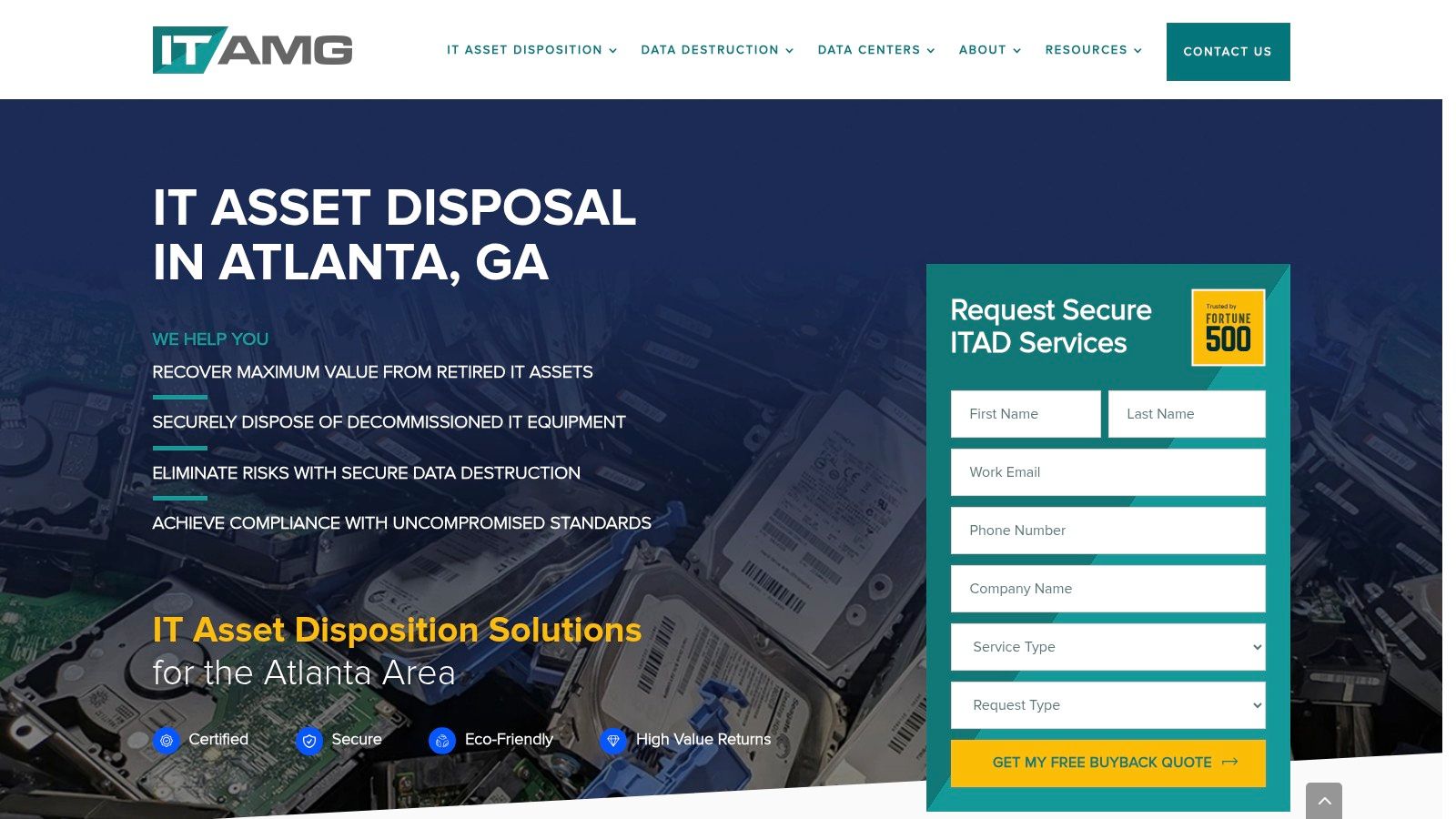
ITAMG is the right kind of provider when your purchasing team or compliance office needs certifications front and center. Some buyers can work with a local recycler and confirm process details during quoting. Others need a more formal certification posture from the outset. That's where ITAMG becomes attractive.
They emphasize reuse, resale, certified data destruction, and R2-certified recycling. They also support data center decommissioning, lease returns, donation workflows, and full logistics. If your retired assets need to move through a documented process with recognized standards attached, that's a serious advantage.
Why certification matters for cost control
Certified disposition isn't just about compliance language. It affects cost because poor handling creates hidden exposure. A weak chain of custody, an undocumented wipe, or a vague downstream recycling process can turn a low-cost disposal decision into a legal and reputational problem.
ITAMG highlights R2v3, RIOS, and NAID credentials, along with adherence to NIST 800-88 and DoD 5220.22-M data destruction standards. For healthcare, education, and public-sector buyers, that's often easier to defend internally than a lower-cost option with less documentation.
Secure disposition costs less than remediation.
The trade-off is distance and scheduling. ITAMG isn't headquartered in Atlanta, so local buyers should confirm response times, pickup minimums, and how field logistics are handled for metro-area jobs. And like any value-recovery program, actual return depends on what the secondary market wants when your project lands.
Still, among Atlanta businesses focused on IT cost reduction, ITAMG is a strong option when auditability and resale potential both matter.
Learn more at ITAMG Atlanta IT asset disposal.
7. IQ4hire
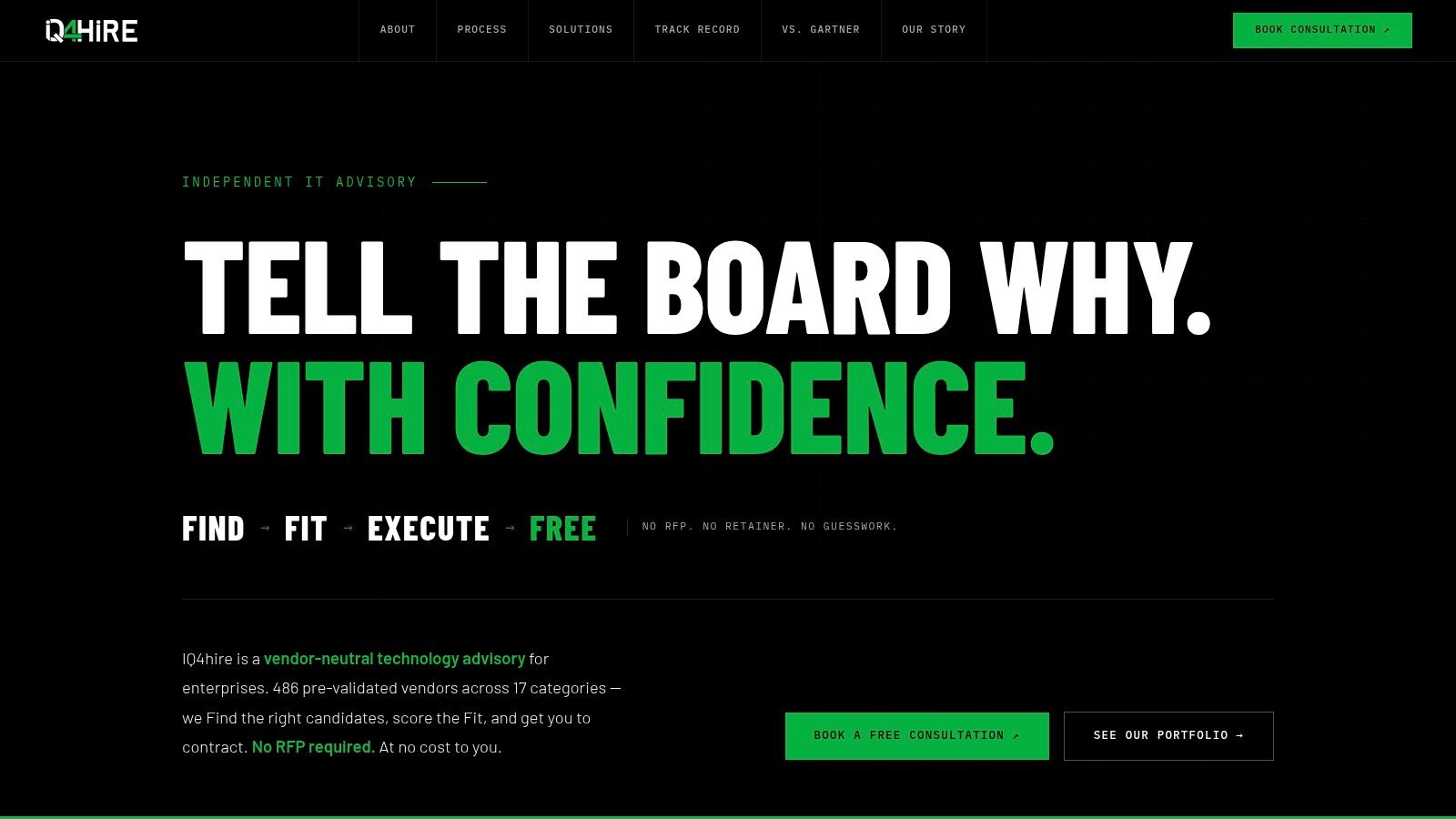
Most companies leave money on the table in procurement, not because the market lacks options, but because nobody has time to run a disciplined comparison. IQ4hire solves that problem with a vendor-neutral advisory model built around structured selection and negotiation across multiple IT categories.
This isn't an MSP or an ITAD provider. It's more like a sourcing engine for telecom, cloud, colocation, UCaaS, CCaaS, Microsoft licensing, expense management, and similar categories that often carry buried cost inefficiencies.
When IQ4hire is most useful
IQ4hire works best when you suspect incumbent pricing has drifted upward or your contracts were never benchmarked properly. Their process is useful because it forces apples-to-apples review instead of letting vendors define the comparison on their own terms.
The model is attractive to enterprise buyers because the client doesn't pay traditional upfront consulting fees. IQ4hire is compensated by the winning vendor. That lowers friction, but it also means procurement leaders should be comfortable with the commercial structure and ask direct questions about how recommendations are made.
- Best for multi-category review: The economics improve when you're evaluating several categories or major renewals.
- Best for contract pressure testing: Competitive down-selection often exposes terms your incumbent never volunteered.
- Less ideal for one-off small buys: The process is more valuable for meaningful recurring spend.
One useful complement to this approach is better lifecycle planning before you rebid anything. ACR's article on IT lifecycle management best practices helps frame that internal work.
If you want to explore their advisory model directly, visit IQ4hire.
7 Atlanta IT Cost-Reduction Providers Compared
| Provider | Implementation Complexity 🔄 | Resource Requirements ⚡ | Expected Outcomes ⭐ / 📊 | Ideal Use Cases 💡 | Key Advantages ⭐ |
|---|---|---|---|---|---|
| Atlanta Computer Recycling | Moderate, tailored on‑site logistics and program scoping | On‑site access, coordination with staff; vendor handles packing/transport; quote‑based pricing | Secure, compliant data destruction; reduced e‑waste; streamlined bulk retirements | Data‑center decommissions, large office refreshes, regulated orgs (healthcare, government) | ⭐ DoD 5220.22‑M 3‑pass wiping, physical shredding, end‑to‑end logistics; reuse focus |
| Cortavo | Low, standardized flat‑fee onboarding | Per‑user OPEX subscription; minimal internal change management | Predictable IT OPEX, consolidated billing, consistent SLAs | SMBs seeking predictable managed IT and bundled services | ⭐ Published pricing, 24/7 US help desk, public IT cost calculator |
| Integris | Medium, requires discovery and compliance alignment | Collaborative engagement; advisory time and possible co‑managed staff | Aligned IT spend, reduced compliance risk, lifecycle cost control | Regulated SMBs needing GRC/vCISO and co‑managed IT | ⭐ GRC and vCISO advisory, lifecycle/asset management, co‑managed model |
| FTC-Cloud | High, technical FinOps and architectural refactors | Engineering access, cloud billing data, ongoing FinOps commitment | Lower cloud spend, improved cost visibility, CI/CD and runtime efficiency | Teams with material AWS/GCP spend lacking formal FinOps practice | ⭐ FinOps focus: rightsizing, refactors, observability, cost‑driven DevOps |
| Prime Asset Recovery | Moderate, valuation, manifests and logistics per job | Physical pickups, serialized documentation, asset inventorying | Potential net‑positive cash recovery, serialized CODs, faster payment cycles | Organizations retiring marketable hardware and seeking value recovery | ⭐ Asset buyback/revenue share model, in‑house shredding, fast documented payouts |
| ITAMG (IT Asset Management Group) | Medium, certified workflows and full logistics | Coordination for pickup/transport; volume helps optimization; compliance paperwork | Certified destruction, value recovery, compliance assurance (R2/NAID/NIST) | Data‑center decommissions, donation/lease returns, buyers needing certifications | ⭐ R2v3/RIOS/NAID + NIST/DoD adherence; on‑site/off‑site shredding; revenue programs |
| IQ4hire | Medium, structured RFP and vendor selection process | Stakeholder time for scoring, procurement oversight; vendor negotiations handled by advisor | Competitive vendor selection, measurable run‑rate savings, benchmarked options | Enterprises re‑bidding multiple IT categories or seeking benchmarked procurement | ⭐ Free to enterprise clients; structured RFP across 17 categories; large validated vendor pool |
From Plan to Savings Your Strategic Next Steps
Selecting the right partner depends on your primary cost problem. If your monthly support costs are unpredictable, start with an MSP model like Cortavo or Integris. If cloud spend is the issue, a FinOps specialist like FTC-Cloud is the better fit. If refresh cycles, office closures, or decommissions are draining budget, an ITAD and asset recovery partner should move to the top of the list.
Before you sign anything, pressure-test three areas. First, expertise. Ask for examples from your industry and make sure the provider understands the systems and obligations you manage. Second, security and compliance. Require documentation, destruction records, and certification proof where relevant. Third, financial model. Get clear on what is included, what creates extra fees, and whether there is any realistic value recovery in the engagement.
Evaluation points that matter in practice
A flashy proposal doesn't mean the economics hold up after six months. The strongest buyers ask operational questions, not just pricing questions.
- Proven expertise: Ask whether the provider has worked with organizations like yours, especially if you're in healthcare, education, government, legal, or financial services.
- Security and compliance: Require concrete documentation such as certificates of destruction, chain-of-custody detail, and any certifications your policies require.
- Financial model: For ITAD, ask whether reusable assets are separated from scrap and whether value recovery is possible. For MSPs, confirm what is bundled, what isn't, and how growth or downsizing affects billing.
Action plan by industry
Hospitals and healthcare groups should prioritize HIPAA-aligned handling and documented data destruction before chasing any resale upside. Ask ITAD vendors such as Atlanta Computer Recycling whether they can support the documentation and handling standards your compliance team expects, including BAAs if your process requires them.
Schools and universities usually need a partner that can move a lot of equipment fast while preserving any recoverable value. The right vendor doesn't just collect devices. They help district or campus IT teams manage logistics, separate reusable gear from low-value scrap, and document the process cleanly.
Data center operators should emphasize chain of custody, on-site support, and remarketing discipline. Decommissioning projects get expensive when internal teams have to coordinate packing, transport, destruction, and resale through multiple vendors.
Government and municipal buyers should insist on auditability from the beginning. Standards, certificates, manifests, and documented handling procedures matter because procurement and records obligations don't disappear once the equipment leaves the building.
The broad lesson is simple. IT cost reduction works best when you target the right cost category with the right kind of partner. Trying to use one vendor for every problem usually leads to weak results. Build the plan around your biggest source of waste first, then tighten the rest of the stack around it.
If your biggest cost leaks are tied to retired hardware, office cleanouts, or secure equipment disposal, Atlanta Computer Recycling is a practical place to start. Their business-focused pickup, de-installation, wiping, shredding, and decommissioning support can help Atlanta organizations reduce disposal friction, protect sensitive data, and recover control over a part of the IT budget that often gets ignored until it's urgent.