Popular Festivals in Atlanta Georgia: 2026 Guide


Friday afternoon in Atlanta, a festival weekend can change your business conditions in a few hours. Customer traffic shifts block by block. Delivery windows tighten. Temporary Wi-Fi, point-of-sale gear, digital signage, and event hardware get deployed fast, then have to be recovered, stored, or retired just as fast.
For Atlanta companies, festival season is a revenue opportunity and an operations test at the same time. Songkick’s Atlanta metro event listings show how active the market stays throughout the year, and that volume matters for more than entertainment. These events create predictable demand spikes that affect sponsorship planning, staffing coverage, parking access, routing, and the lifespan of short-term tech assets.
The business question is straightforward. Which festivals fit your audience, and what will they cost your team to support well?
Strong results usually come from matching the event to the objective. Consumer brands may want visibility and sampling. Professional service firms may get more value from hosted client experiences, partner activations, or neighborhood campaigns tied to festival traffic. Operations leaders need a different lens. They have to schedule pickups, equipment swaps, storage, and end-of-life device handling around road closures and venue congestion so routine work does not stall.
That planning extends beyond marketing. Festival season often increases the volume of aging laptops, tablets, displays, payment hardware, and accessories that have been sitting in storage since the last activation. Companies reviewing event calendars should also review disposal and recovery workflows, nearby activation zones, and local audience patterns around places like Atlanta’s best-known parks and public gathering spaces.
The festivals below are worth attention because each one attracts a different mix of attendees, sponsors, vendors, and operational pressure.
1. Atlanta Dogwood Festival
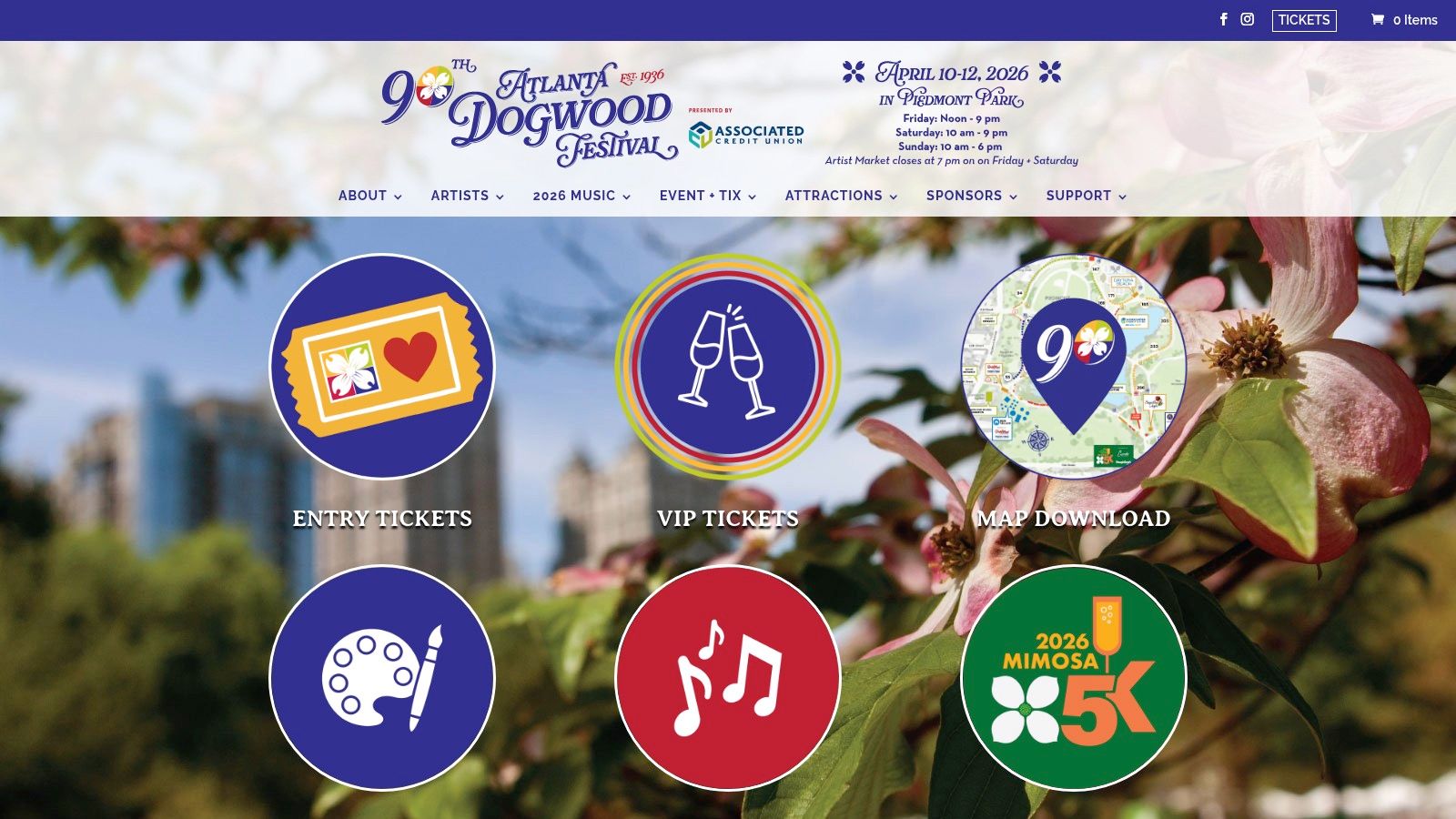
Atlanta Dogwood Festival works well for businesses that want broad local visibility without forcing a hard sell. The audience mix tends to favor brands that can speak to households, creative professionals, and community-minded buyers in the same activation. If your company only knows how to run a loud booth and hand out swag, this isn’t your best fit.
Its strength is range. A juried artist market, multiple music stages, family programming, and add-on events create several different audience moods across one footprint. That gives sponsors and service providers more than one angle to work with.
Where it fits for business outreach
The practical advantage is location. Piedmont Park gives you Midtown adjacency, strong name recognition, and natural spillover into nearby retail and hospitality corridors. If you serve customers who already spend time around Atlanta’s major greenspaces, this festival can support both brand presence and nearby partner promotions. Businesses planning a neighborhood campaign can pair festival activity with content about Atlanta parks worth knowing.
What works best here is soft engagement. Think demo stations, useful giveaways, visual merchandising, and local partnerships. What doesn’t work is overcomplicated lead capture that depends on flawless connectivity or a booth team trying to qualify every passerby like it’s a trade show.
Practical rule: If your activation requires long explanations, attendees will keep walking. Build for quick interaction first, deeper follow-up later.
Operational trade-offs
For operations leaders, the challenge is less about the event itself and more about access. Large crowds and limited on-park parking can complicate setup windows, service calls, and equipment pickup. That matters if your business is running point-of-sale tablets, branded displays, temporary Wi-Fi, or rental AV.
A simple approach usually works best:
- Stage equipment off-site: Don’t rely on curbside timing near the park.
- Use smaller deployment kits: Tablets and lightweight display systems are easier to move than bulky fixed stations.
- Plan your teardown path early: End-of-day congestion is where good activations lose time and gear.
Dogwood is strongest for companies that value brand association, community presence, and a polished local image. It’s weaker for businesses chasing immediate high-intent conversions.
For direct event details, use the Atlanta Dogwood Festival website.
2. Atlanta Jazz Festival
By late morning on Memorial Day weekend, Piedmont Park is full, Midtown traffic slows, and nearby restaurants, hotels, and service teams feel the impact before the first headliner matters to attendees. For Atlanta businesses, that is the primary value of Atlanta Jazz Festival. It creates a concentrated demand window with long dwell time, strong local visibility, and a crowd that tends to stay in place instead of rushing through.
The official festival organizers describe it as one of the country’s largest free jazz festivals and note that it takes place in Piedmont Park over Memorial Day weekend on the Atlanta Jazz Festival website. Free admission widens the audience. The holiday timing also makes planning easier for companies that want to build an annual campaign, client event, or staffing model around a repeatable city event.
Where the business case is strongest
Jazz Festival works best for companies that benefit from trust, association, and time with people. That includes professional services firms hosting clients nearby, healthcare organizations building community presence, hospitality groups packaging dining and after-hours experiences, and employers using the weekend for recruiting or employee engagement. Teams shaping those after-event plans can pair festival activity with nearby Atlanta nightlife and entertainment options.
Audience behavior matters here. People come to listen, stay, and settle in. That changes the activation strategy. Fast giveaways and loud sales tactics usually underperform, while thoughtful hospitality, arts sponsorship, low-friction mobile engagement, and relationship-based programming tend to hold up better.
Practical trade-offs for marketing and operations
The upside is clear. The constraints are clear too.
- Strong fit: Client hosting, sponsor visibility, community investment messaging, and simple mobile capture tied to a later follow-up.
- Weak fit: Heavy booth builds, aggressive street-team tactics, or campaigns that depend on perfect cellular service and long on-site forms.
- Operational pressure points: Memorial Day delivery windows, crowded access routes, weather exposure, and tighter competition for temporary labor, rentals, and technical support.
For operations leaders, the main decision is how much infrastructure to bring on-site. A lighter setup usually wins. Small-format displays, battery-backed tablets, offline-ready forms, and tightly packed deployment kits are easier to move and recover than elaborate builds that create more setup risk than marketing value.
IT teams should also treat festival season as an asset-control issue, not just an event issue. Loaner laptops, tablets, hotspots, badge printers, and aging screens often cycle through multiple activations during spring and summer. If chain of custody is loose, devices come back late, untracked, or still holding data. If equipment is near end of life, plan the wipe, reuse, or recycling path before the event weekend instead of after it. That reduces loss, lowers disposal confusion, and supports sustainability reporting with fewer last-minute scrambles.
Atlanta Jazz Festival is strongest for businesses that want reputation depth, client contact, and community credibility. It is weaker for teams chasing immediate, high-volume conversion from a cold crowd.
3. Atlanta Pride Festival & Parade
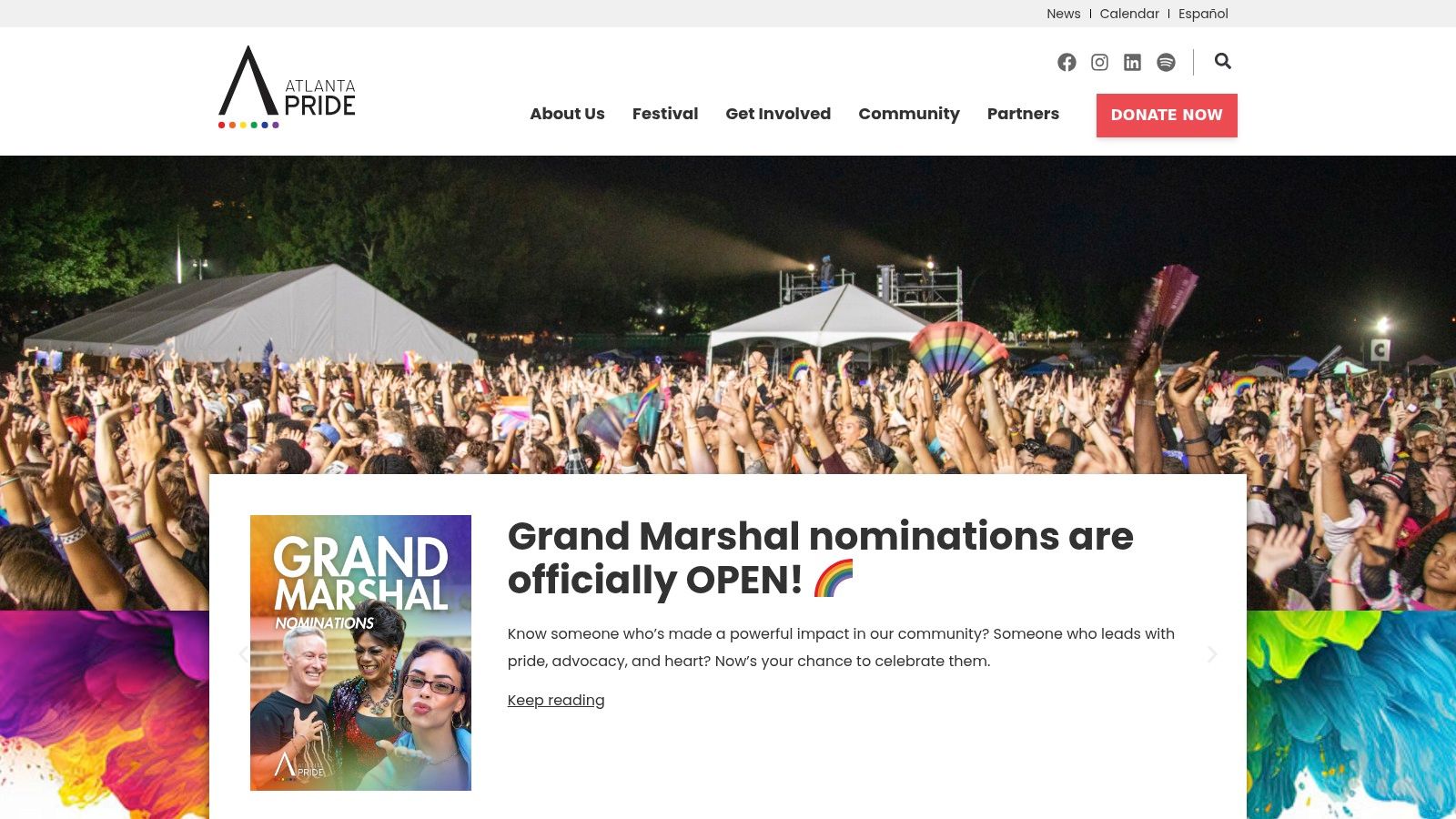
Atlanta Pride Festival & Parade is one of the most important visibility opportunities in the city for brands that want to be seen in public, not just in ad creative. That difference matters. Audiences can tell when a company shows up with a year-round posture versus a weekend-only message.
For businesses, this event rewards operational seriousness. Midtown and Piedmont Park activity, parade traffic, and street closures can complicate staffing and service access. If your office, clinic, retail site, or hospitality operation sits near the route, you should treat the weekend as a business continuity event as much as a marketing opportunity.
Brand fit and audience expectations
Pride audiences respond well to organizations that connect presence with substance. Employee resource groups, community partnerships, inclusive recruiting, health access, and service accessibility all land better than generic festival branding. A polished booth alone won’t carry the message.
That creates a clear divide. If your company has credible programs and trained staff, Pride can be a strong platform. If your team is improvising messaging on the fly, the risk to brand trust is real.
Operational pressure points
Many companies get caught flat-footed. Midtown access changes. Parking gets tighter. Delivery timing becomes less predictable. Internal support teams sometimes forget that a public celebration can create commercial constraints for nearby sites.
Use a simple planning model:
- Shift nonessential pickups: Avoid avoidable truck movement near peak parade windows.
- Brief front-line staff early: Security, reception, and facilities should know route impacts before the weekend starts.
- Keep backup devices ready: High-footfall activations put extra pressure on tablets, scanners, and payment tools.
Field note: The businesses that handle Pride best don’t just sponsor it. They assign ownership across marketing, HR, facilities, and IT.
This festival also raises a practical sustainability question. Temporary event tech, branded screens, old access-control devices, and retired POS hardware don’t disappear when the weekend ends. Organizations that participate at scale should decide in advance how they’ll retire and secure those assets.
For event updates and participation information, visit the Atlanta Pride website.
4. Shaky Knees Music Festival
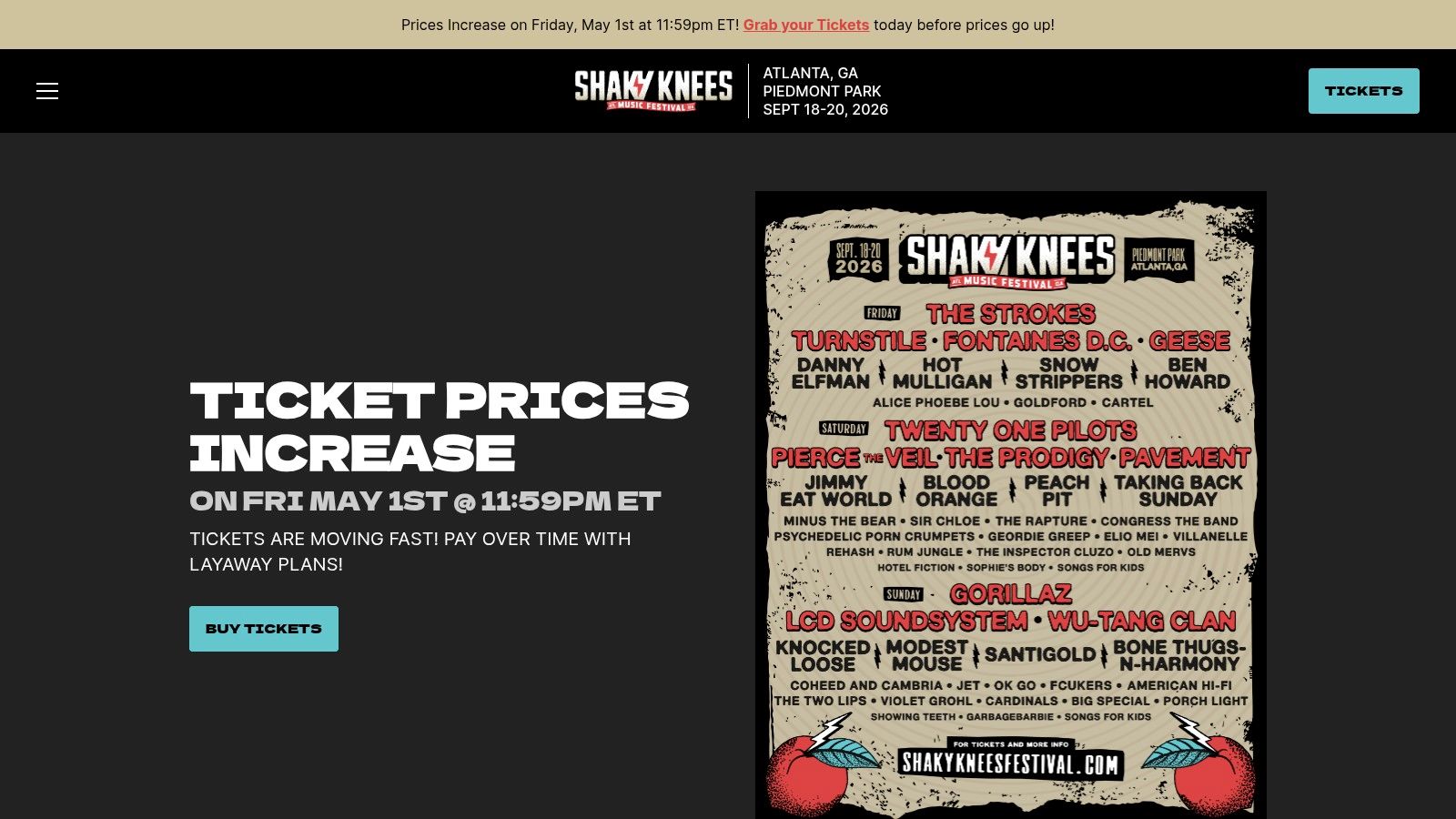
A September festival weekend in Atlanta can look good on the marketing calendar and still create problems by Friday afternoon. Staff arrive late because of road closures, vendors miss load-in windows, cellular congestion slows payment tools, and the activation your team approved two months ago suddenly needs a shorter queue and a faster reset. Shaky Knees rewards brands that plan for those conditions early.
For companies targeting younger urban buyers, lifestyle audiences, and social-first consumers, Shaky Knees can be a strong fit. It usually draws an audience that notices speed, relevance, and production quality. If your brand experience feels generic or slow, people move on quickly.
Where this festival makes business sense
Shaky Knees works best for companies that can create short, high-throughput interactions. Sampling, charging stations, merchandise tie-ins, QR-led lead capture, and compact retail setups tend to perform better than long demos or hospitality concepts that depend on extended attention spans.
It also fits brands building a broader Atlanta campaign, not just a weekend presence. A company can tie festival messaging into local content about things to do in Atlanta and use Shaky Knees as the campaign's highest-visibility touchpoint.
The Operational Trade-off
This festival offers concentrated exposure, but the execution standard is higher than at many civic or arts events. Premium areas, general admission traffic, and sponsor zones create different audience behaviors across the same site. A client-hosting strategy may work in one section and fail in another because the pace, dwell time, and expectations are different.
I usually advise businesses to simplify the field plan before they add creative extras:
- Build for short wait times: Staff, signage, and payment flow should keep lines moving.
- Protect outdoor tech: Tablets, routers, scanners, and displays need weather covers and backup power.
- Map teardown in advance: Post-show congestion can delay load-out and increase the chance of lost or damaged equipment.
Shaky Knees also creates a practical IT and sustainability issue that teams often leave until after the event. Temporary network gear, retired tablets, damaged screens, and used POS hardware can contain customer or transaction data. Once the festival ends, disposal becomes a security, compliance, and asset-recovery decision.
For lineup and ticket details, use the Shaky Knees website.
5. SweetWater 420 Fest
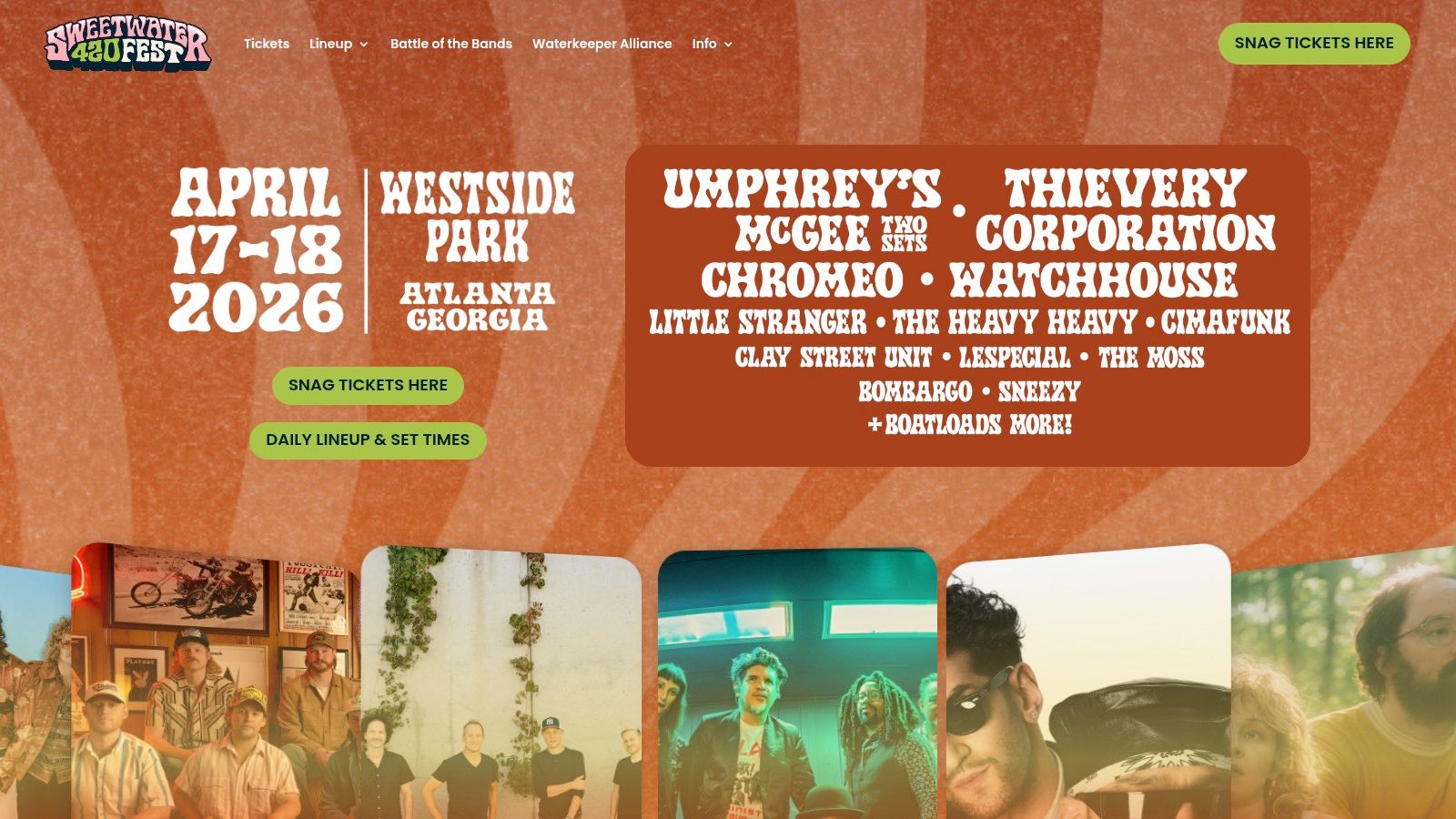
SweetWater 420 Fest is a strong option for brands that sit at the overlap of music, lifestyle, food and beverage, and sustainability. If your company wants a polished but relaxed environment for customer engagement, it can be more commercially useful than a broader city festival because the audience identity is more defined.
That said, venue and footprint changes can alter the logistics playbook. A campaign that worked one year may need a different transport, staffing, or parking approach the next.
Why some brands overperform here
Brands tend to do well when they lean into hospitality and mission. Craft beverage culture, local food, and environmental positioning give sponsors and partners room to build a story that feels native to the event. If your brand already talks about water stewardship, waste reduction, or local community partnerships, this festival gives you a more believable place to say it.
That also makes it a good venue for practical sustainability, not just sustainability language. Event organizers and participating businesses should think beyond compost bins and look at the electronics side of temporary operations. Mobile payment hardware, network gear, and digital signage often move from active use to storage limbo after events. That’s where asset tracking usually breaks down.
What to watch operationally
The biggest mistake is assuming a feel-good festival atmosphere means low execution standards. It doesn’t. Beverage-heavy events still require disciplined staffing, equipment control, and cleanup.
Build your activation so it can be packed, audited, and removed without guesswork. Festivals end fast. Gear goes missing faster.
A few priorities stand out:
- Document device assignment: Know which staff member had each tablet, hotspot, or scanner.
- Separate reusable from disposable materials: This matters for both cost control and sustainability reporting.
- Set a post-event asset review date: If you wait too long, temporary gear becomes orphaned inventory.
For vendors serving food on-site or around surrounding neighborhoods, packaging choices shape customer experience too. This comprehensive guide on UK takeaway packaging isn’t Atlanta-specific, but it’s useful for thinking through portability, heat retention, and cleanup during high-volume event service.
For festival planning and official updates, visit the SweetWater 420 Fest website.
6. Dragon Con
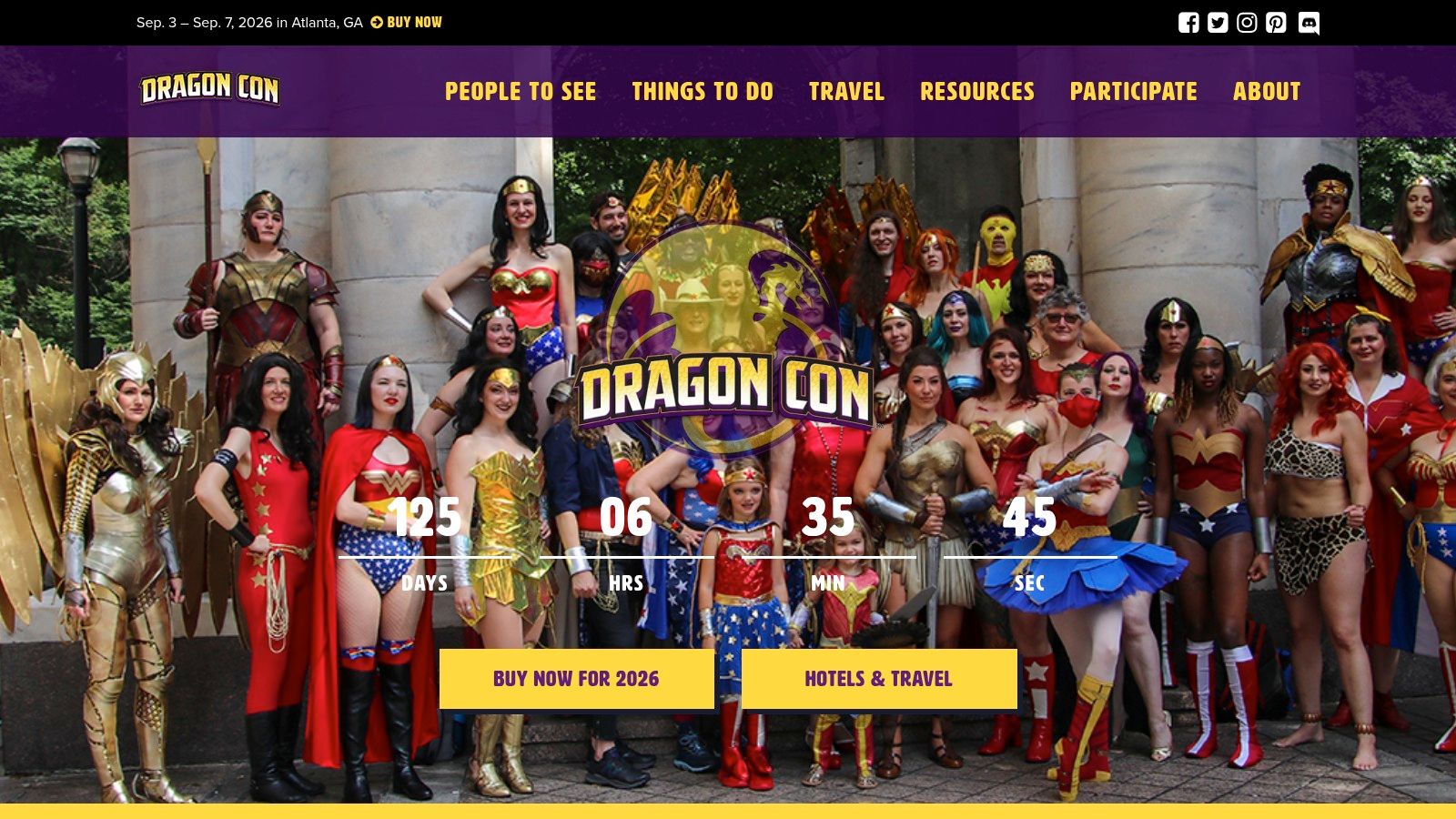
Dragon Con is different from the park festivals because it behaves more like a citywide temporary operating system. Downtown hotels, foot traffic, badge access, exhibitor logistics, and parade spectators all change the rhythm of central Atlanta over Labor Day weekend. For businesses with downtown locations, this is less a weekend event and more a temporary market condition.
It’s also one of the best environments in Atlanta for niche targeting. Tech vendors, gaming companies, creative services firms, specialty retail, and entertainment-adjacent brands can find unusually focused sub-communities here.
Commercial upside for the right sectors
The audience isn’t generic. That’s the point. Businesses that know how to speak to fandom, creators, collectors, and highly online communities can get real traction through sponsorships, partnerships, after-hours events, or exhibitor participation.
That doesn’t mean every business should activate on-site. Some of the better plays happen nearby. Hotels, restaurants, bars, transport providers, print shops, and emergency support vendors all benefit from demand concentration. Companies building a broader visitor-facing campaign can also align with nearby top Atlanta attractions to capture incremental traffic before and after core convention hours.
Operational complexity is the real story
The challenge with Dragon Con is coordination. Multiple venues mean multiple loading rules, different internal schedules, and more chances for assets to get misplaced. If your company supports an exhibit, client suite, branded installation, or downtown pop-up, assign one owner to inventory and teardown. Shared responsibility usually turns into lost equipment and blurry accountability.
This is especially relevant for IT and facilities teams. Temporary displays, printers, routers, badge scanners, and backup laptops often get packed quickly and reviewed later. Later is where data risk creeps in. If any of those devices touched attendee, customer, or employee information, secure wipe and disposition need to be in the closeout plan.
A final practical point. Dragon Con rewards businesses that prepare for high demand early. Badge timing, room availability, and loading access don’t leave much room for casual planning.
Use the official Dragon Con website for programming and attendance details.
7. Taste of Atlanta
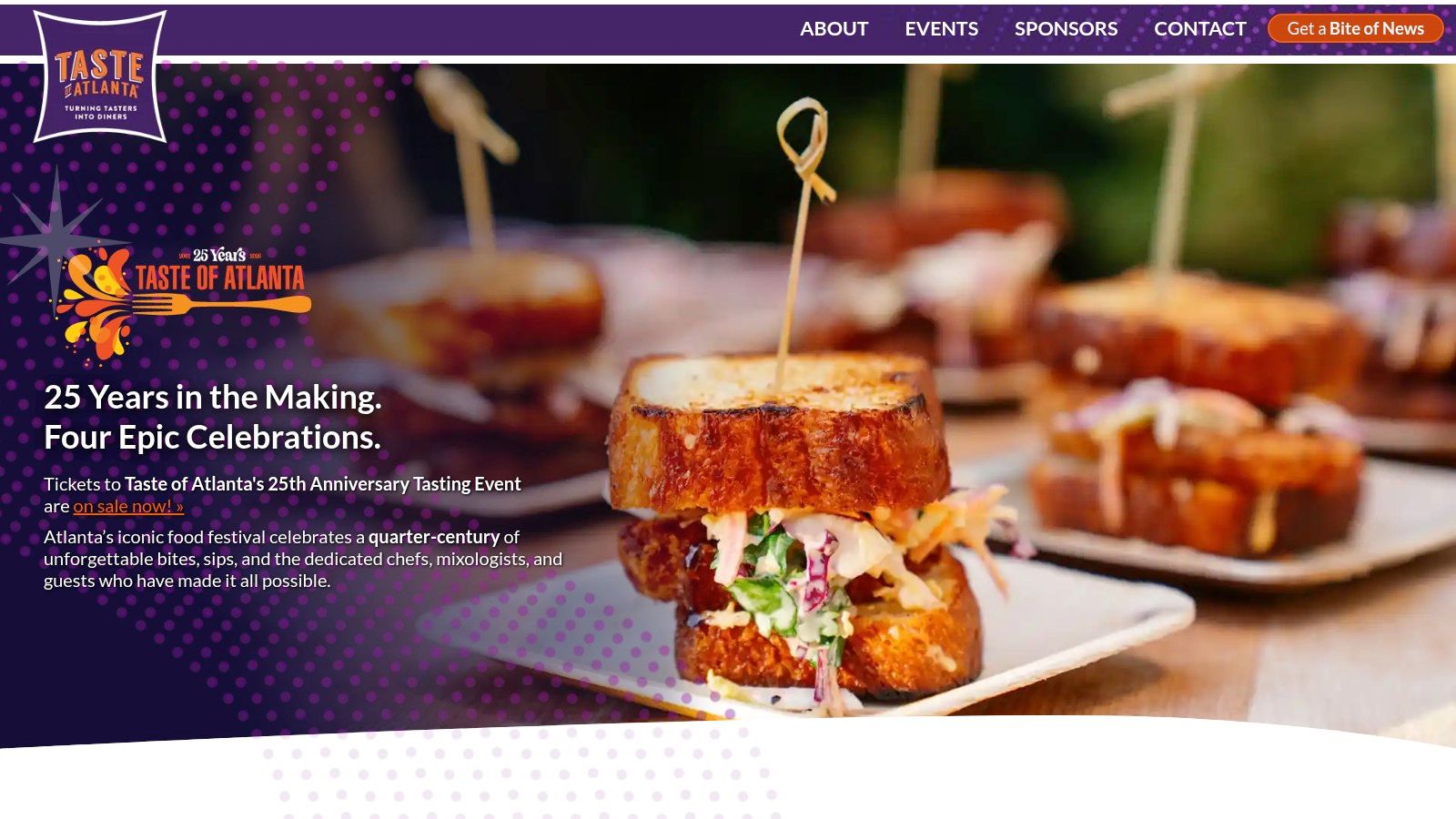
Taste of Atlanta is one of the most practical festival brands for business development because food lowers the barrier to entry. People are already in sampling mode, conversation comes easier, and neighborhood-based formats can match local targeting better than a single large park event.
For restaurants, beverage companies, hospitality groups, commercial kitchen suppliers, and real estate teams focused on neighborhood traffic, this event family can be especially useful. It gives you a way to show up where dining decisions already happen.
Why it’s business-friendly
The multi-venue format is the main advantage. You can choose the date, geography, and audience profile that better matches your offer. That’s more useful than a one-size-fits-all activation, especially for brands trying to test a market or host a smaller client group.
It also supports partnership strategy. A food-adjacent company doesn’t have to act like a restaurant to belong here. Payment providers, staffing firms, waste services, refrigeration vendors, and hospitality tech providers can all build a credible presence if they frame the message around service reliability and operator support. Brands that want a broader dining tie-in can support content around notable Atlanta restaurants.
What to manage carefully
Because these are fully ticketed experiences, audience expectations are high. If you’re participating, presentation matters. Service speed matters. Staff energy matters. One weak touchpoint stands out fast in a tasting environment.
Use a disciplined event model:
- Keep servings and scripts tight: People want to sample, not listen to a pitch.
- Support fast payment and lead capture: If your process stalls, your line dies.
- Plan packaging and cleanup: Food events expose operational sloppiness immediately.
Good food festivals reward operators who understand throughput. The best booth isn’t the prettiest one. It’s the one that serves cleanly and keeps moving.
Taste of Atlanta also creates a useful reminder for post-event operations. Tablets, mobile POS units, printers, and digital menu displays often travel between venues and staff teams. If you don’t reconcile that equipment after each event, it becomes hard to know what’s active, what’s obsolete, and what still contains data.
For schedules and tickets, visit the Taste of Atlanta website.
Comparison of 7 Popular Atlanta Festivals
| Event | Implementation Complexity 🔄 | Resource Requirements ⚡ | Expected Outcomes 📊 ⭐ | Ideal Use Cases 💡 | Key Advantages |
|---|---|---|---|---|---|
| Atlanta Dogwood Festival | Moderate, established logistics; artist juries & multi-stage coordination | Moderate, staff/volunteers, vendor/stage support, park permits | Strong local arts engagement & family attendance, ⭐⭐⭐ | Family outings, art sales, community engagement | Deep community roots; diverse programming; transit-accessible |
| Atlanta Jazz Festival | Moderate, city-run production with citywide partner events | Low–Moderate, municipal support, staging, volunteer coordination | Wide cultural reach; high free attendance & prestige, ⭐⭐⭐ | Free public concerts, jazz promotion, family-friendly events | Free main stages; curated jazz lineup; 31 Days of Jazz series |
| Atlanta Pride Festival & Parade | High, parade routing, multi-march coordination, accessibility planning | High, security, permits, extensive volunteer & org partnerships | Massive turnout, strong community services visibility, ⭐⭐⭐ | Advocacy, large-scale community outreach, inclusive celebration | Largest regional Pride; MARTA-accessible parade; robust accessibility |
| Shaky Knees Music Festival | Moderate, multi-stage scheduling & tiered ticket operations | High, artist booking, production, tiered ticketing infrastructure | High-profile exposure; potential sellouts; strong fan engagement, ⭐⭐⭐ | Rock/indie audiences, tiered group experiences, live-music showcases | Consistent high-quality lineups; clear tiered experiences |
| SweetWater 420 Fest | Moderate, beverage-focused production with sustainability programming | Moderate, craft-beer ops, vendor management, environmental partners | Strong brand activation & charitable/sustainability impact, ⭐⭐ | Craft-beer fans, brand marketing, eco-partnered events | Distinct beer-and-music culture; Waterkeeper partnership |
| Dragon Con | Very high, multi-venue, multi-track programming across downtown hotels | Very high, venue coordination, badges, exhibitors, hotel blocks | Broad fandom reach; significant industry networking & economic impact, ⭐⭐⭐⭐ | Large-scale fandom conventions, industry panels, cosplay events | Unmatched scale and breadth; extensive programming and parade |
| Taste of Atlanta | Moderate, multi-venue culinary scheduling and demo programming | Moderate, chef/vendor coordination, ticketing, demo staging | Strong foodie exposure; business sampling & culinary discovery, ⭐⭐⭐ | Restaurant promotion, corporate outings, neighborhood tasting events | Wide restaurant representation; flexible calendar and formats |
Integrating Festivals into Your Annual Business Strategy
A Midtown office can lose half a day of productivity during a major festival weekend if leadership treats the event like a surprise instead of a calendar-based operating constraint. The same weekend can also produce qualified leads, stronger client relationships, and neighborhood visibility for companies that planned six to eight weeks earlier.
Atlanta’s festival calendar works like a recurring business cycle. Each event creates a different mix of foot traffic, brand exposure, staffing pressure, delivery delays, and technology needs. Smart teams sort festivals by business purpose first, then assign ownership across marketing, operations, facilities, and IT. That prevents a common mistake. Marketing commits to an activation, but no one adjusts parking, pickup windows, device deployment, or post-event asset recovery.
Congestion is usually the first operational problem. Businesses near Midtown, Piedmont Park, and downtown event zones regularly deal with road changes, limited parking, slower vendor access, and longer setup times during major festival weekends. If your company schedules office moves, equipment swaps, or surplus pickups during those periods, expect higher labor costs and a tighter service window.
Temporary event technology is the second issue, and it gets less attention than it should. A weekend activation may require tablets, hotspots, badge scanners, POS hardware, displays, printers, and backup laptops. On Monday, those assets still need to be collected, wiped, redeployed, stored, or retired properly. For regulated industries and larger institutions, that process also has a data security and chain-of-custody component.
The same pattern shows up at the venue and sponsor level. Organizations that support multiple events over the year can accumulate retired ticketing hardware, old network gear, surveillance equipment, kiosks, and aging back-office systems. Schools, healthcare groups, and public agencies have even less room for guesswork because device disposal often touches compliance, records management, and internal audit requirements, as noted earlier in the article.
The practical approach is a three-part plan:
First, pick festivals based on business fit, not popularity. Dragon Con may justify sponsorship or B2B hospitality for a company selling to tech-savvy audiences. Taste of Atlanta may be better for product sampling, local partnerships, or client entertainment. Pride, Jazz Fest, and Dogwood can support very different audience strategies even when they happen in similar parts of the city.
Second, build an operations calendar around festival weekends. Adjust staffing, delivery routes, field service schedules, parking instructions, and vendor pickups before the event week starts. If your team supports onsite activations, assign one owner for logistics and one for technology so accountability stays clear.
Third, define the full lifecycle of event tech before anything is deployed. Decide what will be reused, what requires secure data destruction, what can be remarketed, and what needs certified recycling. That step protects margins and reduces the pile of obsolete equipment that often sits in storage long after festival season ends.
If your business deploys temporary event tech, closes seasonal pop-ups, or rotates aging equipment after major activations, Atlanta Computer Recycling can help you handle the back end properly. Their B2B focus fits post-festival needs such as secure data destruction, electronics pickup, de-installation support, and responsible recycling for commercial organizations. Merchandise planning matters too, and this customization for wholesale beanies is a reminder that branded gear should be selected with the same discipline as signage, staffing, and device rentals.
Atlanta businesses that treat festival season as part of annual planning usually make better decisions before, during, and after the crowds arrive. If you need a partner to securely retire event laptops, tablets, servers, networking gear, or surplus office equipment, Atlanta Computer Recycling can help you build a compliant, sustainable IT asset disposition plan for your organization.