Best Parks to Visit in Atlanta, Georgia for Businesses

Your HR lead wants a wellness event. Operations wants parking, predictable timing, and a location that does not create a half-day planning problem. Leadership wants something that supports culture, recruiting, and community visibility without paying retreat-level costs.
Atlanta’s best parks solve that mix better than many teams expect. Used well, they give companies practical space for walking meetings, volunteer projects, department picnics, client meetups, and family-inclusive gatherings that feel organized instead of forced.
The business case is simple. A good park is easier to reach than an off-site venue, less formal than a conference room, and often better suited to real conversation. For companies near Midtown, Downtown, Buckhead, or the Eastside BeltLine corridor, the right park can fit into a workday instead of consuming one.
That matters for employee participation. If the site is hard to access, short on parking, or too crowded to hold a conversation, turnout drops and the event starts to feel performative. If the location is central, flexible, and easy to understand, teams show up ready to engage.
This guide evaluates Atlanta parks the way a business operator would. Which locations support wellness programming, team-building, and community engagement with the least friction, and which ones pair well with lower-cost outings such as other free things to do in Atlanta?
1. Piedmont Park
Piedmont Park is the safest recommendation for most companies because it does a lot well without requiring much explanation to attendees. In Midtown, it gives you a central location, recognizable skyline views, and enough room to split a large group into different activities without losing cohesion. If you need one park that can serve HR, operations, and leadership equally well, this is usually the one.
It’s also Atlanta’s best-known urban green space. Piedmont Park spans over 200 acres in Midtown, and its 2010 renovation added features including a 3-acre dog park. That scale matters for business use because teams can hold a picnic, a wellness walk, and a family-friendly after-hours meetup without competing for the same patch of grass.
Why it works for company events
The big advantage is flexibility. Some teams want a structured outing with sign-in tables and branded tents. Others just need an easy place for managers to host a walking check-in, then let employees branch off toward open lawns, paths, or nearby destinations.
Piedmont also benefits from adjacency. The Atlanta Botanical Garden sits next door, and the park’s layout makes it easy to pair a work-sponsored outing with lunch, a walk, or a casual social hour. If your team wants a low-cost outing instead of a formal event, this park also fits naturally with other free things to do in Atlanta.
- Best use case: Midtown team gatherings, employee appreciation events, and mixed-age company picnics.
- What works well: Clear wayfinding, broad appeal, and enough space for both active and low-key programming.
- What doesn't: Quiet conversations can be harder on busy weekends or during major events.
Practical rule: If you're bringing a larger department, send parking guidance in advance and designate a clear meeting point. Piedmont is easy to enjoy, but groups lose time fast when everyone arrives from a different side.
Trade-offs to know before you book around it
Piedmont Park attracts people for good reason, and that popularity is the main drawback. Peak weekends can feel crowded, event closures can disrupt your original plan, and on-site parking isn't the park's strong suit. Nearby paid decks solve the problem, but they add friction if you haven't accounted for them up front.
For companies based in Midtown, Downtown, or along the BeltLine corridor, the convenience usually outweighs those trade-offs. For firms farther north or teams prioritizing a quieter setting, another park on this list may be a better operational fit.
Visit Piedmont Park Conservancy.
2. Shirley Clarke Franklin Park
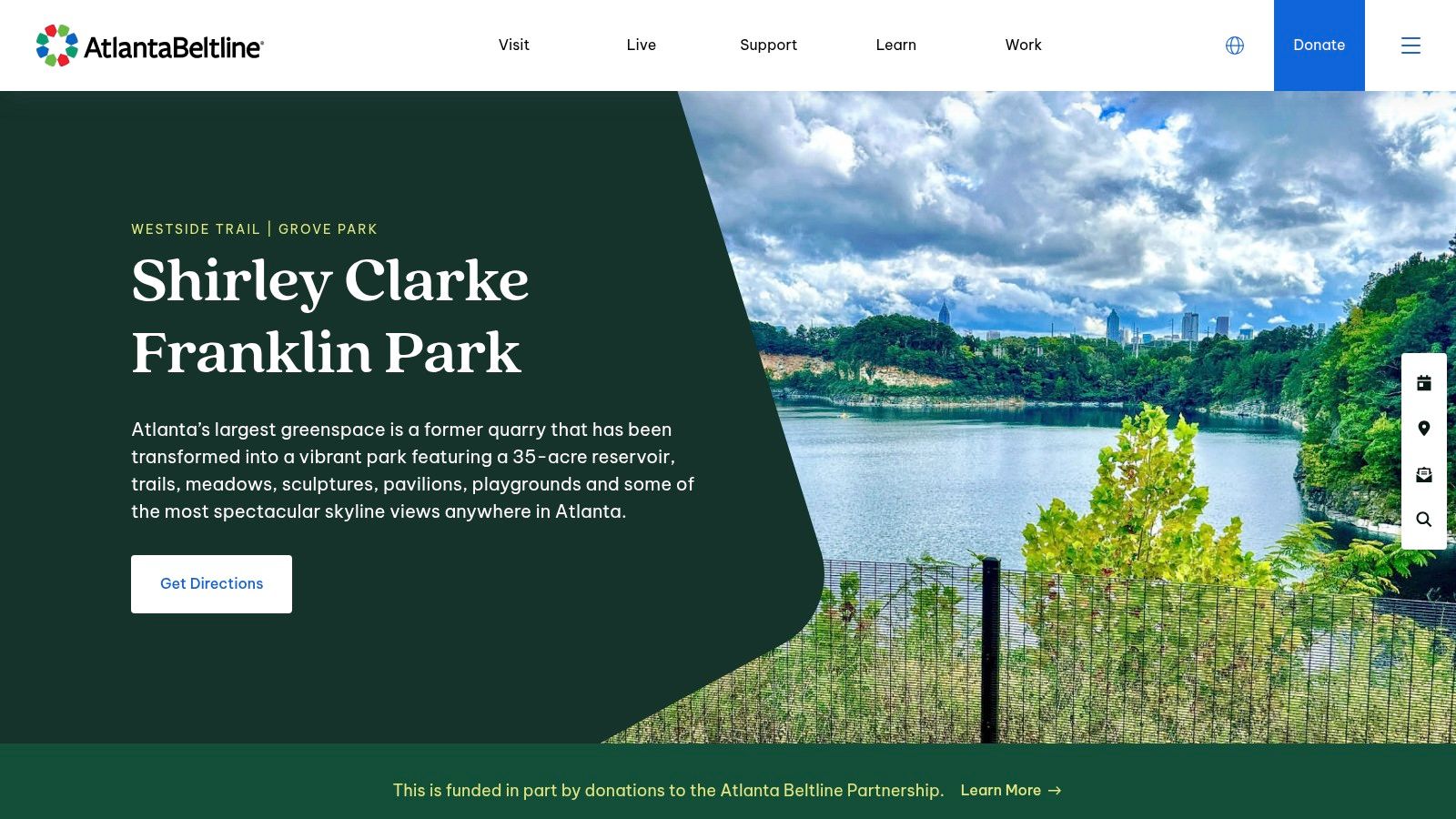
If Piedmont is the obvious choice, Shirley Clarke Franklin Park is the smarter choice when your company wants space, views, and a setting that still feels fresh to many attendees. It’s especially useful for businesses trying to host a team outing that feels intentional rather than routine.
The park is built around the former Bellwood Quarry area and has a visual impact that most in-city parks can't match. The overlooks create a natural “arrival moment,” which helps for recruiting events, executive offsites, or company photography tied to culture and employer branding.
Best fit for teams that want room to spread out
This park works well when your event needs breathing room. Department leaders can start with a group walk, move into small breakout conversations, and still avoid the boxed-in feeling that comes with busier intown parks. For companies on the west side or with employees commuting from multiple directions, it can also be easier than a Midtown-centric meetup.
A practical strength here is that it often feels less overrun on ordinary days. That makes it a good option for leadership teams that want an outdoor change of scenery without the social intensity of a major destination park. If you're building a company weekend itinerary, it also pairs well with other things to do in Atlanta this weekend.
The best business parks aren't always the most famous ones. They're the ones where people can actually talk, walk, and reset without fighting the environment.
Where it falls short
The trade-off is access. This isn't the park I'd pick if your attendees rely heavily on rail transit or if you're trying to minimize walking from parking areas. Driving or rideshare usually makes the day easier.
For event planners, that means doing a bit more coordination up front. Include arrival instructions, identify the exact entrance or overlook area you want to use, and remind attendees to wear comfortable shoes. The topography is part of the appeal, but it's also why this park isn't the best fit for every group.
Still, for businesses that want a distinctive Atlanta setting without defaulting to the usual spots, this one stands out.
Visit Shirley Clarke Franklin Park on Atlanta BeltLine.
3. Grant Park
Grant Park is a better choice than many companies realize, especially if your team values shade, a calmer pace, and a setting with character. Some parks are built for spectacle. Grant Park is built for staying comfortable long enough to have real conversations.
It’s Atlanta’s oldest city park in this lineup by reputation and feel, and the mature tree canopy changes the experience. On hotter days, that matters more than any headline amenity. Teams can walk, gather on lawns, or host family-inclusive events without feeling exposed the entire time.
Strong choice for volunteer-minded company culture
Grant Park is one of the better parks for businesses that want a softer, community-rooted tone. Because of its historic setting and conservancy support, it lends itself well to service-oriented events, neighborhood engagement, and company gatherings that feel local rather than corporate.
The adjacency to Zoo Atlanta also gives planners options. A simple company picnic can become a broader family day, especially for organizations trying to build events that include spouses, children, or alumni. If that’s your audience, this park fits naturally with other family-friendly things to do in Atlanta.
- Best use case: Volunteer days, nonprofit partnerships, family-friendly staff gatherings.
- What works well: Shade, open lawns, and quieter pockets away from heavier foot traffic.
- What doesn't: Parking can get tight near the zoo, and path conditions vary enough that planners should walk the site ahead of time.
What a business audience should watch for
This isn't the park I'd choose for a slick, highly produced corporate activation. It works better when the goal is connection, conversation, and a less polished environment. That's a feature for some brands and a mismatch for others.
If your company is planning accessibility-sensitive programming, do a pre-visit and map the exact route you expect people to use. Grant Park is appealing partly because it feels established and natural, but that also means surfaces and grades can be less uniform than in newer parks.
Visit Grant Park Conservancy.
4. Historic Fourth Ward Park
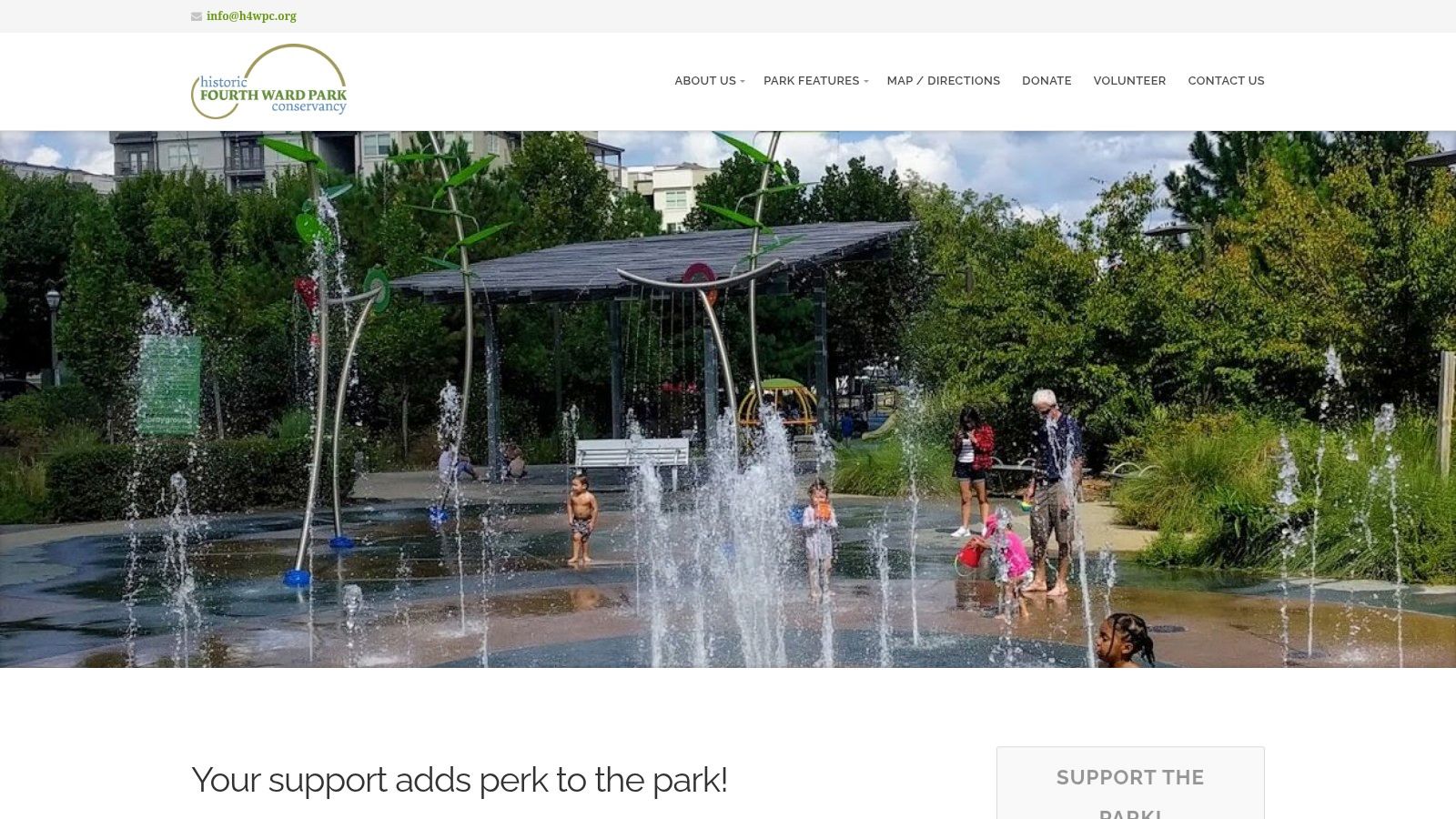
Historic Fourth Ward Park is one of the most useful parks in Atlanta for companies that want a short, efficient outing near food, retail, and other activity. If your team won't commit to a half-day retreat, this is the kind of place that still gets people out of the office without asking too much.
Its strongest asset is location. With direct proximity to the BeltLine and Ponce City Market, it makes it easy to organize a walking meeting, informal networking meetup, or wellness hour that ends with lunch. That convenience is why it often works better for modern office culture than larger parks that require more planning.
Best for short-format team time
This park is a practical pick for firms that operate on tight calendars. Managers can bring a team over for an outdoor check-in, let people walk the area, and still keep the event compact enough to fit into a busy workday.
The engineered lake and amphitheater-style layout also help. There are clear sightlines, defined spaces for gathering, and enough nearby activity that the outing doesn't feel isolated. If your goal is to blend green space with Atlanta energy, this is one of the better ways to do it. It also sits comfortably alongside other best things to do in Atlanta when you're building a visitor itinerary for clients or recruits.
A good corporate outing doesn't always need to be long. Sometimes the win is giving people a well-located place to step away, talk, and come back sharper.
The main limitations
Historic Fourth Ward Park can feel busy, especially during peak BeltLine hours. If your team wants quiet reflection or a more private setting, this isn't the strongest option. Parking also takes some patience, and paid decks are part of the equation.
That said, for recruiting lunches, startup meetups, and culture-focused team outings, the trade-off is often worth it. This park rewards companies that value walkability and energy over isolation.
Visit Historic Fourth Ward Park Conservancy.
5. Chastain Memorial Park
Chastain Memorial Park is one of the best parks in Atlanta for businesses that want movement built into the event. Some parks are better for sitting. Chastain is better for doing.
The draw here is range. Walking paths, athletic amenities, open fields, and the surrounding Buckhead setting give companies multiple ways to use the same destination. That makes it especially effective for recurring wellness programming, not just one-off outings.
Where Chastain outperforms more central parks
If your company is based in Buckhead or serves employees coming from the north side, Chastain often feels more convenient than an intown meetup. It also tends to support routine better. A wellness committee can organize regular morning walks, informal run clubs, or step challenges here without needing a complicated event plan each time.
This is the park I'd choose for businesses that want to normalize outdoor activity as part of team culture. It works for a quarterly field day, but it works even better for habits. That's an important distinction, because the most effective wellness programs are repeatable.
- Best use case: Ongoing employee wellness programs, fitness-centered gatherings, and North Atlanta team meetups.
- What works well: Variety of recreation options and enough room for people with different comfort levels around activity.
- What doesn't: Destinations inside the park are spread out, so the event can feel fragmented if you don't establish a clear home base.
Operational downside
Concert or event days can complicate traffic and parking. If you're planning something time-sensitive, check the surrounding calendar first. This park is reliable, but not if a major event nearby changes the flow.
For a business audience, Chastain is strongest when you treat it less like a tourist stop and more like an asset for repeat use. It rewards companies that want consistency over novelty.
Visit Chastain Park Conservancy.
6. Freedom Park
Your HR lead wants a wellness event that gets people moving, but half the team is coming from different intown neighborhoods and no one wants to spend the morning circling for one central parking lot. Freedom Park solves that problem better than almost any park on this list.
This is Atlanta’s strongest park for companies planning movement-based gatherings instead of a stationary event. Walking meetings, run clubs, bike meetups, and step-count challenges all fit the layout. Because the park connects across neighborhoods rather than pulling everyone into one lawn, it also works well for distributed teams that need flexible access points.
Best for active culture and low-friction participation
Freedom Park is a practical choice for employers who want wellness programming that feels easy to join. Staff can enter from different points, participate for part of the route, and still feel included. That matters for companies trying to increase turnout without building a complicated event around one exact start time.
The route itself helps. Public art, changing views, and connections to surrounding streets keep the experience from feeling like a repetitive lap. If your company is pairing movement with local engagement, this park gives you more personality than a standard trail loop. It can also pair well with client visits or employee itineraries built around other top tourist attractions in Atlanta, especially for teams hosting out-of-town colleagues who want a more local experience between meetings.
Freedom Park works best when the goal is conversation in motion, not a single-site gathering.
What to plan around
This park asks for more coordination than a traditional event lawn. Amenities are spread out, street crossings need attention, and the best experience usually depends on choosing a clear meeting point, route, and finish location in advance. For larger groups, that planning step is necessary.
It is less effective for companies that need tents, centralized food service, or a simple family-day setup. It is stronger for wellness committees, culture teams, and managers who want an active format with lower social pressure than a formal event.
Visit Freedom Park Conservancy.
7. Centennial Olympic Park
Centennial Olympic Park is the most event-friendly park on this list for Downtown business use. It’s not the most natural-feeling park, and that’s exactly why it works for certain corporate needs. If you want a clean, recognizable setting near Atlanta’s major attractions, it does the job well.
For out-of-town clients, conference attendees, or teams already working around Downtown, this park is easy to layer into an existing schedule. It pairs especially well with museums, attractions, and convention-related activity, which reduces planning overhead for companies hosting visitors.
Best use for a business audience
This is the strongest park on the list for firms that need convenience and accessibility more than immersion in nature. The flat layout, promenades, and central lawns make it approachable for mixed groups, including visitors who aren't dressed for a long walk or who just need a short outdoor break between meetings.
It also carries strong public recognition. Centennial Olympic Park has 22 acres and sits at the center of Downtown visitor activity, with 92% visitor satisfaction reflected in Tripadvisor's 2026 metrics. Even allowing for the source's tourism angle, that broad approval aligns with what matters for corporate planners. People generally know where they are, know what to expect, and can combine the park with other top tourist attractions in Atlanta Georgia.
Where it doesn't compete with neighborhood parks
This isn't where I'd send a team looking for a restorative, leafy park experience. Event infrastructure and surrounding attractions make it useful, but they also make it feel more programmed and less relaxed.
- Best use case: Client visits, Downtown team breaks, conference add-ons, and short social meetups.
- What works well: Easy pairing with attractions, simple navigation, and broad appeal for visitors.
- What doesn't: Less quiet, less shade-driven atmosphere, and occasional access restrictions during event setup.
Visit Centennial Olympic Park.
Top 7 Atlanta Parks Comparison
| Park | Access & Complexity 🔄 | Facilities & Resources ⚡ | Typical Experience / Outcomes ⭐ | Ideal Use Cases 📊 | Key Advantages & Tips 💡 |
|---|---|---|---|---|---|
| Piedmont Park | Very easy multi‑modal access (MARTA, bikes, scooters); crowds/event closures on peak days | Strong on‑site amenities (restrooms, concessions, dog parks); limited paid parking | Urban park experience with skyline views, mixed active/recreational use | Walks, picnics, dog play, fitness loops, quick food + skyline stops | Direct BeltLine & Botanical Garden connections; arrive early or use transit |
| Shirley Clarke Franklin Park | Moderate complexity, best reached by car/ride‑share; limited direct rail | Large acreage and trails; parking concentrated in lots (can fill on events) | Dramatic quarry overlooks and quieter in‑city topography | Photography, skyline vistas, longer trail walks, less‑crowded nature visits | Unique quarry views; plan parking and bring water for longer visits |
| Grant Park | Moderate access with adjacency to Zoo Atlanta; parking may be busy | Historic features, playgrounds, shaded canopy; variable path conditions | Historic, shaded neighborhoods with family‑friendly lawns and quiet pockets | Family outings, conservancy events, shady walks away from core downtown | Supported by conservancy programs; expect zoo traffic on peak days |
| Historic Fourth Ward Park | Very walkable from BeltLine/Ponce City Market; limited on‑site parking | Engineered lake (stormwater), splash pad, skatepark; nearby paid garages | Thoughtful urban design with active, social atmosphere | BeltLine stops, family splash/play, skateboarding, quick urban breaks | Combine visit with Ponce City Market; go off‑peak for quieter experience |
| Chastain Memorial Park | Car‑oriented with dispersed facilities; event days impact parking | Multi‑use PATH loop, golf, tennis, equestrian, amphitheatre; facilities spread out | Broad recreation hub suited to longer workouts and varied sports | Long runs/walks, tennis/golf, equestrian activities, concerts | Many activity options in one place; allow time to walk between areas |
| Freedom Park | Linear access with many neighborhood entry points; great for cycling | Extensive mostly‑flat multi‑use trails and public art; amenities dispersed | Seamless car‑free connections and art‑infused corridor for longer outings | Cycling, long runs, art walks, connecting to BeltLine/trail network | Excellent for continuous rides; plan stops and be cautious at street crossings |
| Centennial Olympic Park | Extremely accessible downtown; flat and stroller‑friendly; event closures common | Fountain of Rings, central lawns, nearby museums; less natural amenities | High‑impact tourist and event space, civic/entertainment focus | Combine with Aquarium/Coca‑Cola/CNN visits, family stops, events | Ideal for downtown itineraries; expect event setups to affect access |
Invest in Your Team, Community, and Brand
A leadership team needs an offsite next month. HR wants something that supports wellness. Operations wants easy parking and restrooms. Marketing wants photos that do not look staged. In Atlanta, the right park can cover all four goals at once.
For a business audience, parks are working assets. They give companies low-friction venues for team walks, volunteer projects, recruiting events, client meetups, and family-friendly gatherings without the cost of booking private space for every initiative. The catch is that site selection has to follow business needs, not weekend visitor habits.
The practical filters are simple. Check access from your office or hotel cluster. Confirm parking capacity and restroom availability. Look at shade, walking surfaces, noise level, and whether food options are nearby. Then match the setting to the goal. Piedmont Park fits broad-attendance events and visible company gatherings. Chastain Memorial Park fits recurring fitness programs and active teams. Freedom Park fits walking meetings, cycling groups, and point-to-point movement. Centennial Olympic Park fits downtown schedules, conference add-ons, and client-facing events where convenience matters more than a natural setting.
That decision affects turnout.
Parks also help connect internal culture to public-facing community work. A cleanup day, park stewardship project, or family volunteer event feels credible because it happens in a place employees and neighbors already use. Companies that want that work to support retention as well as reputation should define the outcome in advance. Is the goal employee participation, neighborhood visibility, nonprofit partnership building, or a stronger wellness calendar? The park should serve that goal, not the other way around.
For teams building a broader local engagement plan, the GroupOS insights on community engagement offer a useful business case for visible, practical involvement close to home.
One pairing I recommend often is a park service event with an office electronics recycling drive. It gives staff a public-facing volunteer activity and clears a real operational backlog at the same time. For Atlanta companies replacing laptops, desktops, drives, and network hardware, that combination supports sustainability goals, reduces storage clutter, and gives leadership a clearer story to share with employees and community partners.
A park will not create culture by itself. It will give a healthy culture a place to be seen, practiced, and tied to the city around it.
If your organization is planning a team event, office refresh, relocation, or decommissioning project, Atlanta Computer Recycling can help you turn that effort into a practical sustainability win. ACR supports Atlanta-area businesses, schools, healthcare groups, and government teams with secure IT asset disposition, electronics recycling, pickup logistics, and data destruction services that minimize disruption while keeping retired equipment out of landfills.