7 Top Museums to Visit in Atlanta GA for 2026


Your team wants an Atlanta outing that feels sharper than a standard steakhouse dinner. Your clients expect polish. Your employees want something more engaging than another hotel ballroom. And if you're planning for a school, hospital, government department, or large office, you also need practical answers fast: where the buses unload, whether parking will be a headache, how private the space feels, and whether the venue can support a structured program instead of just passive sightseeing.
That’s where the right museum changes the equation. Atlanta has enough depth that you can match the venue to the event objective. Some museums work best for executive entertainment. Others are better for leadership sessions, family-inclusive gatherings, or educational field experiences. The strongest options already operate as event-capable institutions, not just attractions, which reduces planning friction and gives your group a setting people will remember.
If you're refining your broader planning approach, these modern corporate event strategies pair well with museum-based programming.
This guide to the Top Museums to Visit in Atlanta GA focuses on what matters to organizational planners. You’ll see where each museum fits, what works well for group logistics, and where the trade-offs show up in real planning. Some are best for Midtown convenience. Some justify a longer transfer because the venue experience is stronger. A few are excellent for mission-driven programming but need careful framing for mixed audiences. That’s the lens here.
1. High Museum of Art
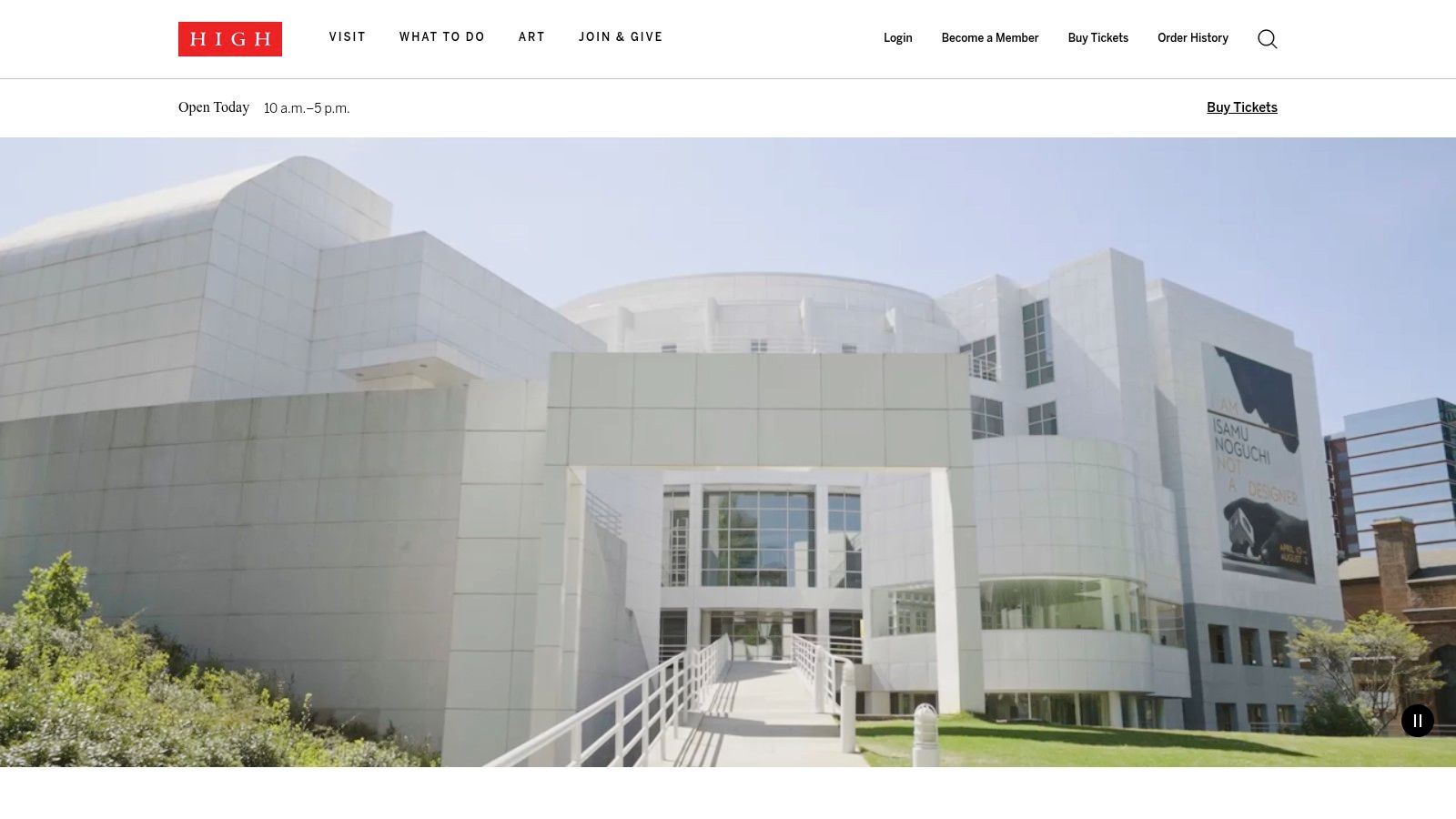
A common Atlanta planning brief sounds like this: senior guests are staying in Midtown, the schedule is tight, and the venue still needs to feel polished enough for a client dinner, board reception, or donor-facing program. The High Museum of Art usually makes the shortlist quickly because it solves several event problems at once. The location is central, the building is visually impressive on arrival, and the museum already knows how to host groups that expect more than general admission.
The High is part of the Woodruff Arts Center, and the museum describes its collection as more than 20,000 works of art in its collection. That matters for planners. A museum with real curatorial depth gives you options beyond a simple walk-through, whether you want a guided highlights tour, a structured educational component, or a reception paired with gallery access.
Best fit for polished Midtown events
This venue works well for executive receptions, university and foundation gatherings, sponsor events, and team outings where the setting needs to carry some of the experience. The architecture helps. Richard Meier’s white exterior and bright interior spaces give even a modest program a more refined ambiance without requiring heavy décor spend.
A few strengths stand out for group planners:
- Midtown convenience: The museum is easier to reach for attendees staying near downtown and Midtown hotels, and it pairs well with MARTA-based itineraries.
- Strong event identity: Guests understand immediately that this is a cultural venue, not a repurposed meeting room.
- Programmable visit: You can build an agenda around docent-led tours, private event space, or a social function tied to current exhibitions.
If your group wants more off-hours activity around the museum stop, this guide to top tourist attractions in Atlanta Georgia helps round out a fuller itinerary.
One caution deserves attention early. If private gallery access is part of the brief, ask about after-hours availability before you build the program around it.
Trade-offs planners should expect
The High is strongest for groups that value atmosphere, central access, and a premium guest impression. It is less ideal when privacy is the top requirement during standard public hours. Public traffic can affect the feel of a corporate event or school visit unless you book space and timing carefully.
Parking is another practical consideration. Paid parking at the Woodruff campus is workable, but congestion can build when multiple arts events overlap on the same evening. For bus arrivals, school groups, and large company outings, that makes arrival timing more important than it would be at a standalone campus museum.
Friday programming can also change the planning equation. Popular evening events add energy, but they can also bring heavier crowds and longer parking queues. For some clients, that buzz is an asset. For others, especially hosts planning a controlled executive experience, it is a reason to choose a quieter time block.
The High remains one of Atlanta’s strongest museum choices for organizations that want substance behind the setting. Its collection areas support serious educational and cultural programming, not just a backdrop for cocktails. For institutions that also handle collections, exhibitions, or asset care, these Professional fine art services offer a useful parallel on managing valuable works professionally.
Website: High Museum of Art
2. Atlanta History Center
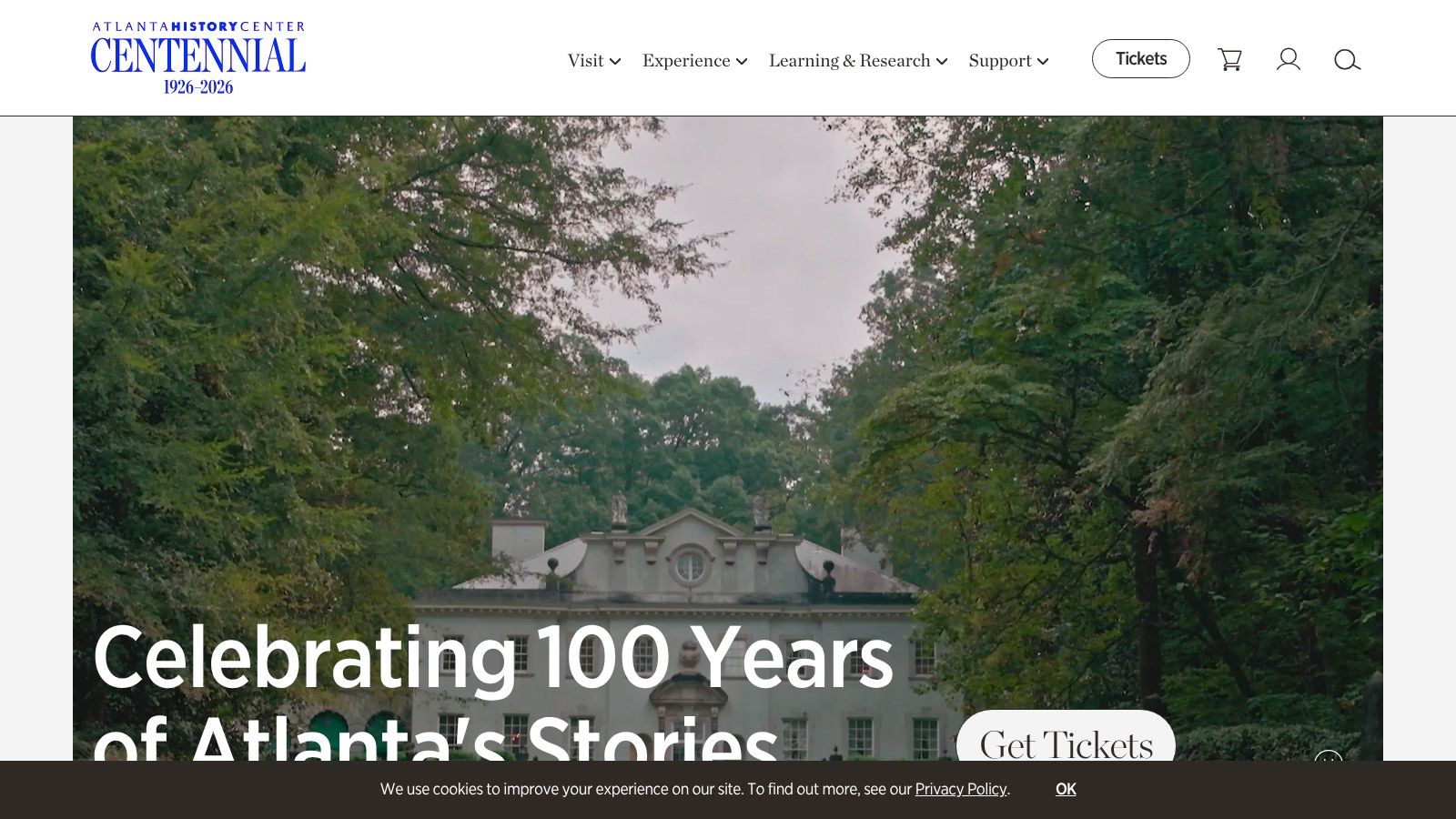
A planning team arrives with a full-day agenda: morning remarks, small-group sessions, a hosted lunch, then an evening reception that still feels connected to Atlanta. The Atlanta History Center handles that kind of program better than many single-building museums because the property gives you multiple environments on one site.
The center sits on a large Buckhead campus with museums, gardens, trails, and historic houses, as outlined on the Atlanta History Center campus map. For corporate planners and school coordinators, that matters more than brochure language. It gives you room to separate arrivals, learning sessions, networking, and social time without sending guests across the city.
Why it fits multi-part group programs
This is one of Atlanta’s better museum options for organizations that need more than a standard gallery visit. Leadership retreats, donor events, university outings, and client programs all benefit from the site’s range of settings.
The practical advantages are clear:
- Multiple venue types: Galleries, outdoor areas, and historic spaces support different tones within one event.
- Better agenda control: It is easier to assign distinct areas for plenaries, breakout discussions, tours, and receptions.
- Executive-friendly location: Buckhead works well for groups staying in nearby hotels or hosting dinners before or after the event.
For planners building a wider itinerary around the visit, this guide to other worthwhile Atlanta activities for group schedules can help fill the open hours around your museum block.
The programming is also useful. Exhibits on Atlanta history, regional identity, and civic change give companies and academic groups material that can support facilitated discussion instead of passive attendance.
One caution matters early. A spread-out property improves program design, but it also increases movement time. If your group includes executives on a tight clock, student groups, or attendees with mobility needs, build in more transition time than you would at a compact downtown museum.
Where the center earns its budget
Atlanta History Center performs best when the setting should contribute to the message. Swan House, the historic houses, and the broader campus create a stronger sense of place than a hotel ballroom or standard meeting venue. That makes it a smart choice for organizations that want Atlanta context built into the event itself.
The museum’s exhibition and research resources also support educational depth. School and university groups can pair gallery time with place-based learning. Corporate teams can use the site for leadership or strategy sessions where the environment feels more thoughtful than a conventional off-site.
The trade-off is cost and coordination. Buckhead pricing can push event budgets higher, and a campus-style venue asks more from the planner. Signage, guest communication, and weather backup plans all need attention. The Margaret Mitchell House is also a separate property, so planners should not assume all Atlanta History Center assets are part of one walkable event footprint.
Before you book, confirm current admission, operating hours, group tour procedures, motorcoach access, and private rental availability directly through the Atlanta History Center. For daytime group visits, that step prevents the most common problem I see with museum events: building a strong agenda around assumptions that do not match the site’s actual event window.
3. National Center for Civil and Human Rights
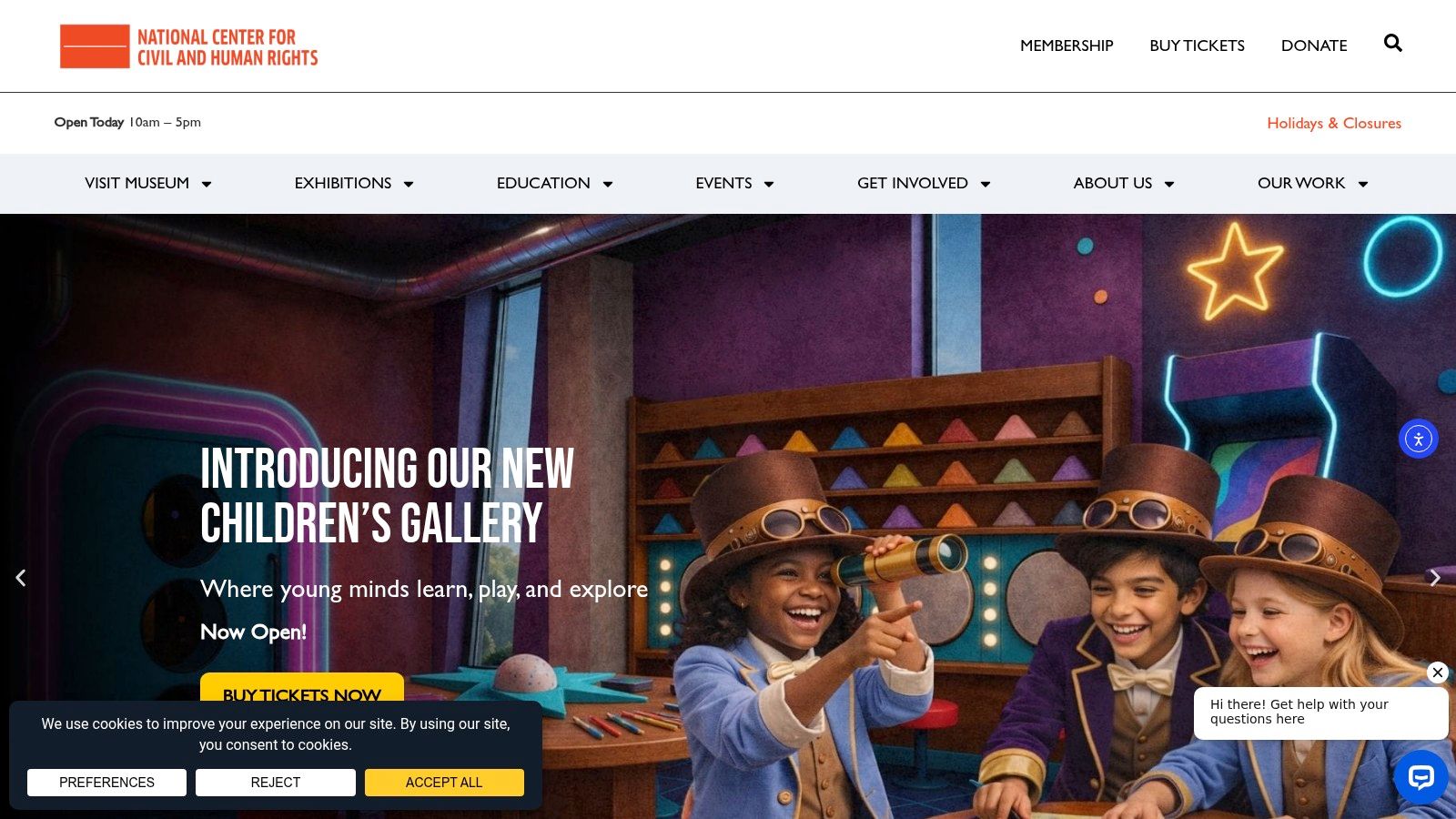
Some venues are memorable because they’re beautiful. This one is memorable because it asks something of the audience. For companies planning leadership programs, ERG gatherings, board sessions, or values-driven client events, the National Center for Civil and Human Rights can create a stronger impression than a conventional event venue.
That strength is also the caution. This isn’t passive background programming. If the group arrives expecting light entertainment, the fit can feel off.
Best for mission-driven corporate programming
The downtown location works well for organizations bringing in guests from outside Atlanta. Hotels, restaurants, and nearby attractions reduce transport friction, which matters when part of your attendee list is flying in for a short stay.
This museum is particularly effective for:
- Leadership retreats: Exhibits can anchor discussion around ethics, responsibility, and decision-making.
- DEI and ERG events: The setting gives those conversations weight that a hotel meeting room can’t match.
- University and nonprofit groups: Mission-oriented audiences often engage more fully here than at broader general-interest venues.
If you're building a full downtown schedule, this guide to the best things to do in Atlanta GA can help fill gaps around the main program.
The main trade-off is emotional intensity
For the right audience, that intensity is exactly why the museum works. It creates a setting where post-visit discussion feels necessary, not performative. That can make it one of the strongest choices in this list for leadership teams that want substance.
For mixed corporate audiences, though, framing matters. Planners should prepare moderators, brief speakers, and avoid treating the museum as just another scenic event backdrop. A rushed cocktail hour after a heavy gallery experience can feel mismatched.
Shared parking in downtown decks is another practical constraint. Guests usually manage it fine, but it's less self-contained than venues with dedicated lots. Build in walking time, clear arrival instructions, and a stronger pre-event communication plan.
The museum works best when the program acknowledges where guests are. Build in transition time after gallery experiences before launching into the next agenda item.
Website: National Center for Civil and Human Rights
4. Fernbank Museum of Natural History
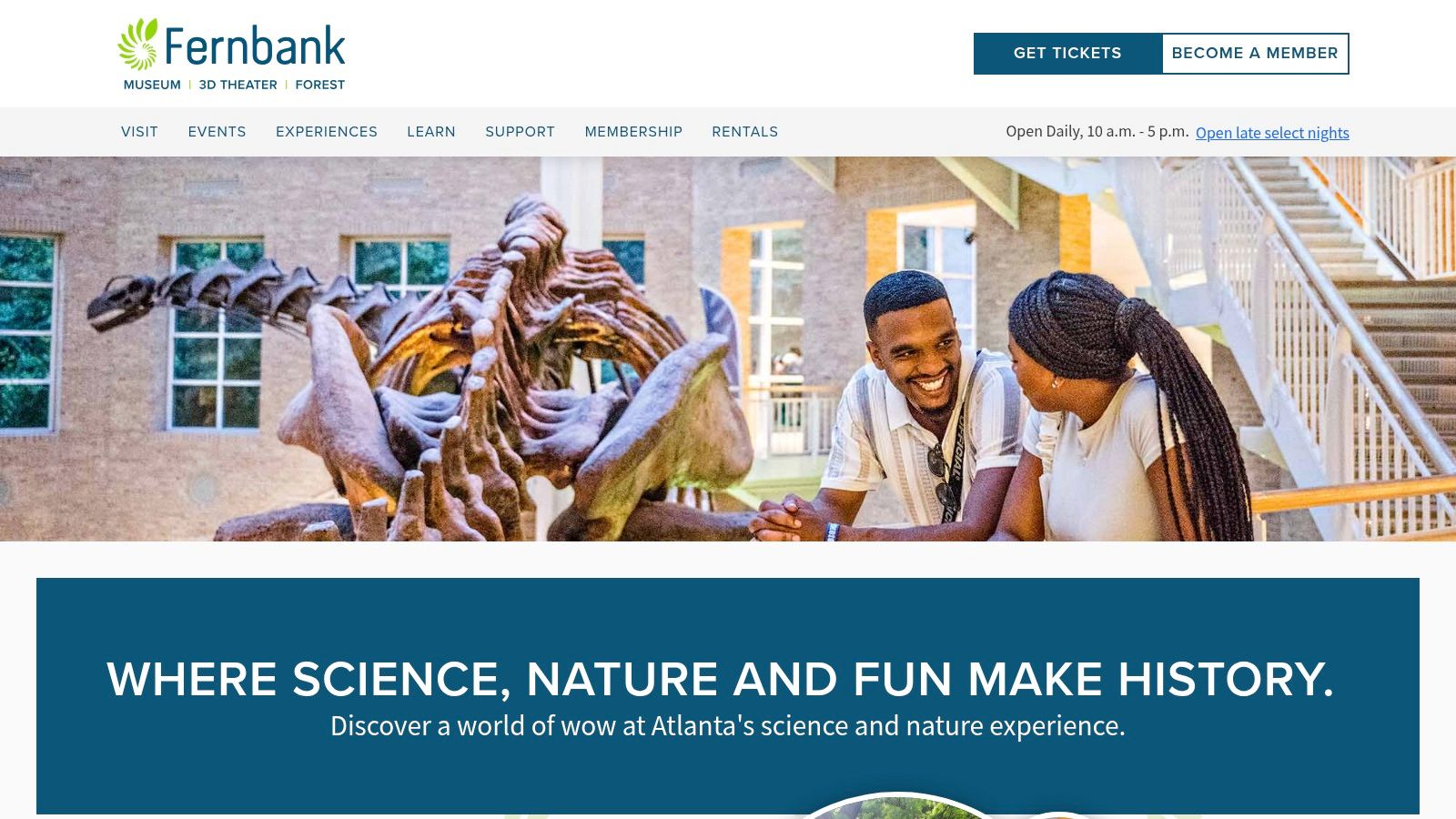
Fernbank is one of the easiest museums in Atlanta to program for broad audiences. If your guest list includes employees, spouses, kids, educators, or community partners, it does something many museums don’t do as well. It accommodates different energy levels without making the event feel diluted.
The indoor exhibits give you structure. The outdoor areas give people room. That combination solves a lot of planning problems.
Where Fernbank stands out
Fernbank is a strong option for family-friendly company outings, school-related events, donor programs, and less formal team gatherings. It’s also one of the better picks when you need a venue that doesn’t force everyone into the same mode of participation.
Its biggest strengths are practical:
- Outdoor plus indoor flexibility: The museum combines exhibits with 75 acres of outdoor nature experiences.
- Simple parking: Free on-site parking reduces one of the most common museum-event headaches.
- Strong casual appeal: Dinosaur halls, nature trails, and after-hours adult programming give you several event styles to choose from.
For planners organizing events that include employees’ households, these family-friendly things to do in Atlanta can help shape a broader family weekend.
Real planning trade-offs
Fernbank is less central than Midtown and downtown options, and it isn't directly on MARTA rail. That matters if a large share of your attendees won’t be driving. You may need shuttles, rideshare coordination, or a stronger transportation note in your invitation.
The other issue is traffic inside the museum. School groups and families are part of what makes Fernbank lively, but they also affect noise levels and pacing. If your event depends on uninterrupted flow or a quieter executive feel, you’ll need to pay close attention to timing and rental structure.
The upside is that the venue supports several distinct formats without feeling awkward. A daytime educational outing works here. So does an evening social event. So does a mixed-age gathering where some people want exhibits and others want fresh air and conversation.
Plainly put, Fernbank is one of the least brittle museum choices in Atlanta. It can absorb a lot of attendee variation without breaking the event.
Website: Fernbank Museum of Natural History
5. Center for Puppetry Arts – Worlds of Puppetry Museum
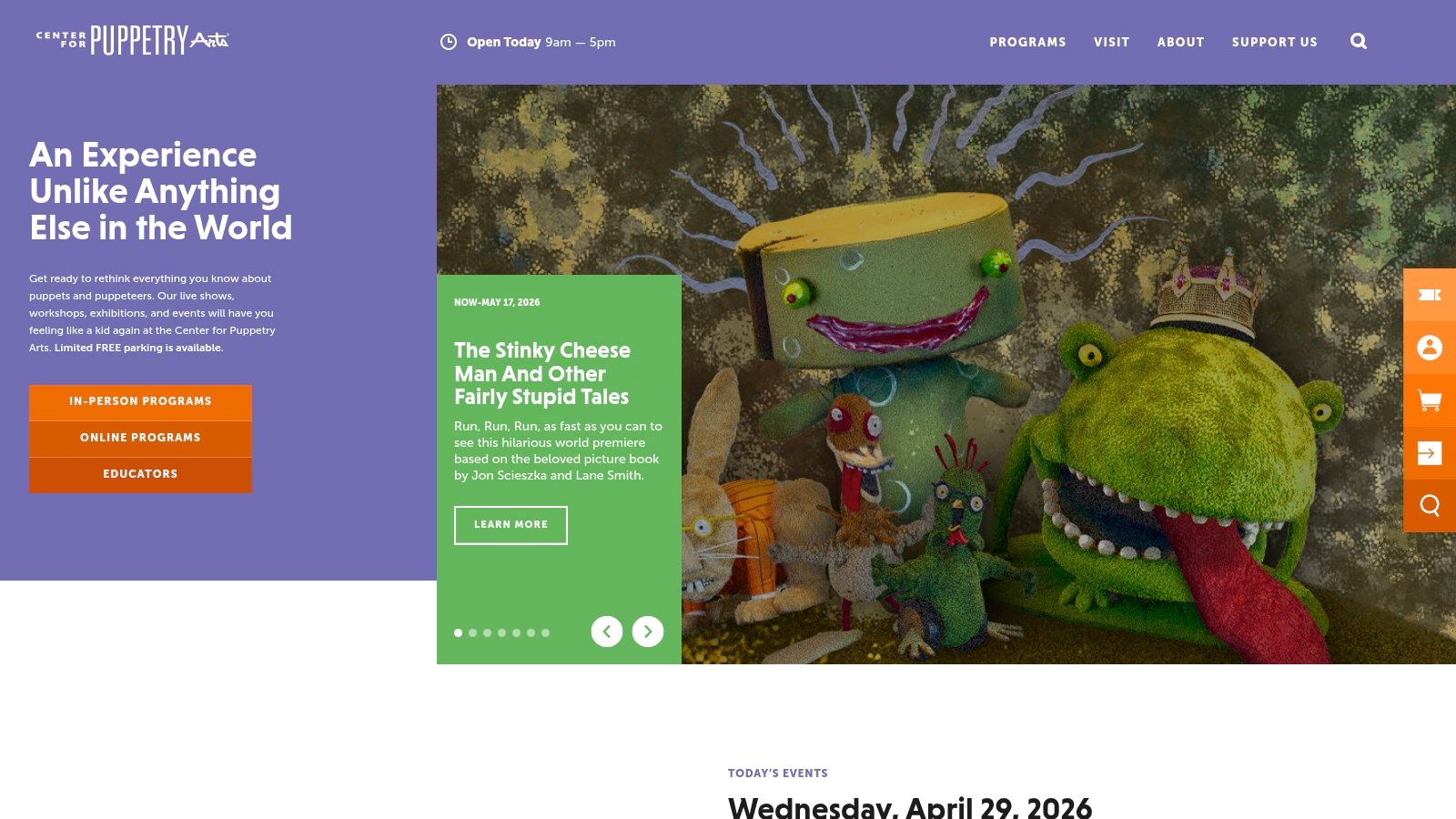
Most museum events fail in one predictable way. They’re pleasant, but no one talks about them later. The Center for Puppetry Arts avoids that problem because the experience is unusual enough to stick.
This is not the venue for a stiff executive dinner. It is a strong venue for creativity workshops, employee appreciation events, client entertainment with personality, and smaller groups that benefit from interaction rather than passive observation.
Why smaller groups often do better here
The Worlds of Puppetry Museum can work especially well for marketing teams, learning and development groups, school administrators, and organizations trying to loosen up a program without making it feel unserious. The Jim Henson material gives the venue broad recognition, while the workshop model adds something guests can do.
That matters. Activity-based events are often easier to remember because attendees participate instead of just circulating.
A few strengths make this museum useful:
- Interactive programming: Create-A-Puppet sessions give teams a built-in collaborative exercise.
- Distinctive identity: The venue doesn’t feel interchangeable with any other museum on this list.
- Midtown location: Access is easier than many niche venues with similarly specialized programming.
What works and what doesn’t
This museum is best when the event embraces its tone. If your internal culture is rigidly formal, the venue can feel like a mismatch. If your team values storytelling, design, education, media, or hands-on collaboration, it usually lands well.
The biggest limitation is scale. Spaces tend to suit small to midsize groups better than very large all-hands functions. Scheduling also matters because family-oriented programming can shape the atmosphere if you book at the wrong time.
That doesn’t make it less useful. It just means the planner needs to be intentional. Pair a private workshop with a museum visit and a short reception, and the outing feels curated. Try to force it into a large generic corporate template, and its strengths fade.
Website: Center for Puppetry Arts
6. Delta Flight Museum
If you need one museum on this list with immediate wow factor, this is probably it. The Delta Flight Museum has a built-in advantage that standard cultural venues can’t replicate. Guests remember the aircraft.
That makes it especially useful for transportation companies, travel-related businesses, logistics firms, engineering teams, and any event where innovation and movement fit the message. It also helps when many attendees are flying in and you want to keep ground transfers simple.
Best use cases for airport-area groups
The location near Hartsfield-Jackson is a genuine planning advantage for short-format corporate events. You can host a reception or program without forcing out-of-town guests deep into the city, then move them back to airport hotels with less friction.
The museum also works well for:
- Industry events: Aviation, supply chain, and technology audiences usually connect with the venue immediately.
- Client entertainment: Historic aircraft create a stronger conversation starter than a standard private dining room.
- Interactive team outings: Simulator and VR elements can add optional activity layers for smaller groups.
If you’re coordinating an airport-adjacent schedule, this list of the best restaurants in Atlanta GA may help with pre- or post-event dining.
The operational trade-off
This venue sits on a corporate campus environment, and that changes the planning style. Guests typically need clear arrival instructions, advance booking, and careful communication around access expectations. If your team tends to book late or improvise logistics, this isn’t the easiest option.
The museum rewards planners who like structure. With good pre-event communication, it can feel smooth and highly distinctive. Without that prep, confusion at arrival can undercut the experience.
It’s also worth noting that interactive elements like simulator sessions are best treated as enhancements, not core event flow for large groups. They’re strong for breakout-style engagement but can become a bottleneck if everyone expects the same experience at once.
Website: Delta Flight Museum
7. Jimmy Carter Presidential Library and Museum
Some events need energy. Others need gravitas. The Jimmy Carter Presidential Library and Museum is better for the second category.
For nonprofit boards, public sector groups, universities, healthcare leadership teams, and organizations hosting discussion-centered programs, this venue offers a setting that naturally supports themes like service, diplomacy, leadership, and civic responsibility. It feels quieter than many Atlanta event spaces, and that can be a real advantage.
Why it works for reflective programs
The museum’s location gives it a park-like feel that helps guests focus. That matters for groups that want conversation, not distraction. The venue also supports several event formats, from formal sessions in a theater setting to receptions that benefit from the inviting grounds.
This museum can be especially effective for:
- Board meetings and retreats: The atmosphere supports concentration better than louder social venues.
- Academic and policy events: The subject matter lends itself to discussion-heavy agendas.
- Leadership programs: Exhibits on public service and global engagement create a useful thematic backdrop.
Limits planners should factor in
The same qualities that make this venue strong also make it less flexible for some event styles. It’s not the right fit for high-volume social energy, and organizations should expect that a federal facility may come with extra protocols or restrictions.
That isn’t a problem if you’re planning accordingly. It is a problem if you assume it functions like a private event venue with few boundaries. Museum hours can also push private events toward after-hours scheduling.
For the right audience, though, this is one of the strongest settings in Atlanta for thoughtful programming. It creates the kind of room where speakers can slow down, guests can engage, and the venue supports the message instead of competing with it.
Website: Jimmy Carter Presidential Library and Museum
Top 7 Atlanta Museums Comparison
For planners, the right museum is less about popularity and more about fit. Guest count, parking, privacy, vendor access, program tone, and after-hours availability usually decide whether an event runs cleanly or turns into a coordination problem.
Use this comparison to match each venue to the kind of group experience you are building.
| Venue | Implementation Complexity 🔄 | Resource Requirements ⚡ | Expected Outcomes ⭐📊 | Ideal Use Cases 💡 | Key Advantages ⭐ |
|---|---|---|---|---|---|
| High Museum of Art | Moderate. Private gallery events often require after-hours scheduling and close vendor coordination | Medium. Dedicated group sales support, established vendor relationships, and paid parking options | High prestige, strong visual impact, and credible cultural programming for client-facing events ⭐📊 | Client receptions, galas, curated professional tours | Recognizable architecture, flexible event spaces, and experienced on-site coordination |
| Atlanta History Center | High. Multi-venue scheduling across a large campus requires careful guest flow, transportation planning, and timing control 🔄 | High. Advanced A/V, catering coordination, parking or valet, and experienced event staff ⚡ | Large-format events that can support layered agendas, immersive settings, and dependable operations ⭐📊 | Conferences, multi-session events, large corporate functions | Multiple distinct venues, extensive event support systems, and capacity for complex programs |
| National Center for Civil and Human Rights | Moderate. Best results come from thoughtful framing, audience preparation, and program design that fits the subject matter 🔄 | Medium. Advanced A/V, timed-entry tour planning, and downtown parking coordination ⚡ | Meaningful engagement that supports leadership discussion, values-based programming, and DEI objectives ⭐📊 | DEI trainings, leadership retreats, ERG summits | Mission-driven content, modern facilities, and a central downtown location |
| Fernbank Museum of Natural History | Moderate. Indoor and outdoor programming needs weather planning, staffing coordination, and schedule discipline 🔄 | Medium. Giant Screen rental options, ample free on-site parking, and flexible event support ⚡ | Exploratory, family-friendly group experiences with broad age appeal and easy arrival logistics ⭐📊 | Team-building, family picnics, private screenings | Indoor and outdoor flexibility, free parking, and a nature-focused setting |
| Center for Puppetry Arts | Low to Moderate. Smaller rooms and program-specific scheduling work best for focused groups with defined agendas 🔄 | Low. Workshop materials, small theater rentals, and limited staffing needs ⚡ | Interactive, creative experiences that work especially well for smaller teams and hosted guest groups ⭐📊 | Create-a-Puppet workshops, small team-building sessions, client entertainment | Distinctive hands-on programming, the Jim Henson collection, and a strong creativity angle |
| Delta Flight Museum | Moderate to High. Security procedures, simulator reservations, and airport-area timing need early coordination 🔄 | High. Specialized equipment, transportation planning, and advance bookings for premium experiences ⚡ | Strong experiential impact with high novelty and clear appeal for travel, innovation, and sales events ⭐📊 | Aviation-themed receptions, travel-sector events, conferences with flying attendees | Historic aircraft settings, airport proximity, and interactive simulators |
| Jimmy Carter Presidential Library and Museum | Low to Moderate. Federal protocols and after-hours requirements can shape setup, security, and event timing 🔄 | Medium. Theater and outdoor space access, landscaped grounds, and free parking ⚡ | A thoughtful, distinguished setting suited to leadership discussion, policy programming, and formal gatherings ⭐📊 | Board meetings, academic symposiums, diplomatic receptions | Strong alignment with leadership and public service themes, plus quiet grounds that support focused events |
A simple rule helps here. If the event needs high energy and visual impact, start with the High Museum or Delta Flight Museum. If the agenda depends on discussion, reflection, or institutional credibility, the National Center for Civil and Human Rights, Atlanta History Center, and Jimmy Carter Presidential Library and Museum usually give planners a stronger fit.
From Planning to Partnership Your Atlanta Museum Event Guide
A planner booking a museum event in Atlanta usually has two deadlines at once. One is the event date. The other is the point when transportation, catering, security, A/V, and guest flow become hard to change. The museums in this guide can support polished corporate programs, student visits, and donor or client functions, but the strongest outcomes come from treating the venue decision as an operations decision, not just a programming choice.
A Midtown half-day at the High Museum of Art works well for executive hosting, creative team sessions, or partner entertainment. One practical format is a 1:00 p.m. arrival, a guided gallery experience at 1:15 p.m., a discussion block at 2:30 p.m., and a reception at 4:00 p.m. That schedule keeps the event focused and gives guests enough structure without making the museum feel like a conference room with art on the walls.
For a full-day program, the National Center for Civil and Human Rights is often a stronger fit for leadership development, educator groups, and values-based discussion. Breakfast and opening remarks can lead into gallery time, followed by a catered lunch and a moderated afternoon session. The trade-off is pacing. If attendees are expected to reflect on weighty material, the schedule needs quiet time and facilitation support, not back-to-back presentations.
Practical planning points that matter most
Before confirming a date, contact the museum’s group sales or private events team and verify what the space can support.
- Start with the operations contact: Ask about hold policies, minimums, setup windows, staffing, and whether your date overlaps with major public programs or exhibitions.
- Map arrivals in detail: Confirm parking capacity, charter bus access, rideshare drop-off procedures, and whether MARTA access is realistic for your group size and timing.
- Clarify vendors early: Some museums require approved caterers, exclusive beverage service, or in-house technical support. That can simplify coordination, but it can also limit budget flexibility.
- Ask direct accessibility questions: Public overviews rarely cover route changes, elevator access, seating availability, sensory considerations, or accommodation procedures in enough detail for group planning. Discover Atlanta’s museum overview is a useful starting point, but planners should still confirm specifics with venue staff.
Atlanta also has institutional depth that supports group programming. According to CauseIQ’s directory of museums in the Atlanta-Sandy Springs-Alpharetta metro area, the region includes a large base of museum organizations with substantial staffing, revenue, and assets. For planners, that matters because it signals real operating capacity. Many of these institutions are equipped to handle school groups, association events, sponsor functions, and corporate gatherings with the discipline expected from established venues.
The business case is straightforward. Museums can support client hospitality, team experiences, donor cultivation, and educational programming in settings that carry more character than a standard hotel meeting room. In a city with a strong visitor economy and a well-established cultural sector, that makes museums a practical option for business travel and hosted events, not just leisure itineraries.
Choosing a museum venue is a brand and logistics decision at the same time. The setting shapes how guests experience the program, and the operating requirements shape how much work your team carries. The same planning discipline applies to physical technology assets. As organizations retire laptops, servers, networking gear, or office equipment during moves and upgrades, secure disposition needs a clear process. For certified data destruction and responsible electronics recycling, Atlanta Computer Recycling provides that support. If your team is also comparing off-site venue options, these versatile event space options can complement a museum-first event strategy.
If your organization is planning an office move, hardware refresh, school IT cleanup, hospital equipment retirement, or data center decommissioning, Atlanta Computer Recycling can help you handle it securely and responsibly. ACR supports Atlanta-area businesses, healthcare organizations, schools, and public agencies with business-focused electronics recycling, certified data destruction, and efficient pickup for bulk IT assets.