Discover Top Tourist Attractions In Atlanta Georgia

Your CEO lands at Hartsfield-Jackson in the morning, takes two customer meetings by midafternoon, and still has a window to host dinner or show a visiting partner something that feels distinctly Atlanta. In that kind of schedule, attractions are not filler. They are tools for setting tone, buying conversation time, and giving clients or executives a better impression of the city than another private dining room can.
Atlanta is well suited to that job. The downtown core supports tight scheduling for conference guests and first-time visitors. Midtown gives planners a more refined option for smaller executive groups, recruiting visits, and client programs that need less convention traffic and more breathing room. The best choices depend on the outcome you want, not just the attraction’s name.
For business travel, that distinction matters. A strong attraction can keep a mixed client group engaged, help a sales team host without overproducing the evening, or give senior leaders a setting that feels intentional rather than improvised. A poor fit creates friction with transportation, crowd flow, timing, and conversation.
Atlanta’s visitor economy is large enough that the city has the hospitality infrastructure to support group movement, event logistics, and polished guest experiences, as noted by Discover Atlanta’s tourism overview. That scale is useful for planners. It usually means better venue coordination, more reliable transportation options, and attractions that are used to serving corporate groups.
This list evaluates top tourist attractions in Atlanta through that business lens. The focus is practical use. Which venues work for client entertainment, which ones suit team-building, which ones impress visiting executives, and where the trade-offs show up once timing, access, and group mix become real constraints. If your itinerary also includes outdoor executive hosting, golf tournaments in Atlanta can complement a broader client program, and companies planning sustainability-themed events may also want local resources on environmentally responsible electronics recycling in Atlanta.
1. Georgia Aquarium
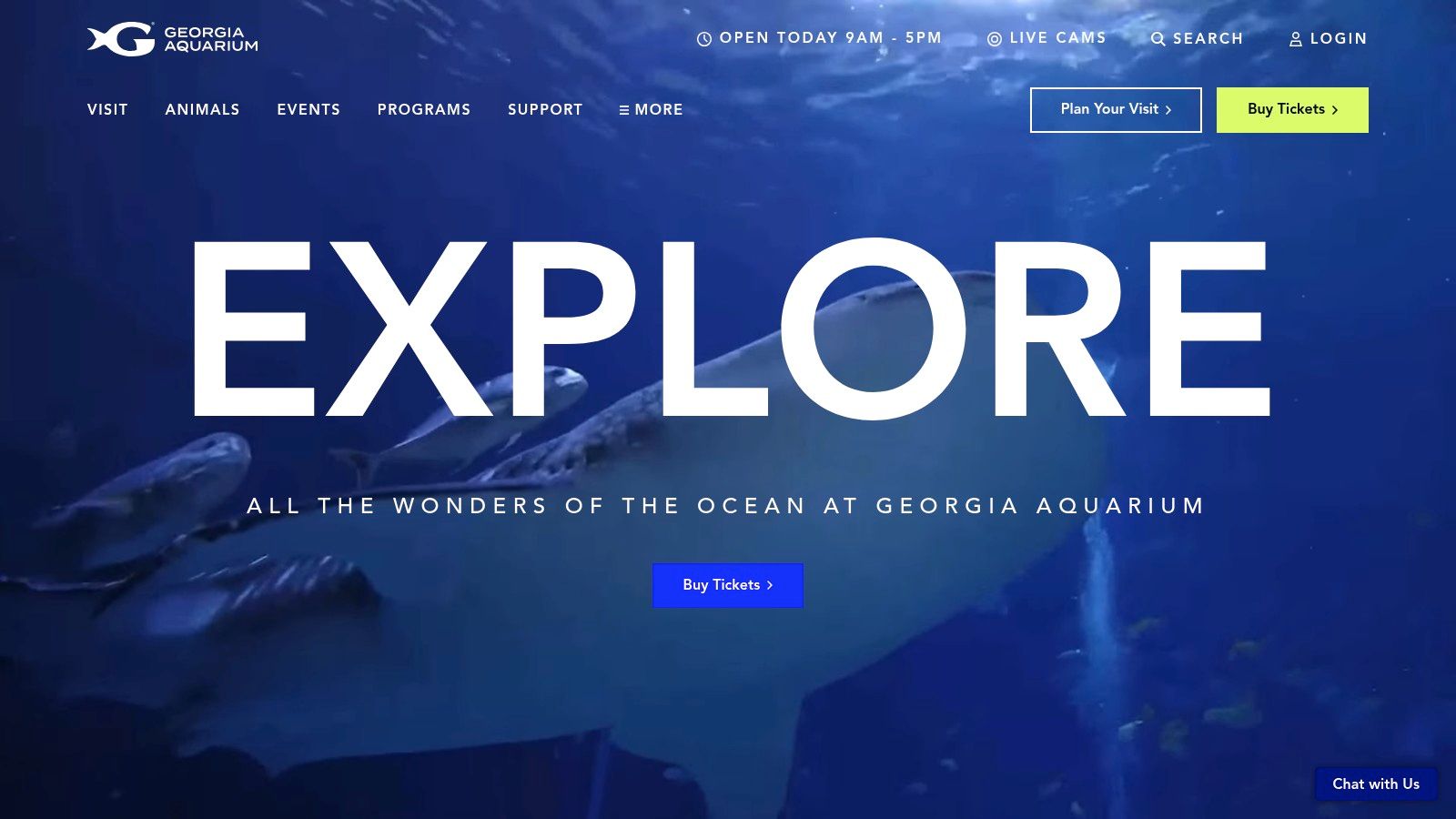
A common Atlanta hosting problem looks like this: your client group has 90 minutes free downtown, half the attendees want something memorable, and nobody wants an itinerary that feels forced. Georgia Aquarium solves that problem better than almost any attraction in the city. It gives visiting executives a clear Atlanta experience, works for mixed-interest groups, and carries enough prestige to justify the calendar space.
Its business value starts with recognition. Georgia Aquarium was founded through a major gift from Bernie Marcus, a point the aquarium highlights in its own history and founder information. For planners, that matters because the venue already has status with out-of-town guests. You are not asking clients to trust your taste on an obscure local pick. You are booking a known flagship attraction.
Best use for corporate visitors
This works best for client entertainment, conference side programming, and executive hosting where the group mix is broad. It also performs well when spouses or family members are part of the trip. Few Atlanta attractions can hold attention across that many audiences without heavy coordination from your team.
The main trade-off is noise and foot traffic. If your objective is relationship-building, use the aquarium as the shared experience, then schedule the actual business conversation over dinner or in a quieter lounge nearby. Trying to hold serious deal discussion on the busiest exhibit path usually wastes the opportunity.
Early slots tend to work better.
The scale is part of the draw. Georgia Aquarium states that it holds more than 11 million gallons of water and supports a large collection of habitats and marine species. That translates into real wow factor for first-time visitors, which is useful when you need an event setting that feels substantial without becoming complicated to explain or sell internally.
Use it when you need:
- Broad appeal: Good for clients, recruits, conference guests, and accompanying family members.
- A strong first impression: The venue feels deliberate and high-caliber.
- Downtown compatibility: It fits well with hotels, restaurants, and other Centennial Park district stops.
Skip it if:
- Private conversation is the priority: Crowds and ambient noise get in the way.
- Your group dislikes popular attractions: Busy periods can feel compressed.
- You need the lowest-cost outing: Parking, premium encounters, and group add-ons can increase spend fast.
For operations teams already coordinating meetings in town, it can also be efficient to pair the visit with practical tasks such as environmentally responsible electronics recycling services in Atlanta so the trip supports both hospitality and back-office needs.
2. World of Coca‑Cola
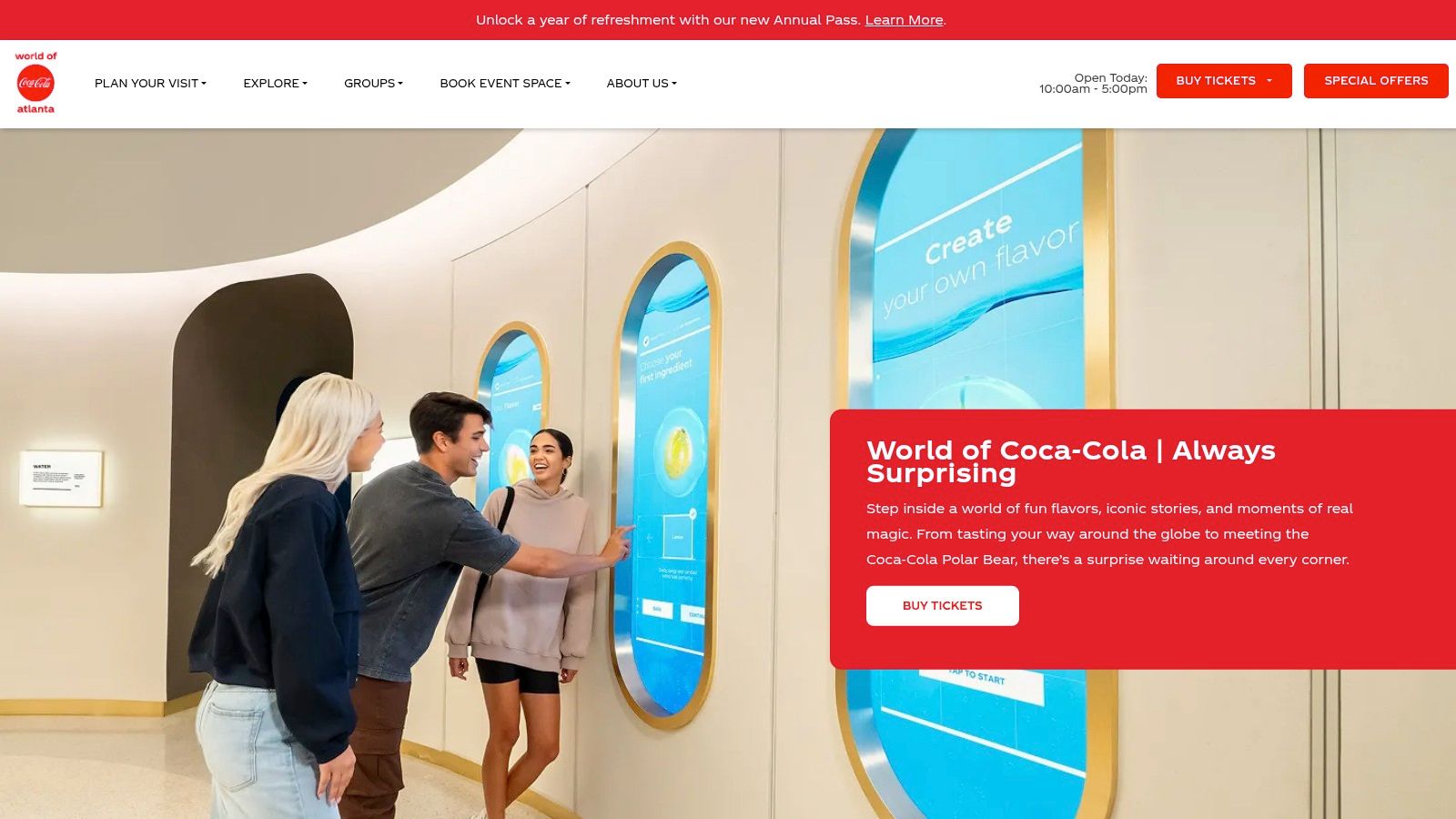
World of Coca‑Cola is a cleaner fit for tight itineraries than many planners expect. It’s brand-forward, polished, and easy to complete without committing half a day. If your visiting group has a narrow window between meetings, this is one of the simplest attractions to slot in.
That shorter duration is its biggest strength. Some attractions ask guests to mentally “shift gears” and settle in. Coca‑Cola’s museum experience doesn’t. People can engage at their own pace, sample the interactive pieces, and move on without feeling rushed.
Where it fits best
This is strongest for out-of-town executives, sales prospects, and conference attendees who want a recognizable Atlanta stop but don’t need a deep educational experience. It’s especially useful when you’re managing a group with uneven attention spans. Some people will enjoy the brand history. Others will mainly remember the tasting room and central location.
The downside is obvious. If your guests dislike overt branding, this can feel commercial. That doesn’t make it a poor choice. It just means you should know your audience before booking around it.
A practical approach is to use World of Coca‑Cola as a midday connector. Put it between lunch and another downtown venue, or use it to occupy an arrival day when the team doesn’t have enough time for a larger outing.
Trade-offs for planners
The downtown location in Pemberton Place is a real operational advantage. You’re not asking rideshares or charter transport to bounce around the city for a relatively short stop. That saves friction, which matters when your attendees are already moving between hotels, offices, and dinner reservations.
Here’s where it performs well:
- Short scheduling windows: Works when you only have part of an afternoon.
- Low-effort hosting: Easy for guests to understand and enjoy without much setup.
- Bundle planning: Nearby attractions let you build a half-day program.
Where it falls short:
- High-substance relationship building: It’s more fun than meaningful.
- Quiet networking: The busy tasting areas can get loud.
- Experienced local guests: Longtime Atlantans may not find it memorable.
This is a better “keep the itinerary moving” attraction than a signature relationship-building venue.
For a lot of companies, that’s enough. Not every outing needs to be profound. Sometimes the right answer is a well-run, centrally located experience that keeps clients entertained and on schedule.
3. Atlanta Botanical Garden
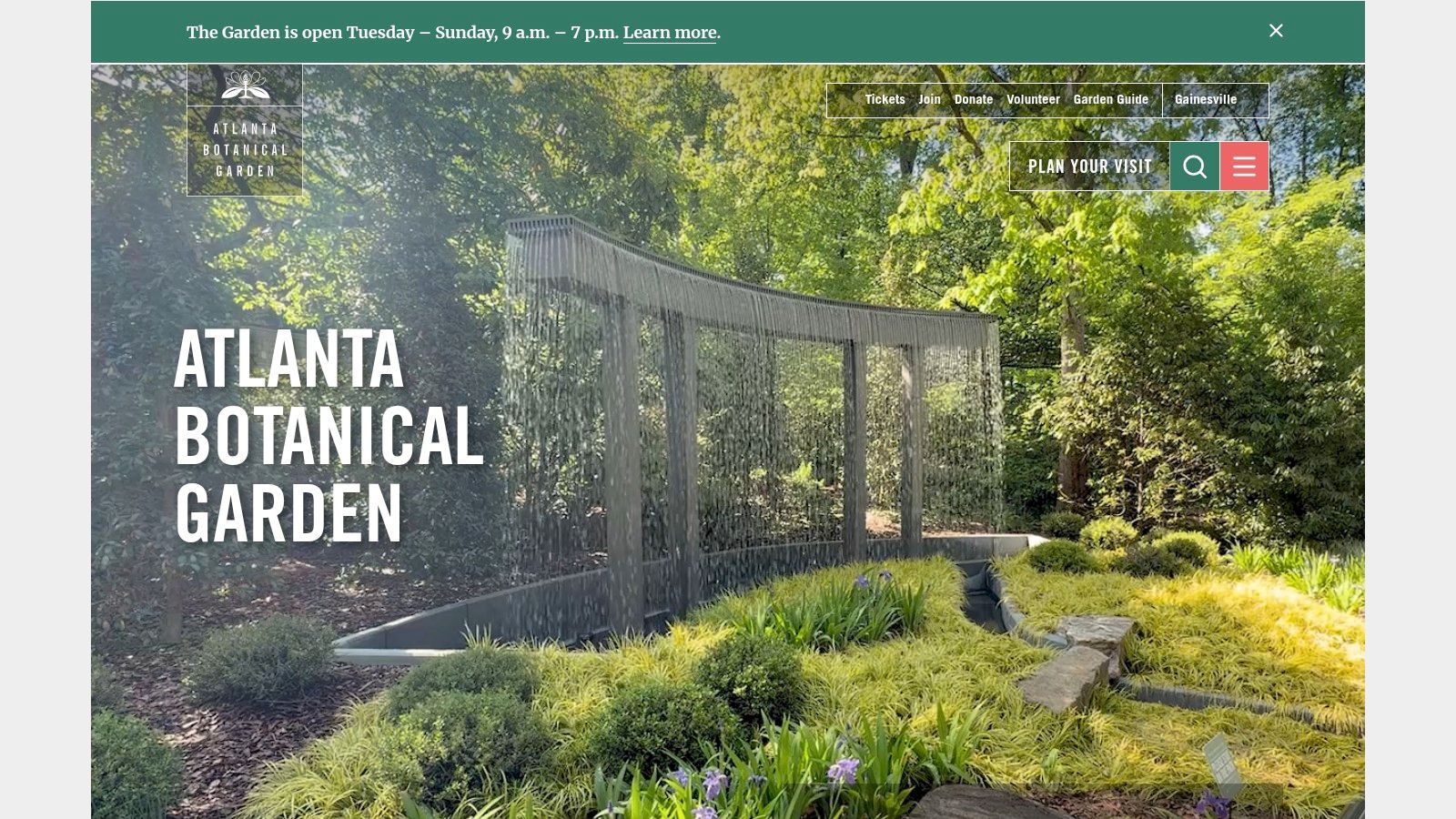
A client flies in for a Midtown meeting, dinner is already booked, and you need one stop that feels polished without eating half the day. Atlanta Botanical Garden fits that slot well. It gives visiting executives a calmer, better-designed setting than many downtown attractions, which makes it useful for relationship-focused hosting, informal conversation, and small-group hospitality.
Its Midtown position is part of the value. The garden connects easily to nearby hotels, restaurants, and Piedmont Park, so planners can build a clean itinerary without sending guests across the city. The site itself is large enough to feel like a real outing, but still contained enough to manage on a business schedule.
Best business use case
The garden works best when the objective is quality of interaction. Senior hires, board visitors, investor prospects, and clients who prefer a more refined environment usually respond better here than they do in louder, more brand-driven venues. The paths, seasonal displays, and well-kept event spaces create a setting where conversation can carry the experience.
One detail guests tend to remember is the Kendeda Canopy Walk at Atlanta Botanical Garden, which moves visitors through Storza Woods above the forest floor. That gives hosts a distinctive talking point and good photo opportunities without turning the outing into a strenuous activity block.
Trade-offs for planners
This is a stronger choice for small and mid-sized groups than for large convention traffic. Timed entry, seasonal crowds, and special events can affect how freely your group moves through the property. For important visits, confirm entry windows early and decide in advance whether guests should arrive by rideshare, charter, or private car.
Use it when you want:
- A conversation-friendly setting: Better suited to client hosting and executive visits than high-noise attractions.
- A Midtown schedule: Easy to pair with lunch, dinner, or another cultural stop.
- A polished visual backdrop: Helpful for hosted visits, donor cultivation, and executive spouse programs.
Watch for:
- Weather exposure: Parts of the visit work best in mild conditions, especially for guests in business attire.
- Event-night congestion: Popular installations and evening programs can change the pace.
- Separate dining coordination: Check current food service options before treating it as a full hospitality venue.
The adjacency to Piedmont Park Conservancy adds flexibility if you need a short walk before dinner or extra buffer time between meetings. It also supports a broader Atlanta story around urban green space and city stewardship. For companies that want to connect that message to operations, this Fulton County IT disposal guide for commercial operations is a practical local resource. If your guests take an interest in the city’s canopy and plant life, common tree types Atlanta is a useful follow-up.
4. Martin Luther King, Jr. National Historical Park
Martin Luther King, Jr. National Historical Park is not a casual entertainment stop. It’s a values-driven choice. When used well, it signals that your company understands Atlanta as more than a backdrop for meetings and conventions.
That matters for board visits, university partnerships, nonprofit relationships, DEI-centered team programs, and recruiting weekends where culture is part of the conversation. This site can frame Atlanta in a serious, grounded way that sports and brand attractions can’t.
Best business use case
Use this park when the goal is reflection, context, and substance. The site includes Dr. King’s birth home block, historic Ebenezer Baptist Church, and visitor center exhibits focused on the Civil Rights Movement. That combination gives hosts a meaningful way to introduce the city to first-time executives, especially those making decisions about investment, relocation, or long-term partnerships.
It’s also easier to justify on a business itinerary because admission to the park sites is free. Cost isn’t the planning issue here. Scheduling is. Some components use timed access, and the multi-site layout means your group will spend part of the visit moving outdoors between buildings.
Bring groups here only if you can give the visit enough space. Rushing through it between lunch and a flight weakens the experience.
Strengths and limits
The strongest argument for this attraction is depth. Atlanta’s business identity is tied to civil rights history, civic leadership, and institutional legacy. This park helps visiting professionals understand that context in a way that feels direct and credible.
Still, not every corporate group is right for it. If the outing is supposed to be light, social, or celebratory, choose something else. This is better for intentional programs than for default entertainment.
Consider it if you need:
- A values-oriented itinerary: Strong fit for mission-driven organizations.
- Educational impact: Useful for universities, healthcare groups, and civic partnerships.
- A free but high-value stop: Good for mixed-budget planning.
Be careful if:
- The group has very limited time: The site deserves a slower pace.
- You need tightly controlled indoor logistics: There are short outdoor transitions.
- You’re planning a purely celebratory event: The tone may not match.
For operations teams coordinating broader facility shutdowns or relocations while executives are in town, Fulton County IT disposal guidance for commercial operations can be folded into the trip planning on the practical side.
5. National Center for Civil and Human Rights
The National Center for Civil and Human Rights works well when you want a serious downtown venue but need more structured curation than the King historical park provides. It connects the U.S. Civil Rights Movement to broader human rights issues, which makes it useful for executive groups that want context, not just sightseeing.
This is one of the better choices for corporate teams that value discussion afterward. The exhibits are designed to provoke response. That gives facilitators, HR leaders, or event organizers a natural bridge into dinner conversation, leadership sessions, or internal workshops.
Why planners choose it
Location is one reason. The center sits in the downtown attraction cluster, near several other major stops, so it’s easy to build into an efficient hospitality schedule. The other reason is tone. It’s thoughtful without being sprawling, and immersive without becoming entertainment-first.
That makes it especially effective for law firms, universities, healthcare organizations, public sector groups, and companies that want a more purposeful client itinerary. If you’re hosting a purely leisure-focused audience, it may feel heavier than they expect. For the right group, though, that seriousness is the point.
A practical issue to note is transportation for larger groups. There’s no on-site bus parking, so marshalling has to be handled elsewhere. Event planners should sort that out before guests arrive rather than trying to improvise curbside.
What it does better than nearby attractions
It gives downtown Atlanta intellectual weight. A lot of visitor itineraries stack novelty and convenience. This center adds credibility. That can matter if your company wants the visit to reflect institutional values, not just hospitality polish.
Use it for:
- DEI-oriented team outings: The content supports meaningful internal discussion.
- Executive education style visits: Strong fit for leadership cohorts and board groups.
- Downtown half-day programs: Pairs well with other nearby attractions.
Less ideal for:
- Very young family groups: Adults and older students tend to get more from it.
- Large buses without transport planning: Access takes coordination.
- Guests looking for light entertainment: This is a museum with emotional weight.
A downtown agenda feels more complete when at least one stop carries historical or civic substance.
For local businesses working through compliance, sustainability, and guest programming at the same time, the Fulton County Chamber of Commerce page for Atlanta Computer Recycling is relevant if your visit also includes office, facility, or equipment disposition planning.
6. Atlanta Beltline
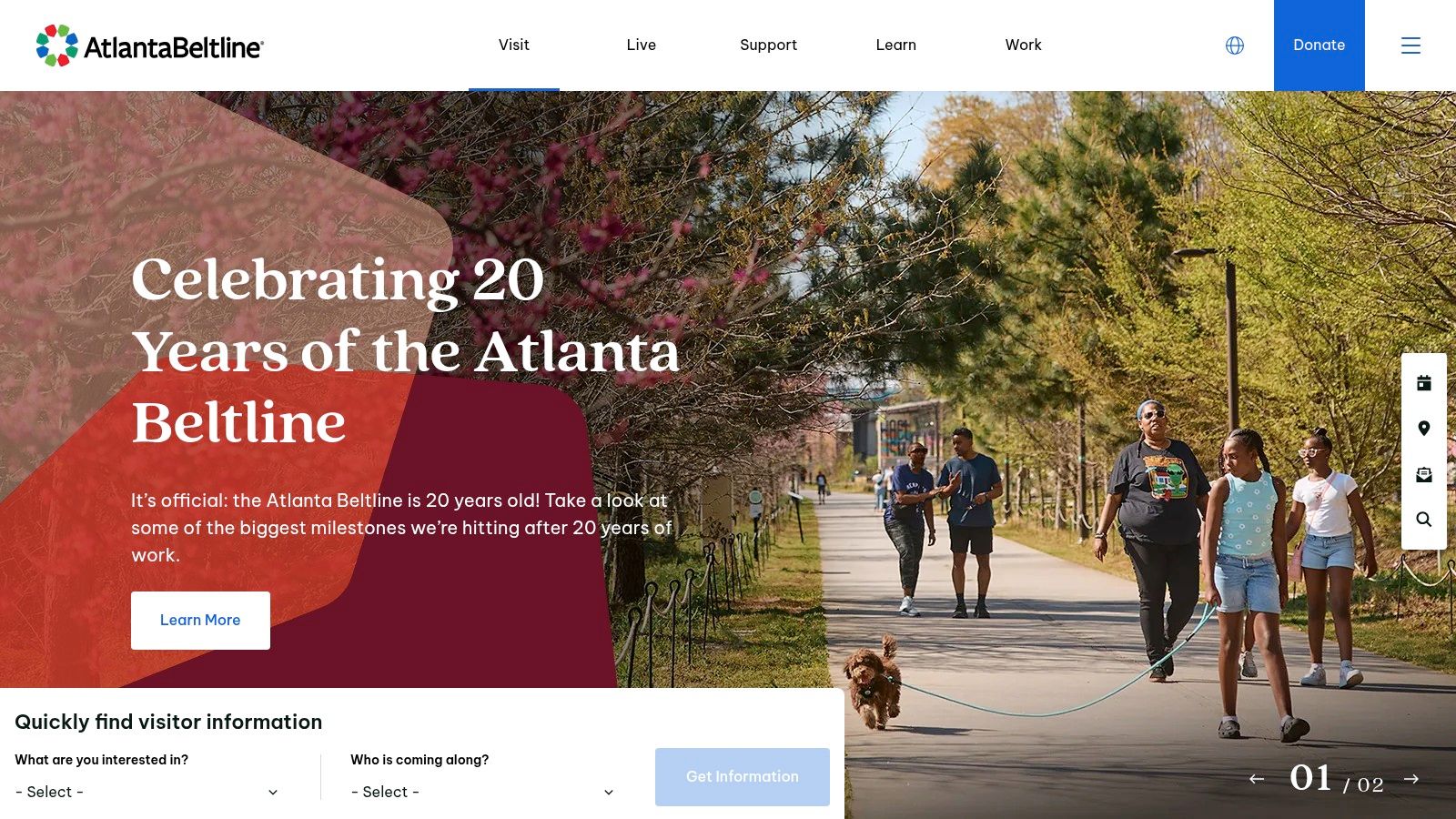
A visiting executive has two free hours between meetings, dinner is booked near Ponce City Market, and the goal is to show Atlanta without putting everyone through another formal venue. The Atlanta Beltline fits that assignment better than almost anything else on this list.
For business use, its value is flexibility and neighborhood context. The BeltLine links active in-town districts and gives guests a clearer read on how Atlanta functions outside hotel lobbies and convention space. That matters for recruiting, relocation conversations, and client visits where the city itself is part of the pitch.
The practical upside is range. You can use one short segment for a walking meeting, build a team outing around public art and food stops, or let a client group experience a part of the city that feels current and lived-in. The Midtown Atlanta recycling and business services guide is also useful if your visit includes office planning in the same part of the city.
The trade-offs are real. Timing is less predictable than a museum visit. Weather can ruin the plan. Surface conditions, crowds, and walking distances vary by segment, so route selection matters more than many out-of-town hosts expect. For guests in dress shoes, tight schedules, or limited mobility, I would choose a shorter stretch or skip it altogether.
Best business uses for the BeltLine
The BeltLine works well for:
- Client entertainment that needs to feel relaxed: Walking side by side usually produces better conversation than sitting across a table for two straight hours.
- Recruiting and relocation tours: Guests see neighborhoods, retail activity, and the city’s day-to-day energy.
- Younger team outings and informal networking: The setting feels current without trying too hard.
- Repeat visitors: It offers something different from the standard downtown circuit.
It is a weaker fit for:
- Tightly timed executive itineraries: Travel between access points and stops can slow down the schedule.
- Formal hosting in business attire: Heat, hills, and uneven pacing can become a distraction.
- Weather-sensitive event plans: Rain and summer humidity change the experience fast.
Used well, the BeltLine is less of an attraction and more of a business tool. It helps visitors understand Atlanta’s growth pattern, its neighborhoods, and its street-level energy in a way a controlled indoor venue usually cannot.
7. High Museum of Art
High Museum of Art is the cleanest choice for polished corporate hosting in Midtown. If you need something that feels refined, structured, and weather-proof, this is usually the first museum I’d consider for executive guests who want culture without logistical sprawl.
The museum sits within the Woodruff Arts Center and carries the kind of institutional presence that works well for donor visits, board weekends, and leadership retreats. It feels less like an attraction and more like a venue with gravitas.
Why this works for executive audiences
The High holds a broad collection and rotating exhibitions, so it supports different levels of interest. Some guests want a quick gallery pass-through before dinner. Others want to spend real time with the collection. That range makes it easier to host mixed groups without overcomplicating the plan.
It’s also in Midtown, which helps if your visitors are staying outside the downtown tourism cluster. That change of setting can be useful. Downtown is efficient. Midtown often feels more established and less convention-driven.
A practical limitation is schedule awareness. The museum is closed on Mondays, and the garage can get busy on weekends. Neither issue is difficult to manage, but both will cause avoidable headaches if no one checks the calendar before inviting clients.
Practical fit and trade-offs
The High is strongest when your group values curation, architecture, and a calmer pace. It’s not ideal if the team wants something loud, kinetic, or highly interactive. This is a venue for measured conversation and good planning, not spontaneous spectacle.
It works best for:
- Board members and senior leaders: The atmosphere matches the audience.
- Midtown client itineraries: Easy to pair with strong restaurants and nearby venues.
- Rain-proof hosting: A reliable option when outdoor plans look risky.
It’s less effective for:
- Large high-energy team outings: The tone is more composed than playful.
- Guests who want Atlanta “icons” first: Some will prioritize downtown landmarks.
- Casual last-minute planning: You still need to verify parking, hours, and exhibition timing.
The High also benefits from location context. Midtown’s hospitality mix supports a more refined business visit overall, and if your company has parallel facility or equipment needs in the district, Midtown Atlanta recycling support for businesses can be handled on the same trip.
Top 7 Atlanta Attractions Comparison
| Attraction | 🔄 Complexity & Visitor Flow | ⚡ Resources / Cost & Logistics | 📊 Expected Outcomes & Impact | 💡 Ideal Use Cases | ⭐ Key Advantages |
|---|---|---|---|---|---|
| Georgia Aquarium | High, large crowds, timed-entry systems, moving-gallery logistics | Higher cost, admission tiers, parking, add‑ons; strong accessibility | High impact, memorable, “wow” factor for guests and large groups | Client entertainment, large corporate events, family visits | Signature megafauna exhibits; private-event rentals |
| World of Coca‑Cola | Low, compact self‑guided experience with optional guided tours | Moderate cost; short duration makes scheduling easy; central location | Moderate impact, light, engaging brand story; good for quick visits | Pre/post-conference activity; entertaining international clients | Tasting room; concise brand storytelling |
| Atlanta Botanical Garden | Moderate, timed entry, seasonal crowding, outdoor circulation | Moderate cost; paid garage parking; event-dependent logistics | Serene, relationship-building outcomes; strong visual/photographic setting | Upscale client entertainment, relaxed offsites, receptions | Curated landscapes; canopy walk; event venues |
| Martin Luther King, Jr. National Historical Park | Moderate, multi-site layout, timed home tours, short walks between sites | Low cost (free admission) but schedule-sensitive; group coordination required | Deep educational and emotional impact; strong DEI relevance | DEI training, team reflection visits, educational programs | Historic authenticity; ranger programming; free access |
| National Center for Civil and Human Rights | Moderate, timed-entry, immersive interactives, limited bus parking | Moderate cost; downtown access; private tours and event spaces available | High educational impact linking civil rights to global human-rights issues | Leadership development, DEI-focused outings, private tours | Immersive exhibits; contemporary curation; event capabilities |
| Atlanta Beltline (trails & parks) | Low, open, segment-based flow; weather and peak-time variability | Low cost (free); optional bike/scooter rentals; minimal logistics | Flexible impact, wellness, informal team-building, neighborhood exposure | Active team-building, wellness breaks, neighborhood tours | Free, highly flexible; public art and dining access |
| High Museum of Art | Low–Moderate, clear circulation, scheduled visits, closed Mondays | Moderate cost; on-site garage parking; membership benefits available | Refined cultural engagement; strong impression for sophisticated audiences | Elegant client entertainment, receptions, networking events | World-class collections; notable architecture; special evening programs |
Integrating Atlanta's Best into Your Business Strategy
A client flies in for a one-day visit. You have time for one dinner, one off-site stop, and maybe a short morning activity before meetings start. In Atlanta, that choice matters because the attraction you pick shapes the tone of the entire visit.
The smartest approach is to treat these places as business assets. Georgia Aquarium works well when you need a high-recognition Atlanta experience with broad appeal. The Botanical Garden and High Museum fit better when the goal is a calmer setting and better conversation. The King historical park and the National Center for Civil and Human Rights are stronger choices for leadership groups, values-based programming, and visits where context matters as much as entertainment.
Audience fit comes first. A prospect traveling with a spouse or children usually needs convenience, flexibility, and a setting that feels easy to enjoy. A board member or senior executive often responds better to a quieter schedule, stronger hospitality pacing, and fewer handoffs. Team outings after a conference usually benefit from movement, neighborhood access, and unstructured conversation instead of another tightly managed session.
Restraint usually produces better results.
Companies often try to stack three or four stops into one afternoon because several major attractions are close together. That plan looks efficient on paper and performs poorly in real traffic. For most corporate groups, one anchor attraction paired with a meal or reception gives people more time to talk, fewer transportation risks, and a cleaner schedule.
Atlanta supports that kind of hosting well. The city has a large visitor economy and a hospitality market built around conventions, sports, and business travel, so planners can usually find strong venue support, transportation options, and experienced service partners. The trade-off is competition for prime dates, event space, and parking, especially during major downtown and Midtown event weeks.
Execution is what guests remember. They notice whether pickups are on time, whether the route makes sense, and whether the evening feels organized without feeling rigid. They also notice when internal logistics spill into the guest experience, especially during office moves, renovations, or technology replacement cycles.
That operational layer matters more than many teams expect. If your company is hosting visitors while also clearing surplus equipment, updating meeting spaces, or closing part of a facility, assign that work to a separate track with a separate owner. Good hospitality programs protect the guest-facing schedule from back-of-house disruption.
The practical takeaway is straightforward. Match the attraction to the business objective, keep the itinerary tight, and respect Atlanta travel time more than the map suggests you should. Done well, these attractions help companies entertain clients, give visiting executives a sharper read on the city, and create team experiences that feel deliberate instead of generic.
If your Atlanta visit also involves an office refresh, data center work, surplus IT gear, or a facility shutdown, Atlanta Computer Recycling helps commercial teams handle the operational side without slowing down the business agenda. ACR supports secure, business-to-business electronics recycling and IT asset disposition across metro Atlanta, including hard drive wiping, media destruction, pickup logistics, and responsible downstream recycling for retired computers, servers, laptops, and network equipment.