10 Best Places to Visit in Atlanta Georgia


You’re in Atlanta for a site review, leadership meeting, conference, or facility transition. Your calendar shows a few open hours, but you don’t want a generic tourist list. You want places that are worth seeing and useful to think about. That usually means locations where you can observe scale, coordination, public-facing systems, security posture, and the kind of operational discipline large organizations either get right or pay for later.
That’s the lens this guide uses. Atlanta isn’t just a city with attractions. It’s a working environment built around logistics, healthcare, higher education, public infrastructure, and enterprise technology. The same city that welcomes leisure travelers also supports hospital networks, research institutions, school districts, federal operations, and nonstop facility upgrades. Atlanta has ranked as the seventh-most visited city in the United States, with over 35 million visitors a year and 712,000 overseas visitors recorded in 2010, and that concentration of traffic is one reason its public venues reveal so much about large-scale operations.
If you manage IT, facilities, compliance, or relocation work, the best places to visit in Atlanta Georgia aren’t only entertaining. They’re practical case studies. You can look at visitor flow and think about endpoint density. You can look at archives and think about retention risk. You can watch a high-volume venue function without visible friction and recognize what good asset lifecycle planning looks like behind the scenes.
For distributed teams and hiring leaders, Atlanta also fits into a broader conversation about where work happens now, especially among top remote companies that still rely on physical infrastructure somewhere in the chain.
1. Georgia Aquarium

Georgia Aquarium earns a place on any mainstream list, but it’s especially useful for business visitors because it concentrates complex building operations into a highly visible public environment. It also sits inside Atlanta’s dense downtown attraction cluster, alongside Centennial Olympic Park and World of Coca-Cola, which helps explain why this part of the city remains such a durable visitor hub.
From an operations standpoint, the aquarium is a good reminder that visitor-facing venues depend on back-of-house systems most guests never notice. Ticketing, access control, digital signage, payment processing, network uptime, environmental controls, and monitoring all have to work together. When one layer fails, the public notices immediately.
What IT and facilities leaders should pay attention to
A venue like this doesn’t just need reliable systems. It needs refresh planning that won’t interrupt guest experience. That’s the same problem a hospital wing, university building, or corporate campus faces during hardware replacement.
- Watch the flow points: Entry gates, staffed counters, and exhibit transitions show where system delays would create visible congestion.
- Think about monitoring systems: Any environment with continuous life-support or environmental oversight depends on disciplined maintenance and eventual equipment retirement.
- Consider data exposure: High-volume public venues collect customer and transaction data, which means retired devices can’t leave the chain unsecured.
Practical rule: The more public the venue, the less tolerance there is for sloppy decommissioning.
If you’re extending the stop into a personal outing with family or colleagues, Atlanta Computer Recycling’s guide to family-friendly things to do in Atlanta is a useful companion. For business readers, the key lesson is simpler. Large attractions run on the same fundamentals your organization does: documented processes, resilient infrastructure, and a clean plan for what happens when systems age out.
2. World of Coca-Cola

World of Coca-Cola works well for visitors who care about brand systems, not just brand history. It’s one of the easier places in Atlanta to observe how a global company translates a large operating story into a controlled guest experience. That matters if you manage technology in manufacturing, distribution, or customer-facing environments.
The attraction itself is polished and highly structured. Guests move through exhibits, media, retail, and tasting areas in a sequence that feels simple on the surface. Underneath that, you can infer a lot about coordination between content systems, facility operations, merchandising, queue management, and staff workflows.
Why it matters beyond tourism
In enterprise settings, brand environments often mask operational complexity. A visitor sees a clean experience. Your team sees integrated systems, replacement cycles, vendor dependencies, and old equipment that can’t be retired casually.
That’s the useful trade-off to study here. High-touch environments benefit from strong digital infrastructure, but they also accumulate technology quickly. Kiosks, point-of-sale hardware, media displays, networking gear, and back-office systems all age on different timelines. If disposal planning lags behind upgrades, risk piles up in storage rooms and satellite closets.
A few practical observations stand out:
- Retail-heavy environments need disciplined inventory control: Retired endpoints and peripherals tend to scatter unless one team owns the chain of custody.
- Experience venues reward phased replacements: Swapping everything at once creates unnecessary disruption.
- Legacy devices often survive longer than policy expects: That’s common in exhibit spaces and branded environments where custom integrations resist change.
Public venues are a good place to study a simple truth. User experience depends on systems guests never see.
If you’re visiting Atlanta with operations on your mind, World of Coca-Cola is less about soft drinks than about enterprise orchestration. It shows how mature organizations package history, commerce, and infrastructure into one continuous experience. That’s exactly the kind of environment where secure IT asset disposition needs executive attention, not end-of-year cleanup.
3. Martin Luther King Jr. National Historical Park
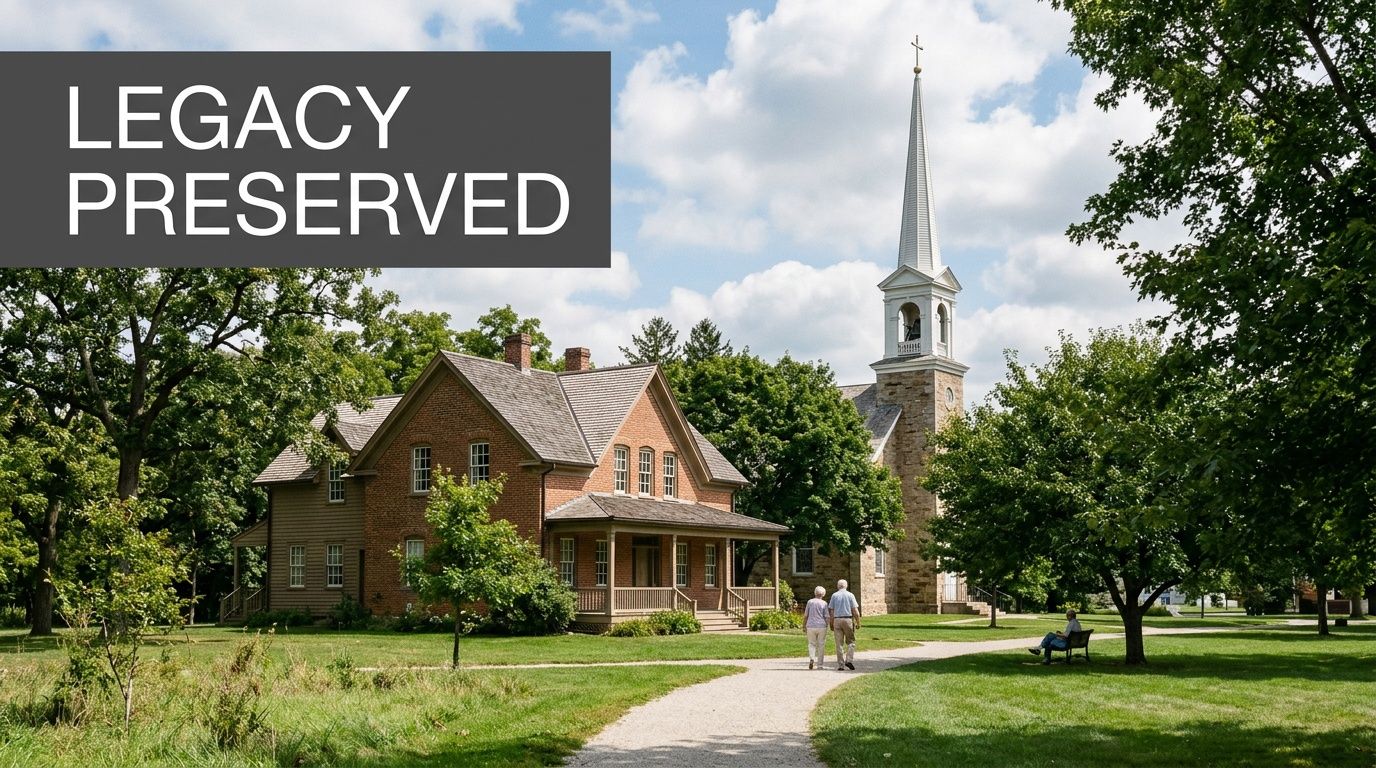
This is one of the most important stops in the city, and not because it’s optimized for entertainment. Martin Luther King Jr. National Historical Park brings you into an environment where preservation, public access, and institutional responsibility all meet. For organizations that handle records, archives, student data, health information, or regulated public documents, that overlap is immediately relevant.
Historic sites don’t get to modernize carelessly. They need systems that support interpretation, records management, visitor services, and security without compromising the integrity of the mission. That balancing act feels familiar to anyone running IT in education, government, or healthcare.
Preservation changes the technology conversation
In a normal office, replacing aging hardware is mostly a budget and logistics decision. In a mission-driven archival environment, replacement affects continuity, access, and stewardship. You can’t treat historical records infrastructure like a standard office refresh.
That’s why this site is worth visiting with a practitioner’s eye. It reinforces a discipline many organizations skip: align data destruction practices with records retention, governance, and institutional obligations before old devices leave service.
- Archives require deliberate transition planning: Data may need preservation, migration, or controlled retention before devices are removed.
- Public institutions face layered risk: Operational convenience can’t override legal, historical, or ethical responsibilities.
- Legacy environments linger: Older hardware often remains in service because replacement has to be coordinated carefully.
For visitors looking to pair this stop with other budget-conscious downtown planning, Atlanta Computer Recycling’s roundup of free things to do in Atlanta GA is helpful.
What works here is the seriousness of the experience. What doesn’t work is rushing it as a quick checkbox between louder attractions. If you’re evaluating the best places to visit in Atlanta Georgia through an operational lens, this park stands out because it shows how institutions carry memory forward. Technology supports that work, but only when teams treat lifecycle management as part of stewardship, not as an afterthought.
4. Atlanta BeltLine

The Atlanta BeltLine is one of the clearest examples of infrastructure reuse in the city. It’s not a single attraction in the traditional sense. It’s a connected urban system, and that’s why operations people tend to appreciate it more than casual lists suggest.
Walking it gives you a different kind of read on Atlanta. You see mixed-use development, public access design, lighting, signage, mobility patterns, and the ongoing challenge of maintaining a distributed physical environment across neighborhoods. That’s much closer to campus operations or municipal IT than to a standalone venue.
Distributed systems are harder than centralized ones
A downtown attraction can centralize staff, hardware, and response protocols. A corridor-style public asset can’t. Maintenance, security, connectivity, and user experience all become more variable when infrastructure stretches across multiple access points and operating contexts.
That’s the lesson worth paying attention to. Distributed environments often look simple to leadership because no single control room tells the whole story. The burden lands on teams managing field equipment, edge devices, signage, cameras, access points, and replacement schedules over time.
If your organization operates across several buildings or sites, the BeltLine will feel familiar. The complexity isn’t in one room. It’s in the handoffs.
The BeltLine also connects naturally to Atlanta’s park system, so if you want a broader outdoor route map, ACR’s guide to the best parks to visit in Atlanta Georgia adds context.
One practical trade-off: the BeltLine is better for observation than for tight scheduling. It works if you want to understand the city’s physical fabric. It works less well if you need a contained attraction with a fixed start and finish. For facilities and IT leaders, though, that’s part of the value. It demonstrates what decentralized infrastructure really demands once the ribbon-cutting is over.
5. Atlanta History Center
The Atlanta History Center is one of the strongest visits in the city for anyone who deals with records, institutional memory, or modernization in sensitive environments. It combines museum operations, archival stewardship, public programming, and campus-style facility management in one setting. That mix makes it more operationally interesting than many business travelers expect.
Historical institutions face a familiar problem with higher stakes. They have to adopt current systems without damaging access, provenance, or trust. In practical terms, that means digitization, collection management, storage controls, and secure retirement of obsolete equipment all need to happen with discipline.
Legacy systems don’t disappear just because budgets say they should
Many organizations say they’re modernizing, but they’re layering new tools over old workflows. History-focused institutions expose that pattern quickly. They often support a blend of archival databases, media storage, exhibit systems, office endpoints, and older specialized hardware that can’t be swapped out casually.
That makes this site relevant for:
- Hospitals with long retention obligations
- Universities managing mixed research and administrative records
- Government departments balancing public access with internal controls
The useful takeaway is that integrity matters as much as efficiency. A rushed refresh may create short-term gains and long-term problems if migrated data loses context or retired drives leave custody without proper destruction.
What works and what doesn’t
What works is treating modernization as a governed process. Teams document what exists, define retention requirements, migrate intentionally, and retire assets only after legal and operational checks are complete.
What doesn’t work is the common shortcut of storing old devices “just in case.” That practice turns closets and offsite rooms into unmanaged risk.
The Atlanta History Center rewards a slower visit. For business readers, it also reinforces a point that applies far beyond museums. If your systems support valuable records, the disposal step is part of the recordkeeping strategy. It isn’t separate from it.
6. Georgia Institute of Technology
Georgia Tech is one of the best places in Atlanta to think about technology at institutional scale. A major engineering campus compresses almost every challenge IT leaders deal with into one environment: research demands, administrative needs, student services, cybersecurity, endpoint turnover, lab equipment changes, and constant pressure to upgrade without interrupting core operations.
That’s what makes the campus useful beyond its academic reputation. You can move through a university setting and see how different technology lifecycles coexist. Classroom hardware, research computing, departmental systems, AV setups, networking gear, and staff devices don’t all follow the same replacement timeline, and they shouldn’t.
Higher education is a lifecycle management stress test
A university doesn’t operate like a corporation with one procurement pattern. It has decentralized needs and centralized risks. Labs may hold sensitive research data. Administrative offices carry personnel and finance records. Students use shared systems that need turnover controls. Old machines can’t be unplugged and forgotten.
From a practitioner’s standpoint, Georgia Tech highlights several realities:
- Research environments create data destruction obligations beyond normal office standards
- Departmental autonomy often complicates retirement workflows
- Refresh cycles are continuous, not annual
That last point matters. In education, there’s rarely one clean window where everything can be replaced. Projects happen by grant, department, building, or academic calendar. Secure pickup, documentation, and de-installation need to fit around that reality.
Academic environments rarely have a single “old equipment room.” They have many. That’s why chain-of-custody discipline matters so much.
A visit here works best if you already understand campus operations. You’ll recognize why educational institutions need partners who can handle phased collections, secure media destruction, and environmentally responsible recycling without creating friction for faculty or facilities teams. Georgia Tech shows the complexity clearly. It also shows why ad hoc disposal methods break down fast.
7. Emory University and Emory Healthcare Systems
If your organization works in healthcare, this stop may be the most immediately relevant on the list. Emory combines a major university environment with a large healthcare footprint, which means academic IT, research systems, clinical infrastructure, and administrative operations all exist in close proximity. That creates more overlap, more sensitivity, and less room for error.
Healthcare technology isn’t just about uptime. It’s about trust, privacy, patient care, and documentation. When devices age out, disposal isn’t a warehouse problem. It becomes a compliance event.
Healthcare has different consequences
In office settings, a failed retirement process may create inconvenience or financial loss. In healthcare, the same failure can expose protected information, interrupt workflows, or create audit issues nobody wants to explain later.
That’s why Emory is useful as a lens for operational planning. It reflects the layered reality many Atlanta healthcare systems face:
- Clinical endpoints may hold or access sensitive patient information
- Imaging and specialty devices often involve nonstandard retirement processes
- Research and treatment environments don’t pause easily for equipment transitions
The organizations that handle this well don’t improvise. They inventory thoroughly, separate reusable equipment from media-bearing assets, schedule removals around care delivery, and document destruction in a way compliance teams can use.
The practical takeaway for hospital and clinic leaders
What works is a coordinated process between IT, biomed where relevant, compliance, and facilities. What doesn’t work is asking one team to “clear out old gear” after a refresh is already underway.
In Atlanta, healthcare institutions operate at a scale where secure de-installation and documented media destruction have to be routine, not exceptional. Emory makes that clear even from an outside visit. You can see the density of systems, the seriousness of the environment, and the operational discipline required to keep technology transitions from becoming compliance problems.
8. Atlanta Public Schools District Technology Centers
School district technology doesn’t always get the attention it deserves from business audiences, but it should. Large K-12 environments manage a constant stream of laptops, desktops, classroom displays, networking gear, testing devices, and administrative hardware across many sites. The operational challenge isn’t glamorous. It’s persistent, budget-sensitive, and full of data protection obligations.
That’s why Atlanta Public Schools is worth thinking about when considering the best places to visit in Atlanta Georgia through an enterprise lens. School systems resemble distributed branch operations, except the users include students, teachers, administrators, and support staff with very different needs.
Education environments punish sloppy asset tracking
A district can’t rely on loose disposal habits. Devices move between classrooms, media centers, district offices, and storage areas. Some are reassigned. Some are cannibalized for parts. Some sit too long waiting for approval. Without process discipline, nobody has a clean picture of what still exists.
The challenge is bigger than clutter. Student information requires protection, and public institutions are expected to manage e-waste responsibly.
A realistic approach includes:
- Centralized intake for retired devices
- Clear documentation by school and department
- Secure media handling before reuse, resale, or recycling
- Pickup coordination that doesn’t disrupt instruction
What business leaders can learn from school systems
School districts get good at stretching hardware life, but that can become a weakness when equipment remains in circulation beyond practical support windows. The best operators know when to extend and when to retire.
For IT and facilities managers outside education, APS-style environments offer a useful analogy for multisite operations. You have dispersed assets, mixed users, constrained budgets, and strong accountability requirements. If your organization runs regional offices, clinics, or field sites, the same disposal discipline applies. The difference is only in the user profile, not in the need for control.
9. Centers for Disease Control and Prevention Headquarters
Few Atlanta institutions communicate mission-critical data handling more clearly than the CDC. Even from a high-level visitor perspective, the message is obvious. This is an environment where information security, research integrity, and operational continuity are inseparable.
For government agencies, health systems, universities, and regulated enterprises, that matters. The CDC represents the type of institution where retired hardware can’t be treated as generic surplus. Storage media, network devices, research systems, and support equipment all exist inside a stricter accountability framework.
Federal environments raise the bar
A lot of private-sector leaders talk about strong controls, but federal and public health environments force those controls into daily practice. Asset retirement needs documented custody, secure destruction, and processes that stand up to scrutiny after the fact, not just during internal meetings.
That’s what makes the CDC a useful reference point. It underlines a few operational truths:
- Sensitive data environments need disposal policies that are enforceable, not aspirational
- Surplus handling is still security work
- Chain of custody matters as much as destruction itself
In high-consequence environments, “we wiped it” isn’t enough. Teams need procedures, evidence, and accountability.
The trade-off here is that the CDC isn’t a tourist attraction in the same sense as a museum or park. It’s more of a symbolic and practical landmark for professionals who understand what secure public infrastructure requires. If that’s your lens, it belongs on the list. It reminds you that data lifecycle management isn’t administrative cleanup. In some institutions, it’s part of the mission.
10. Hartsfield-Jackson Atlanta International Airport
Hartsfield-Jackson is the clearest large-scale operations lesson in the city. Even if you’re only passing through, it’s worth treating the airport as more than transit infrastructure. It’s a live model for nonstop technology dependence under public scrutiny.
Airports are unforgiving environments. Systems support wayfinding, security coordination, passenger processing, baggage movement, communications, concessions, facility maintenance, and continuous changeover. Legacy and current technologies often operate side by side because replacement has to happen without bringing the operation to a halt.
Why airports matter to IT and facilities teams
The airport isn’t just large. It’s layered. Multiple stakeholders rely on infrastructure that must remain stable while projects, repairs, vendor swaps, and equipment retirement continue in the background.
That creates lessons any enterprise leader can use:
- Downtime tolerance is close to zero
- De-installation has to be staged carefully
- Old equipment can’t sit unsecured in operational back areas
- Coordination between facilities, IT, security, and vendors is imperative
For readers managing projects near the airport corridor, Atlanta Computer Recycling’s page on Hartsfield-Jackson Atlanta International Airport logistics and service considerations is especially relevant.
A final operational observation
Airports expose weak planning fast. If cable pulls, hardware removals, pallet staging, or media control are handled poorly, the impact spreads immediately across teams and tenants.
That’s why this is one of the strongest entries on the list. It shows what mature infrastructure management looks like when continuity really matters. For any organization preparing for a relocation, closure, upgrade, or data center drawdown, the airport environment reinforces the same principle. Asset disposition has to be planned as part of operations, not after operations are done.
Top 10 Atlanta Destinations Comparison
| Item | 🔄 Implementation complexity | ⚡ Resource requirements | ⭐ Expected outcomes | 📊 Ideal use cases | 💡 Key advantages / Tips |
|---|---|---|---|---|---|
| Georgia Aquarium | High, mission-critical HVAC/filtration + legacy monitoring | Specialized aquatic sensors, redundant servers, 24/7 ops staff | ⭐⭐⭐, operational reliability and asset turnover needs | Facility IT operations, enterprise monitoring examples | Demonstrates redundancy and planned IT asset disposition; visit off-peak to observe infrastructure |
| World of Coca‑Cola | Medium–High, retail, bottling demos and public exhibits | Production control systems, POS/retail servers, HVAC | ⭐⭐⭐, brand/retail IT insights and routine upgrades | Manufacturing IT, retail & distribution ITAD cases | Good example of supply-chain IT upgrades; manufacturing gear often requires secure disposal |
| Martin Luther King Jr. National Historical Park | Medium, archival systems with compliance constraints | Secure archives, controlled environments, specialized archival hardware | ⭐⭐⭐⭐, preservation-focused outcomes with compliance emphasis | Government/educational archival IT and compliant data destruction | Highlights archival compliance and sensitive-data handling; plan for compliant destruction when upgrading |
| Atlanta BeltLine | High, distributed IoT, public networks and multi-node upgrades | Wide-area IoT sensors, network infrastructure, coordinated maintenance | ⭐⭐⭐⭐, smart-city data insights and recurring e-waste streams | Smart-city deployments, large-scale IoT lifecycle management | Exemplifies distributed asset disposition needs; coordinate logistics across nodes |
| Atlanta History Center | High, large archives + climate-controlled storage | Specialized preservation hardware, backup systems, limited refresh cycles | ⭐⭐⭐⭐, long-term preservation with careful modernization | Cultural institutions, archival ITAD and digital preservation | Modernization must preserve integrity; specialized disposal protocols required |
| Georgia Institute of Technology | Very High, multiple data centers, HPC clusters | Large server farms, research equipment, high-bandwidth networks | ⭐⭐⭐⭐⭐, continuous research enablement and frequent decommissioning | Academic research computing, high-volume ITAD projects | Typical source of high-volume, research-grade equipment requiring compliant decommissioning |
| Emory University & Healthcare Systems | Very High, HIPAA-bound clinical systems and imaging networks | EHRs, medical imaging devices, strict compliance processes | ⭐⭐⭐⭐⭐, patient-data protection and regulated disposal outcomes | Healthcare IT, HIPAA-compliant IT asset disposition | Healthcare requires certified data destruction (DoD/HIPAA standards); improper disposal risks severe penalties |
| Atlanta Public Schools District Tech | Medium–High, large K‑12 network with FERPA obligations | Thousands of devices, LMS integrations, tight budgets | ⭐⭐⭐⭐, sustainable e‑waste reduction and student-data protection | K‑12 device lifecycle programs, district-wide IT refreshes | Schools generate steady volumes of equipment; cost-effective, FERPA-compliant disposal is critical |
| CDC Headquarters | Very High, federal-grade secure systems and surveillance networks | Classified-level security, certified destruction protocols, strict documentation | ⭐⭐⭐⭐⭐, highest-level data security and compliance outcomes | Federal agencies, mission-critical public-health ITAD | Federal disposals require certified processes and documentation; on-site security protocols often mandatory |
| Hartsfield‑Jackson Airport | Extremely High, 24/7 mission-critical ops across large footprint | Massive redundancy, phased upgrades, on-site de-installation logistics | ⭐⭐⭐⭐⭐, uninterrupted operations with secure technology turnover | Large transportation hubs, high-availability facility ITAD | Requires coordinated logistics and on-site services to avoid operational disruption; strict retention rules apply |
Your Partner in Atlanta’s Technology Lifecycle
Atlanta’s major destinations tell a consistent story. The city’s most visible institutions run on layers of technology that most visitors never think about. Aquariums, museums, universities, hospitals, public agencies, school systems, parks, and airports all depend on networks, endpoints, storage, access controls, monitoring systems, and disciplined support practices. When you visit them with an operations mindset, you stop seeing only attractions. You start seeing infrastructure under load.
Centennial Olympic Park is a strong example of that civic continuity. It remains a downtown anchor as a 21 to 22 acre public space created from Atlanta’s 1996 Olympic legacy, surrounded by major destinations and still functioning as part of the city’s convention and entertainment core. That kind of staying power doesn’t happen by accident. It comes from long-term planning, maintenance, and periodic reinvestment. The same logic applies inside enterprise environments. Systems that serve the public or support large organizations need lifecycle decisions that extend beyond the initial deployment.
That’s also why Atlanta keeps attracting business and leisure traffic. The city’s tourism infrastructure has expanded around major venues such as Mercedes-Benz Stadium and Truist Park, while recognition from National Geographic and Lonely Planet reinforced Atlanta’s place on the global travel map in 2022, as noted earlier in the city tourism record. For business leaders, that visibility matters because every high-traffic destination depends on behind-the-scenes operational discipline. Visitor experience is the surface layer. Asset management, security controls, and replacement planning are the underlying system.
For IT managers and facilities leaders, the takeaway is practical. Every refresh creates a downstream obligation. Every server replacement, office closure, clinic renovation, lab upgrade, and storage-room cleanup eventually reaches the same question: what happens to the retired equipment, and who controls the risk while it leaves service? Organizations get into trouble when they treat that question as secondary. Old drives sit too long. Network gear gets moved without documentation. Pickup happens before stakeholders confirm retention and destruction requirements. Sustainability goals become marketing language instead of documented outcomes.
Atlanta Computer Recycling exists for that part of the lifecycle. The company serves commercial organizations across the metro area with business-focused electronics recycling and IT asset disposition support. That includes secure hard drive wiping using the DoD 5220.22-M 3-pass standard, physical shredding for obsolete or non-functional media, on-site de-installation, packing, pickup logistics, and coordinated data center decommissioning. For hospitals, schools, government agencies, and large enterprises, that combination matters because it reduces disruption while supporting security and compliance obligations.
The environmental side matters too. Organizations can’t claim responsible modernization if retired electronics end up unmanaged or sent to the wrong channel. A strong disposition partner helps keep reusable equipment in circulation where appropriate and routes the rest through responsible recycling streams. That protects data, supports sustainability goals, and keeps facility teams from carrying unnecessary storage and handling burdens.
If your organization is planning an upgrade, relocation, or cleanout, it helps to evaluate the process the same way you’d evaluate broader managed IT infrastructure services guidance. Look at continuity, documentation, accountability, and end-of-life control. Those aren’t side issues. They’re part of the infrastructure strategy.
Atlanta rewards that mindset. The best places to visit in Atlanta Georgia are memorable on their own, but for business professionals they also reveal how serious organizations operate. When it’s time to retire aging technology, that same seriousness should carry through to the final handoff.
Atlanta Computer Recycling helps Atlanta-area businesses, hospitals, schools, government offices, and data center operators retire technology without creating new risk. If your team needs secure IT asset disposition, compliant data destruction, electronics recycling, or help with a facility decommissioning project, Atlanta Computer Recycling provides a practical, business-focused path from pickup to final disposition.