7 Free Things to Do in Atlanta GA


You don't always need a ticketed attraction to make Atlanta work for a business trip. Sometimes you need a place to walk a client after lunch, give a remote team a low-friction meetup spot, or clear your head between a site visit and an evening flight. That's where the best free things to do in Atlanta GA earn their keep.
The useful options aren't just “free.” They also need to be easy to reach, simple to explain to out-of-town visitors, and flexible enough to fit a real schedule. A good stop for a professional audience should work in a tight hour, tolerate people arriving from different neighborhoods, and offer enough substance that it doesn't feel like filler.
Atlanta does this better than many visitors expect. You can move from a civil-rights landmark to a skyline park, from a contemporary art stop to a downtown fountain show, without building your day around admission windows or a big spend. Some places are best for decompressing. Others are better for conversation, walking meetings, or a quick reset that still feels distinctly local.
Below are seven places I'd recommend for professionals who want free things to do in Atlanta GA that are practical, memorable, and easy to fit around work.
1. Atlanta BeltLine – Eastside Trail
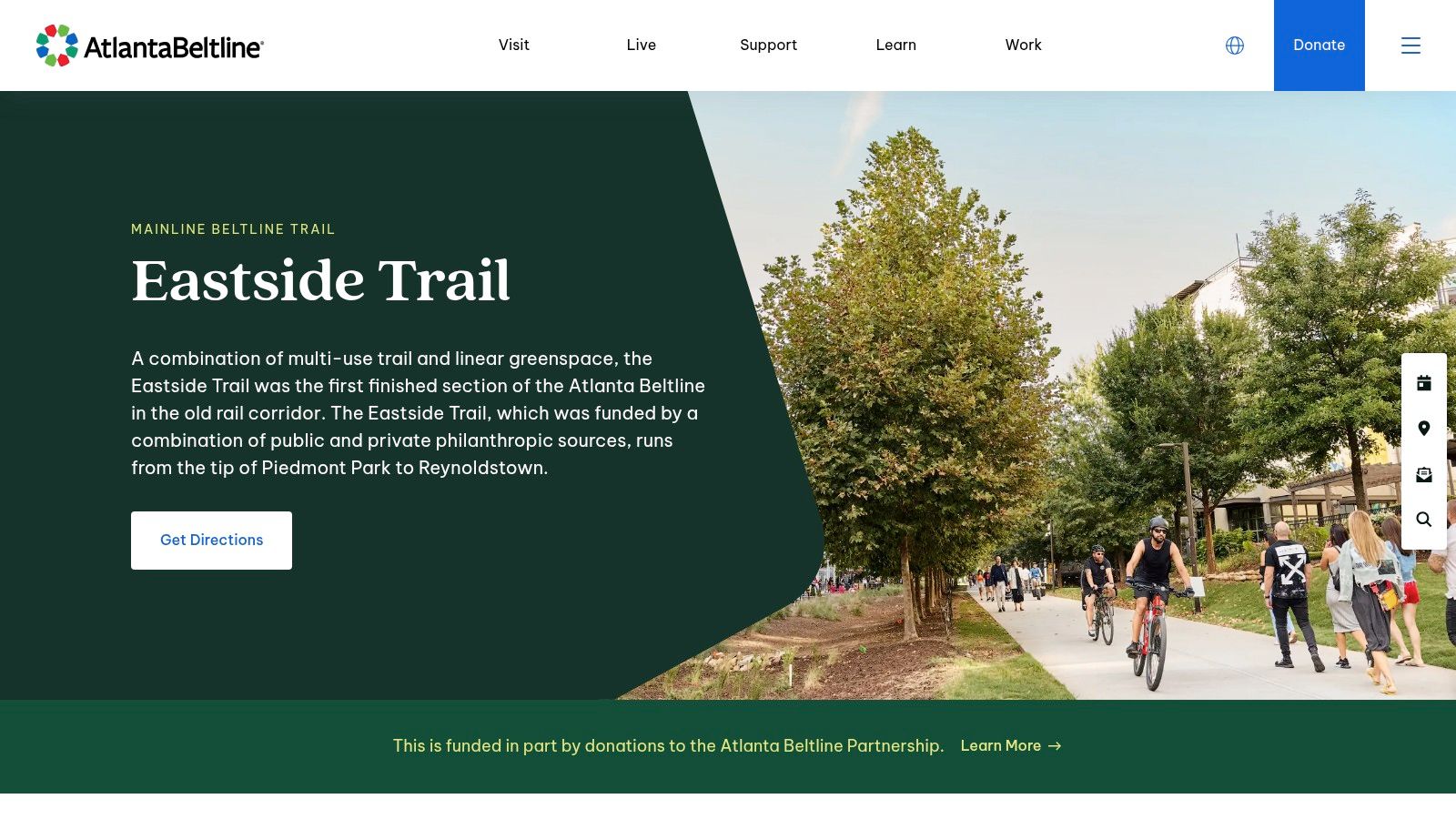
If you only have one free outing to suggest to a visiting colleague, the Eastside Trail is usually the safest pick. It gives people a readable slice of intown Atlanta without requiring a long commitment, and it works whether your group wants a brisk walk, a casual stroll, or just a place to talk without conference room air.
The trail connects several neighborhoods and lets you build your own version of the outing. You can enter near Midtown, Ponce City Market, Historic Fourth Ward Park, Inman Park, or Krog Street Market. That flexibility matters for business schedules because it keeps you from forcing everyone into one rigid start point.
Why it works for professionals
The biggest advantage is range. A team with mixed energy levels can do a short out-and-back and still feel like they saw something worthwhile, while stronger walkers can stretch the route into a longer urban loop with public art, patios, and park access along the way.
It also handles informal hosting well. If you're meeting a client who's tired of restaurants and boardrooms, the trail gives you movement, people-watching, and easy exits to food halls or coffee stops without the awkwardness of a fully planned activity. For more Atlanta outing ideas in the same spirit, these business-friendly Atlanta suggestions are useful.
Practical rule: Use the BeltLine early in the day or near sunset on weekdays if the goal is conversation. Peak weekend traffic makes it harder to walk side by side.
Trade-offs to know before you go
The Eastside Trail is popular for good reason, but that popularity creates friction. Parking near the busiest access points can be limited, and nearby options are often paid. If your group is driving in from multiple offices, it's usually better to choose one landmark meeting point and share it clearly in advance.
A few things make the experience smoother:
- Pick a landmark, not just “the BeltLine.” Meet at a specific entrance, bridge, or market-facing access point so nobody wastes time texting from the wrong segment.
- Match the route to the meeting. For a quick reset, do a short walk near one node. For relationship-building, use a longer stretch with a planned coffee stop.
- Expect crowding at prime times. The trail still works when busy, but it stops feeling relaxed.
What works and what doesn't
What works is treating the Eastside Trail as a flexible corridor, not a destination that demands a full afternoon. It excels as a no-cost add-on between other plans.
What doesn't work is trying to force a formal group activity onto it at the busiest times. If you need quiet, predictable pacing, or easy parking right next to your start, choose another stop on this list.
Visit the Atlanta BeltLine Eastside Trail page for maps and access details.
2. Martin Luther King, Jr. National Historical Park
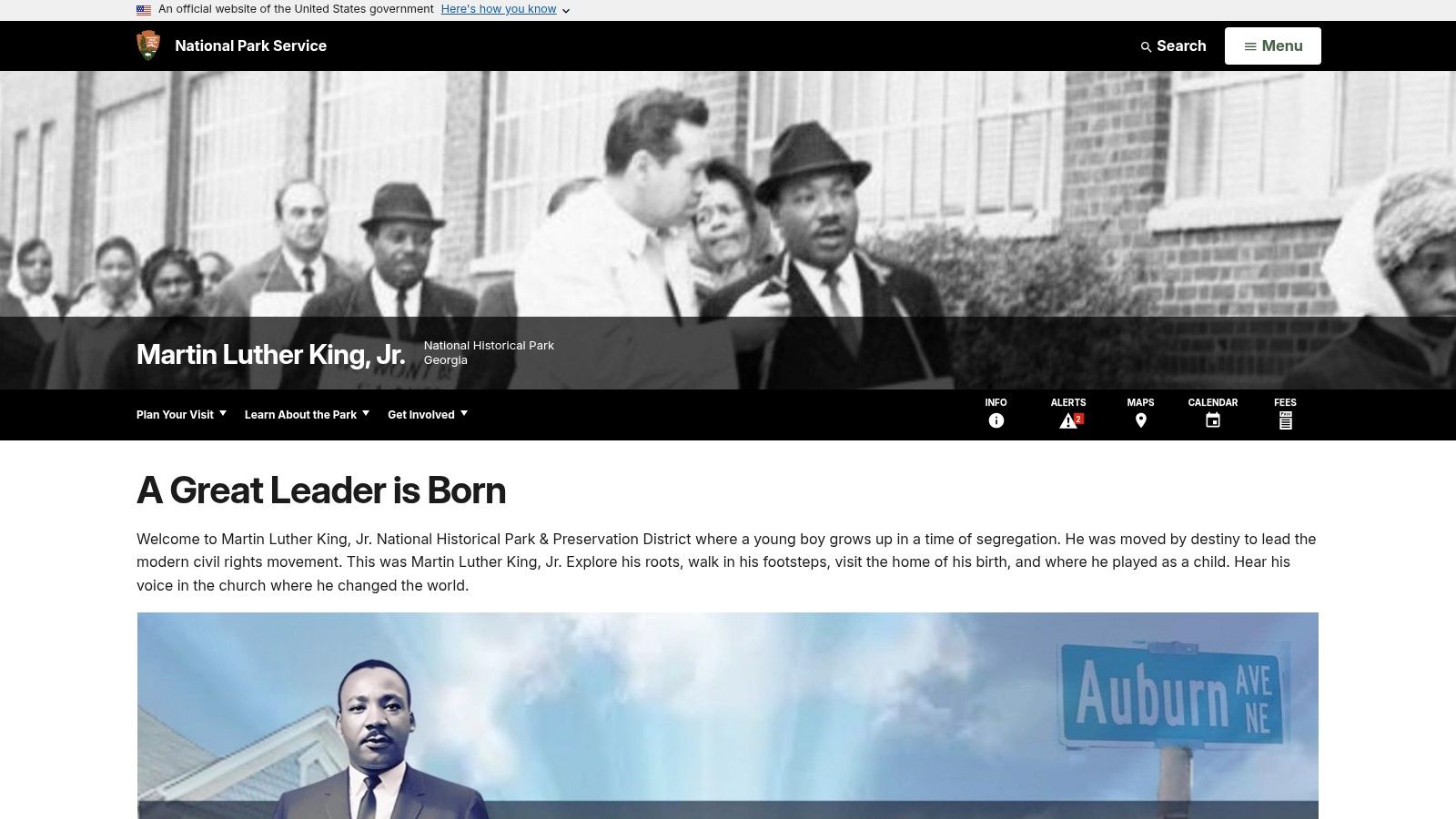
Some free attractions are mainly scenic. This one carries real weight. If you're hosting visitors who want Atlanta history, civic context, and something more meaningful than a casual stroll, Martin Luther King, Jr. National Historical Park is one of the strongest choices in the city.
The site combines the Visitor Center, Ebenezer Baptist Church, The King Center, and the Birth Home area into a walkable experience. Because entry to the park and Visitor Center exhibits is free, it works well for visitors who want a high-value stop without budget approvals or advance purchasing.
Best use case
This is the stop I'd recommend when the group is small, engaged, and willing to slow down. It suits leadership retreats, university visitors, public-sector guests, and out-of-town colleagues who want a serious introduction to Atlanta rather than a purely recreational one.
The campus layout also helps. You're not trapped in one building. You can move through the area at your own pace, then continue into Sweet Auburn for coffee or a meal. If you want more classic city stops nearby, this roundup of Atlanta tourist attractions pairs well with the area.
This is one of the few no-cost stops in Atlanta that can anchor an entire afternoon rather than just fill a gap.
Timing matters here
There is a practical downside. Demand can be high, especially around holidays and school-trip periods. If someone in your group wants the Birth Home presentation, those day-of tickets are first-come and limited, so spontaneity doesn't always work in your favor.
A few smart moves help:
- Arrive earlier if the Birth Home matters. This isn't the place to show up late and hope for every part of the experience.
- Check the day's ranger programming. Ebenezer Baptist Church talks can add a lot if your timing lines up.
- Keep the group size realistic. Large business groups can move slower here than they expect.
What works and what doesn't
What works is approaching this park with intention. Give people room to read, reflect, and move through the site rather than trying to rush it like a quick photo stop.
What doesn't work is using it as casual filler between tightly packed downtown appointments. The subject matter deserves attention, and the site rewards visitors who have a bit of time and patience.
You can plan the visit on the National Park Service page for Martin Luther King, Jr. National Historical Park.
3. Piedmont Park
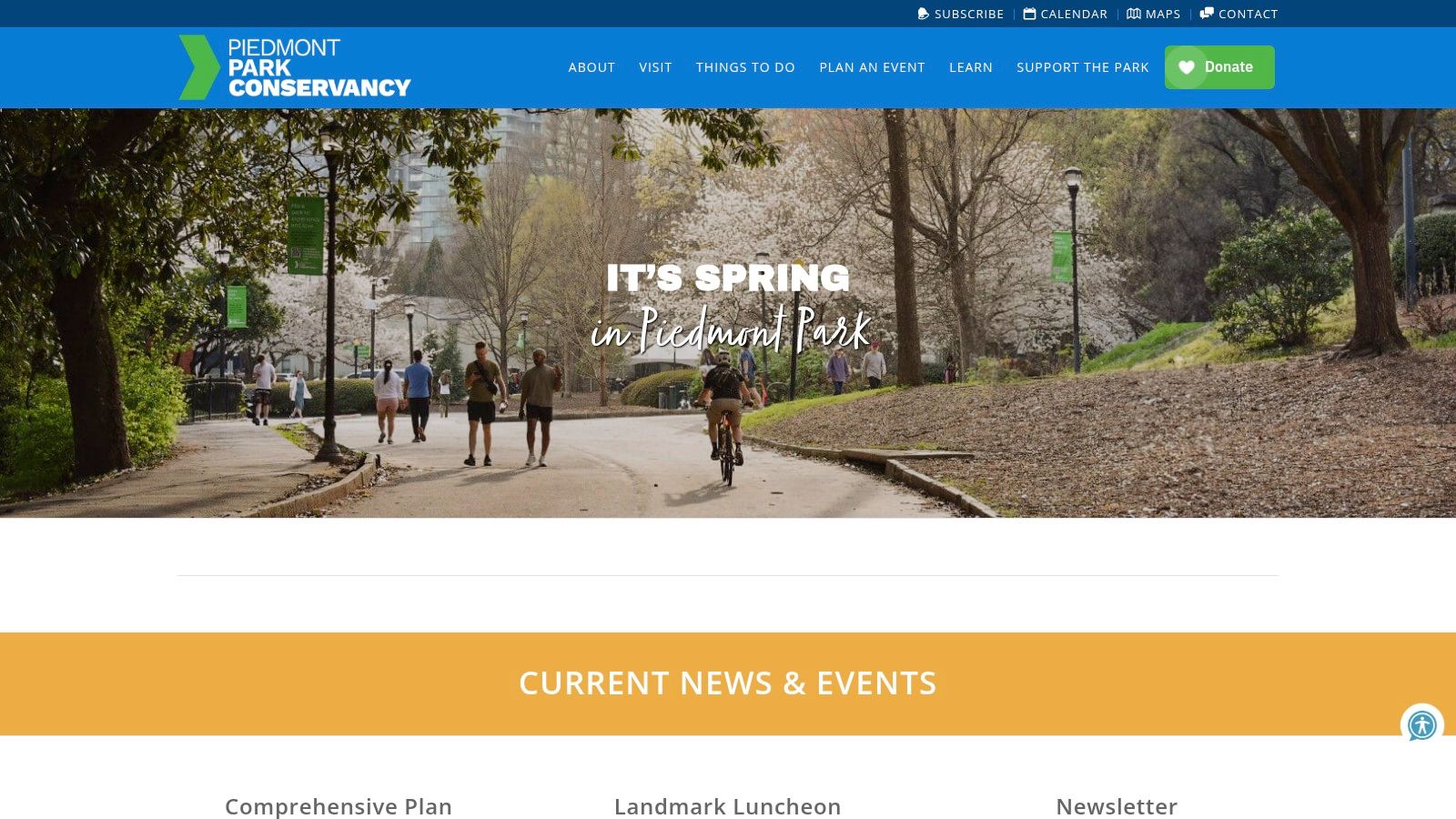
You finish a long day in Midtown, the group still has an hour before dinner, and nobody wants another bar or conference room. Piedmont Park solves that problem fast. It is central, easy to explain to out-of-town colleagues, and flexible enough for a walking meeting, a low-pressure client meetup, or a quiet reset after back-to-back appointments.
Scale is the reason it works. The Piedmont Park Conservancy's park map and visitor information show a large footprint with multiple entrances, open lawns, sports fields, and the Lake Clara Meer area, which gives groups room to spread out instead of bunching together on a single crowded path.
Why business travelers keep coming back
For professional travel, convenience matters as much as scenery. Piedmont Park is one of the better free options in Atlanta because it can be useful in several formats without much planning. A solo traveler can clear their head with a loop around the lake. A manager can turn it into a short one-on-one walk. A small team can meet near the edge of the park, walk for 30 to 45 minutes, and still make dinner on time.
The skyline views help too. They give the outing a distinct Atlanta feel without requiring a ticket, a reservation, or a long block of time.
If your trip extends beyond Midtown and you need ideas for free or low-cost group time in the suburbs, this roundup of Suwanee community events and local activities is useful for planning around meetings north of the city.
Logistics make or break this stop
Piedmont Park is easy to enjoy and easy to misjudge.
Parking and access are the main trade-offs. On ordinary weekdays, it can be a simple add-on to the day. During festivals, markets, and large public events, the same park can feel crowded, slower to enter, and less predictable for groups that are trying to stay on schedule.
A practical approach works best:
- For a quick decompression break: Pick one meeting point near your exit route and keep the walk short.
- For a team outing: Set a clear turnaround time so faster walkers and slower walkers do not split the group too much.
- For client entertainment: Check the weather first and avoid major event windows if you want conversation over crowd energy.
What to expect
This park rewards flexible plans. It is a strong choice when your goal is fresh air, movement, and a setting that feels more polished than "we just needed something free."
The downside is consistency. If your schedule leaves no room for parking delays, weather changes, or event traffic, another stop may be easier to control. But for many business travelers, that trade-off is acceptable because Piedmont Park delivers a lot of value without adding cost.
4. Atlanta Contemporary
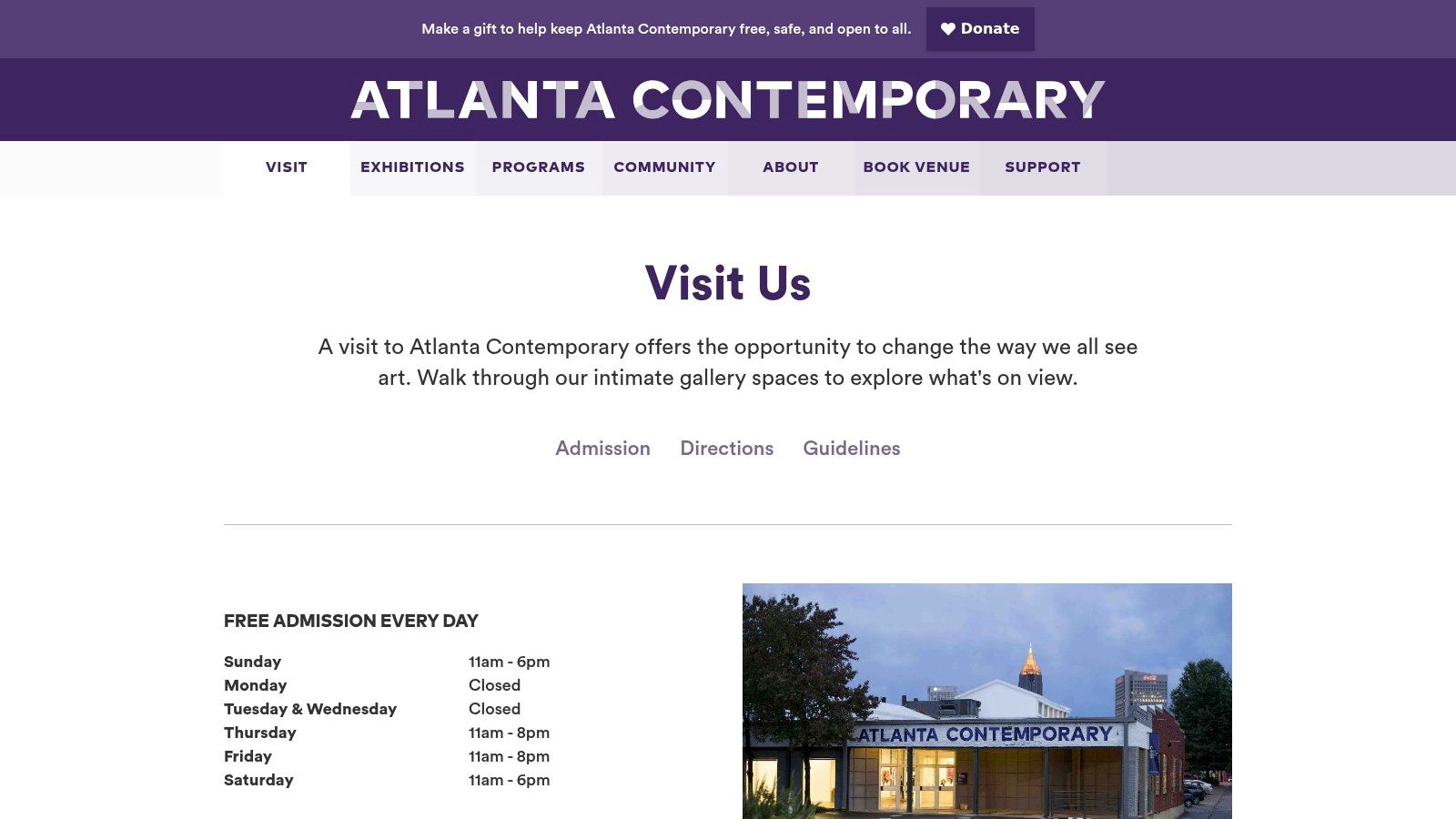
Not every free outing needs to be outdoors or historic. Atlanta Contemporary is a strong answer when you need something compact, culture-rich, and easy to fit between lunch and your next meeting.
The main advantage is efficiency. Admission is always free, and the footprint is manageable enough that you can have a worthwhile visit without blocking half a day. That makes it one of the better choices for professionals staying on the Westside or meeting nearby.
Why this one earns a spot
A lot of art stops are either too large for a quick drop-in or too slight to justify the detour. Atlanta Contemporary threads that middle ground well. You get rotating exhibitions, a nonprofit arts setting, and a more current, local creative perspective than a standard tourist stop.
It's especially useful if your group includes design, marketing, architecture, education, or tech people who appreciate idea-driven spaces. For professionals looking at metro-area event options beyond central Atlanta, this local events page for Suwanee can also help when meetings take you north of the city core.
The trade-offs are real
This isn't a giant museum, and it shouldn't be treated like one. The value is in a concentrated visit, not a marathon. Exhibition quality can vary with your taste, and hours may be tighter on some days than visitors expect.
That said, those limits are also part of the appeal. You can go in, see something substantial, talk about it over coffee, and move on without fatigue.
- Best for: Small groups, one-on-one client meetings, solo decompression, and creative teams.
- Less ideal for: Large groups that need a highly structured agenda or visitors who want Atlanta history rather than contemporary art.
- Smart approach: Check what's on view before you suggest it to others.
What works and what doesn't
What works is pairing Atlanta Contemporary with nearby lunch or coffee and treating it as a purposeful short stop. It's excellent for conversation because the setting gives you something concrete to react to without requiring extensive prep.
What doesn't work is overpromising the scale. If your guest expects a major museum experience, recalibrate before you arrive.
Plan the visit on the Atlanta Contemporary visitor page.
5. Federal Reserve Bank of Atlanta – Monetary Museum
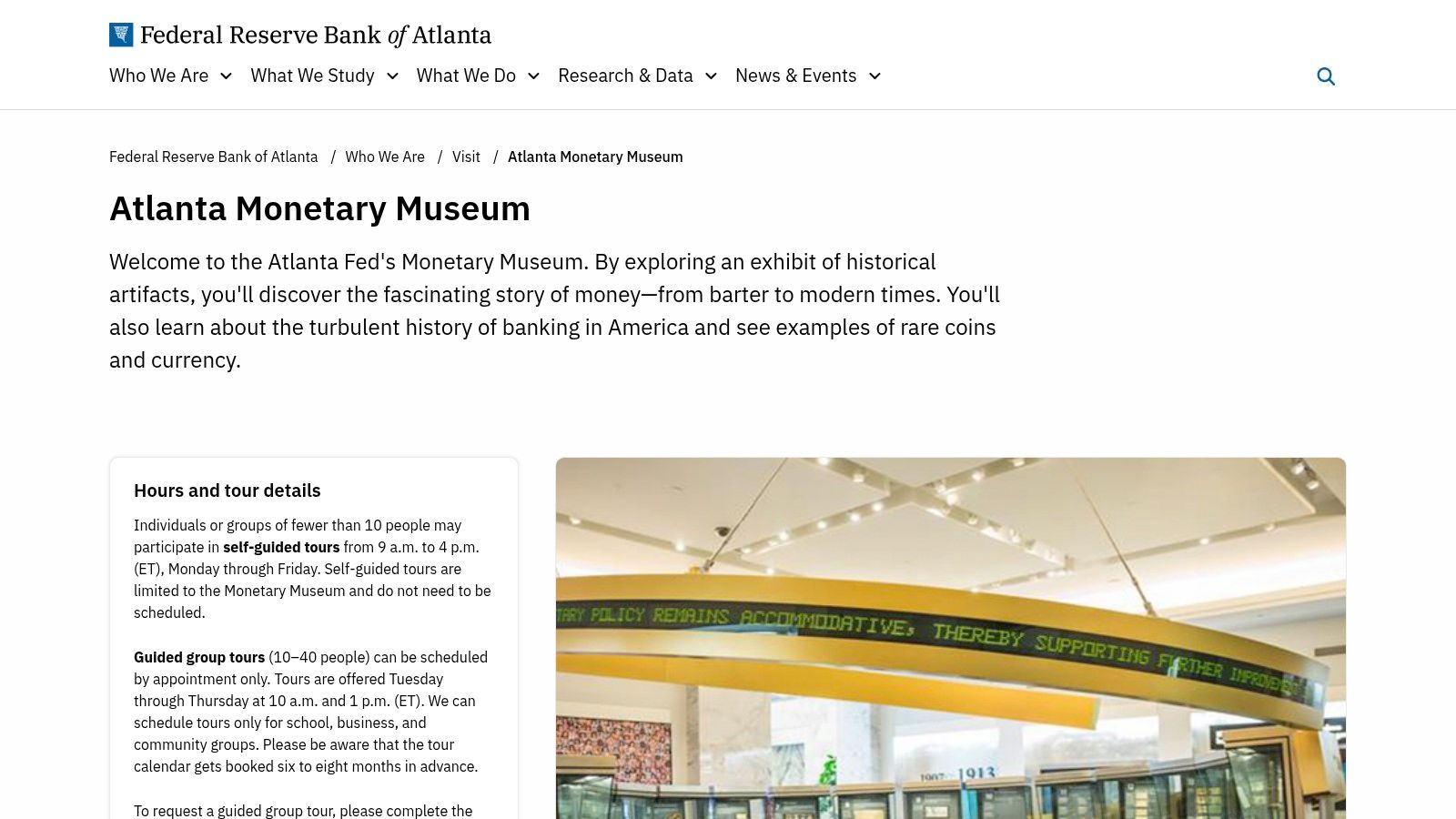
This is the most business-coded option on the list, and that's exactly why it belongs here. The Monetary Museum is one of the few free attractions in Atlanta that feels naturally aligned with finance, operations, policy, and systems-minded teams.
You get exhibits on U.S. currency, banking, and the Federal Reserve's role, plus observation access into cash-processing activity when available. For professionals who like structured visits and tangible subject matter, that can be more satisfying than a generic sightseeing stop.
Where it fits best
Use this one for weekday schedules and intellectually curious groups. It's especially good for finance staff, analysts, compliance teams, students, and anyone who enjoys understanding how institutions work.
I also like it for lunch-and-learn style outings because the visit has clear edges. You arrive, pass security, move through the exhibits, and leave with enough to discuss afterward. There isn't much ambiguity about how to spend your time.
On-the-ground advice: Tell everyone to bring ID and budget extra minutes for screening. The museum is free, but access still runs on federal building logic.
Practical constraints
The main downside is obvious. This is not an anytime attraction. It's geared to weekdays and closes on federal holidays, so it won't help much if you're trying to fill a Saturday afternoon.
The security step also changes the mood. That's fine for business groups, but not ideal if you want something spontaneous and low-friction. This is a “show up prepared” outing.
A few situations where it works well:
- Finance or IT-adjacent teams: The content is relevant enough that the outing doesn't feel random.
- Visiting colleagues with limited time: It has a compact, well-bounded format.
- Educational hosting: The museum gives younger professionals and interns a practical civic institution to engage with.
What works and what doesn't
What works is choosing the Monetary Museum when you want an outing with a clear point. It feels useful, not ornamental.
What doesn't work is treating it like a free-form wander. If your group wants open-air movement, casual social energy, or easy weekend availability, pick Piedmont Park, the BeltLine, or Centennial Olympic Park instead.
For hours and entry details, use the Federal Reserve Bank of Atlanta Monetary Museum page.
6. Centennial Olympic Park and the Fountain of Rings
A common downtown scenario is simple. A client has 45 minutes before dinner, or a conference attendee needs air after a long afternoon indoors. Centennial Olympic Park fits that window well because it is central, easy to reach on foot from the convention corridor, and familiar enough that no one needs a long explanation.
The park was built as part of Atlanta's 1996 Olympic legacy, and that context gives a short visit more substance than a generic downtown green space. The Georgia World Congress Center Authority's park information is the best place to confirm current access details, fountain timing, and event-related changes before you go.
What makes this stop useful for business travelers is efficiency. You can use it as a reset between meetings, a casual walk with a colleague, or a low-pressure place to show an out-of-town guest a recognizable piece of Atlanta. The Fountain of Rings gives the visit a clear focal point, so even a brief stop feels intentional rather than improvised.
It also pairs well with nearby sports and entertainment plans. For visitors who want to connect a downtown walk with a broader sports itinerary, Atlanta Braves-related outings for business travelers and visitors can help round out the schedule.
Where it works best
Centennial Olympic Park is strongest in a few specific use cases:
- Conference breaks: Easy to reach from major downtown hotels and meeting venues.
- Client hosting: Recognizable Atlanta setting without a ticket purchase or long commitment.
- Solo decompression: Enough open space to clear your head without losing time to transit.
- Short team walks: Better for informal conversation than for a structured group activity.
The trade-off is straightforward. This is still a busy downtown park. During major events, weekends with heavy tourism, or peak afternoon heat, the setting can feel more exposed and crowded than relaxing. If the goal is quiet conversation, this is not the strongest pick on the list.
That said, it succeeds when you use it for what it does well. Quick reset. Easy meeting point. Short, memorable downtown stop with some actual Atlanta identity behind it.
7. Historic Oakland Cemetery
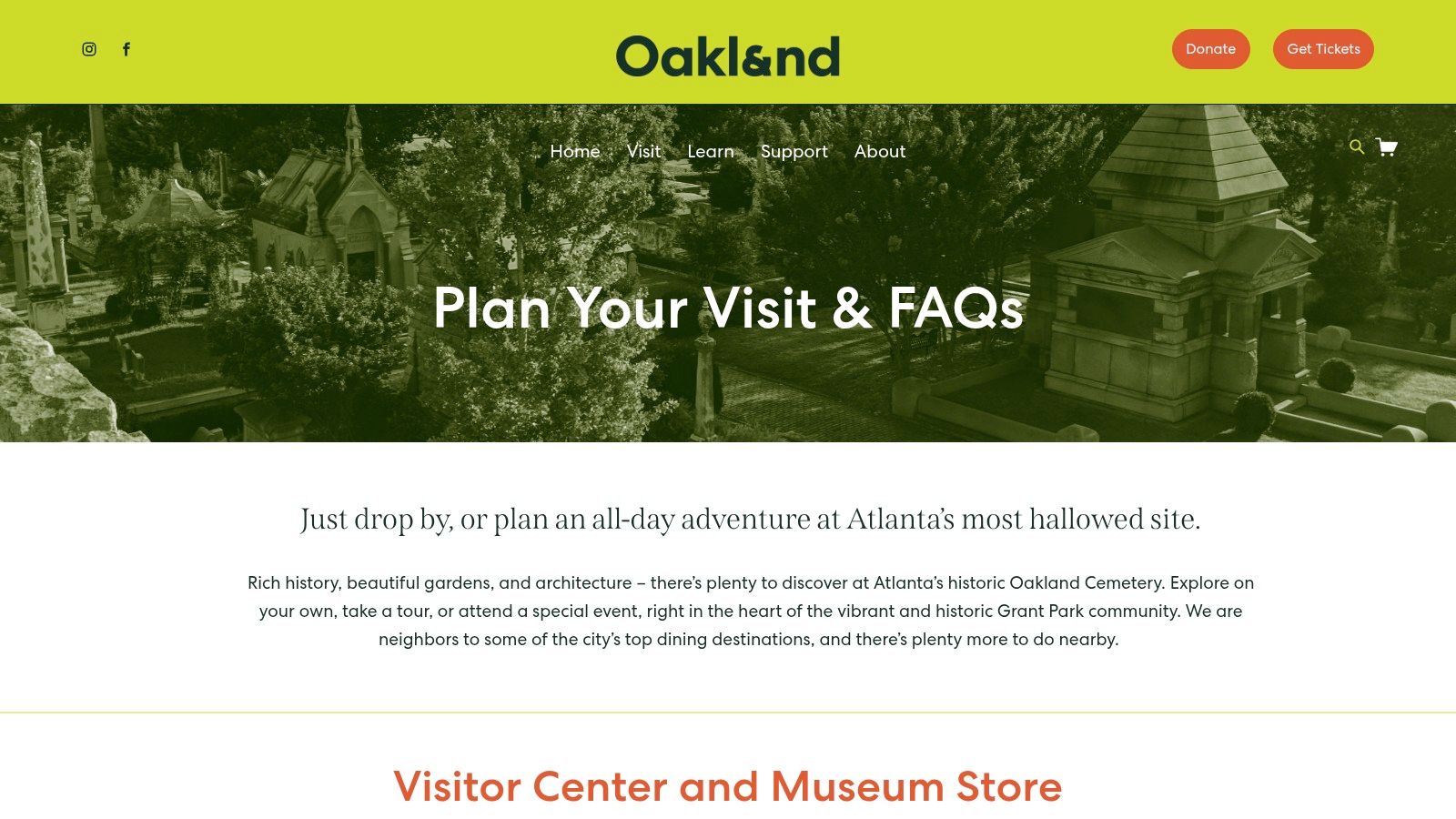
Historic Oakland Cemetery is the quietest recommendation on this list, and for some groups that's exactly the point. When you need a reflective setting close to downtown that still feels distinctly Atlanta, Oakland often works better than the city's busier headline attractions.
The grounds are open for free self-guided visits, and the setting combines natural beauty, architecture, sculpture, and local history in a way that rewards slow walking. Specialty tours may require tickets, but you don't need one to have a strong visit.
Who should choose Oakland
This is a good fit for solo business travelers, small leadership groups, history-minded clients, and anyone who prefers low-noise environments. It also works well when you want to walk and talk without competing with traffic, loud music, or dense crowds.
Unlike some cemetery visits that feel overly niche, Oakland has enough visual variety to hold attention even for visitors who aren't deep history buffs. Skyline views, monuments, and garden character give the place texture.
Practical realities
Oakland isn't as frictionless as a paved urban park. Some paths are uneven, and comfortable shoes matter. Shade can also be limited in hotter weather, so midday summer visits aren't always the smartest move.
The best approach is simple:
- Go when the weather is reasonable. Morning or later afternoon is usually more pleasant.
- Use the map. Self-guided exploration works better when you choose a few areas of focus.
- Keep expectations aligned. This is contemplative, not animated.
Some of the best free things to do in Atlanta GA aren't high-energy at all. They're places that let you think clearly for an hour.
What works and what doesn't
What works is choosing Oakland when your group wants calm, space, and local character. It can be a strong counterweight to the overstimulated pace of a conference or project week.
What doesn't work is trying to force it into a loud, celebratory team outing. If the mood you're after is social and upbeat, go with Piedmont Park or the BeltLine.
Visit the Historic Oakland Cemetery planning page before you go.
Comparison of 7 Free Atlanta Attractions
Business travelers usually have one real constraint, not three hours of free time, but 45 to 90 useful minutes between obligations. The right pick depends on where you are staying, how much structure your group wants, and whether the goal is conversation, local context, or a quick reset outdoors.
| Attraction | Access & Complexity 🔄 | Resources Required ⚡ | Experience Quality ⭐ | Ideal Use Cases 📊 | Tips & Key Advantages 💡 |
|---|---|---|---|---|---|
| Atlanta BeltLine, Eastside Trail | Low. Car-free path with several entry points, though popular stretches get busy | Minimal. Good walking shoes help. Parking near busy nodes is often paid | ⭐⭐⭐⭐, energetic and distinctly Atlanta | Walking meetings, informal client time, solo decompression after meetings | Best for flexible schedules. Start from a point close to dining if you want an easy meal afterward |
| Martin Luther King, Jr. National Historical Park | Moderate. Core areas are straightforward, but popular components can require more planning | Low. Mostly walking, with some wait time depending on timing | ⭐⭐⭐⭐, strongest historical and civic value on this list | Client visits with substance, team reflection, first-time visitors who want context | Better for groups willing to slow down and engage, not rush through |
| Piedmont Park | Low. Easy to enter and easy to use, but event days can affect parking and crowd levels | Minimal. Works with nothing more than a water bottle and comfortable shoes | ⭐⭐⭐⭐, open space, skyline views, strong reset value | Team walks, casual catch-ups, outdoor breaks between sessions | Reliable choice for mixed-energy groups because people can walk, sit, or split off briefly without hassle |
| Atlanta Contemporary | Low. Small footprint and simple visit, with hours worth checking in advance | Minimal. Fits neatly into a short opening in the day | ⭐⭐⭐, focused and current rather than broad | Creative teams, design-minded clients, quick culture stop | Good option when you want something more polished than a park but less time-intensive than a large museum |
| Federal Reserve Bank of Atlanta, Monetary Museum | Moderate. Weekday access and security procedures add friction | Low to medium. Bring ID and allow extra entry time | ⭐⭐⭐, especially strong for finance, policy, and data-oriented audiences | Business groups, analysts, client outings tied to economics or institutions | Strong thematic fit for certain teams. Less useful for groups that just want to relax outdoors |
| Centennial Olympic Park and the Fountain of Rings | Low. Central downtown location makes it easy to reach on foot from nearby hotels and venues | Minimal. Best used as a short stop, not a long block of time | ⭐⭐⭐, recognizable and efficient for a quick break | Short downtown resets, visitor photo stop, casual walk between appointments | Works best if you are already downtown. Less appealing in peak heat because comfort drops fast |
| Historic Oakland Cemetery | Low. Self-guided access is simple, but terrain is less forgiving than a city park | Minimal. Comfortable shoes matter | ⭐⭐⭐, quiet, reflective, visually distinctive | One-on-one conversations, calm solo time, small groups that want space | Best for thoughtful pacing and low-noise conversation, not high-energy team bonding |
A simple way to choose:
- Need the easiest group option? Pick the BeltLine or Piedmont Park.
- Need the strongest sense of place? Pick the King historic site.
- Need something for a professional audience? Pick the Monetary Museum.
- Need a short downtown stop between meetings? Pick Centennial Olympic Park.
- Need quiet instead of activity? Pick Oakland Cemetery.
- Need a compact cultural stop? Pick Atlanta Contemporary.
For business use, the trade-off is straightforward. The more meaningful and specialized sites usually require tighter timing or a more specific audience. The easiest options, especially the BeltLine and Piedmont Park, are less curated but far easier to fit into a real work trip.
Making the Most of Your Time in Atlanta
The best free things to do in Atlanta GA depend less on rankings and more on fit. If you're planning around business travel, the right choice is the one that matches your time window, your group's energy level, and the kind of conversation you want to have. That's why a park, a museum, and a historic site can all be the right answer on the same trip.
For quick, low-friction movement, the BeltLine and Piedmont Park usually win. They work when people are arriving from different places, when you need room for mixed fitness levels, or when the main goal is getting out of a building and resetting. If you're trying to create a sense of Atlanta for a visitor without spending anything, both deliver that efficiently.
For substance and civic context, Martin Luther King, Jr. National Historical Park is the strongest option on this list. It asks more of your time and attention, but it gives more back. Centennial Olympic Park also offers recognizable Atlanta identity, though in a faster, more casual format that's better for short downtown windows.
Atlanta Contemporary and the Monetary Museum are the specialist picks. They aren't universal crowd-pleasers, and that's fine. What they do well is serve specific audiences very well. If your colleagues are creative, design-oriented, analytical, or institutionally curious, those stops often leave a stronger impression than a generic scenic walk.
Oakland is the outlier, and a useful one. Business schedules can be loud, crowded, and overplanned. A quiet place with history and room to walk can be more restorative than the obvious headline attraction. It won't fit every group, but when it fits, it really fits.
The broader lesson is practical. Good planning in Atlanta isn't about stuffing more into the day. It's about choosing activities with low logistical drag and clear upside. That applies whether you're selecting a place to take a client for an hour or making bigger operational decisions for your business. Time, attention, convenience, and risk all matter. The best choices respect those constraints instead of pretending they don't exist.
That's one reason local knowledge matters. An efficient outing and an efficient asset-disposition project both come down to the same habits. Know the constraints, choose the right setting, and avoid unnecessary friction. Atlanta rewards people who plan that way.
If part of your trip or project includes documenting the city well, especially around skyline views, public spaces, or built environments, this architectural photography guide is worth a look.
As an Atlanta-based business, we appreciate the value of practical planning that supports both productivity and the city itself. Free public spaces, historic landmarks, and accessible cultural sites help keep Atlanta usable and welcoming for residents, workers, and visitors alike. Thoughtful business decisions do the same. When companies handle logistics responsibly, reduce waste, and make room for smarter local engagement, the city benefits over the long term.
If your Atlanta business is planning an office cleanout, IT refresh, relocation, or data center decommission, Atlanta Computer Recycling can help you handle retired equipment responsibly. ACR provides business-focused electronics recycling and ITAD services across metro Atlanta, including secure hard drive wiping, equipment pickup, de-installation, packing, and support for hospitals, schools, government agencies, and commercial offices that need a practical, compliance-aware process.