Your Guide to 7 City of Suwanee Events in 2026


A Gwinnett company can spend an entire quarter showing up at local events and still get very little business value from it. The usual failure points are predictable. Teams pick events based on crowd size instead of fit, treat sponsorship like signage instead of positioning, and miss the operational details that turn a community appearance into actual pipeline, partnerships, or municipal visibility.
City of Suwanee events merit closer review because they give B2B service providers multiple ways to participate. A company can sponsor, host a targeted activation, support event operations, or attach a CSR program to an existing gathering. For firms in IT, facilities, healthcare support, education services, security, waste handling, or municipal contracting, that mix creates opportunities for practical relationship building.
Suwanee’s growth has also changed the business case. A larger, more active community usually brings more local institutions, more family traffic, stronger expectations around civic participation, and more pressure on businesses to show up in ways that feel useful, not promotional. This growth creates opportunities for commercial service providers.
The face-to-face channel still does work that digital media often cannot. It gives sales and leadership teams live conversations, lets operations staff demonstrate competence in public, and puts community impact where residents, city stakeholders, and partner organizations can see it. For many B2B firms, the best return does not come from pushing offers on-site. It comes from sponsorship alignment, educational presence, logistical support, and CSR programs such as local Gwinnett County electronics recycling services tied to high-traffic community events.
Suwanee also offers range. Some events are broad awareness plays. Others are better for recurring brand familiarity, hospitality, school and family engagement, or targeted networking with local decision-makers and adjacent vendors.
This guide evaluates each major event through a business development lens. The goal is to help Gwinnett companies decide where to invest, what kind of presence fits the audience, and how to connect brand visibility with community value.
1. City of Suwanee – Calendar of Events
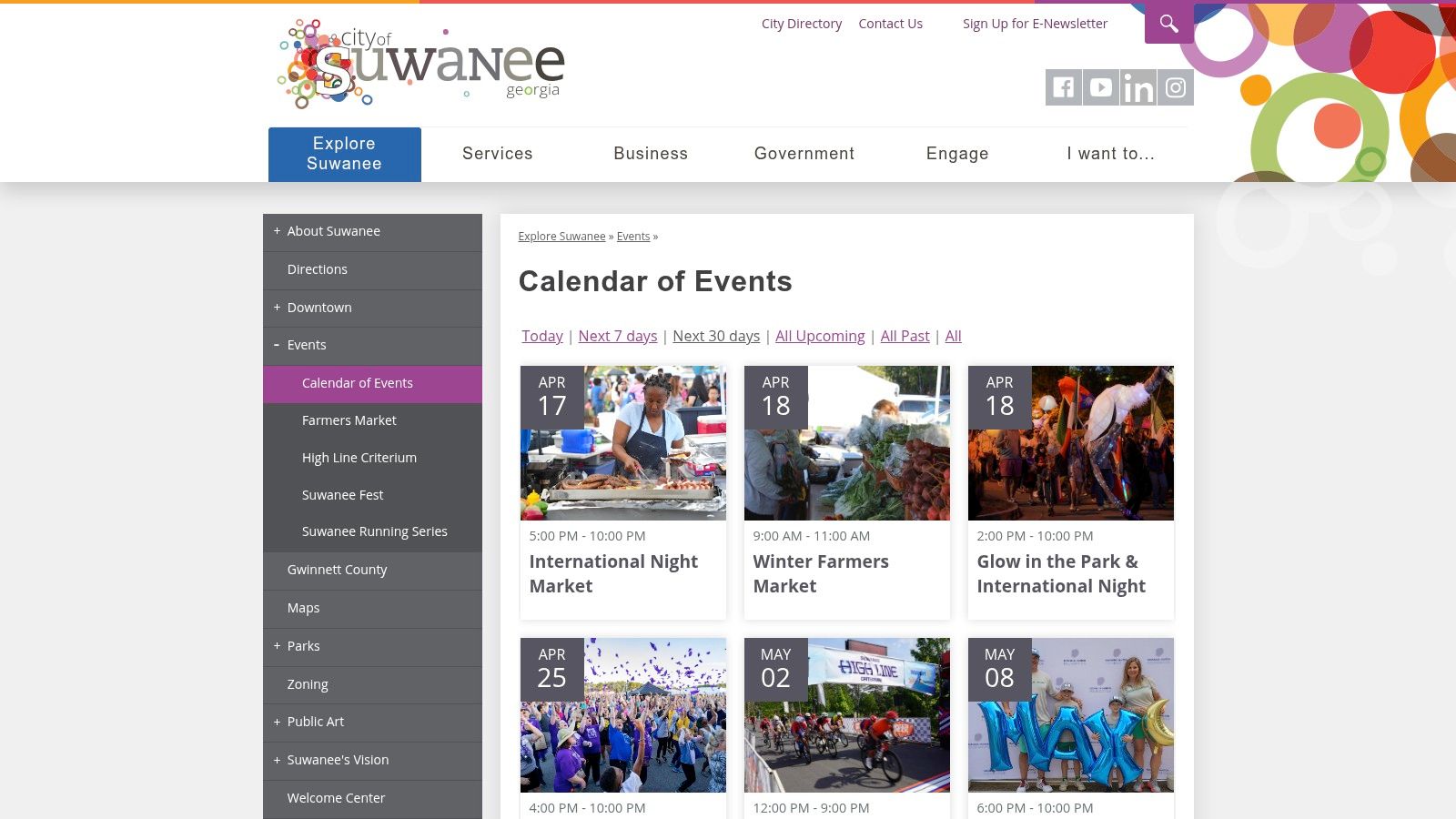
The City of Suwanee Calendar of Events is the operational starting point. If you're evaluating city of suwanee events for sponsorship, vendor outreach, or a community activation, this is the page to monitor first.
It aggregates city-produced programming and permitted partner events across civic venues. That matters because business planning falls apart fast when teams rely on social posts, old blog mentions, or screenshots from prior years.
Why this is the best planning tool
The calendar is practical, not flashy. You can sort by time horizon, move into individual event pages, and confirm venue-specific details before assigning budget or staff. For B2B teams, that reduces the usual waste around duplicate prep, stale dates, or showing up with the wrong setup assumptions.
The most useful parts are straightforward:
- Confirmed event timing: You can quickly sort for current and upcoming activity rather than guessing what is still active.
- Operational detail pages: Many listings connect to pages with parking notes, maps, rules, and event-specific logistics.
- Policy visibility: If your company needs park-use context, vendor rules, or permit direction, the official ecosystem is easier to access from here than from scattered web searches.
For regional service businesses, this is also the best place to map Suwanee into a larger Gwinnett outreach plan. Companies already covering nearby accounts can pair event planning with broader service territory review through Gwinnett County commercial electronics recycling coverage.
Best use for business teams
Use the master calendar as a pipeline tool. Build a simple internal sheet with target event, audience fit, sponsorship status, staffing requirement, compliance risk, and follow-up owner. Then revisit the calendar weekly during active seasons.
What works:
- Official confirmation before marketing commits
- Fast comparison across venues
- Better coordination between sales, operations, and field teams
What doesn't:
- Treating the calendar as the only source of truth for every external ticketing detail
- Assuming a search result with an old event page means the event is current
- Waiting until the month of the event to check application windows
Practical rule: If an event matters to revenue, recruiting, or local partnerships, verify the active year on the official calendar before printing collateral or reserving labor.
The trade-off is that some listings point out to third-party pages for ticketing or expanded details. That's normal, but it means your team still needs a final verification step. Historical pages can also surface in search, which is why the calendar should anchor your planning instead of Google results.
2. Glow in the Park & International Night Market

Glow in the Park & International Night Market is one of the better Suwanee events for broad brand exposure. It combines a night market format with cultural programming, food, retail vendors, and lantern-centered activities that create a naturally social atmosphere.
For businesses, this is less about hard selling and more about visible community alignment.
Where it fits in a B2B strategy
This event attracts a mixed audience and rewards brands that feel additive, not intrusive. If your company serves schools, healthcare providers, apartment operators, or family-facing organizations, the cultural and community tone gives you room to lead with service, education, or sustainability.
A conventional lead-gen booth can feel flat here. A better play is a simple, high-utility presence:
- sponsor a family activity
- support a low-friction giveaway tied to useful business services
- host a sustainability message that doesn't overwhelm the event mood
That approach works well for companies with adjacent community touchpoints in the broader Asian retail and commercial corridor, including nearby areas such as Johns Creek and the H Mart business district.
What works and what doesn't
This event's biggest strength is range. You get visibility with families, local professionals, civic participants, and residents who may not attend a niche business function. That can be valuable if your sales cycle is relationship-based and local trust matters before a formal procurement conversation begins.
What tends to work:
- Branded hospitality or sponsored recharge space
- Multilingual or culturally aware outreach materials
- CSR ideas that feel useful, such as electronics reuse education or secure-device disposal awareness
What tends not to work:
- Heavy sales language
- Booth designs that require attendees to stop for long demos
- Activations that ignore parking flow, crowd movement, or weather risk
Community-first events reward brands that help the evening run better. They don't reward brands that behave like trade show exhibitors.
The trade-off is logistics. Outdoor night programming creates visibility, but it also introduces traffic, parking pressure, and weather exposure. If your team depends on power, secure storage, or controlled demo conditions, you'll need a lean setup and a backup plan.
For many B2B providers, Glow is best used near the top of the funnel. Build recognition. Collect a small number of high-quality local conversations. Then follow up later through direct outreach, chamber networking, or a more business-focused event.
3. Suwanee Fest
A Gwinnett business that wants one event to anchor its local community strategy usually starts with Suwanee Fest. The reason is practical. Few city events give you the same mix of foot traffic, civic visibility, sponsor inventory, and room for a service-focused activation that still feels community-first.
For B2B providers, the opportunity is broader than booth traffic. Suwanee Fest can support sponsor recognition, local trust building, employee volunteer participation, and public-facing CSR. A company that handles IT asset disposition, workplace technology, facilities support, banking, insurance, or professional services can use this event to stay visible with residents who also sit on school boards, manage offices, recommend vendors, or influence purchasing informally.
The best approach is to treat Suwanee Fest as a market-positioning play, not a direct-response campaign.
That distinction matters. This festival is large, busy, and family-oriented. People are not showing up to compare vendors in detail. They will, however, remember a company that contributes something useful, runs a disciplined activation, and follows up well after the weekend.
Strong fits include:
- sponsor packages that include both pre-event branding and on-site presence
- a booth built around one clear message
- staff trained to start short, natural conversations
- CSR concepts such as secure electronics recycling education, office cleanout guidance, or a community collection initiative tied to responsible disposal
- hospitality or outreach that supports relationship building after the event, similar to how businesses use a private dining setting for client conversations in Hapeville
Weak fits include:
- complicated displays that are hard to transport from parking and shuttle drop-off points
- long demos that create backups
- aggressive lead capture tactics
- generic giveaway tables with no connection to your service line
- staffing plans that rely on junior team members without event judgment
Execution is where companies usually win or waste the investment. Exhibitor placement, load-in timing, weather exposure, storage limits, and crowd flow all affect results. I have seen capable service firms underperform because they brought trade show habits to a civic festival. Suwanee Fest rewards brands that are visible, organized, and helpful. It does not reward overbuilt setups or messaging that sounds like a procurement pitch.
The internal value can be just as important as the public one. If your company wants a local CSR program that employees will support, this is one of the cleaner opportunities on the calendar. A branded volunteer effort, a school-facing sustainability message, or an e-waste awareness campaign can strengthen recruiting, retention, and community reputation at the same time.
Suwanee Fest works best for businesses that can commit to planning, simplify their message, and use the event as one part of a longer Gwinnett relationship strategy. For many local B2B firms, it offers the highest visibility ceiling on the city's calendar, but only if the activation is built for community engagement rather than pure sales.
4. Suwanee American Craft Beer Fest
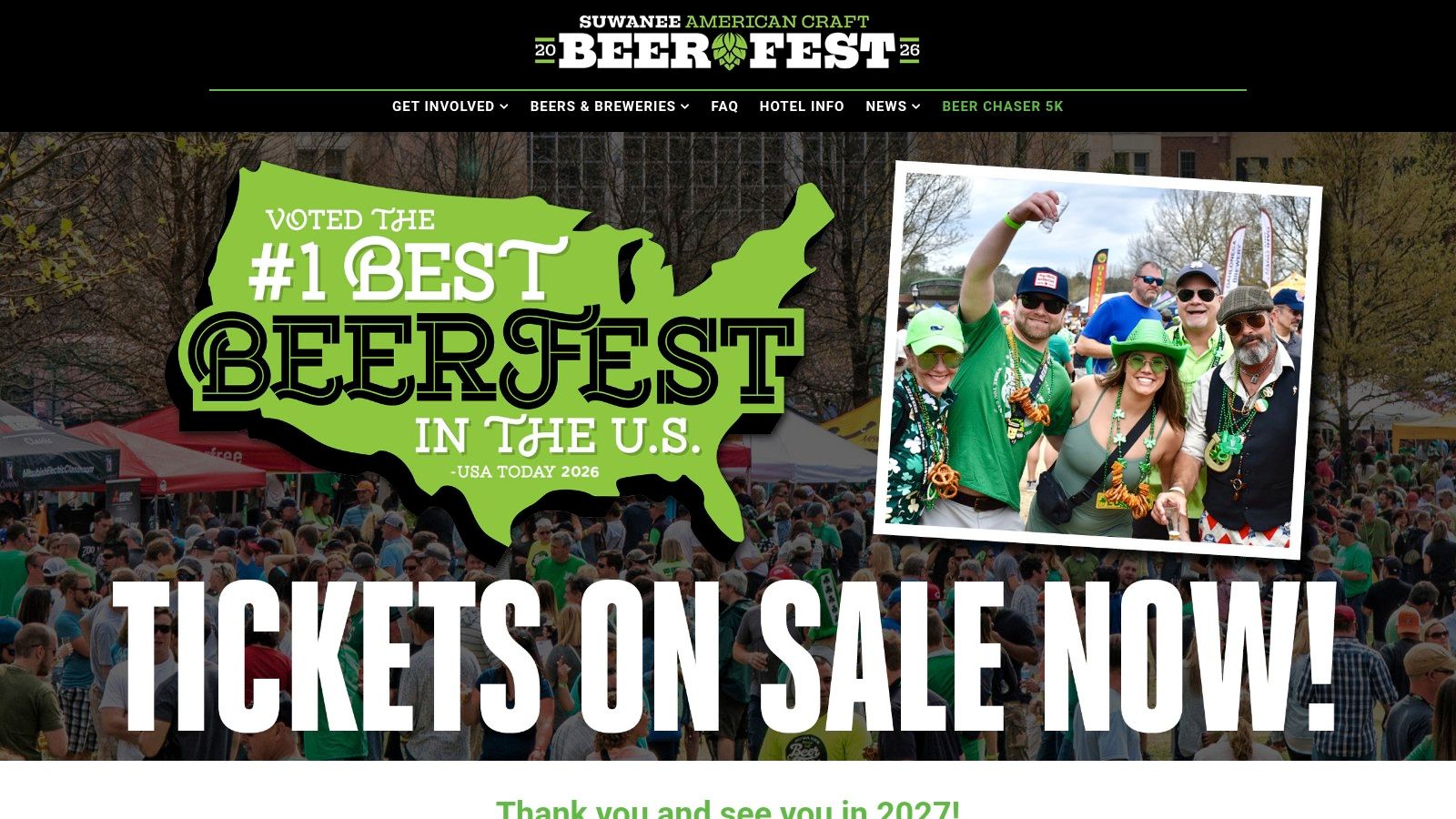
A Gwinnett service firm brings two account managers, hosts a small group of clients, supports a local cause, and leaves with stronger relationships than it would from a standard booth at a broad public festival. That underscores the value of the Suwanee American Craft Beer Fest. It is a tighter, adult audience with clearer sponsorship logic and better conditions for conversation than many city events.
For B2B companies, the advantage is selectivity. This event does not offer the widest possible reach. It offers a better setting for firms that sell through trust, referrals, and local visibility among established professionals.
That changes the playbook.
Best use case: hosted relationships, not mass lead capture
Beer Fest works best when a business treats it as a controlled brand and hospitality channel. Client hosting, sponsor visibility, and charity alignment usually outperform a typical promotional setup. The audience is there for an experience, which gives your team more time to talk naturally if the activation feels appropriate to the setting.
Strong fits include:
- commercial real estate, architecture, and construction firms hosting partners
- financial, legal, and insurance companies building local referral relationships
- IT, telecom, and security providers meeting decision-makers in a lower-pressure setting
- companies attaching their name to a community cause rather than a hard sales pitch
- B2B brands that want regional visibility with a local civic connection
A company using Suwanee events as part of a broader metro outreach plan can also connect this approach with relationship-building in other hospitality-centered districts, including Hapeville commercial outreach near Volare Bistro.
Trade-offs to address before you commit
The constraints are straightforward. The event is centered on alcohol, so brand fit matters. Some firms will rule it out for compliance, internal policy, or audience-positioning reasons, and that is a reasonable decision.
For companies that do participate, staff selection matters more than booth design. Send senior people who can read the room, keep the tone professional, and represent the company well in a social environment. Junior event staff handing out swag rarely produces much value here.
Operational discipline matters too. Ticketed festivals often run smoothly, but they still require planning around sponsorship terms, guest management, weather, load-in, and on-site storage. Businesses that simplify their presence usually perform better than those trying to force a trade show model into a tasting event.
Where B2B brands can stand out
The better opportunity is to sponsor something useful or host something intentional. A branded lounge element, a measured VIP presence, or a community-facing CSR tie-in will usually carry more weight than a generic table.
Good options include:
- sponsor hospitality with named hosts and a clear invite list
- a charity tie-in with local relevance
- concise messaging tied to one service line
- senior staff focused on relationship quality, not badge volume
- a public-service element such as responsible recycling or event support logistics
Weak options include:
- aggressive lead forms in the middle of a tasting experience
- family-oriented activations that do not match the audience
- compliance-heavy handouts that read like procurement documents
- oversized setups that create logistical friction
- assuming high attendance means strong commercial intent
Suwanee American Craft Beer Fest is one of the more targeted city of suwanee events for local business development. For the right Gwinnett company, it can produce stronger conversations, better sponsor visibility, and a more credible community presence than a broader festival, provided the activation is built for hospitality and judgment rather than volume.
5. Suwanee Wine Fest
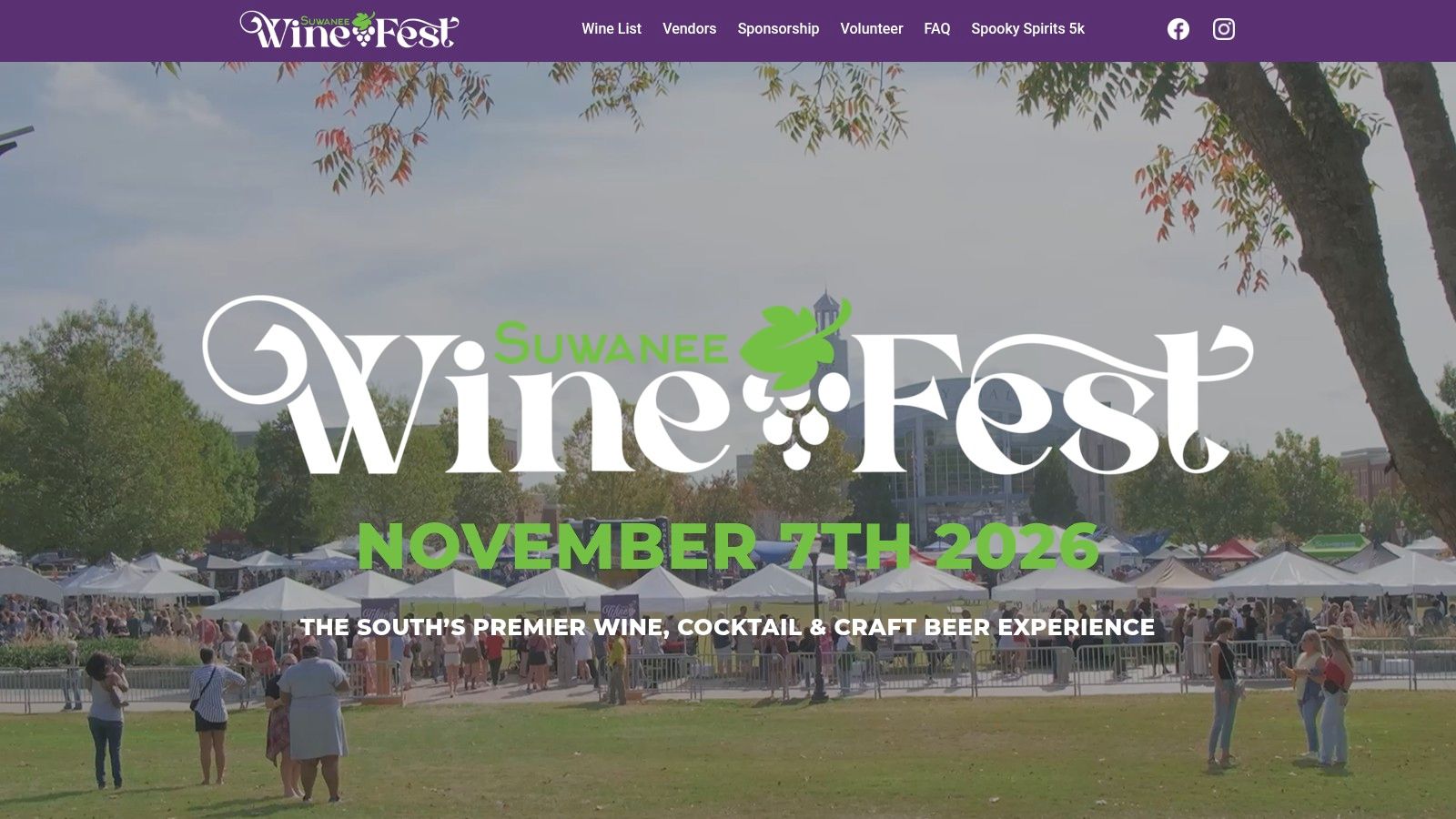
A Gwinnett firm brings six clients, reserves a small hospitality footprint, and leaves with two stronger referral relationships plus a clearer position in the local business community. That is the right way to evaluate Suwanee Wine Fest. It is less about foot traffic and more about who your team hosts, how the brand shows up, and whether the setting fits the relationships you want to build.
For B2B service providers, Wine Fest works best as a client retention and partner development event. The audience and tone support measured hosting, polished sponsorships, and brand visibility that feels credible in a civic setting. Companies in financial services, commercial real estate, healthcare support, legal services, managed IT, telecom, and security often have a better reason to be here than brands looking for fast lead capture.
Best used for hosted relationship building
The commercial case is straightforward. If your business already serves Gwinnett accounts or depends on local referral channels, Wine Fest gives you a setting to spend time with decision-makers outside the usual meeting format. The event can also support a community-facing initiative if it is handled with restraint. A local technology provider, for example, could pair event visibility with outreach around responsible electronics disposal and reinforce that message through nearby service campaigns such as Union City business recycling programs.
That approach tends to outperform generic booth behavior.
A strong activation usually includes a defined guest list, a host who can carry real conversations, and one clear message tied to a service line or community commitment. The weak version is easy to spot. Staff collect cards without context, signage gets too technical, and the brand tries to sell in an environment built for hospitality.
Where the trade-offs are real
Wine Fest does have limits. It is a narrower audience than a broad civic festival, weather can affect attendance and pacing, and attribution is harder than it is with a form-driven campaign. Businesses need to decide before the event what success means. In practice, that usually means quality conversations, introductions to target accounts, sponsor visibility with the right audience, or a CSR touchpoint that improves local reputation.
The event also rewards discipline. Keep the setup clean. Keep the staffing senior enough to hold useful conversations. Keep follow-up tight the next week while the interaction is still fresh.
Suwanee Wine Fest is one of the more selective city of suwanee events for business development. Companies that treat it as a hosted relationship channel, not a volume play, usually get more from it.
6. Suwanee Farmers Market
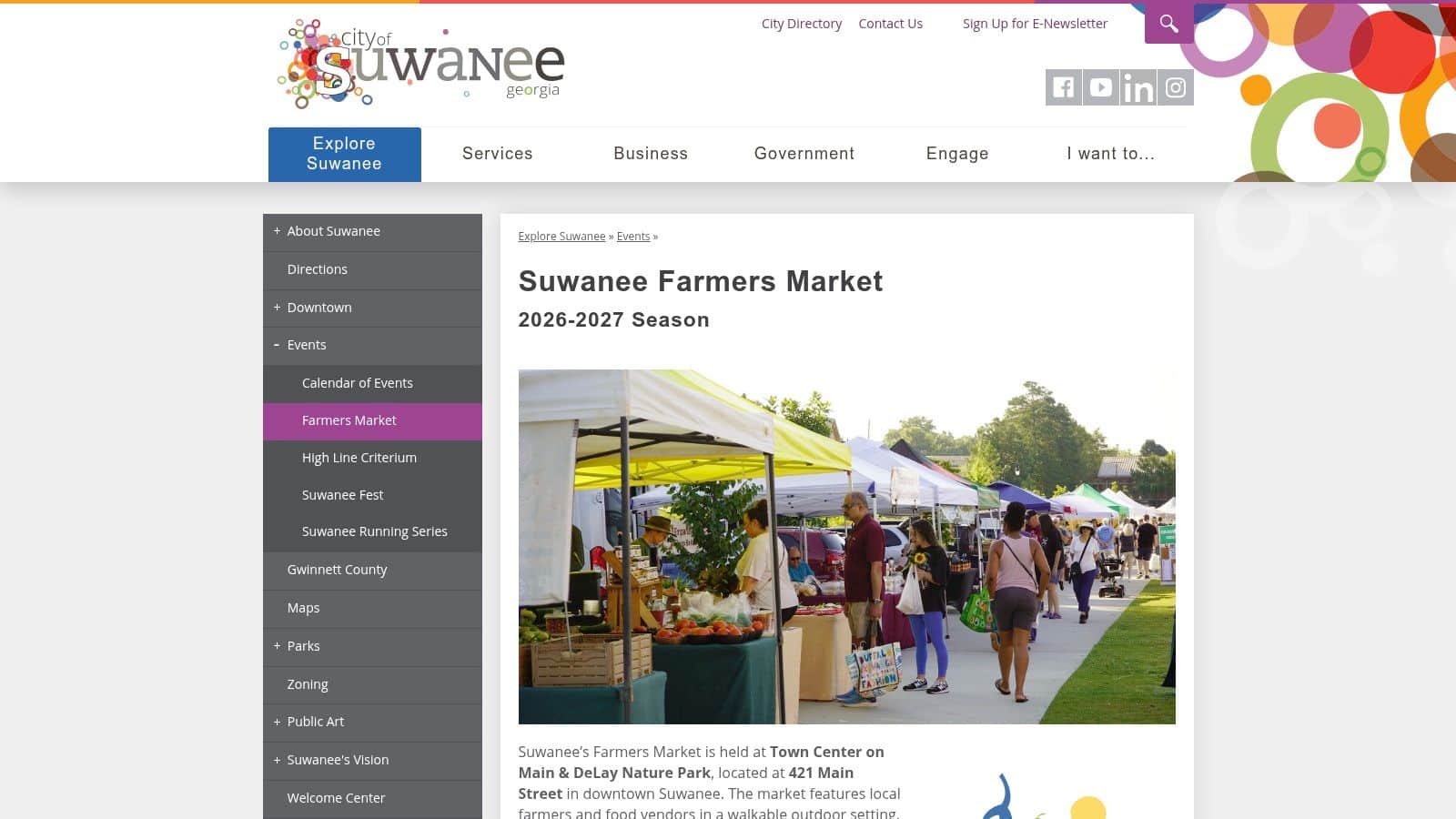
A Gwinnett business that wants repeat visibility, practical community access, and a lower-risk test environment should pay attention to the Suwanee Farmers Market. It is one of the better city of suwanee events for firms that benefit from familiarity rather than spectacle.
That distinction matters for B2B providers. A recurring market gives staff multiple chances to meet residents, local operators, civic partners, and nonprofit contacts in a setting that does not force every interaction into a hard sell. Over time, a recognizable presence can do more for local credibility than a single large sponsorship.
Best for recurring visibility and CSR testing
The farmers market suits businesses that want to show up consistently and attach their brand to practical community value. The setting near Old Town and the library supports that. It feels local, walkable, and routine, which is useful if your goal is to become known, not just noticed.
This format works well for:
- community education campaigns
- light brand presence with repeat impressions
- partnerships with schools, nonprofits, or sustainability groups
- collection drives that work better on a scheduled basis than as a one-day stunt
For regional operators, that visibility can also support nearby market positioning. A company promoting secure disposal or sustainability services can reinforce that message through related service-area content such as Union City commercial electronics recycling programs.
A practical event for pilot activations
For B2B service providers, the market is a smart place to test an activation before committing budget to a larger festival. An e-waste education table, a scheduled small-item collection day, or a co-hosted nonprofit awareness effort is easier to staff and measure here than at a headline event with heavier logistics.
The opportunity is straightforward. Suwanee's event ecosystem depends on recurring volunteer support and community operations, but electronics use and end-of-life disposal rarely get visible attention in public event programming. That creates a credible opening for firms in ITAD, secure recycling, office cleanouts, and sustainability consulting to sponsor a useful service instead of just renting space.
There are trade-offs. Attendance is smaller than at marquee festivals, early hours can limit access to some business decision-makers, and weather has more impact when success depends on repeated dates across a season.
What tends to work:
- the same booth identity each week or month
- one clear community message
- a simple call to action tied to a service or collection day
- staff who can explain the local benefit in plain language
What usually underperforms:
- oversized displays built for festival traffic
- expensive activations that need large crowds
- teams expecting immediate lead volume instead of relationship building
The farmers market is not a scale play. It is a consistency play. For many Gwinnett businesses, especially those testing sponsorships or CSR programs, that is the better investment.
7. Summer Porch Jam

A Gwinnett business owner arrives expecting a standard festival footprint, then finds Old Town spread across porches, lawns, and side streets. That change matters. Summer Porch Jam is not a volume play. It is a neighborhood trust play.
For B2B service providers, that distinction affects budget, staffing, and goals. Porch Jam works best for firms that want to be associated with local quality of life, not firms that need a high-traffic sales environment. If the objective is brand familiarity, recruiting visibility, or light-touch community engagement, the format can work well. If the objective is lead capture at scale, there are better events on Suwanee's calendar.
The strongest fit is usually businesses that already sell through reputation and referrals. That includes:
- home and property service firms
- local professional services
- healthcare and wellness providers
- sustainability-focused community partners
- employers trying to build local hiring visibility
Execution needs to match the setting. Static booths with heavy hardware often feel out of place. Mobile teams, branded volunteer support, sponsored wayfinding, refreshment stations, and short educational interactions tend to fit the tone better.
There is a real trade-off here. The distributed layout makes logistics harder. Power access, storage, weather planning, and setup control are less predictable than at a park-based event. That limits what an IT services company, recycler, or operations-heavy sponsor can realistically deliver on site.
For CSR-minded companies, Porch Jam is usually better for awareness than collection. A business that handles electronics recycling, office cleanouts, or sustainability consulting can use the event to introduce a future community initiative, support volunteers, or attach its name to a useful public-facing touchpoint. The actual collection day is often easier to run at a more controlled venue.
One practical lesson stands out. At events like this, staff judgment matters more than physical setup. Send people who can hold short, natural conversations, answer practical questions, and represent the business without sounding scripted.
Porch Jam will not give every sponsor the same return profile as a headline festival. It can still be a smart investment for Gwinnett companies that want community credibility, soft brand visibility, and a clear position as a local partner before asking for business.
Comparison of 7 City of Suwanee Events
| Event | 🔄 Implementation complexity | ⚡ Resource requirements | 📊 Expected outcomes | 💡 Ideal use cases | ⭐ Key advantages |
|---|---|---|---|---|---|
| City of Suwanee – Calendar of Events | Low, centrally maintained, routine updates | Low, web access; city staff upkeep | Reliable confirmed dates, logistics and permit links | Confirm schedules, apply for permits, event planning | Authoritative, comprehensive official source |
| Glow in the Park & International Night Market | Medium, multi-night program with workshops | Medium, vendor coordination, parking/shuttles | High attendance, strong cultural exposure | Community outreach, cultural programming, vendor visibility | Free access, diverse audience and family‑friendly |
| Suwanee Fest | High, multi-stage, parade, juried exhibitors | High, large staff, shuttles, exhibitor logistics | Very high foot traffic and sponsor visibility | Major brand/sponsor activations, large-scale sales | Flagship festival with strong media coverage |
| Suwanee American Craft Beer Fest | Medium, ticketed event with age-restricted logistics | Medium, security, ticketing, vendor operations | Targeted 21+ draw; strong attendance for outreach | Adult-focused marketing, beverage partnerships | Established brand, professional event operations |
| Suwanee Wine Fest | Medium, curated tasting format with VIPs | Medium, curated vendors, tasting setup, staffing | Repeat, reliable audience with sponsor exposure | Wine promotions, sponsor outreach to older demographics | Well-organized, complementary demographic to beer fest |
| Suwanee Farmers Market | Low, recurring weekly/seasonal schedule | Low, vendor stalls, basic city support | Consistent local foot traffic and steady visibility | Regular local outreach, product sampling, community presence | Recurring schedule; local-producer emphasis |
| Summer Porch Jam | Medium, distributed micro-stages across Old Town | Low–Medium, decentralized logistics, limited power | Hyper-local engagement and high neighborhood goodwill | Neighborhood outreach, conversational activations | Unique strolling format encouraging informal interaction |
Integrating Your Business into the Heart of Suwanee
A Gwinnett service company sponsors an event, sets up a table, gives away a few items, and goes home with little to show for it. The problem usually is not the event. The problem is treating city of suwanee events as one-off promotions instead of part of a local market strategy.
The stronger approach is to assign each event a job.
Use Suwanee Fest and larger city programming for reach, sponsor visibility, and partner introductions. Use Glow in the Park and the International Night Market for cultural alignment and family-facing brand trust. Use the beer and wine festivals for client hospitality, referral relationships, and adult-focused offerings. Use the Farmers Market for repetition and local familiarity. Use Summer Porch Jam for neighborhood goodwill and conversations that work better in a relaxed setting than in a crowded expo-style footprint.
That choice should follow your operating model, not your enthusiasm. Some B2B firms need appointments, qualified conversations, or hiring leads to justify the spend. Others get better returns from sponsorship signage, hosted meetups, employee volunteer days, or community service programs tied to the event calendar. A modest activation with clear ownership usually outperforms an expensive setup that no one on the team can run well.
This matters in Suwanee because the city rewards consistency. Businesses that show up once may get visibility. Businesses that show up across the year, with a clear role in the community, build recognition with residents, school stakeholders, local officials, and nearby employers.
For B2B service providers, that opens a lane many event sponsors ignore. Community events create demand for cleanup, logistics, technology handling, sustainability support, and compliance-aware public service projects. An e-waste drive is a good example. If it is planned well, it supports CSR goals, gives your staff a visible service role, and starts credible conversations with schools, medical groups, offices, and nonprofits that need help managing retired equipment.
There is a real trade-off here. Public-facing collection events attract attention, but they also require process discipline. If collected devices may contain sensitive data, the program needs documented intake procedures, chain of custody, secure transport, and a clear plan for data destruction and downstream handling. Without that backbone, the branding upside is not worth the compliance risk.
That is why the best event strategy is usually narrow at first. Pick one or two Suwanee events that fit your audience, service line, and staffing capacity. Define the goal before you commit. Decide whether success means meetings booked, partners identified, volunteer participation, email signups, or follow-up consultations. Then build the activation around that outcome.
A CSR component works best when it is useful, visible, and easy to explain. Secure electronics recycling fits that standard well. It gives a sponsor something more credible than generic swag, and it ties community presence to a practical service local organizations need.
Atlanta businesses that want more than logo exposure can turn Suwanee event participation into a real community and compliance strategy with Atlanta Computer Recycling. ACR helps commercial clients with secure electronics recycling, IT asset disposition, hard drive wiping using the DoD 5220.22-M 3-pass standard, shredding for obsolete media, on-site de-installation, packing, pickup, and larger data center decommissioning projects across the metro area. If you're planning a sponsorship, school partnership, office cleanout, or community e-waste activation in Suwanee, ACR can help you build a program that protects data, supports sustainability, and fits the way your business operates.