A Pro’s Guide: Best Things to Do in Atlanta GA (2026)


You land in Atlanta with a tight schedule. A conference badge is in your bag, two prospect meetings are on the calendar, and there is just enough time to decide whether this trip will produce market insight or only mileage. For operators, procurement leaders, and ITAD teams, the best things to do in Atlanta GA are the places that reveal how the city buys, deploys, secures, and retires technology.
That changes the definition of a destination.
Atlanta is one of the few markets where research institutions, hospital systems, enterprise headquarters, government operations, logistics infrastructure, and large event venues sit close enough together to study in a single trip. For a B2B audience, those sites are more useful than a standard visitor itinerary because they show where budget authority sits, how equipment moves through the region, and where compliance pressure becomes operational work.
The value is practical. A campus can show decentralized device lifecycles. A hospital network can expose tighter chain-of-custody expectations. An airport, school system, or state operation can reveal how public procurement and security requirements shape refresh schedules. Each stop gives a different read on asset volume, risk tolerance, and vendor fit.
In practice, Atlanta rewards buyers and service providers who treat the city as an operating market rather than a tourism stop. The institutions in this guide function as business intelligence checkpoints. They help you assess demand, spot partnership opportunities, and understand where secure IT asset disposition fits across the metro area.
1. Georgia Tech Campus & Advanced Technology Research Center
Georgia Tech is one of the fastest ways to understand how Atlanta thinks about applied technology. A campus visit isn’t just academic sightseeing. It puts you in front of a dense environment of labs, procurement workflows, research computing, endpoint turnover, and the practical realities of managing devices across a large institutional footprint.
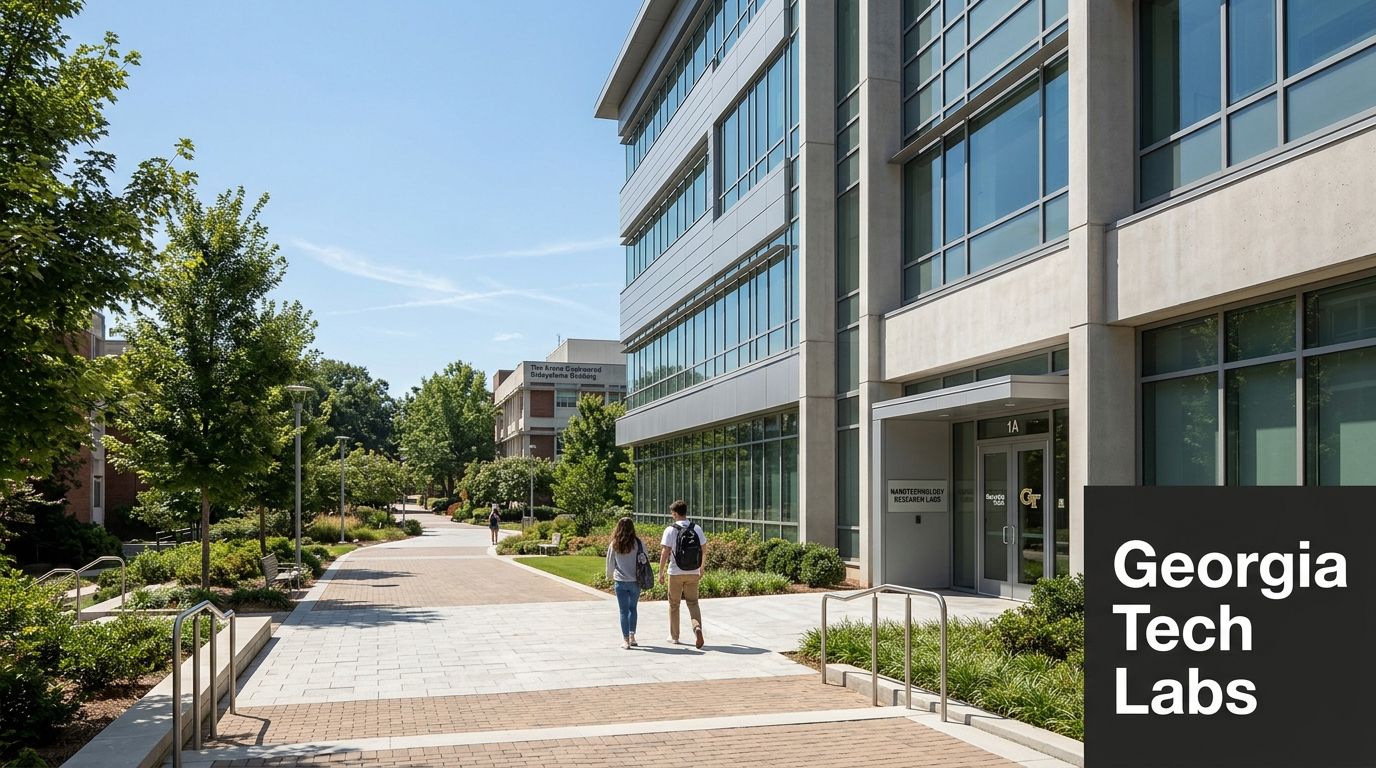
If you work in ITAD, infrastructure services, or enterprise recycling, this matters because universities don’t refresh hardware like a single corporate office. They cycle equipment across departments, labs, shared environments, and grant-funded programs. That creates uneven retirement schedules and different risk profiles for desktops, laptops, storage, networking gear, and specialized devices.
What to pay attention to on campus
The useful move isn’t wandering the campus for atmosphere. It’s observing how a research institution creates parallel buying and retirement streams. Engineering, administrative units, student computing, and research operations rarely dispose of assets on the same timetable.
A good visit usually includes:
- Visitor center coordination: Use formal campus access points and scheduled tours so you’re not guessing where decision-makers or relevant facilities sit.
- IT procurement conversations: Ask how departments handle asset lifecycle transitions, surplus equipment, and chain-of-custody requirements.
- Conference timing: If a technology event is happening on campus, you’ll get a better read on partner ecosystems and local vendor presence.
- Operational mapping: Note where central governance exists and where individual schools or labs appear to retain autonomy.
Universities are strong indicators of future enterprise demand because they combine budget discipline with constant technical change.
Georgia Tech also helps sharpen your eye for what doesn’t work in Atlanta. Generic outreach to “the university” usually goes nowhere. The better path is identifying who owns policy, who owns logistics, and who owns the actual exit of equipment from rooms, labs, and buildings. Those are often three different groups.
For business travelers asking about the best things to do in Atlanta GA, this is high-value fieldwork. You’re not just visiting a campus. You’re studying a large-scale technology environment where lifecycle management is visible if you know where to look.
2. Emory University & Healthcare IT Operations
A meeting near Emory can tell a B2B buyer more about Atlanta’s operating discipline than a tourist stop ever will. The university, health system, and research environment sit close enough to overlap, but their technology lifecycles do not move in sync. That separation matters if you sell ITAD, de-installation, secure logistics, or downstream processing.
Healthcare procurement rewards vendors who understand risk at the workflow level. A retired nurse station PC, a research lab workstation, and an administrative printer may all leave service in the same month, but they do not follow the same approval path, documentation standard, or pickup window. Teams that treat the entire environment like a standard office cleanout usually lose credibility fast.
Where healthcare buyers get selective
At Emory-linked environments, the primary buying signal is operational maturity. Procurement may care about pricing, but compliance, security, facilities, and clinical stakeholders often shape whether a vendor gets approved at all. Buyers ask specific questions. Who maintains chain of custody? How are storage devices documented? Which crews can enter restricted spaces? What happens if pickup timing interferes with patient care or lab schedules?
That is why vendors with experience in data center decommissioning for Atlanta organizations often stand out in healthcare conversations. The discipline overlaps. Controlled removals, documented handling, and clear sequencing matter in both settings, even when the assets and stakeholders differ.
A business visit here also helps clarify a larger Atlanta pattern. The city gives you access to dense institutional demand within a small geographic footprint. For an operator, that is more useful than stacking recognizable attractions onto the itinerary. Time spent around Emory is field research on how serious organizations in Atlanta handle privacy, uptime, and equipment retirement.
What works when engaging healthcare systems
- Lead with controls: Start with audit trails, data handling procedures, and access protocols.
- Build around care delivery: Pickup windows and labor plans have to fit clinical operations and research schedules.
- Separate asset streams: End-user devices, infrastructure equipment, and department-specific hardware often require different handling.
- Expect multi-party review: IT, security, compliance, procurement, facilities, and legal may all have a say before work begins.
For a B2B reader asking about the best things to do in Atlanta GA, Emory belongs on the list because it exposes how high-accountability institutions buy. It is a practical stop for understanding Atlanta’s healthcare IT environment, the stakeholder complexity behind disposition projects, and the level of process discipline the market expects.
3. Atlanta Data Center Corridor & Cloud Infrastructure Operations
A morning in Atlanta can start with a cloud region sales call and end with a loading dock conversation about retiring racks, storage, and network gear. That is why the data center corridor belongs on a B2B version of the best things to do in Atlanta GA. It gives operators, vendors, and investors a direct view into one of the metro’s most practical demand centers for IT asset disposition.
What matters here is density and repetition. Atlanta has a meaningful concentration of colocation, cloud, and enterprise infrastructure activity, so refresh projects are not isolated events. They happen in cycles. For anyone evaluating the local market, that creates a clearer read on how buyers choose service partners, how facilities manage physical turnover, and where disciplined execution beats broad marketing claims.
Data center teams buy differently from universities and hospital systems. Their attention goes straight to process risk.
They ask whether a provider can remove equipment without disrupting adjacent production environments. They ask about chain of custody, serialized inventory, staging, dock coordination, badging requirements, and how packed assets leave the site. A generic recycling pitch usually fails in that setting. A focused service like data center decommissioning in Atlanta is more relevant because it speaks to the actual work: de-installation, palletization, documentation, and controlled outbound logistics.
The trade-off is straightforward. Some buyers want one vendor to promise everything. Mature operators usually prefer a partner that handles a defined scope well and documents each handoff. In live infrastructure environments, reliability beats breadth.
A business visit to this segment is useful if you treat it as field research rather than a sightseeing stop. Review how providers position their airport and high-security infrastructure handling experience in Atlanta because the same discipline often carries over into data center work. The common thread is controlled access, scheduling pressure, and very little tolerance for confusion on site.
What to examine in Atlanta’s data center market
- Decommissioning workflow: Ask how teams label, disconnect, stage, and document assets before anything leaves the floor.
- Facility coordination: Loading access, elevator reservations, security approval, and after-hours windows often shape the project more than the hardware itself.
- Scope discipline: Providers who define what they will remove, pack, and report tend to execute better than firms selling vague end-to-end promises.
- Downstream accountability: Buyers want to know where equipment goes, how records are maintained, and what proof they receive after pickup.
For a B2B reader, this is one of the most useful things to do in Atlanta because it shows how the city’s infrastructure economy buys. The lesson is practical. In Atlanta’s data center market, providers win by being orderly, documented, and easy for operations teams to trust.
4. Hartsfield-Jackson Atlanta International Airport Technology Infrastructure
Few places in Atlanta make operational complexity as visible as the airport. For a business visitor, the lesson isn’t aviation trivia. It’s scale, coordination, redundancy, and the challenge of retiring equipment inside a facility that can’t slow down for your project.
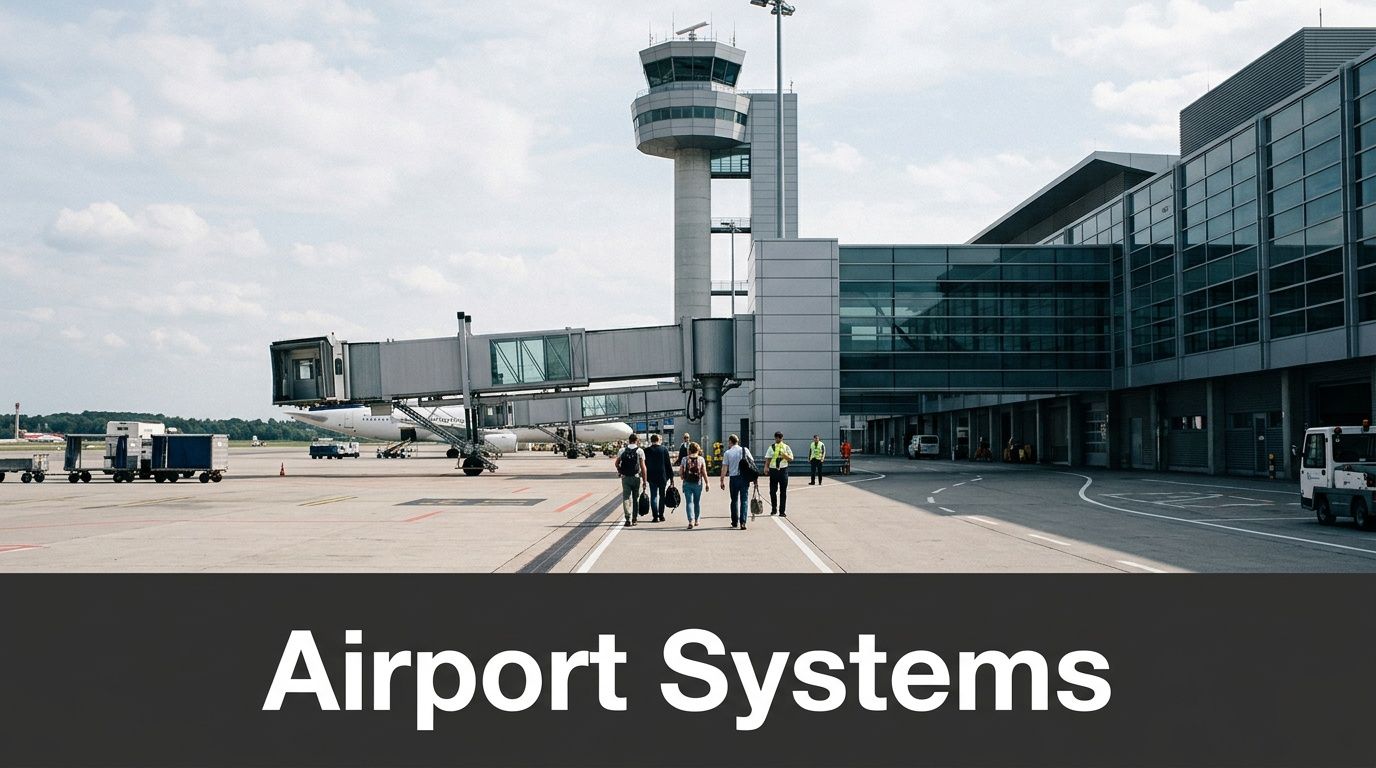
Airports run on layered systems. Passenger information displays, security devices, networking, administrative equipment, baggage systems, endpoint fleets, and back-office hardware don’t retire in one neat batch. They move through replacement and disposal in waves, often with access restrictions and vendor coordination requirements that are tighter than many private-sector environments.
What the airport teaches about execution
The useful business takeaway from ATL is that secure IT disposition has to fit into a larger choreography. Public access zones, restricted areas, contractor rules, and scheduling windows all shape the work. That’s why airport-related projects reward service providers who can operate within formal procedures instead of improvising on site.
If airport operations are part of your Atlanta research, review organizations that position themselves around that environment, such as this page on Hartsfield-Jackson Atlanta International Airport technology and recycling support. The operational fit matters more than a broad “we serve transportation” claim.
There’s another reason the airport belongs on a strategic list of the best things to do in Atlanta GA. It sits inside a city built for movement. The better-known city guide examples often highlight nearby landmark corridors, but Atlanta’s more business-relevant trait is how logistics, events, and institutional demand intersect. If your service requires pickup, de-installation, and fast turnarounds, the airport ecosystem helps you understand the city’s rhythm.
Strong airport-market habits
- Watch procurement notices: Public infrastructure buyers leave signals before projects become obvious.
- Build compliance literacy: Access rules and documentation expectations can be strict even for routine removals.
- Think in phases: Airports rarely allow broad, disruptive, one-shot projects.
- Coordinate by stakeholder group: Facilities, security, operations, and IT may each control a different part of the job.
The airport is worth your time because it shows what Atlanta looks like when systems have no tolerance for sloppy service.
5. Downtown Atlanta Tech Hub & Corporate Headquarters
A single afternoon downtown can put you within reach of procurement teams, regional executives, facilities managers, legal counsel, and finance stakeholders. For a B2B operator, that concentration changes what counts as one of the best things to do in Atlanta GA. Downtown is less a sightseeing stop and more a field site for understanding how enterprise buying works in this market.

Headquarters clusters create a different type of ITAD opportunity than airports, hospitals, or universities. The work is less about restricted infrastructure and more about internal coordination across departments that share a building but not a timeline. One floor may be closing, another may be onboarding new staff, and a third may be sitting on retired hardware that nobody owns operationally.
That creates steady demand for office decommissions, storage-room clearouts, laptop refresh pickups, conference room equipment retirement, and post-merger asset consolidation. Teams that sell corporate IT recycling in Atlanta tend to do well here when they can speak to chain of custody, scheduling discipline, and reporting without overcomplicating the conversation.
Downtown also rewards vendors who understand the trade-off between executive visibility and operational friction. A corporate buyer may approve the project quickly if the business case is clear. The same buyer can slow the rollout if building management, security, legal, or facilities expects a tighter process than the vendor proposed.
The downtown market favors providers who can turn asset disposition into a controlled business process, not a one-time cleanup job.
The district’s density matters for another reason. Corporate offices, hotels, event venues, and business services sit close together, so decision-makers often stack meetings and vendor reviews into narrow time windows. That makes downtown useful for market research, account development, and partnership conversations, especially for firms trying to map Atlanta’s enterprise IT footprint efficiently.
What tends to work in this corridor
- Target the operating group behind the problem: Facilities, workplace operations, and procurement often shape the project before IT signs off.
- Use specific use cases: Floor consolidation, executive office moves, and dormant storage rooms get better traction than broad lifecycle messaging.
- Prepare concise documentation: Corporate stakeholders need summaries they can forward internally without rewriting your proposal.
- Respect building logistics: Elevator access, loading windows, tenant rules, and after-hours scheduling can decide whether the project runs cleanly.
- Plan for expansion: One successful downtown job can lead to work across branch offices, remote employee programs, and regional sites.
If the goal is to understand Atlanta’s business environment rather than its tourist circuit, downtown belongs high on the list. It shows how enterprise demand forms in real time, where budget authority sits, and which vendors know how to handle complexity without creating more of it.
6. Grady Memorial Hospital & The Atlanta Healthcare Network
Grady represents a different side of healthcare than a university-affiliated system. It sharpens your understanding of public-facing care environments, urgent operations, and how retired equipment can’t become an administrative distraction.
For ITAD and electronics disposition providers, hospitals like Grady reveal an important market truth. Healthcare work isn’t only about secure destruction. It’s about removing obsolete assets without creating new problems for care teams, biomedical workflows, facilities staff, or compliance officers.
The real trade-off in hospital work
Many vendors pitch speed. Hospitals usually value predictability more. A slower but better-orchestrated pickup beats a rushed project that leaves carts in hallways, misses device classes, or creates uncertainty about what happened to storage media.
The Atlanta healthcare network is broad enough that this lesson repeats across institutions. Once you understand one major hospital’s expectations, you start seeing common patterns. Clear manifests, controlled access, staff identification, after-hours planning, and documented handling aren’t extras. They’re basic operating requirements.
A better way to approach this market
- Train for healthcare norms: HIPAA awareness is table stakes, but operational etiquette matters too.
- Separate departments mentally: Emergency, admin, outpatient, and support areas don’t function alike.
- Expect mixed asset types: Standard office devices may sit alongside more specialized equipment environments.
- Design for minimal disruption: Quiet, efficient crews win trust quickly.
Hospital projects usually fail at the handoff points, not at the shredding or wiping stage.
This is also where Atlanta’s broader business identity becomes useful. The city’s institutional density means healthcare buyers can compare vendors against experiences they’ve had with government, education, and enterprise contractors. That raises the standard. If your process feels loose, they’ll notice.
As a destination for a business traveler, Grady and the wider healthcare network belong on the list of best things to do in Atlanta GA because they expose how high-accountability organizations evaluate outside service providers. You learn quickly whether your operating model is solid enough for serious accounts.
7. State of Georgia Data Center & Government IT Operations
A vendor arrives in Atlanta with a polished sales deck and gets screened out before the first real conversation. The issue usually is not price. It is process. State and agency buyers want evidence that asset handling, chain of custody, and data destruction can stand up to procurement review, security review, and an audit months later.
That makes government IT operations one of the more useful stops for a B2B audience studying Atlanta. Public agencies show, in plain terms, how compliance becomes an operating requirement. The lesson is practical. If a provider cannot explain sanitization standards clearly, control on-site activity, and produce documentation that another department can review without follow-up questions, the account gets harder to win.
Government environments reward consistency more than style.
Procurement may control contract access. Agency IT may define device scope and data handling requirements. Building management may set pickup windows and dock rules. Information security may have final input on storage media disposition. Those layers slow down vendors who are used to one decision-maker, but they also make this market very readable once you know where authority sits.
What strong government-facing vendors do differently
- Complete registration early: Vendor setup should happen before outreach, not after interest appears.
- Use precise sanitization terminology: Public-sector buyers notice loose language fast.
- Plan for distributed inventory: Assets may sit across offices, field locations, and storage rooms.
- Produce audit-friendly reporting: Certificates, manifests, and serial-level records need to be easy to review and easy to share internally.
There is also a useful crossover here. The same discipline that works for state agencies tends to travel well into school systems and other public institutions. Teams that already understand school district equipment recovery and logistics in the Atlanta area often adapt faster because they are already used to distributed assets, calendar constraints, and formal documentation.
For companies evaluating the best things to do in Atlanta GA from a market intelligence perspective, government IT operations belong on the list because they reveal how serious buyers reduce vendor risk. Study this part of Atlanta well, and you get a sharper view of how the region buys trust.
8. Atlanta Public Schools Technology & Equipment Depot
A district refresh in Atlanta rarely means one loading dock and one approval. It usually means devices spread across schools, carts parked in media centers, aging desktops in admin offices, and a narrow collection window between testing, summer projects, and back-to-school prep. For ITAD providers and downstream service partners, that operating reality makes public school systems a serious business destination, not a side market.
Atlanta Public Schools and nearby districts matter because K-12 creates steady equipment turnover with tighter operational constraints than many private-sector accounts. Chromebooks, classroom displays, staff laptops, networking gear, and peripherals age out on different cycles. Storage rooms fill up fast when procurement moves faster than disposition planning.
Why district environments create a different kind of opportunity
School systems are distributed, schedule-bound, and documentation-heavy. A vendor can win trust quickly by handling collection logistics well, but can also lose it just as quickly by showing up with corporate assumptions about centralized staging or all-day site access.
That is why experience with district device recovery and electronics recycling for Fulton County schools has practical value in this market. The work itself is a signal. It shows whether a provider can coordinate across campuses, adapt to school calendars, and produce records that administrators can use.
The trade-off is straightforward. K-12 projects often involve more coordination per asset than a single-site office pickup, but they also offer repeatable work, recurring refresh activity, and strong referral potential across neighboring institutions.
What effective vendors do in the K-12 segment
- Build around school calendars: Summer break, testing periods, teacher workdays, and facility projects determine pickup feasibility.
- Scope labor conservatively: Equipment may need to be gathered from classrooms, closets, carts, and annex spaces before loading starts.
- Use plain-language reporting: District teams need serial-level records, pickup documentation, and data destruction confirmation without jargon-heavy summaries.
- Prepare for stakeholder variety: IT, school administrators, facilities staff, and procurement may all influence timing and sign-off.
This segment also rewards companies that understand adjacent event-style logistics. Crews that can work within fixed venue schedules, similar to operators in exhibition services such as Stand Builders Sydney, tend to adapt better to school access windows and compressed turnover periods.
For a B2B reader evaluating the best things to do in Atlanta GA, school technology operations deserve attention because they show how the region handles distributed assets at scale. Study this part of the market well and you get a clearer view of who can execute disciplined, local, repeat business under real operational constraints.
9. Atlanta's Convention Centers & Event Venues
A conference ends at 6 p.m. By midnight, exhibit hardware has to be broken down, sorted, documented, and cleared from a loading dock that will serve a different client the next morning. That operating reality makes Atlanta’s convention centers and event venues worth studying for any B2B reader assessing the city’s IT asset disposition market.
These venues are not just places where business happens. They are compressed operating environments where technology ownership changes quickly, temporary infrastructure appears and disappears, and old equipment can sit in back-of-house space longer than it should if no one is assigned to remove it. For ITAD providers, AV contractors, facilities teams, and corporate exhibitors, that creates a distinct category of demand.
Venue work favors operators who respect turnover schedules
Event venues buy speed, coordination, and documentation. A provider may be asked to remove retired displays after a sponsor activation, collect replaced networking gear after a temporary build-out, or clear obsolete control-room equipment without disrupting the next load-in window. The technical task is usually straightforward. The scheduling discipline is not.
That is why venue relationships often start small and expand only after a vendor proves it can show up on time, work cleanly in restricted spaces, and leave behind usable records. Adjacent specialists already work this way. Firms involved in exhibition logistics, including Stand Builders Sydney, treat timing as part of delivery quality, not as an administrative detail.
What venue operators and service partners reveal
- Turnover discipline: Tight teardown and reset windows expose which vendors can execute under fixed deadlines.
- Asset accountability: Shared environments make it harder to rely on informal handoffs or incomplete manifests.
- Storage pressure: Retired equipment often competes with active event inventory for limited back-of-house space.
- Multi-party coordination: Venue operations, exhibitors, AV integrators, security, and facilities may all need approval before equipment moves.
- Short decision cycles: Projects are often approved quickly, but execution standards stay high because missed timing affects revenue-generating events.
For a business audience, this is one of the more useful "things to do" in Atlanta because venue operations show how the city handles high-tempo, multi-stakeholder technology logistics. If a provider can perform well here, it usually has the process control to handle more than routine office pickups.
10. Georgia Power & Energy Sector Technology
A vendor can handle a routine office pickup on Friday and still fail a utility project on Monday. Georgia Power and the wider energy ecosystem in metro Atlanta expose that gap fast. The operating environment is tighter, the approval path is narrower, and the consequences of poor process control are higher.
For a B2B audience, this is one of the more useful places in Atlanta to study how asset disposition changes inside critical infrastructure organizations. The value is not sightseeing. It is seeing how buyers evaluate risk around substation support systems, field hardware, network gear, control room technology, fleet devices, and corporate IT that all sit under different handling rules.
Utilities are also a good reality check for service providers that talk broadly about secure disposition. In energy accounts, vague promises do not carry much weight. Teams want clear answers on site access, chain of custody, data destruction records, environmental handling, and how the vendor separates standard office equipment from assets connected to operational environments.
What makes the energy sector different
Georgia Power, as a major Southern utility, represents the kind of organization where IT decisions are tied to reliability, safety, and public trust. That changes vendor fit.
- Operational context matters: Equipment may support generation, transmission, distribution, field service, or back-office functions, and each category can trigger different retirement procedures.
- Access is controlled: Site entry, escorts, work windows, and documentation often shape the project more than the physical removal itself.
- Asset classes vary sharply: Laptops and office peripherals are one workflow. Network appliances, industrial interfaces, and field technologies are another.
- Documentation standards are higher: Buyers often expect serial-level tracking, disposition reporting, and clear proof that data-bearing devices were handled correctly.
- Sustainability claims get tested: Energy-sector stakeholders usually want measurable process discipline, not generic statements about green recycling.
The broader regional context supports that focus on infrastructure-led planning. Atlanta BeltLine describes the project as a long-term redevelopment program connecting trails, transit, parks, and economic development across the city, which is a more credible example of how Atlanta ties growth to major systems planning than the unsupported projection cited in the earlier draft.
That matters for ITAD strategy. In Atlanta, serious institutions tend to treat infrastructure as an operating discipline, not a branding theme. Providers that want energy-sector work need to show controlled execution, respect for restricted environments, and enough technical judgment to know when a standard disposition model does not apply.
For companies evaluating the best things to do in Atlanta GA from a business intelligence perspective, the energy sector belongs on the list because it shows where process maturity becomes a buying requirement.
Top 10 Atlanta Tech & Infrastructure Comparison
| Site | Implementation Complexity 🔄 | Resource & Logistics ⚡ | Expected Outcomes & Impact 📊⭐ | Ideal Use Cases 💡 | Key Advantages ⭐ |
|---|---|---|---|---|---|
| Georgia Tech Campus & Advanced Technology Research Center | Moderate–High 🔄, campus coordination, restricted labs | Campus-scale logistics; scheduled visits and vendor partnerships ⚡ | Deep insight into enterprise research IT; partnership opportunities 📊⭐ | Study enterprise asset lifecycle, research compute decommissions 💡 | Exposure to large-scale IT ops and compliance best practices ⭐ |
| Emory University & Healthcare IT Operations | High 🔄, strict HIPAA controls and facility access | Secure handling, certified processes, heavy documentation ⚡ | HIPAA-compliant data destruction; trust-based contracts 📊⭐ | EHR/system retirements, patient-data secure disposition 💡 | Strong regulatory-driven demand for compliant services ⭐ |
| Atlanta Data Center Corridor & Cloud Infrastructure | High 🔄, high security, uptime constraints | High-volume, time-coordinated removals; rapid logistics ⚡ | Large-scale disposition revenue; demonstrate decommission expertise 📊⭐ | Mass server refreshes, colocation equipment removal 💡 | Regular high-volume contracts and technical specialization ⭐ |
| Hartsfield-Jackson Atlanta International Airport Technology | Very High 🔄, 24/7 critical ops and security protocols | Tight coordination with airport ops/TSA; controlled schedules ⚡ | Secure, high-value asset disposition with strict compliance 📊⭐ | Critical infrastructure upgrades and security-system replacements 💡 | Access to high-value assets and government-level compliance experience ⭐ |
| Downtown Atlanta Tech Hub & Corporate Headquarters | High 🔄, corporate procurement and vendor requirements | Enterprise logistics, NDAs, procurement engagement ⚡ | Enterprise contracts and visibility into Fortune 500 IT cycles 📊⭐ | Corporate hardware refresh, data center decommissions 💡 | Direct access to procurement teams and large-scale projects ⭐ |
| Grady Memorial Hospital & The Atlanta Healthcare Network | High 🔄, acute care constraints and privacy rules | 24/7 uptime considerations; HIPAA-focused workflows ⚡ | Secure medical IT disposals and compliance case studies 📊⭐ | Medical device and EHR decommissioning in clinical settings 💡 | Critical healthcare client relationships and HIPAA expertise ⭐ |
| State of Georgia Data Center & Government IT Operations | High 🔄, formal procurement and compliance (NIST/FISMA) | Certification requirements, long procurement timelines ⚡ | Predictable, large-scale government contracts; strict auditability 📊⭐ | Federally/state-regulated system retirements and records handling 💡 | Stable public-sector opportunities and regulatory credibility ⭐ |
| Atlanta Public Schools Technology & Equipment Depot | Moderate 🔄, multi-site coordination and public procurement | High-volume pickups across schools; budget-aware logistics ⚡ | Recurring refresh-cycle business; education-focused reporting 📊⭐ | Bulk student device recycling and classroom refreshes 💡 | Predictable volume and sustainability-focused procurement ⭐ |
| Atlanta's Convention Centers & Event Venues | Moderate 🔄, time-sensitive, seasonal operations | Fast turnaround logistics; temporary deployments and teardowns ⚡ | High-volume, short-window dispositions; logistics showcase 📊⭐ | Event tech roll-ins/roll-outs and temporary equipment disposal 💡 | Opportunities for rapid-response contracts and large batches ⭐ |
| Georgia Power & Energy Sector Technology | Very High 🔄, critical infrastructure, NERC/FERC rules | Specialized handling, certifications, and security vetting ⚡ | Premium, compliance-driven engagements; high-value equipment disposals 📊⭐ | SCADA/control system upgrades and grid equipment retirements 💡 | High-value contracts justified by strict regulatory needs ⭐ |
Your Partner for Strategic IT Asset Disposition in Atlanta
Atlanta makes more sense when you stop treating it like a leisure destination and start reading it as an operating system. The city’s research institutions, healthcare networks, public agencies, schools, corporate offices, data environments, transportation infrastructure, and event venues all point to the same reality. Atlanta runs on technology assets with finite lifecycles, and those assets eventually need to be removed, wiped, documented, redeployed, recycled, or destroyed the right way.
That’s why a strategic visit to Atlanta should include more than meals and meeting rooms. The best things to do in Atlanta GA, for a commercial audience, involve seeing where procurement gets practical and where risk becomes operational. Georgia Tech shows how institutional technology scales. Emory and Grady show how strict compliance and minimal disruption shape vendor expectations. Data center operators show how precision logistics matter. Downtown headquarters show where recurring enterprise work starts. Government and school systems show how policy, documentation, and distributed assets complicate what looks simple from the outside. The airport and event venues show what happens when timing is absolutely critical.
There’s also a local business reality worth respecting. Many Atlanta organizations don’t need another generic e-waste vendor. They need a partner that understands on-site realities in hospitals, offices, campuses, schools, agencies, and technical facilities. They need clear chain of custody, dependable scheduling, careful packing and removal, and confidence that drives and other media won’t become a lingering risk after the project is “done.”
That’s where a local specialist has an advantage. Atlanta Computer Recycling serves the kinds of organizations that define the metro economy. The company’s model aligns with what the market needs: business-to-business electronics recycling, secure IT asset disposition, data destruction support, on-site pickup, de-installation assistance, and responsible downstream handling for retired computers, laptops, servers, storage, and networking gear. For hospitals and other regulated environments, that includes support aligned with HIPAA-sensitive workflows. For data center and office projects, it means coordinated removals that minimize disruption. For schools and public-sector organizations, it means a service approach that respects documentation and compliance pressure.
The operational details matter. A provider has to show up prepared, handle equipment methodically, and communicate clearly from scheduling through final disposition. That sounds basic, but in Atlanta’s higher-stakes environments, basic execution is what gets remembered and referred. Buyers tend to stay with partners who reduce friction for IT, facilities, procurement, and compliance teams all at once.
If you’re in town evaluating vendors, planning a refresh, closing an office, consolidating infrastructure, or preparing for a larger decommissioning project, use this city the right way. Study the hubs that drive demand. Notice how each sector defines success. Then work with a local partner that already understands those expectations and can execute against them without drama.
When your organization needs secure, business-focused electronics recycling and IT asset disposition, Atlanta Computer Recycling is equipped to help with pickups, de-installation, data destruction support, and responsible downstream processing across the Atlanta metro area. If you’re planning a refresh, an office move, a school surplus cleanup, a healthcare equipment retirement, or a data center decommissioning project, their team can help you move retired assets out efficiently and compliantly.