Your Ultimate Atlanta GA Nightlife and Entertainment Guide

You’ve probably been handed this assignment before: find a place in Atlanta that works for a client dinner, a team social, or a larger company night out, and make sure it feels polished without becoming a logistical headache. That sounds simple until you’re balancing neighborhood fit, transportation, dietary needs, noise level, and the fact that not everyone on the guest list wants a club-heavy evening.
That’s where a business-focused Atlanta GA Nightlife and Entertainment Guide needs to work differently from a tourist roundup. Most lists are built for weekend visitors. Corporate planners, department leads, executive assistants, and IT managers need something else. They need venues that can handle reservations cleanly, districts that won’t scatter a group across half the city, and entertainment options that still work when the goal is relationship-building, not just staying out late.
An Introduction to Atlanta's Professional Nightlife Scene
Atlanta is one of those cities where nightlife is also business infrastructure. If you entertain customers, recruit talent, host conference attendees, or need a dependable offsite plan for a visiting leadership team, the evening economy matters. According to the City of Atlanta's 2025 nightlife impact report, Atlanta’s nightlife industry generates nearly $5.1 billion in annual revenue and directly supports 41,000 jobs.
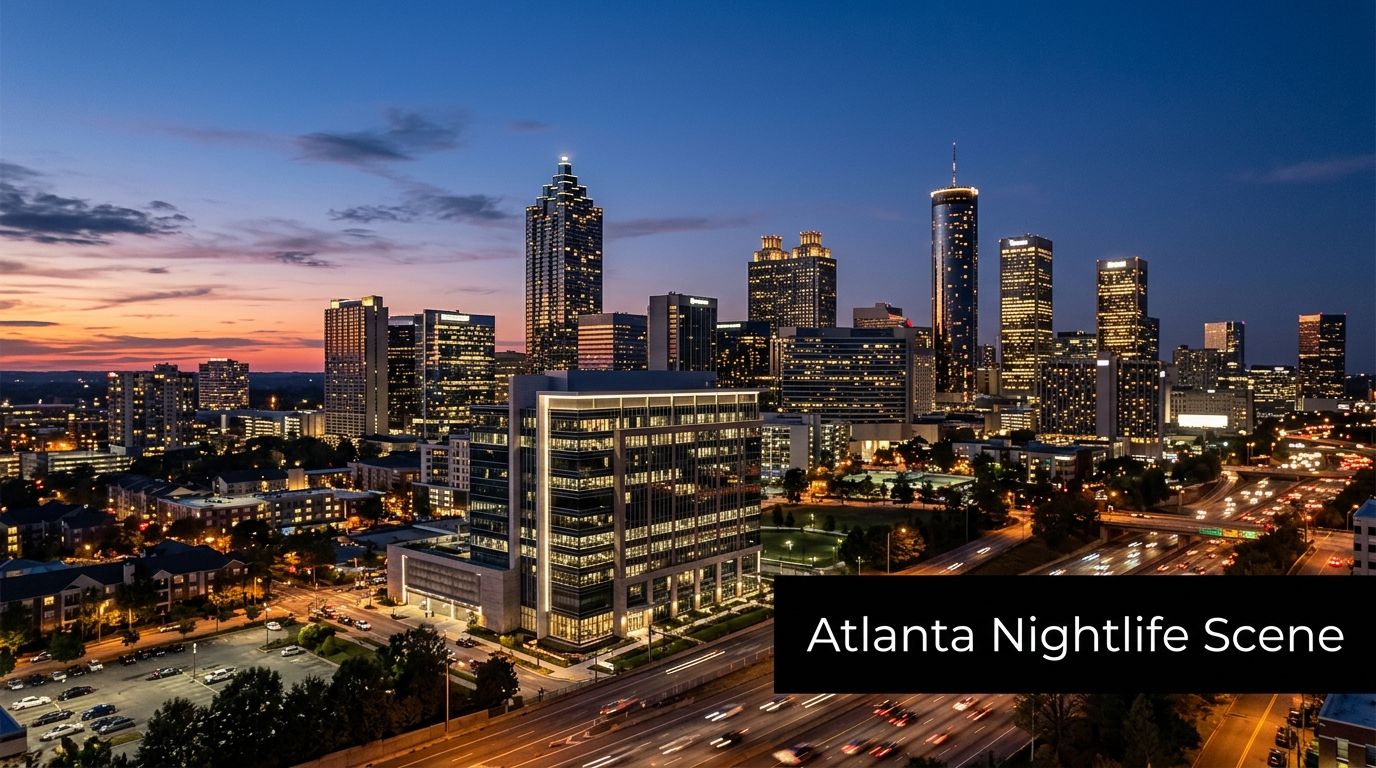
That scale shows up in the extensive choices available to planners. You can build an evening around a performance, an upscale dinner, a brewery district, a comedy venue, or a lower-key cultural outing. The upside is flexibility. The downside is that the wrong choice creates friction fast. A venue can be great for tourists and still be a poor fit for a corporate group that needs conversation, punctual service, and a clean exit plan.
What professionals actually need
For business use, the best nightlife plans usually solve four problems at once:
- Group fit: The venue has to match the room. Executive dinner, mixed-department social, client hospitality, and recruiting event all call for different energy.
- Operational ease: If parking, check-in, private space, or audio setup is messy, the whole night feels amateur.
- Inclusive options: Good planning assumes some guests don’t drink, some want quieter settings, and some need easy access in and out.
- Return logistics: A solid event isn’t just about where people go. It’s also about how they leave.
Practical rule: Start with the event objective, then choose the neighborhood. Teams often do the reverse, and that’s where planning gets sloppy.
If you’re also trying to fill out a broader local itinerary, a curated list of things to do in Atlanta this weekend can help identify nearby add-ons before or after your main evening event.
Atlanta's Premier Nightlife Districts for Professionals
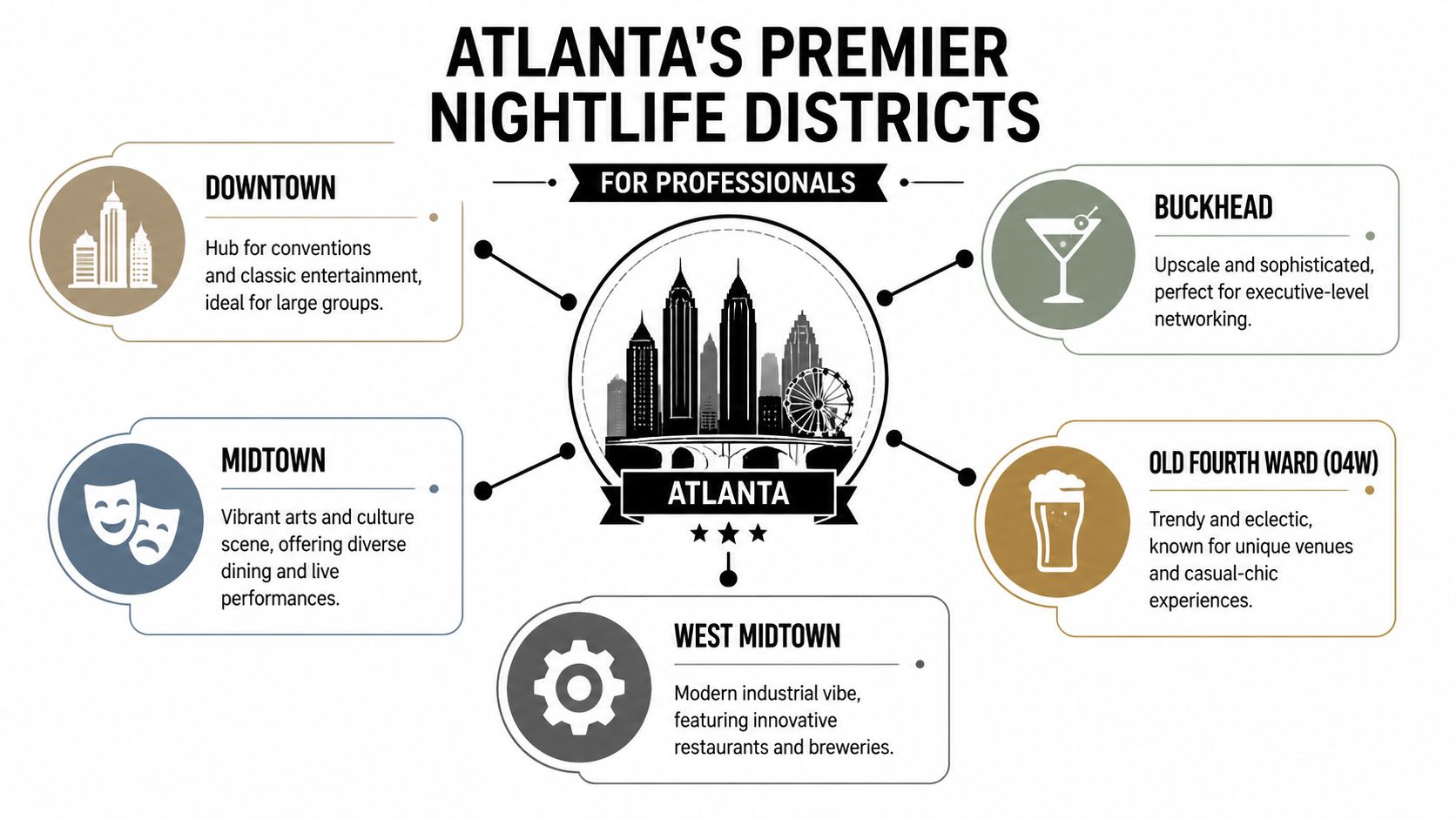
Picking the right district usually matters more than picking the perfect venue. In Atlanta, neighborhoods shape the tone of the night. Some work best for polished client entertainment. Others are better for relaxed team chemistry, casual food-and-drink hops, or creative outings that don’t feel overly staged.
Midtown for culture and polished variety
Midtown is often the safest default when the guest list is mixed and you need range. It gives you strong restaurants, hotel adjacency, arts venues, and enough foot traffic to make the area feel active without forcing a nightclub vibe onto the whole evening.
The clearest anchor here is the Fox Theatre. According to Redfin’s Atlanta feature, Midtown’s Fox Theatre is a 4,678-seat historic venue that hosts over 500 annual performances drawing more than 600,000 attendees. For planners, that matters because it gives you a built-in structure for the night: dinner nearby, a major show, then a straightforward wrap-up.
Midtown works especially well for:
- Client entertainment where you want a refined setting without feeling stiff
- Cross-functional team outings because guests can self-select from theater, dining, or lighter post-show options
- Conference offsites if attendees are already staying in central hotels
Buckhead for executive-level hosting
Buckhead is the district for high-touch hospitality. If your event depends on first impressions, private dining, concierge-style service, and a more formal evening feel, many planners initiate their plans here. It’s not always the best fit for younger teams or casual celebrations, but it does well when the brief is clear: impress the room and keep standards high.
What works in Buckhead:
- Steakhouses and upscale dining rooms for deal conversations
- Lounges that feel social without becoming chaotic early
- Hotels and valet-heavy venues that reduce guest uncertainty
What doesn’t work as well:
- Informal, budget-sensitive team events
- Large mixed-age groups that want lower-pressure movement between stops
- Nights where you need a casual, creative, or local-first tone
West Midtown and Old Fourth Ward for modern team energy
West Midtown and Old Fourth Ward tend to perform better when the goal is connection rather than ceremony. These areas suit teams that would rather gather around chef-driven menus, breweries, patios, or more design-forward spaces than sit through a formal dinner.
West Midtown usually feels more curated and industrial-chic. Old Fourth Ward often feels more eclectic and socially loose. Both are strong choices for companies that want a current Atlanta feel without pushing everyone into a late-night club scene.
The best team events usually happen where people can talk in small clusters, move around naturally, and leave without waiting on a single formal agenda item.
Downtown for large groups and convention traffic
Downtown is practical. It’s ideal when your guests are already there for a conference, company meeting, trade event, or hotel-based program. You won’t always get the most memorable neighborhood feel, but you will get convenience. That counts for a lot when the guest list is big and schedules are tight.
Here’s a simple decision view:
| District | Best use | Watch out for |
|---|---|---|
| Midtown | Client dinners, shows, mixed-group events | Event-night crowds near major performances |
| Buckhead | Executive hosting, premium dinners, polished networking | Can feel too formal for casual teams |
| West Midtown | Team socials, creative groups, modern restaurant nights | Venue spacing can complicate multi-stop plans |
| Old Fourth Ward | Casual-chic outings, younger teams, eclectic evenings | Not every venue handles large reservations equally well |
| Downtown | Convention groups, large corporate blocks, hotel-based events | Less distinctive if you want neighborhood character |
If you’re comparing areas for a broader visit, this guide to best places to visit in Atlanta, Georgia can help you align evening plans with daytime stops.
Exploring Atlanta's Diverse Entertainment Options
A good corporate evening doesn’t have to look like dinner-plus-drinks. In Atlanta, the stronger plans usually come from matching the entertainment format to the reason people are gathering. Some groups need conversation. Some need a shared experience. Some need a room with enough energy to keep people engaged without requiring everyone to perform extroversion on command.
Live music when you want momentum
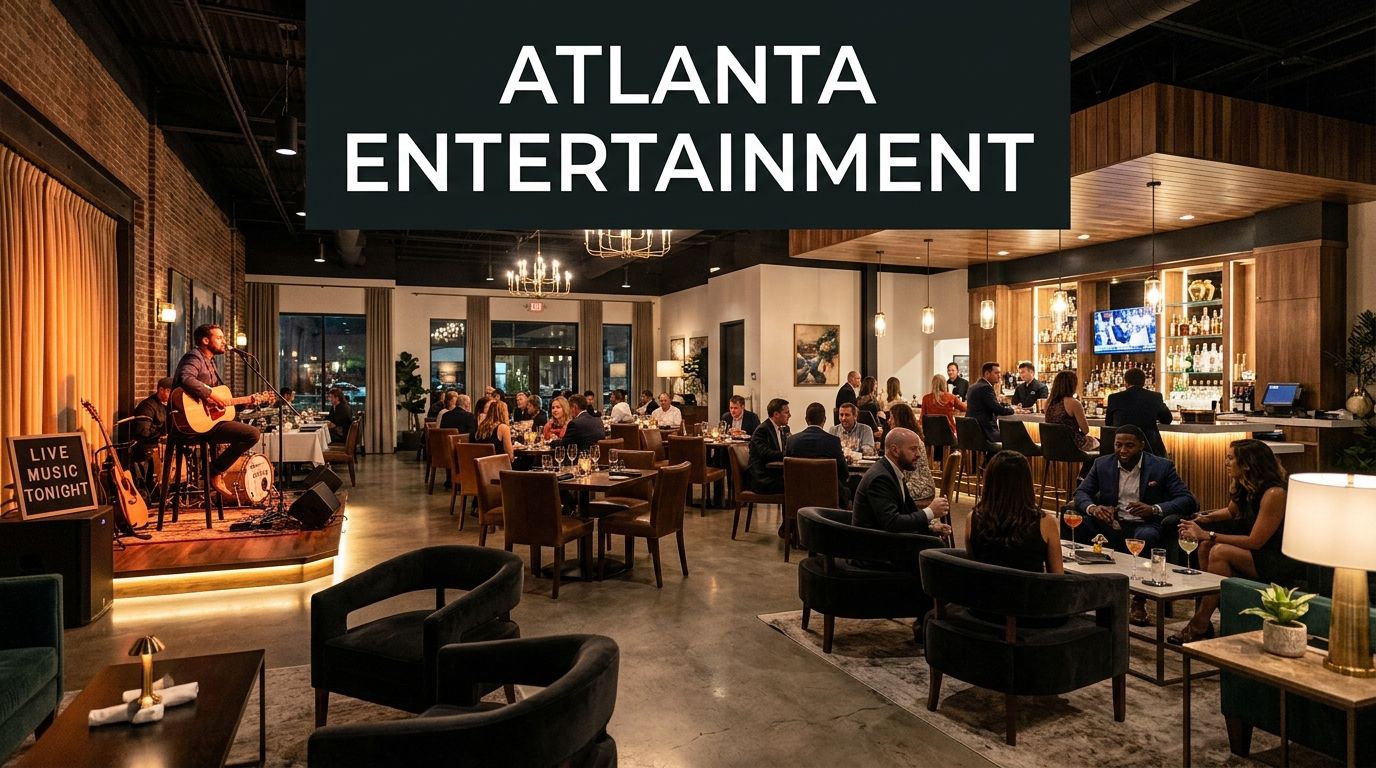
Live music works best when the group already knows each other a bit, or when the point of the evening is hospitality more than deep discussion. For recruiting dinners, conference side events, and internal celebrations, a music-forward venue can carry the night without forcing too much structure.
The trade-off is volume. If your host needs uninterrupted business conversation, don’t book the table closest to the stage and expect miracles. If the goal is to create energy and give people something to enjoy together, then a jazz room, theater performance, or quality music venue can do a lot of heavy lifting.
Good use cases include:
- Post-conference social events
- Team celebrations after a product launch or project close
- Client evenings where the relationship is already established
Comedy and improv for teams that need a lighter format
Comedy is useful when you want an experience people can share without the pressure of constant small talk. Atlanta has enough improv and stand-up options that planners can usually find a show that fits the tone of the group, from casual and quirky to more mainstream.
This format often works better than a lounge for mixed teams. People arrive, settle in, laugh together, and then conversation opens up more naturally afterward. The main caution is content fit. For a corporate booking, always review the venue style and show type before inviting a broad workplace group.
Interactive and cultural outings
Some of the best Atlanta nights for companies aren’t traditional nightlife at all. They’re evening museum visits, creative workshops, game-centered venues, or performance spaces with enough built-in activity to keep the night moving. These are especially useful for groups with different comfort levels around drinking or late-night crowds.
A few formats consistently work well:
- Private dining plus a performance: Strong for clients and leadership groups
- Interactive games plus casual food: Better for internal teams and department socials
- Museum or cultural stop followed by dinner: Ideal for guests from out of town
- Comedy followed by dessert or coffee: Good for smaller teams that want a softer ending
What works and what usually doesn't
Some planners overbuild the itinerary. They stack too many venue changes into one evening and turn a simple social event into a transit problem. Atlanta rewards restraint. One anchor activity and one strong food-and-beverage component usually beats a three-stop shuffle across neighborhoods.
If the group needs rideshares between every stop, the night had better be worth the transfer time.
A simple filter helps:
| Entertainment type | Best for | Less ideal for |
|---|---|---|
| Live music | Celebrations, hospitality, conference guests | Detailed business conversation |
| Theater/performance | Premium client outings, executive events | Very casual team mixers |
| Comedy/improv | Team bonding, mixed groups, lower-pressure socials | Highly formal client entertainment |
| Interactive games | Internal culture events, onboarding groups | Conservative executive dinners |
| Cultural experiences | Out-of-town guests, inclusive programming | Groups expecting a high-energy late night |
If you want to pair evening plans with daytime culture, this roundup of top museums to visit in Atlanta GA is a useful companion.
Planning the Perfect Corporate Night Out in Atlanta
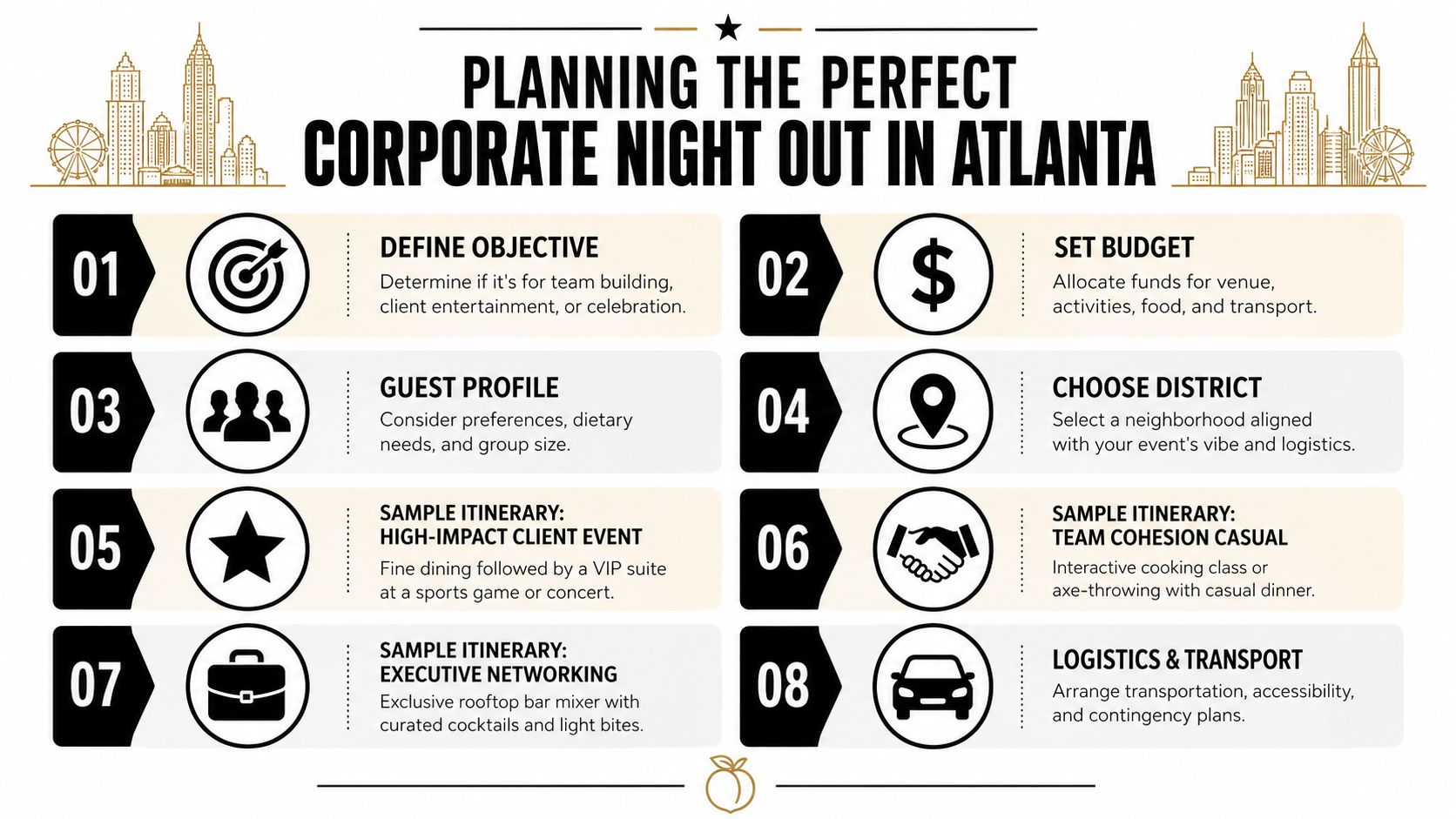
Good corporate planning starts before anyone picks a restaurant. The strongest Atlanta events come from getting the sequence right: objective first, guest profile second, district third, then venue mix. That order prevents the common mistake of choosing a trendy place and trying to force the event around it.
A reliable planning sequence
Use this checklist before you send the first invite:
- Define the purpose. Is this retention, recruiting, client hospitality, team morale, or executive networking? One event can support several goals, but one should lead.
- Screen the guest list. Seniority, dietary needs, alcohol preferences, accessibility needs, and travel patterns all affect venue fit.
- Choose one anchor. Dinner, show, games, comedy, or a cultural experience. Don’t make every part of the night compete for attention.
- Limit movement. Keep most of the evening in one district unless there’s a compelling reason to relocate.
- Set your close. Decide in advance whether the event ends after dinner, after a show, or with an optional final stop.
Three event templates that work
High-impact client dinner
Start in Buckhead or Midtown with a restaurant that takes reservations seriously and can offer either a private room or a semi-private area with enough acoustic separation for real conversation. Follow that with a performance or a polished lounge nearby, but only if the client relationship supports a longer night.
This format works because it gives hosts control. You can keep it concise if the room is tired, or extend naturally if conversation is going well. What doesn’t work is a noisy venue with poor table spacing. That’s where expensive dinners become unproductive.
Casual team-building night
For internal teams, especially in tech, operations, and support functions, the better move is often a lighter, more participatory format. Interactive activities, casual-chic dining, or structured play can lower the social burden for people who don’t love traditional networking environments. If you’re looking for ideas beyond the standard happy hour, this list of engaging games for team building is useful for shaping a more inclusive agenda.
Pair that with a venue where people can come and go in smaller circles. Teams usually relax faster when there isn’t a single performance expectation hanging over the room.
Large company celebration
For a bigger employee event, prioritize throughput over novelty. You need a venue team that can handle arrivals, name checks, bar flow, food timing, and AV basics without drama. In Atlanta, that often means choosing districts and venues built for events rather than trying to retrofit a regular social spot into a company-wide function.
Field note: If your event has more than one decision-maker, appoint one final approver for venue, menu, and transport. Group editing slows everything down and usually weakens the plan.
Practical booking habits
A few habits separate smooth events from stressful ones:
- Ask about private and semi-private layouts early. Photos can hide how exposed a space really is.
- Request the event menu before you commit. A place can be excellent for regular service and mediocre for groups.
- Confirm audio reality. Background music level matters as much as speaker quality.
- Pin down the end-of-night process. Coat check, valet, split checks, and rideshare pickup instructions all matter.
- Use one neighborhood map. Guests show up more confidently when they understand where the evening sits relative to hotels and parking.
For venue inspiration on the dining side, this list of best restaurants in Atlanta GA can help narrow your short list.
Beyond the Bar Sober and Inclusive Entertainment
A lot of corporate nightlife planning still assumes alcohol is the default social engine. That’s outdated. A stronger planner builds events that work whether someone wants wine, a zero-proof cocktail, sparkling water, coffee, or no beverage program at all.
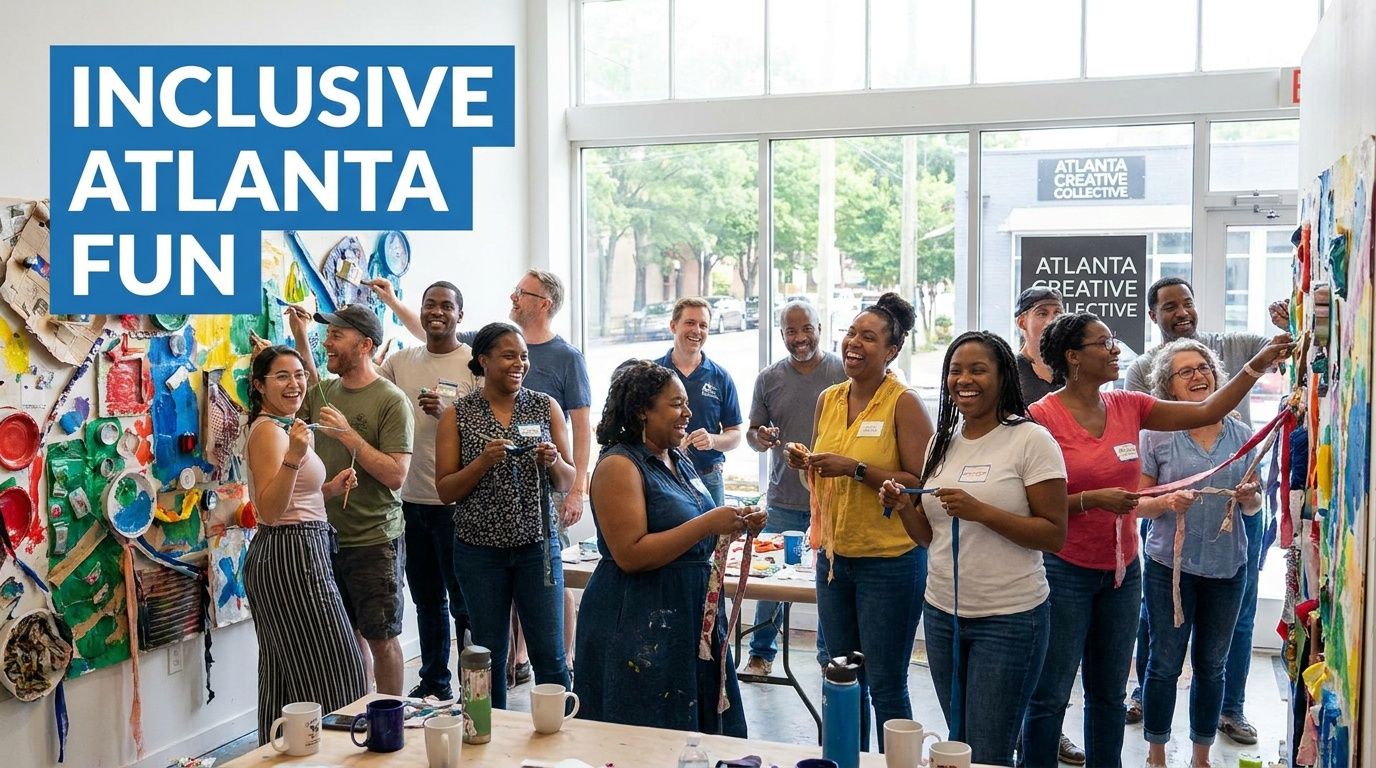
The market has already moved in that direction. A 2025 Visit Atlanta report discussed via TripAdvisor’s Atlanta attractions page shows that 28% of visitors now seek alcohol-free activities, and that shift is showing up in local nightlife through non-alcoholic speakeasies and late-night cafes.
Better options for mixed-preference groups
The practical takeaway is simple. Don’t ask whether the group wants a sober event or a drinking event. Ask whether the evening still works for someone who doesn’t drink. That framing leads to better choices.
Good inclusive formats include:
- Comedy or improv nights where the entertainment carries the experience
- Late-night dessert, coffee, or cafe meetups after dinner
- Museum and culture pairings for visiting clients or cross-functional teams
- Creative workshops or art-centered experiences for departments that prefer activity over bar time
- Restaurants with serious zero-proof menus so non-drinkers aren’t reduced to soda or water
What inclusion looks like in practice
A common mistake is calling an event inclusive because alcohol is optional, while still choosing a venue built entirely around bar culture. That doesn’t feel neutral to guests who are sober, in recovery, abstaining for religious reasons, or just uninterested. The room tells the true story.
A more thoughtful approach:
- Pick venues where food, entertainment, or conversation would stand on their own
- Put zero-proof options on equal footing with cocktails
- Avoid making the latest part of the night the only “fun” part
- Give people natural exit points without awkwardness
Some of the best team nights in Atlanta are the ones where nobody has to explain why they ordered a mocktail, coffee, or nothing at all.
This also tends to improve attendance. When the event isn’t coded as “mandatory bar time,” a wider range of colleagues will show up and stay longer. That matters if your goal is cohesion, not just optics.
If you need low-cost additions that keep the night accessible, this guide to free things to do in Atlanta GA can help fill out a more flexible itinerary.
Navigating Atlanta Safely A Professional's Guide
Duty of care doesn’t end when the reservation starts. In Atlanta, transportation planning is part of event planning. According to Hilton’s Atlanta nightlife by neighborhood guide, data from 2025 shows nightlife-related incidents increased 15% in some popular districts, and MARTA trains end service around 1 AM. For company events, that means a loose “everyone can figure it out” approach isn’t enough.
The practical playbook
Start by deciding how people are getting home before you finalize the venue. If the event runs late, assume public transit won’t solve the problem for the full group. For larger teams, pre-arranged shuttles or coordinated rideshare guidance are usually cleaner than improvising curbside.
Use these habits:
- Name the pickup point clearly: Don’t leave guests guessing which entrance to use.
- Keep the group tight: Long walks between venues create avoidable risk and confusion.
- Assign a point person: Someone should handle transport questions in real time.
- Plan for non-drivers: Never assume every attendee can or should drive after a nightlife event.
If your company wants a straightforward refresher on legal and safety considerations before hosting alcohol-forward events, Georgia DUI Schools' driving laws guide is a practical reference to share internally.
A well-run corporate night ends with people getting home smoothly, not standing on a sidewalk trying to coordinate five separate plans.
Frequently Asked Questions for Event Planners
How far ahead should I book for a corporate night out?
For premium restaurants, performance nights, and private spaces, earlier is better. If your event ties to a major conference, holiday period, or a high-demand evening, don’t wait for every minor detail before placing a hold. Secure the framework first, then refine the guest list and menu.
Is it better to plan one venue or multiple stops?
For most corporate groups, one primary venue plus one optional add-on works best. Multi-stop nights sound exciting in theory, but they often lose people between transitions. Atlanta traffic, parking, and rideshare coordination make overprogramming more painful than planners expect.
What type of venue works best for client entertainment?
Choose places where service is consistent, acoustics are manageable, and seating supports real conversation. A room can be fashionable and still fail the basic test of hospitality. For clients, professionalism beats novelty more often than planners admit.
How do I make the event inclusive without making it feel flat?
Build the evening around an experience that doesn’t depend on alcohol. That can be a show, a tasting menu, a comedy set, a cultural activity, or an interactive group format. Once the event has a real center, beverage choice becomes secondary.
Should I offer transportation for the group?
If the event runs late, spans more than one venue, or involves alcohol in a meaningful way, yes. At minimum, give guests a clear transport plan and a contact person. For senior leaders, clients, or larger employee groups, arranged transportation usually pays off in smoother departures and fewer avoidable issues.
Are private dining rooms always worth it?
Not always. They’re worth it when privacy, presentations, or uninterrupted conversation matter. For casual team socials, a well-positioned semi-private space can feel more natural and less rigid.
Atlanta Computer Recycling helps Atlanta-area businesses handle secure, responsible IT asset disposition without disrupting daily operations. If your team is planning office moves, hardware refreshes, site closures, or data center decommissions, Atlanta Computer Recycling provides business-focused electronics recycling, secure data destruction, and pickup logistics optimized for commercial environments.