Green Metal Recycling: IT Asset Disposal Guide

Your storage room probably already tells the story. Retired servers stacked on pallets. Laptops waiting for approval. Network switches with asset tags from three refresh cycles ago. A few failed drives nobody wants to touch until legal, security, and operations all agree on the next step.
For most IT directors, disposal isn't the hard part. Disposal without creating a security problem, compliance problem, or sustainability problem is the hard part. Once equipment leaves your control, every weak handoff matters. So does every poor decision about reuse, shredding, and downstream recycling.
That’s where green metal recycling becomes useful. Not as a slogan, but as a practical ITAD approach that treats retired hardware as both a data-bearing risk and a recoverable materials stream. If you handle it correctly, you protect information, document the chain of custody, and recover value from steel, aluminum, copper, and other metals that would otherwise be wasted.
The Challenge of Retiring Corporate IT Hardware
An office move, data center consolidation, or hardware refresh creates the same operational mess. Equipment leaves production fast, but it rarely leaves the building fast enough. You end up with idle assets in cages, closets, and loading areas while multiple teams debate what can be reused, what must be destroyed, and what has to be documented.
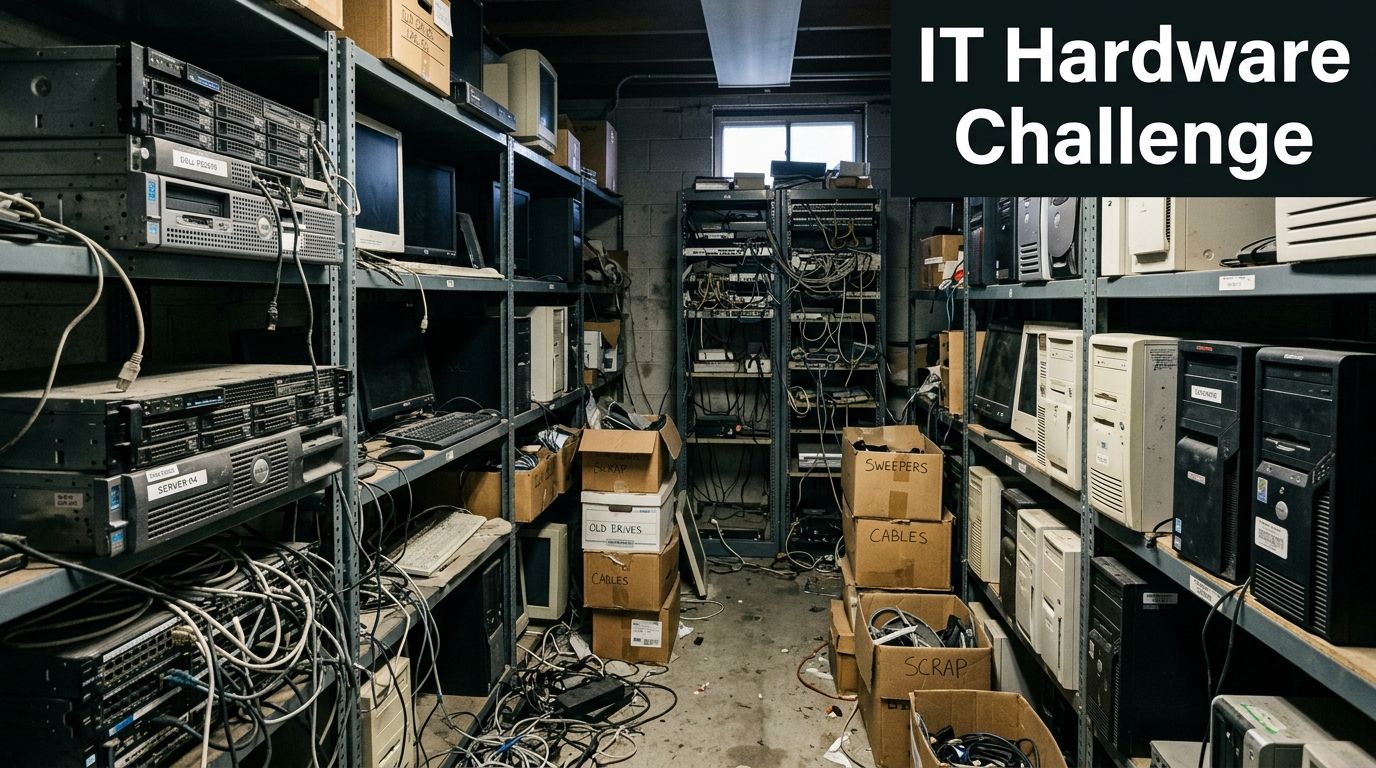
The problem isn't just clutter. A retired server still holds risk until drives are wiped or destroyed, serials are reconciled, and disposition records are complete. That’s true whether you're managing a hospital, a school district, a financial services office, or a multi-site enterprise.
Where most disposal programs break down
In practice, three failures show up again and again:
- Security gets separated from recycling. One vendor handles data destruction. Another handles scrap. That split creates chain-of-custody gaps.
- Assets sit too long. Hardware that should have moved through disposition stays on-site because nobody owns the final workflow.
- Sustainability becomes an afterthought. Teams focus on removal speed and miss the recovery value inside the equipment.
The landfill risk is bigger than most companies realize. Globally, more than 400 million tons of metal are recycled annually, yet a significant portion still enters landfills. In the USA, 5 million tons of steel are landfilled annually, comprising 7.2% of municipal solid waste according to metal recycling facts from Business Waste. For IT leaders, that’s not abstract. It points directly to server chassis, racks, casings, and other hardware metals that should be recovered instead of buried.
Practical rule: If your disposition process starts with “just get it out of here,” it usually ends with missing records, unclear downstream handling, and avoidable risk.
A better program starts before pickup. If you're trying to streamline tech operations, asset management discipline has to extend into retirement, not stop at deployment. The same is true when you define your IT asset disposition process. End of life is part of lifecycle management, not a side task for facilities.
Why green metal recycling matters here
Green metal recycling gives you a cleaner operating model. You don't treat obsolete IT as generic junk. You treat it as controlled material that requires secure handling first, then responsible recovery. That changes how you select partners, how you package equipment, how you document destruction, and how you report environmental outcomes to leadership.
Done right, this isn't just cleanup. It's risk reduction with a better downstream result.
What Green Metal Recycling Means for IT Equipment
For corporate IT, green metal recycling means recovering metals from retired electronics in a way that protects data, reduces waste, and supports reuse of industrial materials. It’s not the same as tossing equipment into a shred stream and calling it recycling.
The better way to think about it is reverse mining. Your old servers, switches, desktops, and storage arrays already contain refined materials. Steel in the chassis. Aluminum in housings and heat sinks. Copper in wiring and power assemblies. Additional metals in boards and connectors. The job is to separate those materials cleanly after secure processing, not destroy everything upfront and hope some value survives.
What it is not
Some disposal methods look efficient but create downstream losses.
| Approach | What happens | Why it falls short |
|---|---|---|
| Bulk discard | Equipment is treated as waste first | You lose recovery value and create unnecessary landfill exposure |
| Blind shredding | Devices are destroyed without careful separation | Data may be addressed, but material recovery is weaker |
| Uncontrolled resale | Assets move out without solid sanitization and audit trails | You introduce security and compliance risk |
Green metal recycling takes a different path. Security controls come first. Material recovery follows a disciplined sequence.
What a proper process looks like
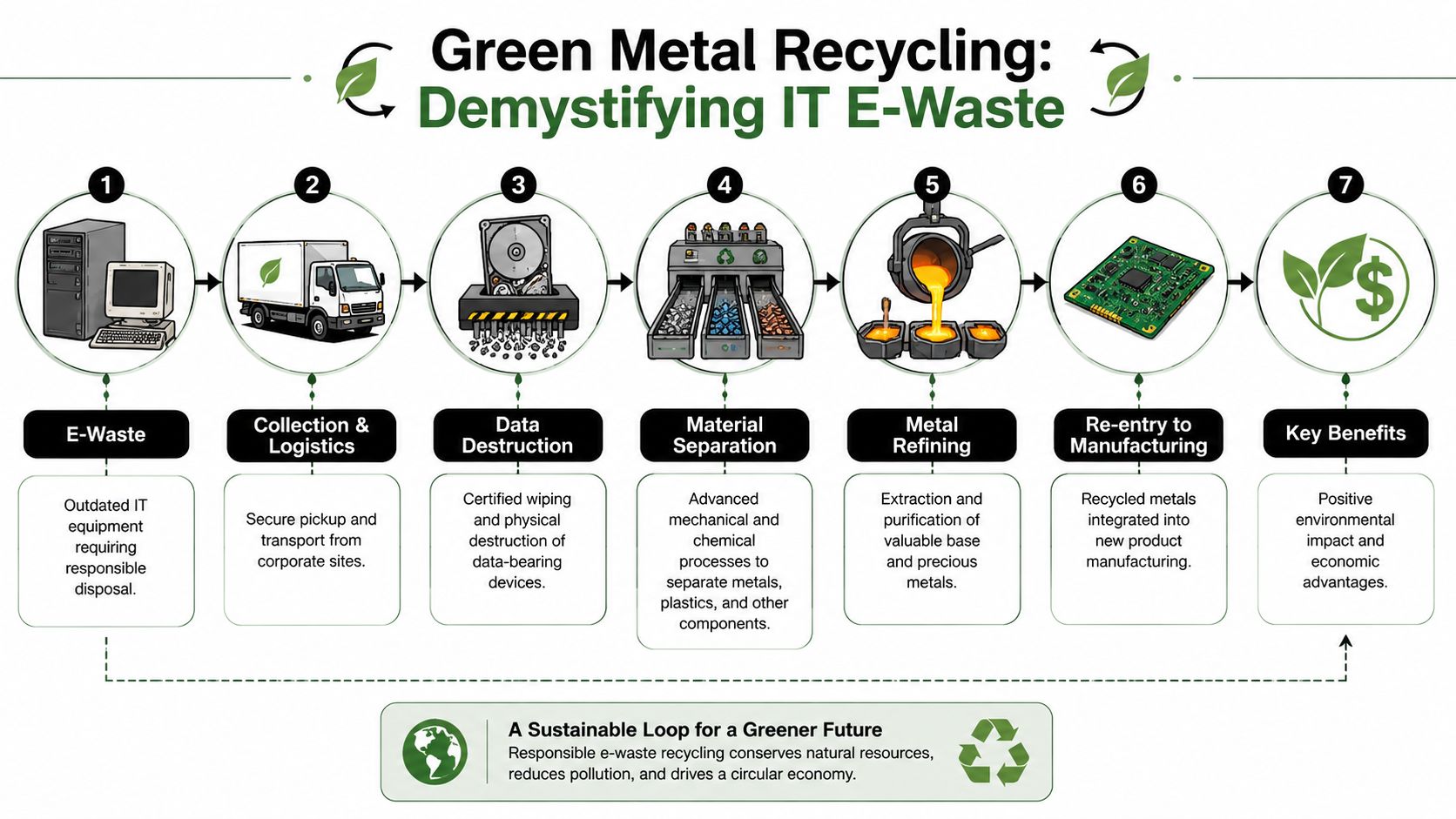
A sound program usually includes these stages:
- Collection under control. Equipment is inventoried, packed, and moved through a documented handoff.
- Data-bearing items are identified early. Drives, backup media, and embedded storage don't get mixed into a general scrap stream.
- Manual de-manufacturing happens before heavy processing. Technicians remove components that need separate handling.
- Metals are sorted into useful categories. Ferrous and non-ferrous streams don't get blended if you want strong recovery outcomes.
- Recovered materials go back into manufacturing. That’s where the environmental value is realized.
For IT teams, that middle step matters most. If your recycler can’t explain how storage media are isolated before downstream processing, they’re not running a secure ITAD workflow. They’re running a waste removal workflow.
Old hardware isn't low-value because it's old. It's high-risk until sanitized, and high-value once sorted correctly.
This is also why heavy metals in electronics need careful handling. If you want a clearer view of the material side, this overview of heavy metal recycling in electronics is a useful reference point. It helps connect the environmental issue to the physical components your team retires.
What works in real environments
The best results come from selective processing, not blunt-force disposal. Server rails, racks, and housings should move through metal recovery channels. Boards and data-bearing devices should follow stricter handling paths. Reusable assets should be evaluated before destruction. Mixed pallets with no triage usually produce weak documentation and weaker recovery.
That’s the core idea. Green metal recycling isn't feel-good language. It's a more disciplined way to retire IT equipment.
Environmental and Financial Benefits for Your Business
Most leadership teams will support responsible disposition in principle. They approve budgets faster when you tie it to energy savings, avoided disposal costs, and better reporting.
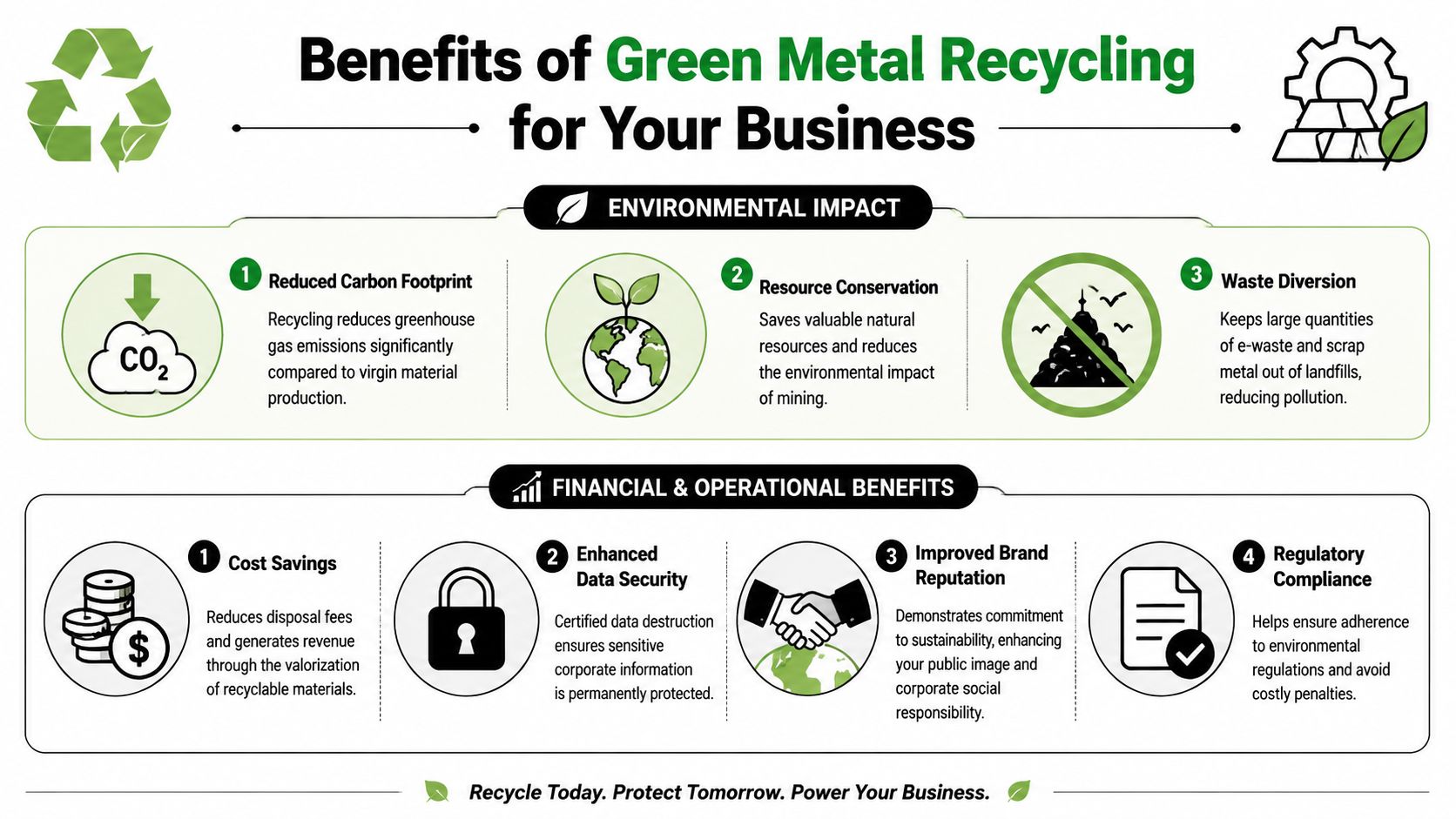
That’s where green metal recycling earns its place in an ITAD policy. It supports environmental goals, but it also changes the economics of retirement projects. When you recover metals instead of paying to bury equipment, end-of-life handling stops looking like pure overhead.
The environmental case leadership can understand
Two materials in business IT make the point clearly.
- Steel recovery matters at scale. Steel is everywhere in enterprise hardware, from server casings to rack infrastructure.
- Aluminum recovery is especially efficient. According to zero-waste metal recycling guidance from OKON Recycling, aluminum recycling demands only 5% of the energy required for primary production and can cut carbon emissions by up to 95%.
- Landfill diversion supports ESG narratives. Companies don’t need to overstate this. They just need clean documentation showing retired equipment was processed responsibly.
Those points matter when procurement, compliance, and sustainability teams ask what happens after devices leave service.
The financial side is more practical than most people expect
The financial argument isn't just about commodity value. It includes transport efficiency, avoided disposal fees, and better use of labor during decommissioning.
Recovered copper from decommissioned data centers can yield over $5,000 per ton of mixed e-scrap, compared to paying landfill fees. Partnering with a local recycler can also cut logistics costs by up to 40% while supporting ESG reporting, based on analysis of scrap metal recycling's economic impact.
That doesn't mean every project turns into a profit center. It does mean your business should stop assuming all retired equipment is a disposal expense.
Where companies actually see value
A disciplined green metal recycling program helps in several ways:
- Budget control: You reduce waste-hauling and landfill dependence.
- Operational speed: Clean asset triage keeps refresh and move projects from stalling.
- Audit readiness: Better documentation makes internal reviews much easier.
- Material recovery: Metal-bearing assets retain downstream value that basic junk removal ignores.
If your finance team wants a simple frame, use this one:
| Cost center mindset | Recovery mindset |
|---|---|
| Pay to remove obsolete gear | Sort assets for reuse, destruction, and recovery |
| Treat all equipment the same | Separate items by data risk and material value |
| Focus on haul-away speed | Focus on documented outcomes and value retention |
Businesses usually don't fail at recycling because the metals aren't there. They fail because the workflow treats everything as trash too early.
There’s also a direct connection between secure retirement and value capture. Programs that identify resale, component harvesting, and scrap recovery early tend to perform better than programs that wait until loading day. If you’re evaluating whether old equipment still has worth, this guide to old electronics recovery options is a practical place to start.
The business case is straightforward. If you already have to retire equipment, you might as well do it in a way that lowers risk and captures value.
How Sustainable Metal Recovery from E-Waste Works
A well-run recovery process should never feel mysterious. If a recycler can’t describe the path from pickup to downstream smelting, you should assume the controls are loose.
The process starts long before anything is shredded. Your team identifies what’s leaving the environment, who approved it, and which assets carry data. That inventory drives packing, transport, and final reconciliation.
Step one is controlled intake
For enterprise projects, secure pickup isn't a courtesy. It’s part of the control system.
A proper intake process typically includes:
- Asset verification at release. Tags, counts, or serialized records should match what was approved.
- Segregated packaging. Drives and other data-bearing components shouldn’t be buried in mixed metal loads.
- Documented handoff. Your records should show when custody changed and who accepted the material.
Many “recycling” providers reveal themselves to be merely haulers. They can remove equipment, but they can’t preserve audit integrity.
Step two is de-manufacturing before destruction
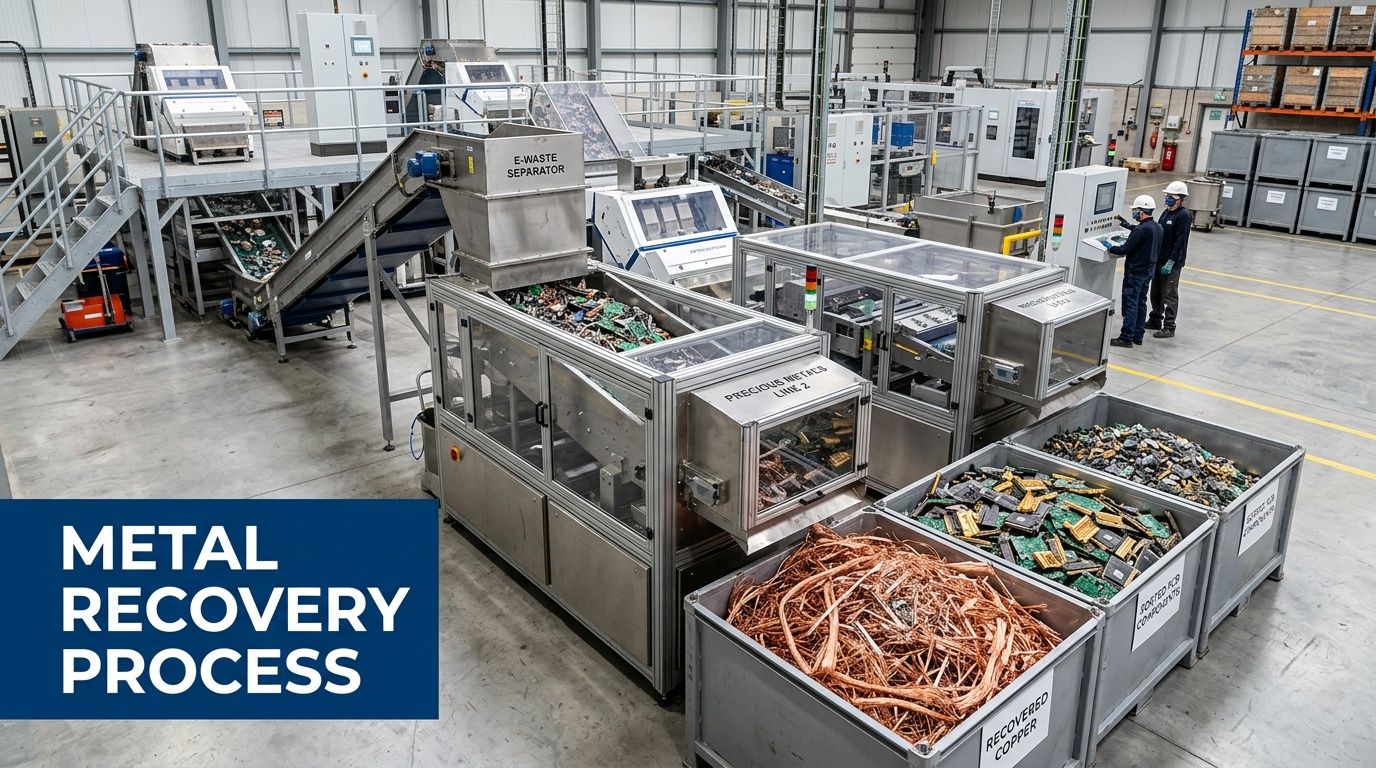
Once equipment reaches the facility, the smart move is controlled disassembly. Servers are ideal candidates for this because their materials are concentrated and relatively accessible. Steel chassis, aluminum heat sinks, copper cabling, power supply components, and circuit boards can all be separated into more useful streams.
That separation improves both security and recovery. Drives can be processed under the right destruction standard. Boards can move into specialized channels. Structural metals can move into cleaner recycling streams.
A lot of recovery quality depends on sorting discipline. Ferrous metals are commonly separated magnetically. Non-ferrous metals require more selective handling. In advanced operations, XRF analyzers help identify alloys and improve downstream routing. That matters because mixed, contaminated streams produce weaker results.
Step three is metal recovery into industrial feedstock
For steel, one of the most important downstream paths is the Electric Arc Furnace. According to the BMRA overview of scrap steel and green steel, recycling steel scrap in Electric Arc Furnaces uses up to 74% less energy than primary production, and each tonne of scrap steel recycled this way saves approximately 1.5 tonnes of CO₂ emissions.
That matters directly to IT retirement because so much enterprise equipment is steel-heavy. Old racks, rails, chassis panels, and enclosures aren’t just leftovers from a refresh. They’re feedstock for greener manufacturing when recovered correctly.
Ask one direct question: “What happens to my steel, aluminum, boards, and drives after intake?” A serious provider can answer without hand-waving.
The same logic applies to boards. They don't belong in the same conversation as commodity scrap. Their handling is more specialized, and the chain of custody around them matters. If you’re reviewing downstream categories, this look at circuit board recycling workflows helps connect the board stream to the larger ITAD process.
What does not work
Three shortcuts usually undermine the program:
| Shortcut | Immediate benefit | Long-term problem |
|---|---|---|
| Mixed-load pickup with no item separation | Faster loading | Poor traceability |
| Early shredding of everything | Simple processing | Lost recovery value and limited documentation |
| Vague downstream reporting | Easy vendor presentation | Weak audit defense |
The strongest programs are boring in the best way. Clear intake. Controlled sanitization. Deliberate separation. Documented downstream movement. That’s how sustainable metal recovery should work.
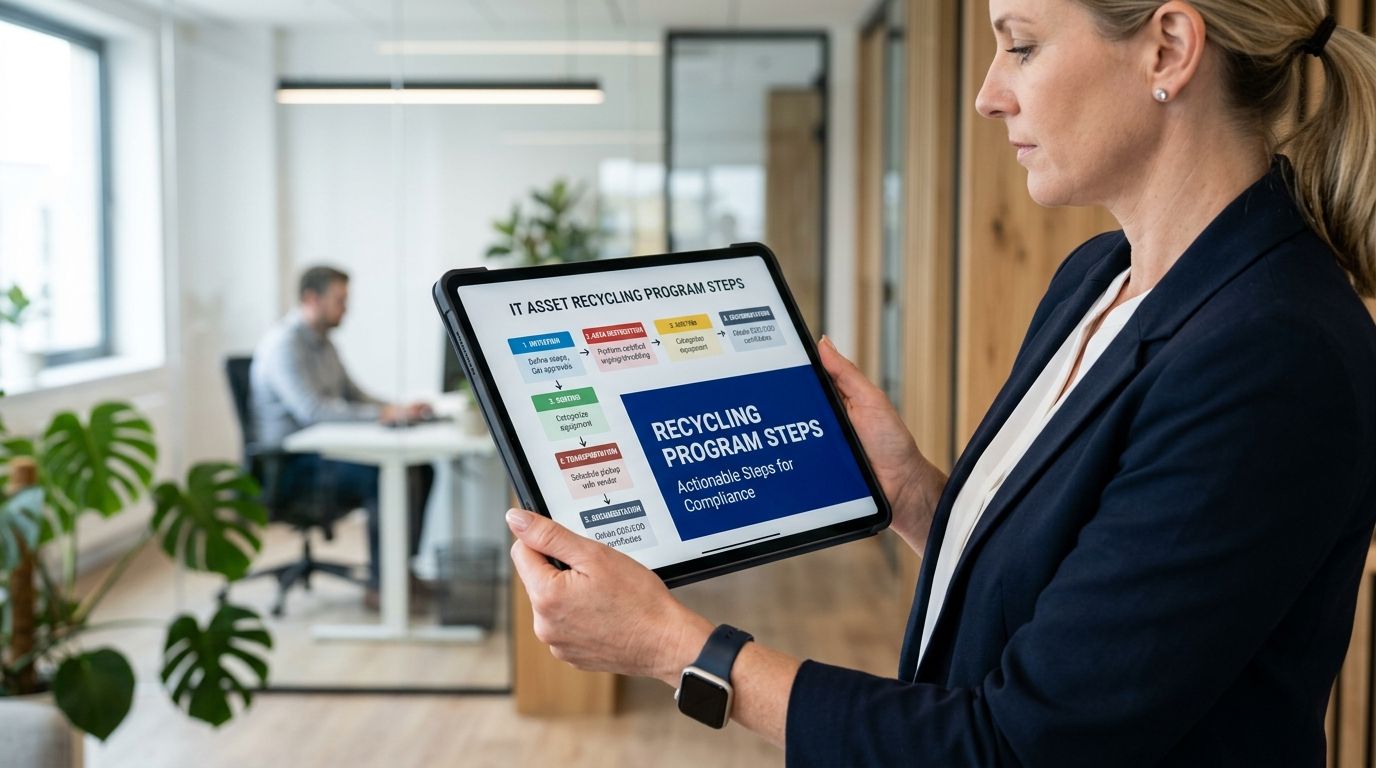
Implementing a Compliant Recycling Program Step by Step
Most companies don't need a more ambitious recycling policy. They need an executable one. The difference is whether your team can move from “we should clean this out” to a documented process that security, legal, facilities, and compliance can all support.
A key reason to tighten this now is the weakness in the wider e-waste market. Over 80% of e-waste is handled informally, which raises data breach risk. The EU’s Waste Framework Directive is also pushing firms toward models that combine certified data destruction such as DoD 5220.22-M with green metal extraction, as described in White & Case’s analysis of green metals recycling. Even if your company operates locally, the message is clear. Informal handling and weak data controls are no longer acceptable.
Step one, define the scope before pickup
Start with an asset list, not a truck schedule.
Include:
- What is leaving service. Servers, laptops, switches, storage arrays, monitors, UPS units, accessories.
- What holds data. Hard drives, SSDs, backup appliances, removable media, embedded flash.
- What needs special handling. Leased assets, regulated devices, damaged media, equipment tied to litigation hold or internal review.
If your inventory is messy, don't wait for perfection. Build enough structure to separate assets by risk and disposition path.
Step two, set security requirements in writing
Your recycler should not be guessing what your organization expects. Define it.
A written requirement set should cover:
- Sanitization method: wiping where appropriate, physical destruction where necessary
- Chain of custody: who signs, when, and in what format
- Documentation: inventory reconciliation and certificates of destruction
- Exception handling: failed drives, unlabeled devices, and items discovered outside scope
Healthcare, government, and finance teams should be especially strict here. If a provider only talks about environmental benefits and avoids the data question, move on.
Certified destruction isn't paperwork for its own sake. It's the evidence you need when an auditor asks what happened to a specific device.
Step three, choose a processor that can handle business-grade complexity
A commercial ITAD partner should be comfortable with de-installation, staged pickups, packing, and mixed asset loads. They also need a clear answer for what happens to devices that can be reused, refurbished, dismantled, or recycled.
Use a simple evaluation grid:
| Evaluation point | What you want to hear | Red flag |
|---|---|---|
| Data destruction | Clear method, clear records | “We usually wipe things” |
| Logistics | Scheduled pickup and documented handoff | “Just pile it at the dock” |
| Downstream handling | Defined streams for reuse, destruction, and metals | “Everything gets processed together” |
| Reporting | Reconciliation and disposition records | Generic weight tickets only |
For many organizations, this is also the point where universal waste rules enter the conversation. Batteries, lamps, and related materials can't be treated casually. A working reference on universal waste management for electronics programs can help align IT and facilities before the first pickup date.
Step four, separate policy from convenience
What’s easy for your team isn't always what protects the business. For example, putting all retired equipment in one cage may be operationally simple, but it makes triage harder. Sending everything for immediate shredding may feel safe, but it can destroy reuse value and complicate reporting.
A better operating model separates assets into at least three lanes:
- Potential reuse or remarketing
- Mandatory destruction
- Material recovery
That separation gives you more control over both compliance and economics.
Step five, close the loop after the load leaves
Too many programs stop at pickup confirmation. That’s not enough. You need final records that show disposition is complete.
Your closeout package should let you answer basic business questions:
- Which assets were received?
- Which media were destroyed?
- Which items were recycled?
- Are exceptions documented?
- Can you support an audit months later?
If the answer to any of those is no, the program isn't finished.
Partner with ACR for Your Secure and Sustainable ITAD
When your business retires IT hardware, the objective isn't just removal. It's controlled disposition. You need data security, documented compliance, and responsible downstream handling in the same workflow.
That’s why green metal recycling works so well inside a mature ITAD program. It gives your team a practical way to retire equipment without treating everything as waste. Security comes first. Materials recovery follows. The result is a cleaner chain of custody and a better environmental outcome.
For Atlanta-area organizations, that matters across a wide range of projects. Office closures, school refreshes, hospital equipment replacement, server room cleanouts, and full data center decommissioning all create the same core challenge. Equipment has to move quickly, but not loosely.
If your organization also relies on outside partners for broader infrastructure work, it helps to coordinate with providers that understand IT services for complex electronics. Disposal works better when it isn’t isolated from the rest of your technical operations.
A focused local ITAD partner can simplify the process by handling pickup, de-installation, secure data destruction, recycling coordination, and final reporting under one roof. That reduces handoff risk and gives your team a clearer path from project kickoff to documented completion.
When you're ready to move aging equipment out of storage and into a secure, sustainable disposition flow, the next step should be simple. Schedule the project, define the asset scope, and get the chain of custody started with a pickup request for business electronics recycling.
Atlanta Computer Recycling helps Atlanta businesses retire IT assets without losing control of security, compliance, or sustainability. If you need a partner for server disposal, office cleanouts, data center decommissioning, or secure electronics recycling, contact Atlanta Computer Recycling to plan a compliant pickup and build a practical ITAD workflow for your organization.