Bare Bright Copper Price Near Me: An Atlanta B2B Guide


As of 2026, bare bright copper prices near Atlanta typically range from $4.45 to $5.10 per pound. The number your business realizes depends on volume, purity, and whether your recycling partner treats retired IT equipment as a commodity pile or as a managed ITAD project.
That’s the situation many Atlanta IT managers are in right now. A server room refresh is done, a network closet has been cleared, and the leftover equipment is sitting in a storage room because nobody wants to lose value, trigger a compliance problem, or spend staff time sorting scrap the wrong way. When people search bare bright copper price near me, they usually want a rate. Commercial teams need more than that. They need to know what’s inside retired assets, what can be recovered cleanly, and what process protects the company while maximizing return.
What Is the Real Value in Your Retired IT Assets
A familiar scene plays out after office consolidations, server refreshes, and data center changes. Pallets of retired rack servers, power supplies, switches, cabling, and miscellaneous electronics get pushed into a back room. Facilities sees clutter. Finance sees disposal cost. A good ITAD operator sees recoverable material value, including high-grade copper.
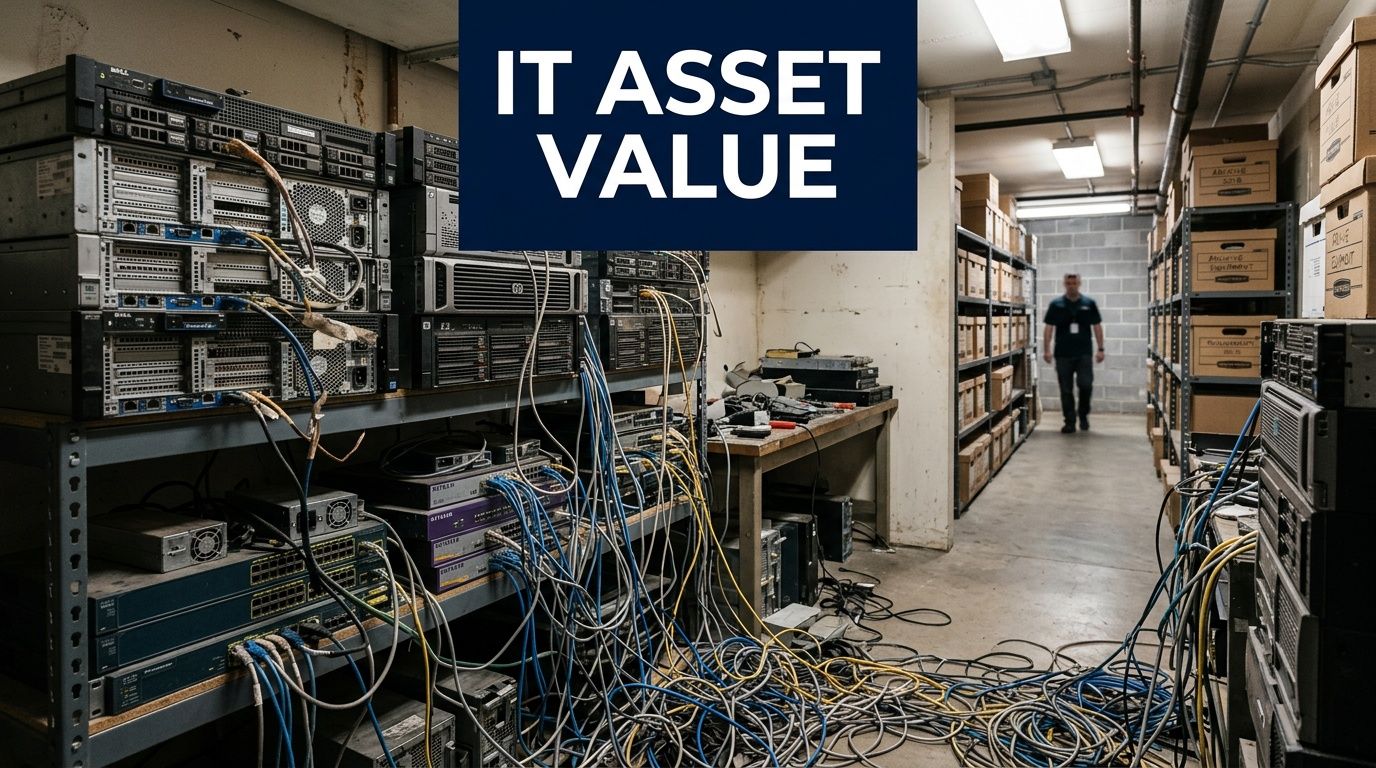
The key shift is simple. Those retired assets are not just e-waste. They’re a mix of data-bearing devices, reusable equipment, boards, steel, aluminum, and copper-rich components that need to be separated correctly. In that stack, bare bright copper matters because it sits at the top of the copper scrap hierarchy for payout.
As of late April 2026, bare bright copper wire typically ranges from $4.45 to $5.10 per pound, and that premium can produce 20-30% higher returns than mixed copper scrap, according to Rockaway Recycling’s bare bright pricing reference. For a business, that changes the conversation. A decommissioning project isn’t only about hauling things away. It can become a structured value recovery exercise.
Why business scrap is different
Commercial environments generate copper differently than residential cleanouts. In Atlanta offices, hospitals, schools, and enterprise facilities, the copper usually shows up in:
- Power supply assemblies with recoverable wire and internal copper-bearing components
- Server and rack cabling including power cords and infrastructure wire
- Network gear that contains internal wire harnesses and copper-bearing parts
- Legacy telecom and structured cabling left behind after upgrades
What works is disciplined sorting at the time of decommissioning. What doesn’t work is tossing servers, loose cabling, and mixed metal into one gaylord and hoping a local yard will sort it generously.
Practical rule: The earlier your team separates reusable equipment, data-bearing devices, and copper-rich scrap streams, the easier it is to protect both value and chain of custody.
There’s also a business accounting issue here. When teams label everything as “old electronics,” they flatten the value. Better operators break the load into categories: resale, parts harvest, downstream recycling, and commodity recovery. That approach is why some companies recover real dollars from projects that others treat as a disposal expense.
If your organization is evaluating whether old equipment has any immediate cash value, a practical first step is reviewing how firms handle old electronics for cash in a commercial recycling context. The important point isn’t the slogan. It’s the process behind the payout.
The hidden mistake in the storage room
The biggest mistake I see is delay. Not because copper loses all value overnight, but because mixed storage leads to contamination, missing assets, poor inventory records, and rushed decisions. Once your copper-bearing materials are tangled with drives, batteries, and unsorted hardware, the easy premium disappears.
Atlanta businesses usually don’t have a scrap problem. They have a material handling and documentation problem. Solve that, and the copper value starts showing up clearly.
Understanding Bare Bright Copper and Scrap Pricing
A common Atlanta decommissioning mistake looks like this: a facilities team cuts out old power whips, network runs, and internal cabling during a refresh, then sends the whole lot out as “copper.” By the time that material reaches a buyer, the highest-value portion is buried under insulation, connectors, oxidation, and mixed metals. The price drops before the settlement conversation even starts.
If you want the best answer to bare bright copper price near me, focus on what buyers pay a premium for: copper that is clean, clearly sorted, and ready for downstream processing with minimal labor.
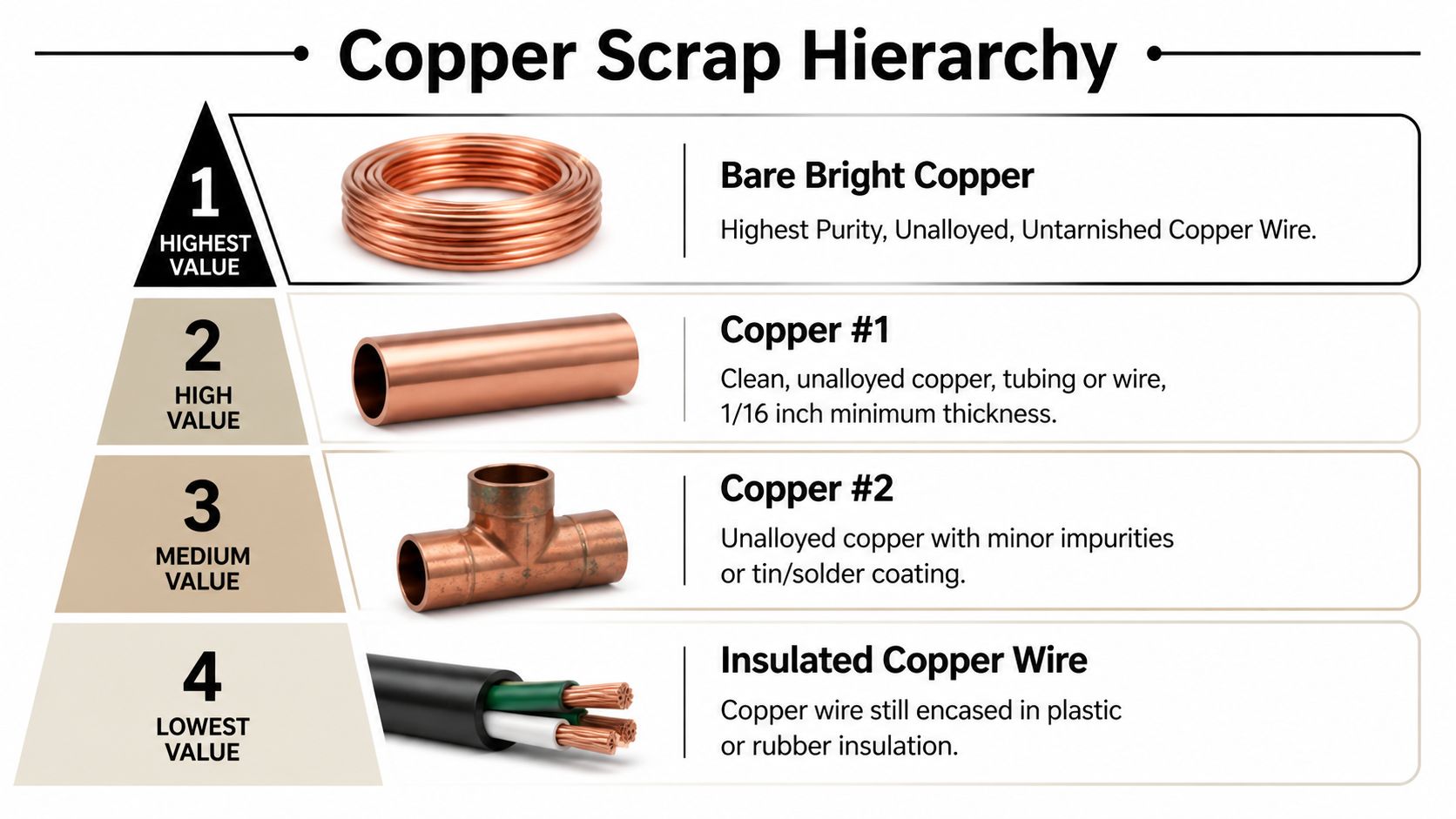
Bare bright copper is the top grade because it is stripped, uncoated, shiny copper wire with very high purity and no solder, paint, insulation, or attachments.
What qualifies as bare bright
In an ITAD setting, this definition matters because cable pulled from offices, data centers, and telecom rooms often looks better than it grades. Clean appearance alone does not make a load bare bright. The material still has to be free of insulation residue, fittings, excessive oxidation, and other contamination that forces additional handling.
| Copper category | What it usually means in practice |
|---|---|
| Bare bright | Clean, stripped, shiny copper wire with no coatings or attachments |
| Copper #1 | Clean copper with minor tarnish allowed |
| Copper #2 | Lower grade copper with more contamination or visible impurities |
| Insulated wire | Copper still wrapped in insulation, which requires further processing |
For Atlanta businesses, the pricing issue is usually not market confusion. It is grade confusion inside the load. Power cable, patch panels, server harnesses, and UPS wiring may all contain recoverable copper, but they do not all belong in the same commodity category.
Why small quality issues cut the payout
Buyers discount loads when they expect extra labor, lower recovery, or both. A few leftover lugs on heavy cable, soldered ends on bus wire, or mixed insulated conductors in a gaylord can pull premium material into a lower grade bucket.
That matters more on commercial projects than many finance teams expect.
A bulk pickup from an office closure or data center shutdown is not judged one strand at a time. It is judged by how consistently the load was sorted, how much contamination is present, and how much work the downstream processor has to do before that copper is furnace-ready. In B2B ITAD, poor sorting also creates a chain-of-custody problem when scrap is mixed with data-bearing devices, batteries, or equipment that should have been inventoried separately.
Clean copper gets premium consideration. Mixed copper gets conservative pricing.
The trade-off is straightforward. Stripping and separating material takes labor. Sending everything out mixed saves time up front but usually gives away margin, especially when the load includes enough high-grade copper to justify tighter handling.
Why prices change from one buyer to another
Local pricing follows broader copper markets, but your actual quote in Atlanta still depends on buyer demand, freight, inbound volume, and how your material is presented. Two companies can call around on the same day and get different numbers for the same claimed weight because one load is bare bright and the other is a mixed wire shipment described too loosely.
For business sellers, that is why a generic scrap quote rarely tells the full story. The better question is how the buyer or processor evaluates commercial wire, documents outbound material, and handles the rest of the decommissioned equipment tied to the project. An IT-focused metal recycling center for Atlanta businesses can assess copper recovery in the context of asset tracking, secure handling, and bulk logistics instead of treating the job like a walk-in scrap drop.
How to Prepare Your Scrap Copper for Maximum Value
A common Atlanta decommissioning mistake looks small in the moment. The crew clears a server room fast, drops cable, power supplies, rails, drives, and loose hardware into the same gaylord, and plans to sort it later. Later usually means the copper is downgraded, asset tracking is weaker, and your return shrinks.
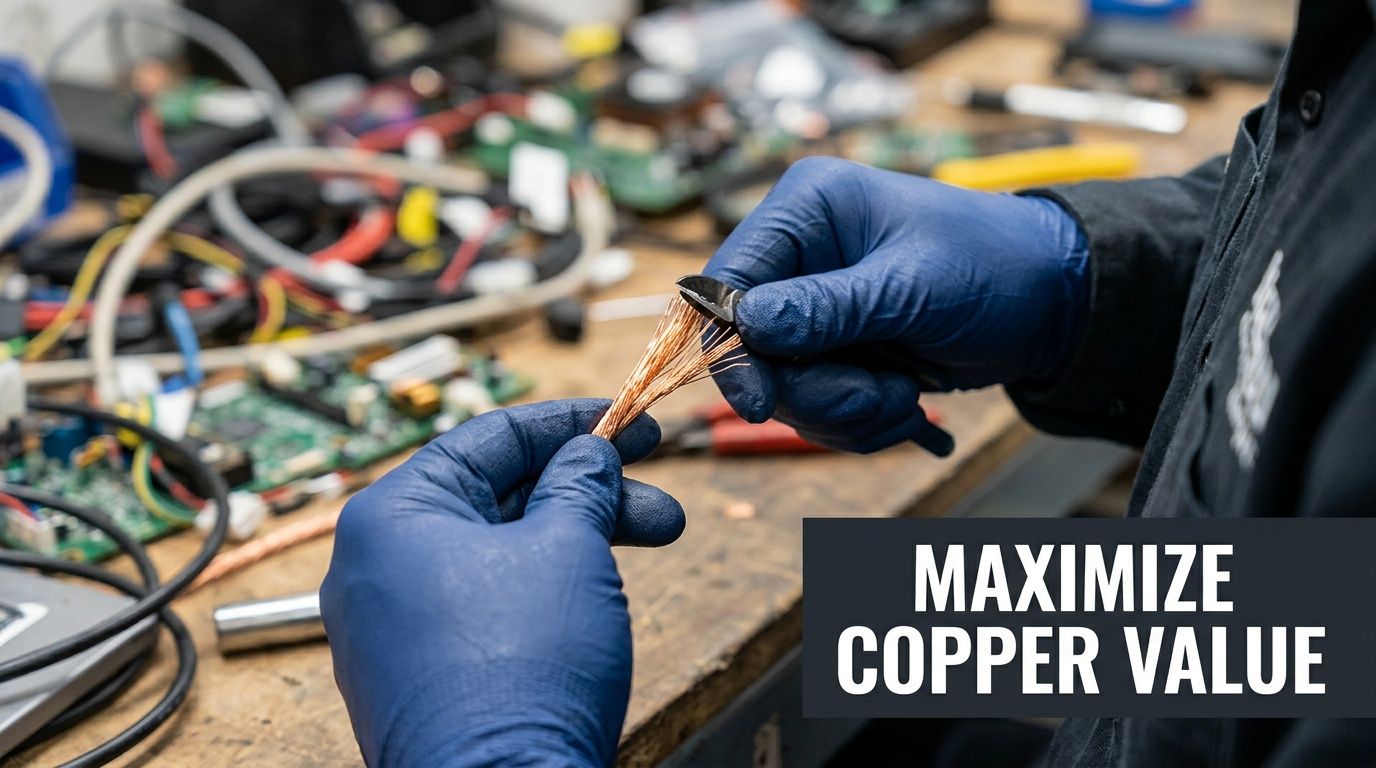
The fix starts before teardown. For business environments, copper prep has to follow the same controls as the rest of the ITAD project. Teams need a defined path for inventory, data destruction, remarketing review, battery handling, and commodity recovery. Bare bright only has value if it stays clean and if it was separated from regulated and reusable material at the right point in the process.
Start with segregation
Stripping wire is not the first decision. Sorting is.
Set up separate containers or pallets for these categories:
- Data-bearing devices such as hard drives and storage arrays
- Potentially reusable equipment such as servers, switches, and laptops in remarketable condition
- Copper-rich material including cabling, power supply wire, and internal harnesses
- Mixed low-value residuals that need downstream recycling
Here, margin is protected. If technicians start cutting cable before drives are pulled, asset tags are reconciled, and exceptions are documented, the project is chasing scrap value while creating avoidable compliance risk.
Decide whether in-house prep makes financial sense
The spread between insulated wire and bare bright can be large enough to get management’s attention. As noted earlier, cleaner, higher-purity copper can command materially better pricing than mixed or insulated wire. That does not mean every business should strip everything on site.
The actual calculation is labor cost, throughput, floor space, and control of the work area.
| Option | What works | What usually doesn’t |
|---|---|---|
| In-house prep | Fits sites with trained staff, controlled workflows, and enough volume to justify dedicated sorting time | Becomes expensive when IT staff or facilities staff are pulled off higher-value work |
| Specialist processing | Fits multi-site refreshes, data center closures, and mixed e-waste streams that need documented handling | Loses value if material was already mixed, damaged, or contaminated before pickup |
I see this often with office and colocation cleanouts around Atlanta. A company focuses on the top per-pound number and ignores the cost of having administrators, field techs, or movers spend hours hand-stripping cable. On paper the scrap rate looks better. In practice the project often costs more.
Protect copper grade during handling
Bare bright pays for cleanliness. Small drops in purity can lead to noticeable discounts because downstream processors have to remove contamination before the material is furnace-ready. As noted earlier, even a minor purity issue can cut into the final settlement.
Protect the load this way:
- Remove plugs, ends, and obvious mixed-metal attachments when practical
- Keep stripped copper dry and separate from insulated wire, steel, aluminum, and general e-waste
- Use labeled containers so one crew does not contaminate another crew’s sorted material
- Document source streams and weights for commercial lots in case a buyer questions grade or settlement
- Keep batteries, boards, and drives out of copper bins so the scrap stream does not create a chain-of-custody problem
One sentence matters here. Clean copper is a commodity. Mixed decommissioned equipment is an ITAD job.
That distinction affects staffing, logistics, and audit readiness. If your team cannot keep copper clean at scale while also maintaining inventory control, send the material through a processor that handles business electronics and scrap recovery together. Companies reviewing what to do with old PC parts usually find the same issue. Copper recovery is only one part of a larger disposition workflow.
The highest-return approach is disciplined and a little boring. Sort first, preserve grade, keep regulated items out of commodity bins, and use internal labor for work that improves security or resale value.
Scrap Yards vs ITAD Services for Atlanta Businesses
An Atlanta company shuts down a server room on Friday, loads obsolete gear into rolling bins, and starts calling around for the nearest bare bright quote. By Monday, the essential question is no longer copper price. It is whether the business can prove what left the building, what data was destroyed, and whether any resale value was lost before the load hit a scale.
What a scrap yard does well
A scrap yard is built for commodity transactions. If a commercial load is already cleaned, sorted, stripped, and separated from regulated electronics, the yard model is efficient. Material gets weighed, graded, and settled against current market conditions.
That works for metal-only loads.
Where the scrap yard model loses ground for business IT
Atlanta IT decommissions rarely arrive as metal-only loads. They show up as mixed streams: servers with drives still installed, network gear with asset tags, UPS units with batteries, telecom cabling, peripheral scrap, and equipment that may still hold reuse value.
A yard can buy copper. It usually does not run the full business process around the copper.
For B2B disposal, the risk sits in everything around the scale ticket. Companies need documented pickup, serialized inventory where appropriate, data destruction controls, downstream accountability, and a clear separation between resale candidates, scrap metal, and regulated e-waste. If those steps happen in the wrong order, the company can lose revenue and create an audit problem at the same time.
Side-by-side decision criteria
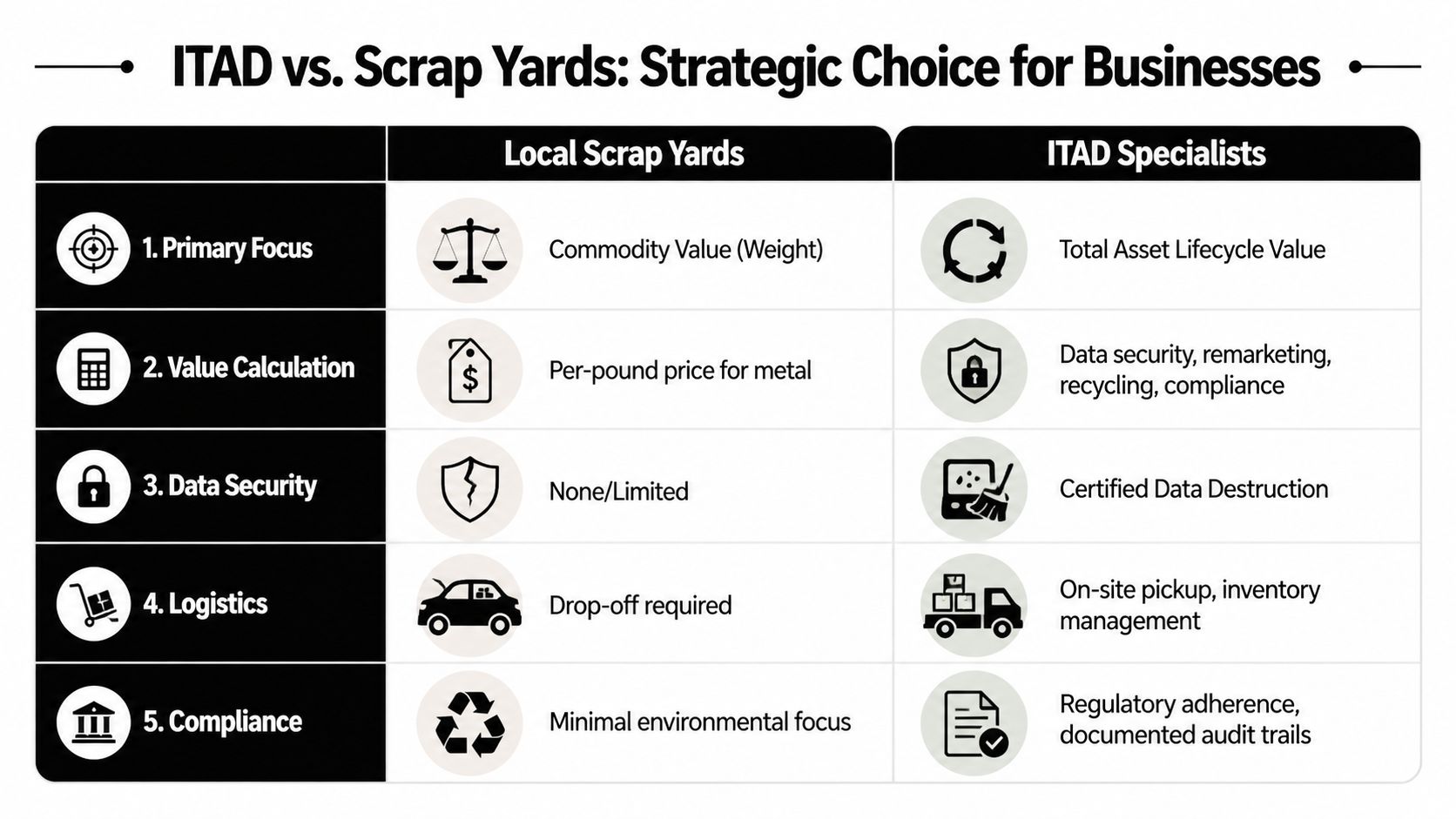
| Decision area | Local scrap yard | ITAD service |
|---|---|---|
| Primary transaction | Metal sale by weight | Managed disposition of assets and materials |
| Data handling | Limited or outside core scope | Built into the workflow |
| Asset inventory | Usually minimal | Tracked and documented based on project scope |
| Value recovery | Mostly commodity-based | Reuse, parts harvesting, commodity recovery, and controlled downstream processing |
| Audit trail | Basic receipt | Chain-of-custody records and disposition reporting |
That difference matters in Atlanta sectors where retired equipment can trigger review from compliance, procurement, legal, finance, or internal audit. Healthcare systems, universities, logistics firms, and regional corporate offices do not just need payout. They need proof.
The nearest option can create more internal work
A local yard may be closer. It often shifts more responsibility back to the business.
- Internal staff must sort mixed material before shipment or accept lower-grade outcomes
- IT or facilities teams must coordinate packaging and transport for bulky and uneven loads
- Documentation may stop at a weight ticket rather than a project-level record of what was processed
- Reusable assets can get scrapped too early if no one evaluates them before metal recovery
A receipt confirms transfer of material. It does not confirm drive sanitization, serialized tracking, or downstream handling standards.
This is usually where Atlanta businesses see the trade-off clearly. If the project is a gaylord of clean, stripped copper, a yard may be fine. If the project is an office closure in Buckhead, a data center refresh near Alpharetta, or a multi-floor equipment pull in Midtown, the job usually needs logistics control first and commodity settlement second.
For companies comparing consumer drop-off options against enterprise-grade disposition, the differences in scope are easy to see in this breakdown of Best Buy recycling options for electronics. Retail recycling has a place. It is not a substitute for managed ITAD on commercial volume.
The right comparison is operational. A scrap yard buys metal. An ITAD provider manages risk, security, reporting, and value recovery across the whole load.
Why Partnering with an ITAD Specialist Maximizes Your Return
The highest return on retired IT assets usually comes from process control, not from chasing the highest quoted scrap rate on one metal grade. Copper matters. It just isn’t the whole equation.

An ITAD specialist maximizes return by managing the asset stream in the right order. First, identify data-bearing devices and secure them. Next, isolate equipment that still has reuse or resale potential. Then recover commodity value from the remaining materials through disciplined downstream channels. That sequence protects the company while preserving upside that a pure scrap transaction misses.
Net return beats line-item scrap price
Businesses get into trouble when they optimize for the easiest visible metric. A bare bright quote is visible. Net project return is what counts.
A stronger ITAD workflow improves commercial outcomes because it can:
- Separate resale from scrap so usable equipment isn’t crushed into metal value
- Preserve copper grade quality through controlled handling and downstream sorting
- Reduce internal labor drag by moving packing, pickup, and processing off your IT team
- Produce usable documentation for internal controls and outside audits
That’s the difference between a metal transaction and a disposition strategy.
Security and environmental discipline are financial issues
Data destruction and environmental compliance are often treated as side requirements. They aren’t. They directly affect cost, risk, and executive exposure. If a project leaves uncertainty around storage media, chain of custody, or final downstream handling, any copper upside becomes secondary.
The most profitable ITAD project is the one that recovers value without creating a follow-up problem for security, compliance, or facilities.
This is especially true in Atlanta healthcare, education, and government environments where retired infrastructure may carry sensitive information or procurement scrutiny. The right provider doesn’t just pick up hardware. The provider turns a messy turnover event into a documented business process.
Why Atlanta operations need local execution
Metro Atlanta projects often involve multiple offices, dense schedules, loading dock limitations, and mixed equipment types from different refresh cycles. That favors partners who can coordinate on-site removal, staging, and transport with minimal disruption to operations.
For organizations evaluating that kind of support, Atlanta IT asset liquidation is the closer fit than generic scrap hauling. The value isn’t only in what leaves the building. It’s in how the project is controlled from the moment assets are touched.
If your search starts with bare bright copper price near me, that’s fine. Just don’t stop at the yard rate. For a business, the best outcome comes from a secure chain of custody, careful material separation, and a disposition model that recognizes every revenue stream inside the load.
Commercial E-Waste and Copper Recycling FAQs
Do we need to strip all copper wire ourselves before pickup
Usually, no. For most businesses, the better move is to segregate copper-rich materials cleanly and let a qualified downstream processor handle volume preparation. Hand-stripping wire with internal staff often looks profitable on paper and turns into lost time, inconsistent grading, and avoidable handling risk.
If your team is already running a tightly managed decommissioning line, limited in-house prep can make sense. If not, focus on separation, inventory, and secure handling.
What should we separate before an ITAD pickup
Separate by risk and value first. Pull out data-bearing devices, reusable equipment, batteries or specialty items, and obvious copper-rich material such as loose cabling or removed power assemblies. Don’t over-sort into tiny categories unless your provider asked for it. Overcomplicated sorting plans usually fail on busy projects.
A clean, practical staging plan beats a perfect one nobody follows.
Can a business rely on a scrap receipt for compliance records
Not by itself. A scrap receipt confirms a transaction. It usually doesn’t provide the level of documentation commercial organizations need for asset traceability, data handling records, or environmental reporting. If your legal, compliance, procurement, or audit teams may ask questions later, you want a fuller record set than a scale ticket.
Is bare bright copper the main source of value in retired servers
It can be an important commodity stream, but it’s rarely the only source of value. In many ITAD projects, the larger financial picture comes from combining resale, parts harvest, and disciplined recycling. Copper recovery becomes more valuable when it sits inside a process that captures every category correctly instead of flattening everything into scrap.
What kinds of Atlanta organizations benefit most from managed ITAD
Healthcare systems, schools, universities, financial firms, public agencies, manufacturers, and enterprise offices all benefit when they have bulk equipment, sensitive data, or recurring refresh cycles. The more locations, users, devices, and internal stakeholders involved, the more useful a documented process becomes.
How should we evaluate a partner for a copper-heavy decommissioning project
Ask operational questions, not just pricing questions.
- Chain of custody for data-bearing assets
- On-site logistics for removal, packing, and pickup
- Material separation methods for copper-rich equipment
- Documentation quality for audit and environmental reporting
- Experience with commercial volumes rather than one-off consumer loads
Should we hold material and wait for a better copper market
Sometimes waiting helps, but storage adds its own costs and risks. Mixed electronics can degrade in value when they sit unsorted, and internal control gets weaker the longer material remains in a back room. If the project includes drives, servers, or regulated devices, timely processing usually matters more than trying to time the market perfectly.
The better approach is to control the asset stream quickly and let the recovery strategy work across all value categories.
Atlanta businesses that need secure pickup, data destruction, and disciplined value recovery can work with Atlanta Computer Recycling for end-to-end ITAD and electronics recycling across the metro area. If your team is planning a server refresh, office closure, or data center decommissioning, start with a project review that covers chain of custody, asset categories, and commodity recovery opportunities before anything leaves the building.