10 Top Day Trips from Atlanta Georgia for IT Pros


You already know the usual version of “Top Day Trips from Atlanta Georgia.” It’s mountain towns, waterfalls, breweries, and train rides. That’s useful for weekends. It’s less useful when you’re responsible for regulated data, retired endpoints, storage arrays, and a disposal chain that has to survive audit scrutiny.
For IT leaders, operations directors, and compliance owners, a smarter day trip starts closer to the systems that shape Atlanta’s business environment. A university campus can show you how a large institution manages refresh cycles and vendor coordination. A hospital district reveals how decommissioning gets harder when protected data and medical workflows are involved. A stadium, airport, or utility environment shows what mission-critical uptime does to replacement planning and chain-of-custody expectations.
That’s why I treat these routes as working trips, not leisure drives. You’re not going for scenery. You’re going to observe how Atlanta organizations likely think about asset lifecycle, secure retirement, sustainability, and operational risk. Those lessons matter whether you run a regional IT team, support multiple offices, or need a better framework for cybersecurity risk management.
There’s also a practical reason to frame them this way. Existing day-trip coverage leans heavily toward recreation and overlooks business disposal needs, even as one guide notes a 15% rise in commercial e-waste from metro relocations in 2025 Georgia EPA data and points out that trip content rarely addresses electronics recycling for office moves. That gap is where smart operators can learn faster.
Below are ten strategic day trips inside and around Atlanta’s operating core. Each one offers a different lens on security, compliance, procurement discipline, and IT asset disposition in practice.
1. Georgia Tech Campus and Sustainable Technology Initiatives
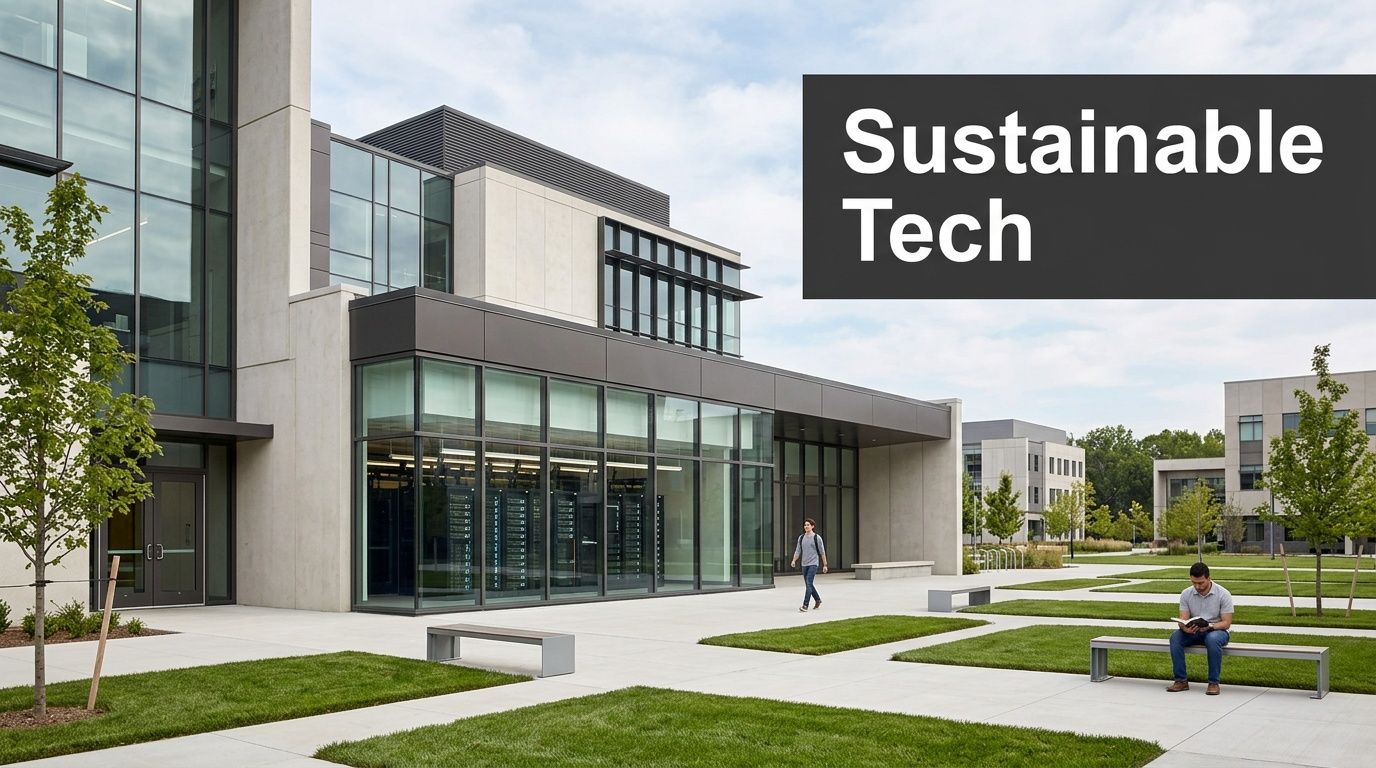
Georgia Tech is one of the most useful stops if you want to study complexity without the access barriers of a federal or aviation site. A major university environment forces IT teams to balance research demands, classroom uptime, endpoint sprawl, and sustainability pressure in one operating footprint. That combination makes it a strong first stop on any serious list of Top Day Trips from Atlanta Georgia for business readers.
What works here is the scale of questions you can ask. Universities don’t retire a few laptops at a time. They cycle through lab systems, staff devices, specialty equipment, AV gear, and storage media across multiple departments. That creates a disposal reality where policy has to be broad, but execution has to be specific.
What to pay attention to on campus
If you arrange conversations with facilities, procurement, or campus IT, keep your questions operational.
- Ask about lab refreshes: Computer labs and shared academic environments usually expose the difference between planned lifecycle management and reactive replacement.
- Ask about research data handling: Research devices often need tighter retirement controls than general office hardware.
- Ask about vendor coordination: Universities often rely on outside partners for pickup, reporting, and downstream recycling documentation.
- Ask about surplus versus destruction decisions: Reuse and remarketing can be appropriate for some categories. They aren’t appropriate for all categories.
A common mistake on this kind of visit is focusing only on technology and ignoring process ownership. In practice, the friction often sits between departments. One team owns procurement, another owns security, another owns surplus property, and someone else signs off on compliance language. If your own organization struggles with unclear ownership, campus operations will look familiar fast.
Practical rule: Don’t leave a university visit with only technical notes. Leave with a map of who approves disposal, who documents it, and who answers when audit questions arrive months later.
Bring business cards. Ask for policy examples, not marketing summaries. The best takeaway from Georgia Tech usually isn’t a tool. It’s seeing how a large institution turns asset retirement into a repeatable administrative process instead of an ad hoc cleanup project.
2. Emory University Healthcare System and Hospital IT Operations
Healthcare changes the stakes. In a hospital environment, retired equipment doesn’t just represent hardware value. It represents possible exposure tied to patient information, imaging systems, clinical workflows, and a long list of connected devices that outlive their original deployment assumptions.
That’s why Emory’s healthcare footprint is one of the strongest intelligence trips for compliance-focused operators. You’re looking at an environment where asset retirement has to align with HIPAA expectations, internal security controls, vendor due diligence, and the realities of busy clinical departments that can’t pause for disposal convenience. If you’re also reviewing hosted environments, it’s worth comparing on-prem retirement discipline with Cloud Move's compliant cloud platforms.
The main lesson from healthcare IT
In healthcare, vague disposal language is a liability. “We wiped it” isn’t enough. “Facilities took it away” isn’t enough. “The vendor handles that” isn’t enough.
You need to understand:
- Which devices are in scope: Endpoints, storage, imaging systems, network gear, and embedded systems don’t all follow the same retirement path.
- Which teams approve release: Biomedical, IT, compliance, and legal may all have a say.
- Which records get retained: Certificates, chain-of-custody logs, and destruction records matter after the truck leaves.
- Which assets require physical destruction: Some media shouldn’t be remarketed, even if the hardware around it still has use.
Healthcare teams tend to expose one hard truth: the disposal project starts long before pickup day. If departments don’t inventory correctly, separate media correctly, or quarantine sensitive assets correctly, the recycler inherits confusion instead of a clean handoff.
Hospital environments reward vendors who can document every transfer point and communicate cleanly with compliance staff, not just IT staff.
When you speak with healthcare asset managers, ask about decommissioning timelines for clinical equipment and how they handle gear that mixes operational hardware with storage components. That’s where many disposal programs break down. The organizations that do this well don’t treat secure retirement as a recycling task. They treat it as an extension of clinical risk management.
3. Georgia Power Data Centers and Energy Infrastructure
A utility environment teaches discipline. Georgia Power’s operations are useful to study because mission-critical infrastructure changes how teams think about maintenance windows, vendor trust, and replacement planning. In utility operations, uptime pressure often shapes every downstream disposal decision.
That matters for ITAD because retired gear doesn’t usually leave the environment in neat, low-risk batches. Equipment comes out when projects close, when resilience upgrades land, when standards change, or when a dependency forces refresh. The disposal stream reflects infrastructure realities, not tidy calendar planning.
Questions worth asking utility teams
Start with lifecycle governance, not hardware brands. The stronger questions are procedural.
- How do they approve decommissioning in critical environments?
- What security documentation is required before a vendor gets access?
- How do they separate reusable hardware from controlled components?
- What procurement criteria disqualify a disposal vendor early?
This kind of trip is useful because utilities usually don’t tolerate fuzzy operational language. If a provider can’t explain access control, logistics sequencing, or reporting expectations clearly, that provider won’t last long in a regulated environment.
There’s a trade-off here. You may get less direct visibility into physical systems than you would on a campus or public venue tour. Access can be tighter and conversations more guarded. That’s fine. Even limited exposure can show you how mature organizations evaluate risk before they move a single rack, server, or storage unit.
What works and what doesn’t
What works in utility-style environments is pre-clearance. Security paperwork, point-of-contact coordination, and clear scope definitions save everyone time.
What doesn’t work is showing up with a generic pitch about electronics recycling. Utility buyers want to know who touches the equipment, how handoff is documented, and what happens if a serial number dispute appears after removal. If your internal program can’t answer those same questions, this stop will expose that quickly.
4. Atlanta Public Schools IT Operations and Digital Learning Infrastructure
K-12 environments are where scale meets budget pressure. Atlanta Public Schools is a valuable stop because school systems manage broad endpoint fleets, frequent redeployments, seasonal refresh windows, and strict sensitivity around student information. That creates disposal lessons that many private-sector teams underestimate.
The challenge in school IT isn’t just volume. It’s timing. Summer and break periods compress everything. Devices need to be collected, assessed, wiped, redeployed, surplused, or recycled within narrow operating windows, often while facilities, curriculum, and admin teams are all running separate schedules.
Why schools are worth studying
School systems force practical decision-making. Fancy disposal strategy doesn’t matter if staff can’t execute it across many sites.
A useful conversation with district IT should focus on three pressure points:
- Collection discipline: How devices return from classrooms, carts, offices, and storage closets
- Data protection: How student and staff information is addressed before hardware leaves district control
- Vendor reliability: Whether partners can handle pickup, sorting, and reporting without disrupting start-of-term readiness
One issue schools highlight well is the difference between a refresh cycle and an actual retirement program. Many organizations say they refresh devices. Fewer have a dependable downstream process for what happens next. That gap creates storage room buildup, incomplete records, and avoidable security exposure.
A school district’s disposal problem usually starts as a space problem. Then it turns into a records problem. Then it becomes a security problem.
If you can meet district technology leadership during the off-season, ask how they handle mixed lots. Bulk collections often include working laptops, broken Chromebooks, dead accessories, aging desktop units, and loose drives. The providers that help most are the ones that can sort quickly, document clearly, and keep school staff from becoming warehouse managers.
5. Centers for Disease Control and Prevention Atlanta Campus
The CDC is one of the most instructive stops for understanding how federal expectations shape equipment handling, even if direct access is limited. For IT and compliance professionals, the value here isn’t tourism. It’s exposure to a culture where security vetting, controlled access, and procedural rigor drive every interaction.
Federal environments tend to sharpen your thinking because informal workarounds disappear. Vendor onboarding gets tighter. Documentation standards get stricter. Physical access becomes a controlled event, not a calendar invite.
What this trip teaches immediately
You’ll see the difference between organizations that say security matters and organizations that operationalize it. In a federal context, secure retirement isn’t just about destruction. It’s about custody, authorization, inventory integrity, and traceable transfer events.
Focus your questions on:
- Access control requirements for vendors
- Approval chains for federal equipment retirement
- Documentation standards after pickup or destruction
- How regulated assets are separated from general surplus streams
If your own organization is maturing its disposal process, this is the benchmark mindset worth borrowing. You don’t need to copy federal procedures line for line. You do need the discipline behind them.
The trade-off is obvious. You probably won’t get the loose, exploratory conversations you can get in a university or business district setting. Access may be narrow, and public-facing staff may keep discussions high level. Even so, the lesson is still there. Serious environments screen serious vendors by process quality first.
One practical takeaway
Build your disposal program as if someone outside your department will review it later. That means clean inventory, documented handoffs, named responsibilities, and no ambiguity about where sensitive media went. Organizations operating at federal security levels assume that proof matters as much as intent. That’s the right assumption for everyone else too.
6. Mercedes-Benz Stadium and Smart Venue Technology
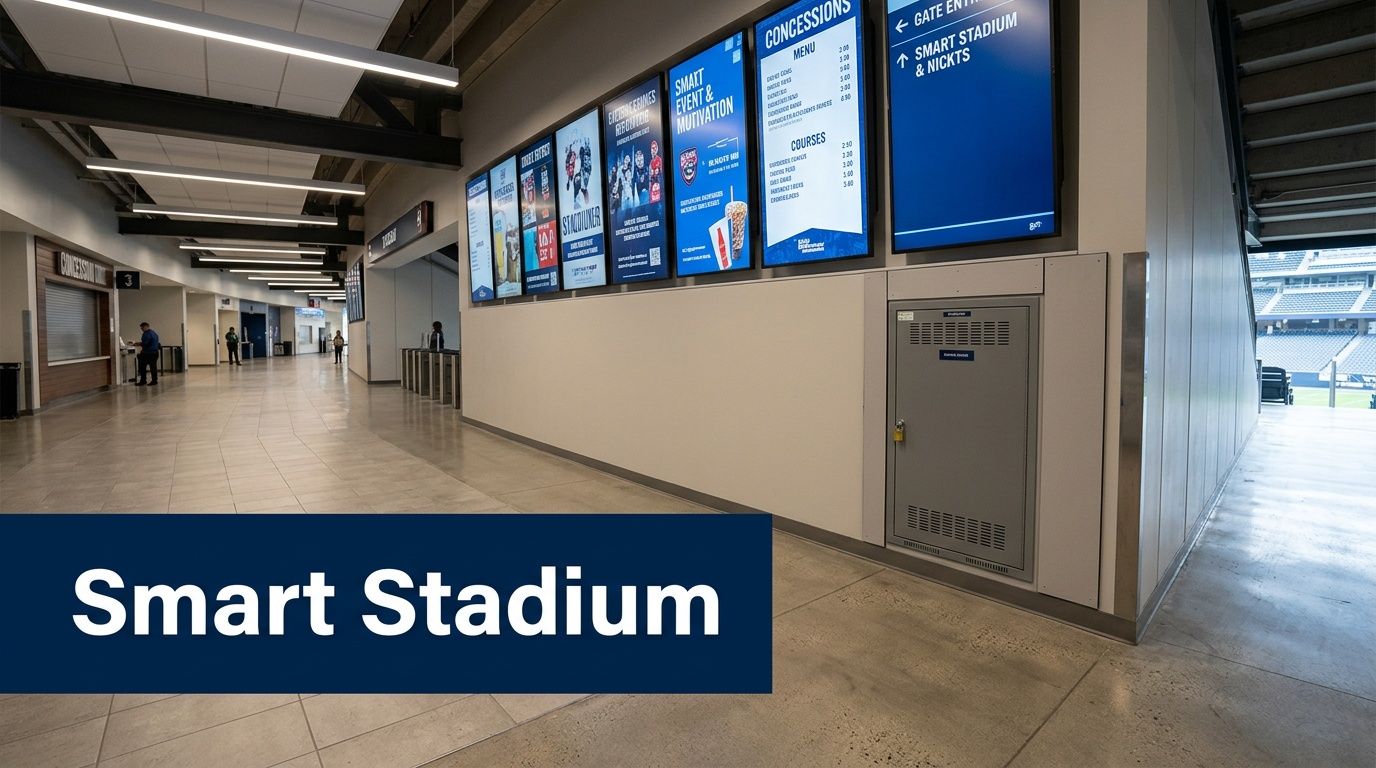
A smart venue is a strong reminder that not all enterprise IT lives in offices or data centers. Mercedes-Benz Stadium brings together networking, digital signage, access control, point-of-sale systems, building systems, and security infrastructure in one high-visibility environment. That makes it a valuable stop for anyone who manages distributed technology outside a traditional corporate floor plan.
Venue operations reward durability, standardization, and fast replacement. Event schedules don’t leave much room for improvisation. If a display fails, a reader goes down, or a networking component ages out, the replacement and retirement workflow has to be tight.
What stadium environments reveal
This is one of the best places to study how organizations handle mixed technology estates. A venue rarely retires one clean category of equipment at a time. More often, you get bundles of displays, control hardware, network devices, endpoint systems, and cabling support gear tied to renovation cycles or sponsor-driven upgrades.
That creates three practical questions:
- How are assets tracked across many operational zones?
- Who approves retirement for customer-facing systems?
- How are secure removals scheduled around live events and contractor access?
What works here is planning around blackout dates and off-peak access. If you’re coordinating a disposal program in a hospitality, venue, or retail-like environment, the lesson is simple. Align your project with operating rhythm. Don’t force the business to stop so IT can clean house.
A common failure point is underestimating embedded storage. Smart venue gear often includes components that store logs, credentials, content, or configuration data. Teams that treat all non-server equipment as low risk usually miss something.
“Nontraditional IT” still carries data risk. Screens, kiosks, controllers, and building systems deserve the same retirement discipline you’d give a laptop or server.
Ask about equipment upgrade cycles and contractor coordination. The answers usually show whether the organization treats retirement as a formal phase of change management or just an afterthought once the new gear goes live.
7. Georgia State University’s Technology Infrastructure and Data Services
Georgia State gives you a different university pattern than Georgia Tech. The lesson here isn’t just technical scale. It’s operational density. A large urban university deals with classroom tech, administrative systems, labs, user support demands, and a broad mix of stakeholders across a busy city footprint.
That matters because density creates friction. Devices move often. Departments have different replacement priorities. Storage rooms fill up faster than anyone expects. A disposal partner has to work within those realities, not against them.
Where to focus your attention
The best conversations at a university like this usually center on standardized decision-making. Large institutions don’t stay functional by debating every retirement decision from scratch.
Ask about:
- Computer lab lifecycle rules
- Procurement standards for replacement hardware
- Current disposal vendor expectations
- How exceptions are handled for research or specialty devices
If those answers are crisp, the institution probably has a mature asset program. If they’re vague, there’s usually hidden operational drag behind the scenes.
This is also a good stop for understanding how decentralization affects disposal. In many large organizations, some departments follow central IT processes closely, while others hold equipment longer, store it locally, or buy outside preferred channels. That makes final disposition harder than the policy manual suggests.
What professionals should borrow from this setting
Borrow the habit of standardizing intake before disposition. By the time equipment reaches your recycler, your team should already know what it is, whether it contains storage, whether it can be redeployed, and who approved release. Universities that do this well reduce confusion before the truck arrives.
The teams that struggle usually put too much burden on the downstream vendor to discover what’s in the pile. That’s expensive, slow, and risky. Georgia State is a good mental model for fixing that problem early.
8. Atlanta Convention and Visitors Bureau and Corporate Technology Hubs
Not every strategic day trip needs a formal facility tour. Atlanta’s business districts and corporate clusters are useful because they expose the commercial conditions behind office relocations, expansions, consolidations, and technology turnover. If you work in B2B services, market reality becomes evident.
A downtown or midtown route built around networking meetings can tell you more about disposal demand than a polished conference panel ever will. Companies change floors, open satellite spaces, absorb acquisitions, and retire mixed lots of hardware in ways that don’t always make it into formal procurement narratives.
Why this route matters commercially
This stop is less about physical infrastructure and more about buying signals. You’re looking for organizations dealing with:
- Office move planning
- Lease transitions
- Storage closet overflow
- Legacy equipment from hybrid-work resets
- Vendor fatigue from unreliable pickup or reporting
Morning meetings usually work best because IT and operations leads haven’t been pulled fully into the day’s escalations yet. Keep the conversation grounded in operational pain. Ask what happens to retired laptops, dock stations, monitors, switches, and old room equipment when offices reconfigure. You’ll often find the answer is “they’re still sitting somewhere.”
This is also where strategic positioning matters. A corporate buyer doesn’t need a lecture on e-waste. They need a partner who can coordinate de-installation, packing, pickup, and documentation with minimal disruption. If you can’t explain that clearly, someone else will.
What works in corporate environments
Specificity works. Talk about chain-of-custody, media handling, office-closeout logistics, and minimal downtime.
What doesn’t work is leading with sustainability language alone. Environmental outcomes matter, but commercial buyers usually move first on risk reduction, internal labor savings, and clean execution. The greener result is important. It just isn’t always the first trigger.
9. Hartsfield-Jackson Atlanta International Airport IT Infrastructure
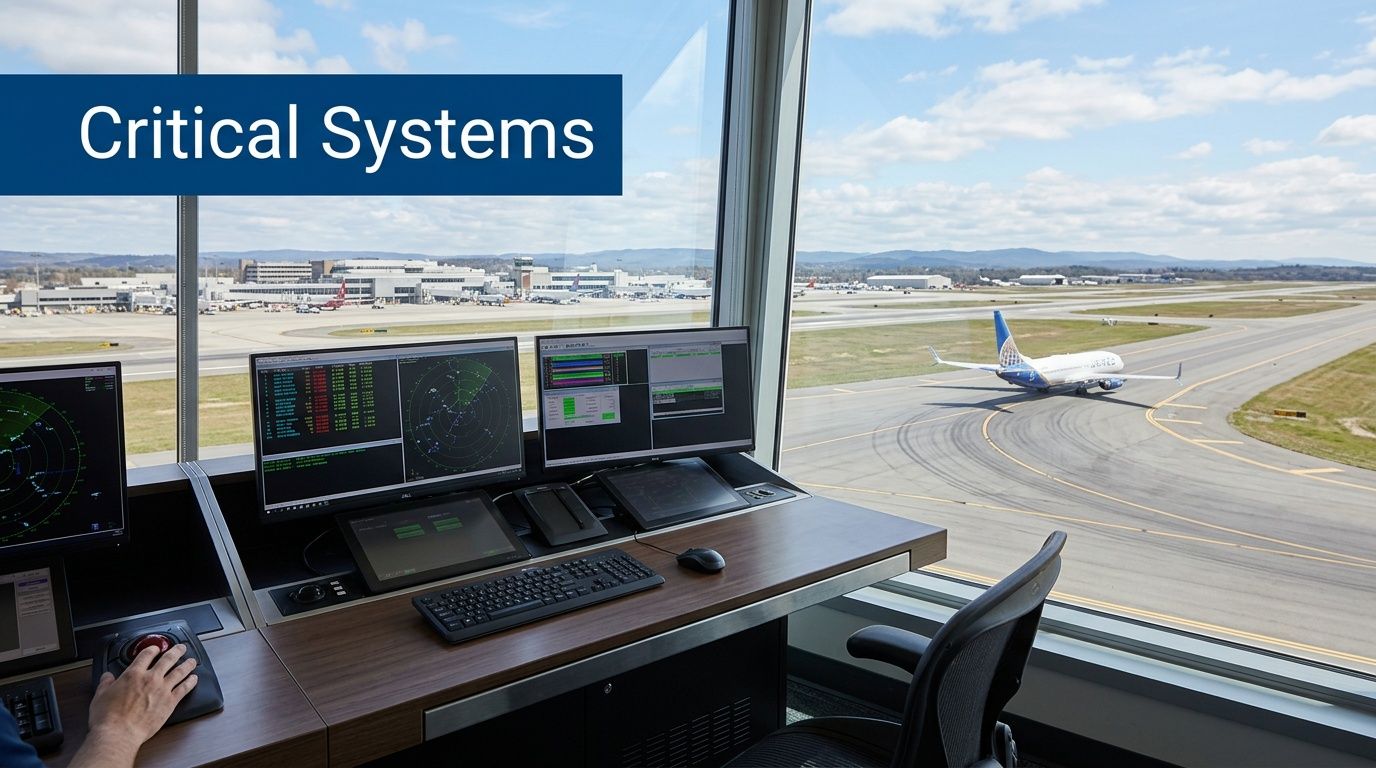
Airport IT is a lesson in controlled complexity. Passenger systems, operations systems, security infrastructure, communications, and vendor-managed technology all intersect in an environment that doesn’t get to pause. That makes Hartsfield-Jackson one of the strongest local examples of what secure retirement should look like when uptime and access control are both nonnegotiable.
This is not an easy visit to arrange, and approval may be limited. Even so, the airport deserves a place on any serious list of Top Day Trips from Atlanta Georgia because it represents the kind of operating environment many enterprises aspire to: controlled, documented, segmented, and risk-aware.
The disposal lesson from transportation infrastructure
In airport-like environments, the hardest part often isn’t deciding that hardware is obsolete. The hard part is removing it without creating operational exposure. Access windows are narrow. Escort rules may apply. Multiple vendors may touch neighboring systems. Asset movement has to be controlled and documented.
That setup teaches two useful habits:
- Scope every project precisely: Ambiguity creates delays and approval friction.
- Sequence work around operations: Retirement has to fit the facility’s tempo, not the other way around.
If you’re responsible for your own high-availability environment, study how transportation organizations likely think about vendor trust. A disposal vendor isn’t just a hauler. That vendor becomes a temporary participant in a sensitive operating environment. The threshold should be high.
The tighter the facility, the more your disposal process has to look like a controlled project, not a pickup appointment.
When you can speak with airport or transportation stakeholders, ask about vendor management, replacement scheduling, and requirements for removing equipment from secure areas. The answers usually reveal whether your own internal standards are strong enough for a high-control environment.
10. Tech Square and Atlanta’s Innovation and Startup Ecosystem
Tech Square is a different kind of trip. You’re not studying mature bureaucracy here. You’re studying speed. Startups, incubators, and growth-stage companies often move faster than their asset controls do, which makes this district a useful place to understand where flexible ITAD services create the most value.
Fast-growing companies usually don’t fail because they lack ambition. They fail operationally because simple things become messy at scale. Devices pile up after hiring sprints. Offices open before standards are fully set. Acquisitions or relocations leave mixed hardware in conference rooms and closets. Nobody owns the retirement process until the mess becomes visible.
Why startups are worth your time
This ecosystem shows what happens when growth outruns process. For service providers and internal IT leaders alike, that’s useful intelligence.
The conversation here should focus on:
- How many locations the company supports
- Whether onboarding and offboarding are standardized
- Who owns retired equipment
- Whether the company wants simple service packages or custom handling
What works with growth-stage organizations is simplicity. They don’t want a heavy, confusing engagement model. They want clear pickup terms, understandable data handling, and confidence that they won’t be embarrassed later by a disposal mistake.
This part of Atlanta also benefits from practical local knowledge. One of the better examples of nearby recreational day-trip gravity is Blue Ridge, which has become one of Atlanta’s most popular day trip destinations at about 95 miles or 1 hour and 30 minutes from the city center. That kind of regional business-travel pattern matters because startup and tech teams often mix offsite planning, recruiting events, and equipment moves in the same operating rhythm.
One final observation from Tech Square
Young companies often understand security in theory before they understand asset disposition in practice. That’s normal. The opportunity is to give them a process they can follow. If the disposal workflow is too complicated, they’ll postpone it. If it’s clear, fast, and documented, they’ll use it.
Top 10 Atlanta Tech & Infrastructure Comparison
| Site | Implementation Complexity 🔄 | Resource Requirements ⚡ | Expected Outcomes 📊⭐ | Ideal Use Cases 💡 | Key Advantages ⭐ |
|---|---|---|---|---|---|
| Georgia Tech Campus and Sustainable Technology Initiatives | 🔄 Medium, advance scheduling; some restricted areas | ⚡ Moderate, campus coordination, vendor liaison | 📊⭐ Enterprise‑scale IT insights; sustainable e‑waste practices | 💡 Institutional e‑waste reduction programs; university partnerships | ⭐ Direct view of large IT ops and innovation labs |
| Emory University Healthcare System and Hospital IT Operations | 🔄 High, HIPAA restrictions; strict scheduling | ⚡ High, compliance docs, vetted escorts, audit readiness | 📊⭐ Deep HIPAA‑compliant disposal and medical device lifecycle insights | 💡 Regulated‑industry disposal training; healthcare vendor selection | ⭐ Exposure to healthcare compliance and audit trails |
| Georgia Power Data Centers and Energy Infrastructure | 🔄 High, security checks; limited public access | ⚡ High, clearance, technical escorts, strict schedules | 📊⭐ Mission‑critical uptime, redundancy, and lifecycle best practices | 💡 Utility‑grade decommissioning and logistics planning | ⭐ Observe 24/7 critical infrastructure operations |
| Atlanta Public Schools IT Operations and Digital Learning Infrastructure | 🔄 Medium, student safety approvals; limited hours | ⚡ Moderate, district contacts, seasonal scheduling | 📊⭐ Understanding bulk device cycles and FERPA compliance | 💡 K‑12 bulk retirement and cost‑effective disposal programs | ⭐ Scale experience across many sites and cost focus |
| Centers for Disease Control and Prevention (CDC) Atlanta Campus | 🔄 Very high, federal clearances; months‑long vetting | ⚡ Very high, security clearance, strict documentation | 📊⭐ Federal security/compliance (FISMA/NIST) and secure asset handling | 💡 Government contract readiness; high‑security disposals | ⭐ Direct exposure to federal procurement and standards |
| Mercedes‑Benz Stadium and Smart Venue Technology | 🔄 Medium, tours only on non‑event days; area limits | ⚡ Moderate, event‑aware scheduling, vendor coordination | 📊⭐ Insights on high‑availability venue tech and IoT integration | 💡 Venue IT upgrades, display replacements, event tech refreshes | ⭐ Real example of event‑scale IT and integration |
| Georgia State University's Technology Infrastructure and Data Services | 🔄 Medium, appointments required; research areas restricted | ⚡ Moderate, CIO/IT contacts, seasonal visits | 📊⭐ University‑scale refresh cycles and lab equipment handling | 💡 Campus computer lab refresh and coordinated pickups | ⭐ Large student population context and multi‑data‑center ops |
| Atlanta Convention & Visitors Bureau and Corporate Technology Hubs | 🔄 Medium, per‑company scheduling; security varies | ⚡ Moderate, networking, tailored meetings | 📊⭐ Broad view of corporate IT practices and procurement trends | 💡 Office relocations, multi‑tenant upgrades, vendor pitching | ⭐ High concentration of diverse enterprise prospects |
| Atlanta Hartsfield‑Jackson International Airport IT Infrastructure | 🔄 Very high, 24/7 ops; strict vetting and limited access | ⚡ Very high, extensive security docs, narrow windows | 📊⭐ Understanding mission‑critical transportation IT and redundancy | 💡 Secure disposal for critical systems and high‑value contracts | ⭐ Exposure to large, security‑sensitive infrastructure needs |
| Tech Square and Atlanta's Innovation and Startup Ecosystem | 🔄 Low‑Medium, many contacts; relationship building required | ⚡ Low, event attendance, sponsorships, scalable offers | 📊⭐ Leads from rapid‑growth companies with frequent turnover | 💡 Scalable, flexible disposition packages for startups | ⭐ Access to VC networks and growth‑stage prospects |
Your Next Move Turning Insights into Action
These routes matter because they reveal the same pattern in different operating environments. Universities deal with scale and departmental complexity. Healthcare environments raise the bar on documentation and protected data handling. Utilities, airports, and federal settings show what mature control looks like when downtime, access, and compliance all carry real consequences. Venues and startups reveal a different lesson. Speed and visibility don’t reduce disposal risk. They often increase it.
For most Atlanta organizations, the practical problem isn’t deciding that old equipment has to go. Everyone already knows that. The problem is executing retirement in a way that protects data, satisfies internal stakeholders, and doesn’t consume weeks of staff time. That’s where a lot of teams get stuck. Equipment starts accumulating in server rooms, storage closets, spare offices, and loading areas because no one wants to create risk by moving too fast, and no one has the bandwidth to build a process from scratch.
This is also why “Top Day Trips from Atlanta Georgia” can be a useful business lens rather than just a travel phrase. When you visit or study these ecosystems, you see that mature organizations don’t treat ITAD as an afterthought. They build it into lifecycle planning, vendor management, and operational governance. That’s the standard worth copying.
If your organization handles regulated data, distributed endpoints, network infrastructure, storage media, or data center hardware, your next move should be to evaluate your current retirement process against what strong environments demand. Ask a few direct questions. Do you know which assets are waiting for disposition right now? Do you know which ones contain storage? Do you know who signs off on release? Do you have a documented chain of custody once equipment leaves the building? If those answers aren’t immediate, your gap isn’t just environmental. It’s operational.
Strong IT-business decisions depend on execution that supports the wider organization, not just the IT department. That’s the same principle behind achieving tech-business alignment. Disposal, decommissioning, and e-waste handling should support business continuity, audit readiness, and sustainability goals at the same time.
That’s where a specialist partner matters. Atlanta Computer Recycling is built for B2B organizations that need secure, practical, local service. The company handles computers, laptops, servers, networking gear, and data center equipment across the Atlanta metro area. Its model is built around business reality: on-site de-installation, packing, pickup, logistics, and clear handling for organizations such as hospitals, schools, government entities, and larger commercial offices. For clients with compliance obligations, ACR offers free hard drive wiping using the DoD 5220.22-M 3-pass standard and physical shredding for obsolete or non-functional media, which is especially important when reuse isn’t appropriate.
There’s also business value in working with a provider that understands project flow, not just recycling flow. Office closures, equipment refreshes, server room cleanouts, and larger decommissions require coordination. They require a team that can work around your schedule, reduce disruption, and keep materials out of landfills through reuse and certified recycling where appropriate. That’s not a branding detail. It’s the difference between a cleanup effort and a controlled disposition program.
The best next step is simple. Take what these day trips reveal and apply it to your own operation now, before storage piles become risk events. Inventory what you have. Clarify ownership. Tighten documentation. Then work with a partner that can carry the process through without introducing new exposure.
If your team needs a dependable way to retire IT equipment without creating security, compliance, or logistics headaches, talk to Atlanta Computer Recycling. ACR helps Atlanta businesses, healthcare organizations, schools, government agencies, and data center operators manage secure electronics recycling and IT asset disposition with pickup, de-installation, data destruction, and responsible downstream handling built for real-world operations.