How to Dispose of a Gas Grill in Atlanta (Business Guide)


When a property refresh hits all at once, the grills behind the office patio or resident amenity deck suddenly become someone’s problem. They’re rusted, greasy, missing parts, and often still connected to fuel or small electronic components. For a business in Atlanta, that’s not a curbside chore. It’s an asset disposition task with safety, logistics, and environmental consequences.
The easiest mistake is treating an old grill like broken furniture. It isn’t. A gas grill combines scrap metal, hazardous fuel handling, non-recyclable parts, and sometimes e-waste. The same mindset that governs server retirement works better here too: identify risk first, separate components correctly, document where materials go, and choose a disposal path that matches the scale of the job.
Beyond the Backyard A Business Guide to Grill Disposal
A commercial grill retirement usually starts with a familiar scenario. A corporate campus replaces outdoor amenities. An apartment operator upgrades shared courtyard equipment. A hospital or school clears aging patio assets before a renovation. In each case, the grill looks minor compared with IT equipment, furniture, or appliances, but it still needs a controlled process.
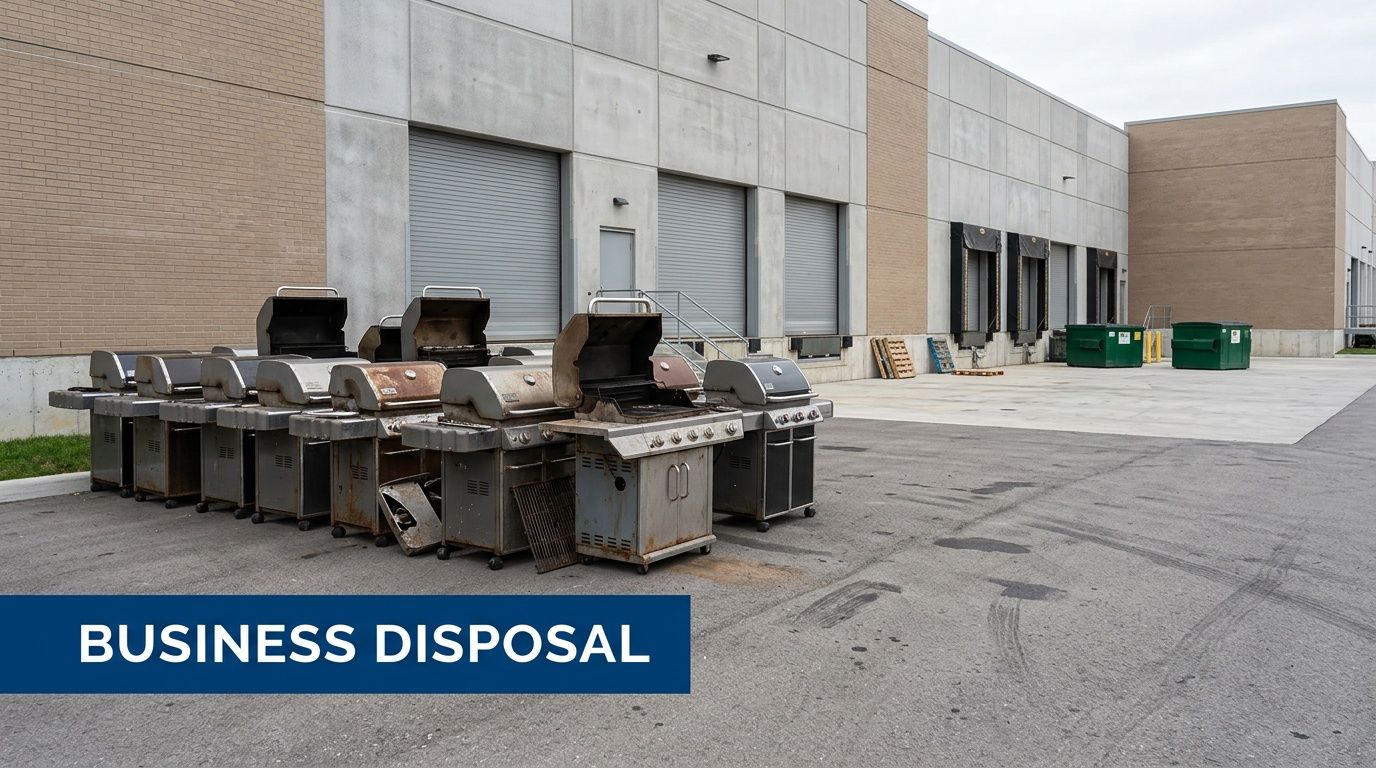
A structured approach matters because grills combine several waste streams in one unit. The body is mostly metal, the hose and some trim pieces belong in trash, the propane tank needs separate handling, and the igniter or control hardware may belong in electronics recycling. That’s why how to dispose of a gas grill at a business site should be handled more like a decommissioning project than a janitorial task.
One practical reason to do it right is the recovery value of the materials themselves. Recycling a standard-sized gas grill can divert up to 75 pounds of recyclable metal from landfills, which makes it a real sustainability opportunity for Atlanta organizations managing site upgrades or closures, as noted by Family Handyman’s grill disposal guidance.
Why facilities teams should treat grills like retired assets
The operational parallel to ITAD is straightforward. Before a server leaves a data room, teams isolate risk, remove sensitive components, and route materials through approved channels. A retired grill deserves the same discipline.
- Safety first: residual propane changes the risk profile immediately.
- Material separation matters: clean, sorted metal moves differently than a contaminated mixed load.
- Documentation helps: when a property manager or compliance lead asks where the units went, you need a clear answer.
- Sustainability counts: businesses already track recycling outcomes for electronics and office equipment. Outdoor assets should follow the same logic.
Practical rule: If a unit contains fuel, wiring, batteries, or multiple material types, don’t send it to “general disposal” without a teardown plan.
For Atlanta operators building broader waste and reuse programs, the same local sustainability mindset behind recycling in Atlanta applies here. The asset may be simpler than a server, but the process shouldn’t be casual.
First Priority Safely Decommissioning the Propane Tank
The propane tank is the part that can injure people, damage property, and get a load rejected. Handle that first, before anyone starts loosening bolts or loading the grill onto a truck.

Safe disposal starts with isolation. According to MG Transportation Hauling’s grill disposal guidance, explosion risks tied to propane account for 72% of grill-related disposal incidents, and a soapy water test confirming no bubbles is an essential part of verifying the connection isn’t leaking.
What the decommissioning sequence should look like
Use a deliberate process, ideally outdoors and away from occupied areas.
- Close the tank valve fully. Confirm the valve is turned shut before touching the regulator.
- Disconnect the regulator carefully. Use the correct hand tool and avoid forcing seized fittings.
- Run a soapy water check on fittings. If bubbles appear, stop and escalate the tank for specialist handling.
- Remove the tank from the grill body. Keep it upright during staging and transport.
- Route it separately. Don’t send it with scrap metal and don’t toss it into a mixed junk load without confirming the hauler’s protocol.
If your maintenance team doesn’t work with propane often, it helps to review equipment basics from adjacent trades. A practical reference on how technicians select and troubleshoot RV regulators can sharpen your understanding of regulator condition, connection points, and why guesswork around gas hardware is a bad idea.
What doesn’t work
The shortcuts are predictable. Staff try to “make sure it’s empty” themselves. Someone assumes the scrap yard will take the tank with the frame. A porter stores disconnected tanks indoors until the next cleanup cycle. That’s where minor disposal tasks become reportable incidents.
Pressurized fuel containers should never ride along as an afterthought in a routine cleanup load.
For business properties, this falls into the same operational category as universal waste management. The rule is simple: isolate the regulated or hazardous component first, then move the remaining asset through normal recovery channels only after the hazard is removed.
Atlanta-specific handling mindset
In Atlanta, the practical move is to plan tank handling before the dismantling day. Confirm whether your chosen destination is a hazardous waste collection point, a propane exchange or dealer program, or a removal vendor that explicitly accepts disconnected tanks under its own procedures. Don’t send crews out to “figure it out on site.” That wastes labor and increases the chance that a tank ends up abandoned in a maintenance cage.
Dismantling the Grill for Maximum Material Recovery
After the tank is removed, the focus moves from managing hazards to recovering materials. Companies at this stage either execute an efficient teardown or produce a disorganized pile of scrap that most facilities will refuse to accept.
Modern grills aren’t a single metal object. They’re assemblies. Grates, burners, body panels, wheels, knobs, side shelves, wires, batteries, and sometimes control modules all need different handling. The best results come from taking them apart with the same discipline used in equipment decommissioning: separate by material, remove contamination, and isolate electronics.
Start with cleaning, not cutting
Grease is what gets otherwise recyclable equipment rejected or downgraded. Before dismantling, remove food debris and built-up residue so the unit can be handled safely and sorted cleanly.
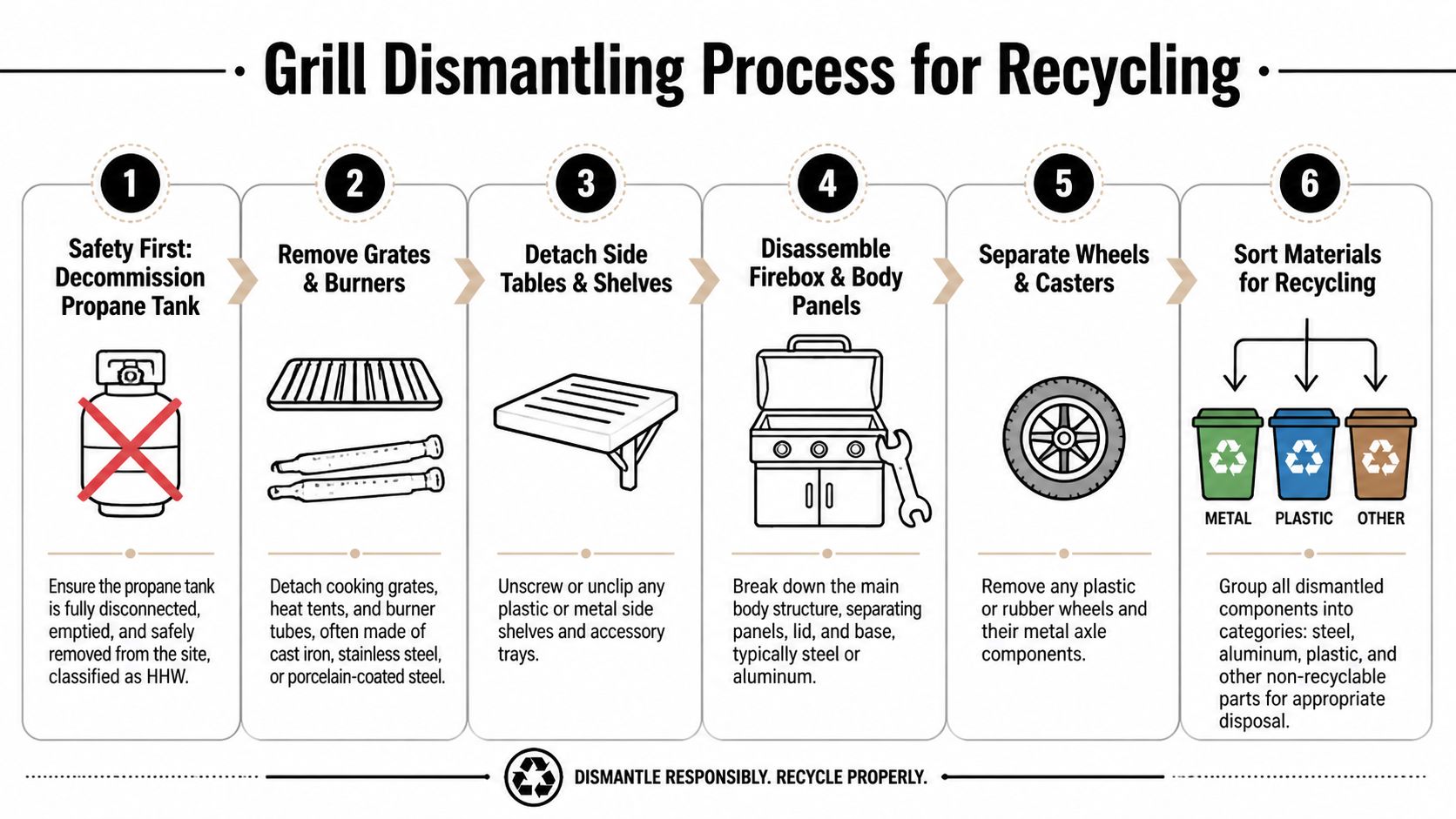
A practical teardown usually follows this order:
- Pull the easy metal first: grates, heat tents, and burner tubes come off early and separate cleanly.
- Remove side tables and shelves: plastic and metal accessories shouldn’t stay attached if you want clean sorting.
- Break down the firebox and lid: these larger sections often hold the bulk of the recyclable metal.
- Take off wheels and casters: they’re often mixed-material pieces and need separate decisions.
- Bag the small parts: screws, valves, brackets, and igniter hardware disappear quickly if you don’t contain them.
Don’t overlook the e-waste
This is the piece many facilities teams miss. Modern grills can include igniters, control panels, battery compartments, or electronic starters. According to LoadUp’s guide to grill disposal and recycling, small electronics contribute 15% to landfill toxins if not properly handled, only 25% are recycled, and businesses can face fines up to $25,000 per RCRA violation for improper disposal.
That changes the disposal workflow. If the grill has any powered component, treat it as a mixed asset, not pure scrap.
Field note: The fastest way to contaminate a good metal load is to leave batteries, wiring, and plastic control assemblies attached because “the yard can sort it.”
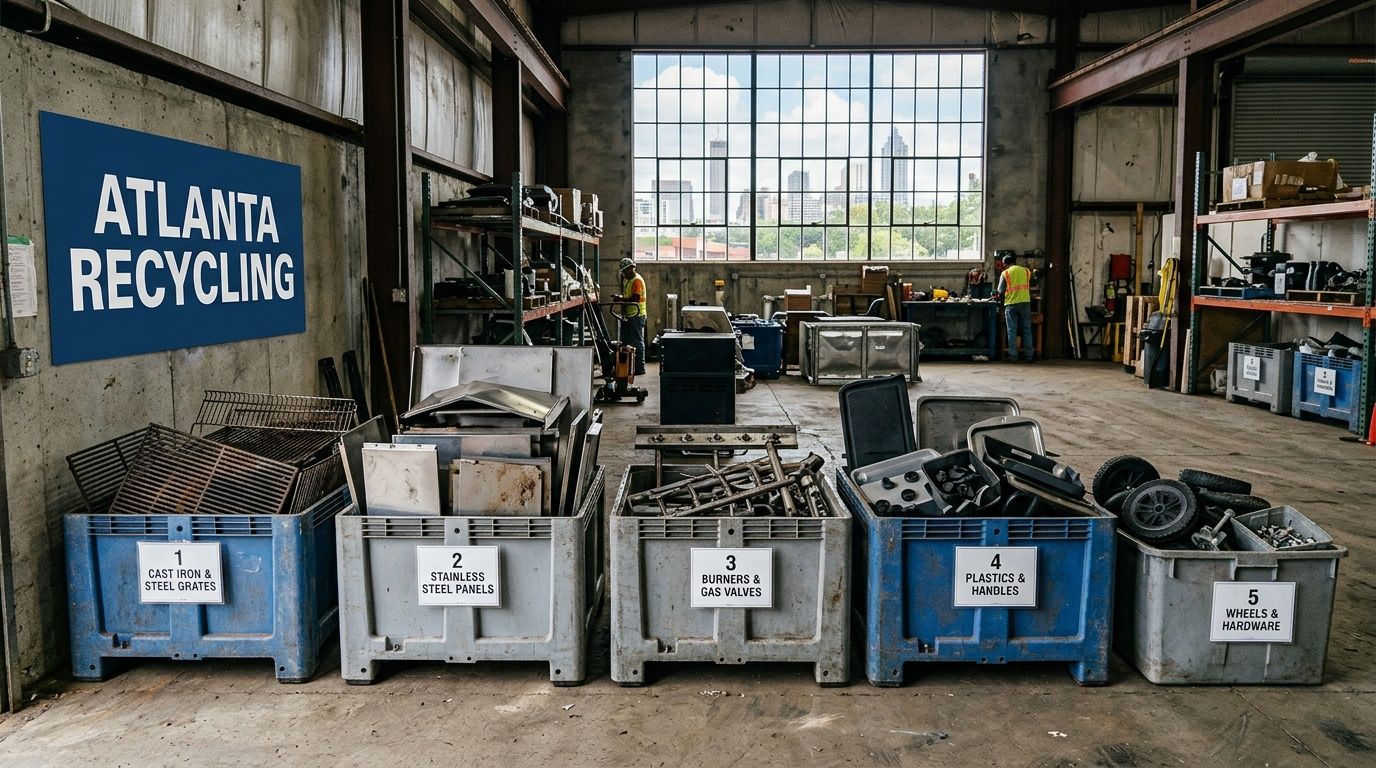
A practical material-sorting model
Use staging bins or pallets with simple labels:
| Component group | Best handling approach |
|---|---|
| Clean metal body parts | Keep together as scrap-ready metal |
| Hoses and non-recyclable trim | Route to trash if not accepted for recycling |
| Plastic knobs, wheels, shelves | Check whether local plastics rules allow recovery |
| Igniters, wiring, battery parts | Send through an electronics stream |
| Valves and removable metal fittings | Keep separate if your recycler prefers cleaner metal categories |
Mixed loads become efficient for Atlanta operators with existing equipment recycling workflows. The electronics portion belongs with a specialized stream, while metal can move through a scrap processor. If your team needs a destination for the non-fuel hard components, a local metal recycling center is the right category of outlet to plan around.
Navigating Atlanta's Disposal and Recycling Pathways
After teardown, a key question is where each stream goes. For commercial properties, Atlanta disposal options aren’t all equal. Some are convenient but limited. Others recover more material but require better prep.
Comparing the main pathways
Here’s how the options usually shake out for Atlanta-area businesses:
| Pathway | Best for | What to watch |
|---|---|---|
| Municipal or bulk pickup | Very limited commercial use cases | Often unsuitable for business properties or mixed-material units |
| Private scrap recycler | Clean, dismantled metal components | May reject contaminated or poorly sorted loads |
| Hazardous or special waste channel | Fuel tanks and restricted components | Requires separate planning and handling |
| Electronics recycler | Igniters, batteries, control modules | Must be separated before the metal load leaves |
| Full-service removal vendor | Multi-unit or labor-constrained projects | Verify how they handle recycling versus landfill disposal |
For facilities teams, the main operational decision is whether you want one vendor to manage the process or whether you’ll route each stream yourself. The second path can recover more value and gives tighter control, but it also consumes staff time and vehicle capacity.
What works well in practice
Commercial operators do best when they group the work by material and destination before pickup day. That means one area for clean scrap, one for trash-bound non-recyclables, one for electronics, and a clearly marked holding point for tanks pending approved disposal.
This is also where broader workplace organization matters. If your team is already rethinking overflow storage, surplus furniture, and renovation debris, a practical resource on how to reduce clutter through recycling can help frame grill disposal as part of a larger site cleanout standard rather than a one-off task.
Atlanta-specific routing decisions
In the Atlanta market, private recyclers and special-drop facilities are usually more reliable for this category than assuming city pickup will solve it. Use municipal channels only after confirming they accept the exact material mix and property type involved. For odd components or hard-to-place items, local guidance around CHaRM Atlanta recycling is useful when your load includes parts that don’t fit normal curbside or standard scrap categories.
The most efficient disposal day is the one where every component already has a destination before the first bolt comes off.
Evaluating Professional Removal Services for Businesses
Sometimes the best answer isn’t dismantling in-house. It’s outsourcing the whole job because labor, liability, and coordination cost more than the recoverable scrap.
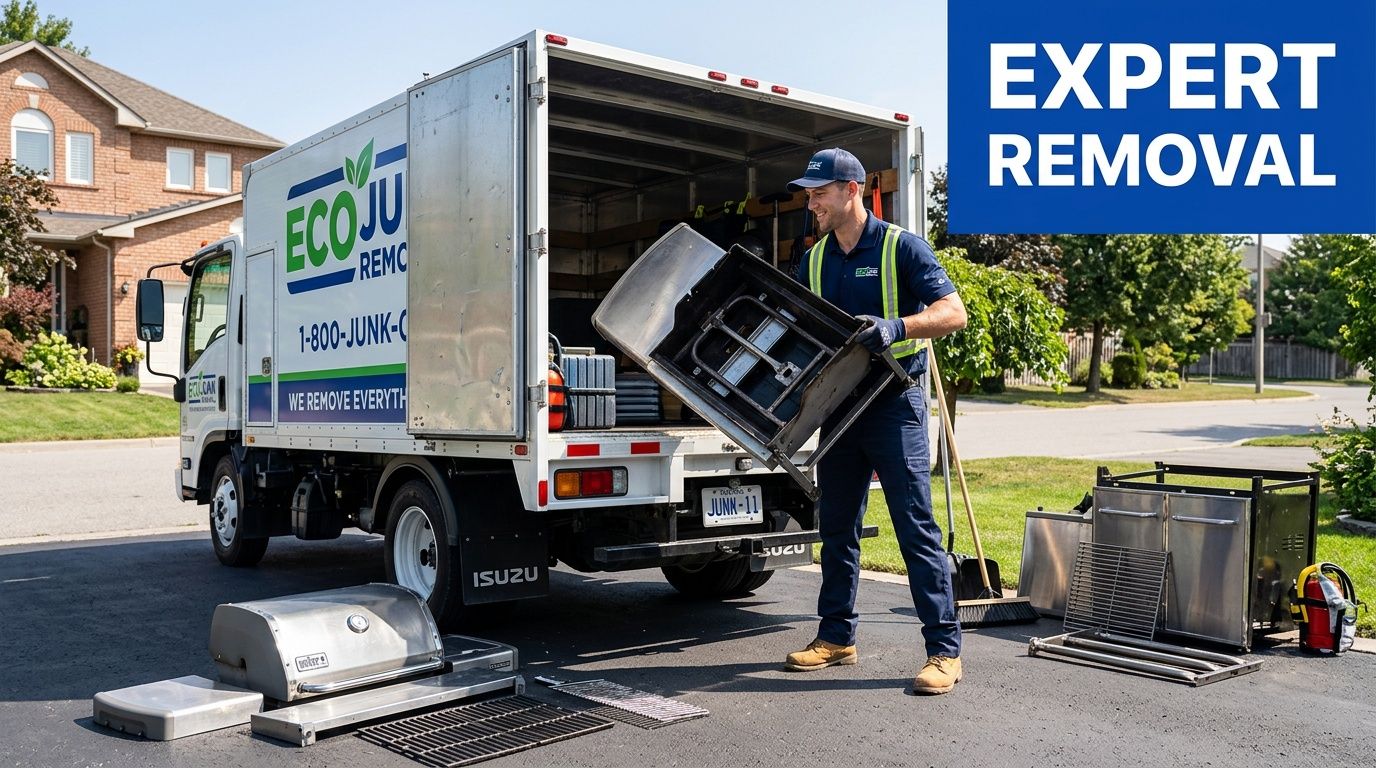
The baseline cost is clear. Angi’s disposal pricing overview notes that professional junk removal for a single gas grill typically costs $100 to $200. For a business, that number is only part of the decision. The primary comparison is outsourced removal versus internal labor hours, truck use, safety exposure, and the risk of an incomplete teardown.
When hiring a service makes sense
Professional removal is usually the stronger choice in a few situations:
- Multiple grills across one property: labor coordination becomes the bigger issue than per-unit disposal cost.
- Occupied sites: apartments, hospitals, schools, and offices need minimal disruption.
- No internal transport capacity: maintenance teams often don’t have the right vehicle separation for fuel-related components and scrap.
- Tight project timelines: closure, renovation, or amenity replacement schedules don’t leave room for trial-and-error disposal.
A useful comparison comes from adjacent facility logistics. Teams planning large site changes often study vendors outside their local market just to clarify service expectations. For example, firms that handle office removalists Perth work show the broader principle well: the best providers don’t just haul items away, they sequence labor, access, loading, and site protection around business operations.
What to ask before you book
Not every junk hauler handles grill disposal the same way. Ask direct questions.
- How do you handle propane tanks? If the answer is vague, keep looking.
- Do you dismantle on site or load whole units? This affects safety and access planning.
- What gets recycled versus landfilled? You want a real answer, not a generic promise.
- Can you manage mixed loads with electronics? Important for newer grills with powered components.
- Do you provide pickup windows that work around facility operations? Especially important for healthcare, schools, and multi-tenant sites.
The business trade-off
The scrap value of a grill rarely justifies pulling maintenance staff off core duties. What businesses are buying with a removal service is predictability. The same reason companies use scheduled electronic recycling pickup applies here too: one coordinated pickup is often cheaper operationally than several small internal disposal efforts that drag on for days.
Integrating Grill Disposal into Your Broader Asset Strategy
A retired gas grill isn’t special. It’s just another business asset that reached end of life and needs a controlled exit.
The organizations that handle this well don’t separate “facilities junk” from “formal disposition.” They use one operating standard across both. Identify hazards first. Break the asset into the right waste or recovery streams. Keep regulated items out of general disposal. Choose vendors based on process, not just price. That’s the same discipline behind good ITAD.
What a mature process looks like
A strong internal standard usually includes a few simple rules:
- No mixed loads by default: fuel, metal, plastics, and electronics don’t leave together unless a vendor is equipped for that workflow.
- No assumptions about curbside disposal: commercial assets need confirmed routing.
- No hidden electronics left in the shell: if it has an igniter, starter, or battery, someone removes it before haul-away.
- No last-minute staging: tanks and dismantled components should have a defined holding area.
That’s how you avoid the familiar problems. Rejected loads. Maintenance staff improvising. Scrap yards refusing contaminated material. Property teams discovering after the fact that “junk removal” meant landfill.
Responsible disposal isn’t about making a grill disappear. It’s about knowing exactly how each part left your site.
For Atlanta businesses, that mindset pays off beyond one patio appliance. It creates a repeatable disposition model for breakroom equipment, warehouse fixtures, appliances, lab support gear, and all the other non-IT assets that rarely fit neatly into one vendor category. Once your team treats these items like managed retirements instead of cleanup leftovers, compliance gets easier and sustainability reporting gets more credible.
If your Atlanta organization needs a partner for structured business asset pickups, electronics recycling, or end-to-end ITAD support, Atlanta Computer Recycling helps commercial clients handle retired equipment with secure logistics, responsible downstream processing, and minimal disruption to daily operations.