Where Can I Recycle AA Batteries? 10 Atlanta Options


Your office battery jar fills up faster than anyone expects. A few dead AA cells from keyboards and remotes turn into a mixed pile from scanners, mice, test equipment, and desk accessories, and then someone has to decide whether those batteries belong in the trash, a retail drop box, or a managed recycling stream.
The right answer changes with the setting. A household usually needs a nearby drop-off option and clear rules on what battery chemistries a program accepts. A business has a different set of concerns: employee collection points, labeling, transport, recordkeeping, and whether the batteries are loose, stored in bulk, or still inside retired electronics.
That distinction drives this guide. It covers consumer-friendly AA battery recycling options in Atlanta, but it also addresses what facilities managers, office admins, IT teams, and procurement leaders need to know when battery disposal overlaps with electronics recycling and universal waste handling. Organizations that generate batteries regularly should start with a documented universal waste management process for batteries and electronics, especially if the same cleanup includes laptops, peripherals, or other regulated equipment.
If you still use rechargeable cells in office peripherals or at home, these safe recharging tips for AA batteries are a useful refresher before you replace another batch.
1. Accepted Items – Recycle Electronics Atlanta
For Atlanta organizations, this is the most practical option when AA batteries are part of a larger IT cleanup. Atlanta Computer Recycling's accepted items page is built for commercial disposition, not casual household drop-offs, and that matters because businesses rarely recycle batteries in isolation. They usually need to clear out laptops, docking stations, backup devices, peripherals, and storage media at the same time.
What stands out is how clearly the page sets boundaries. It tells commercial clients what equipment the company will take, how device-integrated batteries are handled, and where special handling may be needed. That reduces the usual guesswork that slows down office cleanouts.
Why it works for business operations
Retail drop-off advice often ceases to be useful. If your team has a few AA batteries at home, a store bin may be enough. If your facilities team is handling a storeroom of old peripherals and retired devices, you need a process that accounts for chain of custody, packing, transport, and data security.
ACR's service model is built around that operational reality:
- Commercial focus: It fits offices, schools, hospitals, agencies, and data center environments better than consumer drop-off programs.
- Integrated pickup: On-site de-installation, packing, and local fleet pickup reduce internal labor and avoid piecemeal disposal.
- Data protection: Free DoD 5220.22-M 3-pass wiping and physical shredding for obsolete or non-functional media help support HIPAA and similar requirements.
- Battery handling clarity: The accepted-items guidance helps teams avoid showing up with mixed material that triggers delays or extra handling steps.
Practical rule: If AA batteries are leaving the building with servers, laptops, or storage devices, treat the project as IT asset disposition first and battery recycling second.
There's also a strong planning advantage. Businesses can align battery handling with a broader universal waste system for electronics and battery-related material instead of relying on ad hoc employee trips to retail stores.
Best fit and trade-offs
This isn't the right choice for someone with a handful of household batteries. Residential users are generally better served by partner drop-off locations or mail-back programs. But for commercial sites, the trade-off is favorable: more process, more oversight, less risk.
The page is especially useful because it doesn't pretend every battery issue is simple. Some damaged devices, loose batteries, or hazardous components may require special handling or added coordination. That's exactly the kind of operational honesty business buyers should want.
2. The Battery Network formerly Call2Recycle
An office manager in Atlanta has a small tub of used AA batteries at the front desk, a few rechargeable packs in a supply closet, and no interest in guessing which store will take what. The Battery Network is often the cleanest starting point in that situation. It gives households a familiar drop-off locator and gives businesses a more controlled path through collection boxes and mail-back services.
The practical value is coverage. A resident can use the locator to find nearby options for common battery recycling needs. A business can apply the same network across several offices instead of letting each site improvise its own disposal routine. That difference matters once you need consistency, staff instructions, and records that hold up under internal review.
Where it helps most
The Battery Network is a strong fit for rechargeable AA programs, especially in offices, schools, clinics, and multi-site organizations that want one documented process. For smaller commercial volumes, paid collection boxes can cost less than arranging custom pickups. For households, the locator is usually the faster answer.
There are limits, and they are important. Retail partner programs often focus on rechargeable chemistries, not every loose alkaline AA battery an employee brings from home. If your team is sorting mixed waste, confirm accepted battery types before assigning a drop-off trip or ordering boxes. That is also a good time to review what electronics can be recycled in Atlanta so batteries are not packed with items that belong in a different stream.
A few operational points are worth keeping in view:
- Best fit is rechargeable batteries: Free or low-friction drop-off options usually center on rechargeables.
- Useful for distributed teams: Mail-back and box programs help standardize handling across branch locations.
- Better documentation than ad hoc disposal: A defined program is easier to explain in a facilities policy or sustainability report.
If staff members ask where can i recycle aa batteries, clarify whether they mean rechargeable or single-use alkaline. That one question changes the answer, the cost, and the handling method.
If your site also generates seasonal maintenance waste, ACR's guide on recycling old lawn mower equipment responsibly is a useful companion for broader facility cleanup planning.
3. Batteries Plus
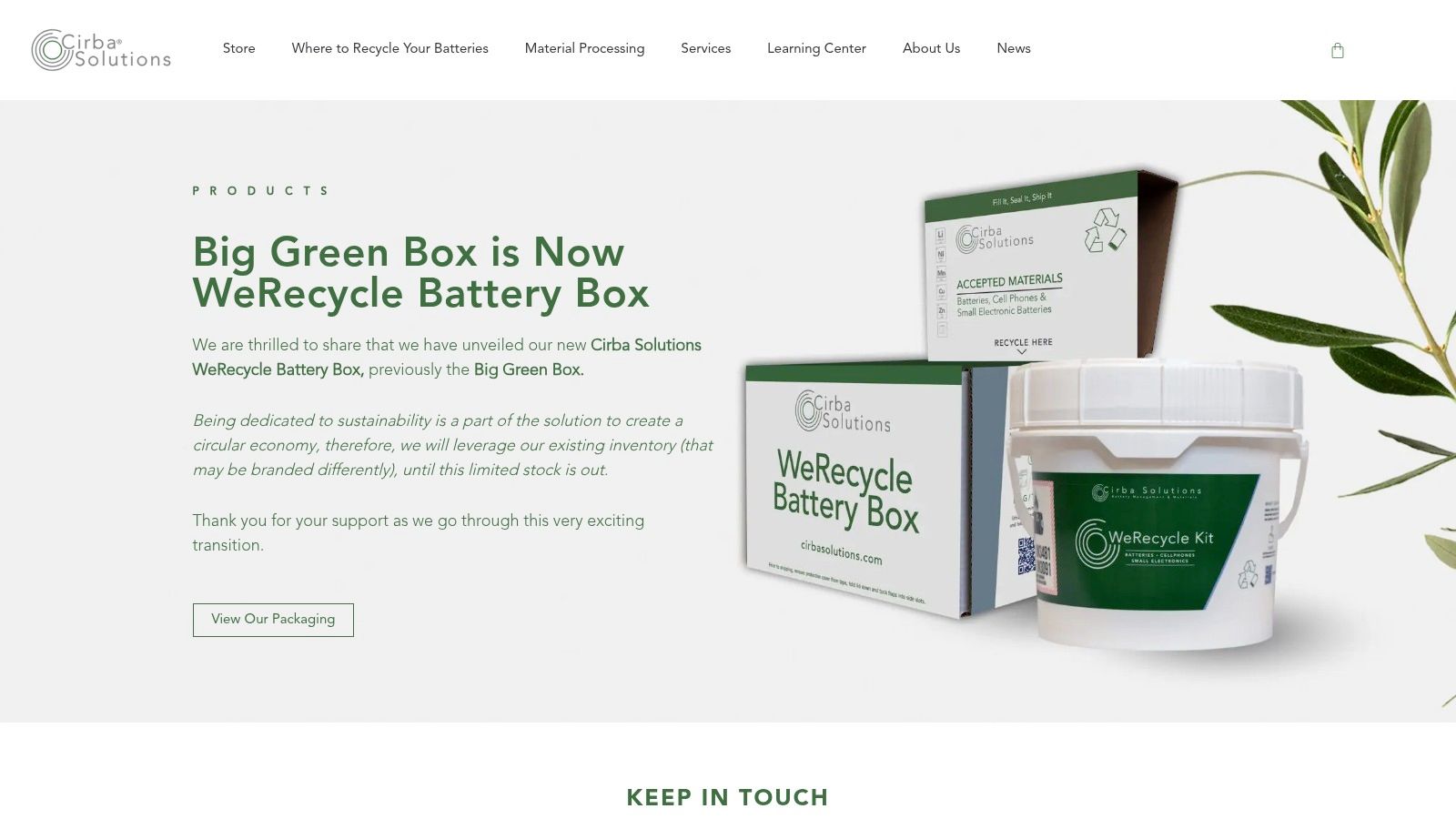
Batteries Plus recycling services are one of the most straightforward in-person options for both households and small businesses. If your team wants a staffed counter instead of an anonymous bin, this is often the easiest middle ground.
The practical benefit is simple. Store staff can usually help identify battery types and explain what that location will accept before you unload a container of mixed cells.
Why businesses use it
For a branch office, small clinic, or school admin building, Batteries Plus can be more practical than setting up a formal pickup. You can combine battery drop-off with recycling small devices or replacing battery-powered accessories during the same trip.
That said, this is still a store-by-store decision environment. Policies can vary, especially for single-use alkaline AA batteries, and fees may apply.
- Strong in-person guidance: Helpful when staff aren't sure whether a battery is alkaline or rechargeable.
- Useful for mixed errands: Battery recycling and replacement purchases can happen together.
- Good for small commercial volumes: Better for recurring small batches than for warehouse-level clear-outs.
Call ahead before assigning an employee to make the trip. With battery recycling, local acceptance rules matter more than brand recognition.
If your office is clearing out more than batteries, this broader guide to what electronics can be recycled in Atlanta helps define what should go through retail and what should go through a commercial processor.
4. Cirba Solutions WeRecycle Battery Box formerly The Big Green Box
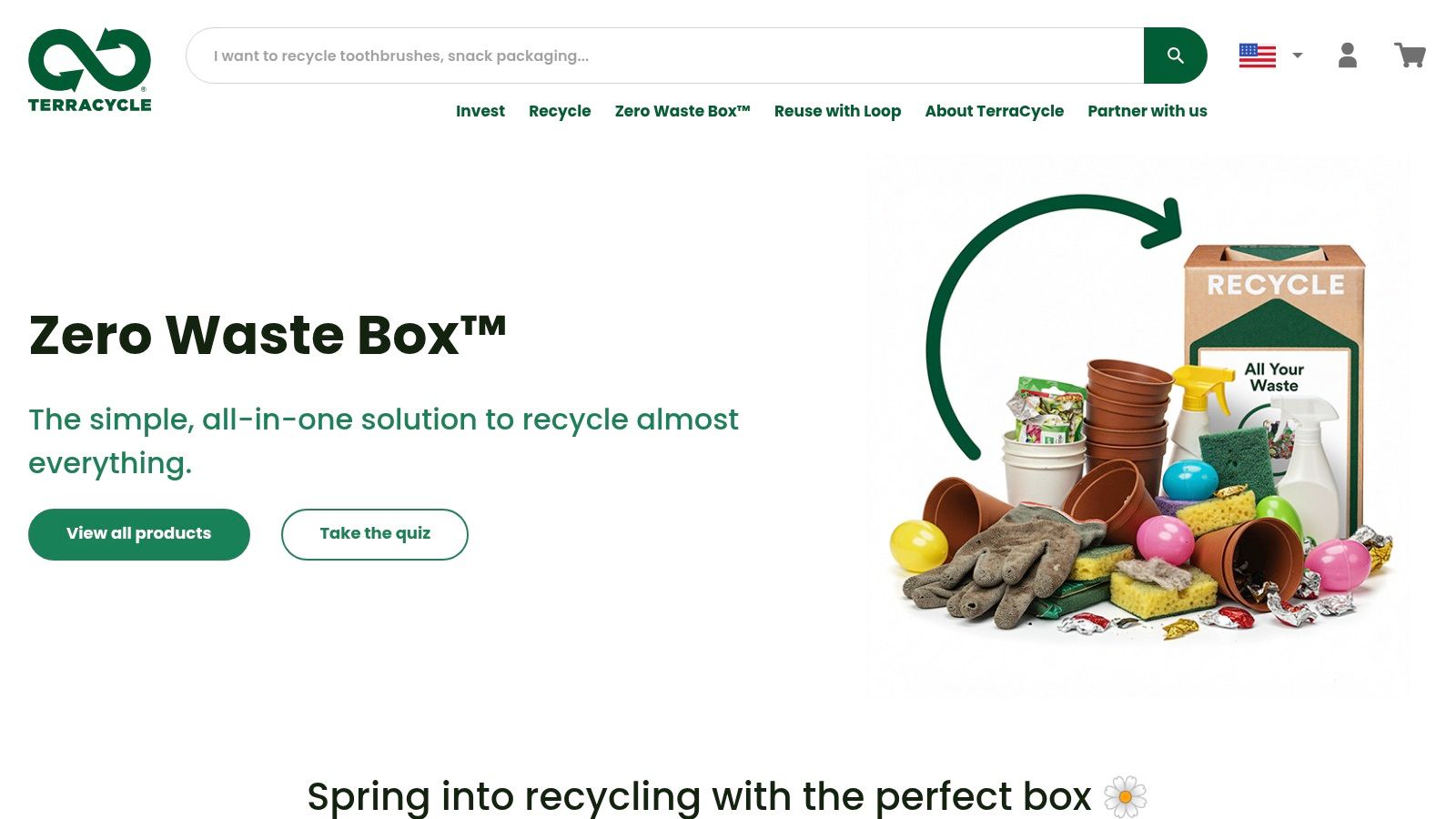
Cirba Solutions' WeRecycle Battery Box is for organizations that want a controlled mail-back workflow. This is less convenient than dropping batteries in a store bin, but it's far better for distributed teams, branch offices, and sites that need compliance paperwork.
The biggest operational advantage is packaging. The kits are built for shipping, include return logistics, and reduce the risk of someone improvising a battery shipment with the wrong box or labeling.
When mail-back beats drop-off
Mail-back programs make sense when convenience needs to be standardized across locations. A headquarters team can order the same collection format for satellite offices and avoid relying on local store policies that may differ from one branch to the next.
This also addresses a real handling problem. The background material provided notes a gap in public guidance around proper preparation for AA batteries, especially mixed chemistries and rechargeable cells, with rejections occurring when drop-offs are poorly prepared. A boxed program reduces that ambiguity by giving staff a defined process.
- Best for distributed sites: One process, multiple offices.
- Useful for documentation: Better fit for regulated organizations than casual drop-off habits.
- Less attractive for tiny volumes: Paid kits are easier to justify when you consolidate material.
If your organization is trying to keep batteries and electronics out of the waste stream entirely, ACR's explanation of why you should never throw electronics in the trash reinforces why centralizing disposal decisions saves trouble later.
5. TerraCycle Zero Waste Box
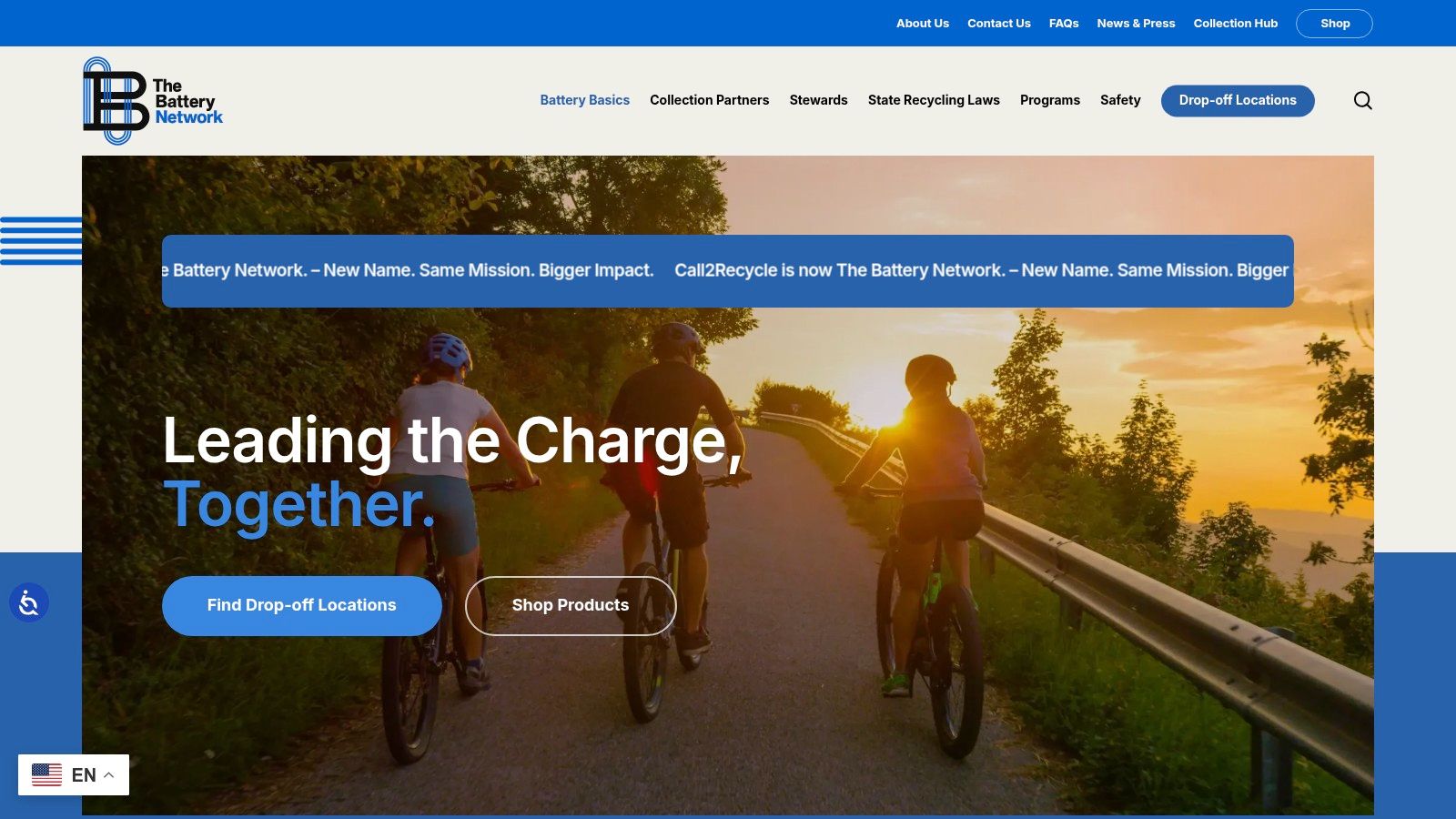
TerraCycle's Zero Waste Box shop is a good choice for teams that want an especially clear mail-back option for alkaline batteries. The alkaline-only box removes one of the most common operational mistakes in office recycling programs: collecting everything in one container and hoping the processor sorts it out.
That matters because battery chemistry confusion is where many workplace recycling efforts fail. An employee sees "AA" and assumes every AA follows the same rules. It doesn't.
Best use case
TerraCycle works well for remote teams, small offices, and households that don't want to make repeated retail trips. It also works when your organization prefers a prepaid system with instructions already attached to the box.
The trade-off is cost. This is a convenience-first service, not the lowest-friction option for price-sensitive users.
- Clear chemistry separation: The alkaline-only option is easy for staff to understand.
- Prepaid return flow: Good for offices without internal shipping expertise.
- Better for convenience than savings: You pay for simplicity and standardization.
For Atlanta groups planning occasional consolidated disposal days, ACR's roundup of an electronics recycling event near me in Atlanta can help decide when an event, a box, or a commercial pickup is the better route.
6. Lowe's
For rechargeable AA batteries, Lowe's corporate sustainability information points users toward in-store collection through The Battery Network. This is one of the easiest options for households and workplaces that already shop there regularly.
The appeal is speed. If employees are already visiting Lowe's for facilities supplies, adding a small batch of rechargeable batteries doesn't require a separate trip or vendor setup.
The limitation to watch
This is not the place to send every dead AA battery in the building. In practice, store bins typically focus on rechargeable chemistries, not single-use alkaline AAs. If your workplace uses Ni-MH cells in peripherals, Lowe's can be a clean fit. If the batteries are mostly alkaline, expect to need another channel.
The operational lesson is simple: match the recycling outlet to the chemistry, not the battery size.
Rechargeable AA and alkaline AA are both "AA batteries," but they often belong in different collection streams.
For small-volume rechargeable drop-offs, Lowe's is convenient. For mixed chemistries or larger business quantities, it becomes less efficient.
7. The Home Depot
The Home Depot's battery disposal guidance is useful because it does two things well. It offers a familiar in-store path for rechargeable battery collection, and it gives consumers enough disposal guidance to avoid the most common mistakes.
If your employees already visit Home Depot for site maintenance or facility purchases, this can be a simple add-on. That kind of routine matters. Collection channels work best when recycling happens during an errand people were already going to make.
Practical fit for Atlanta users
This is best treated as a rechargeable-battery convenience option, not a universal battery solution. For businesses, that means it works for small quantities from maintenance closets, AV kits, and rechargeable peripheral batteries. It doesn't replace a documented commercial recycling process.
A few trade-offs stand out:
- Easy access: Helpful when your staff already shops there.
- Clear consumer guidance: Better than leaving employees to guess prep rules.
- Not ideal for alkaline-heavy loads: Single-use AAs usually need a different route.
The background material also notes that some national chains have been discussed in connection with evolving mail-back and collection pilots. Even so, store-level acceptance still needs verification. For business use, never build a disposal policy around assumptions from one location.
8. Interstate All Battery Center
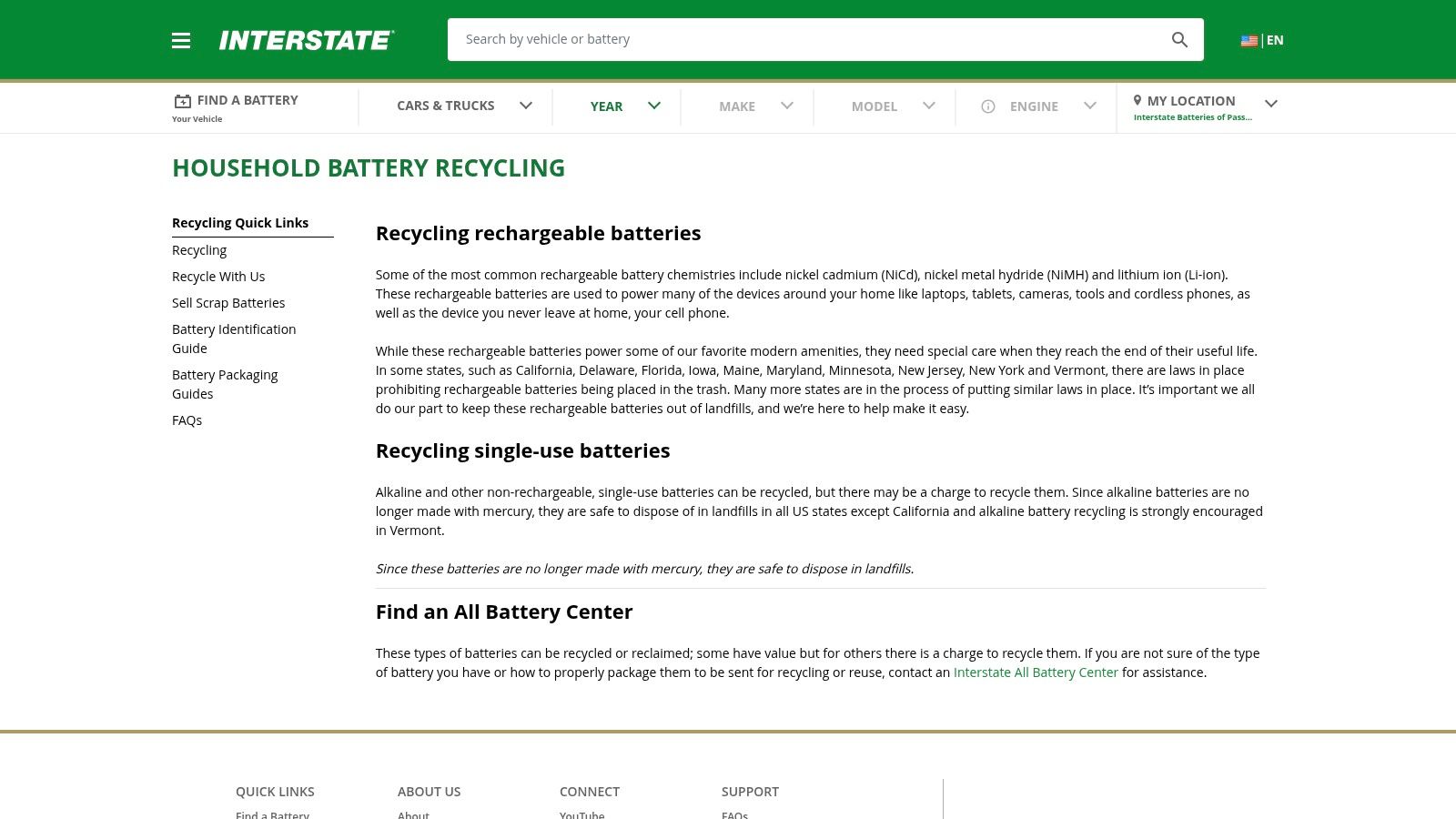
Interstate Batteries' household battery recycling information is a good option when you want actual battery expertise at the counter. That's the main differentiator. Specialty battery stores are often better than general retail when staff need help sorting odd chemistries or identifying what came out of a device.
For offices and facilities teams, that can save time. Instead of sending someone to a big-box store and hoping the bin matches the material, you can often get direct guidance from staff who deal with battery categories every day.
Where it fits best
This is a strong option for small business drop-offs, maintenance shops, schools, and users with mixed household batteries. It's especially useful when your inventory includes less-obvious battery types and you need someone to confirm what's acceptable before disposal.
The downside is variability. Acceptance policies and any fees may differ by location, so this isn't as standardized as a national stewardship box or a dedicated commercial service.
- Specialist staff: Helpful for identification and sorting.
- Useful for nearby businesses: Good if a location is close enough to make recurring drop-offs practical.
- Policy variation: Always confirm before loading up a car or service van.
If your question is strictly where can i recycle aa batteries and you want human help, Interstate is one of the better retail answers.
9. Cleanlites and LampMaster mail-back kits
A facilities manager with half a dozen buildings has a different problem than a homeowner with a drawer full of used AA batteries. The issue is not just where can i recycle aa batteries. It is how to move recurring battery waste through a documented process that holds up for audits, vendor reviews, and internal reporting.
Cleanlites battery recycling services fit that operational need. The company is geared toward institutional programs, including offices, schools, healthcare sites, and property portfolios with ongoing waste streams. LampMaster mail-back kits cover the smaller end of that same need. They give branch offices, clinics, and single-site operations a prepaid option without requiring pickup scheduling or a broader service contract.
Why facility managers use this model
The main advantage is control. Instead of relying on employees to make repeated retail drop-offs, organizations can centralize collection, keep paperwork in order, and match battery disposal to existing environmental procedures. That matters more in business settings than it does at the household level.
There is a practical trade-off. Mail-back kits are usually easier to deploy across smaller locations, but per-unit costs can be higher if volumes stay low and scattered. Pickup service makes more sense once a site generates enough material to consolidate shipments and assign responsibility to facilities, EH&S, or operations staff.
- Good fit for recurring battery waste: Better suited to scheduled collection than occasional cleanouts.
- Documentation support: Useful for compliance records, sustainability reporting, and vendor oversight.
- Scales by location type: Mail-back works for smaller sites. Pickup programs work better for larger facilities and multi-site organizations.
For Atlanta households, this option can be more process than they need. For Atlanta businesses that also manage lamps, electronics, and other regulated waste, it is often a more efficient way to handle battery recycling as part of a broader e-waste program.
10. Ridwell
A common Atlanta scenario is a small office with a coffee can of used AA batteries in the supply closet and no one assigned to deal with it. Ridwell solves that operational gap for subscribers in its service areas. Ridwell's accepted items guidance shows a simple model: follow the prep rules, set batteries out on the scheduled pickup day, and avoid a separate store trip or mail-back process.
For households, home offices, and very small teams, that simplicity can be enough to keep batteries moving out of drawers and into a recycling stream. It also works for companies that want a light process for employee-generated battery waste without setting up a formal vendor program at each location.

Where Ridwell fits operationally
Ridwell works best when volume is low, pickup service is available, and convenience is the main barrier to recycling. For a household, that may be the whole decision. For a business, it is only part of the decision.
Organizations still need to ask a few practical questions. Does the site need disposal records? Is someone responsible for consolidating batteries safely before pickup? Will the same vendor also handle laptops, peripherals, or other e-waste the office generates? If the answer to those questions is yes, a consumer-style subscription may help with small battery volumes but will not replace a broader recycling or IT asset disposition process.
- Best for low-volume generation: Useful for homes, remote workers, and small offices with recurring battery waste.
- Works best in covered service areas: Availability depends on local pickup routes, so Atlanta users need to verify coverage first.
- Limited for compliance-driven programs: Companies with EH&S requirements, vendor reporting needs, or larger mixed waste streams usually need a commercial recycler.
As noted earlier, battery recycling demand is growing. That matters differently at each scale. For consumers, the priority is choosing a method they will use. For Atlanta businesses, the better approach is to treat battery collection as one part of a documented e-waste process that can scale across offices, facilities, and IT refresh cycles.
10 AA Battery Recycling Options Compared
| Provider | Handles / Core features | Convenience & UX (★) | Compliance / Data Security (🏆) | Target audience (👥) | Price / Unique features (💰 ✨) |
|---|---|---|---|---|---|
| Atlanta Computer Recycling (Accepted Items) | Business IT assets: PCs, servers, network gear, batteries; on‑site de‑install, reuse/shredding, free DoD 5220.22‑M wiping | ★★★★☆, local fleet, scheduled pickup, minimal disruption | 🏆 HIPAA/compliance focus; certified recycling; physical shredding for media | 👥 Offices, data centers, hospitals, gov't | 💰 B2B pricing; free 3‑pass wipe ✨ on‑site de‑install & local logistics |
| The Battery Network (Call2Recycle) | Rechargeable battery retail drop‑offs; business boxes; locator tool | ★★★★☆, thousands of retail points, easy drop‑off | 🏆 Standardized stewardship & safety practices | 👥 Consumers & businesses needing rechargeable disposal | 💰 Free for rechargeables; paid boxes for alkaline ✨ wide retail network |
| Batteries Plus | AA (alkaline & rechargeable varies), retail drop‑off, staff assistance | ★★★☆☆, 700+ stores, in‑person help | 🏆 Retail handling; staff guidance for safe packaging | 👥 Households & small businesses seeking counter service | 💰 Variable (call ahead) ✨ staff ID & packaging help |
| Cirba Solutions, WeRecycle Battery Box | Prepaid mail‑in UN‑compliant kits for mixed chemistries; multiple sizes | ★★★☆☆, turnkey mail‑in, good for consolidated volumes | 🏆 UN‑compliant packaging & business documentation | 👥 Businesses/offices consolidating battery volumes | 💰 Paid kits (best for bulk) ✨ prepaid UN kits + compliance docs |
| TerraCycle, Zero Waste Box | Prepaid Zero Waste Boxes incl. Alkaline‑Only Bucket for AA/AAA/C/D/9V | ★★★☆☆, simple mail‑back, multi‑site shipping | 🏆 Provides labels/instructions and handles alkaline streams | 👥 Households & distributed teams | 💰 Premium mail‑back pricing ✨ dedicated alkaline bucket option |
| Lowe's (via Battery Network) | In‑store rechargeable battery collection bins | ★★★★☆, ubiquitous retail access | 🏆 Backed by national stewardship program | 👥 Consumers & workplaces for rechargeables | 💰 Free for rechargeables ✨ convenient store bins |
| The Home Depot (via Battery Network) | In‑store rechargeable battery collection & consumer guidance | ★★★★☆, clear bins, store guidance | 🏆 Partnership with stewardship; safety signage | 👥 Shoppers & small workplaces | 💰 Free for rechargeables ✨ integrated consumer education |
| Interstate All Battery Center | Specialty retail accepts many household batteries; staffed sorting help | ★★★★☆, expert in‑store assistance | 🏆 Location‑dependent acceptance; staff expertise | 👥 Consumers & nearby businesses needing expertise | 💰 May charge; varies by store ✨ battery specialists on site |
| Cleanlites (LampMaster kits) | Commercial battery recycling, pickups, LampMaster prepaid kits | ★★★☆☆, commercial pickup & kit options | 🏆 Pickup + certificates for compliance | 👥 Offices, schools, facilities with recurring needs | 💰 Paid pickup/kits ✨ compliance docs & nationwide commercial service |
| Ridwell | Subscription doorstep pickup for hard‑to‑recycle items incl. alkaline AAs | ★★★★★, scheduled curbside pickup, high convenience | 🏆 Transparent handling partners; clear prep rules | 👥 Households & small offices in service areas | 💰 Subscription fee ✨ doorstep pickup & clear prep instructions |
From AA Batteries to Full IT Asset Disposal
A common Atlanta office scenario starts with a coffee can of AA batteries at reception and ends with a larger problem. During an IT cleanup, those loose cells get mixed with keyboards, headsets, wireless mice, docks, old laptops, and a few phones pulled from storage. At that point, disposal is no longer a simple drop-off task. It is a chain-of-custody, safety, and compliance decision.
Start with handling. Tape battery terminals or bag batteries individually before transport, especially rechargeable and lithium types. Loose batteries rolling around in a desk drawer, supply closet, or vehicle create avoidable fire and damage risks, and they also make sorting slower when the load reaches a recycler.
For households, convenience usually drives the choice. A store bin, mail-back kit, or pickup subscription often works if the batteries are sorted correctly and the service accepts that chemistry.
For businesses, process matters more than convenience.
Once batteries are generated across multiple departments or bundled with retired electronics, the practical questions change. Who is responsible for packing and pickup. Which items can move together. What documentation is needed. Whether any data-bearing equipment is in the same load. A retail battery program may still work for a small batch of rechargeable AAs from one office manager. It is rarely the best answer for a school district clearing storage rooms, a healthcare facility replacing mobile devices, or a company decommissioning workstations across several floors.
That is the actual divide between consumer recycling and commercial e-waste management. Consumer programs focus on easy access. Commercial programs need scheduling, item tracking, documented downstream handling, and clear separation between batteries, universal waste, and data-bearing assets. Businesses in Atlanta usually need both levels of thinking. Employees may recycle a few household batteries at a store, while the organization needs a formal disposal plan for accumulated electronics and battery-powered equipment.
For Atlanta businesses, Atlanta Computer Recycling is the practical fit when the battery question is tied to broader asset removal. Atlanta Computer Recycling handles pickup logistics, accepted-item review, secure data destruction, and responsible recycling or reuse for retired IT equipment. That approach reduces the risk of treating batteries as an isolated nuisance when they are part of a larger disposal workflow.
Handled properly, the AA battery bin stops being a recurring facilities problem. It becomes one controlled part of an IT asset disposition process that is easier to schedule, document, and audit.