Atlanta Tech Recycling for Businesses: A Complete Guide


For any business in Atlanta, dealing with old tech is much more than just "disposal." It's a critical part of your data security plan and your commitment to environmental compliance. A smart IT Asset Disposition (ITAD) program doesn't just get rid of old equipment; it protects sensitive information, keeps you on the right side of regulations, and can even recover value from retired electronics. Honestly, it's an essential process for any modern organization.
Your Blueprint for Secure and Compliant Tech Recycling in Atlanta
If you're an IT or facilities manager, you know your job doesn't end when a server is decommissioned or a fleet of laptops is replaced. The disposal process itself is loaded with risks, from data breaches that can cost millions to environmental fines for improper handling. A strategic approach to Atlanta tech recycling turns this challenge from a logistical headache into a secure, compliant, and even value-generating part of your operations.
This guide is a practical framework for navigating the complexities of commercial ITAD. It’s built for organizations that understand what's at stake—whether you're a hospital that needs to guarantee HIPAA-compliant data destruction or a data center executing a full decommission. Winging it isn't just inefficient; it's a huge liability.
Key Stages of a Commercial ITAD Project
A successful ITAD project follows a clear, structured path. Each stage addresses a specific risk and ensures a seamless transition from asset retirement to final disposition. This table breaks down the core phases of a professional tech recycling project, showing what happens at each step and why it's so important for your business.
| Phase | Key Activities | Primary Goal |
|---|---|---|
| 1. Internal Preparation | Creating an inventory list, identifying assets for disposal, and defining project scope. | Establish a clear record of every item and set the foundation for the entire project. |
| 2. Secure Logistics | On-site packing, serialized asset tracking, and transport in a secure, insured vehicle fleet. | Maintain a verifiable chain-of-custody from the moment an asset leaves your facility. |
| 3. Data Destruction | DoD-standard data wiping, physical hard drive shredding, or degaussing. | Guarantee the complete and irreversible eradication of all sensitive corporate and customer data. |
| 4. Asset Processing | Testing and grading for resale, dismantling for parts, or sending to certified recycling partners. | Maximize value recovery from reusable assets and ensure responsible handling of e-waste. |
| 5. Reporting & Verification | Issuing Certificates of Destruction and detailed asset settlement reports. | Provide a legal, auditable trail that proves compliance with data security and environmental laws. |
Following these steps methodically is what separates a professional, defensible process from a risky one. It’s all about creating a documented, secure, and transparent end-of-life journey for every single asset.
This simplified diagram shows how these core ITAD steps flow from one to the next.
This process visualizes the journey of a retired IT asset, from the moment it's tracked internally to its secure sanitization and, finally, responsible recycling. You can learn more by exploring our in-depth guide to secure electronics disposal.
The real-world impact of these structured efforts is massive. For example, Atlanta-based partners recently helped divert over 350,000 pounds of e-waste from local landfills in a single year. That's hundreds of thousands of pounds of hazardous materials kept out of our environment, all while recovering valuable metals and components.
By treating ITAD as a core security function rather than an afterthought, Atlanta businesses can protect their data, reputation, and the environment. It’s about mitigating risk at every single stage of an asset's end-of-life journey.
This introduction sets the stage for a practical, actionable playbook. The following sections will give you the detailed steps needed to execute a secure and successful tech recycling program right here in Atlanta.
Building Your IT Inventory and Data Destruction Plan
Before a single server rack or laptop cart leaves your facility, the real work begins. A successful Atlanta tech recycling project is built on the back of meticulous inventory management and an ironclad data destruction plan. If you skip this step, you're not just disorganized—you're opening your company up to massive data security risks and compliance headaches.

Think of this phase as creating a single source of truth for every single asset you plan to dispose of. It's the pre-flight checklist that ensures nothing gets missed and gives you the groundwork for all the chain-of-custody documentation to come. Getting a handle on effective inventory management principles now will save you a world of trouble later.
Cataloging Your Assets for Disposal
First things first: you need a detailed manifest. This isn't just a quick count of devices; it's a comprehensive log that both your team and your recycling partner will rely on. The goal is to capture enough detail to track each item individually, from your office all the way to its final disposition.
At a bare minimum, your inventory spreadsheet should include these fields for every asset:
- Asset Tag Number: Your company's internal ID for tracking.
- Device Type: Get specific here (e.g., Dell Latitude 7420 Laptop, HP ProLiant DL380 Server).
- Serial Number: This is non-negotiable. The unique manufacturer's serial number is critical for tracking.
- Physical Condition: Make a note if it's functional, damaged, or only good for parts.
- Location: Note the department or room where the equipment was last used.
This level of detail is absolutely essential. If you're decommissioning a hundred workstations, simply writing down "100 PCs" isn't going to cut it. Any auditor or compliance officer will expect a serialized list that proves every single data-bearing device was accounted for and properly sanitized.
Choosing the Right Data Destruction Method
Once you know what you're getting rid of, the next critical decision is how you'll destroy the data it holds. Let's be clear: just deleting files or formatting a hard drive is not enough. Data can often be recovered from drives that haven't been professionally sanitized, leaving sensitive corporate or customer information dangerously exposed. A factory reset often leaves plenty of recoverable data fragments behind.
There are two primary, industry-accepted methods for making sure that data is gone for good. Your choice between them will often come down to the type, age, and condition of the storage media.
1. Data Wiping (Sanitization)
This is a software-based approach that overwrites every single sector of a working hard drive with random data, making the original information completely unrecoverable. The gold standard is the DoD 5220.22-M 3-pass wipe, a method recognized by government and highly regulated industries as a secure way to eradicate data. It's the perfect choice for newer, functional hard drives that might be resold or reused.
2. Physical Shredding
For older, failed, or totally obsolete media—like non-functional hard drives, solid-state drives (SSDs), or backup tapes—physical destruction is the only guaranteed solution. An industrial shredder literally grinds the devices into small, irrecoverable pieces of metal and plastic. This is the ultimate failsafe.
For businesses in sectors like healthcare or finance, using a mix of both methods is often the smartest play. Wiping functional drives preserves their potential resale value, while shredding end-of-life media provides the absolute certainty of destruction—a crucial element for HIPAA compliance.
By pairing a detailed inventory with a solid data destruction strategy, you create an auditable and defensible process. This ensures your Atlanta tech recycling initiative not only clears out old equipment but also rigorously protects your organization's most valuable asset: its data. You can explore a deeper dive into these methods in our guide to secure data destruction.
How to Choose the Right Atlanta Tech Recycling Partner
Once you've got a detailed inventory and a clear data destruction plan, you've reached the most critical decision in this whole process: choosing your Atlanta tech recycling partner. This choice has a direct impact on your data security, environmental compliance, and the project's overall success.
The right vendor becomes a trusted extension of your IT team. The wrong one can expose you to serious legal and financial liabilities.

Vetting potential partners goes way beyond just comparing price quotes. You're handing over your company's retired assets and, far more importantly, the sensitive data they hold. That means you need to dig into their certifications, operational processes, and logistical muscle to make sure they meet the highest standards.
Verifying Essential Certifications
In the world of IT asset disposition (ITAD), certifications aren't just fancy badges—they are your proof of responsible and secure handling. They show that a vendor has passed tough third-party audits and sticks to strict industry standards. For any business in Atlanta, these are absolute deal-breakers.
Make sure any potential partner holds these two key certifications:
- R2 (Responsible Recycling): This standard is all about protecting the environment, ensuring worker health and safety, and locking down data security. An R2-certified facility is audited to confirm it properly manages hazardous materials and stops illegal e-waste exports.
- e-Stewards: Often seen as the gold standard, e-Stewards has a zero-tolerance policy for exporting hazardous e-waste to developing nations. It also has incredibly rigorous criteria for data security and worker protection.
A vendor with one or both of these certifications has already proven their commitment to doing things the right way. It’s the first and most important filter you should apply.
Onsite vs Offsite Services
A good recycling partner should be flexible enough to meet your specific security needs and operational limits. The big choice you'll make is whether crucial services—especially data destruction—happen at your location (onsite) or their facility (offsite).
| Service Type | Key Advantages | Best For |
|---|---|---|
| Onsite Services | Gives you maximum security and complete peace of mind. You can literally watch hard drives get shredded, which eliminates any chain-of-custody worries for data-bearing devices. | Healthcare (HIPAA), finance, government, or any business with highly sensitive data that absolutely cannot leave the building intact. |
| Offsite Services | Generally more cost-effective and causes less disruption to your workday. A secure, locked truck takes all assets to the vendor's facility for processing, including data wiping or shredding. | Standard corporate IT refreshes where a well-documented and secure chain-of-custody is all the assurance you need. |
A top-tier Atlanta provider will offer both options. This lets them handle anything from a small office cleanout with a simple offsite pickup to a full data center decommissioning requiring an onsite shredding truck and a de-installation team. As you weigh your options, our guide on finding the right electronic waste recycling company can help you match your needs to the right services.
Evaluating Logistics and Documentation
A vendor's logistical strength is just as critical as their certifications. You need a partner who can handle the physical side of the job, from the initial pickup to the final report. Their process should give you confidence, not create new headaches for your team.
Be sure to ask some direct questions about their logistics:
- Do they operate their own insured fleet of trucks?
- Are their drivers background-checked and trained to handle sensitive equipment?
- Can they supply secure, locked containers for transport?
- What’s their scheduling process, and can they work with your timeline?
Beyond the physical move, the paperwork they provide is your legal proof of due diligence. Never work with a vendor who is fuzzy on the details of their reporting.
Insist on receiving a serialized Certificate of Destruction for every data-bearing device and a complete chain-of-custody document. These aren't just pieces of paper; they are your auditable records proving every single asset was handled and destroyed according to industry best practices.
Choosing a partner is ultimately about building trust. The global e-waste recycling industry supports 18 million jobs worldwide, and with the US market recently hitting $27.7 billion, computer equipment is the most recycled category. By picking a certified, transparent, and logistically sound partner here in Atlanta, you ensure your project is a positive part of this ecosystem while completely protecting your organization.
Managing Logistics and Regulatory Compliance in Georgia
Once you’ve picked the right partner, the project shifts from planning to pure execution. This is where the rubber meets the road for your Atlanta tech recycling initiative—coordinating the hands-on removal of your assets while navigating Georgia's specific compliance landscape. A well-managed process at this stage keeps business disruptions to a minimum and gives you the ironclad documentation you need to prove due diligence.
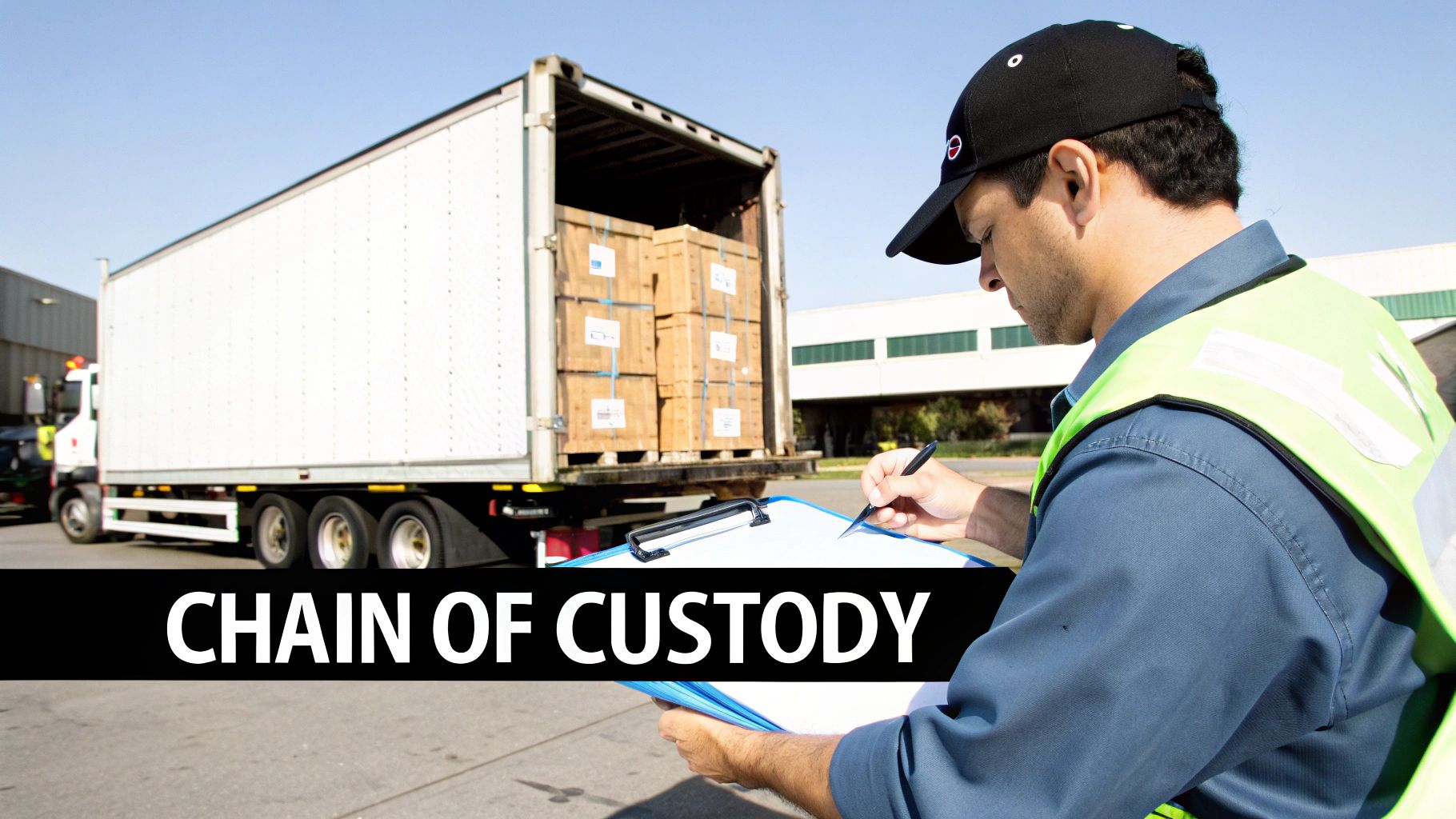
Successfully handling the logistics is about more than just scheduling a truck. It’s a carefully choreographed effort between your team and your recycling vendor to make sure every single asset is handled securely, transported safely, and tracked from the moment it leaves your door.
Coordinating Onsite Logistics and Pickup
The pickup day is the most visible part of the entire process. To make sure it runs smoothly, crystal-clear communication with your vendor is absolutely essential, especially if your project needs more than a simple curbside collection.
Picture this common scenario: a downtown Atlanta office is decommissioning 200 workstations and 15 servers. This isn't a job for one person and a van. A professional ITAD partner will bring a full-service team to the table:
- An Onsite De-installation Crew: Trained technicians arrive to safely un-rack servers, disconnect networking gear, and prep all the equipment for transport. This frees up your own IT staff to focus on their core duties.
- Secure Packing and Palletizing: Assets get carefully packed into secure containers or shrink-wrapped onto pallets. For anything holding data, locked bins are standard practice to maintain a solid chain of custody.
- Scheduled Transport: The vendor will coordinate directly with your building's management to book freight elevator access and loading dock time, preventing chaos and keeping you on good terms with your property manager.
This is the kind of detailed coordination that separates a true professional service from a simple junk hauler. It ensures your day-to-day operations can continue without a hitch while old assets are removed securely and efficiently.
The logistical chain of custody is your first line of defense in proving due diligence. Each step—from the de-installation team's arrival to the transport vehicle's departure—should be documented and aligned with the initial inventory you created.
Navigating Georgia's E-Waste and Compliance Rules
While Georgia doesn't have a statewide e-waste law that forces businesses to recycle electronics, that doesn't mean organizations get a free pass. Federal regulations and strict industry-specific compliance standards are very much in play, making proper disposal a legal and financial necessity.
For most Atlanta businesses, data security is the biggest worry. Federal laws like HIPAA for healthcare and GLBA for financial institutions impose steep penalties for data breaches, no matter how they occur. If sensitive client or patient data gets compromised from a hard drive that was carelessly tossed out, the liability lands squarely on your organization.
This is precisely why the documentation from your recycling partner is so important. A Certificate of Destruction is your legal proof that all data-bearing devices were properly destroyed, giving you a critical record for any future compliance audit.
Beyond the legal risks, responsible disposal just makes good business sense and aligns with corporate sustainability goals. While consumer recycling is on the rise, the sheer volume of commercial e-waste requires specialized handling. Recently, Atlanta's household recycling rate hit 23% of total waste collected over five months, with recyclables making up 19% of all curbside tonnage. This figure highlights the critical gap that professional Atlanta tech recycling services must fill for businesses.
By mastering both the physical logistics and the regulatory landscape, you ensure your tech disposal project is not just done, but done right—compliant, secure, and defensible. For a deeper dive into local options and best practices, check out our insights on recycling in Atlanta.
Understanding Costs, Reuse, and Finalizing Your ITAD Plan
Finalizing your Atlanta tech recycling program comes down to the bottom line. Many IT managers mistakenly write off professional ITAD as a pure expense, but a smart approach can often offset—or even erase—the costs. Understanding the financial side is key to building a plan that’s both secure and sustainable.
This is where we demystify the pricing, break down the service contracts, and make the critical decision between simple recycling and strategic asset reuse. A clear financial picture ensures your project meets both your security mandates and your budget.
Decoding ITAD Pricing and Contracts
Professional tech recycling isn't a flat-rate service. The final cost hinges on the volume of gear you have, the specific services you need, and the hidden resale value of your assets. Any transparent vendor worth their salt will provide a detailed quote breaking it all down.
When you get that service agreement, here’s what you need to scrutinize:
- Logistics Fees: This covers the actual pickup—transportation, the labor for de-installing equipment, and packing materials. You should always ask if there are hidden fuel surcharges or extra fees for tricky locations like high-rise offices or facilities without a loading dock.
- Data Destruction Charges: While some partners include standard DoD-level wiping for free, specialized services like onsite hard drive shredding almost always carry an extra per-drive or hourly fee.
- Recycling Fees: Some items, like old CRT monitors or bulky UPS batteries, contain hazardous materials. These often incur a special handling fee to cover the cost of responsible, compliant disposal.
- Reporting Costs: A reputable partner should include crucial paperwork like a Certificate of Destruction as a standard part of their service. Confirm this upfront so you're not caught by surprise.
A solid contract spells out every potential charge, leaving no room for ambiguity on the final invoice. It should also clearly define the scope of work, from the moment they arrive to the final report landing in your inbox.
The Strategic Value of Reuse and Remarketing
One of the most important financial decisions you'll make is whether to simply recycle an asset or explore its potential for reuse. Not every retired device is destined for the scrap heap. Equipment that’s only a few years old and still works perfectly can often be refurbished and resold, creating a revenue stream that directly cuts into your disposal costs.
This is where a partnership with an expert in Atlanta tech recycling pays for itself. A good ITAD vendor has the market knowledge to accurately assess your assets for resale potential.
Think about this real-world scenario: your company is refreshing 150 three-year-old laptops. Just recycling them would mean a net cost for logistics and data destruction. But by having them securely wiped, tested, and remarketed, you could recover a huge chunk of their remaining value. The entire project could flip from a cost center to a net gain.
A qualified vendor handles the entire process seamlessly:
- Secure Data Wiping: First, every drive is sanitized to DoD standards, guaranteeing your data is gone for good.
- Testing and Grading: Technicians then assess the cosmetic and functional condition of each machine.
- Refurbishment: If needed, they'll perform minor repairs or upgrades to maximize what it can sell for.
- Remarketing: Finally, the vendor uses their established sales channels to find new homes for the refurbished equipment.
This strategy transforms your retired tech from a liability into a financial asset. To see how this process can maximize your returns, you can learn more about professional Atlanta IT asset liquidation services. For any equipment that is genuinely too old or damaged for a second life, certified recycling is the only responsible path forward, ensuring every component is handled in an environmentally sound way.
Your Top Atlanta Tech Recycling Questions, Answered
Even with a detailed plan in hand, the specifics of commercial ITAD can still leave you with questions. As an IT manager or facilities director, you need straight answers to make informed, defensible decisions. Let's tackle some of the most common questions we hear from Atlanta businesses about getting rid of their old tech.
My goal here is to give you clear, no-nonsense information so you can wrap up your project with total confidence, knowing you’ve hit all your security, compliance, and operational targets.
What's the Real Difference Between Standard Recycling and Certified ITAD?
This is a big one. People often use these terms interchangeably, but for a business with data to protect, the difference is night and day.
Standard recycling is really just about material recovery. Its main goal is to break down old electronics and keep them out of a landfill. That's a noble cause, but the process usually skips over the strict security protocols your business absolutely needs.
Certified IT Asset Disposition (ITAD), on the other hand, is a security-first process from beginning to end. It's built on a foundation of a strict chain-of-custody that tracks every single piece of equipment from the moment it leaves your building to its final stop. This includes certified data destruction, comprehensive reporting, and the legal paperwork—like a Certificate of Destruction—to back it all up.
For any company that handles sensitive customer, patient, or internal data, certified ITAD isn't just a good idea; it's a fundamental part of your risk management strategy. It gives you the audit trail you need to prove compliance with regulations like HIPAA.
Simply put, choosing a certified ITAD partner for your Atlanta tech recycling project means every step is locked down, documented, and secure.
Do We Have Enough Equipment for a Pickup Service in Atlanta?
This is a frequent worry, especially for small and mid-sized businesses that aren't overhauling an entire data center. The short answer is: probably. Reputable commercial recyclers in the Atlanta area are set up to handle projects of all shapes and sizes.
Professional services are designed for bulk disposals, but "bulk" can mean anything from a small office refresh with a few dozen machines to a massive corporate move with thousands of assets. A good vendor isn't going to turn you away because you don't have a full truckload.
The trick is to just be upfront. When you call for a quote, give them a rough idea of your inventory:
- An estimate of laptops, desktops, and servers.
- The number of monitors, printers, and networking devices.
- Any big, heavy-hitter items like server racks or large UPS systems.
A quality provider will work with you on the logistics, whether that means sending a single van for one pallet or dispatching a full truck and a de-installation crew for a bigger job.
How Can We Be 100% Sure Our Data Is Actually Destroyed?
This is the most critical question of all. Absolute certainty about data destruction comes down to two things: the method and the paperwork. Just hitting "delete" or doing a factory reset is a major risk—data can often be pulled back with the right tools.
There are two gold-standard methods that guarantee your data is gone for good:
- Secure Data Wiping: This is a software approach where every single sector of a hard drive is overwritten multiple times with gibberish. The DoD 5220.22-M 3-pass standard is a widely trusted protocol that makes the original information completely unrecoverable.
- Physical Shredding: For drives that are old, failed, or held top-secret information, this is the ultimate failsafe. The storage device is literally fed into an industrial shredder that pulverizes it into tiny, useless fragments of metal and plastic.
A professional ITAD partner will not only offer both options but, more importantly, will provide you with a Certificate of Destruction. This is a legal document that serves as your official compliance record, listing the unique serial numbers of every drive that was destroyed. It's the auditable proof you need to show you met your responsibility to protect sensitive data.
Are There Hidden Costs I Should Be Worried About?
Transparency is the mark of a pro. A good partner will give you a clear, itemized quote before they touch anything, so you should never be ambushed by the final bill. That said, it pays to know what to ask about.
While a pickup might be low-cost or even free if you have enough valuable equipment for resale, certain items or extra services can have fees. Be sure to ask about these potential charges upfront:
- Special Handling Fees: Things with hazardous materials, like ancient CRT monitors or bulky UPS batteries, often have a disposal fee to cover the cost of handling them in an environmentally compliant way.
- Onsite Shredding: Bringing a mobile shred truck to your office so you can watch the destruction is a premium white-glove service and usually comes with an hourly rate or per-drive charge.
- De-installation Services: If you need a crew to pull servers from racks or unplug an entire office floor, that labor will typically be quoted as a separate line item.
- Logistics Charges: It's always a good idea to ask about fuel surcharges or other trip fees, especially if your office is on the outskirts of the metro Atlanta service area.
A reputable vendor will be completely open about these costs. Always insist on a comprehensive quote that spells everything out, ensuring your Atlanta tech recycling project comes in on budget with no last-minute surprises.
Ready to implement a secure, compliant, and cost-effective ITAD program for your Atlanta business? The experts at Atlanta Computer Recycling are here to help. We provide end-to-end services, from secure logistics and certified data destruction to responsible recycling. Contact us today for a free quote and discover how we can manage your retired IT assets safely and efficiently.