Atlanta Falcons vs Los Angeles Rams: A Business Game Plan

Monday morning after a big Falcons week usually looks the same in Atlanta offices. Slack channels drift from project updates to lineup talk, someone asks whether the conference room TV still works, and a sales lead wonders if the next client lunch should become a watch party instead. For business teams, atlanta falcons vs los angeles rams isn't only a sports topic. It's a scheduling, hospitality, AV, and IT logistics topic.
That matters more than most companies expect. A smooth game-day event at the office depends on the same things that drive any well-run workplace experience: reliable displays, clean audio, stable streaming, spare adapters, clear ownership, and a plan for old equipment that gets replaced in the process. Many teams discover their conference room setup is outdated only when they try to host something visible.
For Atlanta operations leaders, facilities managers, and IT teams, the opportunity is straightforward. Use the local attention around a Falcons game to strengthen culture, host clients in a setting people enjoy, and test whether your workplace technology is helping or getting in the way. If your office is already juggling device refreshes, conference room upgrades, or a cleanup of retired hardware across locations in Atlanta business environments, the game becomes a practical checkpoint.
Introduction A Gameday Playbook for Atlanta Businesses
A mid-sized Atlanta office doesn't need a giant production budget to make a Falcons game useful. It needs intent. The best setups I've seen treat the event like a compact business function, not a last-minute pizza run with a cable remote that may or may not work.
That changes the planning conversation. Marketing wants a social moment. HR wants morale. Sales wants a low-pressure client touchpoint. IT wants to know whether the streaming device is current, whether the soundbar still pairs correctly, and who has admin access to the smart display before kickoff.
What business teams usually get right
Most companies are already good at the obvious pieces:
- Food and timing: They order early, avoid scheduling the event too close to deadline-heavy work, and make attendance optional.
- Space selection: They choose the largest conference room, cafeteria, or training room with enough seating and sightlines.
- Internal buzz: They post in Teams, Slack, or email, and they let department leads invite clients where appropriate.
Those basics matter. They just aren't enough if the technology fails in front of employees or guests.
Practical rule: If you're hosting a sports watch party in the office, test every AV and network component the day before, not an hour before.
Where the real friction shows up
The weak points are almost always operational. An HDMI switch disappears. A streaming app needs a password no one can find. The mounted display is fine, but the mini PC attached to it is years old and struggles with playback. The room sounds hollow because the old speaker setup was never sized for a crowd.
Those aren't sports problems. They're asset lifecycle problems.
A game like Falcons vs. Rams exposes them faster than an ordinary meeting does. When everyone in the room notices the lag, the dropped stream, or the washed-out display, leadership suddenly has a clear reason to replace aging hardware. That's useful. But once the replacement decision gets made, someone still has to inventory, remove, and securely dispose of the old gear.
A Storied Rivalry Falcons vs Rams Head-to-Head
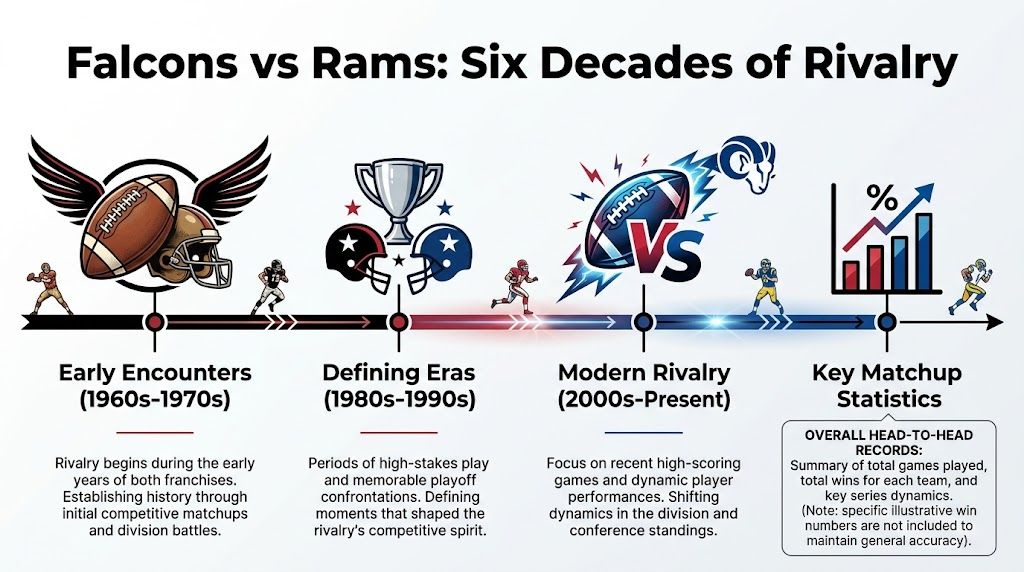
Falcons vs. Rams carries more history than the average interconference-style office talking point. The franchises have met 82 times, including two playoff games, since September 11, 1966, when the Rams won 19-14, according to StatMuse's Falcons-Rams all-time record summary.
That long record matters for Atlanta businesses using the game as a watch-party anchor. A matchup with decades of history gives employees, clients, and partners something to react to before kickoff, not just during the game. In practice, that usually leads to better turnout, more natural conversation, and a stronger reason to put conference-room AV, displays, and streaming hardware through a real-world stress test.
Los Angeles controlled the early years of the series. The Rams won the first eight meetings from 1966 through 1971, which helps explain why the rivalry still carries a persistent "prove it" tone for Atlanta fans.
The broad shape of the series
For business readers, the simplest context is the historical balance of the matchup:
| Statistic | Atlanta Falcons | Los Angeles Rams |
|---|---|---|
| All-time series record | 31 wins, 2 ties | 49 wins |
| First meeting result | Lost 19-14 | Won 19-14 |
| Largest result in Falcons' favor | 47-17 playoff win | N/A |
| Most lopsided Falcons loss in series | 59-0 defeat | N/A |
The Rams hold a 49-31-2 edge in the series. The same source also shows how uneven the results have been over time, with Atlanta producing major highs, including that 47-17 playoff win, and major lows, including a 59-0 defeat.
Why this rivalry still holds attention
For an Atlanta office event, history is useful because it creates built-in engagement. People remember playoff swings, ugly losses, and the occasional upset that resets expectations for a week. That kind of recognition changes the room. Guests pay attention longer, side conversations start faster, and leadership gets a clearer view of whether the room, network, audio, and display setup can support a crowd.
That last point matters to IT managers more than it does to fans. A routine game may not expose weak hardware. A matchup with real emotional weight usually does. If the screen brightness is poor, the stream buffers, or the sound system drops out during a key drive, everyone notices at once.
Atlanta companies have used this same local sports pattern before. This look at Atlanta business audience engagement around the Falcons vs. Bills game shows why football events often become a practical checkpoint for equipment replacement, device inventory review, and disposal planning after the crowd goes home.
Analyzing the 2026 Matchup Key Team Statistics
A close Falcons vs. Rams game tests the same thing a corporate watch party tests. Raw capacity matters less than execution under pressure.
In the most recent meeting on December 29, 2025, Atlanta beat Los Angeles 27-24 even though the Rams finished with more total yards and slightly more possession time, according to ESPN's Rams-Falcons game summary. For Atlanta business readers, especially IT and facilities teams, that is a familiar operating pattern. The group with more activity on paper does not always control the result. The group that protects against failure points usually does.
Falcons vs. Rams 2026 Season Stats Comparison
| Statistic | Atlanta Falcons | Los Angeles Rams |
|---|---|---|
| Most recent meeting score | 27 | 24 |
| Total yards in most recent meeting | 345 | 363 |
| First downs | 15 | 16 |
| Turnovers | 0 | 3 |
| Third down conversions | 5/13 | 5/13 |
| Red zone efficiency | 1/2 | 1/3 |
| Time of possession | 29:45 | 30:15 |
What the numbers actually matter for
The cleanest signal here is ball security. Atlanta finished with zero turnovers. Los Angeles gave it away three times. In operational terms, that gap works like the difference between a well-run event and one with recurring preventable issues. You can have enough screens, enough bandwidth, and enough staff. A few badly timed failures still define the night.
That matters for companies planning internal game events. A watch party rarely fails because the room was one TV short. It fails because one weak connection, one aging display, or one unmanaged device turns a routine setup into a visible problem in front of employees, clients, or leadership.
Atlanta also got a major individual performance from Bijan Robinson, who rushed for 195 yards and added 34 receiving yards, as detailed in the same ESPN recap. That kind of production changes how the entire game is called. It also mirrors what happens in business operations when one dependable asset carries too much of the load. It can save the day, but it also exposes how much depends on a few key systems still doing their job.
Three practical takeaways stand out:
- Turnover margin outweighed yardage. Atlanta protected possessions and avoided giving the Rams short-field chances in return.
- Efficiency beat volume. The Falcons did not need to dominate every category to control the result.
- One high-impact performer shifted the script. Robinson's output changed pace, field position, and play-calling.
For IT managers, that is the useful read on this matchup. The headline stat is not who moved the ball more. It is who avoided mistakes that force costly recovery. The same standard applies after an office event ends. If older TVs, conferencing gear, streaming devices, or laptops only work when everything goes right, they are already in the replacement conversation. Once they come out of circulation, secure disposition becomes part of the same job, not a separate one.
Paths to Victory and What the Odds Say
A close Falcons-Rams game creates the kind of event Atlanta companies usually want. People stay through the fourth quarter. Clients keep talking. Staff do not drift out at halftime.
As noted earlier, the Rams were 8.5-point favorites and the total sat at 48.5. Atlanta still won. For business leaders planning around a game like this, that matters less as a betting note and more as an operations lesson. Pre-event expectations help with staffing, food timing, and room setup, but they do not rescue poor execution once guests arrive.
Atlanta's best path
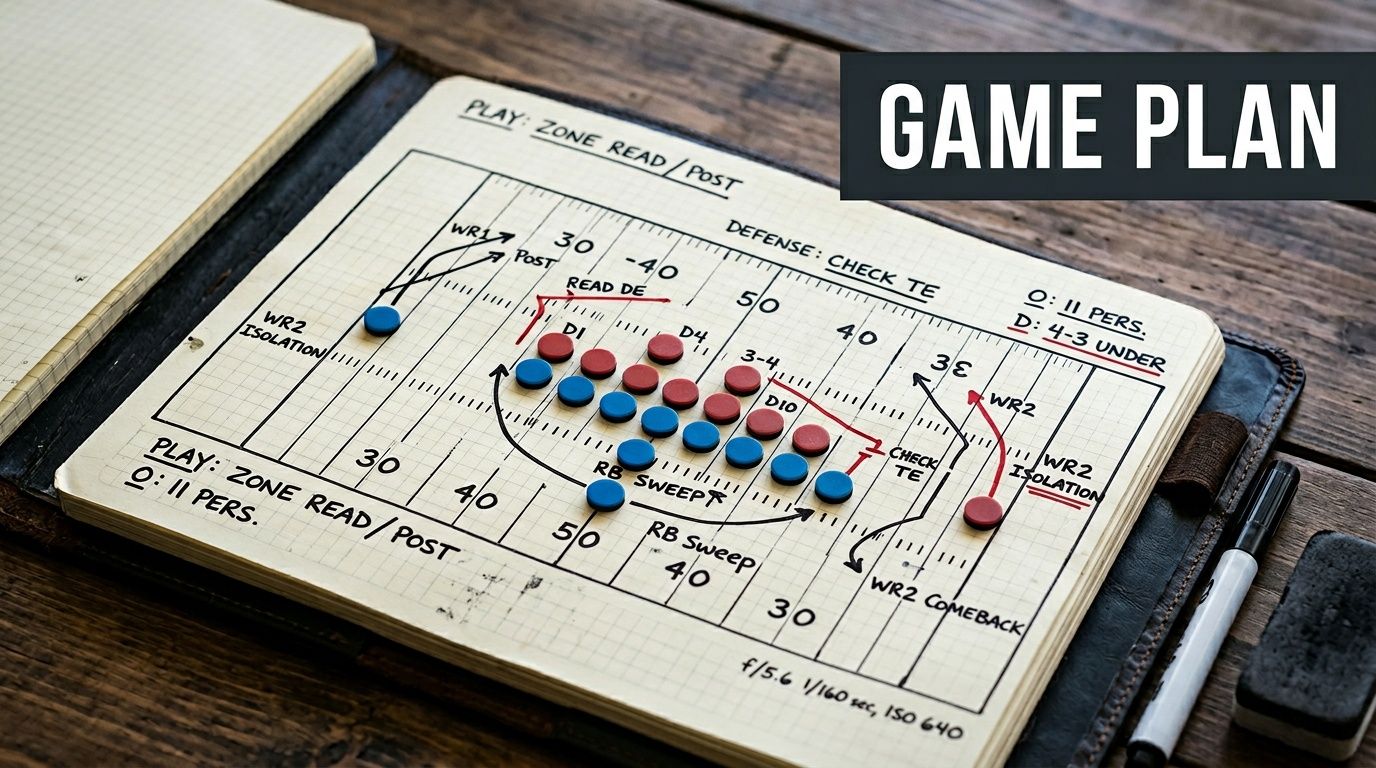
Atlanta's path is straightforward. Start on schedule, stay patient, and avoid giving Los Angeles extra possessions.
The Falcons are at their best when the run game settles the offense early and reduces pressure on obvious passing downs. That approach also shortens the game, which matters against a Rams team that can punish coverage mistakes. The trade-off is clear. A run-first plan keeps the game controlled, but it leaves less margin for penalties, stalled drives, and missed kicks.
A practical winning script looks like this:
- Establish the run early: A productive ground game helps Atlanta control pace and down-and-distance.
- Protect the ball: Against a more explosive opponent, empty possessions create avoidable pressure.
- Make field position count: Hidden yards in punts, kick coverage, and return decisions can decide a one-score game.
The Rams' best path
Los Angeles does not need a new identity for this matchup. The Rams usually create enough offense to stay on schedule. Their bigger risk is self-inflicted disruption.
If they limit turnovers and avoid short fields, they can force Atlanta into a faster game than the Falcons want to play. This is a primary pressure point. The Rams benefit when possessions increase, the pace picks up, and Atlanta has to chase instead of manage.
What the finish says about the matchup
The last meeting ended with a late field goal in front of more than 69,000 fans, as noted earlier. That kind of finish is not just good television. It changes how a company should plan the event around it.
A one-score game keeps employees in the room longer than a blowout. It also extends demand on the gear you set up before kickoff. Displays stay on longer. Audio gets pushed harder. Streaming devices, switchers, laptops, and conference-room screens all stay in use deeper into the evening.
That is where smart event planning overlaps with IT operations. If your watch party depends on older TVs, spare laptops, aging soundbars, or retired conference equipment pulled out for one more use, close games expose every weak point. Equipment that barely works during a 30-minute test often fails during three hours of real use.
For Atlanta IT managers, the takeaway is practical. Plan for a competitive game, plan for full-room attention, and plan for the equipment review that follows. If temporary event gear is at the end of its useful life, secure retirement should already be on the checklist.
Leveraging the Game for Corporate Engagement in Atlanta
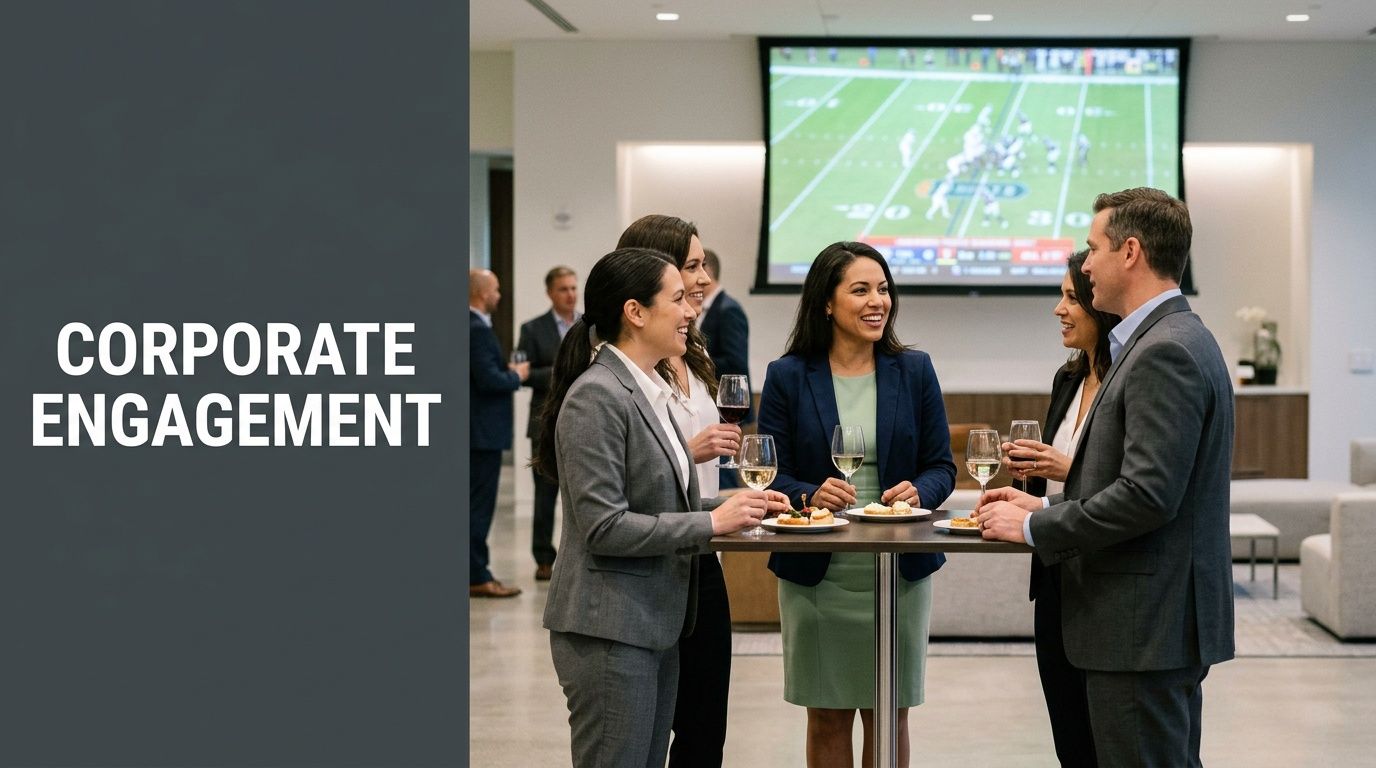
A Falcons-Rams watch party can do more than entertain staff for a few hours. Used well, it gives companies a low-friction setting for relationship building. Clients who won't attend a formal dinner may accept a casual invite to a game-viewing event. Employees who rarely interact across departments often loosen up around live sports.
That only happens when the event feels well run. If it feels improvised, people leave early.
A practical watch-party framework
Start with the guest list. Internal-only events work well for morale, but mixed events with selected clients and partners often generate better business value. The key is to decide that upfront so the tone, food, signage, and room layout match the audience.
Then handle logistics in this order:
- Choose the room based on acoustics first. A packed training room with controlled sound is better than a stylish open area where nobody can hear.
- Assign one event owner and one technical owner. If one person owns both, response time slows when the room gets busy.
- Build around arrival patterns. Most guests don't arrive at the same minute. Put food and drinks where late arrivals won't block the viewing area.
What works for employee and client engagement
I've seen a few tactics work consistently better than flashy extras.
- Light structure beats over-programming: A simple kickoff note, a quick welcome for guests, and maybe a halftime prize is enough.
- Branding should stay subtle: This is still a game. Don't turn every surface into a sales message.
- Conversation zones matter: Give people a place to talk without competing with the speakers.
If your marketing team wants to extend the value beyond the room, local media planning can help. This overview of live sports advertising for local business campaigns is useful because it frames how game-day attention can connect with broader local outreach instead of staying trapped inside a one-night event.
Keep the event local and familiar
Atlanta companies usually get better participation when they lean into city identity rather than generic football themes. Food from known local vendors, a brief nod to neighborhood pride, and references to other hometown teams all help the event feel grounded. That's part of why sports-linked office events work so well here. The city already knows how to rally around them.
For teams building a broader calendar, sports don't have to stop with football. A similar community dynamic shows up in Atlanta business hosting around Braves season moments, where client entertainment and internal engagement often overlap.
From Gameday Setup to Secure E-Waste Disposal
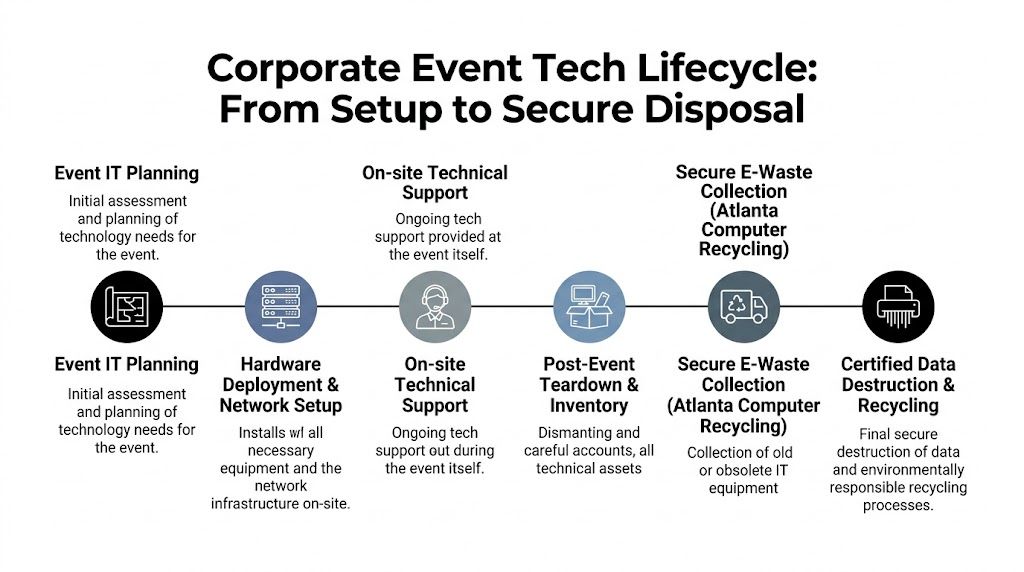
A Falcons vs. Rams watch party often exposes IT problems faster than a scheduled audit. The stream buffers on an aging mini PC. A conference room display has a failing input board. Someone pulls an old laptop from storage to run audio, and no one is fully sure what accounts are still logged in.
That is why event logistics and IT asset disposition should be planned together. If game-day prep leads to a hardware swap, the retired equipment needs a clear exit path, documented ownership, and data handling that holds up under internal review.
The hidden asset list behind one simple event
For Atlanta businesses, a single office viewing setup can involve equipment from facilities, marketing, and IT all at once. The visible items are the TVs and speakers. The forgotten items usually create the cleanup problem later.
A typical setup may include:
- Displays and mounts: Lobby TVs, conference room panels, digital signage, wall mounts, and spare remotes.
- Playback devices: Mini PCs, streaming boxes, conference room laptops, media tablets, and docking stations.
- Network and audio gear: Small switches, access points, soundbars, mixers, microphones, and extension hardware.
- Support equipment: Power strips, surge protection, adapters, chargers, and carts used to move portable screens.
Once the event is over, displaced gear often ends up in a storage room with no ticket, no disposition date, and no clear owner.
Why disposal risk rises after an AV refresh
Retired AV hardware is often treated like low-risk surplus. In practice, much of it belongs in the same risk category as standard IT equipment. A conference room PC can store browser sessions, saved Wi-Fi credentials, cached files, and meeting links. Streaming devices and smart displays may retain app logins. Network gear can still hold configuration data tied to your environment.
For regulated organizations in healthcare, education, finance, and government, that creates a real control issue. If the device touched your network or stored access information, disposal is not just a facilities task.
Old AV gear is still IT gear if it stores credentials, connects to your network, or contains removable media.
What good post-event handling looks like
The best time to decide what happens to retired equipment is before the replacement hardware goes live. That keeps old assets from sitting in closets for six months while responsibilities drift between departments.
A workable process is straightforward:
- Inventory first: Record what came out of service, from which room, and who approved removal.
- Separate redeployment from retirement: Some screens and peripherals still fit secondary spaces. Data-bearing devices usually need a tighter review.
- Control data-bearing assets: Laptops, desktops, mini PCs, servers, switches, and storage media need tracked handling.
- Use documented recycling and destruction procedures: Chain of custody, reporting, and verified downstream processing matter for business accountability.
For companies planning around a high-visibility event like Falcons vs. Rams, this is a practical chance to clean up more than the viewing setup. It is often the moment IT managers finally get approval to remove outdated conference room tech, unused desktops, and surplus networking gear in one project. If your team needs a documented local process, review these business e-waste recycling services in Atlanta and build disposition into the event checklist from the start.
How to Watch and Follow the Falcons vs Rams Game
A watch party falls apart fast if the stream fails five minutes before kickoff. For Atlanta offices, the safest approach is to confirm the official broadcast listing the day before and test the exact room, display, audio path, and login your team plans to use. A setup that works in someone's living room often breaks in a conference room because of expired app credentials, unsupported streaming hardware, blocked network traffic, or weak audio handoff to the display.
If your company has been replacing cable boxes with app-based viewing, treat that change as an IT task, not just an office convenience. This guide on how to switch from cable to streaming is a useful reference before you rely on a new setup for a live game.
Keep the viewing plan simple. One person should own the primary stream. Another should have a backup ready, such as a second device, alternate app login, or another approved room. That small bit of preparation matters more than adding extra screens if your goal is a smooth event for clients, staff, or leadership.
For teams that want local context before, during, and after kickoff, keep the official team coverage handy and add a business-relevant Atlanta resource such as this Atlanta Falcons page for local business readers.
If the event also involves swapping displays, retiring streaming sticks, replacing mini PCs, or clearing out old conference room equipment, assign that work order before gameday. The companies that handle these events well usually separate viewing logistics from equipment retirement, then route the old gear through a documented IT disposition process instead of letting it pile up in storage.