Atlanta Falcons 2026 Season: Business IT & Security Guide


If you're managing IT for a hospital campus, a regional office, a university, or a data center in metro Atlanta, you already know the feeling. A big public event looks smooth from the outside, but the essential work happens in the layers nobody sees. Devices have to work, people have to move safely, transactions have to clear, and retired equipment can't become a data liability.
That's one reason the atlanta falcons are more useful to study than most business leaders realize. On Sundays, fans see touchdowns, coverage busts, and standings. Operations teams see something else: a live enterprise environment where security, infrastructure, logistics, and asset turnover all have to hold together under pressure.
More Than a Game An Inside Look at the Atlanta Falcons Operation
An Atlanta executive can leave Buckhead, meet clients downtown, and still make kickoff with time to grab food before the game. From the seat, the experience feels simple. Tickets scan, video boards update, concessions move, staff direct traffic, and the building stays coordinated even when emotions swing on every snap.
That smooth experience is the product of a large operating system, not just a football team. The Falcons play inside a venue that functions more like a complex enterprise campus than a traditional sports facility. Security staff, facilities crews, payment systems, digital signage, network operations, guest services, and back-office teams all have to stay aligned in real time.
For business readers, that's the useful lens. The Falcons aren't only a sports brand. They're a regional operation with the same kinds of cross-functional dependencies that exist inside hospitals, corporate headquarters, and distribution-heavy organizations.
What stadium operations teach business operators
A venue on game day creates the same questions your own team faces during a high-stakes week:
- Access control has to hold: Staff, vendors, contractors, media, and guests all need the right level of entry, not broad access.
- Endpoints can't be an afterthought: Ticketing hardware, point-of-sale devices, displays, and support systems all create risk if they aren't tracked and retired correctly.
- Continuity matters more than perfection: Small interruptions compound fast when the building is full and every minute counts.
Teams that manage sports venues well usually think in systems, not silos. That's also why examples from organizations handling large fan environments, such as this Major Premier League Football Club, are useful for Atlanta operators evaluating guest experience and infrastructure together.
Practical rule: If an operation depends on hundreds of devices across multiple functions, retirement planning belongs in the original deployment plan, not at end of life.
That same local perspective is why many Atlanta readers first come to Falcons-adjacent operational topics through resources focused on the Atlanta Falcons and business technology context. The football angle gets attention. The operational lessons are what stick.
A History of Resilience The Falcons Franchise Story
On a Sunday in Atlanta, the Falcons are the visible part of the operation. Behind that logo sits the kind of long-cycle organization local executives recognize immediately: public pressure, uneven performance, expensive infrastructure, and no room to hide when a system breaks.
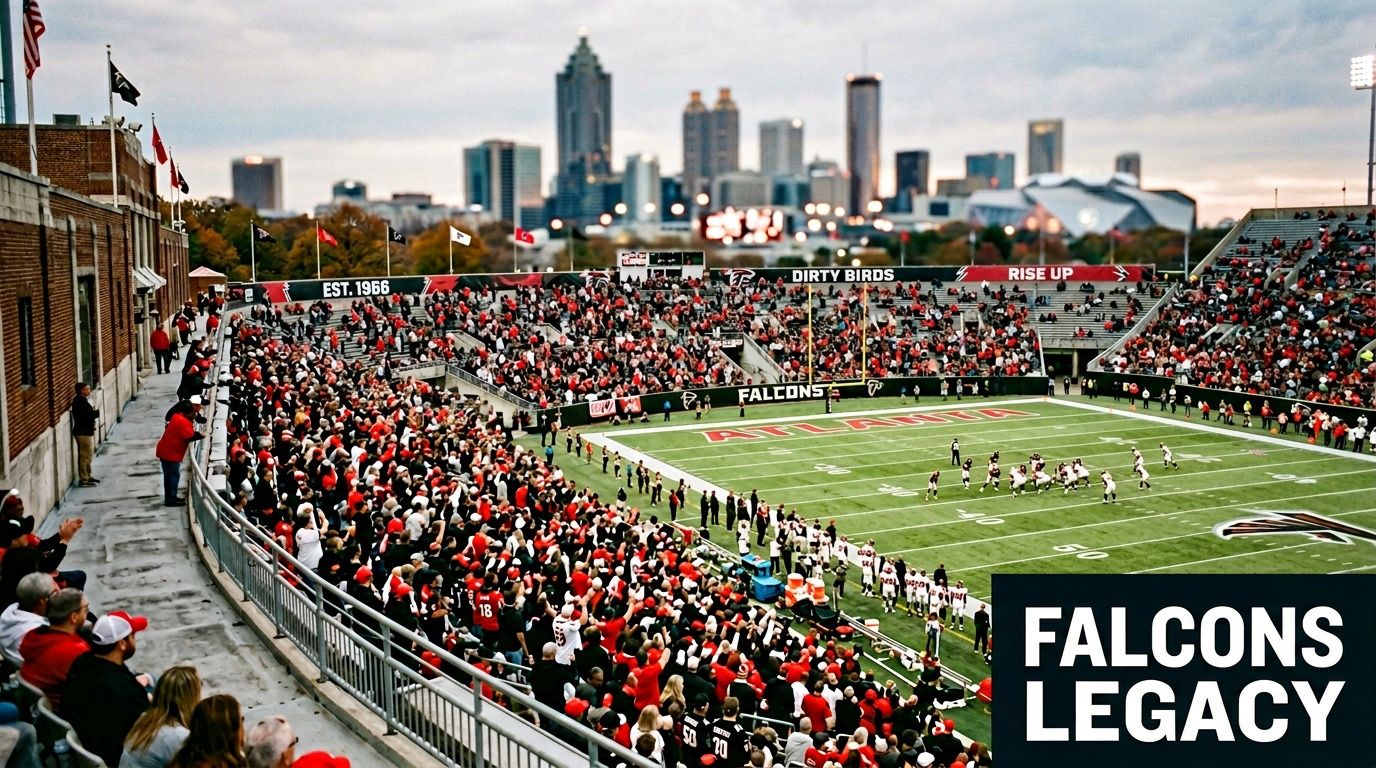
Established in 1966, the Falcons have posted a 406-521-6 regular season record through 2025, along with 14 playoff appearances, 6 division titles, and 2 Super Bowl appearances, according to the Atlanta Falcons season record history. They have never won a championship, which helps explain why the franchise still carries both loyalty and unresolved tension across the city.
That tension is familiar to Atlanta operators.
A stadium enterprise, a hospital network, and a large office campus all face the same basic test over time. Short bursts of success matter less than repeatable execution. Fans judge wins. Leadership has to judge staffing, systems, security, maintenance, and whether the whole operation can recover after a failure without losing trust.
The Falcons' history reflects that exact problem. The first winning season came in 1971 at 7-6-1, and 1973 brought a 9-5 finish. In 1977, the defense allowed an NFL-record low 129 points in a 14-game season. The 1980 team went 12-4 and won the NFC West. In 1998, the franchise reached Super Bowl XXXIII after a 14-2 season.
Those years still matter because they show what the organization can look like when talent, coaching, and execution line up.
The harder lesson came later. The Falcons also reached Super Bowl LI, and the loss after a 28-3 lead became part of the franchise's identity. In business terms, it was a public breakdown under maximum scrutiny. Atlanta leaders understand that kind of moment. One outage, one bad handoff, one failure in preparation can overshadow years of competent work.
The long view is what makes the story useful. Through that same historical span, the franchise recorded 17 winning seasons, 4 tied seasons, and 38 losing seasons, and it did not post consecutive above-.500 seasons until 2008-2009, as noted earlier in the season-by-season record. That is not just football trivia. It is a case study in how hard it is to turn isolated peaks into an operating standard.
That is also why the Falcons fit this article's larger point. Mercedes-Benz Stadium is not only a place where games happen. It is a high-visibility enterprise that depends on disciplined asset tracking, reliable infrastructure, secure access, and responsible retirement of aging equipment. Winning on the field gets attention. Long-term resilience usually comes from the quieter work that happens off it.
Atlanta respects the Falcons because the franchise keeps absorbing hits and returning to work. For any organization running hundreds of devices, multiple vendors, and public-facing operations, that is more than a sports story. It is an operating reality.
The 2026 Falcons Roster Schedule and Outlook
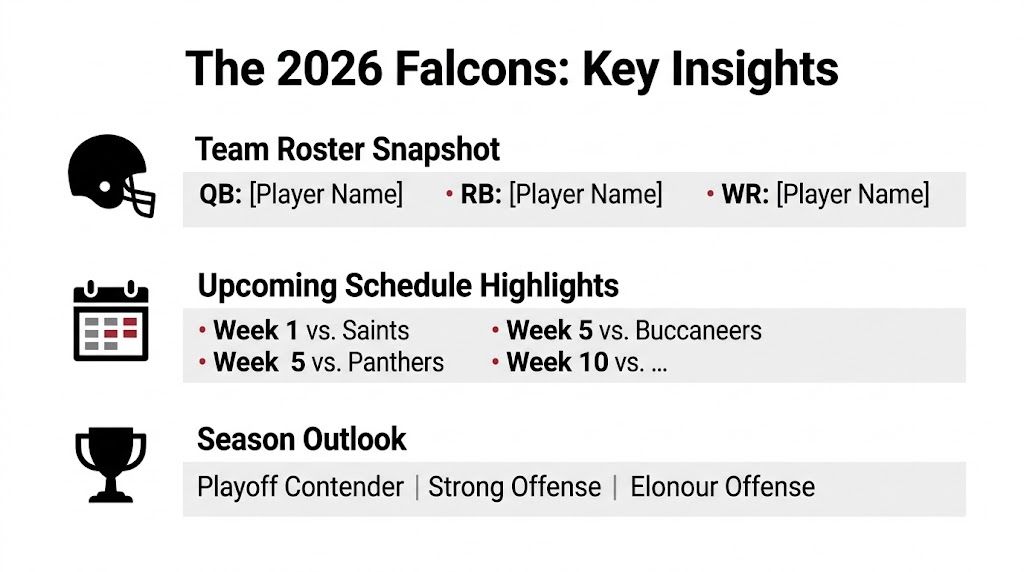
Those looking up the atlanta falcons often seek a current-season snapshot. That's fair. The challenge is simple: verified 2026 roster and schedule details aren't provided in the approved data, so the responsible way to discuss the season is to focus on what can be said without inventing names, dates, or projections.
How to evaluate the team without guesswork
Use a practical checklist instead of hot takes:
Start with continuity
Look at whether the coaching staff, quarterback room, and core leadership remain stable through camp and into September. Teams with fewer moving parts usually communicate faster and recover from mistakes better.Watch the division first
For Atlanta, divisional games shape the season's emotional and competitive tone. If the Falcons handle familiar opponents cleanly, the rest of the schedule often feels more manageable.Track defensive reliability
A team can survive offensive swings. It has a harder time surviving repeated communication failures in the secondary or poor situational defense.Separate hype from deployment
Training camp buzz matters less than who plays meaningful snaps in critical situations.
A useful framework for Atlanta business readers
If you're planning client outings, internal events, or season-long engagement around the Falcons, use this approach:
| Decision area | What to monitor |
|---|---|
| Ticket planning | Official schedule release and home game timing |
| Client entertainment | Division matchups and late-season games with playoff implications |
| Internal engagement | Prime-time windows and rivalry weeks |
| Operational comparison | How the team handles pressure, roster turnover, and public expectations |
The smart read on the 2026 Falcons isn't about pretending certainty. It's about watching whether the organization turns talent into consistency. That's the same standard business leaders use when evaluating their own teams.
Inside the Digital Fortress Mercedes-Benz Stadium
People talk about Mercedes-Benz Stadium as architecture and atmosphere. IT leaders should also think about it as a live, distributed technology environment under public scrutiny.
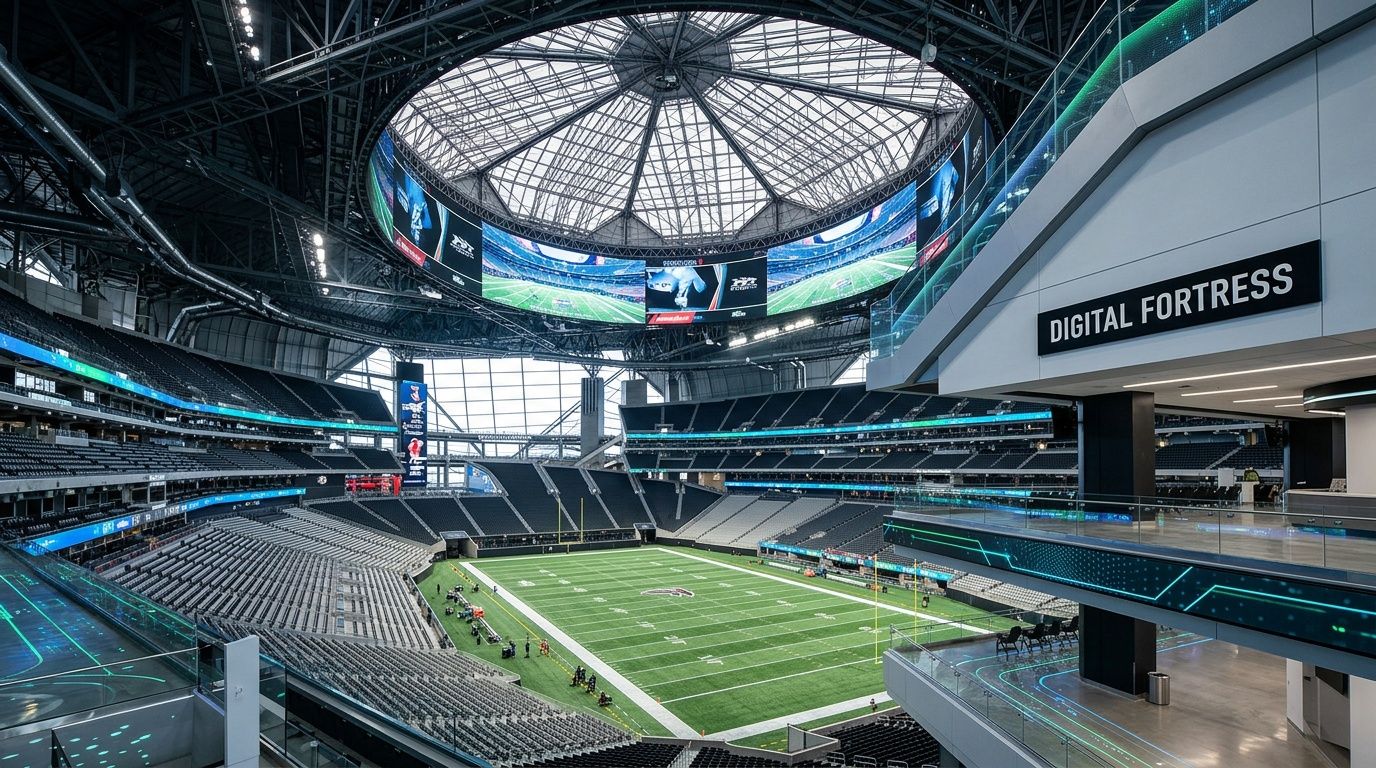
On event day, the building has to support ticketing, concessions, back-office communications, broadcast coordination, signage, security operations, and fan connectivity at the same time. That's why it makes sense to view the stadium as a digital fortress. Not because it's invulnerable, but because failure in one layer can spill into guest experience, revenue, and safety very quickly.
The venue is a business network in public
A modern stadium combines several environments that many companies manage separately:
- Retail infrastructure through concession and payment systems
- Corporate infrastructure through admin networks, staff devices, and operational software
- Physical security infrastructure through cameras, controlled access points, and monitoring tools
- Public-facing digital infrastructure through displays, mobile interactions, and connectivity
That blend is what makes venue operations hard. A hospital can segment aggressively. A data center can restrict physical access tightly. A stadium has to stay secure while remaining highly usable for a massive moving crowd.
For readers who work with large display environments or event-heavy facilities, directories such as Jumbotron Venues help illustrate the scale and complexity of digital display operations in these settings.
Where the hidden risk usually sits
The interesting part isn't only what's installed. It's what's aging out.
Legacy displays, retired point-of-sale units, replaced networking gear, failed storage devices, and decommissioned back-office hardware don't disappear when the season ends. They move into staging areas, closets, loading docks, vendor channels, and disposal queues. That's where disciplined handling matters.
A strong security posture includes the retirement phase, not just the live environment. Businesses that want a clear framework for that end-of-life layer usually start with practical guidance around data security in IT disposition workflows.
The hardware you stop thinking about is often the hardware most likely to leave your control.
That's true in a stadium. It's just as true in a clinic, school district, or office consolidation.
Securing the Playbook Data Protection for a Super Bowl Host
A football playbook only matters if the team protects it. In business, the playbook is broader. Payment data, employee records, device inventories, contracts, credentials, internal communications, and stored files all sit somewhere in your environment. If even one retirement process breaks down, your strongest controls upstream may not matter.
The Falcons offer a useful football analogy here. Their long-running difficulty finding a reliable cornerback opposite A.J. Terrell Jr. has been an exposed weakness, and that same roster issue is captured in the approved source material discussing the team's six-year struggle at that spot and Terrell's community leadership, including his Crownucopia event that provided 200 gift bags to homeless families in Atlanta, as noted in the NFLPA Community MVP coverage of A.J. Terrell Jr..
One weak link changes the whole defense
On the field, offenses attack the coverage they trust they can beat. In business, attackers and auditors both look for the neglected area. It might be a forgotten laptop in storage, backup drives from a branch closure, or networking gear sent out without verified sanitization.
The problem isn't usually a lack of effort. It's a gap in sequencing. Teams lock down production systems, then treat retired assets like a facilities problem instead of a data protection problem.
Use this simple checklist when equipment leaves active use:
- Confirm chain of custody: Know who touched the asset from rack or desk removal through final disposition.
- Match media type to destruction method: Working drives may be sanitized to policy. Obsolete or failed media may need shredding.
- Document the event: If legal, compliance, or leadership asks what happened to a device, your team should have an answer in minutes, not days.
What works and what fails
What works is boring on purpose. Standardized intake, serialized tracking, approved wiping procedures, and clear escalation for damaged media.
What fails is also predictable. Ad hoc closet storage. Informal employee handoffs. A recycling pickup arranged before anyone confirms whether devices still contain sensitive data.
Field lesson: Primary defenses get attention. Secondary exposures create the breach narrative.
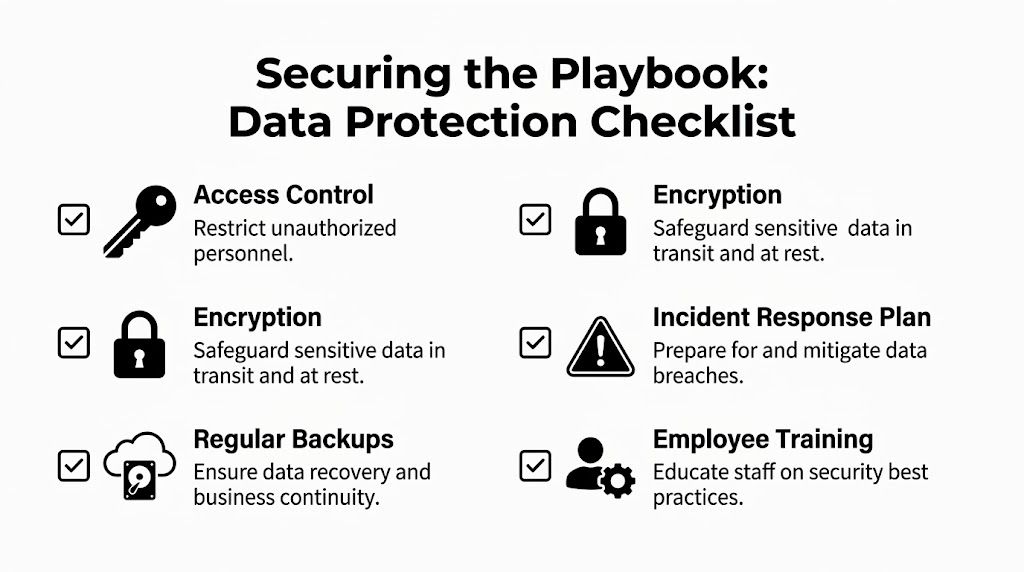
If your organization handles regulated data or high-volume device turnover, secure retirement isn't optional. It belongs in the same category as encryption, access control, and backup discipline. A good starting point is a documented process for secure data destruction that your IT, compliance, and facilities teams all understand.
The Falcons Off-Field Impact on Sustainability and Community
Atlanta doesn't separate sports from civic identity very well, and that's mostly a good thing. The Falcons matter because they sit inside a broader network of neighborhoods, schools, service organizations, and employers that shape how the city sees itself.
The strongest organizations understand that public trust isn't built only through performance. It's built through visible responsibility. In the Falcons' case, one example from the approved material is A.J. Terrell Jr.'s local community work through Crownucopia, which centered culturally inclusive self-care support for homeless families. That kind of effort matters because it turns brand presence into something tangible.
Sustainability isn't a PR side project
For business operators, community impact has a practical twin: how you handle waste, surplus, and replacement cycles behind the scenes.
A company may sponsor local programs and still undermine its credibility if retired electronics sit unmanaged in storage or get pushed into weak downstream channels. That disconnect shows up fast in healthcare, higher education, and enterprise environments where stakeholders expect both environmental care and disciplined data handling.
Three questions usually reveal whether an organization is taking sustainability seriously:
- Where do retired assets go? "Recycled" isn't a process unless someone can explain the downstream path.
- Who owns the handoff? Facilities, procurement, and IT often assume another team has it.
- Is reuse considered before scrap? Extending useful life where appropriate supports both cost control and environmental goals.
The behind-the-scenes version of community stewardship
Responsible e-waste handling doesn't create the same headlines as a player event or a public donation drive. It still shapes local impact. Reuse keeps functional equipment in circulation when appropriate. Certified recycling keeps hazardous material out of poor disposal channels. Good disposition planning also reduces the clutter and uncertainty that slow office moves, clinic upgrades, and campus refreshes.
For Atlanta organizations with ESG, compliance, or procurement goals, the circular model is the useful frame. This overview of the circular economy for electronics in Atlanta captures the operational side of that idea better than generic sustainability language usually does.
Community responsibility isn't only what people can see at an event. It's also what your team prevents from becoming tomorrow's environmental mess.
Salary Caps and Servers A Lesson in Asset Management
NFL teams don't build rosters in a vacuum. They make trade-offs under constraints. Every contract decision affects flexibility, timing, and what the front office can do next. That's why the Falcons are a good analogy for IT asset management.
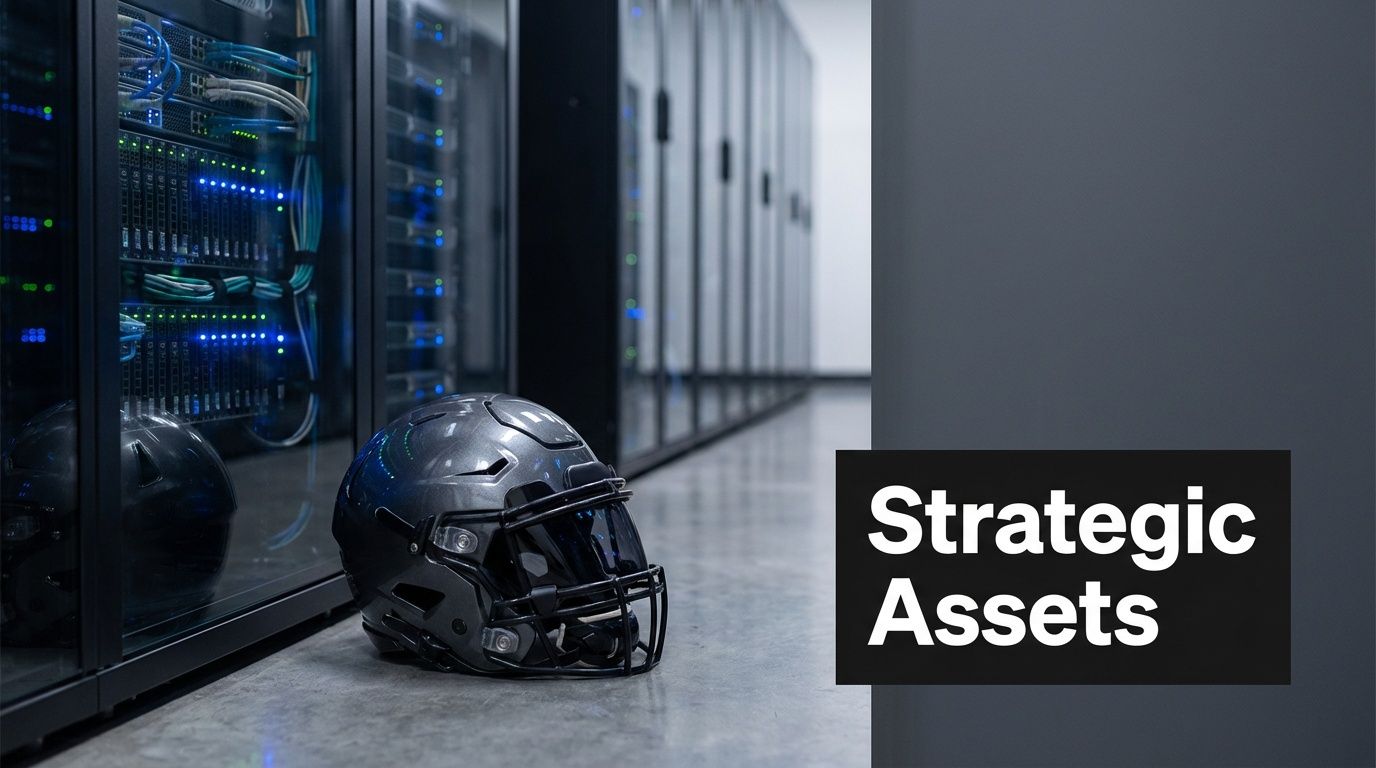
The approved data highlights that the Falcons' contract resets and search for undervalued talent, including interest around draft prospect Ted Hurst, mirror the decisions companies make when they retire expensive legacy hardware and look for value recovery through remarketing. That same material notes Hurst's listed testing numbers of 4.42 in the forty, a 36.5-inch vertical, and an 11'3" broad jump, all in the context of draft evaluation and value hunting covered by Sports Illustrated's report on Falcons draft interest in Ted Hurst.
The roster decision and the server decision are similar
An NFL team asks: is this veteran still worth the cap burden relative to production and future flexibility?
An IT team asks: is this server, storage array, or network stack still worth the maintenance, risk, power draw, and support burden relative to replacement options?
Those are not identical questions, but they produce similar decision paths.
| Falcons roster logic | IT asset logic |
|---|---|
| Move on from an expensive veteran | Retire costly legacy hardware |
| Find value in overlooked talent | Recover value through resale or redeployment |
| Protect future flexibility | Avoid locking budget into aging systems |
| Balance immediate needs and long-term planning | Sequence refresh cycles without operational disruption |
What disciplined asset management looks like
The best teams don't cling to assets out of habit. They define decision points in advance.
In practice, that usually means:
Set retirement triggers early
Base them on supportability, risk, performance fit, and business need. Don't wait until a failure forces the conversation.Separate sentimental value from operational value
A familiar system can still be the wrong system. Many organizations keep old hardware because "it still works," not because it still fits policy or cost expectations.Recover value where appropriate
Some retired assets have remarketing potential. Others belong in secure destruction streams immediately. The point is to decide intentionally, not by default.
Good asset management isn't about squeezing every last month from old equipment. It's about knowing when continued use costs more than controlled retirement.
For teams building a stronger framework, these IT asset management best practices are closer to roster planning than many finance and IT leaders initially think.
Your Business Playbook for Secure and Sustainable Operations
The atlanta falcons are a local football team. They're also a useful operating model for anyone running complex environments in Atlanta. Public pressure, fast-moving logistics, layered technology, and nonstop turnover force clear decisions. Security can't be partial. Asset management can't be reactive. Community responsibility can't live only in marketing copy.
That's the main takeaway for business leaders. Whether you're protecting patient records, handling a campus refresh, closing a regional office, or decommissioning a server room, the basics are the same. Know what you have. Control where it goes. Protect data at the end of life as seriously as you protect it in production. Build sustainability into the disposition process instead of treating it as a side benefit.
The organizations that do this well don't improvise during pickups, moves, or refresh cycles. They use documented workflows, chain-of-custody discipline, approved destruction methods, and downstream recycling partners that can stand up to scrutiny.
If your team treats retired hardware like a loose-end problem, the risk stays open longer than you think. If you treat it like part of core operations, you reduce exposure and gain a cleaner, more defensible process.
Atlanta organizations that need a tighter end-of-life process can work with Atlanta Computer Recycling for business IT asset disposition, secure data destruction, electronics recycling, and data center decommissioning across the metro area. If your team is dealing with office closures, hospital equipment turnover, bulk device refreshes, or legacy hardware that can't sit in storage any longer, they're built for that kind of work.