Weather for Alpharetta GA: IT Impact & E-Waste 2026


A truck backs up to an Alpharetta office on a warm afternoon. Retired laptops leave an air-conditioned server room, sit at the dock, then move into humid outdoor air before transport. That short window can create condensation, packaging weakness, and avoidable chain-of-custody risk if the project plan only checks for rain.
TL;DR: Alpharetta weather affects more than comfort or commute time. Heat, humidity, and regular precipitation can change how you stage, pack, move, wipe, and store retired IT assets. For IT teams, the practical question is simple. Will today’s conditions increase the chance of moisture exposure, heat stress, delayed loading, or handling mistakes during pickup and decommissioning?
In Alpharetta, a forecast that looks manageable for staff can still be a problem for decommissioned servers, laptops, drives, and network gear. Warm air raises internal temperatures in boxed equipment and transport vehicles. Humid conditions increase condensation risk when equipment moves between cooled rooms and outdoor staging areas. Rain adds slip hazards, slows dock activity, and raises the odds of rushed loading decisions that weaken asset tracking.
The operational impact is direct. Weather affects chain of custody, residual value, secure wiping conditions, and whether equipment stays suitable for remarketing or moves straight to destruction. Teams that treat weather as part of project risk control usually schedule tighter dock windows, use better packaging, and build fallback dates into their business continuity planning checklist.
For Alpharetta ITAD work, the right weather plan is an operations plan.
Why Your IT Operations Need a Business-Focused Weather Plan
A pickup can be fully approved, documented, and staffed, then start slipping the moment retired equipment leaves a conditioned room in Alpharetta and hits hot, humid air.
That shift matters fast in ITAD work. Servers, laptops, drives, and network gear do not respond to weather the way office furniture or scrap metal does. A warm loading dock can raise device temperature before the truck doors close. High humidity can create condensation risk during staging. Rain can slow loading just enough to create rushed handling, weak packaging decisions, and avoidable gaps in chain of custody.
The forecast your team needs
Standard weather coverage for Alpharetta is built for daily life. It helps with commute planning, outdoor activities, and weekend schedules. IT operations need a different read on the same conditions.
The useful question is not whether the day feels manageable. The useful question is whether temperature, humidity, and precipitation create added risk during pickup, staging, transport, storage, or data destruction. That is the missing layer in most weather guides, and it matters in Alpharetta because warm seasons often combine heat, moisture, and pop-up rain in ways that disrupt tightly scheduled decommissioning work.
In practice, that means checking more than the headline forecast. Review pickup timing, dew point, expected rain window, truck dwell time, and how long assets will sit outside climate control. If equipment is moving from a cool server room to a humid dock, the weather plan should address that transition before the first pallet is wrapped.
Practical rule: If the review ends with “warm but dry,” the team has not assessed enough for secure IT asset disposition.
Weather risk is also security risk
Weather problems rarely stay limited to equipment condition. They spill into process control.
A delayed truck can leave retired assets in a hallway, cage, or dock area longer than planned. A passing shower can push a team to load faster than labels, counts, and signoff steps should allow. Heat inside a vehicle can reduce reuse potential for some equipment, which changes value recovery. Moisture exposure can also turn a readable drive into a failed drive before wiping or verification is complete.
That is why mature IT teams treat local weather as part of operational risk control, not as a last-minute scheduling note. Teams that already use a business continuity planning checklist for IT and facility disruptions should include weather exposure, staging limits, and fallback pickup windows in the same review.
What works in Alpharetta
The practical approach is straightforward. Schedule loading around the most stable weather window. Minimize time on the dock. Use packaging that can handle short-term moisture exposure without trapping heat. Confirm whether trucks are enclosed, how long they may sit before departure, and what happens if storms delay the route.
What fails is assuming any dry hour is a safe hour. In Alpharetta, a clear morning can turn into a humid afternoon with thunderstorms, and that change affects both equipment condition and handling discipline. For ITAD projects, weather planning protects more than hardware. It protects documentation quality, asset accountability, and the odds of a clean, secure handoff.
Current and Extended Weather Forecast for Alpharetta GA
For anyone searching specifically for weather for alpharetta ga, the near-term forecast points to warm conditions. Current guidance in the verified data shows highs near 86°F today under clear conditions, with potential showers later in the week and highs up to 89°F on April 17.
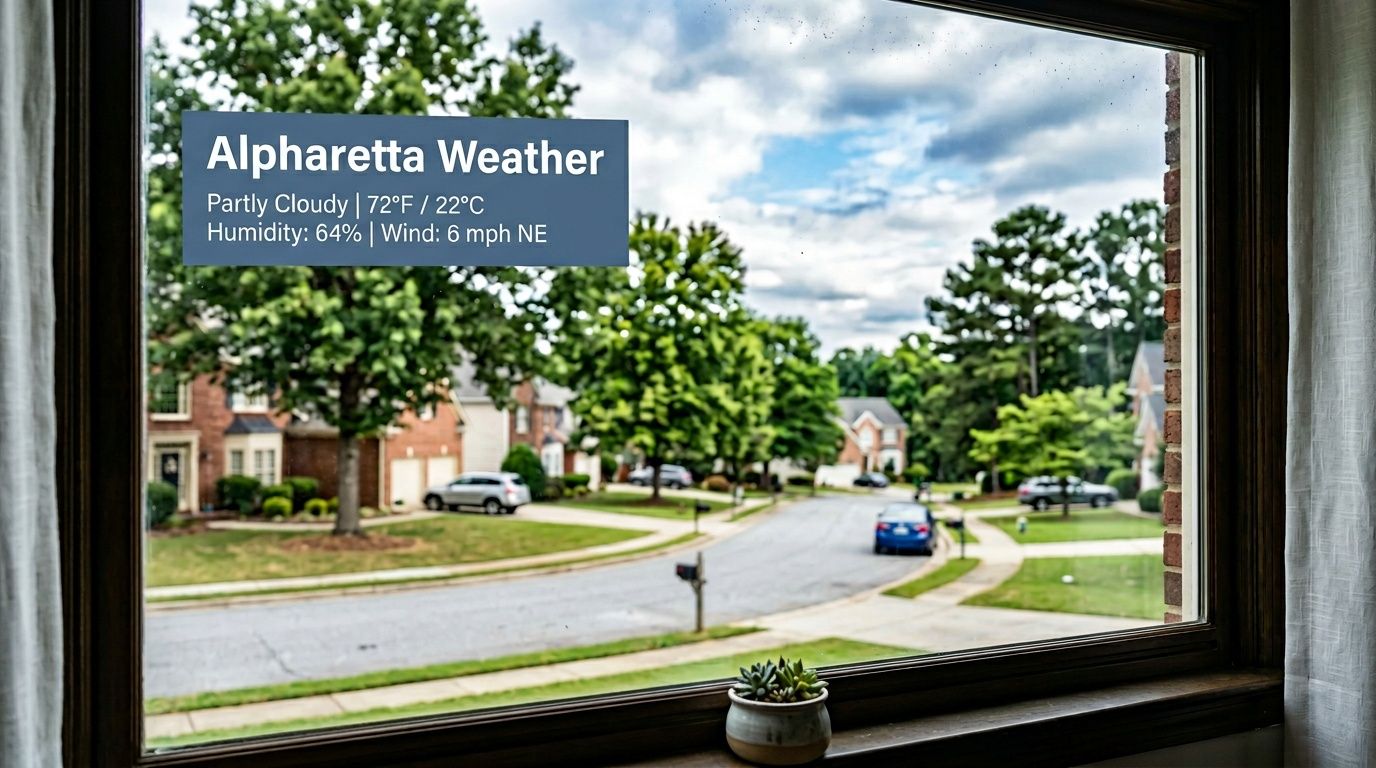
If you want a location-specific overview, this local page on weather conditions in Alpharetta, Georgia is useful as a starting point. For IT operations, though, the raw forecast only matters if you translate it into handling decisions.
How to read today’s weather like an operations manager
Use this quick lens:
| Metric | What it means for IT assets |
|---|---|
| High temperature | Higher heat increases stress during loading, truck dwell time, and dock staging |
| Clear vs. showers | A dry morning can still become a wet pickup window later in the day |
| Humidity and dew point | Muggy air raises condensation and corrosion risk when devices leave conditioned rooms |
| Timing | Early windows are usually easier to control than mid-afternoon loading |
A warm, clear morning often gives teams a false sense of security. The issue isn’t whether people are comfortable outside. The issue is whether retired equipment will spend too long moving between a controlled environment and an uncontrolled one.
What to watch over the next several days
When the extended forecast shows warm highs and possible showers, commercial teams should pay attention to three questions:
- Will equipment sit outside at any point: Even brief exposure matters if pallets wait on a dock.
- Is there a chance schedules slip into hotter hours: A one-hour delay can change conditions a lot.
- Will rain force a rushed transfer: Rushed handling usually creates the biggest avoidable mistakes.
A weather check for ITAD isn’t about comfort. It’s about exposure time, storage conditions, and whether the devices arrive stable enough for secure processing.
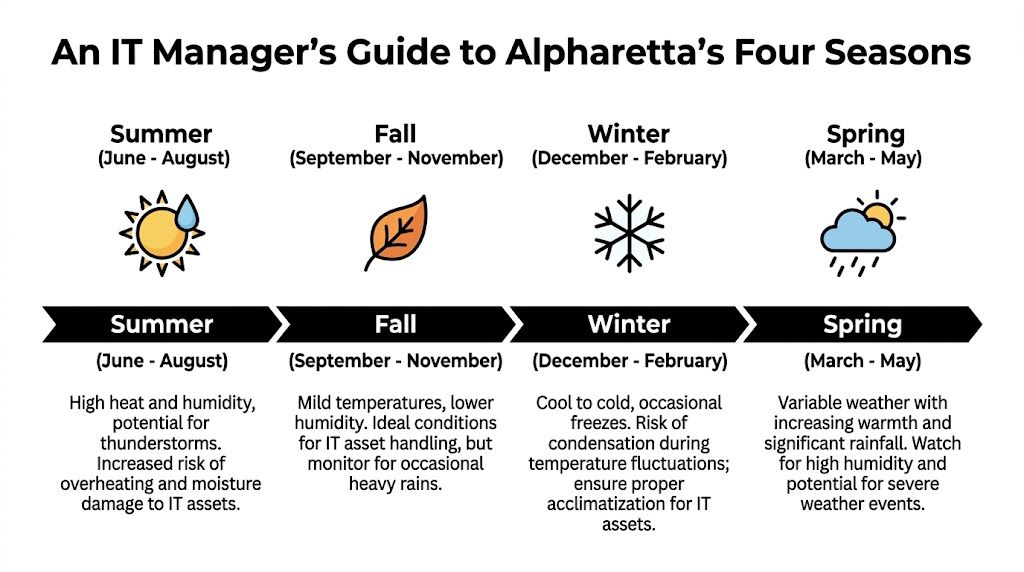
An IT Manager's Guide to Alpharetta's Four Seasons
Alpharetta’s climate isn’t extreme every day, but it is demanding across a full year. The city receives about 51.84 inches of annual precipitation, nearly double the U.S. national average of 29 inches. March is the wettest month and October the driest, though the area stays moist year-round (U.S. Climate Data for Alpharetta).
That matters because ITAD projects don’t happen in a weather vacuum. Scheduling by season changes the odds of a smooth pickup, a successful wipe, and maximum reuse.
Teams managing refresh cycles, office moves, or closures usually benefit from aligning those projects with broader IT lifecycle management in Atlanta rather than waiting until hardware is already stacked in a back room.
Summer
Summer creates the most obvious stress. Heat and humidity raise the risk that servers, laptops, and drives will degrade during staging and transport.
The biggest mistake is midday handling. If a team pulls equipment from a cool office and leaves it queued for loading in the hottest part of the day, they’ve created an avoidable risk window. Trucks, docks, and covered exterior areas still get hot.
Operationally, summer favors tight pickup windows, shorter dwell times, and direct transfer from interior space to protected transport.
Fall
Fall is often the easiest season for controlled handling. Temperatures are generally more moderate, and October is the driest month in Alpharetta based on the verified data.
That doesn’t make fall risk-free. A dry month can still include rain events, and teams often get complacent because the weather feels mild. For decommissioning work, mild conditions are useful only if the staging area is still organized, covered, and monitored.
A clean fall project usually comes down to discipline, not luck.
Winter
Winter risk is less visible but more technical.
Cold equipment moved from a truck or exterior loading area into a warmer room can form condensation. That’s a direct threat to boards, connectors, and drives. In practice, winter handling requires patience. Teams have to let equipment acclimate before processing instead of rushing it from transport to wipe station.
Cold-weather projects fail when people assume “it’s just electronics, bring it straight in.” Thermal transitions are part of the job.
Winter can still be manageable. It just punishes shortcuts differently than summer does.
Spring
Spring often offers good project windows, but it’s also the season that catches teams off guard. Warmer temperatures arrive alongside heavier rainfall, and March is Alpharetta’s wettest month according to the cited climate data.
That means spring planning should assume moisture, not merely react to it. Covered docks, waterproof transfer materials, and flexible scheduling matter more than optimistic forecasting.
Seasonal planning at a glance
- Best for large planned decommissions: Spring and fall, if scheduling stays flexible
- Most exposure risk from heat: Summer
- Most hidden risk from temperature transitions: Winter
- Most weather-driven schedule disruption: Spring
The practical lesson is simple. The best season is the one your team has prepared for properly. Alpharetta’s climate rewards planning and exposes assumptions.
How Humidity and Heat Damage Retired IT Assets
Heat is obvious. Humidity is not.
That’s why humidity causes so many avoidable problems in IT asset disposition. Teams can feel hot air and react to it. They usually don’t react the same way to moisture in the air, even though moisture is often what ruins reuse potential and complicates secure wiping.
Why humidity is harder on electronics than most teams expect
Alpharetta’s subtropical climate means summer dew points often reach muggy levels. Verified data also notes that moving equipment from a 40% to 60% humidity office into higher ambient humidity can compromise component integrity within hours, and that ITAD staging should keep relative humidity below 45% (WeatherSpark climate profile for Alpharetta).

Think of humidity as invisible residue pressure. You may not see water droplets, but the environment still pushes moisture toward colder surfaces and vulnerable internal parts. Circuit boards, contacts, power supplies, and storage media don’t need visible rain to suffer damage.
A related discussion on temperature conditions in Lawrenceville, GA illustrates the same broader point for North Georgia operations. Electronics don’t just fail from impact. They fail from exposure.
What actually happens inside the hardware
A few common failure paths matter most:
- Condensation on colder components: Equipment taken from an air-conditioned room into muggy air can collect moisture where you can’t easily inspect it.
- Corrosion on contacts and boards: Humid exposure can start oxidation that weakens electrical paths.
- Power supply instability: Moisture and heat together can make older hardware less predictable during testing.
- Drive reliability loss: A drive that was reusable in the office can become unreadable after poor transport conditions.
That last point changes the economics of the job. If a drive can’t complete secure wiping because exposure affected its operation, the fallback is often physical destruction instead of reuse.
Heat changes the business outcome
Heat doesn’t only damage hardware. It narrows your options.
When a retired asset stays healthy, teams can inventory it properly, wipe it, test it, and route it for reuse or certified recycling. Once heat and humidity push the device into unstable behavior, the workflow becomes more restrictive. You spend more time validating failures, more time documenting exceptions, and more time moving assets into destruction streams.
Protecting retired equipment isn’t about saving old hardware for its own sake. It’s about preserving the safest and most flexible disposition path.
What works in the field
The best handling approach is boring on purpose:
- Move equipment quickly out of non-controlled areas
- Use sealed containers for sensitive media
- Avoid leaving pallets in open dock zones
- Hold staging conditions below the humidity threshold stated above
- Keep processing areas stable instead of shifting assets repeatedly
What doesn’t work is relying on “covered” space that isn’t climate controlled, or assuming a short wait outdoors won’t matter. In Alpharetta, muggy conditions make that gamble worse than many teams realize.
Planning Secure Pickups and Decommissioning Projects
A weather-aware decommissioning plan is not a nice extra. It’s part of secure handling.
If you schedule pickup windows without considering local heat, rain, and temperature swing, you increase the odds of equipment damage before wiping, weaker documentation during rushed transfers, and more exceptions that your team has to explain later.
The temperature swing problem
Verified Alpharetta climate data shows an average low of 31°F in January and a high of 88°F in July. That range creates real thermal cycling stress. The same data warns that moving equipment from a cold truck into a warm facility can trigger thermal shock condensation and even immediate circuit failure before secure wiping begins (MyPerfectWeather Alpharetta climate profile).

That’s why a pickup plan has to cover more than truck arrival time. It must account for where assets wait, how they’re packed, and how they transition between environments.
A practical pickup checklist
Use this before approving any Alpharetta-area ITAD pickup or decommissioning event:
Choose the right time window
In warm months, earlier pickups usually reduce heat exposure. In cold months, the goal is controlled transitions, not just speed.Inspect your staging area
A covered space is better than an open dock, but it isn’t the same as a climate-managed staging zone. If the space traps heat or humidity, it’s still a risk point.Minimize handling steps
Every extra transfer increases exposure and raises the odds of mistakes in inventory control.Separate sensitive media early
Drives, backup units, and high-priority storage should not move loosely with general e-waste.Build in weather contingency
If showers or temperature shifts are expected, set a decision point in advance. Delay, resequence, or shorten the window. Don’t improvise while equipment is already on the dock.
Questions worth asking your ITAD partner
Not every vendor is set up for weather-resilient handling. Ask specific questions.
- How do you protect equipment during active rain or high humidity
- What happens if loading is delayed after de-installation starts
- Do you use climate-conscious staging and packaging practices for storage media
- How do you document chain of custody if weather changes the pickup flow
- When do you recommend postponing instead of proceeding
Strong answers are concrete. Weak answers sound casual.
What works versus what fails
A successful project usually has these characteristics:
| Works | Fails |
|---|---|
| Pickup timed to lower exposure periods | Midday loading during peak heat |
| Protected, organized staging | Assets stacked near an open dock door |
| Short transfer path | Multiple temporary holding spots |
| Acclimation after cold transport | Immediate powering or processing after winter arrival |
| Predefined weather contingency | Last-minute scrambling during rain |
If weather can change your handling path, weather can change your security outcome.
The best-run projects look slightly overprepared. That’s a good sign. Secure decommissioning should feel deliberate, not improvised.
Your Partner for Weather-Resilient ITAD in Alpharetta
Alpharetta’s weather creates three recurring problems for commercial IT disposal. Moisture, heat, and temperature transition.
Each one can damage retired hardware before data destruction is complete. Each one can reduce reuse options. Each one can complicate project timing, especially when a business is closing an office, refreshing endpoints, or decommissioning a server room on a fixed schedule.
That’s why companies in the area need more than a basic hauling service. They need an ITAD partner that understands secure logistics under local climate conditions, from pickup timing to staging discipline to final disposition documentation.
Atlanta Computer Recycling provides commercial electronics recycling and IT asset disposition for businesses, schools, healthcare organizations, government offices, and data center environments across the metro area. If your team needs a provider that understands local handling risk, review their Alpharetta electronics recycling services.
The practical advantage is simple. A weather-aware ITAD process helps preserve device stability long enough for proper inventory, secure wiping, responsible recycling, and clear chain-of-custody control.
If you’re planning a pickup, relocation, office closure, or data center decommissioning project in Alpharetta, get expert input before the weather becomes part of the problem.
Frequently Asked Questions About Weather and IT Disposal
What’s the best time of year for a large decommissioning project in Alpharetta
Spring and fall are usually the easiest windows to manage because conditions are often more moderate. The exact timing still depends on your staging environment, loading path, and whether the forecast suggests rain or sharp temperature shifts.
For large projects, the better question is not “what month is best” but “what window gives us the most control.”
Should a pickup proceed if rain is in the forecast
Sometimes yes, sometimes no.
Light rain in the forecast doesn’t automatically stop a project if the team has protected loading, short transfer paths, and a clean chain-of-custody process. If assets would need to sit exposed, move across open pavement, or be rushed to beat a storm, postponing is usually the safer decision.
Does the client need to provide a climate-controlled staging area
Not always, but it helps.
If the pickup volume is small and the transfer path is short, teams can often manage risk with timing and packaging discipline. For larger server, storage, and network projects, a stable interior staging area gives you more control and reduces avoidable exposure during inventory and removal.
How does humidity interfere with secure data destruction
Humidity can affect the physical condition of drives and electronics before wiping starts. If equipment becomes unstable, unreadable, or damaged in transport, the team may not be able to complete the normal wipe workflow. At that point, the process often shifts to physical destruction for security.
That still protects data, but it can reduce reuse potential and complicate project economics.
If your organization needs secure, commercial-only ITAD and electronics recycling in North Metro Atlanta, talk with Atlanta Computer Recycling. They handle business pickups, de-installation, hard drive wiping using the DoD 5220.22-M 3-pass standard, physical shredding for failed media, and responsible downstream recycling. Call 404-551-5631 or visit the website to request a free consultation.