Temperature in Lawrenceville GA: IT Disposal Impact

Many IT managers check temperature in lawrenceville ga the same way they check traffic before a move. Quick glance, rough timing, move on.
That works for office furniture. It doesn’t work for retired servers, storage arrays, network switches, and media that still carry regulated data.
The problem shows up when a hardware refresh, office closure, or server room cleanup gets scheduled around availability instead of environmental conditions. The team books the pickup. Facilities opens the dock. Pallets get staged. Then the weather shifts, the equipment sweats when it crosses from one temperature band to another, static risk spikes, or wind pushes dust and debris into a loading area that was supposed to stay controlled.
For commercial IT disposal, weather isn’t a comfort issue. It’s a chain-of-custody issue, a hardware handling issue, and in regulated environments, a compliance issue.
Beyond the Daily Forecast An Introduction for IT Leaders
A familiar situation plays out in Lawrenceville every quarter. An IT manager approves a refresh project, the help desk starts pulling endpoints, infrastructure staff labels rack gear for removal, and facilities asks one simple question: “What day is the truck coming?”
That question sounds logistical. It’s operational risk management.
A generic forecast tells you whether people should bring a jacket. It doesn’t tell you whether cold-soaked laptops will condense when they hit a warm staging room, whether drives waiting for on-site destruction are sitting in a damp dock area, or whether a warm afternoon after a hard freeze will leave moisture on metal surfaces and connectors.
That’s why the weather conversation belongs next to the data security conversation. If you’re retiring assets with patient records, student data, financial information, or internal credentials, then temperature and humidity become part of the disposal plan.
Where IT leaders usually underestimate the risk
IT teams often prioritize three things first:
- Inventory control: making sure every asset is tagged and accounted for
- Data destruction: confirming media sanitization or shredding requirements
- Scheduling: lining up staff, elevators, loading dock access, and vendor arrival windows
All three matter. None of them cancels out bad handling conditions.
I’ve seen the cleanest inventory process get undermined by poor staging decisions. Equipment was documented correctly, but it sat too long in the wrong environment. That’s what turns a routine pickup into a project with avoidable delays, rehandling, and extra scrutiny from compliance teams.
Practical rule: If equipment is sensitive enough to require documented data destruction, it’s sensitive enough to require weather-aware handling.
This is one reason facilities and IT planning often overlap with other resilience work, such as standby generator installation. Both disciplines deal with one basic question: what happens to critical systems when local conditions stop being ideal?
If your team needs a plain-language refresher on the full process, this overview of IT asset disposition is a useful starting point. The key point is simpler than the acronym. ITAD isn’t just disposal. It’s controlled retirement of hardware, media, and the data risk attached to both.
The mindset shift that matters
For Lawrenceville businesses, the better question isn’t “What’s the weather this week?”
It’s “What weather conditions could compromise secure de-installation, staging, transport, or destruction?”
That shift changes how you schedule labor, how long assets remain on a dock, when you move equipment out of conditioned space, and what you expect from your ITAD partner’s packing and fleet practices.
Lawrenceville's Climate Profile for Business Operations
Lawrenceville gives businesses a generally workable operating environment, but “generally workable” doesn’t mean “risk-free.”

The baseline matters. Lawrenceville has a humid subtropical climate, with annual temperatures that typically range from 32°F in winter to 89°F in summer, and conditions rarely drop below 23°F or exceed 95°F, according to average year-round weather data for Lawrenceville. For business operations, that’s favorable. Extreme heat and deep cold aren’t constant obstacles.
That said, a moderate annual range can create false confidence. Most IT disposal problems don’t come from all-day catastrophic weather. They come from transitions. Cold morning to warm interior. Air-conditioned server room to humid loading area. Dry winter air indoors to damp outdoor transport conditions.
What the climate means for real logistics
From an operations standpoint, Lawrenceville’s climate is manageable because it supports year-round movement of equipment without the kind of prolonged deep freeze that can shut down regional logistics. The same source notes that the area’s weather pattern supports consistent activity for transport and on-site work.
But consistency doesn’t remove the need for planning.
Here’s how the local climate affects commercial pickup and decommissioning work:
| Condition | Operational meaning for IT disposal |
|---|---|
| Warm, muggy summers | Equipment moved from cooled rooms into humid air needs controlled staging so moisture doesn’t form later when temperatures shift again |
| Short, cold, wet winters | Morning pickups need extra care when assets have sat overnight near exterior walls, docks, or unconditioned rooms |
| Evenly distributed precipitation | Road access is usually workable, but dock handling and packaging discipline matter because wet conditions aren’t confined to one season |
| Rare extreme highs and lows | Planning is easier, but teams still need procedures for the outlier days that cause most handling mistakes |
Why facilities condition matters as much as outside temperature
A common mistake is treating outside weather as the only variable. In practice, inside conditions often matter more.
A server room may be cool and tightly controlled. The receiving corridor may not be. A dock vestibule may be partly enclosed but still damp. A truck may be shaded during loading and much warmer later in route. Every one of those transitions affects retired hardware.
That’s why facilities teams should think about IT disposal the same way they think about cooling reliability. Strong commercial HVAC maintenance plans are relevant because they support stable indoor conditions before equipment ever reaches the truck.
Lawrenceville’s climate is forgiving enough to support year-round ITAD work, but not forgiving enough to excuse sloppy staging.
If you want a local weather baseline framed more directly around these business logistics issues, this page on weather in Lawrenceville GA is useful context.
The operating takeaway
For most commercial environments in Lawrenceville, weather won’t stop the project.
It will, however, punish weak process. The teams that do this well build schedules around temperature swings, humidity exposure, and staging time, not just calendar availability.
How Temperature and Humidity Damage Retiring IT Assets
Retired hardware still needs careful handling. “It’s going to recycling” is not a license to move it carelessly.
The reason is simple. Electronics don’t become less vulnerable just because they’re leaving service. In some ways, they become more vulnerable because they’re unplugged, handled more aggressively, stacked with other gear, and moved through spaces that weren’t designed for sensitive equipment.
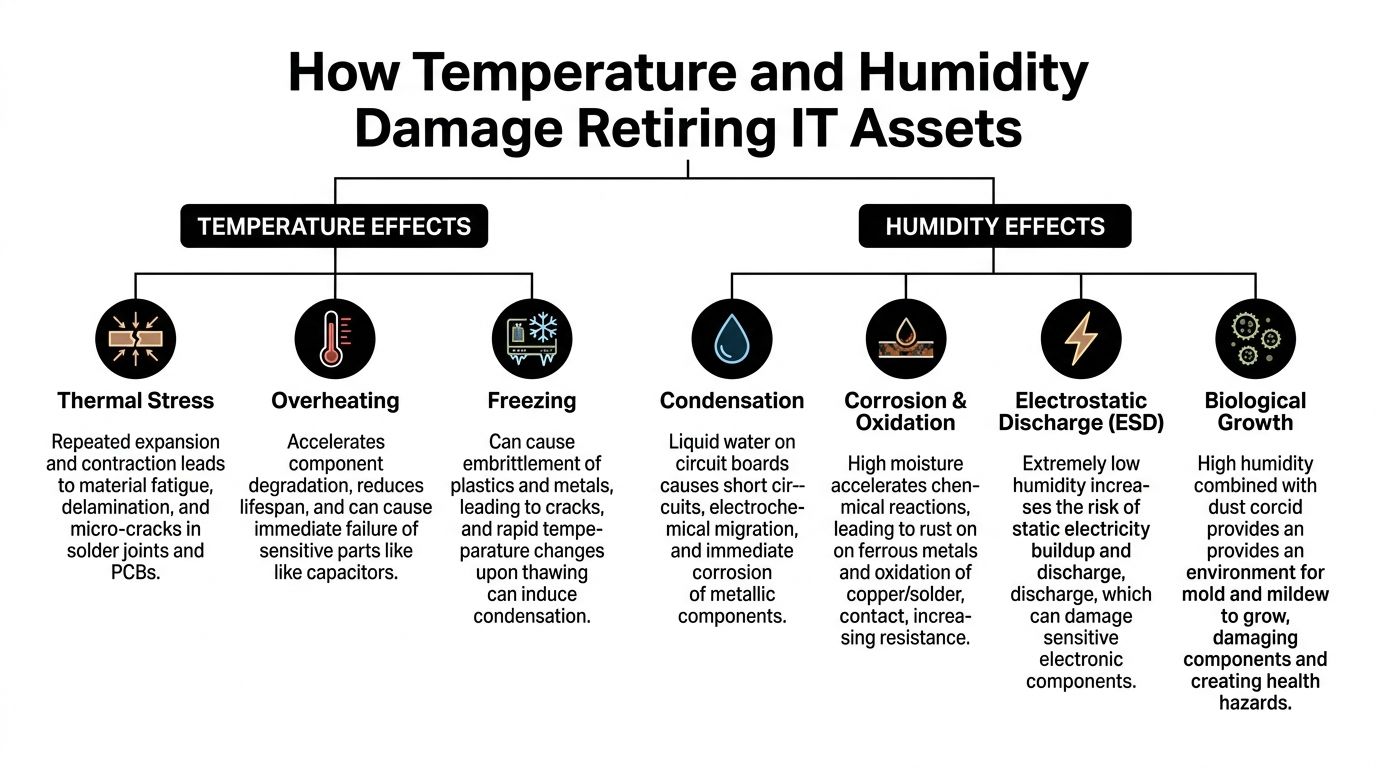
Condensation is the most misunderstood risk
Condensation works like sweat on a cold glass. If a device gets cold enough, then enters warmer humid air, moisture can form on surfaces and inside gaps you can’t inspect easily.
That matters during de-installation. A switch pulled from a cool room into warmer ambient air may look fine from the outside. Internally, moisture can settle on boards, contacts, and drive assemblies. Even if the device is headed for destruction, that moisture can still create handling problems, corrosion, and contamination inside mixed loads.
This becomes a bigger issue when teams rush. They move hardware directly from a temperature-controlled room to a dock, then into a truck, then into another building with different air conditions. Every rapid shift increases uncertainty.
Thermal stress damages hardware before anyone sees it
Materials expand and contract at different rates. Metal, plastic, solder, and board substrates don’t all react the same way.
In Lawrenceville winters, lows near 32°F with high humidity can induce thermal contraction in server components, creating risk around solder joints during de-installation. The same source notes that freeze-thaw cycles can increase the odds of mechanical failure in non-climate-controlled staging areas by as much as 12%, based on the cited ITAD standards discussion in WeatherSpark’s Lawrenceville climate analysis.
That doesn’t mean every cold day breaks equipment. It means repeated transitions create stress where hardware is already vulnerable.
Static risk rises when air gets dry
Static is less dramatic than condensation, but it’s just as real.
When winter air turns dry, especially indoors, people build charge more easily while walking, lifting, unboxing, and repacking. Sensitive components don’t care whether the system is headed back into production or into disposition. One discharge in the wrong place can damage boards, memory, controller cards, and embedded electronics.
That’s why trained de-install crews don’t treat retired gear like scrap metal. They still use controlled handling methods and avoid unnecessary exposure.
What works and what doesn’t
The best handling practices are practical, not elaborate.
- What works: letting equipment acclimate before repacking or processing
- What works: moving rack gear in planned waves instead of clearing an entire room into a mixed-temperature corridor
- What works: using enclosed containers and reducing idle time on docks
- What doesn’t: stacking cold hardware immediately in warm humid staging areas
- What doesn’t: assuming powered-off gear is immune to moisture and static
- What doesn’t: treating decommissioned assets as if cosmetic damage is the only concern
If a device still contains data, then physical handling still affects security. Damage changes how you transport, inventory, wipe, and destroy it.
A disciplined server decommissioning process accounts for those risks before the first rail kit is removed. That’s the difference between a controlled retirement and a rushed cleanout.
The practical point for IT managers
You don’t need to become a materials engineer. You do need to recognize that temperature and humidity change the condition of the asset while it’s still in your custody.
That’s the moment where security, compliance, and logistics all overlap.
Critical Weather Risks in Data Center Decommissioning
Data center decommissioning magnifies every weather-related weakness in a process.
A single desktop pickup can tolerate small mistakes. A room full of servers, storage, backup appliances, PDUs, and network gear can’t. The volume is higher, the staging window is longer, and the chain of custody gets more complex with each pallet, cage, and serialized asset.
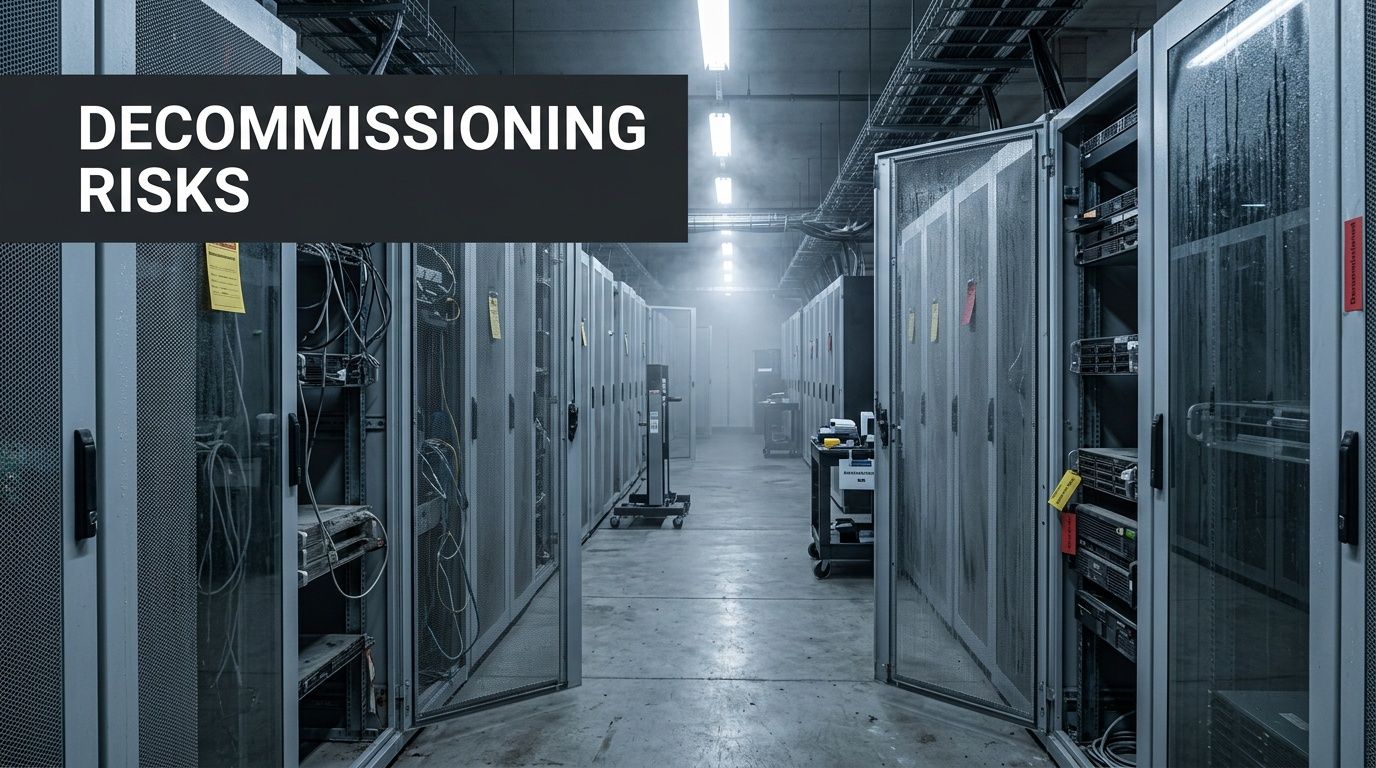
A decommissioning project fails in the middle, not the beginning
Project teams often focus on the endpoints of the job.
At the beginning, they verify scope, racks, floor plans, and media handling requirements. At the end, they expect certificates, reporting, and confirmation that the room is clear. The weak point is the middle. The hours when hardware is off the rack but not yet fully secured in transport.
That’s where weather exposure creeps in.
A cold snap can harden materials and change how cables, bezels, and plastics behave during removal. A fast warm-up can leave moisture where staff doesn’t expect it. An open dock door during a damp day can shift conditions for staged equipment much faster than the server room team realizes.
Georgia winter anomalies create a specific decommissioning risk
Lawrenceville doesn’t live in a constant freeze, but sudden winter swings matter more because they catch teams off guard.
Forecasts for Georgia have included a 29°F high with a 90% chance of snow and lows down to 15°F, conditions where rapid warm-ups can trigger condensation in data center environments, according to AccuWeather’s Lawrenceville forecast context. The same source notes that this moisture can promote corrosion on servers and network gear, while cold snaps also raise electrostatic discharge risk during e-waste handling.
For decommissioning, the danger isn’t only device health. It’s process integrity.
Consider what can happen in one badly timed project window:
- Rack gear is removed in a cold period and staged near an exterior access point
- Afternoon temperatures rise and humid air reaches equipment surfaces
- Technicians keep moving because the schedule is tight and the room must be turned over
- Moisture and surface contamination increase while labeling and palletization continue
- Media handling gets slower or less orderly because packaging now needs rework
That sequence creates friction. Friction creates mistakes.
Controlled decommissioning means controlling the environment around the equipment, not just the inventory spreadsheet attached to it.
Where compliance teams should pay attention
Healthcare, public sector, education, and finance teams often ask the right questions about sanitization standards. They should ask equally direct questions about environmental handling controls.
Use this quick lens:
| Decommissioning point | Weather-driven vulnerability |
|---|---|
| Rack removal | Brittle components, static buildup, and rougher handling under cold dry conditions |
| Temporary staging | Condensation, dust, and moisture exposure in mixed indoor-outdoor spaces |
| Media segregation | Delays and confusion if weather forces repacking or changes room flow |
| Dock transfer | Open-door exposure, windborne particulates, and rushed movement under schedule pressure |
If your project includes a Lawrenceville office, server room, or colocation footprint, local planning matters. This overview of Lawrenceville service logistics is a useful operational reference point.
The broader lesson is clear. A decommissioning runbook that ignores weather is incomplete, even if the data destruction steps themselves are solid.
Scheduling Secure ITAD Pickups in Extreme Temperatures
Good pickup scheduling prevents most avoidable weather problems.
Bad pickup scheduling creates them. Not because the forecast was impossible to read, but because the project was built around convenience instead of handling conditions.
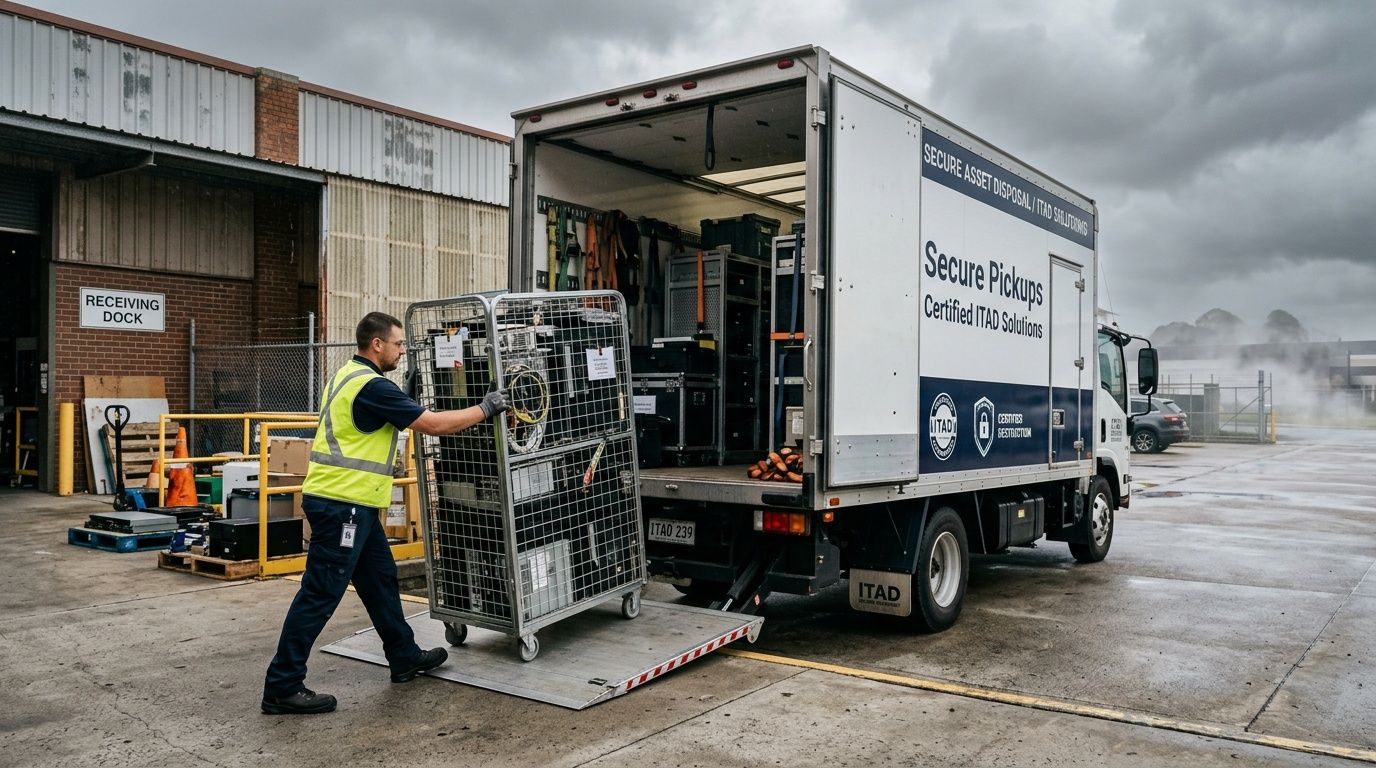
Forecast disagreement is part of the job
In Gwinnett County, standard weather tools don’t always line up cleanly. One forecast can call for 60°F highs, while another warns of 19°F nights and snow, according to the National Weather Service forecast context for Lawrenceville. That same verified note points out why adaptive fleet practice matters, including wind-guarded packing during 40°F to 60°F transitions when high winds disperse particulates.
For IT managers, the takeaway isn’t to become a meteorologist. It’s to stop assuming that a single daily forecast gives enough confidence for high-volume asset movement.
What a strong pickup plan looks like
The most reliable plans build in decision points, not just dates.
Use this checklist before confirming a commercial pickup window:
- Check the transition, not only the high. A mild afternoon doesn’t help if equipment sat through a much colder night and will be moved fast into warmer air.
- Reduce dock dwell time. The longer serialized assets wait in a semi-exposed space, the more chances you create for moisture, dust, and handling errors.
- Ask about packing method. Enclosed cages, covered containers, and wind-aware loading practices matter more on variable-weather days.
- Split large jobs if needed. Two controlled pickup windows are often safer than one oversized sweep that overwhelms staging.
- Coordinate facilities and IT together. The dock manager, security desk, and infrastructure lead need the same timing assumptions.
What works in summer and winter
A practical schedule changes with conditions.
In warmer, humid periods, avoid long gaps between removal from conditioned rooms and secure loading. If a team empties a room too early, hardware spends unnecessary time in less stable air.
In colder periods, give assets time to adjust before repacking or close-contact stacking. Rushed movement from cool interiors to warmer holding spaces can create exactly the kind of moisture issue that nobody notices until later.
Field advice: The safest pickup window is often the one with the least environmental change, not the one that’s most convenient on the calendar.
Questions worth asking your ITAD vendor
Some vendors talk about compliance and never talk about weather. That’s a warning sign.
Ask direct operational questions:
- How do you handle staged equipment when the forecast changes the day before pickup?
- What packing adjustments do you make during windy or damp conditions?
- Do you leave equipment exposed on docks while sorting or counting?
- Can you adapt the loading sequence if interior and exterior conditions are far apart?
- Who on the crew owns chain-of-custody decisions during weather disruption?
Strong answers will sound procedural. Weak answers will sound casual.
Scheduling Trade-offs
Tighter scheduling feels efficient, but it often increases risk. A little extra coordination around weather usually protects the project better than forcing a narrow pickup window that leaves no room to adjust.
That matters most when the assets include servers, drives, backup media, or regulated endpoint fleets. In those environments, the pickup isn’t just transportation. It’s the final controlled step before sanitization, destruction, resale triage, or certified recycling.
Building a Weather-Resilient Asset Disposal Strategy
The best asset disposal programs treat weather as an operating variable, not an afterthought.
That doesn’t mean every pickup needs a complicated climate protocol. It means your process should account for the places where Lawrenceville conditions can affect security and handling. Typically that’s at the handoff points. De-installation, staging, dock transfer, and transport.
Why Lawrenceville is workable with the right process
The good news is that the local climate is generally stable enough to support consistent planning. Observations from Gwinnett County Airport show minimal deviations from historic norms, including a daily average of 63.25°F compared with a historic 70°F/42.4°F, and that stability supports scheduling for bulk IT disposal by reducing condensation risk during de-installation and helping fleet reliability, based on the verified daily weather record context from Wunderground history for the Lawrenceville area.
That’s useful for planners because it means the region usually rewards disciplined scheduling. You don’t need to assume chaos. You do need to prepare for the exceptions that disrupt otherwise routine work.
A resilient strategy has three parts
Not every organization needs the same workflow, but strong programs often share the same bones.
Operational controls
Set rules for where equipment can wait, how long it can sit, and who signs off before it moves from conditioned space to staging. Most weather-related problems begin when assets linger in the wrong place.
Vendor expectations
Your ITAD partner should already have procedures for variable local conditions. If weather only enters the conversation after a delay happens, that partner is reacting too late.
Governance
Security, facilities, and IT should agree on what counts as an acceptable pickup day. That becomes part of risk management, just like access control or chain-of-custody paperwork.
Weather resilience in ITAD isn’t about chasing perfect conditions. It’s about removing avoidable exposure from a process that already carries data risk.
What this means for IT leaders
You don’t need to monitor every humidity swing yourself. You do need a disposal strategy that recognizes physical conditions can affect secure handling, inventory accuracy, and media control.
That broader view fits naturally into supply chain risk management strategies. Retired hardware still moves through a chain. If that chain breaks at a dock, in a staging room, or during a poorly timed pickup, the downstream compliance paperwork won’t undo the mistake.
The strongest programs do one thing well. They make environmental risk boring. No surprises, no improvised staging, no unnecessary dock exposure, no rushed loading because the schedule ignored the conditions.
That’s what good IT disposal should feel like.
If your organization needs a commercial ITAD partner that understands secure handling, compliant data destruction, de-installation, and weather-aware logistics across the Atlanta metro area, talk with Atlanta Computer Recycling. They help businesses, healthcare organizations, schools, government agencies, and data center teams retire IT assets without turning transport and staging into an avoidable risk.