Weather in Lawrenceville GA: Today’s Forecast & Radar


If you're staring at a pickup date, a room full of retired laptops or servers, and a forecast that suddenly turned dark and wet, you're not overthinking it. In Lawrenceville, weather can change the risk profile of an IT asset disposition job fast.
For most businesses, weather in Lawrenceville GA sounds like a planning detail. For IT managers, facilities teams, compliance officers, and data center operators, it's an operational variable. Heat affects handling. Rain affects chain of custody. Sudden temperature swings affect how safely equipment can be moved, wiped, packed, and transported.
That matters most when the assets aren't just scrap. They're systems that may still contain regulated data, hold residual resale value, or need documented disposition for audit purposes. A smart project plan doesn't treat weather as a reason to panic. It treats weather as a condition to manage.
Your IT Pickup Is Scheduled But a Storm Is Brewing
A common scenario looks like this. Your team has approval to clear a server room on Friday. The replacement gear is already in place, the old racks are tagged, and facilities has opened the loading area. Then the afternoon forecast shifts toward thunderstorms.
At that point, the wrong move is to reduce the decision to two bad options. Push ahead carelessly, or cancel everything. Neither works well in a commercial environment.
A weather-sensitive ITAD job needs a tighter decision process. Consider these practical questions:
- Can the equipment be moved without exposing drives, boards, or power supplies to moisture?
- Can the loading path stay controlled from the server room to the truck?
- Can the chain of custody remain documented if the crew has to pause or resequence the pickup?
- Will the de-installation window still be safe for your staff and building operations?
For schools, hospitals, banks, and government offices, these aren't minor details. A delayed pickup can create storage problems. A rushed pickup can create security problems. The forecast doesn't remove the project. It changes how the project should run.
That is why experienced teams build weather contingencies into the pickup process from the start. They don't wait until rain starts hitting the dock. They decide in advance what conditions call for protected loading, what conditions call for staging indoors, and what conditions justify a partial pull instead of a full sweep.
If your organization is planning a commercial removal, it's worth reviewing how a professional IT equipment pickup process in Atlanta is structured before the truck arrives.
Practical rule: In ITAD, weather planning isn't about convenience. It's about protecting data, preserving asset condition, and keeping custody controls intact under less-than-ideal conditions.
Understanding Lawrenceville's Weather Profile
Lawrenceville doesn't operate on a simple dry-season, wet-season pattern. Businesses here work inside a humid subtropical climate, which means warm air, regular moisture, and seasonal swings that are manageable only if you plan for them.
According to WeatherSpark's Lawrenceville climate data, annual temperatures typically range from 35°F to 89°F, rarely falling below 23°F or rising above 95°F. The area also averages 55 inches of precipitation annually. For IT operations, that combination matters more than the label. It means heat exposure is normal, moisture is routine, and transport conditions can't be treated as static.

What that climate means on the ground
For an office manager, this weather profile may just mean keeping umbrellas near the door. For an IT operations team, it means three things.
| Operational factor | What it means in practice |
|---|---|
| Heat exposure | Equipment moved out of conditioned rooms enters warm air quickly, which changes handling risk. |
| Ambient moisture | Loading docks, parking areas, carts, and packaging all need protection from damp conditions. |
| Seasonal volatility | Spring and fall scheduling needs more flexibility than a fixed one-day assumption. |
The local pattern is steady enough for year-round service, but not steady enough for careless execution. That's the trade-off.
If you want a broader consumer-facing summary alongside the operational lens here, Lawrenceville's specific weather patterns give useful local context.
Why businesses should care before scheduling disposal
Weather doesn't affect every ITAD project the same way. A boxed laptop refresh is easier to protect than a live data center decommission. A first-floor office pickup is easier than moving storage arrays down a ramp to a truck.
The practical planning step is to match the job to the season. Don't look only at the date on the calendar. Look at the exposure points:
- Building exit path
- Distance from door to vehicle
- Need for on-site wiping or shredding
- How long assets will sit staged before loading
- Whether equipment is going to reuse, resale, or direct recycling
Teams working across the north Atlanta market often compare nearby conditions before committing to project timing. This local weather reference for Alpharetta operations planning is useful when you're coordinating across multiple facilities.
Summer Heat and Humidity The Silent Risk to IT Assets
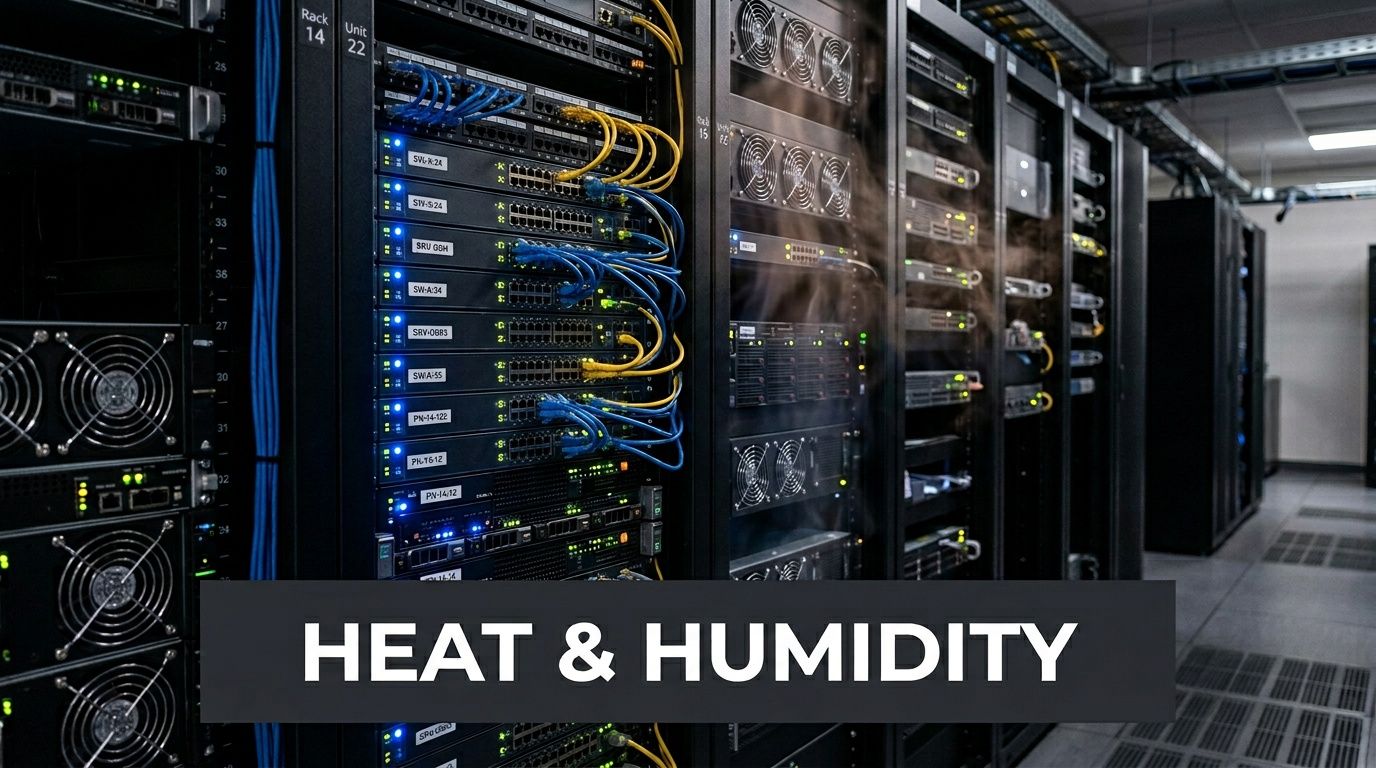
Summer is where experienced ITAD crews separate themselves from improvised movers. In Lawrenceville's hottest stretch, temperatures approach 89°F with high humidity, and that creates a real handling problem for electronics coming out of air-conditioned rooms. The issue isn't just that it's hot outside. The issue is what happens in the transition.
Sensitive hardware can move from a cool server room into warm, humid air in minutes. That shift can trigger condensation and thermal shock, especially when gear is unloaded, stacked, or held near open bay doors before transport. If the equipment still has remarketing value, poor handling can reduce what can be reused. If the assets are headed for recycling, moisture exposure can still complicate safe processing.
What goes wrong during hot-weather moves
The biggest mistake is assuming that once a server is powered down, weather no longer matters. It still does.
A typical risk sequence looks like this:
Equipment sits in a cold room for years.
Internal components stay in a stable environment.The gear is powered down and disconnected.
That part is controlled.The rack, server, or desktop is rolled into humid air.
That's where the trouble starts.The item is loaded too quickly or staged too loosely.
Moisture and temperature differences do their work before anyone notices.Later inspection shows corrosion, residue, or functional instability.
At that point, recovery options narrow.
For organizations that expect resale, redeployment, or documented evaluation, this matters. A rough summer move can damage equipment that looked perfectly fine inside the building.
Hardware doesn't have to get rained on to suffer weather-related damage. A fast move from conditioned air into Georgia humidity is enough to create trouble.
What works and what doesn't
The wrong approach is simple. Open the truck, roll everything out at once, let it sit, and hope speed solves the problem. It doesn't.
The better approach uses control points:
- Short staging windows: Keep assets indoors until the vehicle and crew are ready.
- Sequenced loading: Move priority equipment first, rather than flooding the dock with mixed hardware.
- Protected carts and containers: Limit direct exposure during the room-to-truck transition.
- Driver and crew coordination: Reduce idle time with doors open.
- Separation of reusable assets: Handle value-bearing devices with stricter environmental discipline.
Facilities teams can borrow ideas from building envelope planning. For example, discussions around how to insulate a metal building for Southern climates illustrate the same core problem: hot, humid outside air creates problems when surfaces and interior spaces stay cooler than the ambient environment.
Summer scheduling decisions
Not every summer day is a bad day for a pickup. The issue is exposure duration and process discipline.
Use this decision frame:
| Situation | Better choice |
|---|---|
| Small boxed office equipment lot | Proceed if loading is direct and protected |
| Loose equipment crossing open pavement | Tighten packaging and shorten staging time |
| Server room de-install with remarketing goals | Schedule for the most stable window available |
| Mixed media with on-site destruction needs | Keep destruction and loading environments controlled |
If you're comparing conditions across the metro area for summer planning, this reference on Sandy Springs weather conditions can help when projects span more than one site.
Navigating Thunderstorms and Year-Round Rain
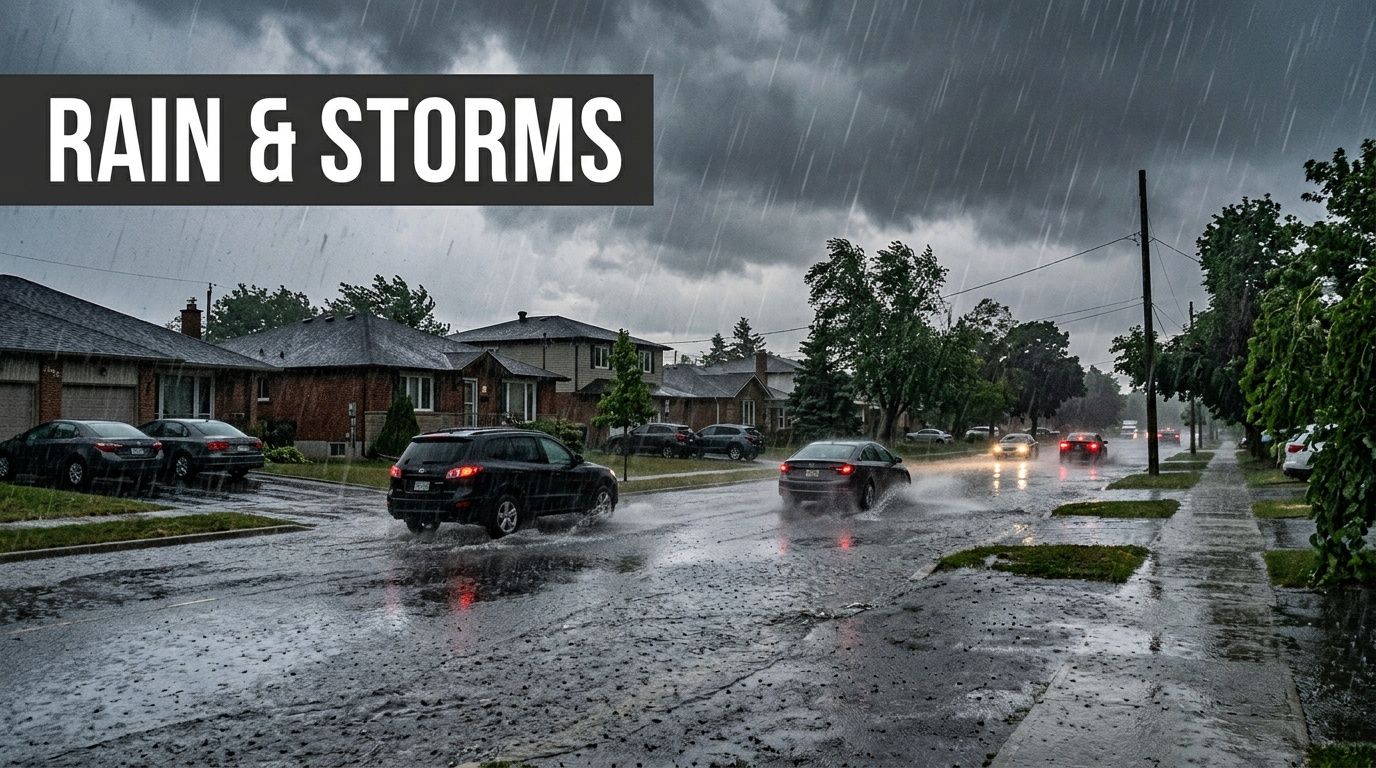
Rain is not an occasional exception in Lawrenceville. It's part of the operating environment. According to MyPerfectWeather's Lawrenceville averages, rain falls on approximately 120 to 130 days per year, and the wettest months can receive up to 5.5 inches. For IT managers, that means one thing. Pickup logistics have to be built for precipitation, not just adjusted when it appears.
Rain changes more than packaging
Many believe the main risk is water touching the equipment. That risk is obvious, but it isn't the whole story.
Rain affects the entire custody path:
- Loading docks become slower and less safe
- Outdoor staging areas stop being usable
- Freight elevators and hallways get crowded as teams try to stay inside
- Vehicle access gets tighter when drivers reposition for cover
- Pickup timing drifts, which affects internal handoffs and signoff
For regulated environments, especially healthcare and public sector sites, timing drift matters. If equipment was approved for release, signed out of service, and staged for secured removal, a weather delay can leave assets in a temporary holding state longer than anyone wanted.
The chain-of-custody problem
Commercial ITAD differs from junk hauling in this respect. You aren't just moving old boxes. You're moving devices that may contain patient records, employee data, financial information, or internal government files.
When a thunderstorm interrupts loading, the process has to remain auditable. That means the team needs answers to practical questions:
| Custody question | Why it matters |
|---|---|
| Who has physical control of staged assets during delay? | Prevents gaps in accountability |
| Where are the devices stored if pickup pauses? | Reduces unauthorized access risk |
| Has the serial tracking process already started? | Keeps inventory records aligned |
| Will media destruction occur on-site or later under seal? | Affects compliance documentation |
A sloppy rain-day pause creates confusion. A disciplined one preserves control.
The best rain plan is boring. Equipment stays covered, staff know the fallback route, paperwork keeps moving, and nobody improvises in the parking lot.
What operationally sound teams do on wet days
The right wet-weather process is less dramatic than many people expect. It relies on preparation, not heroics.
- Pre-stage indoors: Assets stay inside until the truck is in position.
- Protect the route: Teams use the shortest covered path possible.
- Load in smaller waves: This prevents pallets, carts, or loose devices from sitting exposed.
- Document pauses clearly: If the pickup sequence changes, the record changes with it.
- Separate media from low-risk scrap: High-sensitivity items get priority handling.
That matters for schools, clinics, corporate offices, and data centers alike. The weather in Lawrenceville GA doesn't need to stop a secure pickup. But it absolutely should change how the pickup is executed.
If you're coordinating multi-site work north of Atlanta, this guide to Roswell weather conditions is a useful comparison point when aligning schedules across facilities.
Planning for Winter Cold Snaps and Volatility
Georgia winters don't look severe on paper, which is exactly why people underestimate them. The more meaningful issue for IT operations isn't sustained deep freeze. It's volatility.
WeatherBug's Lawrenceville forecast context notes that electronics operate optimally between 64°F and 80°F, and that local spring conditions can swing from 29°F to 86°F within 48 hours. For hardware teams, that's a serious planning signal. Those shifts create thermal stress that can accelerate component degradation and increase failure rates during equipment moves.
Why volatility matters more than cold alone
A cold morning pickup may go fine if the hardware has been in a stable environment and the route is controlled. Trouble usually appears when temperature swings are abrupt and equipment is moved during the transition window.
The most exposed items are often:
- Older desktops with brittle plastics
- Legacy servers already near end of life
- External drive enclosures
- Network gear with aging fans and housings
- Equipment that has sat in marginal storage rooms
If a business is already deciding whether to keep or retire aging gear, volatile spring conditions often strengthen the case for retiring it sooner rather than dragging it into another high-stress season.
Physical site risks during cold-weather pickups
Cold-weather moves also introduce building-side hazards that don't show up in a standard IT checklist.
A few examples:
- Loading docks can become slick during early morning moisture events
- Condensation can form after gear is brought back indoors for recount or verification
- Plastic tabs, bezels, and cable clips crack more easily when chilled
- Staff move slower when they are trying to protect both footing and equipment
That doesn't mean winter is off-limits for decommissioning. It means winter projects need more deliberate sequencing.
If the weather has been volatile for several days, don't treat move day as a normal handling day. Treat it as a fragile-hardware day.
The practical takeaway is simple. Mild winters still require disciplined handling, especially when old hardware, long loading paths, or mixed indoor-outdoor transitions are involved.
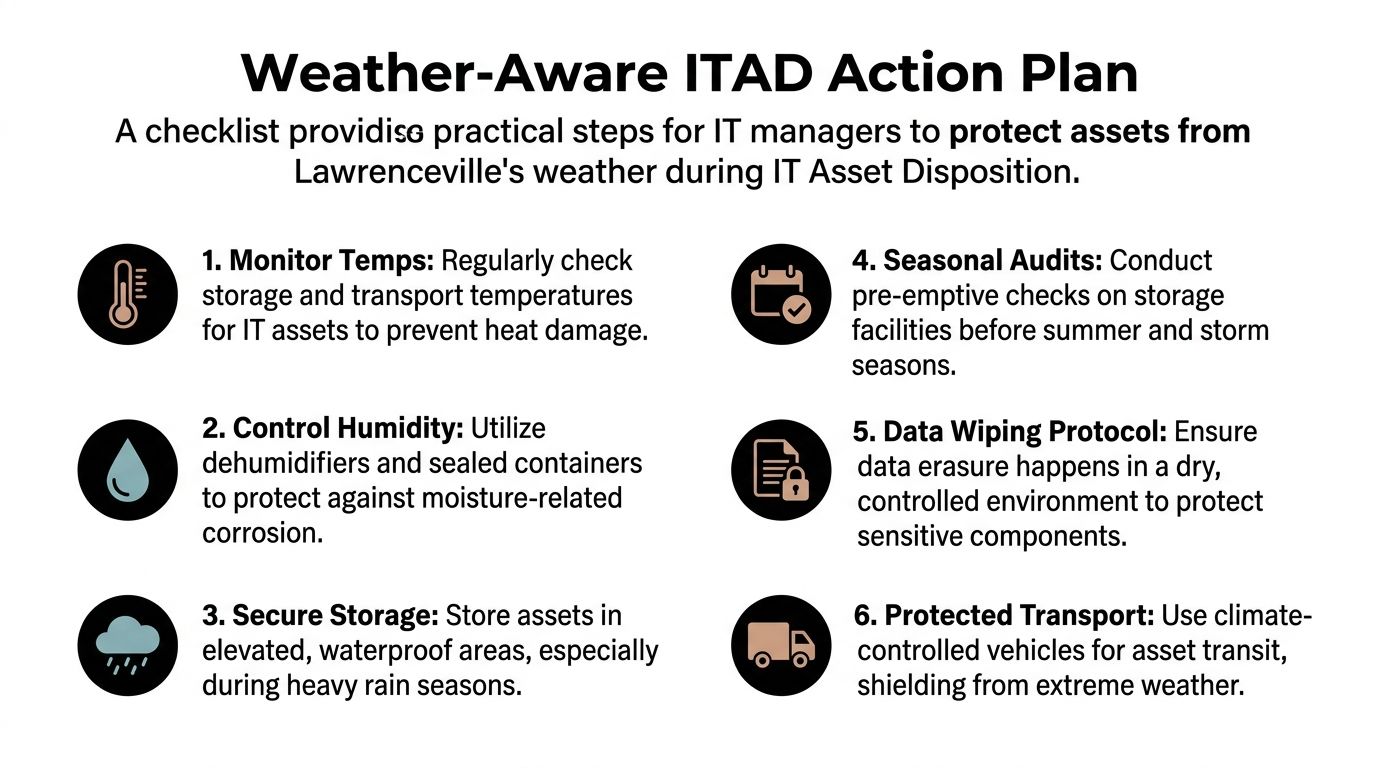
Your Weather-Aware ITAD Action Plan
Weather risk gets easier to manage when you stop treating it as background noise and start folding it into project design. In Lawrenceville, the biggest mistake isn't scheduling during a less-than-perfect forecast. It's scheduling without a weather-specific operating plan.
A strong plan looks at season, humidity, loading path, data destruction requirements, and fallback options before the first device is unplugged.
Start with forecast-based scheduling
The National Weather Service forecast context for Lawrenceville notes that spring humidity can swing from 38% to 79% in 24 hours, and that increased moisture can compromise hard drive functionality during data wiping, potentially affecting compliance certifications such as HIPAA if that environment isn't properly managed. That matters most when organizations assume wiping can happen anywhere as long as the drives power on.
Use the forecast as a go or no-go input for where critical processes occur, not just when the truck arrives.
Here is the practical rule set:
- For on-site wiping: Keep the process in a dry, controlled indoor environment.
- For physical shredding projects: Prioritize sealed handling and minimal outdoor exposure between release and destruction.
- For mixed projects: Separate the data-bearing devices from low-risk commodity equipment during staging.
- For high-humidity periods: Avoid unnecessary handling steps that increase exposure time.
Build a season-by-season operating checklist
Not every season creates the same problem, so don't use one generic workflow.
Summer priorities
- Shorten transition time: Move equipment from cooled interiors to protected transport without long dock delays.
- Flag reusable assets early: Devices intended for resale or redeployment deserve the highest environmental control.
- Reduce door-open time: Keep truck and bay exposure as brief as possible.
Rainy-period priorities
- Confirm indoor staging space: Don't assume the dock will work.
- Map the covered route: Elevators, side doors, ramps, and receiving areas need to be chosen in advance.
- Assign custody owners: If delays happen, everyone should know who controls the staged equipment.
Cold-snap and volatility priorities
- Handle older plastics gently: Faceplates, clips, and bezels fail first.
- Avoid rushed recounts across temperature shifts: Repeated indoor-outdoor movement creates avoidable stress.
- Use slower de-install pacing for aging infrastructure: Legacy hardware rarely benefits from speed.
Ask your ITAD partner the right questions
Many companies ask about certificates, recycling downstreams, and pickup windows. Those are necessary questions. They aren't enough for weather-sensitive projects.
Ask these instead:
- What changes in your process when the forecast shows heavy rain or high humidity?
- How do you protect chain of custody if loading is interrupted?
- Can you separate data-bearing assets from general e-waste during weather delays?
- How do you handle reusable equipment differently from direct-recycling material in summer heat?
- What indoor controls are used when drives must be wiped before removal?
A vendor that answers clearly probably has an operating procedure. A vendor that speaks in generalities probably improvises.
Field advice: Weather planning should show up in the logistics plan, the handling method, and the data-destruction method. If it's missing from any one of those, the plan is incomplete.
The simplest framework that works
For most medium and large organizations, a usable weather-aware ITAD framework fits on one page:
| Step | Decision point |
|---|---|
| Review forecast | Check heat, rain, and humidity risk before finalizing release time |
| Classify assets | Separate data-bearing, reusable, and direct-recycling equipment |
| Protect the route | Choose indoor staging and shortest covered loading path |
| Control destruction | Keep wiping and sensitive media handling in dry, stable conditions |
| Prepare fallback | Define pause rules, custody ownership, and reschedule triggers |
This is the difference between hoping the forecast behaves and running a process that still works when it doesn't.
Partnering for Resilient IT Asset Disposition in Any Weather
Lawrenceville weather creates three recurring challenges for IT disposition work. Heat stresses equipment during transitions. Rain complicates secure pickup logistics. Temperature volatility increases handling risk for aging hardware. None of those problems are unusual, but all of them need process discipline.
Businesses don't need a perfect forecast to retire equipment safely. They need a partner that already knows how to protect devices during loading, preserve chain of custody during delays, and keep data destruction procedures controlled when humidity and moisture become a factor.
That matters even more for hospitals, school systems, financial organizations, and public agencies where compliance and documentation matter as much as physical removal.
If you're planning a project in Gwinnett County, this local service overview for Lawrenceville commercial IT disposition support is the right place to start evaluating what a weather-aware process should look like.
Atlanta businesses don't need to gamble on the forecast when it's time to retire sensitive IT assets. Atlanta Computer Recycling helps organizations manage secure pickups, data-bearing equipment, de-installation, and responsible recycling with a process built for real operating conditions across the metro area. If you're scheduling a server room clear-out, office refresh, or data center decommission in or around Lawrenceville, reach out for a practical consultation before the next weather shift turns a routine pickup into a preventable risk.