Weather for Roswell GA: Your Business Forecast & Operations Guide

When you're running a business in Roswell, you learn quickly that the weather isn't just small talk. It’s a real factor in your daily operations, and overlooking it can be a costly mistake. From sudden thunderstorms to surprise cold snaps, Georgia weather can throw a wrench in your logistics and put valuable assets at risk.
That’s why proactive planning isn’t just a good idea—it’s essential for protecting your equipment and keeping your business on track.
Quick Weather Reference for Roswell Business Operations

For any company managing logistics or business operations in Roswell, the local forecast is a critical piece of business intelligence. A pop-up thunderstorm isn't just an inconvenience; it can ruin sensitive electronics during an asset pickup. An unexpected freeze can make roads treacherous, delaying critical IT asset removal and impacting project timelines.
This guide isn’t just about the weather—it’s about what your business can do about it. We’ve built this reference to help you make smart, timely decisions for scheduling on-site services, planning secure transport for IT assets, and protecting your company's inventory from whatever the Georgia skies have in store.
Connecting Weather to Business Actions
Smart operational planning is all about turning weather data into concrete actions. Think of it this way: a forecast for freezing rain isn't just a heads-up. It's an immediate signal for your logistics manager to check the schedule for any electronics recycling pickups, where moisture or transport delays could cause serious financial and data security problems.
We’ve all seen how quickly a winter event can ice over key commercial routes like Hembree Road and Houze Road. Knowing that a storm is coming gives your business the chance to reschedule and avoid getting your fleet—and your high-value assets—stuck.
Here’s a quick breakdown of how to think about the forecast from a commercial perspective:
- Temperature: Extreme heat can cause retired IT equipment sitting on a loading dock to degrade. On the flip side, sudden freezing temperatures can damage delicate components, especially if condensation forms.
- Precipitation: This is a major risk factor. You should always aim to schedule pickups for servers, computers, and networking gear during dry windows to prevent any chance of moisture damage.
- Wind & Severe Alerts: High winds or storm warnings are a clear signal to secure any outdoor assets and postpone non-essential transport. It’s about ensuring the safety of your personnel and preventing any potential loss of assets in transit.
To make it even clearer, this table connects common Roswell weather scenarios to practical business decisions, especially for IT asset logistics.
Roswell GA Weather Business Impact Summary
| Weather Condition | Typical Range | Business Impact (for IT Asset Logistics) | Recommended Action |
|---|---|---|---|
| Heavy Rain / Thunderstorms | 1-2+ inches | High risk of water damage to electronics during loading/unloading. Delays due to hazardous driving. | Schedule pickups during dry windows. Utilize covered loading docks. Ensure assets are securely wrapped. |
| Freezing Rain / Ice | Temps near 32°F (0°C) | Extremely hazardous road conditions. High risk of transport delays and accidents. Potential for moisture damage. | Postpone non-essential pickups. Alert clients to potential delays. Prioritize driver and fleet safety. |
| High Heat | 90°F+ (32°C+) | Can degrade plastic components and internal wiring on assets awaiting pickup, especially if left in direct sun. | Store assets indoors or in shaded, ventilated areas. Schedule pickups for cooler morning hours. |
| High Winds / Severe Alerts | 30+ mph | Risk of damage to assets from flying debris. Transport can be unsafe, especially for high-profile vehicles. | Secure all loose items at your facility. Postpone pickups until the alert is lifted. Stay informed via local alerts. |
This summary is a great starting point for building weather-resilient business processes. By regularly checking the Roswell, GA forecast and having a clear operational plan, you can protect your company's assets, ensure team safety, and keep your business running smoothly, rain or shine.
Understanding Roswell's Humid Subtropical Climate
To truly protect your business assets, you have to look beyond the daily forecast and understand Roswell’s long-term weather patterns. Our area is defined by a humid subtropical climate. What that really means for your business is a constant battle with hot, muggy summers and generally mild but very unpredictable winters.
This kind of environment is tough on everything, from your building's HVAC system to the lifespan of your IT equipment. That high humidity isn't just a summer problem—it's a year-round concern that can quietly accelerate corrosion on metal parts and degrade sensitive electronics, even those just sitting in a storage closet waiting for disposal.
The Impact of Seasonal Extremes
The distinct seasons here in Roswell bring their own set of challenges for any commercial operation. While our winters are usually mild, a sudden cold snap can still bring risks like frozen pipes or thermal shock to delicate hardware. But it's the summer that poses the most consistent and damaging threat to your company's technology.
Roswell’s climate data shows just how intense our summers get. The average high temperature in July climbs to 88°F, creating conditions that can warp hard drives and ruin stored media over time. This makes getting a timely and secure IT asset disposition plan in place absolutely critical for your business.
With an average of 49.8 inches of rain annually, the threat of moisture damage is always there. For businesses like hospitals or schools that are dealing with bulk IT equipment disposal, that combination of relentless heat and moisture demands a proactive strategy. Getting a handle on these patterns is key, just like it is for our commercial neighbors in Alpharetta, which we cover in our guide on weather impacts on business in Alpharetta GA. Digging into Roswell's historical climate data can really help you fine-tune your long-term operational planning.
How Temperature Extremes Affect Your IT Assets
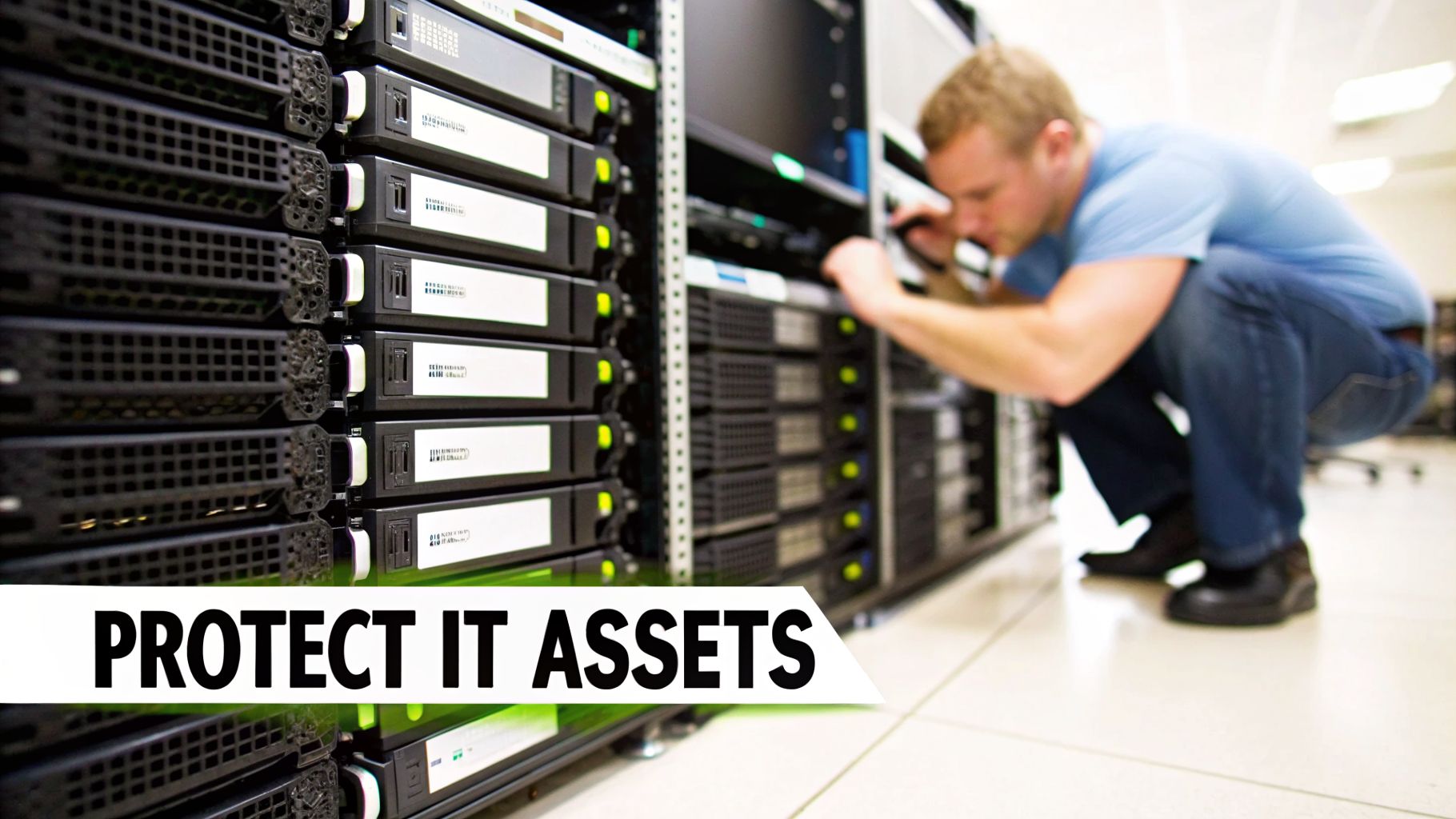
It’s easy to overlook, but the fluctuating weather in Roswell, GA, poses a real threat to your retired corporate IT equipment. The damage isn't just cosmetic—it goes straight to the hardware, threatening your company's data security long before a scheduled pickup.
Think about it this way: summer highs consistently cresting 88°F can start to degrade the magnetic media on older backup tapes and even warp the sensitive platters inside hard disk drives. On the other end of the spectrum, winter freezes introduce the risk of thermal shock, where a fast temperature shift causes microscopic cracks in motherboard components and solder joints. It’s a quiet but significant risk to your data integrity.
Roswell's Cold Weather Risks to Hardware
Roswell’s cool season, which typically runs from late November to early February, brings its own set of challenges to businesses. When retired assets sit in an unheated warehouse or on a loading dock, they can easily dip below freezing.
The real trouble starts when that cold hardware is moved into a warmer space for processing or transport. Condensation forms almost instantly, and that moisture is notorious for causing short circuits on motherboards and in power supplies.
Just look at the data. In February 2026, Roswell saw temperatures swing wildly from a high of 80°F down to 23.74°F, while low humidity dried out the protective seals on equipment. You can see more historical data and its potential impact over on Wunderground's Roswell page. These conditions highlight why a business can’t afford to let old equipment just sit there.
Key Takeaway: The longer your business delays disposing of retired IT assets, the more you expose them to environmental risks. Every heatwave and cold snap increases the odds of hardware failure, which only complicates secure data destruction. This is a common issue for companies across the area, as we've detailed in our guide to weather impacts in Johns Creek GA.
To keep your active business infrastructure stable against Roswell's climate, investing in reliable Commercial HVAC Maintenance Services is a critical line of defense.
Using Weather Alerts for Business Preparedness
When you get a severe weather alert for Roswell, GA, it’s more than just a heads-up to your staff. For any business managing physical assets—especially sensitive IT equipment—these alerts are your cue to protect corporate investments and maintain operational continuity.
Think about it: ignoring a simple thunderstorm or hail warning could mean damaged hardware during an electronics recycling pickup. A tornado alert, on the other hand, requires you to secure your entire facility right away. The key is turning those warnings into a clear, repeatable action plan. This is especially true for businesses in healthcare or finance, where maintaining data security is non-negotiable.
This simple timeline shows the basic steps to take when you know severe weather is on the way.
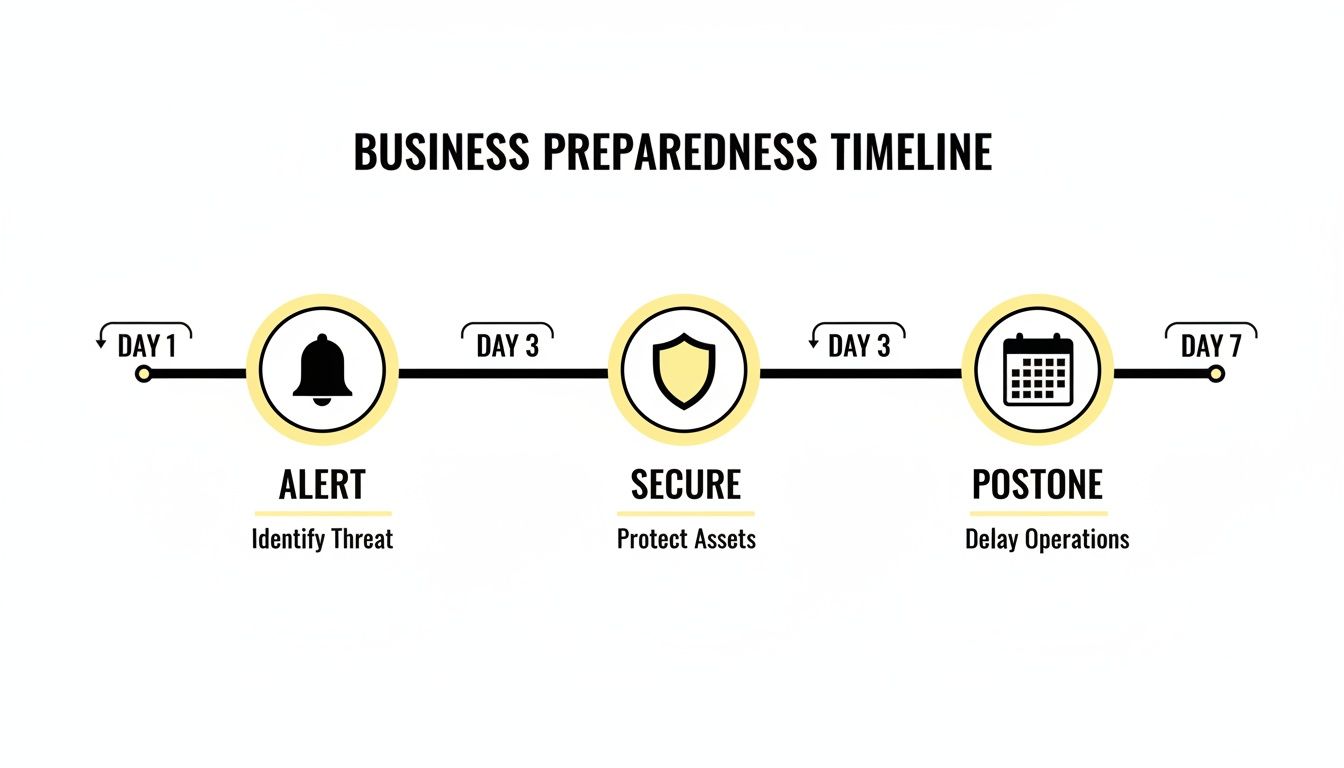
The process is straightforward: an initial alert kicks off actions to secure your assets and, if conditions warrant, postpone any logistics to avoid unnecessary risks to personnel and property.
Business-Centric Preparedness Checklist
The next time a severe weather watch or warning comes in for the Roswell area, use this checklist to guide your team’s response:
- Secure Outdoor Assets: Get any equipment that's waiting for pickup moved to a sheltered, indoor spot. If it cannot be moved, ensure everything is tied down and covered securely with waterproof tarps.
- Verify Data Backups: Before the storm hits, double-check that all critical data from the systems you're decommissioning has been backed up. It’s just as important to confirm that the backups are stored safely off-site.
- Determine Logistics Postponements: You need to make a call on whether to delay scheduled pickups or deliveries. Trying to transport electronics during heavy rain or high winds is a huge, and often unnecessary, business risk. For more complete protection, every company should develop a solid Business Continuity Plan.
Protecting your physical assets during a storm is a fundamental part of any good corporate data protection strategy. For a closer look at building out your own procedures, check out our business continuity planning checklist.
Scheduling IT Logistics Around Roswell's Weather Patterns
Planning your company's IT asset logistics in Roswell is about more than just booking a truck—it's a weather-aware strategy. The local climate’s unpredictable swings, from summer’s intense heat to surprise winter ice, can put the safety, security, and value of your retired electronics at risk during transit. Thinking ahead and aligning your pickups with seasonal patterns is a fundamental part of smart risk management.
For instance, scheduling a full data center cleanout during a July heatwave, with temperatures climbing toward 90°F, can expose sensitive equipment to damaging heat on an open loading dock. On the flip side, trying to move assets during a January cold snap often means dealing with icy roads and significant transport delays. A proactive approach means looking at the weather for Roswell, GA not just for today, but for the whole season.
ITAD Logistics Planning Calendar for Roswell Weather
The smartest move for any business is to match the task to the season. The milder shoulder seasons—spring and fall—are perfect for large-scale, complex projects. Routine pickups offer more flexibility but still require a close eye on the weekly forecast. Just as businesses in Palmetto, GA, must plan for their weather, companies in Roswell need their own specific game plan. You can see how regional differences matter by reviewing the approach for logistics planning in Palmetto GA.
To help your business plan, we’ve put together a straightforward seasonal guide.
Expert Tip: The biggest risks for businesses always come from exposure during loading and transport. Your goal should always be to move assets in dry, moderate conditions. A quick check of the 10-day forecast is all it takes to avoid a sudden storm that could compromise your equipment and data.
This calendar is designed to help you align your ITAD needs with Roswell's typical weather challenges, minimizing risk and keeping your projects on schedule.
| Season | Typical Weather Challenges | Recommended ITAD Activities | ACR Service Highlight |
|---|---|---|---|
| Spring (Mar-May) | Severe thunderstorms, potential for hail and tornadoes. | Ideal for data center decommissioning and large projects due to moderate temperatures. Schedule around storm forecasts. | On-site de-installation and secure, covered transport to protect assets from sudden rain. |
| Summer (Jun-Aug) | Intense heat (90°F+), high humidity, frequent pop-up thunderstorms. | Focus on smaller, routine pickups. Schedule for early mornings to avoid peak heat. | Climate-controlled logistics and prompt service to prevent heat damage to sensitive electronics. |
| Fall (Sep-Nov) | Mild temperatures, lower humidity, but includes the tail end of hurricane season. | Excellent window for bulk equipment clear-outs and office moves before the holidays. | Flexible scheduling to accommodate large-volume pickups during optimal weather windows. |
| Winter (Dec-Feb) | Freezing rain, ice storms, and unpredictable temperature drops. | Best for indoor projects and on-site data destruction. Postpone transport during ice warnings. | On-site hard drive shredding, which secures data without needing to transport assets in risky conditions. |
By using Roswell's climate patterns to your advantage, you can ensure your IT asset disposition process is not only secure and efficient but also safe from whatever the weather brings.
Interpreting Live Weather Radar for Operational Planning
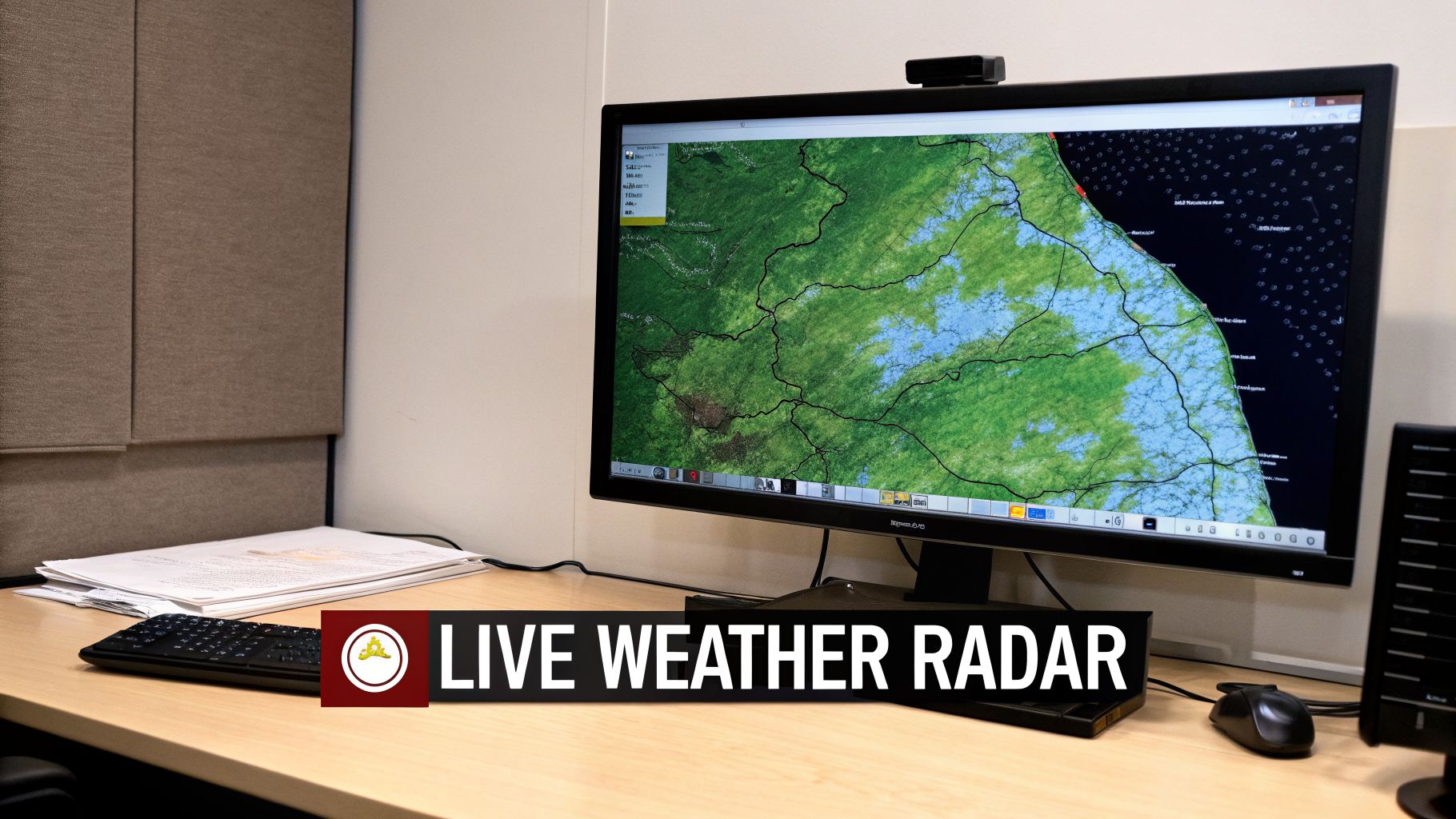
For any Roswell business, a live weather radar isn't just a map—it’s a critical tool for making smart, tactical decisions on the fly. Learning to properly read the radar lets your operations team get ahead of the weather instead of just reacting to it, protecting both your personnel and your company's assets.
Instead of just seeing a blob of "rain," you can start tracking the specific movement and intensity of storm cells. This is a game-changer for logistics, like timing an IT asset pickup to avoid a sudden downpour that could ruin sensitive electronics during loading.
Reading Radar Colors and Movement
Most weather radar apps use a standard color-coding system to show how heavy the precipitation is. Getting a feel for this code is the first step in making informed operational calls based on the weather for Roswell, GA.
- Greens and Blues: These colors generally mean light to moderate rain. This might be a perfectly safe window for quick loading jobs, especially if your assets are well-protected and under a covered dock.
- Yellows and Oranges: This is where you see heavier, steadier rainfall. When these colors pop up over your location, it’s a good idea to pause outdoor work, particularly if you're moving servers or computers.
- Reds and Purples: These are your red flags for business operations. They signal very heavy downpours, potential hail, and strong thunderstorms. All outdoor operations should stop, and any transport should be delayed to avoid unnecessary risk.
By watching the animated radar loop, you can get a good sense of a storm's direction and speed across North Fulton County. This gives your business a real predictive edge, helping you see when you'll have a clear window or when you need to secure facilities. For instance, if you see a band of red moving east toward your office, that's your cue to stop an ongoing equipment pickup and get everything safely indoors.
Protecting IT Assets from Roswell's Weather: A Quick FAQ
If you’re a business manager in Roswell, you know the local weather can be unpredictable. But have you considered how it affects your retired IT equipment? Here are some common questions we get from commercial clients about keeping old hardware safe from the elements before pickup.
How Does High Humidity Affect Old Servers?
Roswell’s humidity is no joke, and it’s a serious threat to electronics stored for disposal. When humidity consistently gets above 80%, condensation is inevitable. It forms both on and inside your old servers and computers while they wait for pickup.
This moisture can be disastrous. On hard drives, it causes platter damage and can lead to head failure, making secure data recovery or destruction a real challenge. For circuit boards, connectors, and other internal parts, it just speeds up corrosion and causes system failures. That's why we provide prompt pickups—to get your assets out of there before the weather has a chance to cause a problem.
Is Scheduling a Pickup During a Storm Warning a Good Idea?
We always advise against it. The safety of your team and ours is our number one priority, and moving heavy, bulky equipment around during high winds or lightning is a risk no business needs to take.
On top of that, loading electronics in the middle of a downpour is asking for trouble. It exposes everything to immediate water damage, which can short-circuit devices and make the secure recycling process far more complicated. Our logistics team keeps a close eye on the forecast and will always work with you to reschedule for the next clear, dry day.
Can Freezing Temperatures Damage Our Retired Laptops?
Absolutely. The cold winter months bring their own set of problems for corporate hardware. When equipment that’s been sitting in the cold (below 32°F) is suddenly brought into a heated space, condensation can form inside the components, leading to short circuits.
The cold can also make the plastic casings on laptops and other gear brittle, making them much more likely to crack or shatter during transport. Our professional process is designed to prevent this. You can learn more about our comprehensive approach for computer recycling in Roswell GA. We ensure a quick, managed transition from your site to ours, minimizing the time your assets spend exposed to those damaging temperature swings.
For a secure, weather-resilient solution for your company’s electronic waste, trust the experts. Atlanta Computer Recycling offers specialized IT asset disposition services designed to protect your data and hardware from pickup to final processing. Get a free quote today at atlantacomputerrecycling.com.