Palmetto GA Weather: A Commercial Guide for Logistics, Operations, and IT Asset Management


For any business operating in Palmetto, Georgia, the local weather is more than just a topic for casual conversation—it's a critical operational variable. The region's intense summer heat, high humidity, and significant rainfall can directly impact supply chains, facility management, and especially high-stakes projects like data center decommissioning or commercial electronics recycling. Understanding and planning for the Palmetto GA weather is essential for mitigating risk and ensuring business continuity.
How Palmetto's Climate Affects Commercial Operations
For facilities managers, IT directors, and logistics coordinators, Palmetto’s weather patterns present tangible daily challenges. An unexpected downpour can compromise inventory on a loading dock, and extreme summer heat can strain HVAC systems and endanger sensitive assets stored in non-climate-controlled environments. These are not minor inconveniences; they are direct threats to your operational efficiency, budget, and project timelines.
The weather should be considered a key factor in any operational plan. A sudden thunderstorm, for instance, creates immediate OSHA concerns with slip-and-fall hazards for crews, potentially causing injuries and costly delays. Palmetto's signature humidity is a constant corrosive force, accelerating the degradation of metal components and introducing moisture into electronics, which can diminish the resale value of IT assets intended for remarketing.
Ignoring these climate patterns is a significant business risk, akin to launching a product without market research. Proactive planning transforms the weather from an unpredictable liability into a manageable operational factor.
To mitigate these risks, your strategy must go beyond a cursory look at the daily forecast. It requires a deep understanding of seasonal trends to inform scheduling, on-site procedures, and the selection of third-party service providers.
Key considerations for your business include:
- Asset Protection: What protocols are in place to shield equipment, inventory, and sensitive electronics from rain and extreme heat during transport and on-site staging?
- Operational Continuity: How can you schedule critical activities like major shipments or facility maintenance to avoid forecasted severe weather and prevent costly downtime?
- Compliance and Security: How do you maintain a secure chain of custody for data-bearing devices or high-value assets when environmental conditions are unfavorable?
By integrating Palmetto's distinct climate into your operational planning, you can protect your assets, keep projects on schedule, and avoid unnecessary disruptions. For more information on local infrastructure and business services, you can explore resources provided by the City of Palmetto, GA.
Understanding Palmetto's Seasonal Climate Profile
To effectively manage logistics and commercial operations in Palmetto, GA, you must understand the specific weather challenges you will face. Much like a financial officer analyzes market cycles, an operations manager must analyze climate patterns to prevent costly errors. The unique characteristics of the Palmetto, GA weather have a direct impact on how you should manage everything from routine shipments to complex IT asset disposition (ITAD) projects.
Summers are notoriously hot and humid, with temperatures frequently exceeding 90°F. For a business, this isn't just about employee comfort; it's a direct threat to any heat-sensitive equipment or inventory. Staging servers or other electronics in a non-climate-controlled warehouse can lead to overheating and hardware failure before the assets even leave your facility.
Conversely, Palmetto’s winters are generally mild but can be deceptively damp. When low temperatures approach 33°F, conditions are ripe for condensation to form inside electronics during transit from a warm building to a cold truck. This moisture can short-circuit sensitive components, turning valuable recoverable assets into a financial loss.
This infographic provides a clear overview of the primary environmental risks—heat, humidity, and rain—that businesses must account for when planning operations in the Palmetto area.
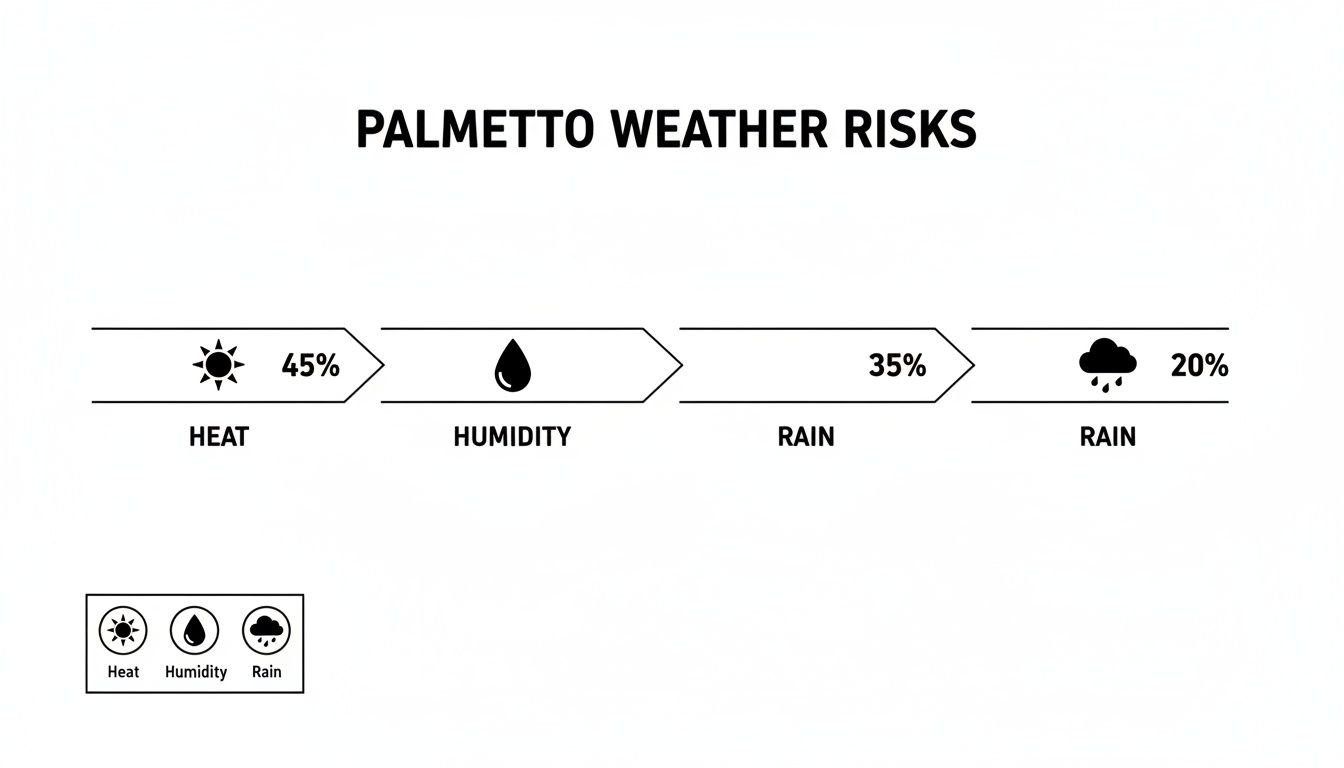
As illustrated, while heat and humidity dominate the summer, rain is a persistent, year-round factor that must always be integrated into operational planning.
To help your business anticipate these seasonal shifts, here is a summary of what to expect.
Palmetto GA Seasonal Weather At-a-Glance
| Season | Average High Temp | Average Low Temp | Primary Weather Concern for Logistics |
|---|---|---|---|
| Spring | 73°F | 50°F | Sudden thunderstorms and heavy rain. |
| Summer | 90°F | 70°F | Extreme heat and high humidity. |
| Fall | 74°F | 52°F | Unpredictable temperatures and lingering humidity. |
| Winter | 56°F | 33°F | Damp conditions and risk of condensation. |
This data underscores the need for an adaptive logistics strategy that evolves with the seasons to effectively protect your company's assets.
A Climate of Extremes
The significant temperature fluctuations are a defining feature of this region. An analysis of detailed local weather data confirms that Palmetto's climate can swing from a winter low of 33°F to a summer high of 90°F. This 57°F annual variance demands flexible and resilient strategies for any company managing logistics, IT asset disposition, or other critical operations in the Atlanta metro area.
This means there is no "set it and forget it" season for operational planning. A logistics plan that works in October’s mild conditions could result in catastrophic failure during July’s oppressive heat and humidity.
Each season presents a unique logistical challenge. By understanding these fundamental patterns, you can better schedule high-stakes projects like HIPAA-compliant data destruction, large-scale equipment removals, or critical inventory shipments. This foresight helps mitigate weather-related delays and, most importantly, protects your valuable assets from damage. To gain a broader perspective, you might find it useful to compare Palmetto's climate with our guide on Johns Creek, GA weather to understand variations across the metro area.
Managing High Rainfall and Humidity in Your Logistics
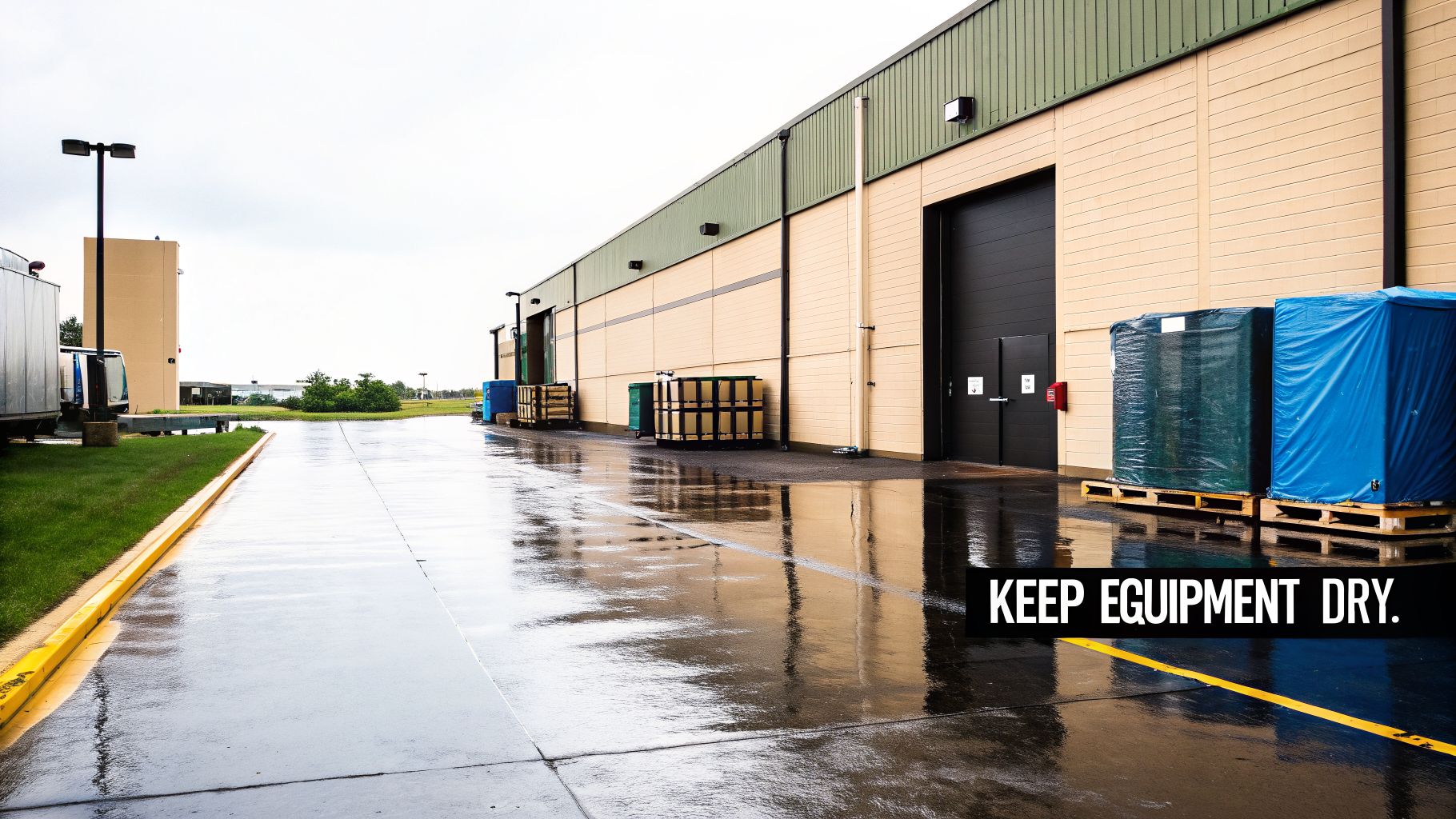
While summer heat is a major concern, the most persistent challenge associated with the Palmetto GA weather is moisture. The combination of high humidity and frequent, heavy rainfall creates a year-round threat. For any business moving sensitive electronics, inventory, or machinery, ignoring this constant risk is a recipe for damaged assets, operational gridlock, and serious safety liabilities.
Consider a common scenario: your team is executing a data center decommissioning, moving racks of servers to the loading dock. An unforecasted shower materializes, turning the dock into a slick, hazardous surface. A few drops of water entering an exposed server chassis can be enough to render a valuable piece of hardware worthless.
For any business, such an event is a direct threat to both assets and personnel. Wet conditions increase slip-and-fall risks for crews handling heavy equipment, and the pervasive dampness accelerates corrosion on metal contacts and circuit boards, especially if assets are staged in a non-climate-controlled area prior to pickup.
The Impact of Palmetto's Wet Climate on Business
The data highlights the scale of this challenge. Palmetto is situated in the humid Atlanta metro area and receives approximately 52 inches of rainfall annually—significantly more than the U.S. average of 38 inches.
This precipitation occurs over roughly 108 days per year, meaning nearly one-third of the calendar presents a potential moisture risk. The area’s subtropical climate directly impacts critical business operations like electronics recycling and IT asset disposition (ITAD).
To proactively manage these risks, your logistics and facility plans must include several non-negotiable moisture-mitigation tactics.
- Utilize Weather-Sealed Transport: All sensitive assets must be moved in fully enclosed, weather-sealed containers or trucks to prevent water intrusion during transit.
- Secure Loading and Staging Zones: Ensure loading docks are fully covered and dry. If a covered dock is unavailable, have tarps, temporary shelters, and other protective coverings ready to shield assets during loading.
- Schedule with Weather Intelligence: Partner with logistics providers who actively monitor local radar and forecasts. They should have the flexibility to schedule pickups during dry windows, even if it requires last-minute adjustments.
How a Prepared Partner Makes a Difference
An experienced commercial service provider, such as an ITAD specialist, already treats the Palmetto GA weather as a managed operational variable. Their processes are designed to counteract moisture-related risks from the outset. Their fleet consists of well-maintained, sealed vehicles engineered to keep sensitive electronics completely dry, regardless of external conditions.
A true professional partner does not view a rainstorm as an excuse for failure; they see it as a predictable challenge to be managed. Their teams are trained to operate safely and efficiently in adverse conditions, ensuring your assets remain protected.
This level of preparation is essential for maintaining a secure chain of custody and preserving the financial value of your IT assets. While Palmetto’s climate has its own unique challenges, comparing them to nearby areas by reading about the weather for Fairburn, GA can offer additional context for regional logistics planning.
Planning for Severe Weather Events in the Atlanta Metro
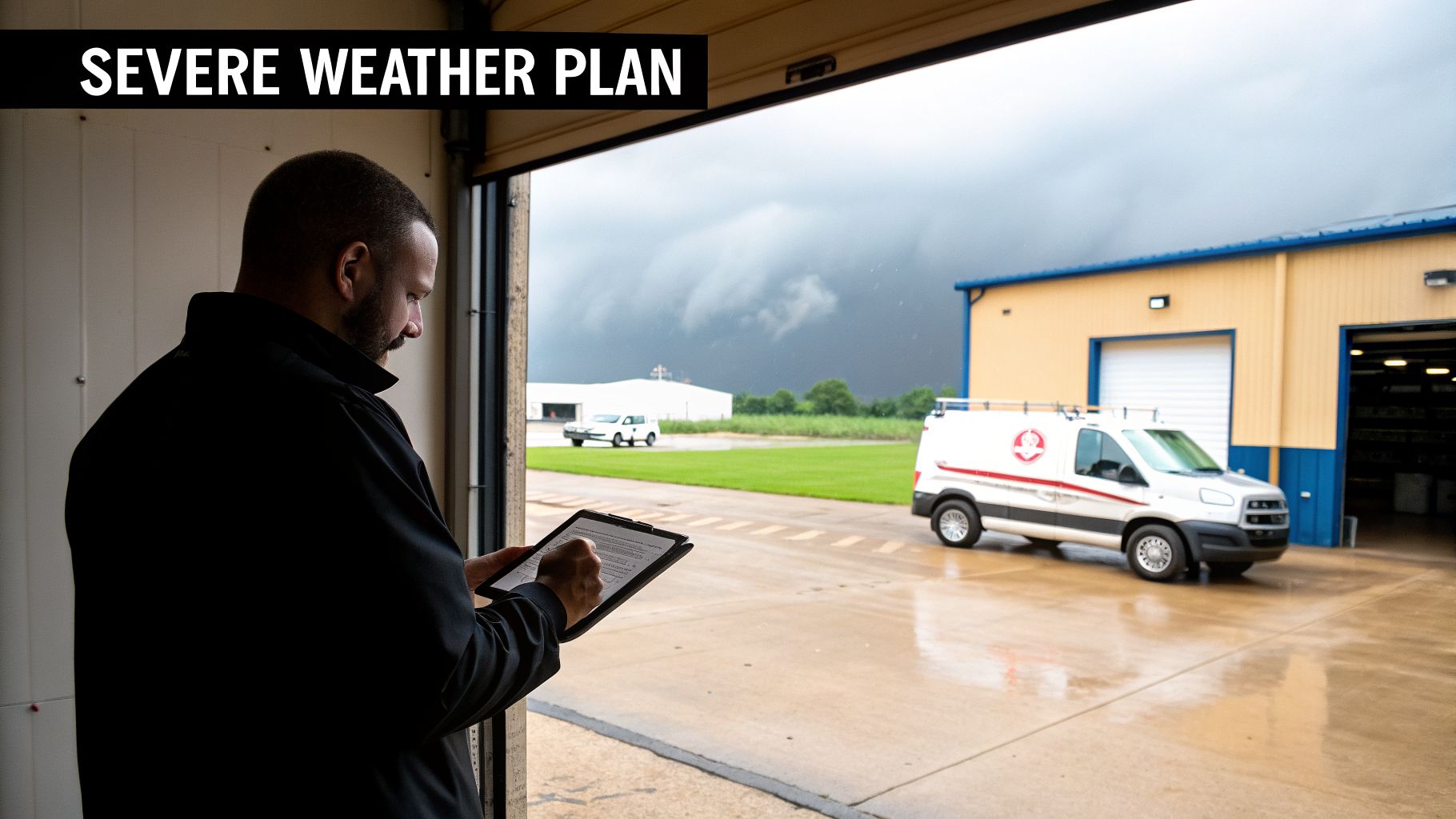
Beyond daily showers, the Palmetto, GA weather pattern includes the risk of more significant severe weather. Powerful thunderstorms with high winds, hail, and the potential for tornadoes demand a robust level of business preparedness. These events, most common in spring and fall, can halt operations, cause widespread power outages, or necessitate emergency services like asset removal or facility repair.
For business leaders and IT managers, this requires more than just rescheduling a delivery. It means implementing a proactive contingency plan that protects valuable assets, ensures employee safety, and maintains operational continuity. A sudden, severe storm can completely derail a project, putting equipment, data security, and revenue at risk.
Real-World Scenario: A Distribution Center's Operations
Imagine a distribution center in the midst of processing a time-sensitive, high-value shipment. A severe thunderstorm warning is issued for the area, forcing all outdoor loading activities to cease immediately.
Without a severe weather protocol, chaos can ensue. Unsecured inventory is left vulnerable to damage, and fulfillment deadlines are missed. A prepared business, however, activates its plan. Its team moves all exposed assets to a secure indoor location, communicates the delay to relevant stakeholders, and coordinates with its logistics partners to reschedule transport for the next safe window, minimizing disruption.
Creating a Severe Weather Protocol
Your company's response to severe weather should be systematic, not improvised. A formal, documented protocol is your strongest defense. A crucial element of this plan is ensuring power continuity; exploring options like those in this guide on choosing the right standby generator is a prudent step for any commercial facility.
A comprehensive protocol should outline specific actions for before, during, and after a severe weather event, ensuring every team member understands their role and can act decisively.
A severe weather plan transforms your team from reactive to proactive. It turns a potential crisis into a managed, orderly procedure, protecting assets and personnel.
Your protocol should include these essential components:
- Pre-Vetted Emergency Partners: Identify and establish relationships with responsive vendors (e.g., ITAD, restoration, transport) who can provide rapid-response services and operate safely in adverse conditions.
- Data Integrity and Backup Verification: For IT-related projects, ensure all critical data is fully backed up and verified before hardware is disconnected or moved. This is a non-negotiable step to prevent data loss.
- Clear Communication Channels: Establish a clear chain of command and communication plan with employees and key vendors to facilitate real-time decisions based on weather alerts.
By developing and drilling a detailed protocol, you fortify your operations against the challenges of severe weather in the Atlanta region. For additional guidance, our business continuity planning checklist provides a valuable framework.
Turning Weather Awareness into Action for ITAD
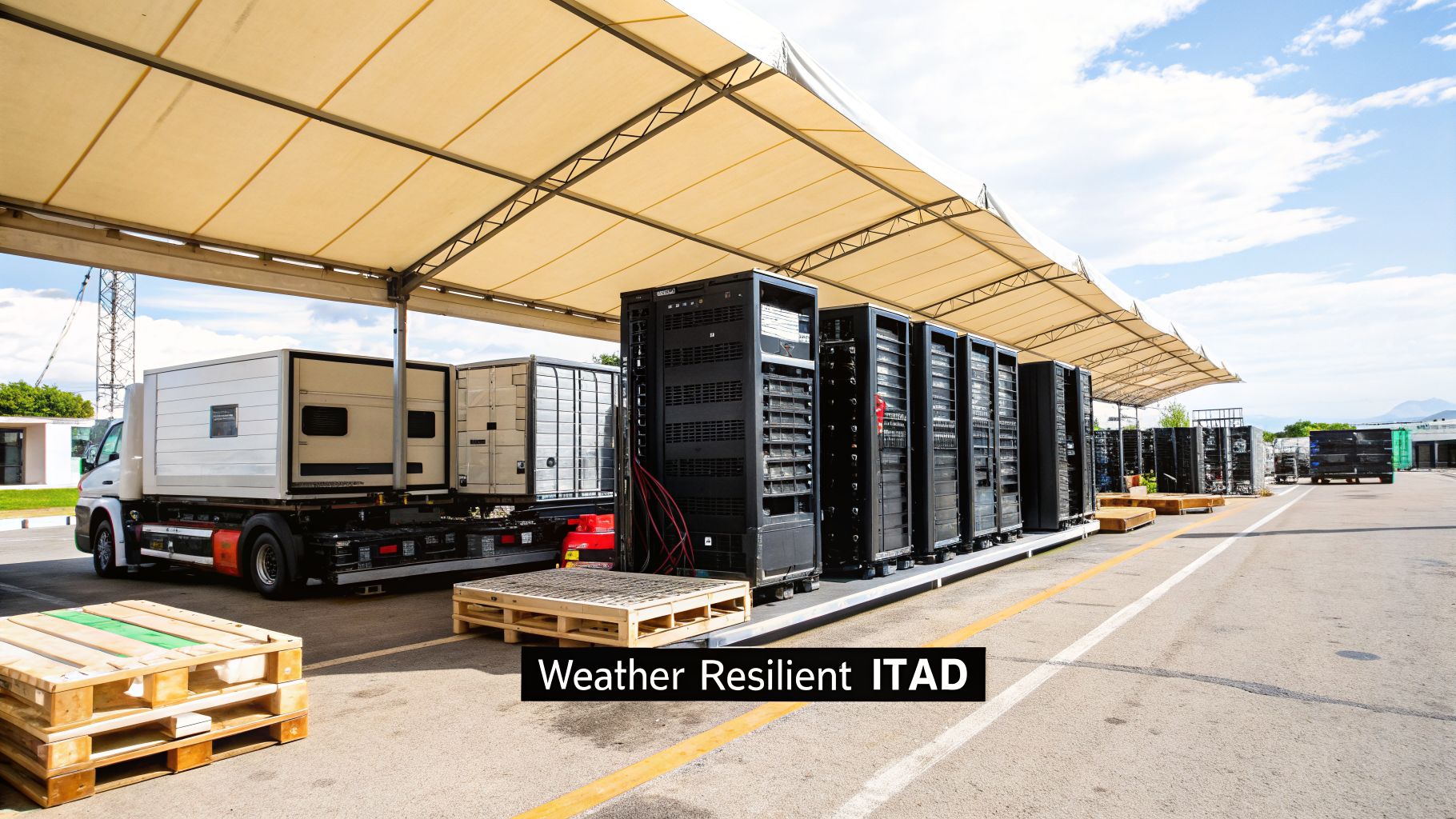
Understanding the Palmetto GA weather is only the first step; translating that awareness into a concrete action plan is what truly protects your business assets. For IT directors, facility managers, and data center operators, a weather-resilient IT Asset Disposition (ITAD) strategy is an essential component of risk management. It is the key to ensuring compliance, maximizing value recovery, and preventing costly, avoidable damage.
This is analogous to securing a commercial property before a storm. You wouldn’t simply hope for the best; you would implement established procedures to protect the facility and its contents. The same disciplined approach must be applied to sensitive electronics during a decommissioning project.
Smart Staging and Scheduling Before Pickup
The period immediately preceding an ITAD partner’s arrival is a high-risk window. A sudden downpour or spike in temperature can cause irreversible damage to equipment staged for removal. Proactive preparation is your best defense.
The first step is to designate a secure staging area. This means moving servers, networking gear, and other electronics away from loading dock doors, ground-level windows, and any other potential points of water ingress. If available, an interior, climate-controlled room is always preferable to a warehouse bay or an unsecured hallway.
Next, consider strategic timing. When scheduling large-scale projects like an office technology refresh or a full data center decommissioning, aim for historically drier and milder months. This significantly reduces weather-related risks. For Palmetto, targeting late spring (May) or early fall (October) typically provides a more predictable and favorable operational window, avoiding the extremes of summer heat and winter dampness.
A proactive ITAD strategy is the difference between a successful project and a costly failure. The plan you make before the truck arrives is just as important as the pickup itself.
By planning your staging and scheduling with Palmetto’s climate in mind, you mitigate risk and maintain control over the project's outcome. It is a simple but highly effective method for protecting your investment.
Communication and Backup Plans
Even the best-laid plans can be disrupted by a sudden weather alert. This is where clear communication protocols with your ITAD provider become mission-critical. You need a partner who acts as an active risk manager, not just a hauler.
Establish clear points of contact and a system for making real-time decisions. If a severe thunderstorm watch is issued, you and your provider must be able to quickly decide whether to proceed, delay, or pause the operation to ensure asset safety.
Consider this comparison:
- The Unprepared Business: Schedules a pickup for a Friday afternoon in July. A pop-up thunderstorm soaks pallets of computers left near an open loading dock. The result is thousands of dollars in lost asset value and a weekend spent on damage control.
- The Prepared Business: A data center manager, also decommissioning in July, works with their ITAD partner to monitor the forecast. Seeing a high probability of afternoon storms, they adjust the pickup to a clearer morning window. All equipment remains in a secure, interior location until the truck is ready for immediate loading, resulting in a flawless, weather-proof execution.
This proactive approach ensures you are prepared for any forecast. For companies managing complex logistics, engaging a partner with a dedicated electronic recycling pickup service provides the necessary flexibility to adapt to changing conditions. A responsive partner will help you navigate Palmetto's unique weather, ensuring your ITAD project is secure and successful from start to finish.
How a Weather-Ready Partner Protects Your Assets
When managing the operational risks of the unpredictable Palmetto, GA weather, the most effective strategy is a proactive one. This means selecting commercial service partners who have already engineered their operations for the local climate, rather than those who simply react to a daily forecast. A professional IT Asset Disposition (ITAD) provider, for example, designs its entire system around mitigating these risks, providing assurance that your valuable assets are protected.
This is akin to sourcing specialized expertise for a critical task. You wouldn't entrust a complex financial audit to a general bookkeeper. Similarly, for high-stakes ITAD in the Atlanta metro, you need a provider with specific, proven, weather-ready capabilities.
Operational Excellence in Any Condition
A truly prepared partner provides a complete system for asset protection. Their fleet should consist of well-maintained, fully enclosed vehicles designed to shield sensitive electronics from both torrential rain and the intense solar heat common during transit in the summer.
Their logistics teams are not just drivers; they are trained professionals skilled in operating safely and efficiently in adverse conditions. From slick loading docks to 90°F heat, they possess the experience to execute flawlessly. Crucially, they also know when to pause. If a severe weather warning is issued, they will not gamble with your equipment. Instead, they will proactively communicate with you to reschedule for the next safe operational window.
The core responsibilities of an expert ITAD partner—secure data destruction, HIPAA compliance, and responsible e-waste recycling—cannot be compromised by a heatwave. True operational excellence means these standards are upheld regardless of the weather.
To further bolster your business against disruptions, it is wise to review your Georgia commercial insurance policies. While a capable partner mitigates on-the-ground risks, a robust insurance policy provides the financial backstop every business needs for unforeseen catastrophic events.
By choosing a partner who understands the nuances of Palmetto, GA weather, you build resilience directly into your IT and logistics operations. It is a strategic decision that protects your physical hardware, critical data, compliance posture, and ultimately, your bottom line.
Frequently Asked Questions: Palmetto Weather and IT Logistics
When planning an IT asset decommissioning or a large-scale logistics project, the local weather in Palmetto is a critical business variable. Here are common questions from operations and IT managers and our expert answers.
When Is the Best Time to Schedule a Large Data Center Decommissioning in Palmetto?
For major projects, strategic timing is crucial to minimize risk. The optimal windows are typically in the late spring (April-May) and fall (September-October).
During these periods, you are less likely to encounter the extreme heat and humidity of summer or the unpredictable severe storms of early spring. This provides a safer and more efficient environment for on-site de-installation, staging, and transport.
How Does High Humidity Affect Electronics Awaiting Pickup?
Georgia's persistent humidity poses a significant risk to idle electronics. When hardware is staged in a non-climate-controlled area, atmospheric moisture can infiltrate casings and cause corrosion on sensitive circuit boards and connectors.
This type of gradual damage can severely reduce or completely eliminate the remarketing value of your IT assets. This is why prompt pickup and transport in a dry, secure vehicle is a non-negotiable part of a professional ITAD process.
A professional ITAD partner understands that your assets are vulnerable until they are securely processed. Their logistics plan must account for humidity and protect your equipment's value from the moment they arrive.
Can an IT Asset Pickup Proceed During a Rainstorm?
Yes, for a typical Georgia rain shower, our operations can continue without interruption. Our logistics crews are trained and equipped to work safely in wet conditions, using covered vehicles, secure loading procedures, and protective coverings to keep all assets completely dry.
However, in the event of a severe weather warning (e.g., high winds, lightning, tornado watch), the security of your assets and the safety of all personnel are the top priorities. A reliable partner will always communicate proactively to adjust the schedule as necessary, ensuring zero risk to your equipment.
When weather risks are high, you need a partner who understands the local climate and has a plan to protect your assets. For secure, weather-resilient ITAD services across the Atlanta area, trust Atlanta Computer Recycling. Learn more about our process at https://atlantacomputerrecycling.com.