Weather Roswell GA: A Business Owner’s Guide to Operational Resilience

Understanding the daily weather in Roswell, GA, is more than a conversational nicety—it's a critical component of strategic business management. For commercial enterprises, metrics like temperature, humidity, and precipitation directly influence operational efficiency, supply chain stability, and the longevity of capital assets.
Roswell GA Weather At A Glance
For any operations manager or business owner in Roswell, the daily forecast is an indispensable tool for immediate, tactical decision-making. An unexpected thunderstorm could necessitate rerouting logistics, while a sudden cold front requires an immediate check on building infrastructure and HVAC systems to prevent costly operational failures.
The impact extends beyond major weather events. A seemingly minor increase in humidity can accelerate the degradation of sensitive IT assets like servers and networking equipment by promoting condensation and corrosion. These local atmospheric conditions are equally critical for businesses in adjacent markets, a topic we explore in our guide to weather in Alpharetta GA.
To facilitate proactive management, here is a concise overview of today's key meteorological data.
Today's Key Weather Metrics for Roswell Businesses
| Metric | Current Value |
|---|---|
| Temperature | 78°F |
| Feels Like | 81°F |
| Humidity | 65% |
| Precipitation Chance | 15% |
| Wind Speed | 5 mph |
| UV Index | 7 (High) |
This data offers a strategic snapshot to help you anticipate potential disruptions and ensure operational continuity.
Understanding Roswell's Humid Subtropical Climate
For any commercial entity operating in North Georgia, the daily forecast represents only a fraction of the full picture. The weather Roswell GA is governed by a humid subtropical climate (Köppen Cfa), a classification with significant implications for your capital equipment, operational budget, and long-range planning.
This climate pattern presents two primary operational challenges: long, hot, humid summers and mild yet volatile winters. Summer temperatures frequently exceed 90°F, and the oppressive humidity places a continuous, heavy load on cooling systems. For any business with data centers or sensitive electronics, this translates directly into higher energy expenditures and an increased rate of hardware failure. The operational effects in a nearby city are detailed in our analysis of Johns Creek weather.
Long-Term Operational Impacts
While Roswell's winters are typically mild, their unpredictability poses a substantial risk. A sudden cold snap can bring freezing rain and ice, as demonstrated by past events that caused widespread power outages and rendered transportation networks impassable.
Businesses must develop strategies for these climatic extremes. A sudden freeze can rupture unprotected commercial plumbing and halt supply chains. Concurrently, high summer humidity can induce condensation within electronics, leading to short circuits and premature asset failure.
Consider the impact: a logistics firm reliant on just-in-time delivery can be paralyzed by a single ice storm. Similarly, a professional services firm that defers HVAC maintenance may face a catastrophic server failure during a July heatwave. Recognizing these climate-driven risks is the first step toward building a resilient enterprise capable of withstanding Roswell's year-round weather challenges.
Seasonal Weather Impact on Business Operations
In Roswell, weather is not a trivial matter—it is a critical variable for any commercial operation. Each season introduces a distinct set of challenges that can disrupt operations, from spring thunderstorms to winter ice events. Without a proactive strategy, businesses risk significant downtime, asset failure, and logistical bottlenecks.
The transitional seasons—spring and autumn—are especially volatile. Spring frequently delivers powerful thunderstorms capable of causing flash floods or power surges, placing unprotected electronic assets at immediate risk. Autumn, while generally milder, represents the final opportunity to prepare for winter, as even a brief freeze can create substantial operational disruptions.
This chart provides a high-level overview of the climate patterns your business should be planning for.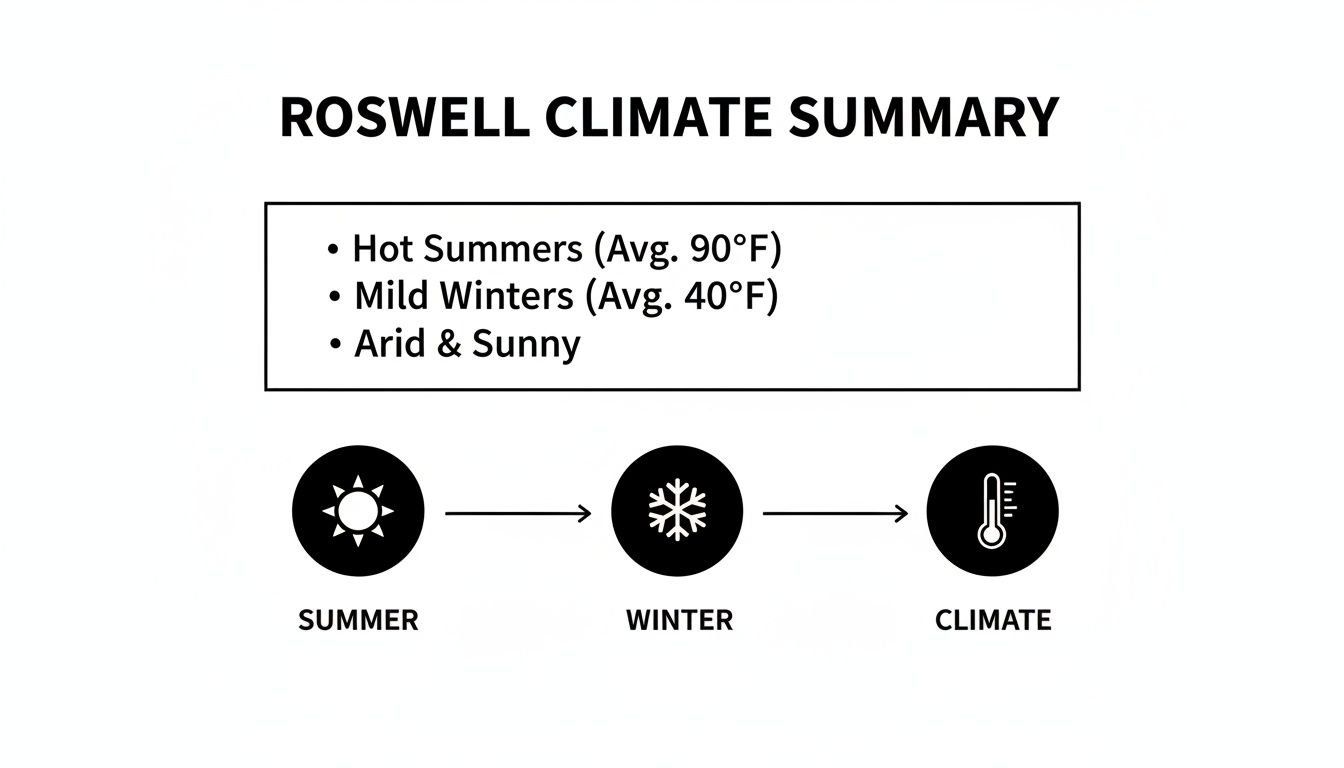
As illustrated, businesses in this region must be prepared for a wide spectrum of conditions, from intense summer heat to periodic freezing temperatures.
Managing Summer Heat And Winter Cold
For IT infrastructure, no environmental factor is more detrimental than a Georgia summer. The relentless heat and high humidity impose a massive strain on the HVAC systems responsible for maintaining optimal temperatures in server rooms and data centers.
Summer in Roswell necessitates preparation for sustained heat, with the average high reaching 88°F in July. Conversely, January lows can descend to approximately 32°F. This annual temperature fluctuation of 56°F creates thermal cycling that can elevate hardware failure rates by as much as 30% if your climate control infrastructure is inadequate. You can review more of Roswell's historical climate data on WeatherSpark.
Winter introduces the threat of ice, a significant disruptor of business. While heavy snow is infrequent, a thin glaze of ice is sufficient to cause a complete shutdown.
A sudden cold front can freeze and burst pipes in commercial buildings, leading to catastrophic water damage in office spaces and server rooms. Past regional freezes have demonstrated that ice can render secondary roads impassable, grinding supply chains to a halt and preventing employees from commuting safely.
Analyzing Historical Weather for Risk Management
Analyzing past weather patterns is not an academic exercise; it is a critical function of protecting your business. By examining historical weather roswell ga data, you can identify trends in extreme conditions that pose a direct threat to your physical assets, operational continuity, and IT infrastructure. These are not merely statistics; they represent quantifiable business risks.
For example, Roswell's climate is characterized by abrupt temperature swings, which inflict significant thermal stress on sensitive electronics like servers and networking equipment. Simultaneously, high humidity levels can cause condensation to form inside these devices, leading to corrosion, short circuits, and irretrievable data loss.
A comprehensive analysis of historical weather is a cornerstone of any effective risk management solutions. Understanding past events enables a business to anticipate future disruptions and implement proactive mitigation measures, shifting from a reactive crisis-response model to a proactive risk-management posture.
Quantifying Local Weather Risks
Here in Roswell, our humid subtropical climate has a direct and measurable impact on any business managing sensitive electronic assets. A review of recent historical data reveals the extent of this volatility. The temperature reached a high of 84°F on March 6 during a thundershower, only to plummet to a frigid 22°F on February 24. During that same period, humidity fluctuated from an arid 18% to a fully saturated 100%.
These are not minor operational inconveniences; they are direct threats. Consider the tangible consequences for your business:
- Thermal Stress: Rapid temperature drops can cause micro-fractures in electronic components, leading to premature equipment failure and unplanned capital expenditure.
- Condensation Damage: Humid air introduced into a cool server environment creates moisture, which can easily short-circuit mission-critical systems and cause data loss.
- Structural Strain: While less common, ice accumulation from winter storms can damage commercial roofs and down power lines, as observed in past regional events, leading to costly repairs and extended downtime.
By scrutinizing these past events, you can build a compelling business case for investing in enhanced infrastructure protection. To further fortify your operations, explore our guide on supply chain risk management strategies.
A Severe Weather Plan for Roswell Businesses
For any Roswell-based enterprise, meteorological awareness is only valuable when translated into a concrete action plan. When severe weather roswell ga materializes—whether as a sudden thunderstorm or a paralyzing ice storm—a documented preparedness strategy becomes your primary defense. It safeguards personnel, protects data, and preserves your bottom line by minimizing costly downtime.
An effective strategy begins with protecting your physical and digital infrastructure from prevalent threats like power surges from lightning or water intrusion from heavy rainfall. Hope is not a strategy; proactive preparation is the only method to ensure business continuity.
Key Components of an Emergency Plan
Your emergency plan should be a clear, actionable playbook that every employee can execute. The objective is to ensure all personnel know their exact roles and responsibilities when severe weather strikes, from securing physical premises to transitioning to remote operations.
Incorporate these essential steps:
- Asset Protection: Install commercial-grade surge protectors for all critical electronics. For servers and networking hardware, an uninterruptible power supply (UPS) is non-negotiable.
- Data Resiliency: Implement the 3-2-1 backup rule: maintain three copies of your data on two different media types, with one copy stored securely off-site. Routinely test your backups to validate their integrity.
- Employee Safety: Establish a reliable communication protocol for disseminating weather alerts and operational status updates. A well-defined remote work policy is vital for events like ice storms that make commutes hazardous or impossible.
Roswell has experienced numerous weather-induced shutdowns. Past ice storms have rendered secondary roads and even major arteries like Oxbo Road impassable due to downed trees or icing, bringing commerce to a halt.
A comprehensive plan is the bedrock of operational resilience. For a detailed framework, our business continuity planning checklist provides an actionable guide. This level of preparation is your most effective defense against weather-related disruptions.
Managing IT Lifecycles in Roswell's Climate
The challenging weather Roswell GA presents is not merely an inconvenience; it actively shortens the lifecycle of your company’s IT infrastructure. The region's long, hot summers, persistent humidity, and abrupt temperature shifts place significant stress on servers, hard drives, and networking equipment, accelerating their failure rates. This directly translates to increased hardware failures, unplanned downtime, and negative impacts on your bottom line.
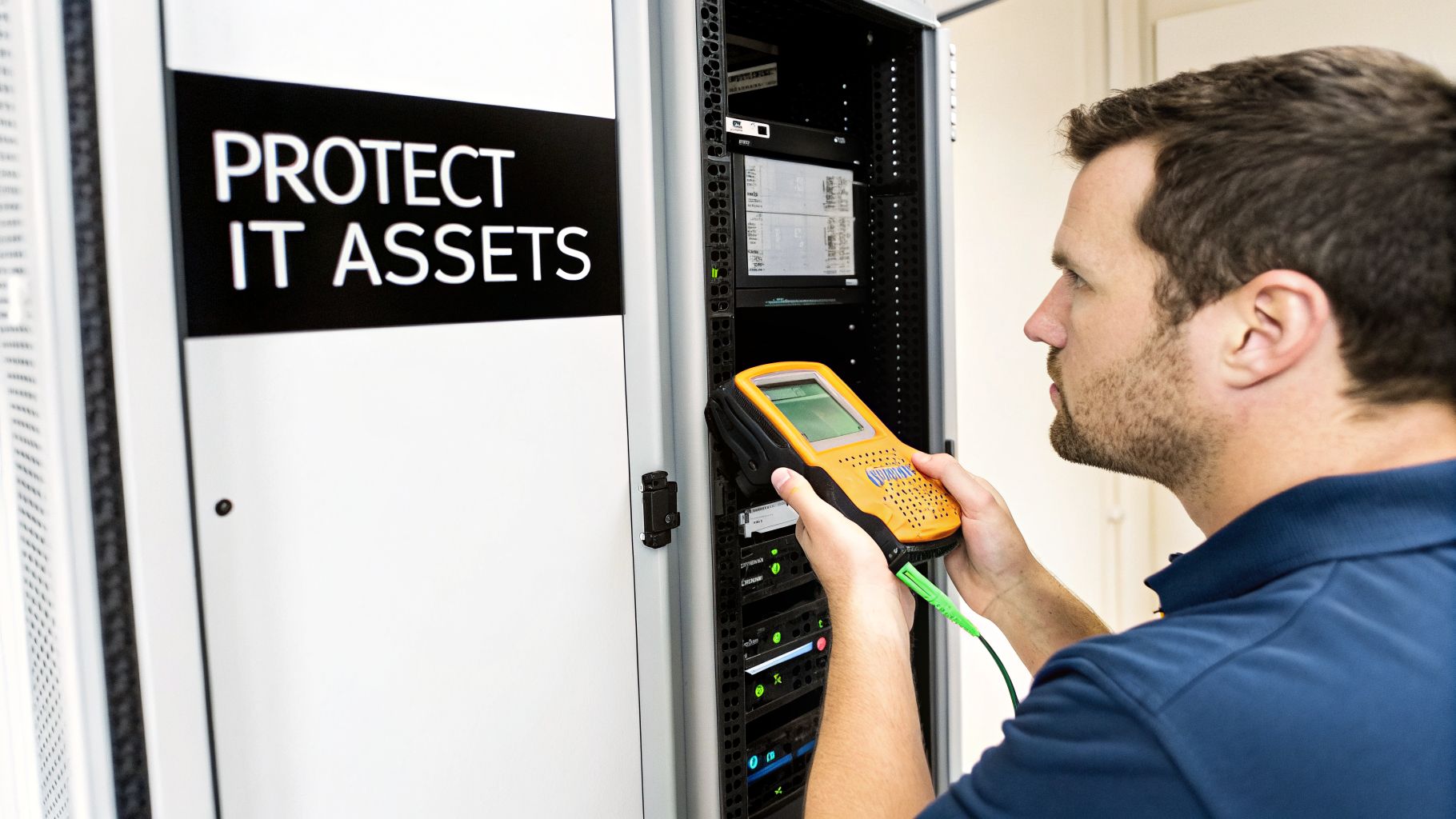
When hardware succumbs to climate-related stress, it triggers a cascade of operational issues. Maintaining an optimal server room temperature is not about employee comfort; it is a critical business function. Proactive HVAC maintenance is a primary defense against heat-induced damage to sensitive electronics. Understanding the fundamentals of commercial HVAC maintenance services is crucial for developing a robust plan to mitigate weather extremes.
The Role of IT Asset Disposition
These climate-driven hardware failures underscore the necessity of a formal IT asset disposition (ITAD) strategy. An ITAD plan is far more than simple equipment disposal—it is a critical component of your cybersecurity and financial framework. It provides a documented, secure process for retiring weather-damaged or obsolete equipment permanently.
A professional ITAD partner manages the entire end-of-life process:
- Secure Decommissioning: We methodically remove retired hardware from your live environment without disrupting operations.
- Compliant Data Destruction: We ensure the permanent eradication of all sensitive data, adhering to strict regulatory standards like HIPAA.
- Responsible Recycling: We ensure e-waste is diverted from landfills through the proper, environmentally sound recovery of valuable materials.
Engaging a specialist mitigates the security risks inherent in retired assets while ensuring regulatory compliance. It transforms a potential liability into a streamlined, managed process.
Ultimately, a robust ITAD strategy is indispensable for any business managing technology assets in Roswell's demanding climate. To learn how we can support this critical function, explore our dedicated IT asset disposition services in Roswell GA.
Frequently Asked Questions About Roswell Weather
Understanding Roswell's weather patterns is fundamental to effective business operations, whether you are planning a corporate function or managing facility operating costs. Here are some common inquiries from local businesses regarding our climate.
When Is the Best Time for Outdoor Business Events?
For outdoor corporate events, the optimal windows are late spring (May) and early autumn (September to October). During these periods, Roswell's temperatures are moderate, and humidity levels are significantly lower.
This timing minimizes heat-related risks for attendees and reduces environmental stress on outdoor electronics and staging equipment.
How Does Summer Humidity Affect Commercial Buildings?
High summer humidity extends beyond occupant discomfort; it places a substantial load on your building's HVAC system, leading directly to increased energy expenditures.
Furthermore, it creates an ideal environment for mold growth and can cause significant damage to sensitive electronics and warehoused inventory. For these reasons, a robust, commercial-grade climate control system is a mandatory investment for protecting business assets.
Does Snow or Ice Impact Business in Roswell?
Yes, significantly. While major snow or ice events are not frequent, even a minor accumulation can paralyze business activity. Roswell, like much of the metro area, lacks the infrastructure to manage significant winter weather.
As demonstrated in past storms, a thin layer of ice is sufficient to make secondary roads treacherous, down trees, and completely halt employee commutes and supply chain logistics.
When unpredictable weather results in hardware failure or a scheduled technology refresh, a secure disposition plan for your retired IT assets is essential. Atlanta Computer Recycling provides expert ITAD services to help you manage your equipment's entire lifecycle, from compliant data destruction to responsible e-waste disposal. Discover how we can support your Roswell business at https://atlantacomputerrecycling.com.