7 Best Shopping Areas in Atlanta Georgia for 2026

Atlanta Beyond the Boardroom: A Guide to Premier Shopping
If you're in Atlanta for meetings, a conference, a client visit, or a site review, downtime tends to come in awkward windows. You might have two hours before dinner, a free afternoon after a presentation, or a morning open between appointments. That's exactly when a strong retail district becomes useful. Not just entertaining, but practical.
The best shopping areas in Atlanta Georgia let you do more than browse. You can pick up a polished client gift, grab a solid lunch, reset after a packed workday, or choose a dinner setting that feels intentional rather than improvised. Atlanta does this especially well because its shopping districts aren't all built the same. Some are efficient and high-end. Others are more walkable, local, and experience-driven.
Buckhead remains the city's clearest answer for luxury and concentration. The BeltLine and West Midtown bring a more creative, mixed-use feel. Larger centers give you one-stop convenience when time matters. Open-air districts work better when you want a less compressed visit.
If you follow TheRetailBroker's real estate outlook, that broader mix of retail formats is part of why Atlanta remains a useful city for both business travel and local operations.

1. Lenox Square
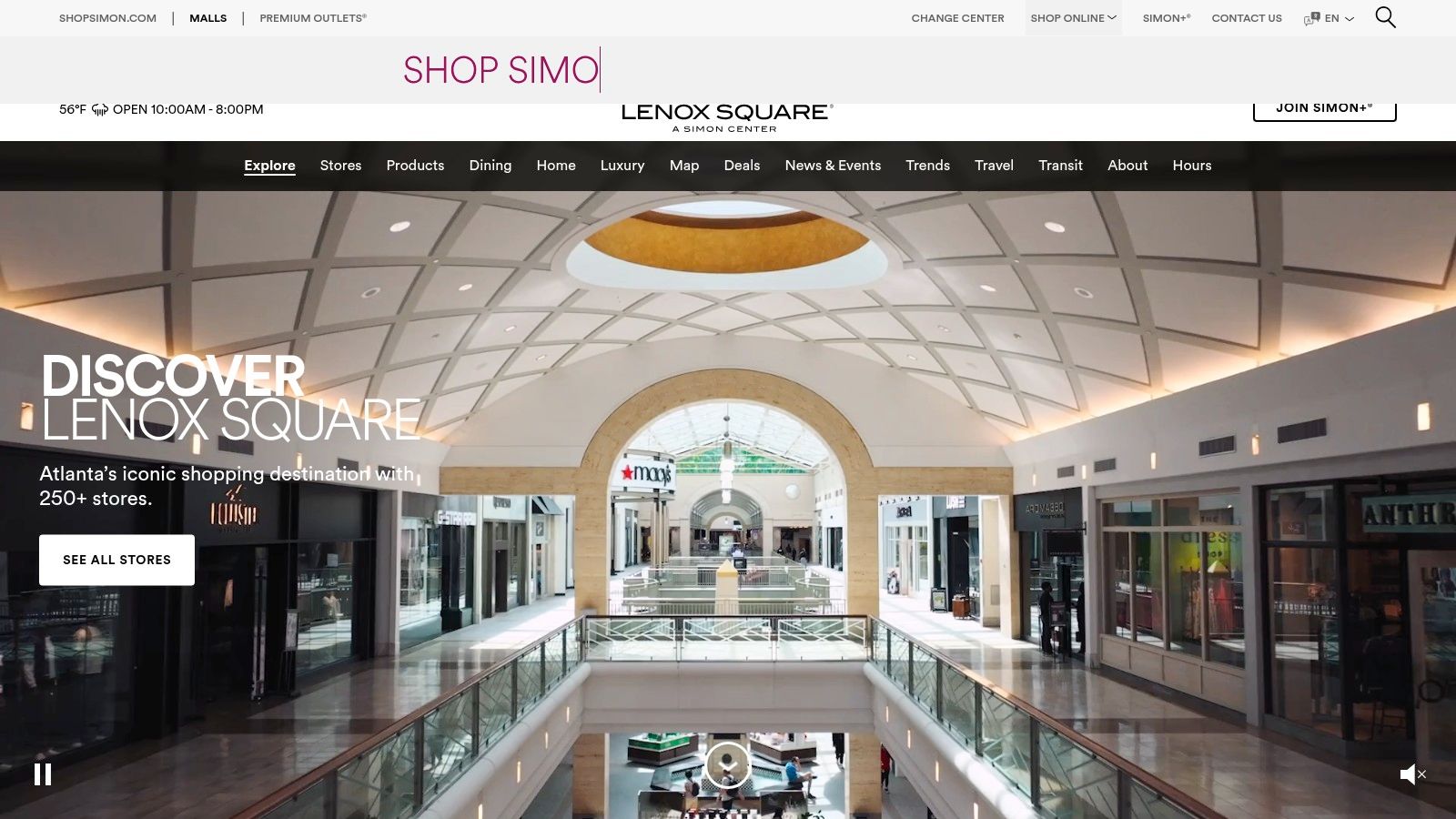
You finish a Buckhead meeting early and suddenly have 90 minutes to use well. Lenox Square is the practical answer. It is the Atlanta shopping stop I suggest when someone needs broad choice, recognizable brands, and a setting that does not require extra planning.
Opened in 1959 in Buckhead, Lenox remains one of the city's best-known retail centers, with a large store lineup noted in this overview of Lenox Square and Buckhead retail. The value for business visitors is straightforward. You can handle a client gift, replace a travel item, and fit in lunch without changing neighborhoods.
The tenant mix spans department stores and luxury labels, which is what makes the center productive rather than just popular. If your day shifts from a casual errand to a higher-end purchase, Lenox usually saves time because the options are already in one place. That matters more than ambiance when your schedule is compressed and your next call starts in an hour.
Why it works for business visitors
Lenox is strongest as an efficiency play. You are not piecing together several streets, parking twice, or asking a colleague to walk another half mile just to find the right store. For teams in town for conferences, site visits, or executive meetings, that convenience often outweighs the downsides of a busy mall.
It also works well for mixed-purpose downtime. One person can shop for personal items while another picks up a polished gift or sits down for a quick meal. That flexibility is useful in a business city like Atlanta, where free time tends to show up in short, uneven blocks.
Practical rule: Choose Lenox Square when you need selection and speed.
The trade-off is traffic. Busy hours can slow parking, restaurant seating, and entry at top luxury stores. If the goal is a quieter client conversation or a more curated luxury setting, another Buckhead option may fit better.
What stands out
- Best for one-stop efficiency: Lenox covers a wide range of shopping needs in a single stop.
- Best for mixed spending levels: You can combine premium purchases with everyday retail on the same visit.
- Best for tight Buckhead schedules: It is easy to reach if your hotel, office, or meetings are nearby.
Lenox also reflects a bigger Atlanta pattern. The city pairs established retail infrastructure with constant reinvention, including the technology that supports modern storefronts, payments, logistics, and customer experience. For business leaders, that connection matters. The same companies that modernize physical retail also generate aging devices, cables, and point-of-sale hardware that need proper downstream handling instead of casual disposal.
If you have extra time after shopping, this guide to Atlanta attractions beyond the mall can help you turn a free afternoon into a more useful stop around the city.
Visit Lenox Square.
2. Phipps Plaza
Phipps Plaza serves a different purpose than Lenox. If Lenox is broad and high-volume, Phipps is more selective and polished. It's the Buckhead choice for visitors who want luxury retail without the same level of intensity.
This is the mall I recommend when the shopping itself is part of the client experience. The atmosphere generally feels calmer, and that changes how long people are willing to stay. A rushed stop can become a relaxed lunch, a boutique visit, and a proper sit-down meeting.
Where Phipps is stronger than Lenox
Phipps works best when you care about environment as much as store list. The center leans premium, and that shows in both its tenant mix and the surrounding amenities. Saks Fifth Avenue and Nordstrom give it recognizable anchor strength, while attached hospitality and wellness offerings make it easier to build a half-day around it.
A district like this also helps when you're hosting out-of-town executives who expect a polished setting. Not every Atlanta retail destination fits that brief. Phipps does.
Quieter luxury tends to work better for client conversations than crowded luxury.
That said, the trade-off is obvious. Phipps doesn't try to be everything for everyone. If you want the largest possible selection in one stop, Lenox has the edge. If you want a more curated high-end experience, Phipps usually wins.
Best use cases
- Client hosting: Better fit than a busier mall when conversation matters.
- Luxury-focused shopping: Strong option if you're not interested in mainstream retail.
- Extended visits: Easier to pair with dining, hotel stays, or wellness appointments.
This is also a good place to think about a gap in how shopping districts are usually discussed. Most Atlanta shopping guides focus on tenant rosters and brand recognition. They rarely address sustainability, environmental practices, or corporate responsibility signals that matter to institutional buyers and operations teams. That gap is specifically called out in Discover Atlanta's overview of shopping districts and the underserved sustainability angle.
For business readers, that matters. If your company evaluates partners on environmental responsibility, retail districts can function as more than leisure destinations. They can signal the type of corporate ecosystem you're engaging with.
Visit Phipps Plaza.
3. Buckhead Village District
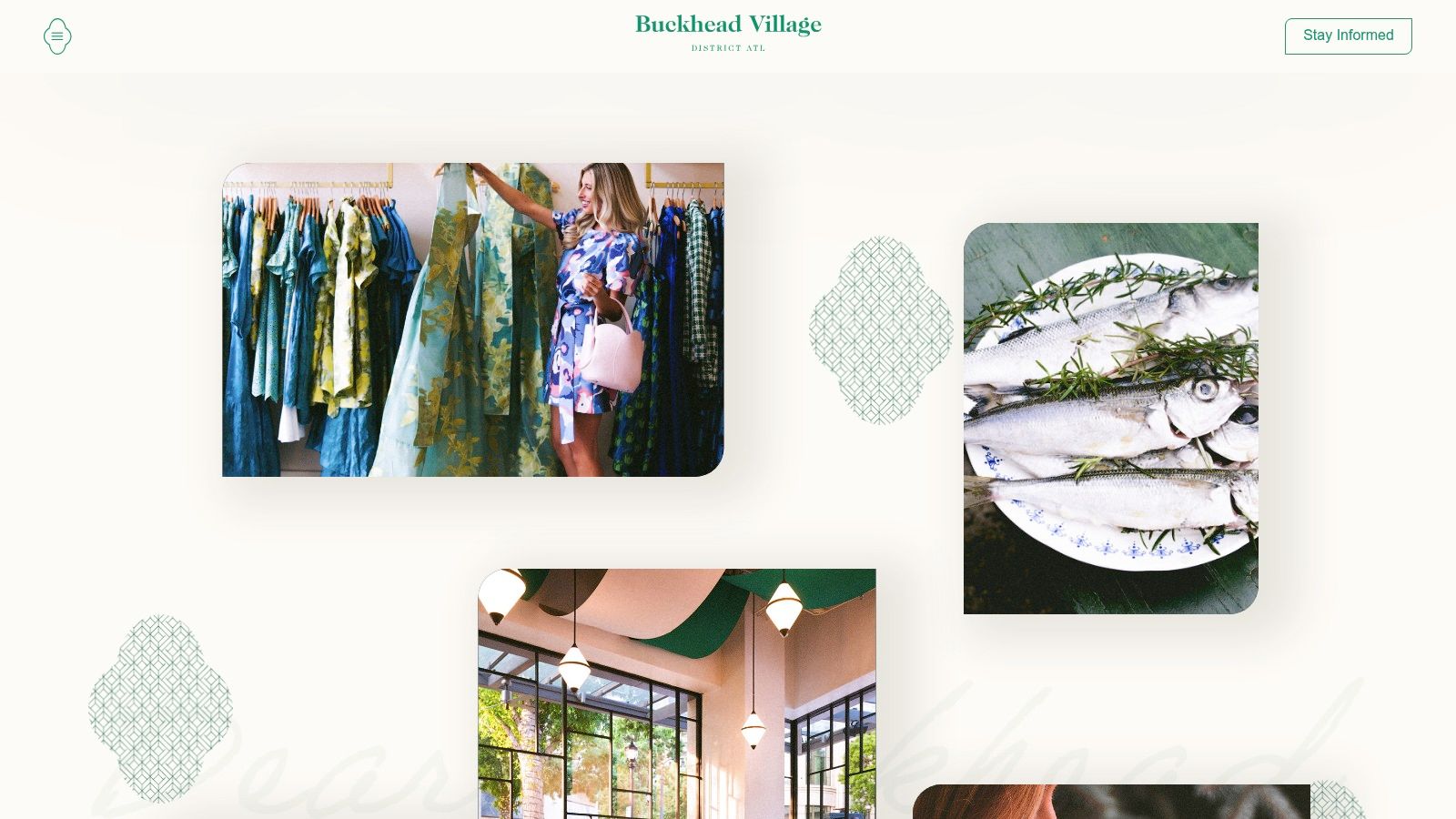
Buckhead Village District is where Atlanta luxury feels most street-level. Instead of a traditional enclosed mall, you get a walkable concentration of designer storefronts, upscale restaurants, wellness concepts, and rotating pop-ups. If your ideal shopping trip includes air, movement, and a little more visual texture, this is the Buckhead option to choose.
It works especially well for business travelers who don't want the compressed feel of an indoor center. You can take a meeting call while walking between stops, browse at your own pace, and turn a retail errand into a dinner plan without changing neighborhoods.
Best for high-touch browsing
Some districts are efficient. Buckhead Village is more curated. That difference matters if you're shopping for a specific gift, looking for statement fashion, or entertaining someone who notices the setting as much as the merchandise.
Luxury brands such as Hermès, Dior, and Christian Louboutin help define the district's identity. The open-air format also makes window shopping more enjoyable than it is at many enclosed centers. You see more, even when you don't plan to buy at every stop.
What doesn't work as well is budget flexibility. This isn't the district for bargain hunting, broad family shopping, or routine pickups. Parking can also get tight at busy times, and that friction is more noticeable here than at larger destinations built around volume.
When to choose it
- Best for premium gifts: The boutique-heavy mix lends itself to thoughtful, high-end purchases.
- Best for a polished evening: Shopping transitions naturally into dinner or drinks.
- Best for outdoor browsing: You get a more relaxed pace than a conventional mall.
Field note: If you're hosting clients, Buckhead Village often feels more intentional than simply saying, "Let's meet at the mall."
If your visit stretches into the evening, this roundup of Atlanta rooftop bars pairs well with the district's luxury-dining rhythm.
Visit Buckhead Village District.
4. Ponce City Market
Ponce City Market is the opposite of formula retail. It's one of the strongest choices in Atlanta when you want shopping to feel tied to the city itself. Set in the historic Sears building along the BeltLine Eastside Trail, it combines retail, dining, office space, and rooftop entertainment in a way that makes a short visit feel fuller than the clock suggests.
For a business traveler, that matters. You can meet someone for coffee, walk the BeltLine, buy a gift, have lunch, and still feel like you saw a real piece of Atlanta rather than a generic shopping node.
Experience matters here
Ponce works best when the group includes people with different interests. One person wants apparel, another wants food, another wants a walk, and someone else wants a rooftop view. This district can absorb that mix better than most.
The retail lineup includes local and national concepts, but the main attraction is the environment. The food hall gives the district energy throughout the day, and the direct BeltLine adjacency makes it easy to connect shopping with movement. That's useful if you've been indoors in conference rooms for most of the trip.
The downside is logistical. Parking can become annoying when dining and event demand overlap. Some of the shops also run boutique-small, which is great for discovery but less reliable if you're shopping with a specific inventory target in mind.
Who should pick Ponce City Market
- Teams with mixed preferences: Easier than choosing a pure mall or pure restaurant district.
- Out-of-town visitors: Strong "this is Atlanta" feel without overcommitting a full day.
- Casual client meetings: Good fit when you want energy without a formal setting.
The best reason to choose Ponce isn't selection alone. It's that people usually leave feeling like they used their free time well.
If the retail portion turns into a meal plan, this local guide to Atlanta restaurants is a useful next step.
Visit Ponce City Market.
5. Atlantic Station
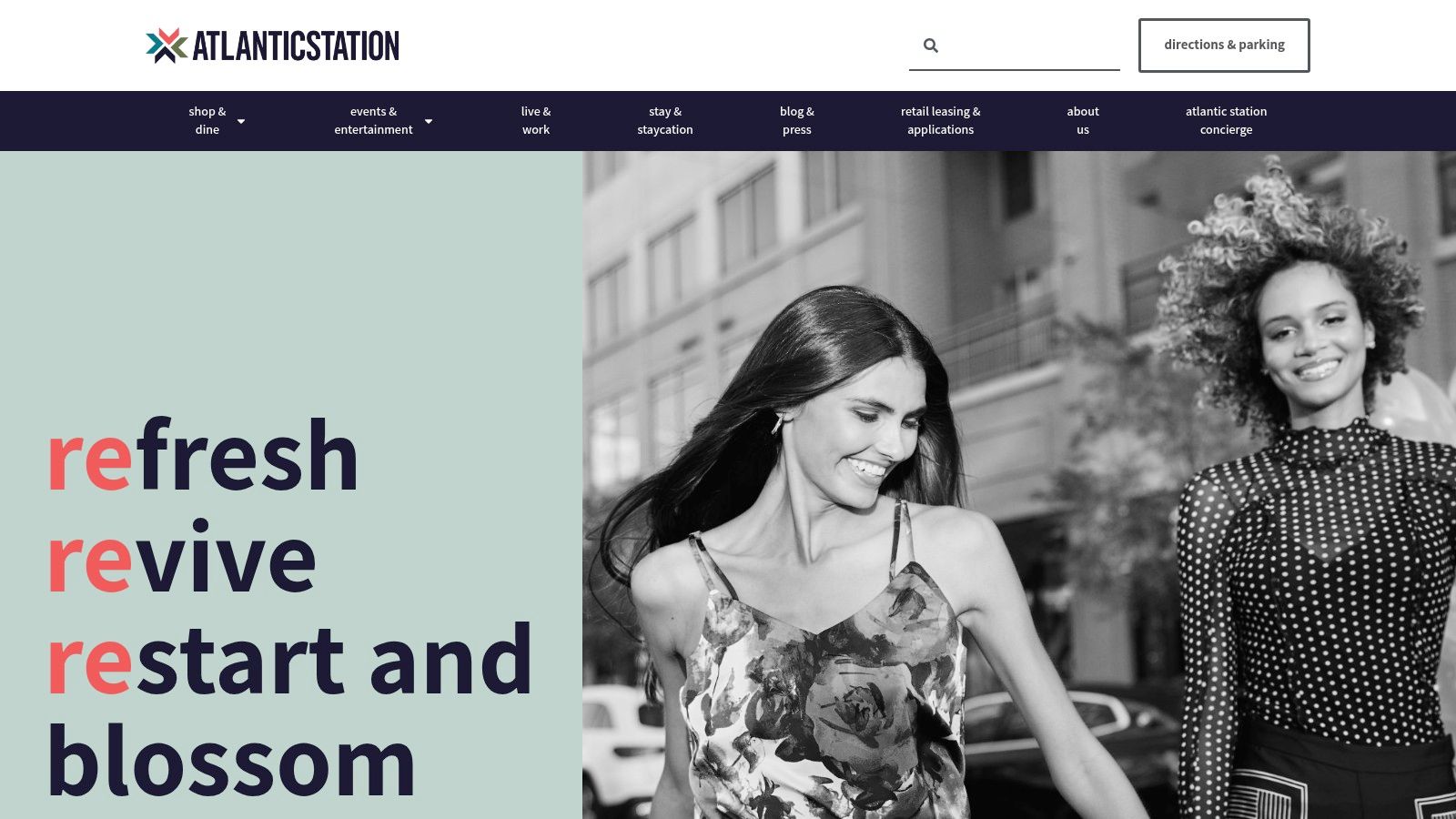
Atlantic Station is the practical pick. It's not trying to compete with Buckhead on luxury, and that restraint is part of why it works. If you need a flexible, open-air district where you can handle mainstream shopping, grab food, and maybe catch a movie or event, Atlantic Station is one of the easiest calls in the city.
This is the district I point people to when they say, "I don't need designer labels. I need something convenient." That could mean replacing a forgotten travel item, meeting a colleague casually, or filling a couple of hours without committing to a longer cross-city outing.
Where convenience beats prestige
Atlantic Station functions well because the mix is broad in an everyday way. National retailers, restaurant options, and entertainment uses sit close together, so the district supports quick visits and low-friction planning. You don't need a luxury budget to make it worthwhile.
The open-air layout also helps if you've already spent the day in offices, hotels, or event venues. It feels less enclosed than a traditional mall and simpler to get around for various errands.
Still, there are limits. If you're shopping for premium fashion or an executive-level gift, other Atlanta districts are better suited. Atlantic Station can also get slow on event days, especially when vehicle flow backs up around garages and major entrances.
Best reasons to go
- Mainstream errands: Stronger than specialty districts for practical shopping.
- Casual group plans: Retail, dining, and entertainment all sit within the same footprint.
- Short urban visit: Good fit when you don't want the commitment of a luxury district.
This part of town also lends itself well to after-hours planning. If your visit extends past shopping, this guide to Atlanta nightlife and entertainment helps turn a simple retail stop into an easy evening itinerary.
Visit Atlantic Station.
6. Westside Provisions District
Westside Provisions District is for people who'd rather buy one smart thing than browse fifty average ones. Located in West Midtown, it leans design-forward, with a tighter collection of apparel, home goods, galleries, and destination restaurants. The scale is manageable, and that's one of its biggest strengths.
This isn't where you go for mass retail coverage. It's where you go when taste matters more than volume.
Best for design-minded visitors
If your work overlaps with interiors, branding, hospitality, real estate, or client gifting, Westside Provisions is particularly useful. The district's retail mix makes it easier to find items that feel selected rather than generic. That can mean home accessories, fashion pieces, or lifestyle gifts that land better than standard mall purchases.
The industrial setting adds character without feeling forced. Pedestrian connections keep the district walkable, and the restaurant lineup gives you legitimate reasons to stay after shopping wraps up.
What doesn't work is scale. Inventory can be limited from store to store, and paid parking adds friction if you're trying to keep the visit quick and transactional. It's also the wrong place for anyone expecting bargains or big-box convenience.
Practical fit
- Best for curated shopping: Stronger than broader districts for distinctive purchases.
- Best for design and home categories: Particularly useful for style-conscious buyers.
- Best for lunch or dinner pairing: Dining quality is part of the destination.
If Buckhead is about concentration and prestige, Westside Provisions is about editing. That's why some professionals prefer it.
Visit Westside Provisions District.
7. The Battery Atlanta
The Battery Atlanta is less about pure shopping and more about packaged momentum. Built around Truist Park, it combines retail, dining, hotels, offices, and live entertainment in one walkable district. If your priority is energy, group activity, or an easy after-work destination, it performs well.
This is a strong option for team outings, client entertainment, and business travelers staying in the Cumberland corridor. It gives people choices without requiring much planning.
Best when the schedule extends past work
The Battery works because it doesn't rely on stores alone. Restaurants, plazas, event programming, and the Coca-Cola Roxy keep the area active beyond standard retail hours. That makes it especially useful for professionals who finish meetings late and still want somewhere walkable and lively.
Corporate offices in the district also help it feel active during the day, not just on event nights. So while Braves games shape the area's identity, you don't have to be a sports fan to get value from it.
The obvious drawback is timing. Event and game days can make parking harder, raise noise levels, and change the pace completely. If you want calm conversation or quick in-and-out access, choose another day or another district.
When it makes sense
- After-work groups: Good blend of food, entertainment, and casual browsing.
- Cumberland-based visitors: Convenient if you're already staying nearby.
- Sports and event add-ons: Easiest choice if your trip overlaps with a game or concert.
For anyone mixing shopping with baseball plans, this local page on the Atlanta Braves and the surrounding experience fits naturally with a Battery visit.
Visit The Battery Atlanta.
Top 7 Atlanta Shopping Areas Comparison
| Destination | Accessibility 🔄 | Time & Budget ⚡ | Experience ⭐ | Ideal Use Cases 📊 | Key Tips 💡 |
|---|---|---|---|---|---|
| Lenox Square (Buckhead) | Central Buckhead; near MARTA (Lenox/Buckhead), valet and ride-share options; parking/crowds peak-heavy. | Variable, browse to full day; mid–high spend (luxury + mainstream mix). | Largest single-roof mall in the area with broad dining and events; can be crowded. | One-stop shopping for mixed budgets, group trips, mall events. | Visit off-peak, use transit or valet, check youth/security policies. |
| Phipps Plaza (Buckhead) | Buckhead location; accessible by car or short transit; quieter circulation than Lenox. | Short–medium visits; skew toward high-end pricing. | Polished, luxury-focused mall with hotel and wellness amenities. | Luxury shopping, calm browsing, spa/dining experiences. | Expect smaller store count; reserve high-end services in advance. |
| Buckhead Village District (Buckhead) | Street-front, highly walkable; linked by "The Buc" micro-transit and MARTA; paid/tight parking. | Short visits; predominantly high-end price points. | Open-air village of luxury flagships, boutiques and seasonal activations. | Window-shopping, boutique discovery, upscale dining. | Wear walking shoes, plan paid parking, check events/pop-ups. |
| Ponce City Market (Old Fourth Ward) | Direct BeltLine access, excellent for walking/biking; paid parking and congestion at peak times. | Medium to long visits; mixed budget (food hall to boutiques). | Redeveloped market + rooftop attractions (mini-golf, Skyline Park); experiential and social. | BeltLine outings, food-focused groups, combined neighborhood visits. | Combine with BeltLine route, arrive early for rooftop and parking. |
| Atlantic Station (Midtown/Westside) | Open-air district with easy highway access, free 2-hour parking and MARTA shuttle; event congestion possible. | Short visits/errands favored; budget-friendly retail (Target) available. | Mixed shopping and entertainment with cinema and central green events. | Quick errands + movie/dining, family outings, short shopping trips. | Use 2-hour free parking for quick stops; avoid event weekends for speed. |
| Westside Provisions District (West Midtown) | West Midtown location with pedestrian connections; posted paid parking and guided lots. | Short–medium visits; higher spend for home/design items. | Curated, design-forward boutiques, galleries and chef-driven restaurants. | Home/design sourcing, boutique gifts, destination dining. | Call ahead for specialty items, plan for paid parking and limited inventory. |
| The Battery Atlanta (Cumberland) | Built around Truist Park; transit/road links exist but parking and access surge on gamedays. | Medium visits tied to events; spending varies (dining, concerts, hotels). | High-energy mixed-use district with concerts, gameday atmosphere and plazas. | Gamedays, concerts, group entertainment and nightlife. | Check event schedules, expect higher parking fees and loud crowds. |
From Retail Tech to Responsible Tech Disposal
Atlanta's retail scene says a lot about how the city operates. These districts aren't just places to shop. They're working examples of how businesses use space, logistics, customer experience, and technology to stay relevant. You see it in digital signage, integrated payment systems, tenant coordination, and the way mixed-use districts keep people moving between retail, dining, and entertainment.
That same mindset applies inside Atlanta businesses. Offices refresh laptops. Hospitals replace aging endpoints. Universities cycle through computer labs. Data centers decommission retired servers and network hardware. Keeping infrastructure current isn't optional, but disposing of old equipment carelessly creates legal, operational, and environmental risk.
For IT managers and operations leaders, the disposal step deserves the same level of planning as procurement. Data-bearing devices can't leave your control without documented handling. Obsolete equipment shouldn't sit in storage closets indefinitely. And if your organization has HIPAA or similar compliance obligations, the standard for disposal gets higher fast.
Buckhead's location also has practical implications for organizations operating nearby. As noted in the earlier Buckhead retail overview, the area's proximity to hospitals, universities, and government facilities makes it useful for efficient logistics tied to IT asset disposition, including coordinated on-site pickups for equipment decommissioning by firms such as Atlanta Computer Recycling.
Operational takeaway: A clean refresh project doesn't end when new hardware arrives. It ends when the old hardware is securely documented, wiped, removed, and responsibly processed.
Atlanta Computer Recycling (ACR) focuses on that business side of the equation. The company provides business-to-business electronics recycling and IT asset disposition services across the Atlanta metro, with support for computers, laptops, servers, network gear, and larger decommissioning projects. For organizations handling sensitive information, ACR offers hard drive wiping using the DoD 5220.22-M 3-pass standard and physical shredding for obsolete or non-functional media, helping clients align disposal practices with data protection requirements such as HIPAA.
That matters because responsible disposal isn't just an environmental issue. It's a chain-of-custody issue, a risk-management issue, and often a project-management issue. A provider that can handle pickup, packing, logistics, and secure processing reduces disruption for internal teams that already have enough on their plate.
If you're interested in the broader operational side of physical retail and visitor behavior, these shopping mall performance insights offer another lens on how commercial environments are measured and managed.
Atlanta's shopping districts show a city that values convenience, experience, and reinvention. Your organization should bring that same standard to retired IT assets. When equipment reaches end of life, secure and sustainable disposition isn't a nice extra. It's part of running a professional operation.
If your company is planning an IT refresh, office relocation, or data center cleanout, Atlanta Computer Recycling can help you handle retired equipment securely and responsibly. ACR works with commercial clients across the Atlanta metro to manage pickup, data destruction, and sustainable electronics recycling with minimal disruption to daily operations.