Union City GA County: The Business Guide for 2026


For businesses in Union City, Georgia, a simple question—"What county are you in?"—is far more than a bit of trivia. It’s a critical detail that dictates your operational, financial, and regulatory obligations.
While the city is primarily in Fulton County, a sizable portion on the east side spills over into Clayton County. This dual-jurisdiction setup creates a unique compliance landscape that every commercial operation needs to navigate with precision.
Understanding the Union City, GA, County Split
For your business, the county line dictates everything. It determines local taxes, business permitting, and most importantly for our clients, the specific rules for e-waste disposal and secure data destruction.
Think of it as a regulatory demarcation. On one side, you have one set of commercial codes, tax structures, and waste management protocols. On the other, a completely different playbook. Operating without knowing which county's rules apply to your facility is a direct route to compliance violations and operational disruption.
This split is a byproduct of the city's strategic growth. Union City's prime location has made it a magnet for commercial and industrial development. The 2020 U.S. Census counted 26,830 residents, a figure that underscores its evolution from a small town into a key logistics and business hub in the Atlanta metro area.
A Tale of Two Counties
The core of the issue for businesses is straightforward: Fulton and Clayton Counties are separate administrative entities. This means two different sets of regulations, two different waste management authorities, and two different approaches to commercial recycling.
For an IT manager or operations director, this county distinction is the first and most important step for ensuring total business compliance. Knowing which side of the line your facility sits on dictates the specific local rules you must follow for IT asset disposition (ITAD).
To illustrate how this affects operations, let’s compare the two jurisdictions from a business perspective.
Fulton vs. Clayton County: A Business Operations Snapshot
| Business Aspect | Fulton County Jurisdiction | Clayton County Jurisdiction |
|---|---|---|
| Primary Regulator | Fulton County Public Works | Clayton County Water Authority & Waste Mgmt |
| E-Waste Rules | Follows state guidelines, specific landfill bans | Enforces state laws, focus on airport-area compliance |
| Business Permitting | Handled via Fulton County offices | Managed through Clayton County government |
| Economic Focus | Broader metro Atlanta commerce, diverse industries | Logistics, transportation, Hartsfield-Jackson Airport |
This table provides a high-level overview, but it highlights why a standardized approach to commercial electronics recycling in Union City is not viable. Your county jurisdiction is the foundational element of any compliance strategy.
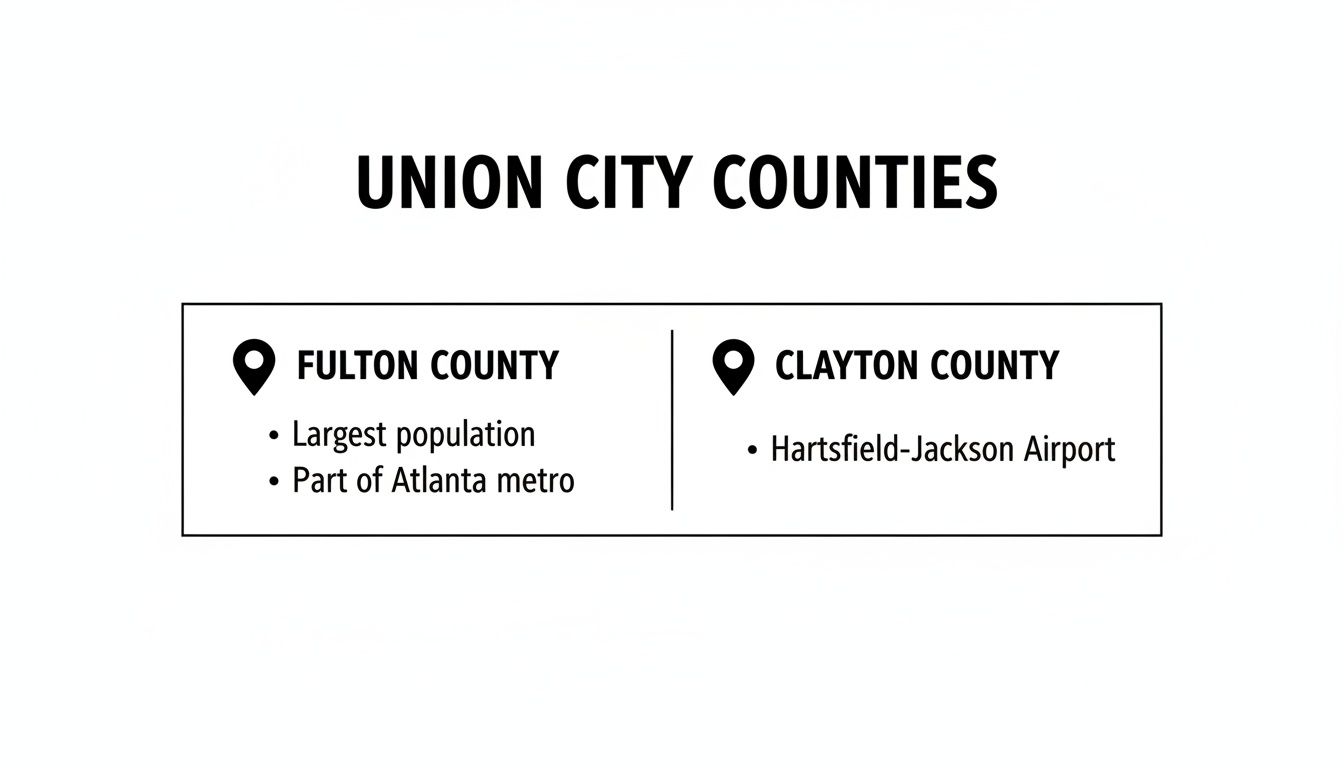
The map above clearly shows the divide. While your business address is Union City, your regulatory reality is defined by either Fulton or Clayton.
For companies managing sensitive data and end-of-life electronics, getting this right is non-negotiable. Engaging an expert partner who understands these local nuances is the only way to guarantee compliance. You can learn more about how we help businesses manage this by reviewing our guide on ITAD services in Union City, GA.
How History Shaped Union City's Dual-County Identity

To understand the dual-county regulations your Union City business must follow, it’s useful to look at the city’s origins. This is more than a history lesson; it's the context for the compliance challenges you face today, especially regarding IT disposal and data security.
The city’s roots trace back to the post-Civil War era. Named 'Union City' to symbolize national healing, it was officially incorporated by the Georgia General Assembly in 1908. It quickly became a vital railway hub connecting Atlanta and Chattanooga, establishing its role in regional commerce. More details on its founding can be found on this local history page.
Growth, Annexation, and the County Line Split
Union City was originally located entirely within Fulton County. As the Atlanta metro area experienced a massive boom, the city expanded to accommodate new commercial and residential development. This growth eventually pushed its boundaries eastward, across the county line into neighboring Clayton County.
That expansion is what created the divided jurisdiction businesses navigate today. The best way to think about it is a single city run by two different administrative offices, each with its own rulebook for permits, taxes, and waste management.
This journey from a small railroad town to a modern commercial and logistics hub is precisely why the Union City GA county situation exists. For your business, the key takeaway is that compliance isn't one-size-fits-all here. It’s county-specific.
Navigating Taxes and Permits Across County Lines
For businesses operating in Union City, the county line isn't just a map detail—it’s a critical factor that directly impacts operations and profitability. Everything from property taxes and business licenses to zoning laws can change dramatically depending on whether your facility is in Fulton County or Clayton County.
This split jurisdiction demands due diligence. When opening a new office, warehouse, or data center, your first question must be: which county government will issue our permits? An incorrect assumption here can lead to significant delays and financial penalties.
Confirming Your Jurisdiction
Before addressing compliance, you must know which county’s rules apply. The most reliable method is to look up your property address on the relevant county tax assessor's website.
Falling on the wrong side of a county regulation can lead to costly fines, project delays, and a mountain of red tape. Verifying your property's county from day one is the single best way to avoid miscalculations and build a compliant foundation.
It’s a simple but crucial distinction. A business on the Fulton County side of Union City will file permits and pay property taxes through Fulton County authorities. Just a few streets over, a business in Clayton County will engage with Clayton County officials for the same processes. The two are not interchangeable.
This is a common challenge for businesses in our growing metro area, and it's not unique to Union City. For example, our neighbors in Palmetto face a similar situation. You can read our guide on the Palmetto GA county situation for more context.
The operational breakdown by county includes:
- Property Taxes: Each county sets its own millage rate and manages its own assessment process.
- Business Licenses: While you register with the City of Union, additional county-specific requirements may apply.
- Zoning & Permits: All building permits and zoning applications are processed by the county where your property is physically located.
Understanding your exact place in the Union City GA county framework is the first step toward smooth, compliant, and predictable business operations.
E-Waste and Data Security Rules for Each County
When your business manages technology assets, your Union City address is more than a location—it’s a compliance map. The regulations for decommissioning old computers, servers, and hard drives are not uniform across the city. They are dictated by whether your facility is in Fulton or Clayton County.
This jurisdictional split is a major operational factor. While federal laws like HIPAA and FACTA establish a baseline for data protection, county ordinances govern the physical disposal process. One county might have stricter landfill bans for electronics, while the other mandates specific commercial recycling programs.
A Tale of Two Regulatory Environments
Imagine two businesses, just a mile apart in Union City. One, a healthcare provider, is on the Fulton County side. The other, a logistics company, is in Clayton County. Both must protect sensitive data, but their end-of-life equipment protocols will differ significantly.
- The Fulton County business must adhere to Fulton's specific waste management protocols, which may include unique documentation for commercial e-waste.
- The Clayton County business operates under a different set of rules, often with stricter oversight on waste streams due to the county's role and infrastructure.
This creates a scenario where a standard office IT refresh requires two entirely different compliance playbooks. Misunderstanding these local nuances can lead to fines, data breach risks, and reputational damage. For more insight on navigating these complexities, see our overview of services for businesses in South Fulton.
The crucial takeaway for any IT or operations manager is that county lines are compliance lines. Assuming a one-size-fits-all approach to electronics disposal in Union City is a recipe for failure.
This hyper-local regulatory landscape highlights the necessity of a certified IT Asset Disposition (ITAD) partner. You need an expert who knows the distinct rules for both Fulton and Clayton counties. They can build a disposal plan that guarantees compliance, no matter which side of the line your business is on, removing the guesswork and ensuring your assets are handled securely and responsibly.
Essential County Resources for Compliant IT Disposal
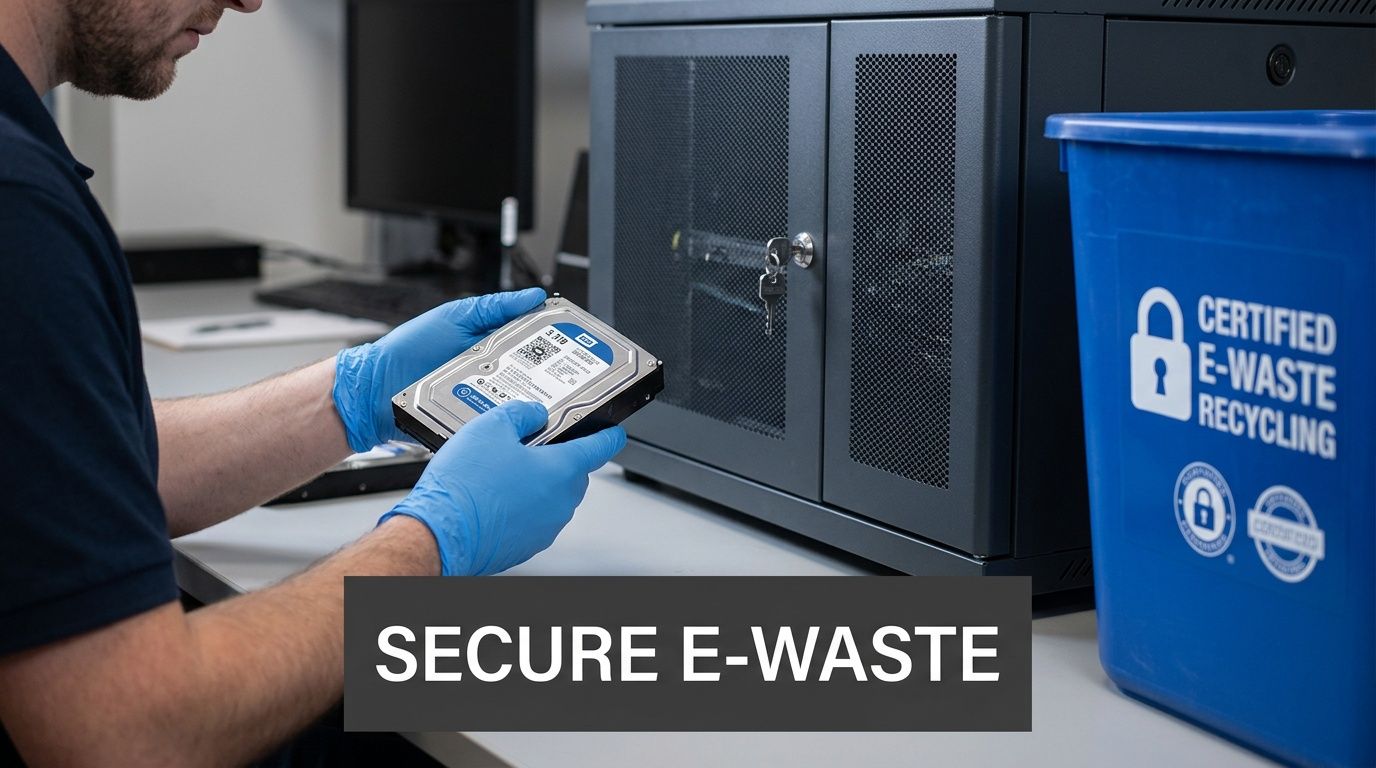
You’ve identified which county your Union City business is in. What’s the next step? The real challenge is finding the right resources to manage end-of-life IT equipment while maintaining compliance. For businesses here, that means adhering to rules set by either Fulton or Clayton County.
Here’s the reality: navigating government resources is often a dead end for commercial clients. You might find a page about residential recycling, but a clear policy for a pallet of servers containing sensitive corporate data? That information is rarely available.
County websites are designed for household waste, not for the complex security risks and regulations that come with business electronics. They simply aren't equipped to provide guidance on certified data destruction or compliant IT Asset Disposition (ITAD).
Finding Your Starting Point
For general waste management rules, county authorities are the official source. These departments establish the baseline regulations for all commercial waste streams, which technically includes your end-of-life electronics.
- For the Fulton County side: The Fulton County Public Works department sets the rules for solid waste and recycling programs applicable to your business.
- For the Clayton County side: Businesses should refer to the Clayton County Water Authority for recycling information, in addition to the county's general waste management guidelines.
However, these offices do not provide the specialized services commercial clients require. They won't offer certified data wiping or secure hardware shredding. Understanding how and where to recycle electronics responsibly requires expertise beyond what a county office can provide.
This is precisely where an experienced ITAD partner becomes essential. We bridge the gap between vague county regulations and the concrete actions needed to protect your data, secure your assets, and ensure every device is handled correctly—no matter your Union City GA county.
A Clear Plan for Secure E-Waste Recycling in Union City
Now that you understand Union City's division between two counties, it’s time to apply that knowledge. The primary directive for any local business is simple: you must confirm your facility's county before taking any action. Guessing is not a strategy, but partnering with an expert removes all uncertainty from compliant IT asset disposition (ITAD).
The first step is a simple address verification to determine if your business falls under Fulton or Clayton County regulations. From there, a tailored disposal plan can be developed that ensures every action aligns with the correct county's requirements.
Choosing a certified provider is the difference between just getting rid of old gear and implementing secure, compliant asset management that protects your business from data breaches and costly fines.
A Process Built for Business Compliance
A true professional partner does more than just pick up your old electronics. You should look for services that actively lower your risk, including:
- DoD-Compliant Data Wiping: We ensure all data is forensically unrecoverable using the Department of Defense 5220.22-M standard for wiping drives, often at no extra cost.
- Physical Media Destruction: For the highest level of security or for non-functional drives, physical shredding is the only method to guarantee compliance with strict HIPAA and SOC 2 requirements.
Don't let the complexities of the Union City, GA county divide become a liability for your business. By following a clear plan with a trusted partner, you can solve your e-waste challenges securely and efficiently. If you need assistance, our guide on how to find e-recycling services near you is an excellent place to start.
Answers for Union City, GA Businesses

Because Union City is split between two counties, we get many questions from local business owners, operations managers, and IT directors. Here are the answers to the most common inquiries.
How Do I Know for Sure Which County My Business Is In?
The most definitive method is to check your property records online. Both the Fulton County Tax Assessor and the Clayton County Board of Assessors have public-facing search tools on their websites.
Enter your business address. The county that displays your property record is the one with jurisdiction over your location. This is the mandatory first step before addressing any local compliance matter.
Keep in mind, your business license is tied to your physical address. If you operate facilities in both the Fulton and Clayton parts of Union City, you’ll need to follow the specific licensing and operational rules for each separate location.
How Does the County Impact Our Data Destruction and Recycling Compliance?
While federal laws like HIPAA set the baseline for protecting sensitive data, county-level regulations often dictate how you manage physical disposal. One county may have more specific rules for transporting and processing shredded hard drives, while the other has different landfill or e-waste mandates.
This is where a certified ITAD partner is essential. We manage the entire chain of custody to ensure you are fully compliant with all federal, state, and local rules applicable to your specific Union City, GA county.
For businesses in Union City, there’s no need to guess. Atlanta Computer Recycling handles the entire process for you—from certified data destruction to responsible recycling—all while following the correct county regulations. See how we can help at atlantacomputerrecycling.com.