Where Can You Recycle Cell Phones? 12 Best Options for Business ITAD in 2025


When corporate-owned cell phones reach their end-of-life, IT managers face a critical challenge: secure and compliant disposition. The process isn't as simple as dropping them in a bin; it involves safeguarding sensitive company data, adhering to environmental regulations, and recovering maximum value from retired assets. Knowing exactly where you can recycle cell phones is the first step in a responsible IT Asset Disposition (ITAD) strategy, protecting your organization from data breaches and environmental liability.
This comprehensive guide is designed for IT leaders, system administrators, and operations managers in the Atlanta metro area, particularly those in healthcare, education, government, and enterprise data centers. We will navigate the complex landscape of cell phone recycling, breaking down the best options for businesses managing bulk device disposals. You'll find a detailed analysis of manufacturer take-back programs, national retail drop-offs, certified e-waste recyclers, and specialized B2B disposition services tailored to organizational needs. Each entry provides a clear overview of the process, data security protocols, accepted devices, and direct links to get started.
We'll cut through the clutter to provide actionable information, helping you identify the most efficient and secure channels for your specific inventory. A successful ITAD plan also requires proper handling of devices awaiting pickup. As part of a comprehensive IT asset disposition strategy, businesses must also consider how to safely store devices before they are recycled, preventing potential thermal runaway fires. For detailed guidance on this crucial step, refer to this resource on how to store lithium batteries safely. This guide ensures you can decommission your mobile fleet with confidence, turning a potential liability into a secure, streamlined process.
1. Best Buy Electronics Recycling
Best Buy's program offers an accessible option for businesses needing to dispose of a small number of devices quickly. With a vast national footprint, their stores serve as convenient drop-off points for old cell phones, regardless of their origin. For businesses, this can be a practical, ad-hoc solution when a formal ITAD engagement isn't necessary, such as for a single retired device or for providing guidance to remote employees.
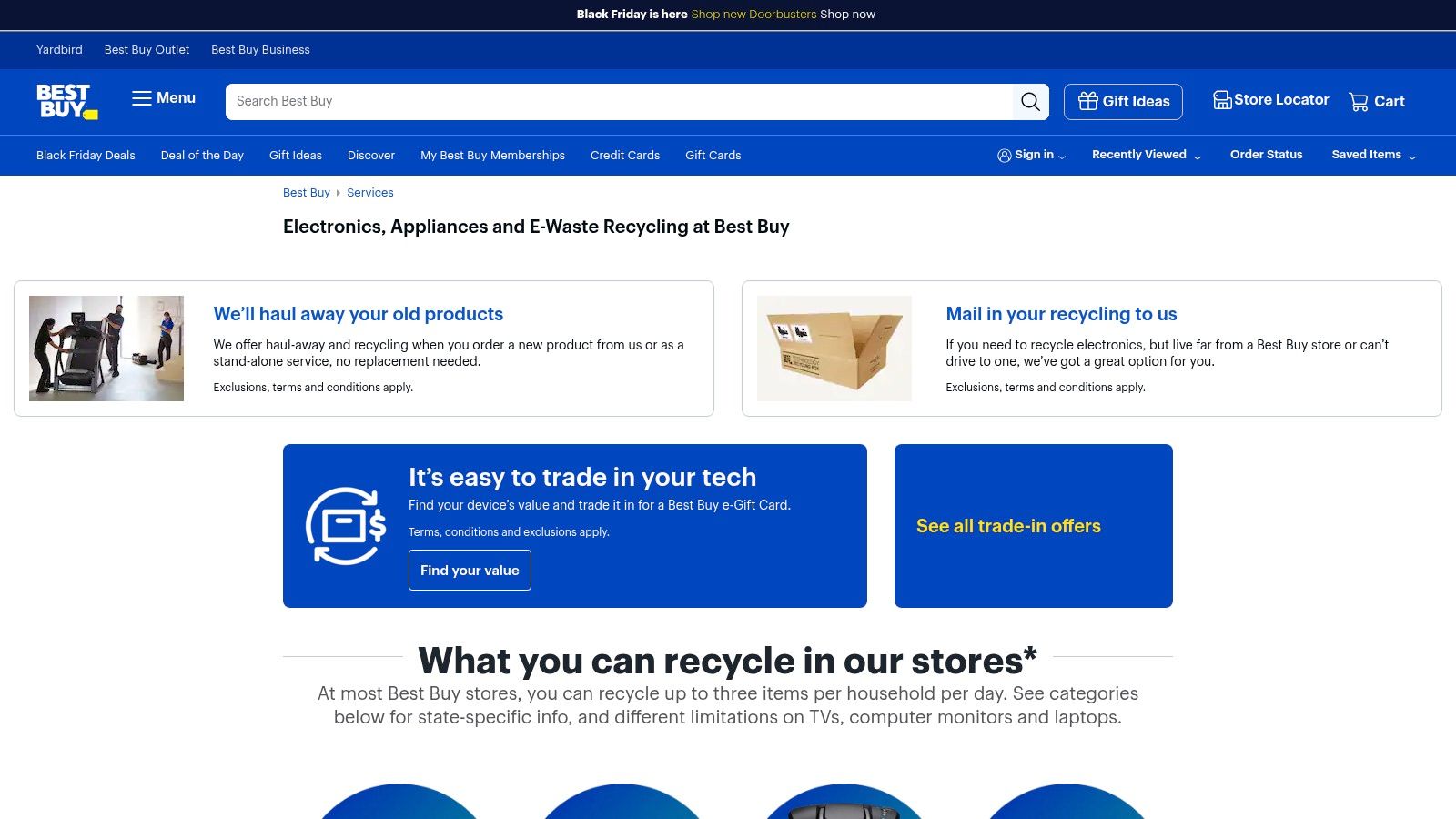
The program provides several pathways. For organizations with geographically dispersed teams, prepaid Recycle-by-Mail boxes offer a streamlined solution for consolidating devices from multiple locations. While this service has a fee, it simplifies logistics. The free in-store drop-off is useful for smaller batches, though it's important to be aware of daily limits.
Key Features and Considerations
For businesses, especially those without a dedicated IT asset disposition (ITAD) vendor, Best Buy’s program is a practical first step. It is particularly useful for ad-hoc recycling needs or for small businesses that don't generate enough e-waste to warrant a specialized B2B service.
- Service Options: In-store drop-off, trade-in for credit, and paid mail-in boxes.
- Accessibility: Available at nearly all U.S. Best Buy stores.
- Cost: Cell phone drop-off is free. Mail-in boxes and other services have associated fees.
- Limitations: Daily quantity limits (typically three items per household per day) may apply. The program does not provide data destruction certificates, which is a critical consideration for corporate devices containing sensitive information.
Website: https://www.bestbuy.com/recycling
2. Apple Trade In
Apple’s Trade In program provides a streamlined solution for businesses operating within the Apple ecosystem, offering a direct path to either receive credit for valuable devices or responsibly recycle them for free. It is particularly effective for organizations managing small-to-medium fleets of iPhones and iPads, as it integrates asset recovery directly into the procurement cycle for new Apple products.
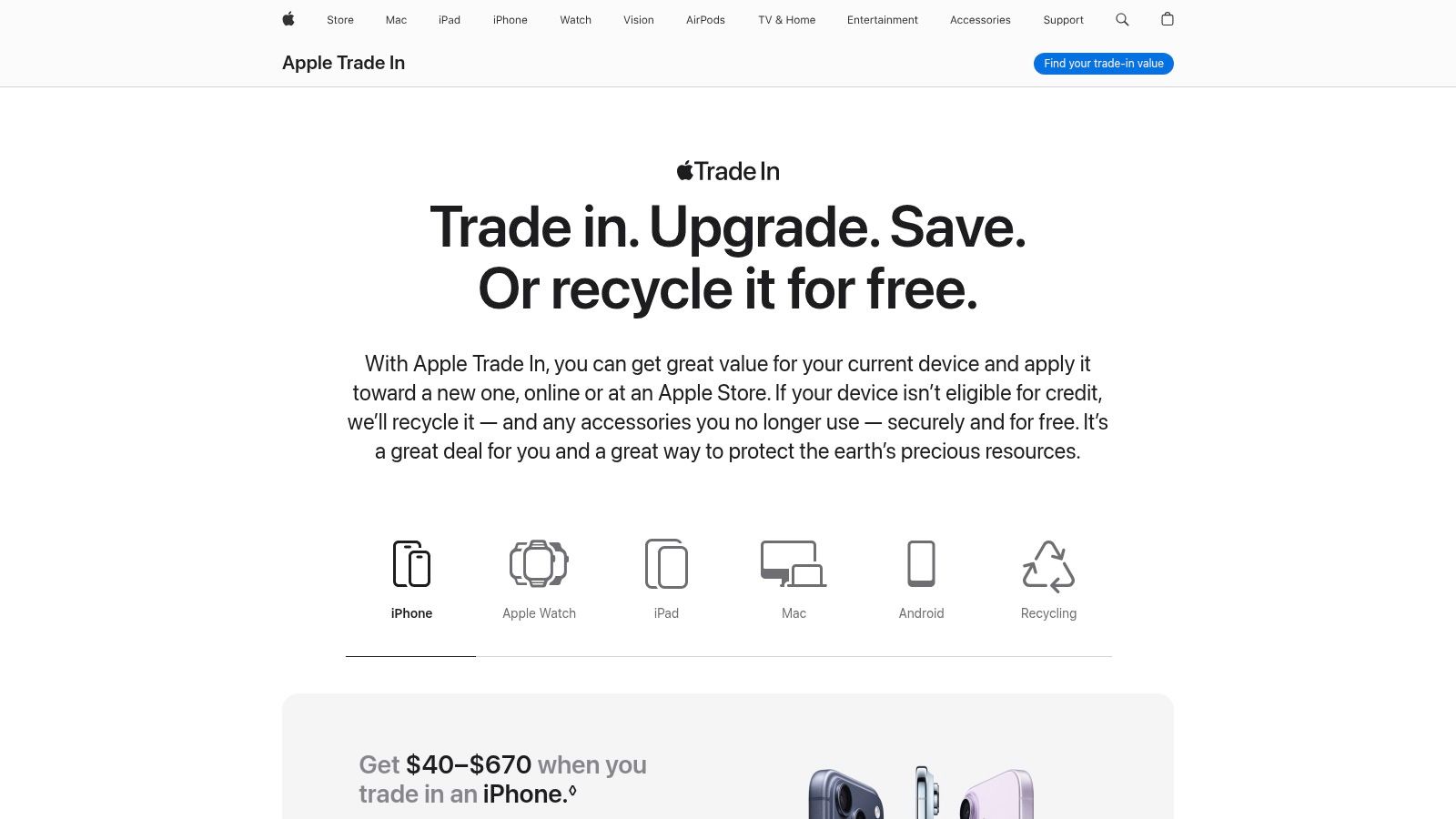
The process is designed for business efficiency, offering an online estimate tool and the choice between mailing devices with prepaid kits or dropping them off at an Apple Store. This flexibility supports both centralized and decentralized IT management. For companies upgrading a small number of corporate-owned devices, this program can simplify the initial stages of device lifecycle management. For more detailed guidance, see our write-up on how to dispose of an old iPhone.
Key Features and Considerations
While primarily designed for consumers, the Apple Trade In program can be leveraged by small businesses for one-off upgrades. It’s important to note that this is not a comprehensive ITAD solution; it lacks the mass processing capabilities, detailed reporting, and certified data destruction documentation that larger organizations require for compliance and security.
- Service Options: Trade-in for credit or an Apple Gift Card, and free recycling for devices with no trade-in value.
- Accessibility: Available online with prepaid mail-in kits or via in-store drop-off at any Apple Store location.
- Cost: Free for all recycling and trade-ins, with shipping included.
- Limitations: The program does not offer data destruction certificates, which is a critical gap for corporate compliance. Trade-in values for non-Apple devices are often lower than market rates, and final offers may be adjusted after professional inspection.
Website: https://www.apple.com/shop/trade-in
3. ecoATM
ecoATM operates a vast network of automated kiosks for immediate device buyback. While primarily a consumer-facing service, it can serve a niche purpose for businesses. For example, it can be a sanctioned option for employees to dispose of old, non-sensitive personal devices used under a BYOD (Bring Your Own Device) policy or for liquidating a very small number of low-value, non-critical corporate assets without engaging a full ITAD vendor.
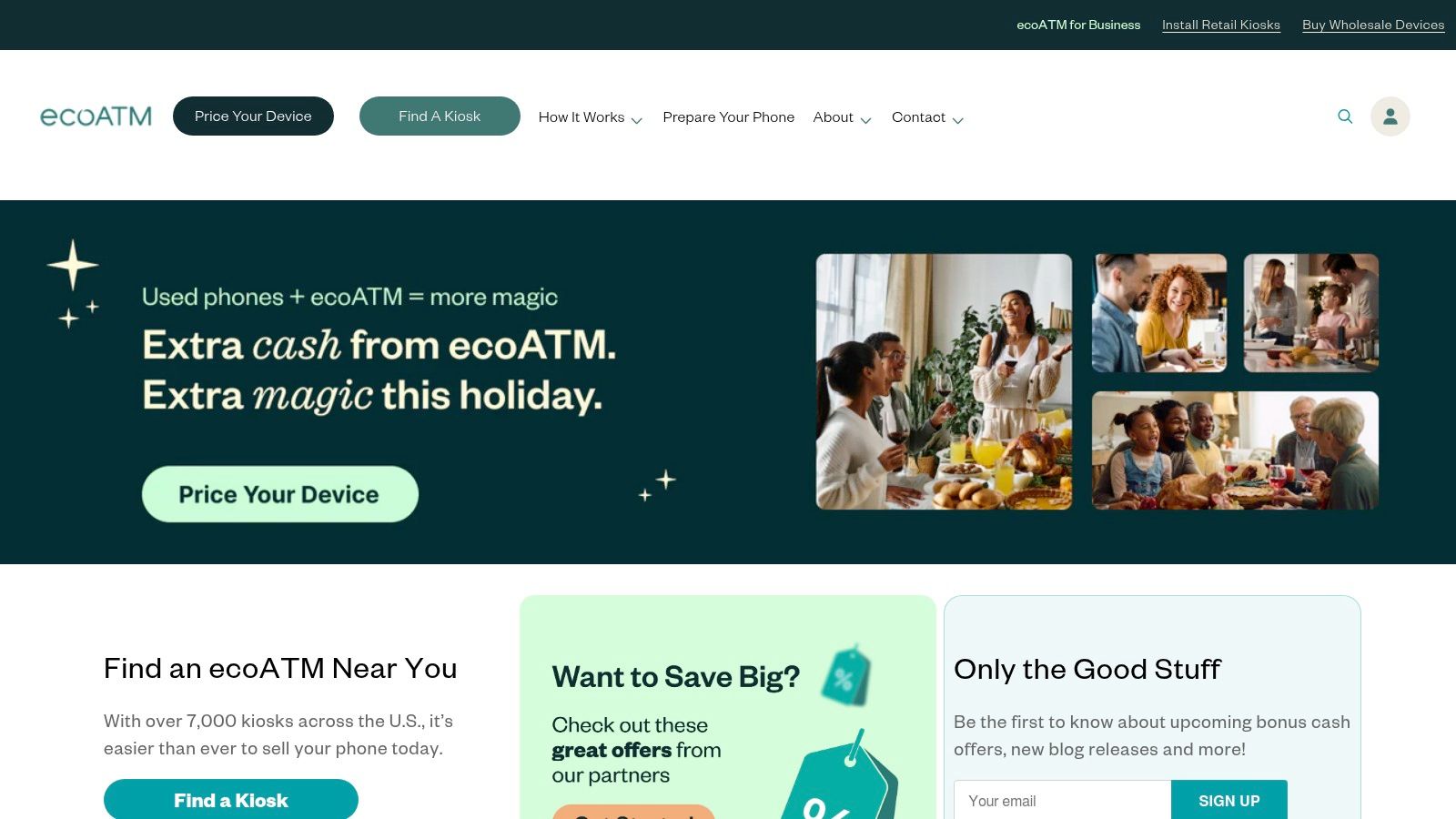
The kiosk-based process is automated: it scans the device, assesses its condition, and provides an immediate cash offer. Phones with market value are typically refurbished and resold. Devices deemed non-functional are sent to certified e-waste recycling partners, ensuring responsible handling. You can find more information about the outcomes of these processes by learning about what happens to recycled electronics.
Key Features and Considerations
While ecoATM is primarily a consumer-focused service, it can be a practical option for small businesses or employees with individually-owned devices that fall outside a corporate ITAD program. It is not suitable for bulk corporate disposals due to the one-at-a-time kiosk process and lack of data destruction certificates.
- Service Options: Instant cash payout at self-service kiosks.
- Accessibility: Over 7,000 kiosks across the U.S. in high-traffic retail areas.
- Cost: Free to use; the value offered for the device is the payout.
- Limitations: Payouts may be lower than online trade-in platforms. The process requires a physical trip to a kiosk and is not designed for business-level, bulk device recycling or certified data sanitization needs.
Website: https://www.ecoatm.com
4. Amazon Trade‑In
Amazon's Trade-In program offers a straightforward, mail-in process for businesses to recover value from a small number of retired devices. By providing Amazon gift card credit in exchange for used cell phones, it allows organizations to convert old assets into funds for future office supply or equipment purchases on the platform. This model is best suited for small businesses or departments that manage their own procurement through Amazon.
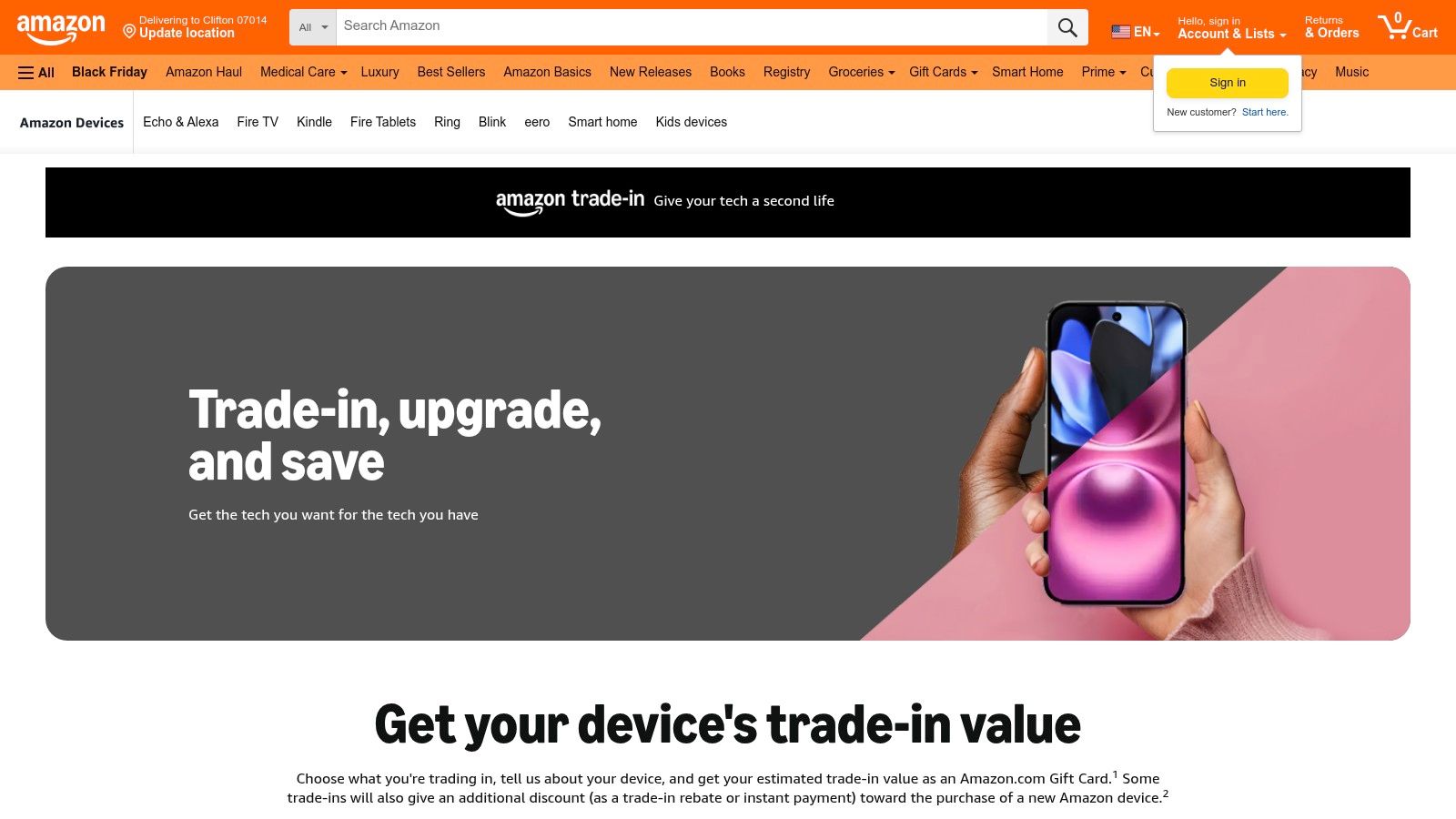
The entirely online process provides a prepaid shipping label, simplifying logistics for companies without a centralized IT department or for managing devices from remote employees. When using mail-in services, ensuring compliance with shipping regulations is crucial. Refer to a guide on how to ship a cell phone with USPS to ensure your package is secure and compliant.
Key Features and Considerations
For businesses managing a small number of devices or seeking an alternative to vendor-managed ITAD, Amazon's program offers a straightforward path to asset recovery. The gift card credit can be used for future office supply or equipment purchases. However, the lack of cash payments and data destruction certificates means it is not suitable for corporate devices that held sensitive information or for companies requiring formal asset disposition records.
- Service Options: Mail-in trade-in for Amazon gift card credit. Select drop-off locations are also available.
- Accessibility: Available to anyone with an Amazon account in the U.S.
- Cost: Free to use, with a prepaid shipping label provided.
- Limitations: Payment is exclusively in Amazon gift cards, not cash. The final trade-in value is determined after inspection and may be lower than the initial quote. No certificates of data destruction are provided, making it inappropriate for secure corporate asset disposal.
Website: https://www.amazon.com/tradein
5. Verizon Device Trade‑In and Recycling
Verizon’s program provides a convenient way for businesses on its network to manage device lifecycle costs. It allows companies to trade in old corporate phones for bill credits, which can directly offset the operational expenses of their mobile fleet. For devices with no trade-in value, Verizon offers free, responsible recycling, ensuring proper environmental disposal. This integration makes it a practical choice for businesses during an upgrade cycle.
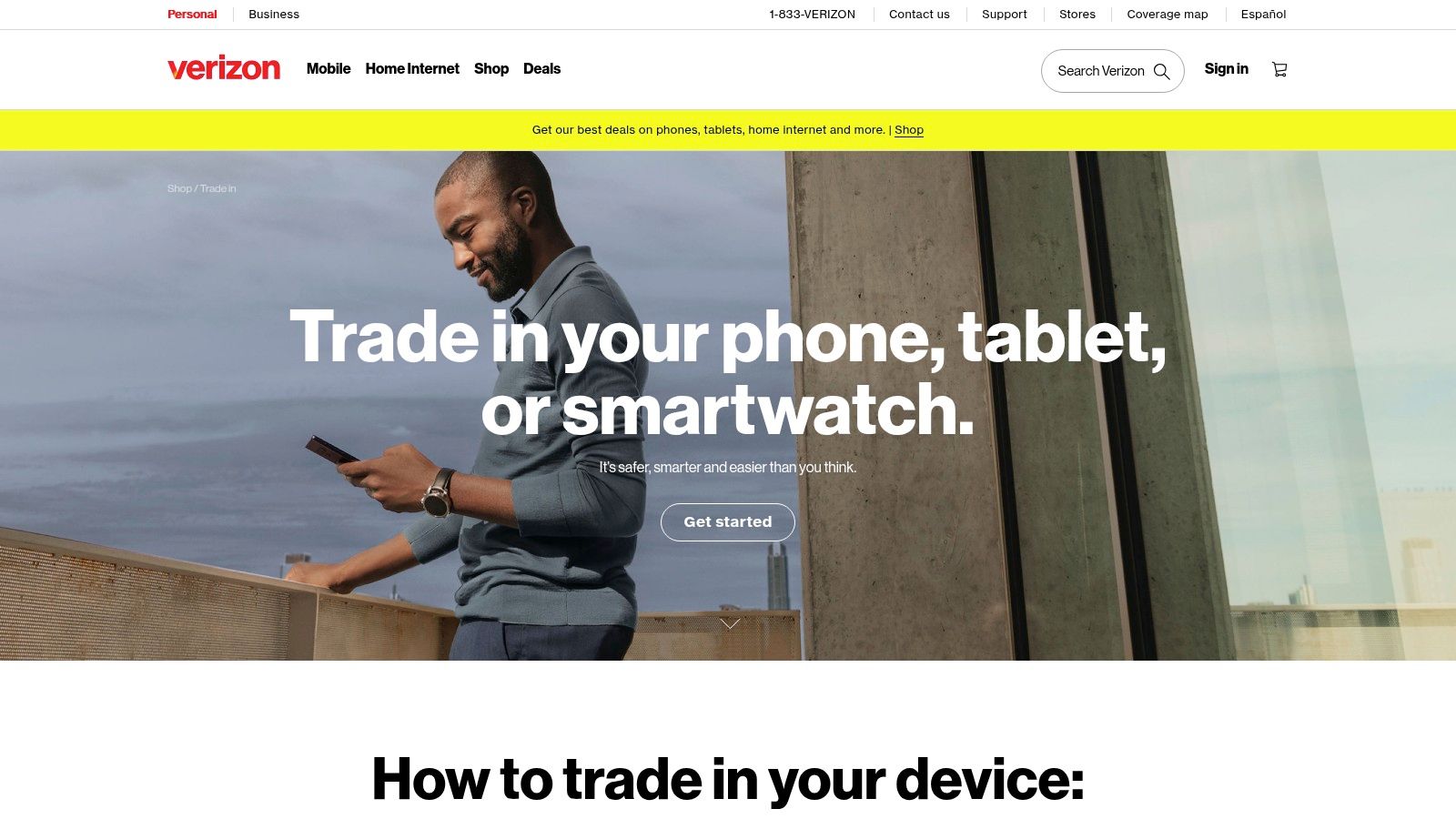
The process offers multiple avenues, including online valuation, in-store drop-off, and prepaid mail-in kits. While the program provides instructions for data wiping, it is crucial for businesses to understand this is not a substitute for certified data destruction. This service is best used for devices that have already undergone a rigorous internal data sanitization process. For a deeper understanding of corporate IT asset disposition, it's beneficial to learn more about professional data security protocols.
Key Features and Considerations
The program's main strength is its convenience for Verizon customers, as trade-in values can be directly applied to their accounts. Frequent promotional deals can significantly enhance the value of newer models, making it a compelling option for organizations looking to maximize returns on recent-generation devices. However, the best offers are often tied to new service agreements or device purchases.
- Service Options: Trade-in for bill credits, gift cards, or instant credit. Free recycling for zero-value devices.
- Accessibility: Online valuation, prepaid mail-in kits, and in-store trade-in options available.
- Cost: Free. Shipping is covered for mail-in trade-ins and recycling.
- Limitations: The most attractive trade-in values often require a new plan or device purchase. Credits may be distributed over multiple billing cycles, and the program lacks certified data destruction for business compliance needs.
Website: https://www.verizon.com/trade-in/
6. T-Mobile Trade‑In
For businesses utilizing the T-Mobile network, its trade-in program can be a strategic financial tool to reduce the total cost of ownership for a mobile fleet. The program often features aggressive promotional offers that significantly boost the trade-in value of old devices when upgrading to new models or plans. This turns the disposition of old assets into a direct subsidy for new hardware procurement, making it an attractive option for companies managing upgrade cycles.
The process is built for efficiency, offering an online quote engine, prepaid shipping for mail-ins, and immediate in-store transactions. This flexibility allows IT managers to choose the most convenient disposition path. By integrating the disposal of old phones directly into the acquisition of new ones, T-Mobile provides a value-centric approach to device lifecycle management.
Key Features and Considerations
For businesses already on or moving to the T-Mobile network, this program is a strategic financial tool rather than just a disposal method. It streamlines the upgrade cycle by integrating the disposition of old assets directly into the procurement of new ones, answering the question of where you can recycle cell phones with a value-centric approach.
- Service Options: Online trade-in quote with a prepaid shipping label or immediate in-store drop-off.
- Accessibility: Available online nationwide and at all T-Mobile retail locations.
- Cost: The trade-in process is free, with T-Mobile covering shipping costs for mail-in devices.
- Limitations: The best values are tied to promotional offers requiring a new device purchase or eligible plan activation. Credits are often applied to the monthly bill over several cycles, not as a lump-sum payment, which requires tracking for business accounting.
Website: https://www.t-mobile.com/offers/trade-in
7. AT&T Trade‑In
AT&T's trade-in program offers a direct financial incentive for businesses operating on its network to upgrade their mobile device fleets. The program allows companies to exchange old cell phones for bill credits or substantial discounts on new devices. This can be a highly effective cost-management strategy, particularly for small businesses looking to subsidize hardware refreshes by leveraging the value of their existing assets.
The process is initiated online with an instant quote based on the device's IMEI and condition. Companies can then complete the transaction at a retail store or use a prepaid shipping kit. While convenient for upgrading a few employee phones, this program is not a substitute for a full-scale IT asset disposition (ITAD) service, as it lacks certified data destruction and bulk processing capabilities essential for enterprise-level compliance.
Key Features and Considerations
The program's main appeal lies in the frequent high-value promotions, which can significantly lower the cost of new flagship phones. However, these offers almost always require a commitment to specific unlimited plans and distribute the credits over many billing cycles, typically 36 months. This makes it less of a simple recycling option and more of a long-term upgrade strategy.
- Service Options: Trade in for bill credits, discounts on new phones, or AT&T promotion cards.
- Accessibility: In-store drop-off at AT&T locations or free prepaid mail-in shipping.
- Cost: Free to participate; the value offered depends on the device model, condition, and active promotions.
- Limitations: Top-tier trade-in values are tied to new device purchases and long-term plan commitments. Credits are applied over many months, not as a lump sum. The program does not provide certified data destruction for business compliance needs.
Website: https://www.att.com/deals/phone-trade-in
8. Samsung Trade‑In
Samsung's trade-in program is a highly efficient channel for businesses standardizing on Samsung devices. A key advantage is the instant credit applied at checkout on Samsung.com, which simplifies procurement and budgeting for new corporate phone deployments. The program's enhanced trade-in values during new product launches provide a strong financial incentive for companies to manage their device lifecycle within the Samsung ecosystem.
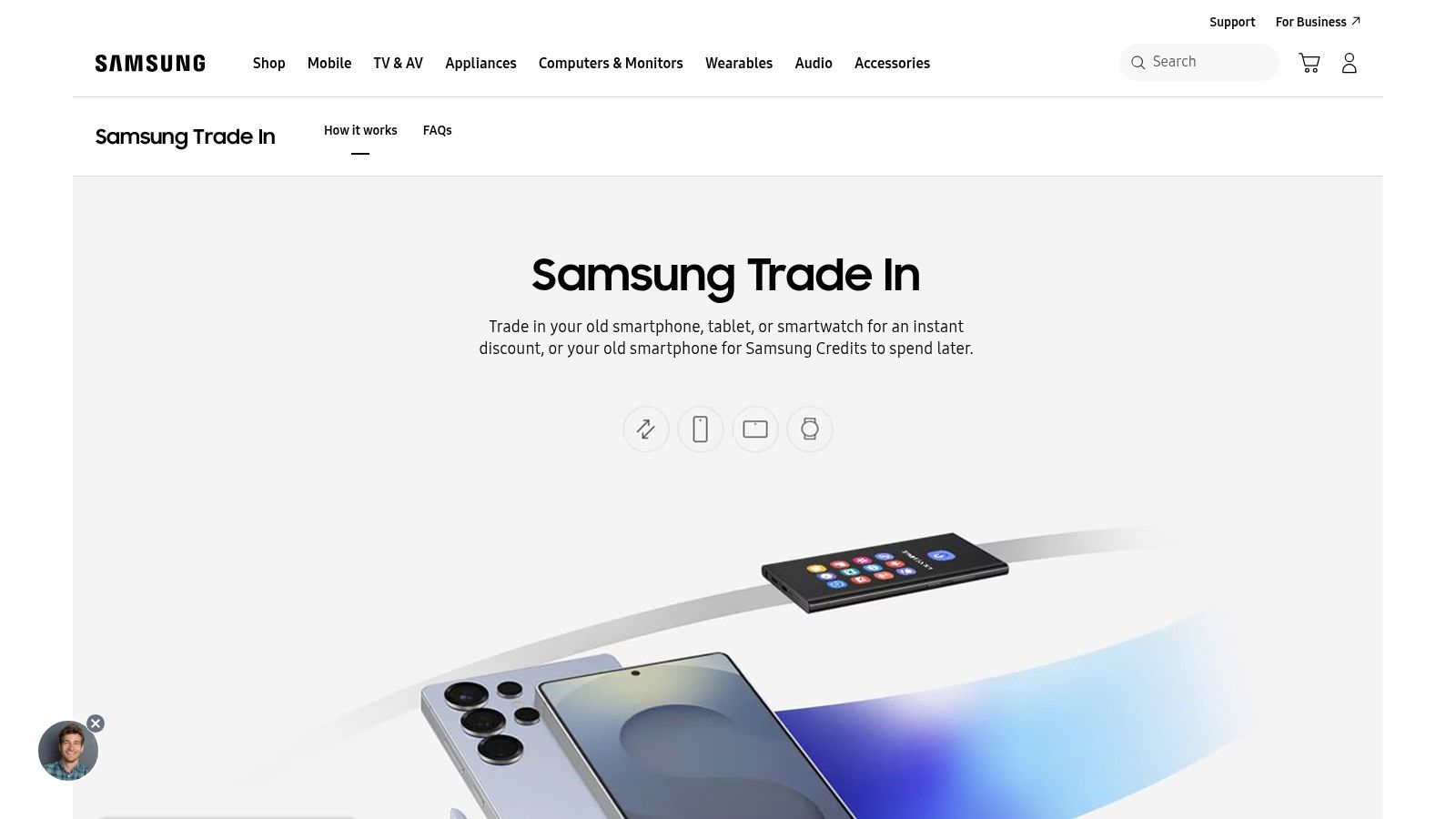
The program is versatile, accepting devices from various brands and even offering reduced credit for phones with cracked screens—a valuable feature for assets that have seen heavy field use. For organizations needing to dispose of phones without an immediate purchase, Samsung's partnership with Likewize offers a standalone trade-in service. This flexibility makes it a robust option for corporate asset disposition.
Key Features and Considerations
For businesses committed to the Samsung platform, this program streamlines device lifecycle management by integrating asset recovery directly into the purchasing workflow. The instant credit model simplifies budgeting for new device deployments. However, the highest financial returns are almost always tied to a new Samsung purchase, making it less ideal for companies switching to other manufacturers or those purely focused on recycling without a hardware refresh.
- Service Options: Instant trade-in credit toward new Samsung products, or a standalone trade-in option via a U.S. partner (Likewize).
- Accessibility: Available online nationwide with free shipping for trade-in devices.
- Cost: Free to use; shipping labels are provided for sending in old devices.
- Limitations: The most competitive trade-in values are contingent on buying a new Samsung device. The standalone partner program may have a more limited list of accepted models and conditions compared to the direct trade-in offer.
Website: https://www.samsung.com/us/trade-in/
9. Staples Electronics Recycling
Staples provides a free and accessible in-store electronics recycling program that is highly convenient for small businesses or for decentralized corporate offices needing to dispose of a few cell phones. With a large retail network, finding a local drop-off point is simple. The program accepts all mobile phones, regardless of brand or condition, making it a reliable, no-cost solution for ad-hoc disposal needs.
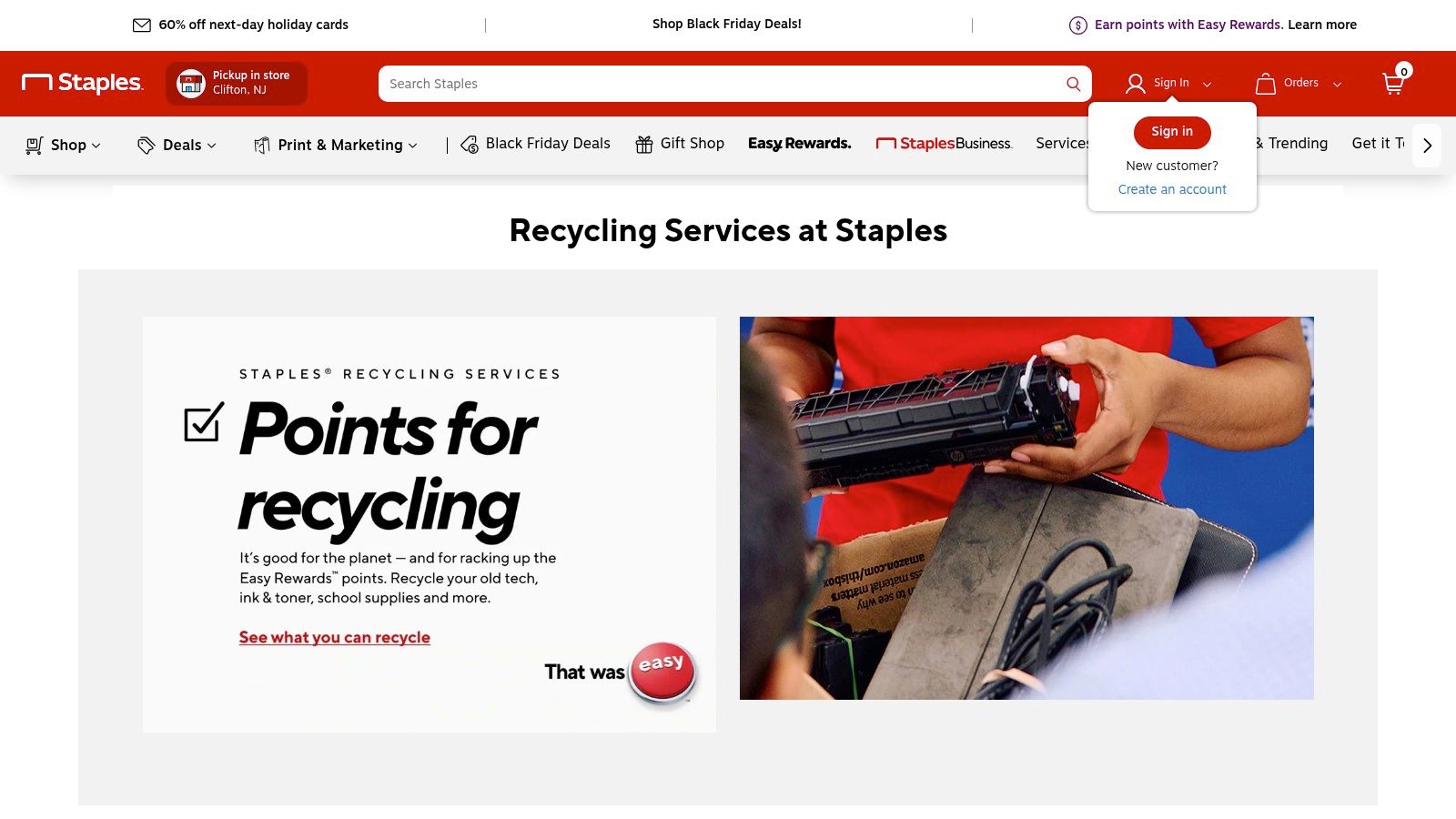
For larger organizations in regulated sectors like healthcare or finance, Staples offers more comprehensive corporate e-waste services. These paid, structured programs provide the logistical support, secure handling, and certified documentation that the free in-store service lacks, addressing enterprise-level compliance and data security requirements.
Key Features and Considerations
The in-store program is ideal for small businesses or corporate departments needing to dispose of a handful of devices quickly and without hassle. It serves as a practical, ad-hoc solution when a full-scale ITAD service is not required. However, for organizations in regulated industries like healthcare or finance, the lack of data destruction certificates from the free drop-off service is a significant limitation that necessitates using their formal business services.
- Service Options: Free in-store drop-off for phones and accessories; corporate e-waste services available.
- Accessibility: Available at most U.S. Staples retail locations with no purchase necessary.
- Cost: Free for in-store cell phone recycling.
- Limitations: Daily limits apply (typically up to seven items per customer). In-store drop-offs do not include certificates of data destruction, a crucial requirement for business compliance.
Website: https://www.staples.com/recycling
10. Earth911 Recycling Search
Earth911 is a powerful research tool for businesses looking to identify local e-waste disposal options. It functions as a comprehensive search engine, connecting users to over 100,000 recycling listings across North America. For IT managers, this is an invaluable resource for finding nearby certified recyclers, county-sponsored e-waste events, or specialized disposal facilities that may not be part of a national chain.
The platform allows users to search by material ("cell phones") and ZIP code, generating a map of drop-off locations. This can be particularly useful for businesses with multiple office locations, enabling them to find compliant disposal partners in different regions. It serves as an excellent starting point for due diligence in building a compliant, geographically diverse ITAD program.
Key Features and Considerations
While Earth911 is an excellent starting point, it is not the final step. The directory points to third-party services, so it's critical for businesses to vet each potential recycler for proper certifications (like R2 or e-Stewards) and data security protocols. Always contact the listed facility directly to confirm their hours, accepted items, and any potential fees before dropping off devices. This due diligence ensures that you're choosing a responsible disposal pathway.
- Service Options: Searchable directory of local drop-off sites, mail-in programs, and community recycling events.
- Accessibility: Available online and via a phone hotline (1-800-CLEANUP) across North America.
- Cost: Free to use the search tool. Costs for recycling, if any, are determined by the individual facilities listed.
- Limitations: Acts as a directory, not a recycler. Information accuracy depends on the third-party listings, so verification is essential. It does not provide data destruction certificates or manage logistics.
Website: https://search.earth911.com
11. Eco‑Cell
Eco‑Cell offers a unique, mission-driven recycling solution that aligns well with corporate social responsibility (CSR) initiatives. The program channels proceeds from collected devices to support wildlife conservation efforts, turning e-waste into a tangible contribution to environmental causes. For businesses, partnering with Eco-Cell provides a compelling story for sustainability reports and employee engagement campaigns.
The program simplifies logistics for corporate partners by providing free shipping labels and collection boxes, making it easy to organize collection drives for employee-owned or non-sensitive company devices. While the primary appeal is philanthropic, Eco-Cell does pay its partners for devices with resale value. This model is ideal for companies prioritizing positive brand association and community impact over maximizing financial returns on retired assets.
Key Features and Considerations
Eco‑Cell is best suited for organizations aiming to support conservation through their recycling efforts, particularly for collecting employee-owned phones or company devices that have been properly wiped. Since data destruction is the responsibility of the sender, it is not a direct replacement for a certified ITAD vendor for devices containing sensitive corporate or client data.
- Service Options: Partner-led collection drives, mail-in program for partners, and public drop-off map.
- Accessibility: Individuals can find a nearby drop-off location via the website map; businesses can partner directly.
- Cost: Free for partners to participate and ship devices.
- Limitations: Senders are responsible for all data wiping and factory resets before shipping. The program is not designed for secure, certified data destruction, making it less suitable for high-security enterprise needs.
Website: https://eco-cell.com
12. Secure the Call
Secure the Call provides a powerful corporate social responsibility (CSR) opportunity by transforming retired corporate cell phones into emergency 911 devices for at-risk individuals, including domestic violence victims and seniors. For businesses, this 501(c)(3) nonprofit offers a clear, high-impact way to contribute to public safety while responsibly disposing of old mobile assets.
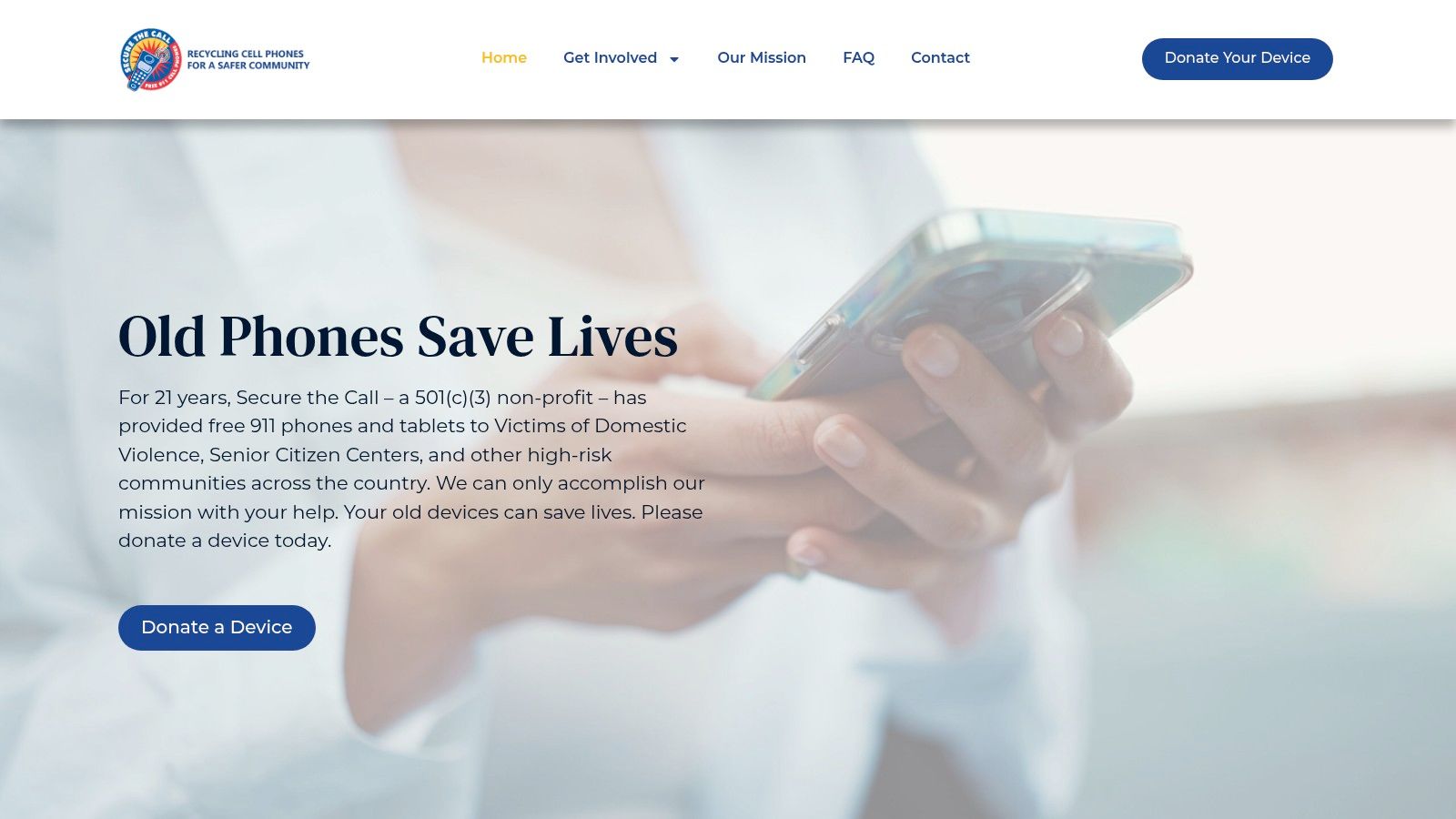
The donation process is logistically simple: organizations can mail in devices using a free, printable USPS shipping label. Secure the Call accepts phones in any condition, securely reformats usable devices, and shreds their SIM cards before redistribution. Any non-functional phones are sent to a responsible recycling partner. This makes it an excellent choice for disposing of devices that have no trade-in value but can still serve a critical community purpose.
Key Features and Considerations
For organizations, this program is less about asset recovery and more about community impact. It's an ideal choice for disposing of devices that fall outside a formal ITAD program, such as a collection of employee-donated phones from a corporate drive. While it doesn't offer monetary returns or data destruction certificates, its mission-driven approach provides a valuable alternative to standard recycling. Learn more about the benefits of old cell phone donations.
- Service Options: Mail-in donation program using a free shipping label.
- Accessibility: Available nationwide to anyone with mail access.
- Cost: Completely free; shipping is covered by the organization.
- Limitations: This is a donation-only service with no financial compensation. It does not provide formal certificates of data destruction, which may be a requirement for corporate devices containing sensitive data.
Website: https://securethecall.org
Cell Phone Recycling: 12 Options Compared
| Service Type (core features) | Data Security & Compliance | Convenience / UX | Value / Pricing 💰 | Target Audience 👥 | Unique Selling Point ✨/🏆 |
|---|---|---|---|---|---|
| Best Buy Electronics Recycling — drop‑off, haul‑away, mail | Basic wipe guidance; retail processing (not enterprise ITAD) | ★★★★ — large footprint, multiple options | 💰 Mixed (some fees; trade‑in varies) | Small biz, ad-hoc disposals | ✨ Nationwide retail access; multiple drop‑off methods |
| Apple Trade‑In — trade‑in or free recycle with prepaid mail | Strong process & data‑erase guidance; Apple inspection | ★★★★★ — streamlined online + in‑store | 💰 High for Apple devices | Businesses in Apple ecosystem | 🏆 Instant credit toward Apple purchases; free shipping |
| ecoATM — kiosk buyback for instant cash | On‑site evaluation; devices refurbished or recycled (limited formal wipe) | ★★★ — very convenient if kiosk nearby | 💰 Low–moderate instant cash payout | Niche: BYOD policies, single units | ✨ Instant, on‑the‑spot cash payment |
| Amazon Trade‑In — gift‑card credit, prepaid mail | Refurbish/recycle via partners; basic data guidance | ★★★★ — simple mail‑in/drop‑off | 💰 Moderate (gift‑card only) | Small biz using Amazon for supplies | ✨ Easy credit to Amazon purchases; free shipping |
| Verizon Device Trade‑In & Recycling — trade/credits/recycle | Provides prep instructions; integrated process (consumer‑grade) | ★★★★ — online + in‑store, status tracking | 💰 Higher with promos/new service | Verizon business customers | ✨ Promo tie‑ins; bill‑credit integration |
| T‑Mobile Trade‑In — quote, prepaid mail, in‑store | Standard wipe guidance; tied to promotions | ★★★★ — straightforward online flow | 💰 High when bundled with plans/promos | T-Mobile for Business customers | ✨ Strong promotional credits for plan activations |
| AT&T Trade‑In — IMEI quotes, mail‑in or store | IMEI/condition checks; consumer‑grade erasure guidance | ★★★★ — clear steps & support | 💰 High with device+plan promotions | AT&T business customers | ✨ Frequent high‑value promotions with commitments |
| Samsung Trade‑In — instant credit at checkout or partner buyback | Partner handling; wipe guidance provided | ★★★★ — instant credit for Samsung purchases | 💰 High for Samsung devices (best when buying new) | Businesses using Samsung devices | 🏆 High instant credit on Samsung.com; partner standalone option |
| Staples Electronics Recycling — free in‑store drop‑off | Uses certified recyclers; corporate e‑waste services available | ★★★★ — free & convenient for office tech | 💰 Free (daily limits may apply) | Small biz, corporate drop-offs | ✨ Free certified small‑electronics recycling; corporate services |
| Earth911 Recycling Search — directory of local recyclers | Directory only — security depends on listed facilities | ★★★ — excellent locator; verify providers | 💰 Free to use (partner fees may apply) | IT Managers researching local vendors | ✨ Largest searchable database of recycling locations |
| Eco‑Cell — conservation collection via partners/zoos | No data wiping service; senders must wipe before donating | ★★★ — mission‑driven collections, org‑focused | 💰 Donation/funding model for orgs (no individual payout) | Businesses with CSR initiatives | 🏆 Funds wildlife conservation via collected devices |
| Secure the Call — nonprofit phone donations for 911 use | Performs reformatting & SIM shredding before distribution | ★★★★ — easy mail‑in donation with social impact | 💰 Donation program (no monetary payout) | Companies focused on social impact | 🏆 Direct social impact: refurbished 911‑only phones for at‑risk people |
Making the Right Choice for Your Business's Mobile ITAD Strategy
Navigating the landscape of mobile device disposal can feel complex, but as we've explored, a wealth of options exists to securely and responsibly manage your organization's end-of-life cell phones. From the consumer-facing convenience of major retailers like Best Buy and Staples to the specialized trade-in programs offered by carriers and manufacturers, the first step is recognizing that the landfill is never the answer. For individuals and small businesses, these avenues provide accessible and often immediate solutions for a handful of devices.
The key takeaway for any organization, however, is that a one-size-fits-all approach to IT Asset Disposition (ITAD) is rarely effective or secure. While an employee might use an ecoATM for a personal device, a business managing dozens or hundreds of phones requires a fundamentally different strategy. Your decision-making process must pivot from simple convenience to a robust framework built on data security, regulatory compliance, and logistical efficiency. The question for an IT manager in Atlanta isn't just "where can you recycle cell phones," but "how can we recycle our phones in a way that protects our data, complies with regulations like HIPAA or SOX, and provides a clear, auditable chain of custody?"
From Convenience to Compliance: Selecting Your Path
For businesses, the choice boils down to balancing security requirements with operational capacity. The programs we've detailed serve different needs, and understanding these distinctions is critical for developing a sound mobile ITAD policy.
- For Low-Volume, Low-Risk Scenarios: If your organization has only a few non-sensitive devices, leveraging manufacturer programs like Apple Trade In or carrier take-back services from Verizon and AT&T can be a practical choice. They offer a straightforward process, but often lack the detailed reporting and certified data destruction documentation required for enterprise-level compliance.
- For High-Volume, High-Security Needs: When dealing with a large-scale fleet refresh, especially one involving devices that contained Protected Health Information (PHI) or sensitive corporate data, your selection criteria must become more stringent. This is where certified e-waste recyclers become non-negotiable. These partners are not just recycling outlets; they are security vendors providing an essential service.
Final Considerations for Your ITAD Program
Before you finalize your mobile device recycling strategy, revisit these critical implementation factors. A successful program is proactive, not reactive.
- Data Security Above All: Never delegate the initial data wipe. Implement and enforce a strict, documented internal policy for wiping all devices before they leave your premises. Relying solely on a third party’s process without your own initial sanitization introduces unnecessary risk.
- Establish a Clear Chain of Custody: Who is responsible for collecting, inventorying, and managing the devices slated for disposal? Ensure this process is documented. For high-volume projects, your chosen partner must provide serialized asset tracking from pickup to final disposition.
- Verify Certifications: Don't just take a vendor's word for it. Ask for copies of their R2, e-Stewards, or NAID AAA certifications. These credentials are the gold standard, confirming their commitment to environmental responsibility and secure data destruction protocols. This verification is a cornerstone of due diligence.
Ultimately, choosing where to recycle your business's cell phones is a strategic decision that impacts data security, environmental stewardship, and regulatory standing. By prioritizing certified, professional ITAD partners, you transform a logistical challenge into a powerful demonstration of corporate responsibility and risk management.
For organizations in the Atlanta metro area seeking a certified, secure, and compliant partner for their ITAD needs, Atlanta Computer Recycling offers specialized solutions. We provide NAID AAA Certified data destruction and R2v3-certified recycling services tailored for corporate, healthcare, and educational clients. To ensure your end-of-life mobile devices are handled with the highest standards of security and environmental care, learn more at Atlanta Computer Recycling.