Sandy Springs Georgia Weather: A Guide for Commercial Operations


For businesses in Sandy Springs, Georgia, weather is far more than small talk. It is an operational variable that directly impacts logistics, facility maintenance, and asset security. Understanding the local climate isn't just prudent—it's a fundamental step toward building a resilient commercial enterprise that can withstand any weather-related disruption.
Why Sandy Springs Weather is a Critical Factor in Your Business Operations
For IT managers, facility operators, or logistics planners in the Atlanta metro, ignoring the weather forecast is equivalent to ignoring a critical network alert—a high-risk gamble. The climate in Sandy Springs presents a unique set of challenges that can disrupt high-stakes business activities, impacting your bottom line.
Viewing the sandy springs georgia weather as a strategic operational factor is essential for risk management. An unexpected afternoon thunderstorm can halt an on-site data destruction project, leaving sensitive servers and equipment exposed. Similarly, the region's high humidity can silently degrade electronics staged for pickup during a major IT asset disposition (ITAD) project, diminishing their value and complicating disposal.
From Reactive Measures to Proactive Strategy
The key to operational resilience is shifting from reacting to weather events to proactively planning for them. This involves treating a severe weather forecast with the same seriousness as a cybersecurity threat.
- Secure IT Asset Disposition: Planning a data center decommissioning or electronics recycling initiative requires a weather-aware timeline. A sudden downpour or an unexpected heatwave can damage assets before they leave your premises, complicating the entire disposition process.
- Logistical Coordination: For any logistics partner, seasonal weather patterns are a primary planning constraint. A minor ice storm can paralyze the entire metro area, delaying critical pickups and creating security risks for valuable assets stranded in transit.
- Facility Management: Weather dictates your property maintenance schedule. Continuous exposure to humidity and rain degrades a building's exterior, making regular commercial pressure washing services an essential investment in preserving your commercial property's value and appearance.
The principle is straightforward: if your operations have a physical component, they are exposed to weather-related risks. Proactive planning transforms this vulnerability into a manageable business variable, keeping your operations secure and on schedule, regardless of the forecast.
By integrating weather patterns into your operational planning, you can develop smarter logistics and protect your most valuable assets. For businesses managing complex IT logistics, a deeper dive into these strategies can be found in our guide to managing the impact of https://atlantacomputerrecycling.com/sandy-springs-weather/, which shows how to turn this challenge into a competitive advantage.
Decoding the Climate for Strategic Business Planning
To effectively manage weather-related risks, one must first understand the local climate patterns. For any business in Sandy Springs, this means translating the term "humid subtropical" into actionable intelligence that protects your equipment, project timelines, and budget. It’s about moving beyond a simple forecast to analyze how our climate impacts day-to-day commercial operations.
This strategic mindset alters how you manage logistics. An IT manager at a local corporation or a facilities director for a large commercial property must consider how a hot, humid summer afternoon can bake sensitive electronics on a loading dock. This is why a seemingly routine ITAD pickup with a partner like Atlanta Computer Recycling becomes a meticulously planned, weather-contingent operation.
Data That Drives Business Decisions
Effective planning is data-driven. You must understand the typical environmental stressors your projects will face. The Sandy Springs, Georgia weather is a set of data points that can determine the success or failure of an operation.
Located in the Atlanta metropolitan area, Sandy Springs features a classic humid subtropical climate that presents constant challenges for facility and IT managers. Historical data from WeatherSpark shows temperatures typically range from a low of 35°F in winter to a high of 89°F in peak summer. Temperatures rarely fall below 22°F or exceed 95°F, defining the operational window for safely handling and transporting sensitive IT assets.
This temperature range is a critical operational parameter, not just a weather fact. For anyone planning a data center migration or an office-wide asset liquidation, it dictates tangible risk.
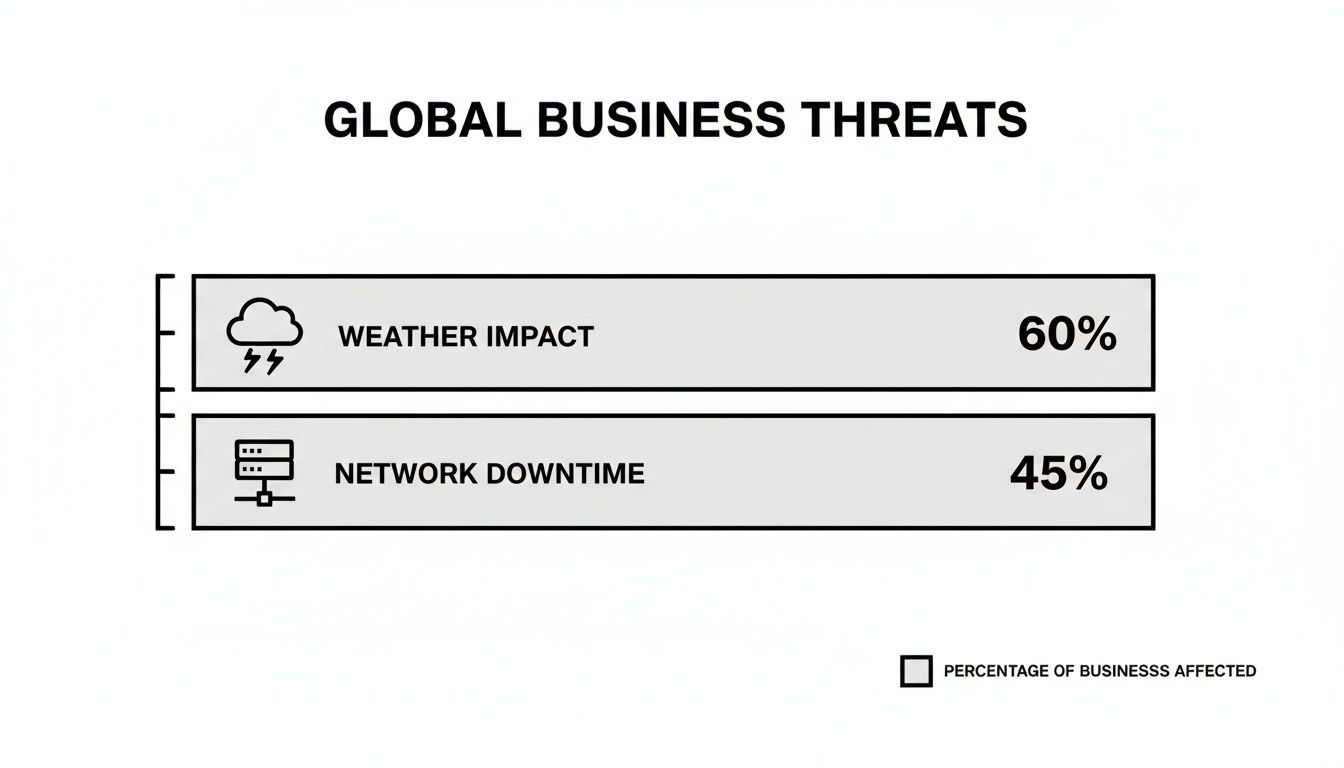
The data is unequivocal: weather impacts more businesses than major technical issues like network downtime. This statistic underscores the need for robust, weather-aware business planning.
Turning Climate Data Into A Business Plan
To assist your team in scheduling logistics with greater confidence, we've developed a seasonal overview. This table outlines what to expect in Sandy Springs throughout the year, offering practical advice for scheduling everything from data center decommissioning to routine electronics recycling pickups.
Sandy Springs Seasonal Weather At A Glance For Business Planning
| Season | Average Temperature Range (°F) | Primary Weather Concerns | Operational Planning Tip |
|---|---|---|---|
| Spring (Mar-May) | 46°F – 78°F | Severe thunderstorms, tornadoes, high pollen | Schedule outdoor projects for early mornings to avoid afternoon storms. Confirm your logistics partners use covered, secure vehicles. |
| Summer (Jun-Aug) | 68°F – 89°F | High heat, extreme humidity, pop-up thunderstorms | Prohibit staging of sensitive electronics outdoors. Schedule pickups for early AM to minimize heat exposure for equipment and personnel. |
| Fall (Sep-Nov) | 48°F – 82°F | Mild temperatures, lower humidity, hurricane remnants | This is the ideal window for large-scale projects like data center migrations or office-wide IT asset liquidations. |
| Winter (Dec-Feb) | 35°F – 55°F | Freezing temperatures, ice, occasional snow | Ensure loading docks and access ways are pre-treated for ice. Verify that transport vehicles can protect equipment from freezing temperatures. |
By aligning project timelines with these climatic realities, your business shifts from a reactive posture to a proactive, strategic approach.
This isn't about predicting the weather with perfect accuracy; it's about understanding and mitigating known risks. For instance, the intense humidity of a Georgia July makes it an unsuitable time for an outdoor decommissioning project, where condensation could damage server components. Conversely, the drier, milder conditions of autumn provide a much safer window for executing major ITAD projects. This foresight is the cornerstone of resilient business planning in the Atlanta area, ensuring your valuable assets are protected at every stage.
Protecting IT Assets From Summer Heat And Storms
Any business operating through a Georgia summer understands the pattern: oppressive heat and humidity followed by sudden, intense afternoon thunderstorms. For commercial enterprises in Sandy Springs, this is not a minor inconvenience but a significant threat to IT infrastructure, especially during sensitive projects like electronics recycling or data destruction.
Ignoring the risks posed by our local sandy springs georgia weather can lead to hardware failure, project delays, and safety issues for staff and vendors.
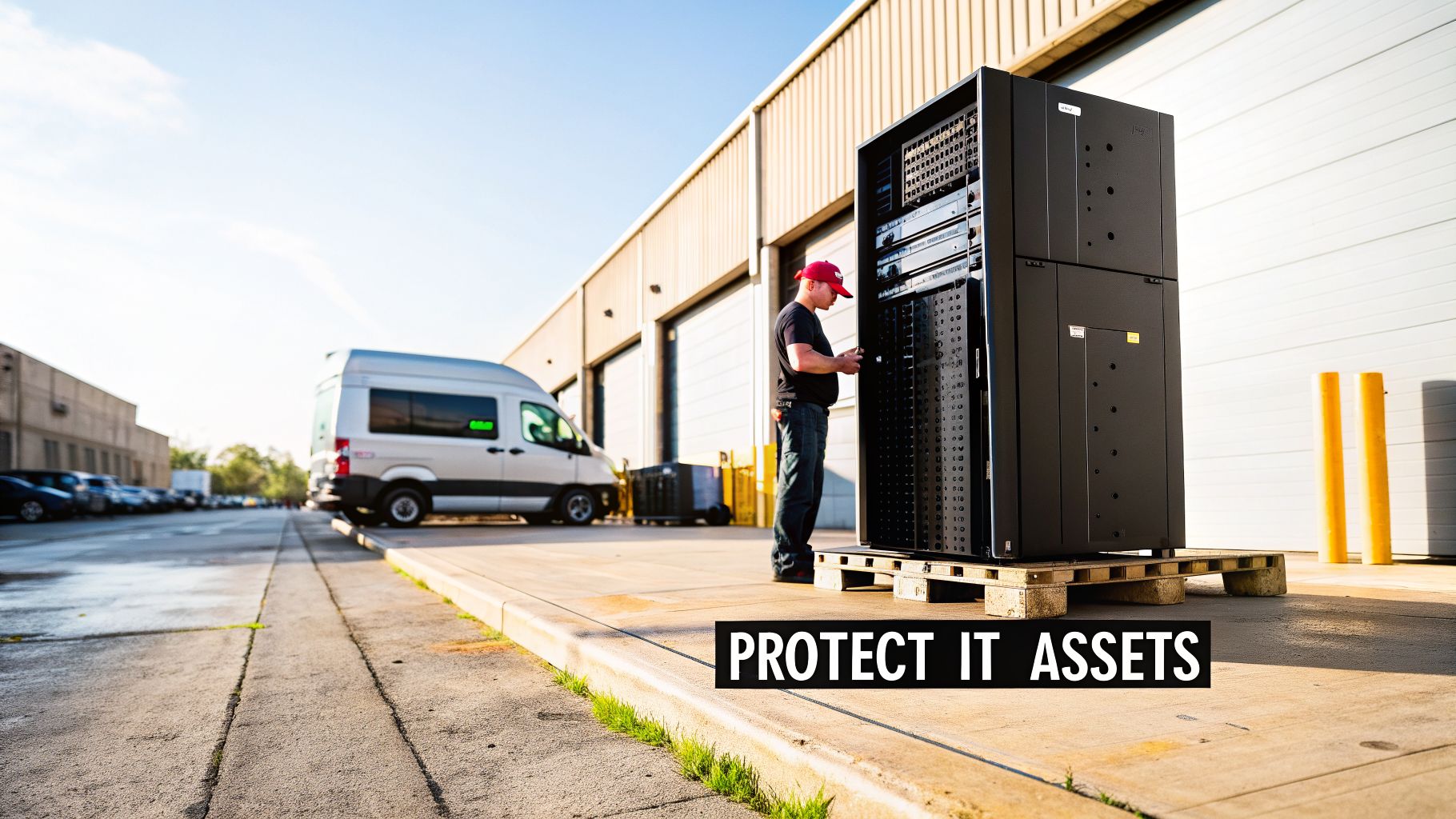
Consider the consequences of staging servers for an ITAD pickup on a loading dock in 90°F heat. The effect is similar to leaving a laptop in a hot car. Extreme heat and humidity can damage sensitive electronic components, complicating data destruction and eliminating any potential resale value of your equipment.
Mitigating Heat and Storm Risks for Commercial Assets
As the heat intensifies, the afternoon brings pop-up thunderstorms that can develop rapidly, causing flash flooding and traffic gridlock. For a crew performing an on-site de-installation, this is a logistical nightmare that halts work and creates significant safety hazards.
Of course, risk is not limited to outdoor work. To protect sensitive equipment operating inside your facility, it is critical to ensure your A/C can handle the summer heat.
The most effective defense against summer's volatility is a proactive operational plan. The simplest strategy is to schedule all critical outdoor logistics for the early morning hours.
- Avoid Peak Heat: Scheduling pickups between 7 a.m. and 10 a.m. minimizes heat exposure for both your equipment and the personnel handling it.
- Dodge Afternoon Storms: An early start significantly reduces the likelihood of being caught in a sudden downpour that can damage assets and derail your project timeline.
- Ensure Personnel Safety: Cooler morning temperatures provide a safer working environment, particularly when crews are lifting and moving heavy servers and racks.
By scheduling asset pickups with your ITAD partner for the early morning, you effectively mitigate the primary risks of summer heat and storms. This simple adjustment ensures your secure data destruction process is not compromised by weather-related equipment failure or delays.
This type of strategic scheduling is a cornerstone of effective IT asset management in the Atlanta region. It should be a non-negotiable part of your process when planning an equipment refresh or decommissioning project. To learn more about building a weather-resilient plan, explore our full range of computer recycling services for Sandy Springs businesses. Protecting your assets from environmental threats is always the first step.
Managing Winter Logistics When Ice Paralyzes the Metro Area
While heavy snow is uncommon in Sandy Springs, a thin layer of ice is all it takes to bring the entire Atlanta metro area to a standstill. When this occurs, critical business logistics can grind to a halt. This low-probability, high-impact scenario demands a dedicated winter weather plan, especially for organizations managing sensitive IT assets.
Unlike northern cities equipped to handle snow and ice, the typical sandy springs georgia weather means that even a small amount of freezing rain can shut down major roadways. For a corporation or government entity planning a large-scale IT disposal, an unexpected ice storm can sideline the project for days, creating significant security and storage risks for assets already staged for pickup.
Building Resilience Into Your Winter Operations
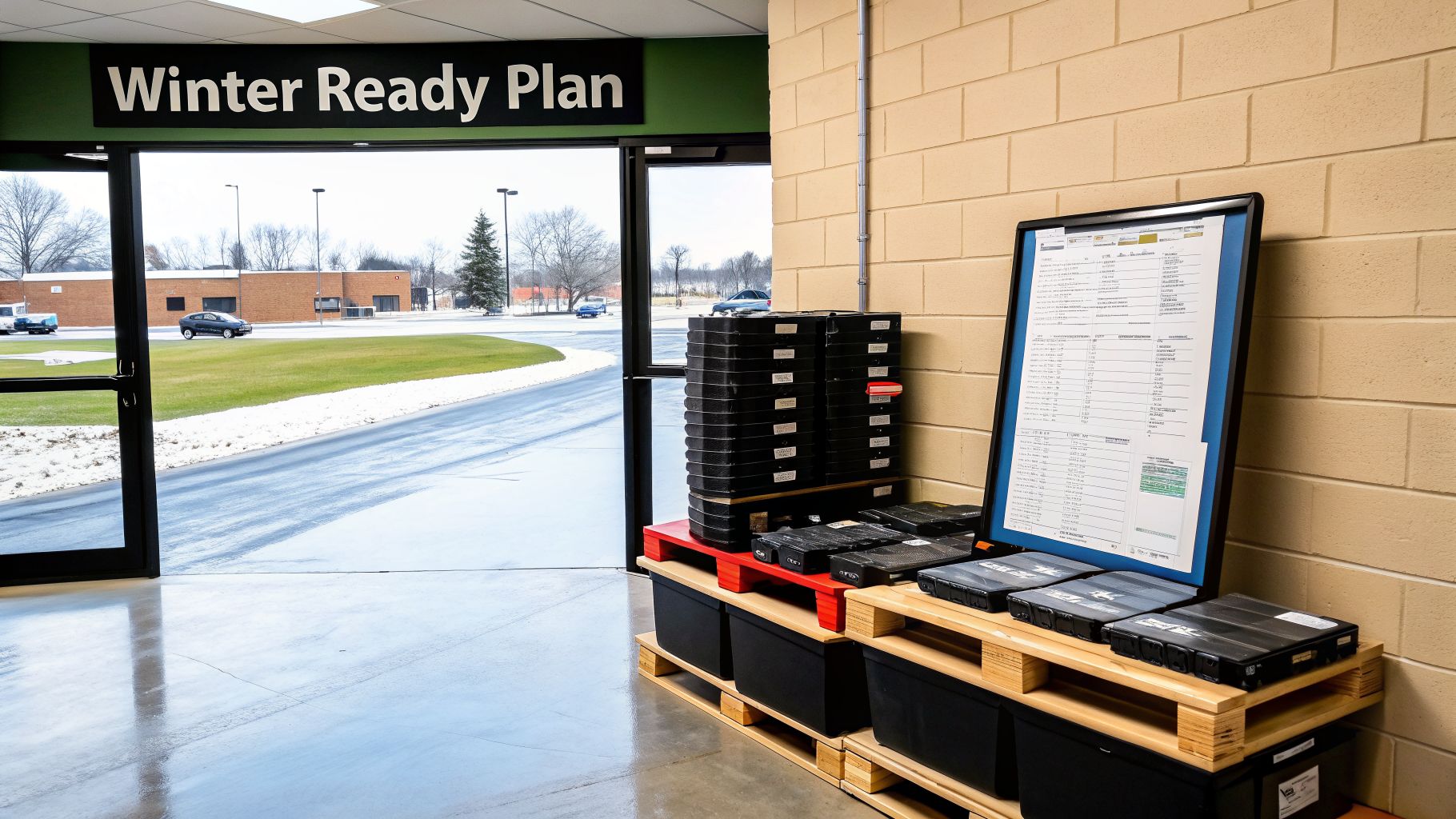
The key to navigating Georgia's winter is not to hope the forecast is inaccurate, but to build flexibility directly into your project plans. Once ice is on the ground, it is too late to react.
We have all seen the impact of past ice storms. Authorities advise residents to stay home, and major arteries like I-285 and GA-400 become impassable. This effectively isolates your facility, making it impossible for logistics partners to complete pickups or deliveries safely. These weather-related logistical challenges are common across the metro area, as detailed in our guide on Fairburn, GA weather.
Proactive communication and flexible scheduling are the two most effective defenses against a winter shutdown.
An ice storm doesn't just delay a truck; it freezes your entire chain of custody. If sensitive assets are left on an unsecured loading dock because a pickup was canceled, your business faces a potential data breach in addition to a logistical crisis.
Your Winter Weather Action Plan for Business
The moment a winter storm watch is issued, it's time to activate your contingency plan. Do not wait for the ice to confirm the forecast. Collaborate with your ITAD partner to implement a clear and decisive strategy.
- Add Buffer Days to Timelines: For any project scheduled during the winter months (December-February), automatically build in 2-3 buffer days. This simple measure prevents a single weather event from derailing your entire project deadline.
- Establish a Clear "Go/No-Go" Trigger: Define a specific trigger for rescheduling, such as the issuance of a Winter Storm Warning by the National Weather Service. This eliminates ambiguity and ensures all parties are aligned.
- Confirm Secure Staging Areas: Before a project begins, designate a secure, indoor, and climate-controlled area for staging assets. If a pickup is delayed, your equipment must remain protected from both the elements and unauthorized access.
- Proactive Rescheduling: As soon as a credible ice threat appears in the forecast, contact your logistics partner to reschedule. It is far better to move a pickup a day early or push it back than to risk stranding assets and vehicles.
This forward-thinking approach ensures your IT asset disposition projects remain secure and on schedule, regardless of the unpredictable Georgia winter.
Preparing Your Business for Tornadoes and Severe Weather
While summer storms and winter ice present distinct operational challenges, the spring season brings the most severe threat to the sandy springs georgia weather landscape: severe thunderstorms and tornadoes. For critical facilities such as data centers, hospitals, and corporate headquarters, this is not a remote possibility but a high-stakes event where thorough preparation is the only defense against catastrophic disruption.
This risk is pronounced in North Georgia, a region prone to the volatile atmospheric conditions that generate powerful supercell thunderstorms. A single tornado warning can trigger a facility-wide lockdown, halting all operations and testing the limits of your business continuity plan. For an IT manager, this immediately shifts focus from daily tasks to protecting critical physical hardware and digital information.
A Three-Phase Approach to Severe Weather Resiliency
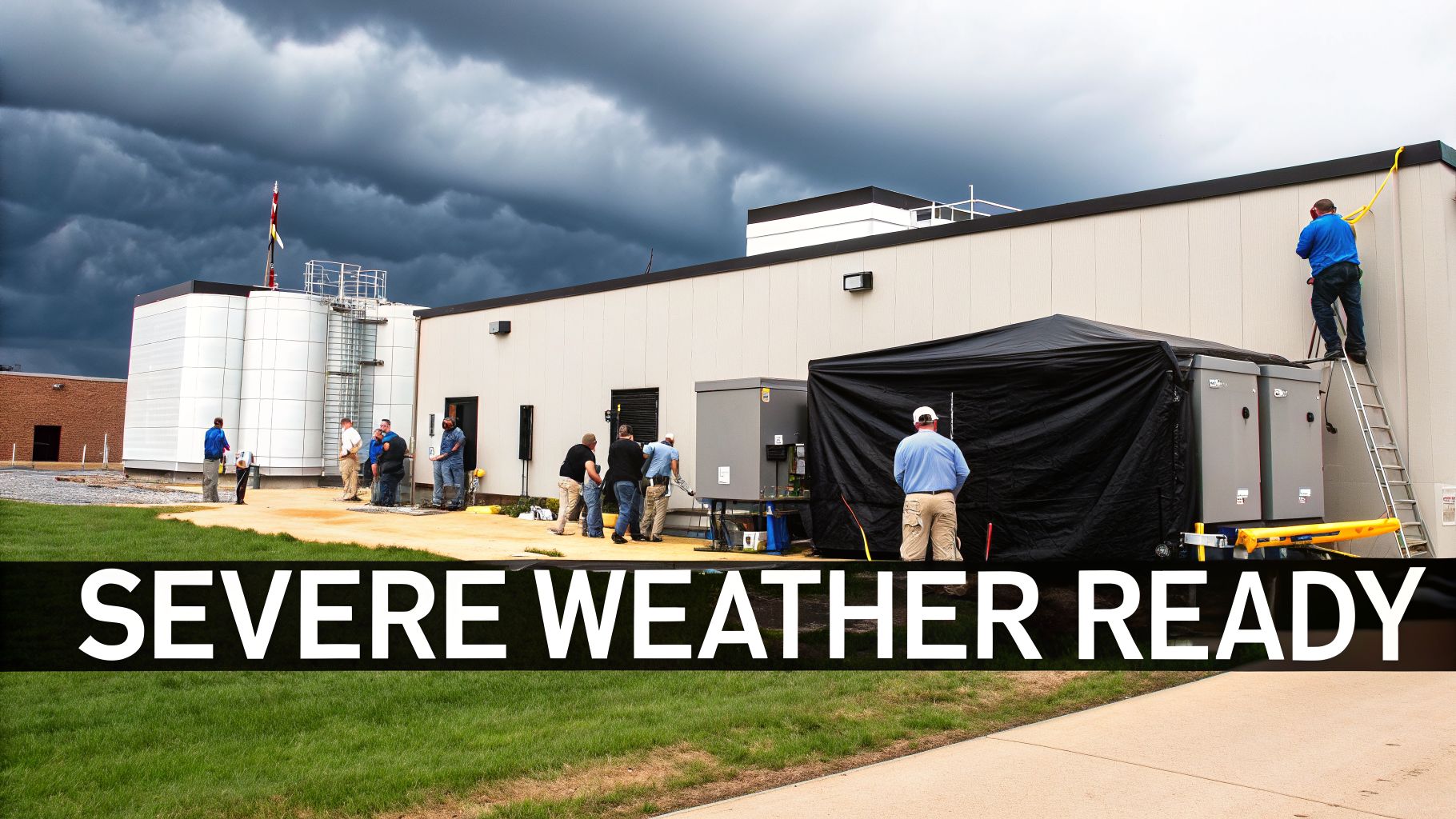
An effective severe weather plan is a dynamic strategy divided into three phases to guide your team before, during, and after an event. Each phase has a specific objective aimed at minimizing damage and restoring operations as quickly as possible.
- Before the Storm (Preparedness Phase): This is where you build your defense. It includes identifying a designated storm shelter, securing loose outdoor equipment, and, for IT departments, verifying data backups. The goal is 100% data redundancy, with off-site or cloud backups completely isolated from your physical location.
- During the Storm (Response Phase): Once a tornado warning is issued, personnel safety becomes the sole priority. All staff must move to the designated shelter immediately. If time permits, critical IT systems should be shut down properly to prevent damage from power surges or abrupt outages.
- After the Storm (Recovery Phase): After receiving the all-clear, the assessment process begins. This involves a thorough inspection of the facility for structural damage, checking power grid stability, and carefully bringing systems back online.
A frequently overlooked aspect of storm recovery is the disposal of damaged electronics. If a tornado or high winds impact your facility, you may be left with numerous compromised servers, computers, and networking devices—all still containing sensitive company or client data.
The Critical Role of ITAD in Storm Recovery
A trusted IT Asset Disposition (ITAD) partner is a vital component of your recovery efforts. A storm can destroy hardware, but your obligation to protect the data it contains remains. Damaged servers cannot simply be discarded, especially for businesses in regulated industries like healthcare, finance, or government.
Incorporating broader supply chain risk management strategies can provide valuable context for building organizational resilience.
After a severe weather event, your ITAD partner can assist with:
- Securely Disposing of Damaged Assets: They can quickly collect compromised hardware and ensure all sensitive data is destroyed using certified methods, such as a DoD 5220.22-M 3-pass wipe or physical shredding.
- Maintaining Compliance: A professional partner provides a complete chain of custody and official certificates of data destruction. This documentation is crucial for demonstrating compliance, even during disaster recovery.
- Ensuring Environmental Responsibility: They guarantee that all damaged and unsalvageable electronics are recycled in accordance with environmental regulations, preventing hazardous materials from entering landfills.
By integrating a certified ITAD provider into your severe weather plan, you ensure that your data remains secure and your organization stays compliant, even in a worst-case scenario.
Frequently Asked Questions About Weather and Commercial Operations
As an IT or operations manager responsible for critical projects like IT asset disposition, weather is a significant uncontrollable variable. Here are practical answers to common questions about navigating the sandy springs georgia weather to keep your commercial projects secure and on schedule.
When is the optimal time to schedule an IT asset pickup for our business in Sandy Springs?
The most predictable and favorable window for a smooth pickup is in the fall. The period from late September to early November offers a balance of mild temperatures, lower humidity, and a reduced chance of unexpected storms. This combination significantly lowers the risk to sensitive electronics and helps avoid logistical disruptions.
Spring is a viable alternative but requires greater flexibility in your planning. You must be prepared to work around rain delays and the potential for severe thunderstorms, which are common during that season.
How do we maintain HIPAA compliance if a weather delay occurs during an asset pickup?
During a weather delay, maintaining HIPAA compliance depends entirely on an unbroken and secure chain of custody. This is non-negotiable. Your ITAD partner must have clear, documented protocols for managing pickup delays.
Before scheduling a pickup, all assets containing electronic Protected Health Information (ePHI) must be staged in a secure, climate-controlled, and access-controlled indoor location. If weather postpones the pickup, these assets must remain in that secure area. Never leave sensitive equipment on an open loading dock or in a common area where it is vulnerable to environmental damage or unauthorized access.
The core principle is straightforward: data security obligations are not suspended due to bad weather. A secure staging area and a documented chain of custody are your primary defenses against a compliance failure during an unexpected delay.
What is the most significant weather threat to our Sandy Springs data center?
The most frequent and significant threat is a power outage caused by a severe summer thunderstorm. While your facility likely has backup generators, a major storm can disrupt the regional power grid for hours or even days, testing your fuel reserves and refueling logistics.
These storms also create access challenges for employees and support vendors. Your business continuity plan must account for a multi-day outage and the associated logistical hurdles posed by severe Sandy Springs Georgia weather. For more strategies on reinforcing your operational resilience, our business continuity planning checklist offers valuable insights.
Does a forecast for light snow really impact our company's logistics?
Yes, it is a critical factor. Unlike northern cities, the Atlanta metro area lacks the infrastructure to manage even minor snow or ice accumulation. A forecast for a small amount of winter precipitation can trigger widespread road closures, traffic gridlock, and business shutdowns.
For any operation reliant on transportation, such as critical ITAD pickups, a winter weather forecast should immediately activate your contingency plan. The safest and most prudent action is to proactively reschedule. This avoids the risk of having valuable assets or your partner’s vehicles stranded and ensures your chain of custody remains intact.
When unpredictable weather threatens your ITAD schedule, you need a partner with deep local expertise. Atlanta Computer Recycling has the experience to plan around regional weather challenges, ensuring your data remains secure and your project stays on track. Contact us at https://atlantacomputerrecycling.com to build a resilient ITAD strategy for your business today.