Recycle Electronics Atlanta for Commercial Services: Secure ITAD & Compliance


Recycling electronics in Atlanta means balancing data protection, environmental compliance, and operational efficiency at every stage. For IT directors, facilities managers, and procurement teams at commercial enterprises, skipping proper disposal channels risks costly data breaches, regulatory fines, and unexpected downtime.
Facing Electronics Recycling Challenges In Atlanta

Many Atlanta businesses find themselves managing end-of-life IT assets loaded with sensitive data, valuable components, and regulated materials. Failing to engage certified ITAD partners can lead to compliance penalties, longer project timelines, and inflated per-unit costs.
- Data security exposure from unencrypted storage devices
- Environmental liability from loose batteries and circuit boards
- Scheduling delays due to limited local ITAD capacity
- Hidden fees when noncompliance triggers audits
Case Study From Midtown Atlanta
A commercial healthcare practice in Midtown skipped a full data wipe on its decommissioned desktops. During a vendor audit, they incurred a $12,000 compliance penalty and overran their IT budget by 15%. This scenario underscores the need for an integrated, audit-ready recycling program that aligns with enterprise procurement and compliance teams.
Identifying Data Security Risks
Nearly every retired device stores recoverable data—hard drives, USB sticks, memory cards. For high-value commercial fleets, enforce DoD 5220.22-M wiping or physical shredding. On-site data destruction minimizes chain-of-custody exposures, accelerates project timelines, and satisfies C-level risk management policies.
Pro Tip: Incomplete data sanitization can cost commercial firms upwards of $25,000 per incident in remediation expenses.
Mitigating Environmental Hazards
Lead, mercury, and flame-retardant plastics require dedicated handling streams. Establish on-site battery bins with sealed containment, then coordinate with R2- or e-Stewards-certified recyclers for hazardous material processing. These controls slash environmental risk and align with enterprise ESG goals.
Handling Logistics And Provider Shortages
Atlanta’s certified ITAD network continues to expand, yet service gaps persist in fringe areas. Early coordination of staging areas and transport routes is essential to avoid project delays and budget overruns.
Between 2017 and 2022, Atlanta’s residential recycling diversion rose from 11% to 23%, but corporate sustainability programs still face contamination challenges. Learn more about Atlanta recycling trends on Resource Recycling.
Multi-site route planning, forklift staging zones, and standardized hazard labeling help streamline pickups and reduce unplanned overtime costs. For a detailed overview of downstream asset processing, see our complete guide at Atlanta Computer Recycling.
By proactively addressing these local hurdles, commercial IT teams can build a compliant, audit-ready disposition strategy that safeguards assets, minimizes environmental impact, and strengthens corporate sustainability credentials.
Understanding Regulatory Requirements And Compliance
Diving into electronics recycling without a thorough understanding of local and federal mandates can expose your organization to significant fines and reputation damage. For business stakeholders, compliance is not optional—it’s a core component of risk mitigation and supply-chain governance.
Georgia’s Environmental Protection Division (EPD) specifies which electronics are classified as e-waste and mandates secure storage before transport. Adhering to these guidelines keeps hazardous materials segregated and avoids mixing CRT monitors with standard office hardware.
- Maintain Georgia EPD’s e-waste definitions on-site ahead of vendor engagements
- Label each container with device categories and hazard warnings
- Keep current EPD regulations accessible to operations and compliance teams
Georgia EPD E-Waste Guidelines
EPD rules require stored e-waste to reside under roofed, impermeable surfaces to prevent soil contamination. Materials must be separated by hazard class—failure to comply can incur fines of $5,000 or more per violation.
This flowchart highlights why strict local compliance matters: only a fraction of electronics currently reaches certified recyclers before landfill diversion.
Data Privacy And HIPAA Requirements
Commercial healthcare and finance facilities in Atlanta face elevated scrutiny under HIPAA and GLBA. Devices containing protected customer data demand encrypted logs capturing device IDs, wipe methods, and technician sign-offs.
- Document device identifier, location, and disposal approach
- Record destruction method (software wipe vs. physical shredding)
- Capture technician name, signature, and date
“Incomplete HIPAA logs lead to audit failures and potential fines of up to $50,000 per violation.” – Compliance Expert
Combining digital and paper records ensures smooth operations during surprise regulatory inspections.
Secure Data Wiping And Destruction Standards
IT teams typically deploy a three-pass DoD 5220.22-M wipe for HDDs and use degaussing or shredding for SSDs.
- On-site shredding to mitigate chain-of-custody risks
- Comprehensive reports detailing wipe software versions
- NIST SP 800-88 certificates guaranteeing data irrecoverability
For deeper insight into required destruction documentation, see Certificates Of Destruction Explained.
Hazardous Materials And Federal Restrictions
Certain electronic components face strict federal restrictions. Mishandling them can trigger severe penalties and operational disruptions.
| Hazardous Material | Federal Limit | Required Handling |
|---|---|---|
| Lead | Banned in cathode-ray tubes | Special labeling and separate collection |
| Mercury | Prohibited in switches and lamps | Seal in approved universal-waste containers |
| Flame Retardants | Restricted in circuit boards | Track via manifest and secure storage |
Complying with these requirements fortifies your organization’s ESG reporting and enhances supply-chain transparency.
Audit Documentation And Internal Policies
Procurement teams and auditors expect a transparent chain-of-custody from pickup through final processing. Your internal policies should document every step clearly.
- Log collection details: dates, volumes, and handlers
- Retain all vendor manifests and disposal certificates
- Archive destruction certificates for a minimum of five years
Key Insight: Well-maintained documentation reduces audit preparation time by up to 60%.
One Atlanta school district digitized forms to shave two weeks off audit cycles—demonstrating that real-time tracking enhances compliance efficiency.
Tackling Low E-Waste Recovery Rates
Globally, only 22.3% of e-waste is officially collected. In regions without robust take-back laws, partnering with Georgia’s certified ITAD firms ensures your diverted assets meet both local and corporate sustainability targets. Discover more in the global e-waste collection statistics.
By mastering regulatory demands, your Atlanta electronics recycling program will scale seamlessly—from initial planning to comprehensive reporting.
Assessing Your Electronics Inventory For Recycling
A precise inventory of every device in your enterprise facility enables predictable budgeting and vendor quotes. Missed printers under desks or forgotten conference-room tablets can inflate quotes and extend project timelines.
Catalog laptops, desktops, servers, tablets, and peripherals with:
- Device Types: Count and location per unit
- Condition Notes: Operational status and visible wear
- Estimated Residual Value: Based on age, model, and market demand
Cataloging Serial Numbers And Conditions
Accurate hardware identifiers streamline tracking and enforce a secure chain of custody.
- Serial Number: Unique asset ID for reporting
- Purchase Date & Warranty: Key for residual value analysis
- Physical Condition: Record dents, scratches, and hardware faults
Early hazmat tagging—like identifying swollen batteries—cuts on-site processing time by 25% and prevents cross-contamination.
Evaluating Refurbishment Versus Destruction
Commercial fleets often yield high-value refurbishment candidates. A three-year-old laptop with intact screens and batteries can return significant ROI, while corroded servers typically require secure shredding.
- Refurbishment: Functional devices under three years old
- Destruction: Nonoperational hardware with critical failures
Clear tagging drives efficient routing and reduces handling errors.
List Of Eligible Electronics For Recycling
| Device Type | Category | Accepted Conditions | Excluded Items |
|---|---|---|---|
| Laptop | Computer | Working or minor wear | Missing battery |
| Desktop | Computer | Fully functional | CRT monitors |
| Server | Networking | Operational drives | Obsolete firmware |
| Mobile Phone | Mobile | Power on and chargeable | Broken screen |
| Printer | Peripheral | Intact housing and wiring | Leaking ink cartridges |
| UPS Battery | Power | Tested under load | Damaged casing |
Use this table to align procurement, finance, and operations teams on acceptable asset categories.
Preparing Assets For ITAD Handoff
A clearly marked staging area reduces pickup confusion and accelerates vendor processing.
- Label pallets with zone codes, asset types, and counts
- Separate hazardous materials like batteries and toners
- Verify your audit sheet matches staging inventory prior to handoff
Capture photos at each stage to resolve any post-pickup discrepancies. For advanced asset-management insights, see our guide on IT asset management best practices.
Tip Proper tagging of high-value assets can boost refurbishment ROI by up to 15%.
Example Inventory Audit Scenario
At a Buckhead insurance office, the IT team scanned 300 workstations in 48 hours using mobile barcode readers. They flagged 12 laptops with failing batteries and 30 printers for toner disposal immediately.
- Mapped device locations onto floor plans
- Prioritized server racks for on-site data wiping
- Delivered destruction certificates within 48 hours
This precise audit enabled vendor quotes to align with actual volumes, boosting process efficiency by 40%.
Best Practices For Inventory Management
Inventory audits should be recurring events. Maintaining live hardware records empowers better recycling decisions and maximizes return on retired assets.
- Schedule quarterly spot-checks for fast-turnover hardware
- Leverage cloud-based tools for real-time data sync across sites
- Train staff on rapid condition assessments to reduce misclassifications
Choosing Certified ITAD Providers And Data Destruction Methods
Partnering with a local, certified ITAD specialist reduces shipping fees, accelerates turnaround, and maintains enterprise continuity. Many ITAD firms now offer scalable, multi-site commercial services that align with corporate procurement requirements.
- R2 Certification for stringent environmental and safety controls
- e-Stewards Certification for ethical, end-to-end stewardship
- Zero-Landfill Policies to meet corporate sustainability mandates
- Transparent Chain-of-Custody for full audit visibility
Key Insight: Zero-landfill commitments can boost material recovery rates by 45% for Atlanta corporations.
Shortlisting Local ITAD Vendors
Collect RFP responses from several certified providers in the Atlanta metro area. Evaluate them on:
- On-Site De-Installation by certified technicians
- Local Responsiveness to minimize travel and expedite schedules
- Transparent Pricing with clear breakdowns of labor, logistics, and disposal fees
One Marietta vendor quoted 24-hour software wiping alongside a multi-day shredding service; another in Buckhead offered same-day shredding for mission-critical media at premium rates. Compare proposals to lock in the best fit for your enterprise SLA requirements.
Evaluating Data Destruction Options
Match destruction methods to security needs, timeline constraints, and budget parameters.
| Method | Security Level | Timeframe | Approximate Cost |
|---|---|---|---|
| Software Wiping | High | 1–3 Days | $5–$15 per device |
| On-Site Shredding | Very High | Same Day | $25–$50 per drive |
| Off-Site Destruction | Very High | 2–5 Days | $20–$40 per device |
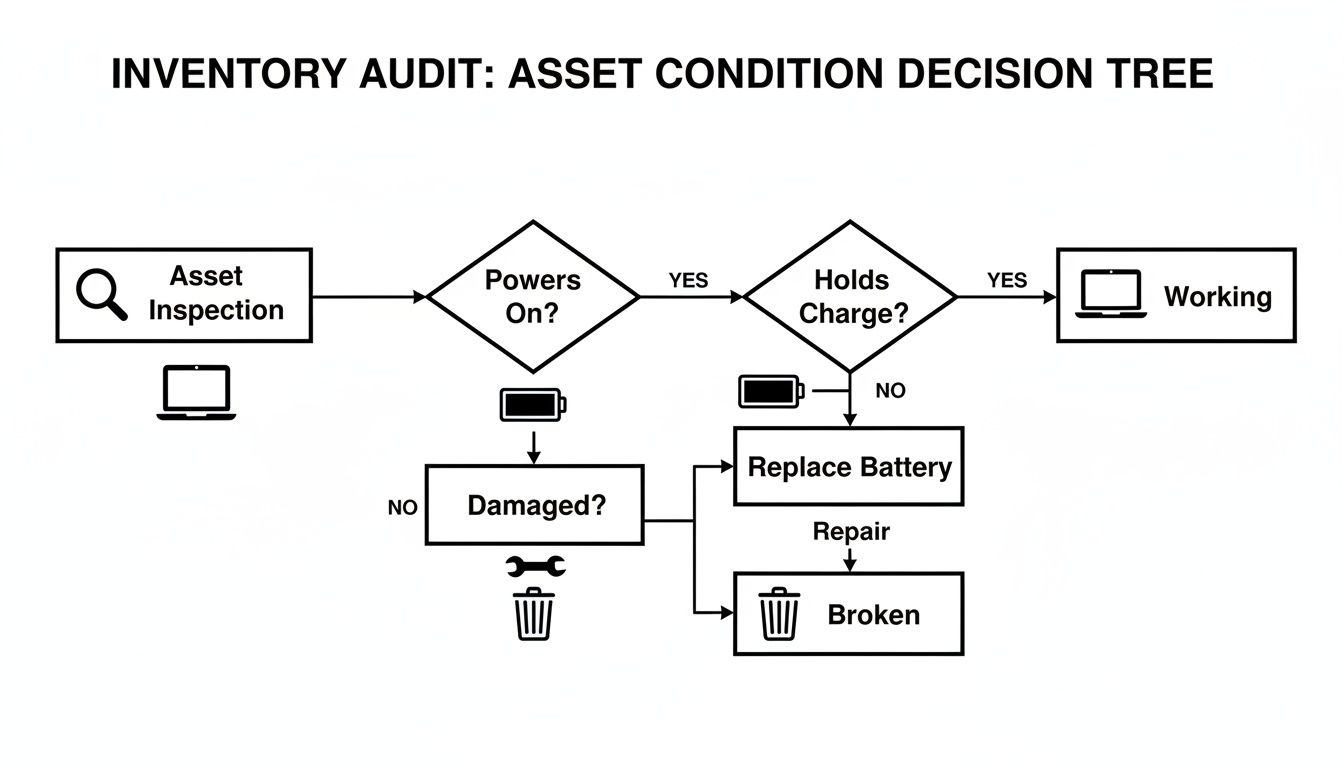
Over 60% of assets can be refurbished; irreparable units proceed directly to secure shredding. Volume, on-site services, and device mix will determine your final cost structure.
For an environmental impact analysis, see Environmental Impact of Electronic Waste.
Negotiating Service Level Agreements
Your SLA underpins data security and project delivery. Key clauses should:
- Cap liability for security incidents
- Guarantee turnaround times for pickups and destruction
- Include indemnity for data breaches
- Provide termination rights for SLA nonperformance
- Offer audit rights and insurance coverage for assets in transit
Expert Tip: Clear SLA metrics can reduce dispute resolution time by 50% and keep projects on schedule.
Evaluate SLAs against internal ITAM policies to seamlessly integrate your ITAD partner into existing governance frameworks. For full-service collection and destruction, check our electronic waste recycling company services.
Streamlining Logistics And Pickup Scheduling

Efficient pick-up coordination minimizes downtime for critical business operations and reduces last-minute fees.
- Confirm site access hours and security protocols pre-scheduling
- Reserve forklift staging spots for palletized IT assets
- Share floor plans and loading-dock layouts to cut crew transit times
- Clearly label mixed-asset storage zones to avoid handling errors
One Midtown client aligned a Monday–Wednesday pickup window with freight schedules, elevator reservations, and off-peak traffic, ensuring on-time service and zero overtime charges.
Packaging And Transportation Guidelines
Proper packaging preserves asset integrity en route:
- Padded crates for monitors; secure bins for loose components
- Shrink wrap for racks and printers against dust and moisture
- Labeled zip-top bags for power cords and accessories
- Anti-static containers for hard drives to guard against ESD
- Adhere to forklift weight limits for safe handling
Labeling Hazardous Materials
OSHA-compliant tags and hazard placards ensure crews instantly identify regulated streams.
Planning Multi-Site Routes
Combining pickups across multiple locations cuts mileage and fuel costs. One three-site route saved 30% on weekly drive time:
| Route Sequence | Estimated Miles | Pickup Window |
|---|---|---|
| A→B→C | 25 | 8am–12pm |
| D→E→F | 18 | 1pm–4pm |
| G→H→I | 22 | 9am–2pm |
Early starts avoid rush-hour delays and align with building access times, bypassing bottleneck checkpoints.
Pickup Window Strategies
Flexible scheduling ensures minimal disruption:
- Reserve vendor off-hours for elevator availability
- Block calendar invites to prevent double-booking of dock spaces
- Confirm post-pickup walkthroughs to identify any missed items
“Efficient routing and clear pickup windows can reduce logistics costs by up to 25% in commercial electronics recycling.” – Logistics Manager
Mark forklift staging zones with high-visibility tape and verify elevator dimensions for oversized loads. Label each skid with route IDs to simplify end-of-day reconciliation.
For details on no-cost pickups, review our free electronics pickup services.
Last Mile Tracking Tips
Real-time visibility adds security and accountability:
- Fit high-value pallets with GPS trackers
- Share live tracking links with vendors and internal teams
- Assign a logistics coordinator to monitor shipments
- Timestamp arrivals in a digital tracker for audit trails
A client in Atlanta cut logistics delays by 40% after optimizing staging maps and pickup windows. Always verify your ITAD partner’s insurance coverage to safeguard against transit incidents.
Final Checklist For Pickup
Before vendor arrival:
- Confirm POC details and site access credentials
- Verify packaging integrity and label accuracy
- Prepare sign-off sheets and ensure data destruction certificates arrive within 48 hours
Post-pickup, conduct a debrief with the ITAD crew, document timestamps, and capture photos to streamline post-service audits.
Well-orchestrated pickup processes ensure your electronics recycling in Atlanta runs securely, on time, and within budget.
Managing Documentation and Certification for Audits
Missing paperwork can derail an audit faster than any operational hiccup. Solid documentation—from chain-of-custody forms to certificates of destruction—protects your team and demonstrates governance to executive leadership.
- Chain-of-Custody Forms: Capture every transfer step, timestamp, and sign-off
- Certificates of Destruction: Verified proof of data sanitization or shredding
- Post-Recycling Reports: Summary of volumes, device counts, and material weights for ESG reporting
- Retention Logs: Master index of digital and physical records with storage locations
Organizing Record Storage
Digital records belong in a secure, access-controlled repository organized by year, vendor, and document type. Printed copies should be filed in fire-resistant cabinets or locked binders.
“Maintaining clear certification records cuts audit prep time by up to 60%,” notes an Atlanta compliance manager.
Recommended Retention Schedule
- HIPAA Logs: Retain for 6 years
- Chain-of-Custody Manifests: Archive for 5 years
- Certificates of Destruction: Store for 3 years
- Post-Recycling Reports: Keep for 2 years
Audit Trail Best Practices
Accurate logs and signatures are non-negotiable:
- Record vendor certificate numbers alongside pickup dates
- Sync digital logs and paper binders weekly, with offsite backups
- Perform quick cross-checks after each job to catch missing details
Embedding these routines in daily operations ensures a rock-solid audit trail that satisfies regulators and internal audit committees.
Common Questions About Electronics Recycling In Atlanta
Commercial teams often ask about pickup frequency and budgeting. Mid-sized to large enterprises typically schedule quarterly collections, while smaller offices may opt for monthly hauls to manage storage and staging fees.
A 200-employee firm in Atlanta reduced on-site inventory by 30% after shifting to quarterly pickups—streamlining space utilization and forecasting disposal budgets more accurately.
Pickup Frequency And Cost Estimates
Costs hinge on device mix, volume, and chosen destruction method:
| Method | Cost per Device |
|---|---|
| Software Wiping | $5–15 |
| Physical Shredding | $25–50 |
Reduce costs through:
- Bundled quotes combining logistics, labor, and paperwork
- Volume discounts for shipments over 100 units
- On-site shredding to eliminate transport fees
Key Takeaway
Data destruction pricing can vary by 200% between wiping and shredding—compare providers to optimize spend.
Ensuring HIPAA And Documentation
For medical and financial firms, privacy is paramount. Demand audit-ready logs with serial numbers, encryption-key destruction details, and technician signatures. Ensure your vendor’s chain-of-custody procedures cover pickup through final processing.
Enterprise-grade ITAD providers deliver:
- Chain-of-Custody Manifests with timestamps
- Certificates Of Destruction specifying methods used
- Post-Recycling Weight Summaries for ESG metrics
Digital reports usually arrive within 48 hours, with hard copies available on request—streamlining compliance for HIPAA, GLBA, and internal audits.
By addressing these FAQs upfront, Atlanta businesses can secure electronics recycling services with confidence—locking schedules, negotiating rates, and ensuring compliance well before pickup day.