A Business Guide to Vetting Electronic Waste Disposal Companies

Choosing the right partner for your electronic waste disposal is more than just another vendor selection. It’s a critical business decision that directly impacts your data security, regulatory compliance, and financial health. Get it wrong, and your organization could be facing a devastating data breach or steep fines for environmental non-compliance.
Why Your E-Waste Partner Is a Critical Business Decision
When your business hands over retired IT assets, you're not just clearing out a storage closet. You're entrusting a partner with your company's sensitive data. Every server, laptop, and smartphone holds a treasure trove of proprietary information—customer records, financial data, and priceless intellectual property.
The fallout from picking the wrong e-waste vendor can be catastrophic. Imagine your company hires a low-bid hauler who cuts corners and improperly disposes of your old office computers. If even one of those hard drives falls into the wrong hands, the resulting data breach could shatter your brand's credibility and embroil the business in years of legal battles and regulatory fines.
Beyond Disposal: The Role of a Strategic ITAD Partner
A professional e-waste disposal company is an extension of your IT, security, and compliance teams. Their job isn't just to haul away old equipment; it's to provide a secure, documented chain of custody that protects your business from the moment an asset leaves your premises until its final, verified destruction.
This partnership is also your key to navigating the complex maze of environmental regulations. The decision involves many of the same top considerations for choosing an outsourcing partner, where reliability, security, and compliance are paramount.
A certified e-waste partner transforms a regulatory burden into a risk management asset. They provide peace of mind by guaranteeing that your corporate data is permanently destroyed and that your company is fully compliant with all environmental laws, protecting your brand integrity and bottom line.
This strategic approach has never been more important. The global electronic waste recycling market is booming, with the North American market alone projected to hit USD 13.67 billion in 2025. This explosive growth is fueled by corporate technology refresh cycles and strict regulations like the Resource Conservation and Recovery Act (RCRA).
Protecting Your Bottom Line and Reputation
Ultimately, a qualified e-waste partner acts as a shield for your business, safeguarding it in several key ways:
- Minimizes Legal and Financial Risk: They ensure your company is compliant with complex laws like HIPAA, GLBA, and RCRA, helping you sidestep crippling fines and legal action.
- Guarantees Data Security: By using certified data destruction methods, they permanently eliminate sensitive information, preventing data breaches before they can happen.
- Supports Corporate Responsibility Goals: Responsible recycling reinforces your company's commitment to sustainability and demonstrates strong Environmental, Social, and Governance (ESG) principles.
- Optimizes Asset Value: A true partner doesn't just dispose—they look for opportunities to recover value through a process called IT Asset Disposition. To learn more, check out our complete guide on what IT Asset Disposition is and how it can benefit your business.
This guide will walk you through exactly how to vet and select a partner who can deliver on these critical business needs.
Understanding E-Waste Certifications and Compliance
When you're vetting an electronic waste disposal company, how do you separate a professional partner from a risky scrap hauler? The answer is simple: certifications.
These aren't just logos for a website. They are your absolute assurance that a vendor follows strict, third-party-audited standards for environmental safety, data security, and operational integrity.
Without that external validation, you're gambling with your company's reputation and security. An uncertified vendor might dangle a lower price, but that "deal" often comes with massive hidden risks—like negligent data handling or illegally exporting hazardous materials. Those shortcuts can lead to catastrophic consequences for your business.
The Gold Standards of E-Waste Recycling
Not all certifications are created equal. For any business, a few key standards are simply non-negotiable. They act as a baseline of trust, signaling that a vendor has seriously invested in the right processes and infrastructure to manage your corporate assets responsibly.
Two of the most critical certifications in the industry are R2 (Responsible Recycling) and e-Stewards. Think of them as the gold standards for corporate e-waste management.
-
R2 (Responsible Recycling): Developed by a multi-stakeholder group that included the EPA, R2 covers the entire lifecycle of electronics. An R2-certified company must prove a clear chain of custody, protect its workers' health and safety, and maintain a documented process for data destruction. It also strictly prohibits the illegal export of hazardous e-waste.
-
e-Stewards: This standard is often seen as the most stringent. Created by the Basel Action Network, it has a zero-tolerance, no-export policy for hazardous e-waste to developing countries—no exceptions. It also mandates incredibly rigorous data security and environmental protocols.
Choosing a vendor with at least one of these is a fundamental first step. It confirms they’re committed to ethical practices that shield your organization from legal and financial blowback.
A Cautionary Tale: The High Cost of Cutting Corners
A mid-sized Atlanta marketing firm hired an uncertified e-waste hauler to clear out old servers and laptops, saving a few hundred dollars. Six months later, an environmental watchdog group traced a shipment of illegally dumped electronics in a foreign landfill right back to them. The brand crisis, negative press, and regulatory investigation ended up costing the firm tens of thousands of dollars and did immeasurable damage to its public image.
This scenario is all too common. It’s exactly why verifying certifications is so critical for any business. A small initial savings is never worth that kind of long-term risk.
Essential Supporting Certifications for Business Needs
Beyond the main recycling standards, other credentials address specific business concerns—especially around environmental management and data security. A truly professional e-waste partner will hold these to demonstrate a comprehensive commitment to best practices.
ISO 14001 is the international benchmark for an Environmental Management System (EMS). A company with this certification has a framework to actively measure and improve its environmental impact. It proves a proactive commitment to sustainability, not just basic compliance, which is a key metric for corporate ESG reporting.
For data destruction, NAID AAA Certification is the pinnacle. This credential, managed by the International Secure Information Governance & Management Association (i-SIGMA), involves surprise audits of a vendor's entire data destruction process, from employee screening to the physical security of their facility. When you see the NAID AAA seal, you know their methods are vetted to the highest possible standard for protecting corporate data.
Essential E-Waste Disposal Certifications Checklist
When your team is interviewing potential e-waste vendors, this quick checklist will help you validate their credentials. Always ask for current proof of certification—don't just take their word for it.
| Certification | What It Guarantees | Why It Matters for Your Business |
|---|---|---|
| R2 or e-Stewards | Ethical and environmentally sound recycling practices with a secure chain of custody. | Protects your company from liability tied to illegal dumping and ensures your e-waste is handled responsibly. |
| ISO 14001 | A documented system for managing and reducing environmental impact. | Aligns with your company's ESG goals and demonstrates a commitment to sustainable operations. |
| NAID AAA | The highest standard for secure data destruction, verified by unannounced audits. | Provides absolute confidence that your sensitive corporate and customer data is permanently destroyed. |
Verifying these credentials is the single most effective way to filter out unqualified vendors and protect your organization.
A certified partner will also provide detailed documentation, including a formal Certificate of Destruction. Understanding the importance of a Certificate of Destruction is key, as it serves as your official record that specific assets were securely and properly disposed of—providing a crucial audit trail for compliance.
Ensuring Ironclad Data Security and Destruction
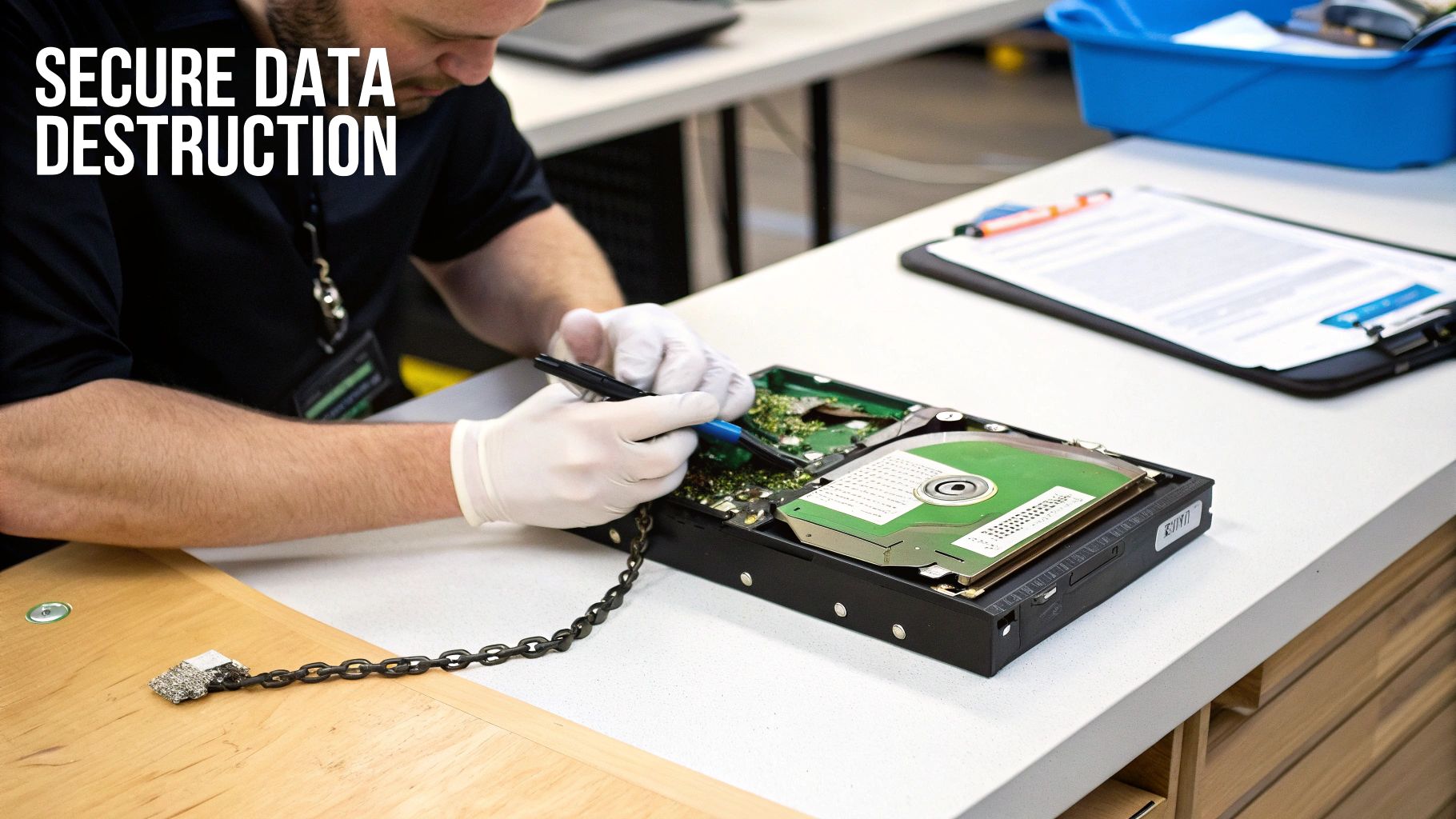
When a corporate server, laptop, or phone reaches the end of its life, the physical hardware is the least of your worries. The real liability is the mountain of sensitive data stored inside. For any business, data security is a responsibility that doesn't end until that asset is verifiably destroyed.
A vendor’s vague promise of "data wiping" just isn’t enough to protect your organization. Any professional e-waste disposal company must offer specific, verifiable, and permanent data destruction methods that meet or exceed industry standards. Failing to secure this is a critical gap in your risk management strategy.
Physical Shredding and Degaussing
The most absolute way to destroy data is to physically obliterate the media it’s stored on. For traditional magnetic hard disk drives (HDDs) and various backup tapes, two methods guarantee complete data annihilation.
Physical shredding is exactly what it sounds like. Industrial-grade shredders use immense force to grind hard drives, solid-state drives (SSDs), and other storage media into tiny, irretrievable metal fragments. This is the gold standard for ensuring data can never be recovered and is often a strict requirement for HIPAA compliance or disposing of classified government materials.
Degaussing is another powerful technique used on magnetic media. This process exposes a hard drive to an incredibly strong magnetic field, which instantly and completely scrambles the magnetic domains where data is stored. The drive is rendered totally inoperable, and the data is gone for good. However, degaussing is completely ineffective on flash-based media like SSDs because they don't store data magnetically. A knowledgeable vendor will know this distinction.
Software Wiping and Cryptographic Erasure
Not every piece of equipment needs to be turned into confetti. For devices you plan on remarketing or redeploying internally, you still need a bulletproof data sanitization plan. This is where software-based methods come in.
-
Secure Data Wiping: This involves using specialized software to overwrite an entire drive with random binary data, often in several passes, according to standards like NIST 800-88. It's a reliable technique for HDDs but can be less effective for SSDs, where wear-leveling technology can sometimes leave data remnants behind.
-
Cryptographic Erasure: For self-encrypting drives (SEDs), this is by far the most efficient and secure method. The process simply involves deleting the media encryption key. Instantly, all the encrypted data on the drive becomes permanent digital gibberish. It’s like locking a vault and then melting down the only key.
The best e-waste recyclers know these differences inside and out. Leading firms like Electronic Recyclers International (ERI) in the U.S. and Veolia in France have built their reputations on providing comprehensive, certified data destruction as a core part of their service, right alongside their zero-landfill environmental policies.
Verifying the Chain of Custody
Secure data destruction isn't just about the final step—it's about the entire journey from your facility to the vendor's. A verifiable chain of custody is the auditable paper trail that documents every single touchpoint for your assets. This is non-negotiable for proving compliance and mitigating risk.
An unbroken chain of custody is your legal and procedural shield. It provides documented proof of secure handling at every stage, from locked transport bins and serialized asset tracking to final destruction confirmation. Without it, you have a critical security gap in your asset management lifecycle.
This documentation needs to be detailed and transparent. It should include asset serial numbers, the exact date and time of pickup, the personnel involved, and a final confirmation that the assets were received at a secure facility. This log creates an unbreakable link from the moment an asset leaves your control to its final disposition.
Critical Questions to Ask Your Potential Vendor
Now that you're armed with this knowledge, you can properly vet any potential partner. Go beyond the surface-level sales pitch and dig into the specifics of their security protocols.
Here are a few essential questions every IT or operations manager should be asking:
- What specific data destruction methods do you use for different media types, like HDDs versus SSDs? Their answer should immediately demonstrate they understand the technologies we just discussed.
- Can we witness the physical destruction process? A transparent partner will offer options, whether it's on-site shredding, in-person viewing at their facility, or a secure video feed.
- What information is included in your Certificate of Destruction? It must list individual serial numbers, the method of destruction, and the date it was completed to be a valid audit document.
- How do you guarantee security during transportation? Look for answers that include locked vehicles, GPS tracking, background-checked personnel, and secure, sealed containers.
- Are your data destruction processes NAID AAA Certified? This is the highest industry standard for secure data sanitization and a strong indicator of a vendor's commitment to security.
Asking these pointed questions will help you quickly separate a basic recycler from a true security partner. For a closer look at what a professional process entails, you can learn more about hard drive destruction services and what to expect from a top-tier provider.
Evaluating Logistics and Value Recovery Opportunities
A top-tier partnership goes way beyond a simple pickup service. It should feel like an extension of your own operations, offering seamless logistics and even the chance to generate a financial return on retired assets. This is what separates a basic hauling service from a true IT Asset Disposition (ITAD) partner.
The operational side of e-waste management is just as crucial as certifications and security. How your equipment is tracked, inventoried, and reported on is fundamental for your internal audits, asset management, and proving regulatory compliance. Without a transparent process, you're flying blind on a critical part of your asset lifecycle.
Serialized Tracking and Transparent Reporting
Imagine trying to prove to a compliance auditor that a specific server holding sensitive customer data was properly destroyed. A simple receipt saying "one pallet of electronics" just won't cut it. That's why serialized asset tracking is a non-negotiable requirement.
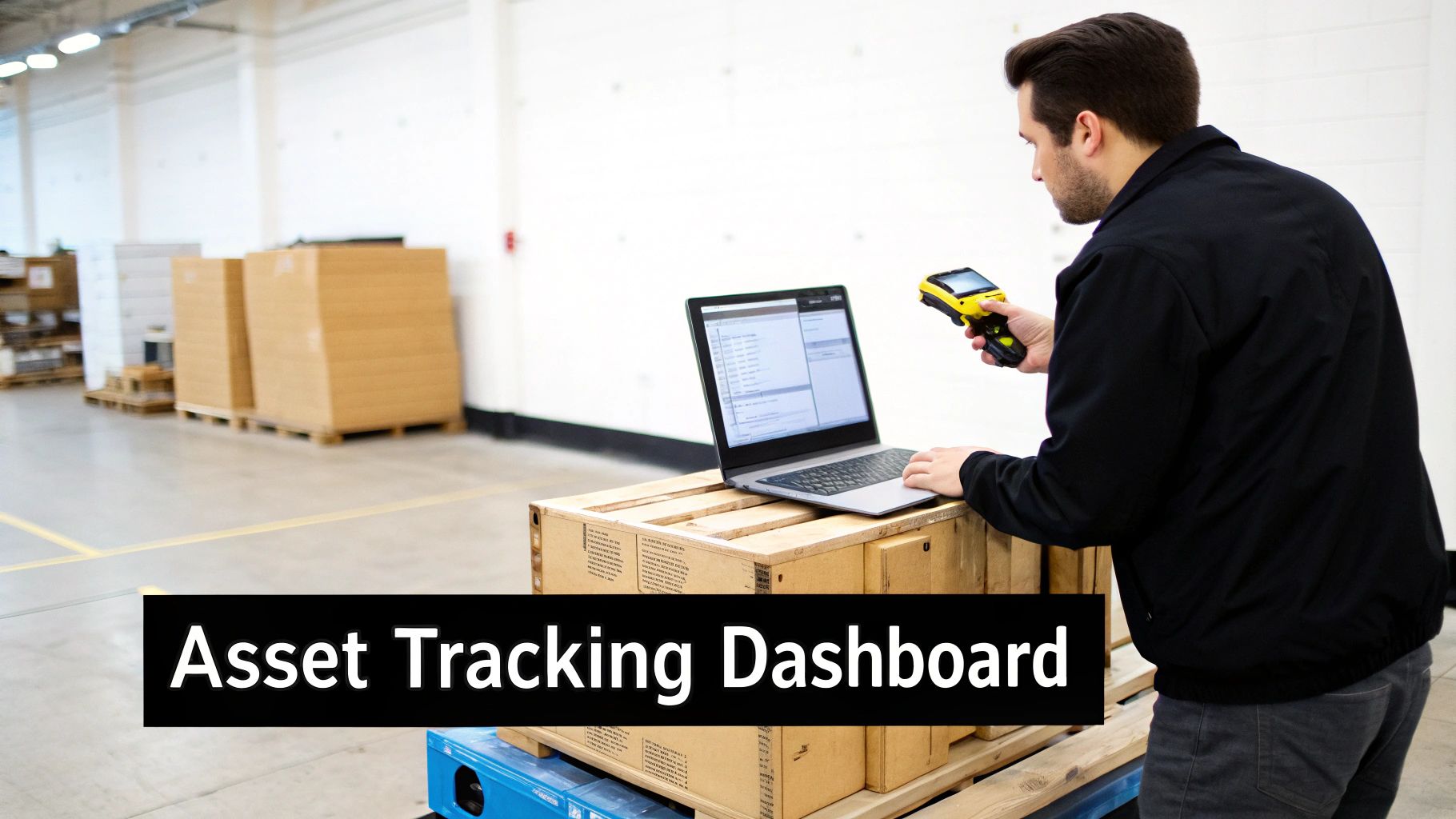
From the moment they take possession of your equipment, a reliable partner should be scanning and logging the serial number of every single asset. This creates an unbroken chain of custody for individual items, not just a bulk load. This detailed tracking should feed directly into a reporting portal you can access anytime.
A robust reporting dashboard provides a complete window into the entire process. Your business should expect to see:
- Individual Asset Details: Every item listed by serial number, your internal asset tag, make, and model.
- Status Updates: The report should follow each asset through every stage—from pickup and transit to data destruction and its final disposition (recycling, resale, or destruction).
- Certificates of Destruction: Digital copies of these certificates should be readily available, linked to the specific serial numbers of the destroyed devices.
This level of detail is indispensable. It gives you the concrete proof needed to satisfy any compliance audit, whether it’s for HIPAA, SOX, or your own internal governance policies.
The Financial Upside of Value Recovery
Many businesses view old IT equipment as a liability—something to be disposed of as cheaply as possible. But a smart ITAD strategy recognizes that these assets often retain significant value. An expert partner can help you unlock that value through responsible refurbishment and resale, turning a cost center into a potential revenue stream.
This process is often called value recovery or investment recovery. It's about identifying retired assets that are not yet obsolete. Think enterprise servers, business-class laptops, or networking gear that can be securely sanitized, tested, refurbished, and sold on the secondary market.
For instance, a company refreshing 200 employee laptops might find that even though the devices are three years old, they are still functional. After certified data wiping, a skilled ITAD partner can refurbish them and manage the resale, sharing a percentage of the revenue back with your company. You not only recoup some of your initial capital investment but also contribute to a circular economy.
Value recovery is more than just getting a check for old equipment. It's a strategic approach to asset management that maximizes financial return while adhering to the strictest data security and environmental standards. It aligns your financial goals with your corporate social responsibility initiatives.
What to Look For in a Partner’s Reporting
When you’re vetting potential partners, always request a sample of their reporting dashboard or a final project report. A quality report is more than a list of serial numbers; it delivers real business intelligence.
Keep an eye out for these key elements:
- A Clear Financial Summary: The report should detail the resale value of any recovered assets, the partner's service fees, and the net revenue or cost for the project. There should be no hidden charges.
- Detailed Disposition Status: For every single asset, the report must clearly state its final disposition—was it resold, recycled, or physically destroyed?
- Environmental Impact Metrics: The best partners provide sustainability reports. These can show the total weight of materials diverted from landfills, the specific commodities recovered (like steel and copper), and even the carbon footprint reduction you achieved. This data is incredibly valuable for your annual Corporate Social Responsibility (CSR) or ESG reporting.
By focusing on logistics and value recovery, you can select a partner who not only mitigates your risk but also actively contributes to your bottom line and sustainability goals. To get a better feel for where these materials end up, you can learn more about what happens to recycled electronics when handled by a certified professional.
Comparing Pricing Models and Contract Terms
When you're vetting an e-waste disposal partner, it's easy to get fixated on the price-per-pound quote. But making a financially sound decision means looking at the total cost of ownership and risk. The pricing structure and the fine print in the contract can dramatically change your total cost and the quality of service you receive.
The cheapest quote is rarely the best value. A bargain-basement price can mask hidden fees or, even worse, signal that a vendor is cutting corners on security and compliance. A slightly higher investment with a certified, transparent partner often saves your company a fortune by preventing a single, catastrophic data breach or regulatory fine.
Unpacking Common Pricing Structures
E-waste disposal isn't a one-size-fits-all service, and neither are the pricing models. A structure that works perfectly for a one-time office cleanout could be a poor fit for a company with a steady stream of retiring IT assets. Knowing the difference helps you find the most cost-effective solution.
You'll generally encounter three common models:
- Per-Pound or Per-Item Pricing: This is as straightforward as it gets. You pay based on the total weight of the electronics or a flat fee for each device (like a set price per laptop or server). It’s a great fit for businesses with predictable, infrequent disposals.
- Flat-Rate Pickup: For a single, upfront fee, the company picks up a set volume of equipment—think a full pallet or a specific bin size. This option provides budget predictability and is perfect for scheduled office cleanouts or data center decommissioning projects.
- Profit-Sharing (Value Recovery): If your retired assets still have market value, this model can be a game-changer. The ITAD partner will refurbish and resell the equipment, then share a percentage of the revenue with you. In many cases, this can significantly offset or even completely cover your disposal costs.
A true partner won’t just hand you a price list. They will analyze your specific asset portfolio—the volume, type, and age of your equipment—to recommend the model that makes the most financial sense for your business. The goal should always be a transparent partnership, not a confusing invoice.
For a deeper look into vetting local providers, check out our guide on selecting Atlanta-based electronic waste recycling companies. It offers more context to help you make a fully informed decision.
Comparing E-Waste Disposal Pricing Models
Choosing the right pricing model is about aligning the vendor's structure with your company's specific disposal patterns and asset types. This table breaks down the most common models to help you see which one fits your situation best.
| Pricing Model | Best For | Potential Pitfalls |
|---|---|---|
| Per-Pound / Per-Item | Businesses with infrequent, predictable volumes of e-waste. | Can become expensive for very heavy or numerous low-value items. |
| Flat-Rate Pickup | One-time projects like office moves or data center cleanouts. | May not be cost-effective if you don't fill the allotted container. |
| Profit-Sharing (Value Recovery) | Companies retiring newer, high-value assets with resale potential. | Revenue is not guaranteed and depends on market demand; less effective for obsolete or broken equipment. |
Ultimately, the best model is the one that offers clarity and value. Don't be afraid to ask for a hybrid model if your needs are complex—a good partner will be flexible.
Watching Out for Hidden Costs
The initial quote is just the starting point. If you aren't careful, your business can get blindsided by unexpected charges that inflate the final bill. Always ask a potential vendor for a complete breakdown of every possible fee before you sign a contract.
Keep an eye out for these common "gotchas":
- Transportation Surcharges: Does the price include pickup, or will you see extra charges for fuel, mileage, or labor?
- Data Destruction Fees: While some vendors bundle basic data wiping, many charge extra for certified physical destruction like shredding, especially for large volumes of drives.
- Detailed Reporting Costs: Need a comprehensive asset tracking report or an environmental impact summary for your records? That might cost extra.
- Hazardous Material Fees: Items like old CRT monitors or certain batteries require special handling, and those costs are often passed on to you.
Scrutinizing the Service Agreement
The service agreement is your shield. This is the legal document that outlines everyone's responsibilities and should leave zero room for interpretation. Review it with your legal team before signing, paying close attention to the clauses that protect your company from liability.
Here’s a checklist of what to look for in the contract:
- Scope of Work: The agreement must spell out exactly what they're doing—from on-site pickup and asset tracking to the specific data destruction methods and recycling processes they use.
- Liability and Insurance: Confirm the vendor carries sufficient liability insurance (e.g., professional liability, data breach insurance) to cover an incident that happens on their watch. The contract needs to clearly state where your liability ends and theirs begins.
- Chain of Custody Guarantee: The vendor’s commitment to providing a secure and fully documented chain of custody for every single asset should be formalized in writing.
- Compliance Assurance: Look for explicit language guaranteeing their processes adhere to all relevant regulations, like RCRA, HIPAA, and any state-specific environmental laws.
- Termination Clause: Make sure you understand the terms for ending the agreement, including any required notice periods or potential penalties.
Taking the time to dig into these financial and contractual details is what separates a smooth, secure partnership from a costly mistake.
How to Finalize Your E-Waste Partnership
You've done the hard work, vetted the candidates, and now it’s time to make a final decision. Choosing the right e-waste partner isn't just a transaction; it's a strategic investment in your company's security, compliance, and reputation. This is where all your due diligence comes together.
Think of your decision as resting on four essential pillars you’ve confirmed throughout this process.
First, lock in those verified certifications like R2v3 or e-Stewards. Next, get a rock-solid guarantee of complete data destruction, backed by a formal Certificate of Destruction. Third, insist on transparent reporting with serialized asset tracking. And finally, agree on a fair pricing model that’s crystal clear, with no surprise fees down the road.
The best electronic waste disposal companies don't just take your old equipment; they absorb your risk. A proactive and informed selection turns a regulatory requirement into a corporate asset, safeguarding your brand and bottom line.
This infographic lays out the typical workflow, showing how a professional engagement should progress from the first call to a signed agreement.
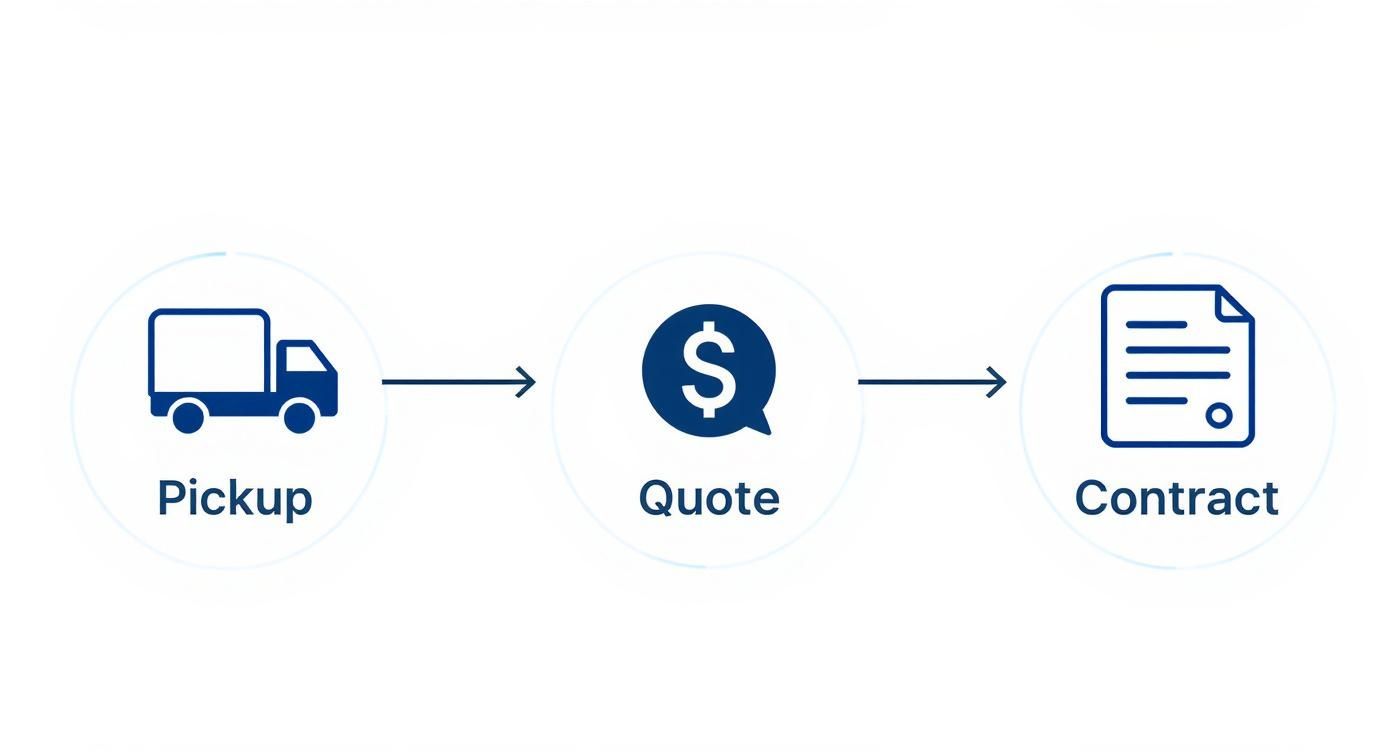
As you can see, a professional service moves seamlessly from logistics and pickup to a transparent quote and, finally, a clear contract. There shouldn't be any guesswork involved.
By now, you should have everything you need to move forward with confidence. Use the checklists and insights from this guide to make your final call. The goal is to select a partner who will help you build a secure, compliant, and responsible e-waste program that protects your business for years to come.
Frequently Asked Questions About E-Waste Disposal
When managing corporate IT assets, a lot of questions come up. Here are some of the most common things IT, operations, and compliance managers ask when they're developing their e-waste strategy.
What Is The Most Critical Factor When Choosing A Vendor?
While certifications and cost are important, the single most critical factor is verifiable data destruction.
Your partner’s ability to prove, with an auditable paper trail, that your corporate data was completely destroyed is the only thing standing between you and a potential breach. Without that guarantee, your business is exposed to massive security risks and legal liabilities. Always look for a vendor with NAID AAA certification or an equivalent, rigorously audited security process.
Can We Recover Any Costs From Our Old Equipment?
Yes, absolutely. This is a core component of IT Asset Disposition (ITAD), often called value recovery, and it’s a smart way to offset disposal costs.
A reputable e-waste company can assess your retired equipment to identify items with resale potential. Functional assets like newer laptops, servers, or networking hardware can be securely sanitized, professionally refurbished, and sold on the secondary market. Your vendor should then share a portion of that revenue with you, which can often cover—or even exceed—your recycling fees.
The sheer volume of electronics being discarded is staggering. In 2022, the world generated 62 million metric tonnes of e-waste, a number expected to hit 82 million tonnes by 2030. Finding ways to properly recycle and recover value is a critical business and environmental priority.
What Happens If My Business Is Not Compliant?
Ignoring regulations like the Resource Conservation and Recovery Act (RCRA) can be a costly mistake for any organization. The consequences are real and severe.
Your company could be facing hefty fines that can run into thousands of dollars per day, per violation. Beyond the financial hit, you also risk legal action and significant damage to your brand's reputation. Working with a certified e-waste recycler is your best line of defense against non-compliance.
If you want to get ahead of the problem, this is an excellent, practical guide on how to reduce electronic waste before you even need to call a recycler.
Ready to build a secure and compliant e-waste program for your Atlanta-based business? Contact Atlanta Computer Recycling for a transparent assessment and a partnership you can trust. https://atlantacomputerrecycling.com