Best Buy Television Recycling: Atlanta Businesses


The screens are mounted, the conference rooms look current again, and the refresh project is finally off your list. Then someone opens the storage room. Along one wall sit the old TVs, digital signage panels, lobby displays, and a few aging monitors nobody wanted to deal with during the rollout.
For a lot of teams, the first instinct is simple. Load them into a van and use best buy television recycling. That instinct makes sense. Best Buy is visible, familiar, and easy to find. For a household cleanup, that can be a practical answer. For a business, the decision gets more complicated fast.
An IT manager has to think past convenience. You need to account for chain of custody, any data left on smart displays, pickup logistics, internal signoff, and whether your disposal method will hold up under audit. That’s where the difference between consumer recycling and commercial IT asset disposition becomes hard to ignore.
Your Office Refresh Is Done Now What About the Old TVs
The common version of this problem looks like this. A company replaces meeting room displays across three floors. Facilities wants the old units gone by Friday. IT wants assurance that anything with storage, apps, or saved credentials won’t leave the building without controls. Finance wants the space back. Nobody wants a pile of retired electronics sitting next to office furniture for another month.
That’s when Best Buy usually enters the conversation. It has earned that visibility. Best Buy says it has become the nation’s largest retail collector of electronics and has recycled over 2 billion pounds of electronics and appliances since 2009, collecting more than 400 pounds of product for recycling every minute its stores are open according to Best Buy corporate recycling program details.
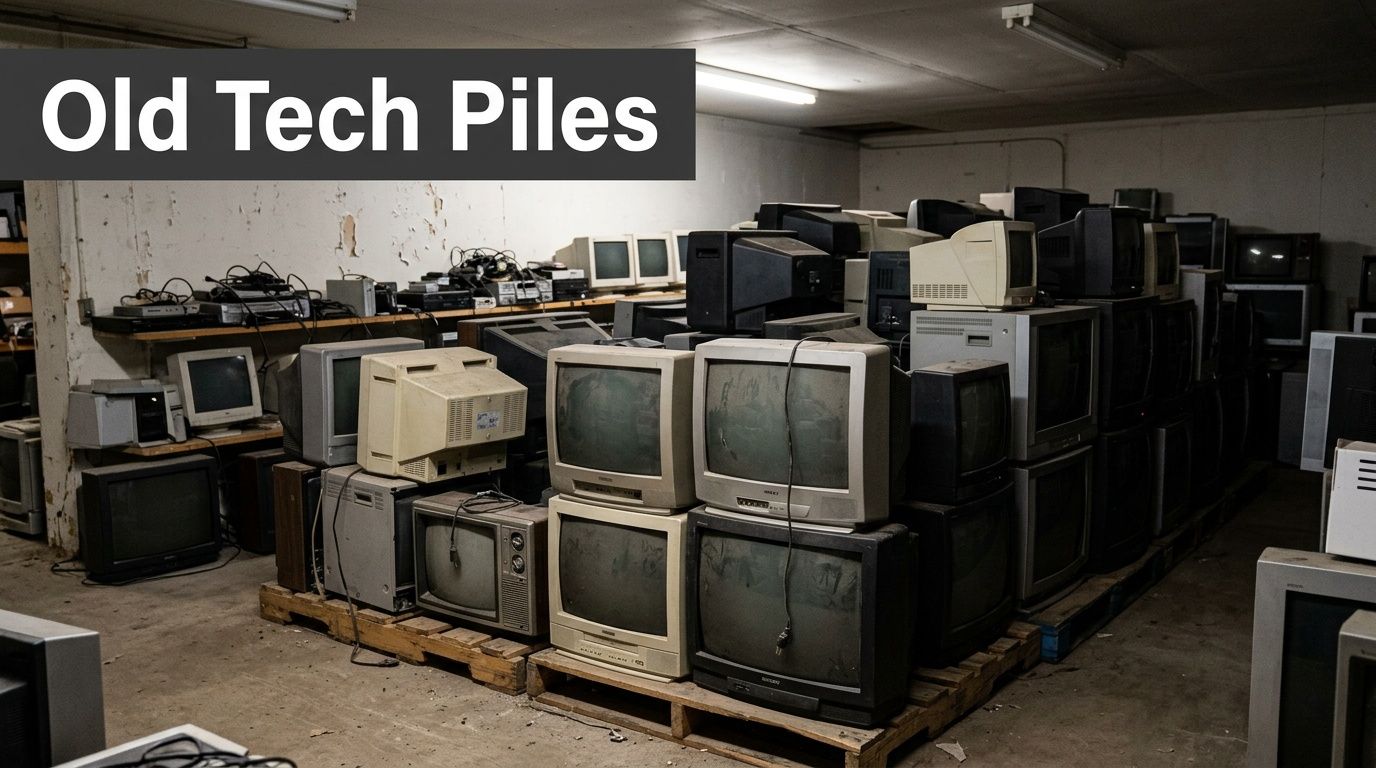
For personal use, that kind of retail access matters. If someone has one old TV at home, a known drop-off point solves the hardest part, which is often just knowing where to take it. In an office environment, though, the old TVs rarely exist by themselves. They sit alongside decommissioned monitors, spare docking stations, failed mini PCs, and cable bins nobody has inventoried.
That creates a holding problem before it creates a recycling problem. Some offices use temporary staging areas, while others rely on off-site space like secure storage units for offices to keep retired equipment contained until disposition is scheduled. That can buy time, but it doesn’t solve the business risk around the assets themselves.
What usually gets overlooked
The issue isn’t whether Best Buy recycles televisions. It does. The issue is whether a consumer drop-off model fits a business disposal workflow.
A business usually needs more than a place to unload hardware:
- Documented custody: Someone has to know what left the office and when.
- Security review: Smart TVs and connected displays can retain settings, accounts, or network details.
- Volume handling: A few screens are manageable. An office refresh can mean pallets.
- Related equipment planning: Displays often leave with other gear, including monitors. Teams sorting that mix usually need guidance on what to do with old computer monitors.
A retail recycling counter solves a convenience problem. Business disposition usually involves a governance problem.
That’s why IT managers should treat Best Buy as a useful reference point, not an automatic answer.
How Best Buy's In-Store Recycling Program Works
If you’re evaluating best buy television recycling seriously, it helps to understand the process exactly as a consumer would use it. The model is built around straightforward drop-off, store-level intake, and standardized downstream processing.
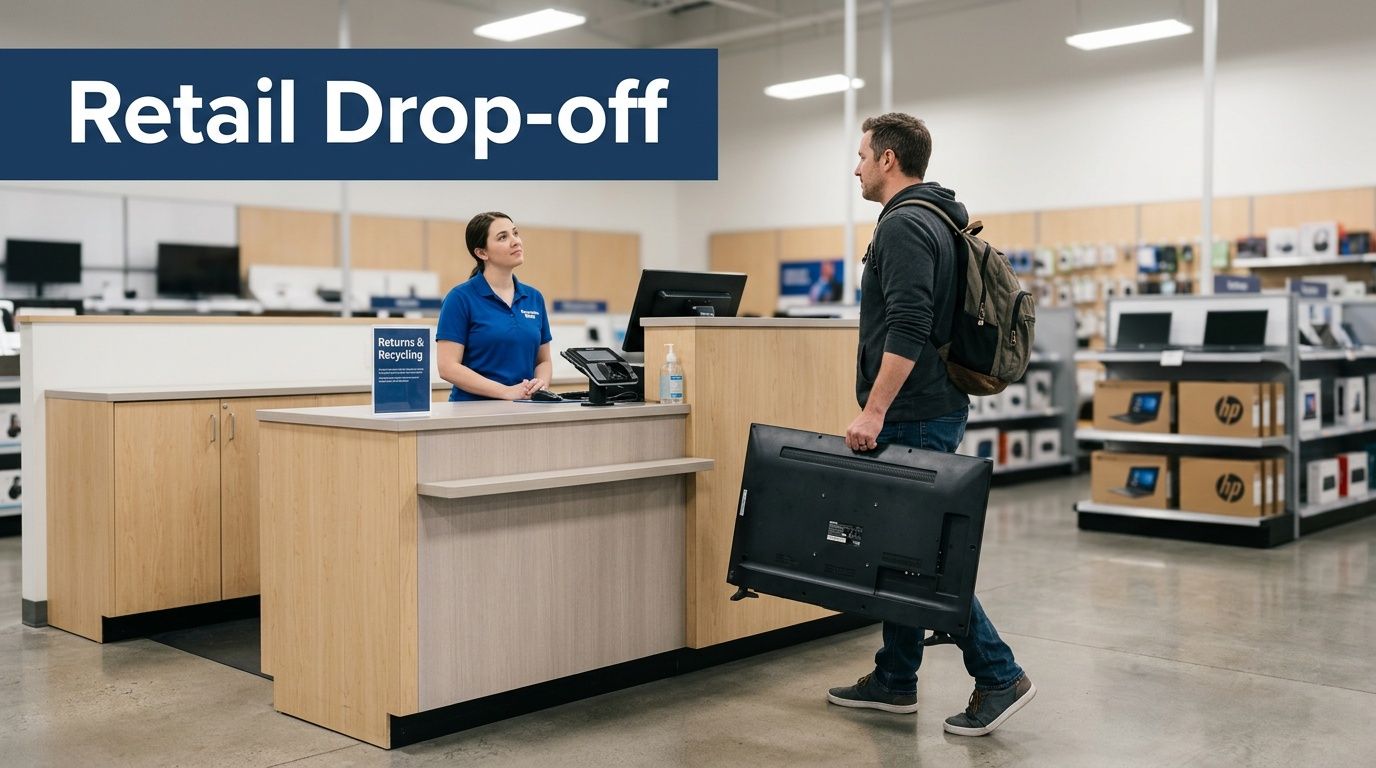
What a household customer can expect
At the store level, Best Buy is designed for small-volume drop-offs.
Item limit: Up to three items per household per day at store counters, based on Best Buy recycling guidelines.
For televisions, the fee structure matters.
TV fee: In most states, Best Buy charges $29.99 to recycle flat-panel TVs up to 49 inches, while Insignia and Dynex TVs under 50 inches are often accepted free, according to Waste Dive’s summary of the program.
That same reporting notes that 61% of people don’t recycle electronics because they don’t know where to take them, which explains why a recognizable retail option gets used so often. Accessibility is a major part of the program’s value.
The basic workflow
For a standard consumer drop-off, the process is usually:
Check eligibility before loading the car
TV acceptance depends on size, type, and local rules. Fees and state exceptions can apply.Bring the unit to customer service
Best Buy accepts items in store rather than requiring the original purchase source to match the retailer.Hand off for consolidation and shipment
The store aggregates collected items and sends them to processing partners.Sorting follows a recycling hierarchy
Best Buy’s stated approach prioritizes reuse, refurbishment, and then materials recovery before final waste handling, with no incineration or land disposal permitted for equipment or components under its program guidance.
State differences and hauling options
Some rules vary by state, which matters if your company operates in multiple locations.
| Situation | What to know |
|---|---|
| CA, CT, HI | No store drop-off fees for qualifying TV recycling under the stated policy |
| PA, WI, MI | Customers paying the $29.99 fee for qualifying smaller TVs may receive a $30 Best Buy Gift Card reimbursement |
| Best Buy brands | Insignia and Dynex units under the stated size threshold are often accepted free |
| Larger items | Oversized TVs may face higher fees or may not fit the standard drop-off model |
Best Buy also offers haul-away paths for larger products:
Haul-away option: The program includes haul-away when replacement products are purchased and delivered, plus a standalone haul-away service for larger products under published terms, as outlined in this Best Buy recycling overview for electronics disposal options.
For a homeowner replacing one living room TV, this is workable. The person pays the fee if needed, follows the item limit, and gets the device out of the house.
For an IT manager, those same rules are where the friction starts.
Critical Gaps in the Best Buy Model for Businesses
An office refresh usually feels finished when the new screens are mounted and working. For the IT manager, the harder part often starts after that. Retired TVs still have to leave the building in a controlled way, and a consumer drop-off model rarely fits how commercial decommissioning operates.
Volume creates operational drag
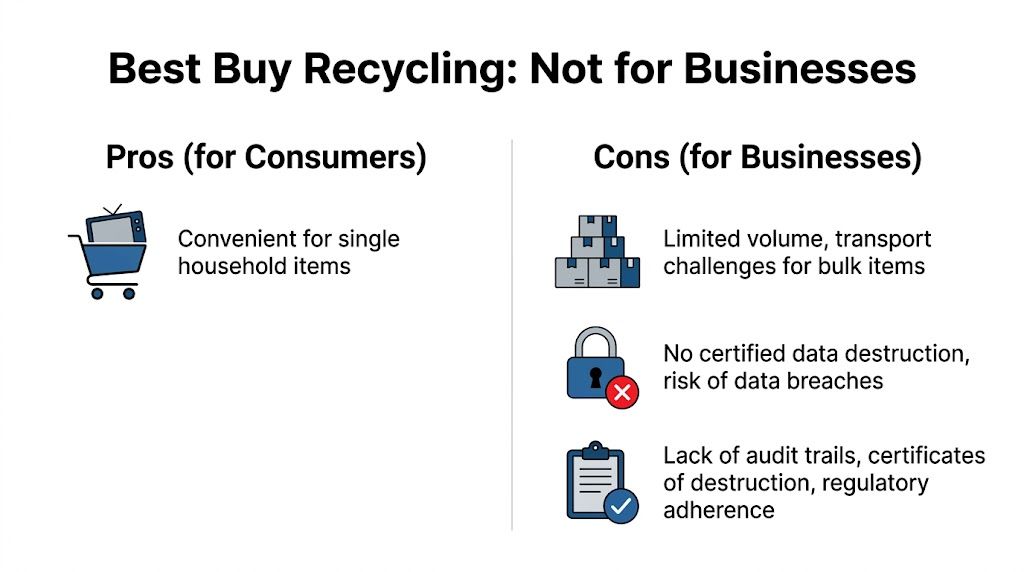
Best Buy’s recycling service is practical for a household. It is far less practical for a business retiring equipment across multiple rooms or sites. Best Buy’s published service framework is built around consumer use, including a household limit of three items per day, as described in Best Buy’s services framework for recycling.
That limit turns disposal into an internal labor project.
A typical business TV refresh can involve conference room displays, digital signage panels, training room screens, lobby units, and breakroom TVs. Staff still have to unmount them, stage them safely, protect them from damage, load them into vehicles, and make repeated store runs. None of that work is covered by a retail counter transaction.
I have seen companies spend more staff time managing the leftovers than they spent ordering the replacements.
Smart TVs raise the security standard
A retired display is not always just a display. Many smart TVs store network settings, app credentials, usage history, pairing information, and other residual data. In business environments, especially shared meeting spaces and customer-facing installations, that matters.
Best Buy states that data on stored media is handled through downstream partner processes where applicable. The gap for a business is verification. IT managers usually need to know who performed the sanitization, what method was used, and what record exists if legal, audit, or security teams ask later.
A simple rule works well here. If a TV ever connected to your network, treat it like any other endpoint during retirement.
That gap gets more serious once displays are tied to collaboration bars, attached media players, conferencing systems, or signage platforms. A consumer drop-off receipt does not usually provide the level of custody documentation or process control expected in a regulated environment, which is a core distinction in IT asset disposition for business equipment.
Compliance depends on records
Retail recycling focuses on collection. Business disposal programs have to stand up to internal policy and external review.
For many organizations, the question is not whether the TV left the building. The question is whether the company can prove what happened from removal through final disposition. That usually includes:
- Asset identification before pickup or transfer
- Chain of custody records showing who handled the equipment
- Documented data sanitization or destruction when devices store information
- Disposition reporting for audit files, risk reviews, and internal signoff
Without that paperwork, the process depends too heavily on trust and memory.
Physical handling is a business problem too
TVs are large, fragile, and awkward to move. Many are wall-mounted, installed above finished floors, connected to structured cabling, or deployed across multiple departments. A consumer model assumes the owner can absorb that effort. A business often cannot do that cleanly without pulling facilities, IT, and operations into the same project.
That is where breakdowns happen in practice:
- Facilities teams remove the hardware but are not responsible for data handling
- IT teams understand the risk but may not have trucks, packing materials, or labor available
- Department managers want space cleared quickly
- No single group owns custody from deinstall through final recycling
Best Buy remains a reasonable convenience option for personal use. For business equipment, the gaps are clear. Scale, documentation, pickup coordination, and controlled data handling are usually missing from a store-based process, and those are the parts that matter most once the equipment belongs to an organization instead of a household.
The Commercial Alternative Secure IT Asset Disposition
When business equipment leaves service, the right framework is IT asset disposition, usually shortened to ITAD. That term matters because it signals a controlled process, not just recycling.
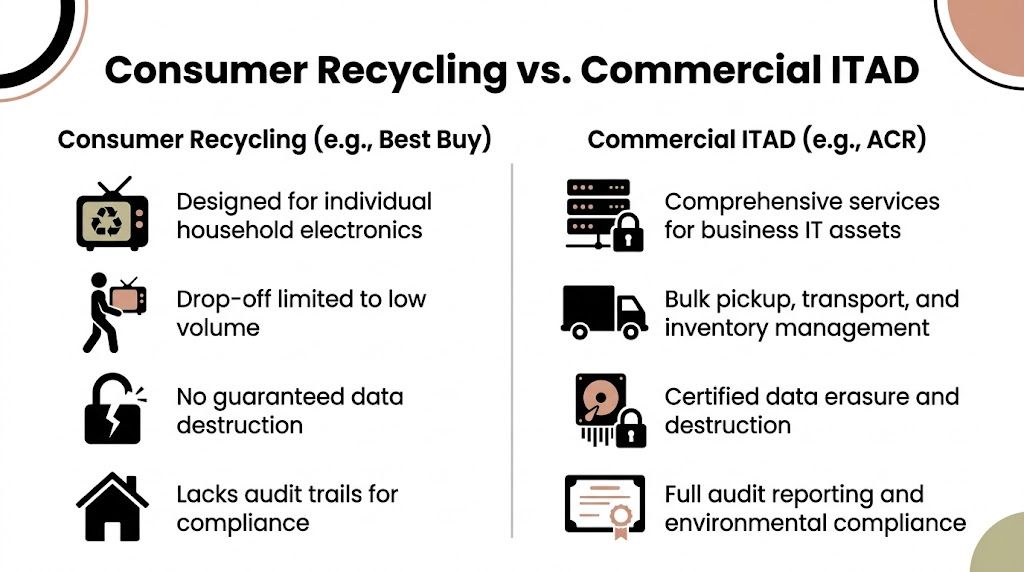
What changes when you use an ITAD process
The first difference is pickup. Instead of asking your staff to move retired TVs through a retail channel, a commercial provider schedules collection around your site conditions, access windows, and internal controls. That’s especially important when displays are mixed with computers, servers, network gear, and storage media.
The second difference is data treatment. Business ITAD isn’t based on hoping users wiped devices correctly before drop-off. It’s based on a defined sanitization or destruction method applied under process control.
A strong commercial workflow usually includes:
- On-site or scheduled pickup tied to your decommissioning plan
- Inventory handling so assets are recorded before they disappear into a truck
- Data destruction standards aligned with NIST 800-88 or DoD requirements where appropriate
- Certificates and reporting for internal records and audits
- Downstream recycling discipline that prioritizes reuse and certified material recovery
Environmental handling should also be documented
Security gets the most attention, but environmental controls matter too. Businesses don’t just need hardware gone. They need it handled responsibly and defensibly.
According to Best Buy recycling FAQs covering downstream partner standards, professional ITAD services that partner with R2 or e-Stewards certified recyclers achieve over 99% landfill diversion rates, and their processes include 100% data destruction compliance using methods such as NIST 800-88 shredding, along with the documentation businesses need for audit trails.
That’s the difference between disposal as an errand and disposal as a managed business process.
What to evaluate in a provider
Not every recycler operates at ITAD level. Ask direct questions.
| Question | Why it matters |
|---|---|
| Do you handle on-site pickup? | Prevents repeated staff trips and reduces uncontrolled movement |
| How do you manage inventory? | Supports chain of custody and internal reconciliation |
| What data destruction standard do you use? | Confirms the process matches your risk profile |
| Do you issue certificates of destruction? | Gives compliance and legal teams a record |
| Who are your downstream partners? | Shows whether environmental claims are backed by certified handling |
If you’re sorting options locally, it also helps to review providers that offer dedicated IT equipment pickup in Atlanta rather than adapting a household drop-off model to a commercial project.
Atlanta Computer Recycling A Secure Partner for Local Businesses
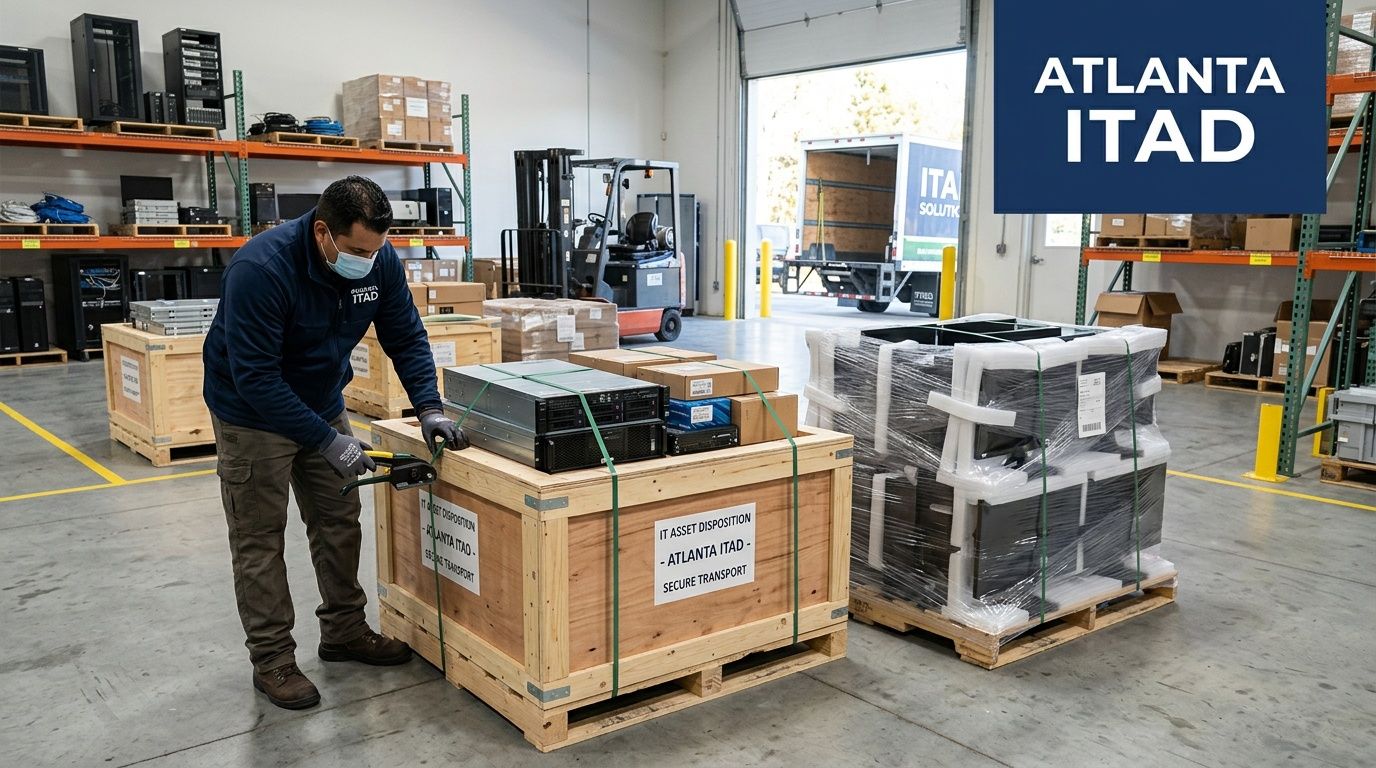
A typical office refresh ends with a storage room full of retired screens, a facilities team asking when they can reclaim the space, and an IT manager who still needs the disposition process documented. That is the point where a consumer recycling option stops being useful. Business equipment has to leave the building under control, with records your team can keep.
What business-ready service looks like in practice
For local organizations, a qualified ITAD partner starts at the pickup point. Equipment is inventoried, packed out by trained staff, and moved through a documented chain of custody instead of being loaded into employee vehicles a few units at a time. That matters even more when the project includes smart TVs, conference room displays, media players, or mixed loads of laptops and peripherals alongside the screens.
The job also has to fit the site. Schools may need summer scheduling. Hospitals may require tighter access control and clear loading instructions. Office towers often require dock reservations, elevator windows, and certificates before a truck can even enter the property. A retail drop-off model does not solve those operating details.
For an Atlanta business, the practical requirements usually include:
- On-site pickup and removal planning that fits your building rules and staff schedule
- Asset tracking and reconciliation so IT and facilities can confirm what left the site
- Data destruction for devices with storage such as smart displays, media units, and attached hardware
- Certificates and disposition records your compliance or legal team can file
- Handling for mixed commercial loads because TV retirements rarely happen in isolation
Why local execution matters
A local provider can scope the job before pickup, identify access constraints, and assign the right crew and vehicle for the volume. That reduces delays and avoids the common problem of underestimating labor for wall-mounted displays, scattered assets, or equipment stored on multiple floors. Teams sometimes benchmark haul-away costs against general cleanout references such as junk removal pricing, but electronics projects usually require more control than a standard removal job.
Atlanta companies that need that level of handling can work with Atlanta Computer Recycling’s commercial electronics recycling and ITAD services. The value is not just local presence. It is a process built for business assets, business timelines, and business records.
If your disposal plan depends on staff making extra trips, guessing at documentation, or separating TVs from the rest of the retired equipment after the fact, the process needs work.
Making the Right Choice for Your E-Waste
The right disposal decision depends on what you’re trying to solve. If you’re a consumer with one aging TV, best buy television recycling may be a reasonable answer. If you’re responsible for retired business assets, convenience by itself isn’t enough.
An office disposal project carries security, compliance, and logistical obligations. You need a process that matches those obligations. That means documented pickup, controlled handling, data destruction, and reporting that your organization can retain. Retail drop-off was never designed to carry that weight.
There’s also a practical budgeting point here. Teams sometimes compare disposal options the way they compare general cleanout services, looking at references for things like junk removal pricing to estimate labor and haul costs. That can help frame transportation expense, but electronics disposition isn’t just junk removal. The data, compliance, and downstream recycling controls are what make the difference.
Choose the method that fits the asset class. Consumer programs work for household convenience. Commercial ITAD works for business risk.
If your organization in the Atlanta area needs a secure, documented way to retire TVs, monitors, computers, or other IT equipment, Atlanta Computer Recycling provides business-focused pickup, data destruction, and responsible electronics disposition built for offices, schools, healthcare facilities, and data centers.