Atlanta Falcons vs Bills: A Game Plan for Victory


If you're managing a server refresh, an office move, or a data center cleanout in Atlanta, you're making the same kind of decisions coaches make before a heavyweight NFL matchup. You don't win by doing everything. You win by protecting the right assets, controlling the pace, and executing under pressure.
That's why the atlanta falcons vs bills matchup works as more than football talk. It's a practical model for how strong operators think. On the field, that means identifying strategic advantages, limiting mistakes, and making the other side play left-handed. In business, especially in IT asset disposition, it means secure chain of custody, disciplined de-installation, and clear accountability from pickup through final disposition.
The game itself gives Atlanta readers a useful frame. The Falcons have had the better historical edge in this series, and their latest win over Buffalo showed what efficient execution looks like when the opponent is talented and dangerous. For IT leaders, that lesson travels well. Big-name vendors, large projects, and tight deadlines don't reward noise. They reward process.
A Rivalry Decades in the Making
An Atlanta operations leader facing a tight refresh schedule knows the pressure. One bad handoff can turn a controlled project into a chain-of-custody problem. Falcons vs. Bills carries a similar kind of pressure because these teams see each other infrequently, which makes each result matter more than a routine annual divisional game.
The rivalry has lasted across eras, coaching staffs, and quarterback changes. What gives it staying power is not volume. It is the fact that every meeting feels like a checkpoint in a longer competitive record, one that Atlanta has generally handled a little better than Buffalo.

Why this history still matters
Head-to-head history should not be treated as a forecast. Good analysts know that. Rosters change, coordinators install new systems, and a game played years ago does not decide the next snap.
It still has value.
A long series with a narrow margin says these franchises have usually produced competitive football, and it reminds Atlanta readers to judge this matchup on its own terms instead of importing league-wide narratives. That is the same discipline IT managers need when they evaluate disposition vendors. A national name can look strong on paper and still lose on execution if pickup windows slip, inventory control breaks down, or local project coordination is weak.
That local context matters in Atlanta, which is why regional football coverage and business operations often overlap in useful ways on this Atlanta Falcons page for local readers. Familiarity helps. Process decides outcomes.
The recent meeting sharpened the point
The latest chapter mattered because Atlanta won by controlling the style of game. The Falcons dictated pace, protected the ball, and forced Buffalo to play from a less comfortable script. In football terms, that is efficiency and situational control. In IT asset disposition, it is the difference between a vendor that merely shows up and one that maintains documented custody, clear reporting, and disciplined execution from pickup through final disposition.
That is why this rivalry works as more than a historical footnote for an Atlanta audience. It is a clean metaphor for competition in the market. Close contests usually turn on the same factors, whether the setting is an NFL field or a warehouse floor. Limit mistakes, secure what matters, and execute the plan under pressure.
Tale of the Tape Recent Team Performance
A game operations director in Atlanta would read this matchup the same way a football analyst should. Start with recent execution, isolate where possessions are being won or wasted, and ignore the noise that comes from national reputation. That is how Falcons vs. Bills should be judged, and it is how serious IT managers should compare disposition vendors.
Here is the practical view.
| Category | Atlanta Falcons | Buffalo Bills | Why it matters |
|---|---|---|---|
| Series position | Narrow historical edge | Slightly behind in the series | The matchup has stayed competitive enough that style and execution matter more than brand |
| Offensive pattern in this matchup | Has produced points with relative consistency | Has had less control of the series flow at times | Atlanta has usually stayed functional on offense instead of relying on chaos |
| Latest notable result | 24-14 win on October 13, 2025 | 14 points scored in that game | The last meeting favored Atlanta's preferred tempo and possession structure |
| Strategic read | Balanced, controlled approach | More dangerous when game flow opens up | Whoever controls pace usually controls the terms |
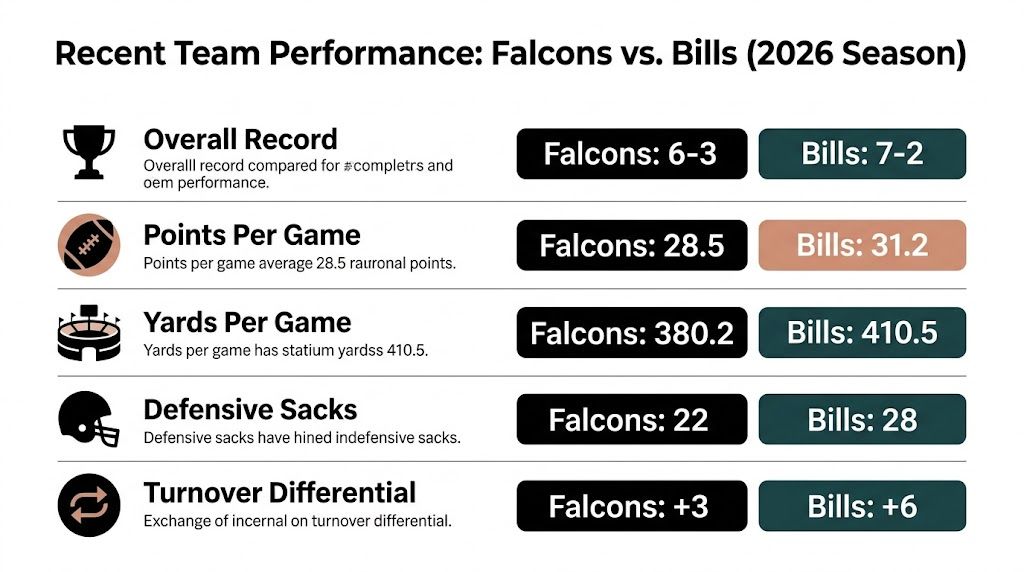
The important point is not the historical total by itself. It is the kind of football that has kept Atlanta competitive in this series. The Falcons have done their best work here when they shorten the game, stay on schedule, and make Buffalo drive the long field without shortcuts. That formula travels well because it reduces variance. In business, the same logic applies to IT asset disposition. A vendor with disciplined chain-of-custody procedures, accurate inventory capture, and on-time pickups usually beats a bigger name that creates friction at every handoff.
Recent team performance also has to be read in context. Buffalo often carries the stronger national profile, but profile does not secure a game plan. Atlanta has had success in this matchup by forcing a more measured contest, where field position, third-down execution, and red-zone decisions carry more weight than highlight plays. For an Atlanta business audience, that should sound familiar. The vendor with the best sales deck is not always the one that documents serial numbers correctly, secures drives properly, and closes the reporting loop without delays.
Three recent-performance signals matter more than broad narratives:
- Pace control: Atlanta is at its best when the game stays structured and possessions stay meaningful.
- Drive efficiency: Buffalo becomes harder to handle when it gets extra possessions or quick scoring swings.
- Error discipline: Short fields, missed fits, and empty drives usually decide the margin before the final score confirms it.
That is the tale of the tape. One side benefits from tempo and disruption. The other benefits from order and repeatable execution.
For another Atlanta matchup framed through the same lens of operational discipline versus headline perception, this Falcons vs. Rams analysis for Atlanta readers offers a useful comparison.
The business lesson is straightforward. Close competition rarely turns on slogans. It turns on process under pressure. In football, that means protecting possessions and finishing drives. In IT asset disposition, it means secure handling, documented custody, and a workflow that still holds together on a busy week in Atlanta.
Decisive Player Matchups and Performance Metrics
Fourth quarter. Atlanta has the lead, Buffalo is trying to close space, and one matchup keeps deciding the next call sheet. Bijan Robinson versus Buffalo's front seven was the pressure point, because once Robinson started creating yards after contact, the Bills had to commit extra attention to the run. That single adjustment changed pursuit angles, safety depth, and the menu Buffalo could call on passing downs.
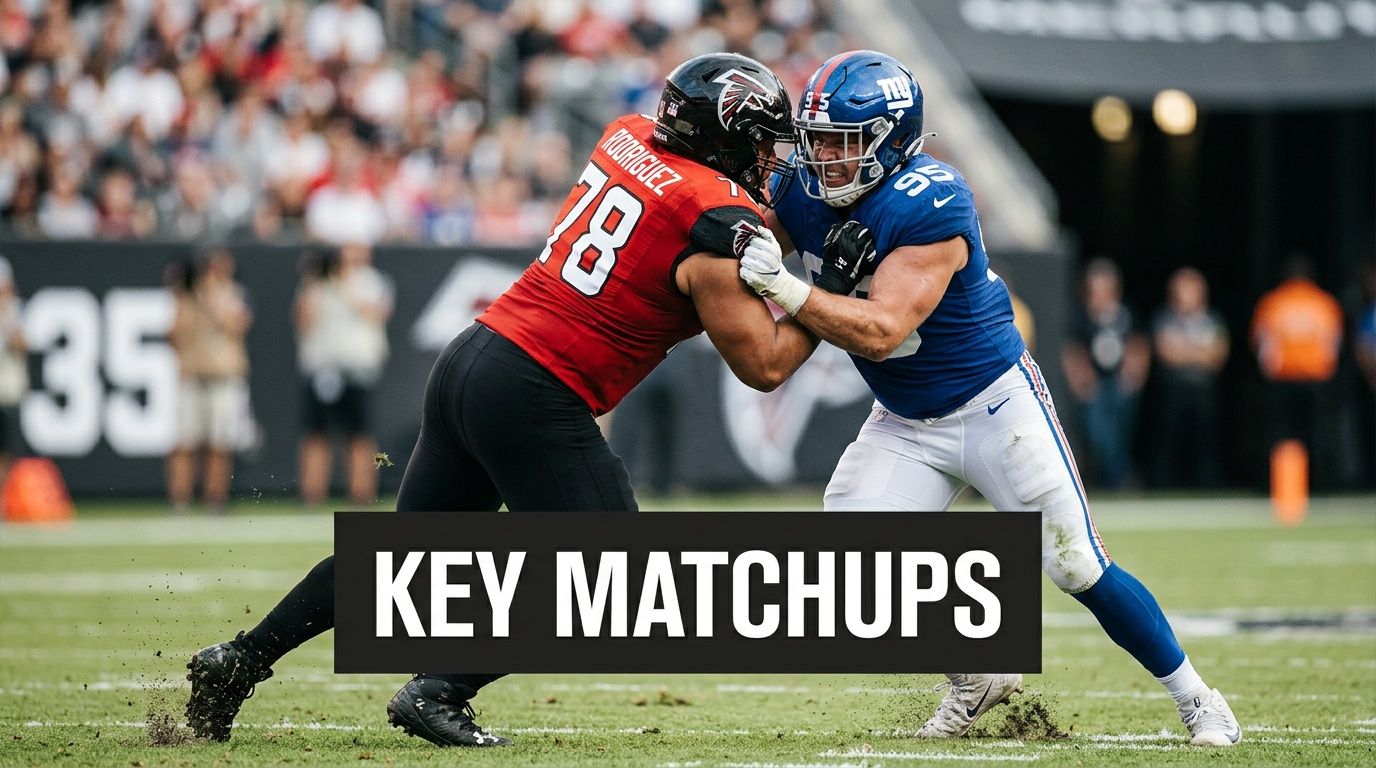
The production justified the reaction. In Atlanta's 24-14 win over Buffalo on October 13, 2025, Robinson ran for 170 yards and broke an 81-yard touchdown, his longest run as a pro, according to the Falcons' official game breakdown at AtlantaFalcons.com. Big runs do more than inflate a stat line. They force a defense to choose between support against the run and structural soundness against play action.
That trade-off matters in football and in operations. An Atlanta company handling a large refresh cycle faces the same kind of decision pressure. If pickup windows, chain-of-custody checks, and drive handling are loose, the whole project shifts into recovery mode. If those control points hold, the rest of the job gets simpler. A local comparison in this Atlanta Braves business and competition breakdown shows the same principle from a different Atlanta sports angle.
Robinson's night mattered because of timing as much as volume. His long touchdown turned a manageable game into one where Buffalo had to chase terms it did not prefer. That is how efficient offenses create stress. They do not need constant fireworks. They need one or two plays that force the opponent to revise its plan.
The matchup was fundamentally about control versus response.
Once Atlanta could run without falling behind the sticks, the Falcons could shorten Buffalo's margin for error. That effect showed up in Buffalo's limited offensive output in the same game, as noted earlier. A productive ground game helped Atlanta control pace, protect its defense, and keep Buffalo from dictating game flow.
Three performance lessons stand out:
- Explosive rushing changes defensive math. One breakaway run can pull safeties closer, widen run fits, and reduce disguise on later snaps.
- Efficiency protects the entire roster. Sustained drives give the defense better field position and fewer high-stress series.
- Clean execution beats unnecessary complexity. Atlanta did not need trickery. It needed blocking that held up, reads made on time, and a runner who finished through contact.
Retail operators see a similar pattern in Proven Tactics on How to Increase Retail Sales. The best results usually come from disciplined execution, clear positioning, and fewer wasted motions.
For IT managers, this is the part worth keeping. A disposition project rarely fails because the strategy sounded bad in a meeting. It fails when inventory control slips, devices sit too long between handoffs, or reporting arrives late. The winning approach, whether on the field or in an Atlanta data center, is the one that stays efficient, secure, and repeatable when the pressure rises.
The Strategic Playbook On-Field Tactics Meet Business Logic
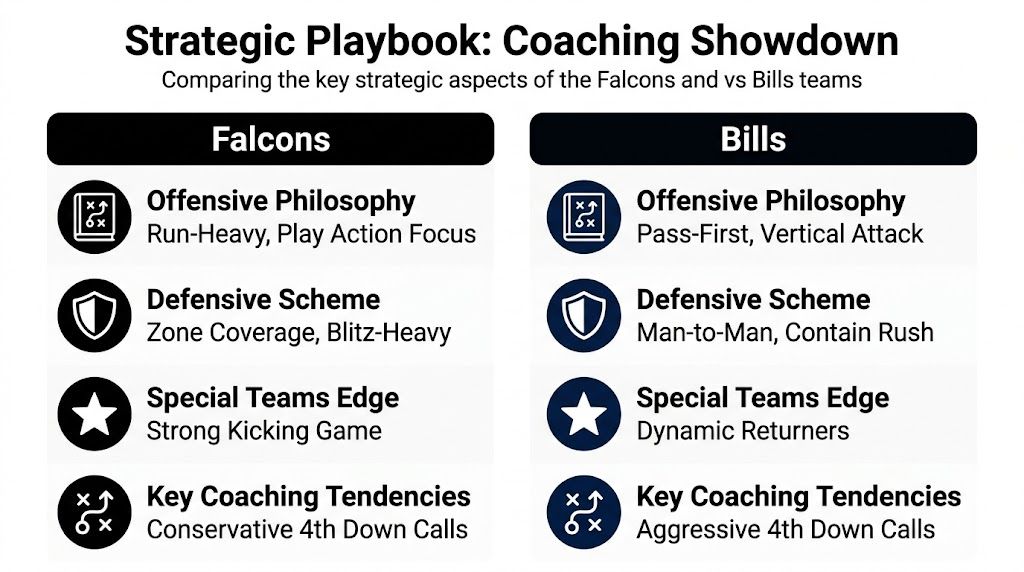
The deeper lesson from atlanta falcons vs bills isn't about one star player. It's about system design. Coaches build game plans around what they can repeat under pressure. Business leaders should do the same. A solid ITAD plan doesn't depend on ideal staffing, a quiet office, or a perfectly clean inventory sheet. It depends on a workflow that still functions when the environment is messy.
This visual captures the strategic split in broad terms.
What Atlanta showed tactically
The useful benchmark from the rivalry data is this: recent head-to-head trends show the Falcons with a 60% against-the-spread cover rate, and in the 2025 clash Atlanta's defense held Buffalo to 291 yards while forcing 4 three-and-outs, according to AiScore's Falcons vs. Bills head-to-head summary. That's a compact description of defensive control.
The business metaphor in that same source is unusually apt. It compares that yardage limit to about a 75% reduction in asset exposure, which mirrors how strong on-site pickup and controlled handling reduce risk during decommissioning. Even if you don't love sports analytics language, the management lesson is straightforward. Reduce exposure early, and the rest of the project gets easier to control.
The football lesson IT leaders can actually use
In game planning and in disposition work, the biggest failures usually come from unmanaged transitions. That's where things get lost, mishandled, or forced into improvisation.
Three habits tend to separate a strong plan from a weak one:
Define the first move clearly
On the field, that means the opening script and personnel packages. In ITAD, it's the intake sequence, access approvals, and who physically touches equipment first.Build for stalled possessions
Football teams prepare for third-and-long. Operations teams should prepare for partial inventories, dead equipment, locked racks, and business units that missed the memo.Protect field position
In business terms, field position is chain of custody. If equipment moves without documented control, you're already playing defense.
A retail operator thinking about throughput, traffic flow, and conversion would recognize the same planning discipline in resources like Proven Tactics on How to Increase Retail Sales. Different domain, same principle. Good outcomes rarely come from effort alone. They come from designing the environment so the right behavior is easier to execute.
The Atlanta angle matters
Local context changes strategy. Stadium conditions, travel, and routine shape football. Building access, elevator scheduling, loading docks, security checkpoints, and metro traffic shape decommissioning work the same way. A plan that looks polished in a slide deck can still fail in the field if it doesn't respect local constraints.
That is why local sports analysis often resonates beyond sports. This Atlanta Braves page reflects the same core reality. Atlanta teams and Atlanta organizations both operate in a city where timing, logistics, and execution matter as much as raw capability.
Operational insight: The best strategy isn't the most complicated one. It's the one your team can execute cleanly when the window is tight.
Game Lines and Expert Predictions
Betting markets are really just fast-moving risk models. They absorb reputation, injuries, recent form, public sentiment, and matchup concerns, then compress all of that into a spread and total. Even if you don't bet, it's useful to read game lines the way a project manager reads a budget forecast. They aren't guarantees. They're consensus estimates under uncertainty.

In a matchup like atlanta falcons vs bills, public money tends to lean toward Buffalo because the Bills usually carry stronger national trust. The smarter read is to ask whether that trust maps cleanly onto this specific game. If the answer is no, the line can lag behind the matchup reality.
My read on the matchup
I don't treat forecasts as fan fiction. I treat them like operational scenarios. If Atlanta can recreate the same broad formula that worked in the notable recent meeting, especially by controlling pace and forcing Buffalo into less comfortable sequences, the Falcons can stay in range deep into the game. If Buffalo dictates tempo early, Atlanta's margin for error shrinks fast.
Here's the practical framework I use:
- Atlanta path to win: run efficiency, disciplined possession management, and a defense that forces Buffalo to settle rather than surge
- Buffalo path to win: early scoring pressure, cleaner passing rhythm, and forcing Atlanta to chase
- Swing factor: whether Atlanta can turn physical efficiency into scoreboard control before Buffalo stretches the game
Prediction as a business-style forecast
My forecast is Falcons in a close, controlled contest if they establish the game script early. If the game opens up into a pure talent race, Buffalo becomes harder to contain. But if Atlanta keeps the structure tight, this rivalry's history says the gap isn't as wide as casual observers assume.
That's the same logic IT leaders use when evaluating a complex disposition project. Don't ask who looks strongest on paper. Ask whose operating model is most likely to survive contact with the actual environment.
Your Business Playbook for Secure IT Asset Disposition
IT managers don't need sports metaphors to understand pressure. You already manage it. Hardware ages out before budgets reset. Storage closets fill up. Compliance teams want answers. Business units want equipment gone without disruption. Leadership wants assurance that data won't walk out the door with retired devices.
That combination is why IT asset disposition deserves the same seriousness as a game plan. The process has to be secure, repeatable, and fast enough that it doesn't interfere with the rest of the organization.
What a strong ITAD process actually looks like
The strongest programs share a few traits. They don't start with recycling. They start with control.
- Verified handling of data-bearing assets so drives, servers, laptops, and network devices aren't treated like ordinary surplus
- Documented chain of custody so nobody has to guess where equipment went or who touched it
- On-site de-installation and pickup planning that fits around live operations rather than disrupting them
- Disposition paths that prioritize reuse when appropriate and certified recycling when reuse isn't viable
For teams building internal governance around these decisions, a strong overview of hardware and software asset management is useful because it places end-of-life handling inside the broader asset lifecycle instead of treating disposal as an afterthought.
What usually goes wrong
Most failures in this area aren't dramatic. They're procedural.
A department stores retired laptops too long. A server pull gets scheduled before stakeholders align on ownership. Drives are separated from systems without clean recordkeeping. Equipment is moved in batches that make later reconciliation harder. None of that feels catastrophic in the moment. It becomes catastrophic when audit questions arrive.
That's why the planning standard should be higher than "we'll deal with it later." A mature organization needs an actual route for retired equipment, especially when healthcare data, educational records, government systems, or enterprise client information may be involved.
The local decision for Atlanta organizations
For Atlanta-area teams, the local variable is logistics. Access windows, loading docks, downtown timing, campus sprawl, medical environments, and office tower restrictions all affect what a clean project looks like. The right partner understands that disposal isn't just about where equipment ends up. It's about how it moves from active use to secure final disposition without introducing avoidable risk.
If you're evaluating options, the best starting point is a provider that specializes in IT asset disposal services in Atlanta. Use that standard as a checklist. Ask how they handle data destruction, de-installation, transportation, documentation, and non-functional media. Ask what happens when the inventory is incomplete or the project expands halfway through.
Strong ITAD work feels organized before the first asset is unplugged.
That is the operational equivalent of winning the line of scrimmage. The visible result comes later. The true advantage is established earlier.
Atlanta Game Day Logistics and Local Guide
If you're heading out to watch the Falcons, keep the logistics simple. Atlanta rewards early decisions and punishes last-minute improvisation. That's true whether you're driving to a stadium, meeting clients, or moving retired equipment through a downtown loading area.
If you're going into the city
For a home-game atmosphere, leave margin for traffic, parking transitions, and postgame congestion. Rideshare can work well if you choose a pickup plan before kickoff rather than after the final whistle. If you're meeting coworkers or clients, pick one clear rendezvous point and send it in advance. Group texts are less reliable when everyone's moving at once.
Aviation and travel schedules also matter more than people expect, especially for visitors and distributed teams flying into Atlanta around major events. For anyone coordinating travel around the metro, this local guide to Hartsfield-Jackson Atlanta International Airport is a practical planning resource.
If you're watching from a sports bar
Choose the venue based on what kind of night you want. Some spots are built for wall-to-wall crowd energy. Others are better for hearing the conversation and breaking down the game with colleagues. If the watch party has a business angle, client relationship, recruiting dinner, or team outing, the quieter option usually wins.
A few practical habits make the night smoother:
- Arrive earlier than feels necessary: good seats disappear fast when a marquee opponent is in town
- Pick the screen before you order: don't assume every table has a clean sightline
- Set the exit plan early: Atlanta traffic after a major game doesn't reward indecision
The local advantage is knowing how the city moves. Atlanta fans understand that instinctively. Smart operators do too.
Atlanta organizations that want the same kind of disciplined execution discussed throughout this article can work with Atlanta Computer Recycling for secure, business-focused electronics recycling and IT asset disposition across the metro area. If you're planning a data center decommissioning, office technology refresh, or HIPAA-sensitive equipment retirement, their team handles pickup, de-installation, data destruction, and responsible downstream disposition with a process built for commercial environments.