Sustainable Electronics Recycling Atlanta GA: Secure & Compliant Solutions for Your Business


Your IT infrastructure is a powerful asset, but what happens when it’s time for an upgrade? For IT and operations managers across Atlanta, retiring old tech is a major headache. It’s a minefield of data security risks, environmental rules, and strict compliance demands. Just hoping for the best isn’t a strategy—it’s a significant business risk, especially for Atlanta's booming healthcare, finance, and legal sectors.
Turning E-Waste Risk Into A Strategic Advantage
Trying to manage IT asset disposal on a case-by-case basis is inefficient and, frankly, dangerous for any modern business. Smart companies are flipping the script, turning secure IT Asset Disposition (ITAD) into a real strategic advantage. This guide is your roadmap to help your company make the right calls on its e-waste, turning a liability into a process that protects your data, guarantees compliance, and recovers value.
The scale of the e-waste problem is almost hard to believe. In 2022, the world generated a massive 62 million tonnes of electronic waste—that’s an 82% increase from 2010. And it’s not slowing down. Projections show that number climbing another 32% by 2030, a growth rate that recycling efforts can't keep up with. A breakdown of global e-waste trends shows this leaves billions in valuable, recoverable resources simply thrown away.
This global crisis has a direct impact right here in Atlanta. Georgia's tech hubs are a huge part of the local economy, and they also generate a significant volume of retired corporate assets. For businesses looking to connect with a reliable local partner, understanding the benefits of local SEO can be invaluable.
From Hazard To Opportunity
The key is a change in mindset. Stop seeing old tech as just a disposal problem. Start seeing it as an opportunity for strategic management—one that lets you assess risks, implement a solid strategy, and gain a competitive edge through bulletproof security and sustainability practices.
This graphic shows how to reframe the entire process.
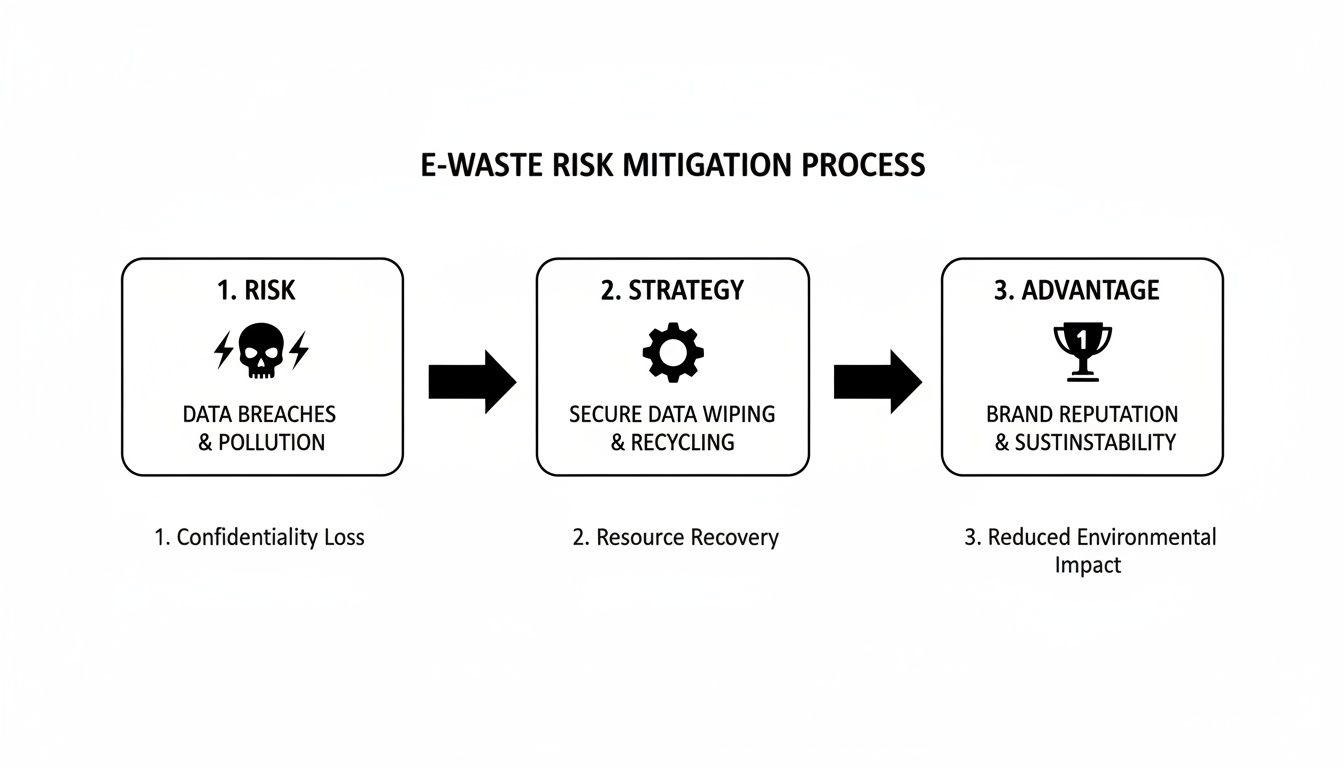
It’s all about turning initial risks like data breaches and compliance fines into powerful benefits, such as a stronger security posture and an enhanced brand reputation.
For an Atlanta business, particularly in healthcare or finance, a single improperly discarded server can lead to catastrophic data breaches and regulatory fines. A documented, certified disposal process isn't just best practice; it's essential for survival.
This guide cuts through the noise. We're giving you a practical framework for sustainable electronics recycling in Atlanta, GA. We’ll walk through everything from asset prep and choosing a secure partner to navigating compliance and logistics. If you need a solution now, check out our dedicated commercial e-waste recycling services in Atlanta. This is your plan for turning a complex obligation into a streamlined, value-driven process.
How To Prepare Assets For Secure And Compliant Disposal
Before any old equipment leaves your office, a little prep work is essential. It’s about more than just clearing space; it's about protecting your data, ensuring a smooth handoff, and kicking off a compliant disposal process. This is the first, and most important, step in any corporate IT asset retirement project.
Think of it as the groundwork for a secure tech refresh or office cleanout. When your team takes the time to prepare assets correctly, you eliminate risks from the very beginning—from potential data leaks to logistical nightmares on pickup day. It’s what separates a professional, secure process from a chaotic, risky one.
Create A Detailed Asset Inventory
First things first: you need to know exactly what you’re getting rid of. An asset inventory isn’t just busywork; it’s your master list for accountability and the foundation for a secure chain of custody.
Your inventory needs to document every single piece of hardware slated for disposal. Don't just count boxes—break it down by category to make tracking simple.
- Computers: Desktops, all-in-one PCs, and laptops.
- Servers: Tower, rack-mounted, and blade servers.
- Networking Gear: Switches, routers, firewalls, and access points.
- Peripherals: Monitors, keyboards, mice, and docking stations.
- Mobile Devices: Company-issued smartphones and tablets.
For every item, you must record its serial number. This isn't optional. That unique identifier is how we track your asset through every stage—from pickup and data destruction to final recycling—giving you a completely auditable trail from start to finish.
Implement Pre-Pickup Security Measures
With your inventory locked in, it's time to focus on securing the data on those devices. The goal here is to neutralize any risk before the hardware even leaves your control. This is a fundamental part of your company's data security posture.
Start by physically disconnecting every device from your live network. An offline device can’t become a point of access. Then, make sure your IT team revokes all access credentials tied to that hardware, including service accounts, admin logins, and any other system-level permissions.
Think of a mid-sized Atlanta healthcare clinic we worked with during their recent tech refresh. Their IT director didn’t just pile old PCs in a back room. He segregated all devices containing protected health information (PHI), clearly tagged them for certified data destruction, and had them ready. This simple, proactive step ensured HIPAA compliance and protected patient privacy before we even walked through the door.
This practice is critical for any business handling sensitive information. Whether it’s financial records, customer data, or intellectual property, flagging those devices helps your recycling partner apply the right data destruction methods without any guesswork. For a closer look, your team can review how you can wipe a computer hard drive for an added layer of in-house security.
Prepare For A Smooth Physical Handoff
Finally, let's talk logistics. How you organize the equipment inside your office makes a huge difference for an efficient, secure pickup.
Designate one secure, central spot for all the inventoried equipment. This prevents stray devices from being missed or, worse, accidentally put back into use. If you have a loading dock or a ground-floor storage room, that’s perfect—easy access for our pickup crew is always a plus.
Having everything in one place also lets your team do one last check against your inventory list when our crew arrives. This final verification confirms every asset is accounted for, creating a seamless and documented handoff to your sustainable electronics recycling partner in Atlanta, GA. Proper prep work ensures the transition from your facility to ours is clean, secure, and professional.
Choosing Between Reuse And Certified Recycling
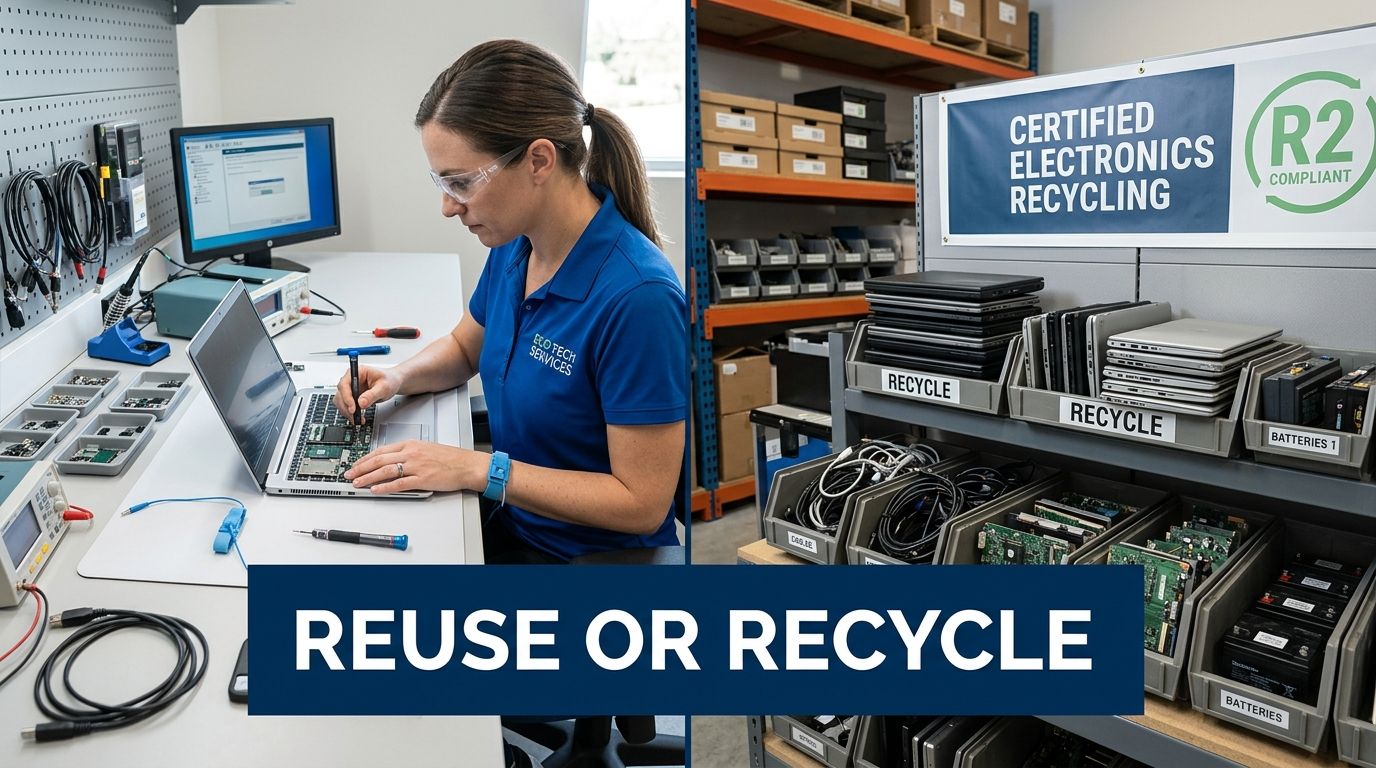
Not all retired IT assets are created equal. Once you've got a complete inventory, the next big decision is figuring out the right end-of-life path for each piece of gear. For an Atlanta business, this isn't just about getting rid of old stuff—it’s a choice that directly impacts your budget, environmental footprint, and data security.
The two main paths are reuse through remarketing and certified recycling.
An experienced IT Asset Disposition (ITAD) partner knows that a one-size-fits-all approach doesn't work. A smart strategy starts with a professional evaluation to sort your assets into these two streams. This is the only way to maximize value from working equipment while guaranteeing total security for items that need to be destroyed.
The Financial And Environmental Upside Of Reuse
The most sustainable choice is always reuse. Giving functional equipment a second life is far more impactful than just breaking it down for scrap metal and plastic. This approach comes with serious financial and environmental perks for your business.
Think about a local university in Atlanta that's doing a campus-wide tech refresh. Their three-year-old laptops might not be powerful enough for the engineering department anymore, but they're perfect for refurbishment. These assets still have real value on the secondary market. By working with a recycler who can securely wipe the data, test the hardware, and resell it, the university recovers a good chunk of its initial investment. That cash can then help pay for new equipment or cover the recycling fees for older, non-functional gear.
The heart of a circular economy is extending a product's life for as long as possible. For electronics, this means prioritizing repair and refurbishment over premature recycling. It conserves the massive resources used in manufacturing and cuts down the carbon footprint of making a new device.
It's a true win-win. Your company recovers value, another user gets affordable technology, and a perfectly good device stays out of the waste stream.
When Certified Recycling Is The Only Answer
While reuse is the goal, it’s not always possible or even a good idea. For older, broken, or obsolete assets—and especially for hardware containing highly sensitive data—certified recycling is non-negotiable. It's the only way to ensure 100% data destruction and environmental compliance.
Imagine a financial firm in downtown Atlanta decommissioning servers that have been running for a decade. Those machines hold years of confidential client data. The risk of that data getting out is astronomical, and the hardware itself has zero resale value. In this case, the only responsible move is certified recycling, which absolutely must include physical destruction of the hard drives.
This is where a professional ITAD partner is critical. You should only work with providers holding certifications like R2v3 (Responsible Recycling) or e-Stewards. These aren't just fancy logos; they are your guarantee that the vendor follows the highest industry standards.
They promise:
- No Illegal Exporting: Certified recyclers are banned from shipping hazardous e-waste to developing nations.
- No Landfill Dumping: All materials are processed and recycled in a compliant, environmentally safe way.
- Secure Data Destruction: Strict protocols are followed to make sure all data is gone for good.
Choosing a certified partner for sustainable electronics recycling in Atlanta, GA protects your business from legal trouble and shows a real commitment to corporate social responsibility. It ensures every device, even those with no monetary value, is handled in a way that protects your brand and the planet. You might be surprised by what can be refurbished or donated; our guide on how to prepare a laptop for donation offers some great insights.
The Critical Role Of Data Destruction And Compliance
For any Atlanta business—especially those in healthcare, finance, or law—data security doesn't stop just because a device is unplugged. The moment an asset is retired, you're dealing with the non-negotiable reality of certified data destruction. A misstep here isn't a simple IT problem; it's a direct threat to your company's reputation and bottom line.
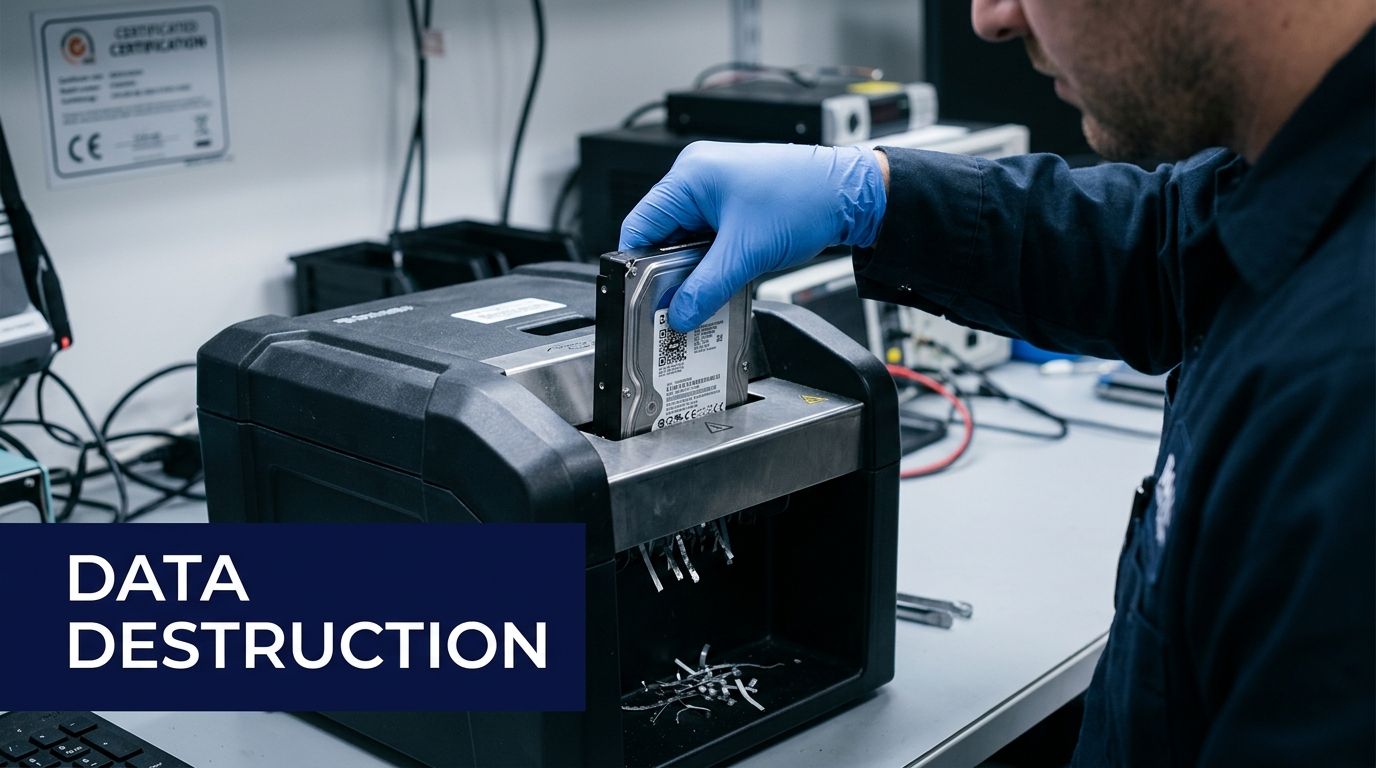
Just hitting 'delete' or reformatting a drive gives a false sense of security. The truth is, that data is often easily recoverable with basic software. This is precisely why professional, certified data destruction is a cornerstone of any responsible IT asset management plan.
Data Destruction Methods Compared
Choosing the right method—software wiping or physical destruction—depends on the drive's condition, age, and the sensitivity of the data it holds. A professional ITAD partner will help you choose the right service for each asset.
| Method | Description | Security Level | Best For |
|---|---|---|---|
| Software Wiping | Overwriting data using specific patterns, like the DoD 5220.22-M 3-pass standard. | High | Functional hard drives intended for resale or reuse. |
| Degaussing | Using a powerful magnetic field to erase data from magnetic media like HDDs and tapes. | Very High | Erasing large batches of magnetic drives quickly, rendering them unusable. |
| Physical Shredding | Grinding drives, SSDs, and other media into tiny, unsalvageable fragments. | Absolute | Non-functional drives, SSDs, or any media containing highly sensitive data. |
While the DoD 3-pass wipe is a fantastic tool for functional drives destined for a second life, it isn't a silver bullet. Physical destruction becomes the only real option when a drive won't power on, is too old for modern wiping protocols, or when your own internal policies demand a zero-risk approach for top-tier intellectual property. It’s also the safest bet for Solid-State Drives (SSDs), whose data storage methods can make software wipes less reliable.
Navigating The Compliance Landscape
In Atlanta's key industries, data destruction isn't just a good idea—it's the law. Major federal regulations come with steep penalties for non-compliance.
- HIPAA (Health Insurance Portability and Accountability Act): Mandatory for any business touching patient information (PHI), requiring strict safeguards all the way to disposal.
- GLBA (Gramm-Leach-Bliley Act): Binds financial institutions—banks, investment firms, insurers—to protect consumer financial data.
- FACTA (Fair and Accurate Credit Transactions Act): Requires the secure disposal of any consumer information to head off identity theft.
A single data breach from one improperly discarded server can unleash millions in fines and shatter customer trust. This is why a formal, documented process for sustainable electronics recycling in Atlanta, GA is so vital for managing risk. The issue is only getting bigger, with global e-waste projected to top 82 million tonnes annually by 2030. A shocking 78% of e-waste is already managed outside of formal, secure channels, increasing the odds of a breach.
The Certificate Of Data Destruction: Your Proof Of Compliance
So, how do you prove to auditors and regulators that you did everything right? The answer is a Certificate of Data Destruction.
This document is your legal, audit-ready proof that your data has been destroyed according to industry standards. It's more than a receipt—it's a formal record that transfers liability and proves your due diligence.
A legitimate certificate must detail:
- The unique serial numbers of the destroyed assets.
- The exact method of destruction (e.g., DoD 3-pass wipe, physical shredding).
- The date and location where the destruction occurred.
- A formal statement of compliance from your certified recycling partner.
Without this certificate, you have no verifiable proof of compliance. It’s the final, crucial step that closes the loop on an asset's lifecycle and protects your business. Of course, protecting data on retired assets is only part of the equation; it’s just as important to review current data protection best practices to safeguard your company's entire digital footprint.
Planning Logistics For Pickup And Decommissioning
Getting old, heavy equipment out of your office or data center isn't just about hauling. It’s a precise operation where the real-world logistics are just as critical as the data destruction that comes later. A smooth pickup keeps your business running without a hitch and locks down the chain of custody from the moment we walk through your door.
The last thing you need is a recycling project grinding your daily operations to a halt. Whether you're moving offices, doing a tech refresh, or shutting down a data center, scheduling is everything. The right partner works on your timeline. For a school, that might mean a big pickup over summer break. For a law firm in downtown Atlanta, it could be a weekend job to keep the lobby clear and client meetings uninterrupted.
Full-Service Coordination From Start To Finish
Frankly, the biggest value in a professional ITAD service is having someone else handle the entire physical removal process for you. Your IT team has more important things to do than de-racking servers, wrapping pallets, and lugging equipment to a loading dock. That's where we come in.
A true full-service partnership means we handle:
- On-site de-installation of servers, networking racks, and other hardware that's bolted down and wired in.
- Professional packing of every asset, including palletizing and shrink-wrapping to make sure it's secure for the ride.
- Secure, GPS-tracked transportation straight from your facility to our secure processing plant.
This turns a logistical nightmare into a simple, hands-off project. Our experienced technicians show up, execute the plan, and give you a single point of contact the whole way through. For any business with sensitive equipment, it's the only way to go.
We recently helped a law firm in downtown Atlanta close a satellite office. They couldn't afford to pull their team off billable work to move dozens of computers and servers. We handled the on-site palletizing and secure transport, getting the entire job done in just a few hours so they could focus on their clients.
Tackling Data Center Decommissioning Challenges
Data center decommissioning is a whole different ballgame. The complexity skyrockets. You're dealing with huge volumes of heavy, interconnected equipment that was once the heart of your operations. A simple van and a couple of guys just won't do the job.
A project of this scale demands a partner with a proper fleet of vehicles and a crew that knows their way around a data center environment. They need to be able to safely de-install blade servers, storage arrays, and entire racks—often on a tight deadline before a lease ends. Moving hundreds or even thousands of assets in one coordinated push is a specialized skill. To see how we manage these projects, you can learn more about our IT equipment pickup services in Atlanta.
This field is growing for a reason. The global electronics recycling market is exploding and projected to hit $55 billion by 2028. This growth is fueled by tougher regulations and the sheer value of materials that can be recovered. A deeper market analysis on electronics recycling trends shows that North America is a huge part of this market, highlighting just how much demand there is for professional ITAD services.
For any data center manager staring down a decommissioning project, finding a partner for sustainable electronics recycling in Atlanta, GA who can manage the entire logistical chain is non-negotiable. It’s the difference between a chaotic, risky process and a controlled, compliant, and successful project closeout.
Common Questions About Business E-Waste Recycling
Even with a solid plan in place, we find that Atlanta's IT and operations managers usually have a few key questions before they pull the trigger on an electronics recycling project. Getting straight answers on cost, security, and logistics is what builds the confidence you need to move forward.
Here are some of the most common questions we hear—and the practical, no-nonsense answers we provide every day.
What Does Sustainable Electronics Recycling Cost For A Business In Atlanta?
This is the big one, and the answer is often better than you'd expect. The cost really depends on what you have, but for many businesses in Atlanta, key services like pickup and certified data destruction are often provided at no charge. This is especially true if you have a bulk disposal of recent-model servers, laptops, and networking gear that still hold some resale value.
That recovered value is what helps us offset the cost of logistics and processing. On the other hand, items with zero resale value and a higher recycling cost—think old office printers, bulky CRT monitors, or broken gear—will likely have a fee. Any transparent vendor will give you a detailed, itemized quote upfront so there are absolutely no surprises.
How Can I Be Certain My Company's Sensitive Data Is Destroyed?
Proof is everything. When it comes to your company’s data, you can't just take someone's word for it. You should only work with a partner who provides a formal Certificate of Data Destruction for every project. This is your official, audit-ready document that proves you met your compliance obligations.
This certificate isn't just a piece of paper; it's a legal document that officially transfers liability from your organization to the recycler. It’s the single most important document you’ll get, detailing the serial numbers of the destroyed drives and the methods used.
For an extra layer of security, ask about witnessing the destruction process. Whether it's on-site shredding at your facility or a visit to the recycling plant, seeing it for yourself provides ultimate peace of mind. A certified process gives you the hard proof needed to satisfy strict compliance standards like HIPAA or SOX.
What Happens To Our Old Computers After You Pick Them Up?
A professional ITAD process is built on a clear hierarchy: reuse first, then recover and recycle. It's the only truly sustainable approach. Here’s how it works once your equipment arrives at our secure facility.
- Triage and Audit: First, every single asset is inventoried and tested. We determine if an item is functional and whether it can be remarketed.
- Reuse and Refurbishment: Working equipment goes through a complete data sanitization process before being refurbished and sold. This is the best environmental outcome, as it extends the device's life and recovers the most value for your business.
- Recovery and Recycling: For equipment that's obsolete or non-functional, we move to recovery. We dismantle devices to separate materials like steel, aluminum, and plastic. Precious metals are sent to certified refiners, while other commodities are processed to be used in new products.
The entire process is designed to achieve nearly 100% landfill diversion. If you're wondering where you can recycle electronics in the Atlanta area, choosing a business-focused partner guarantees this level of responsible handling.
Can You Handle A Bulk Pickup From A School District Or Large Corporation?
Absolutely. Large-scale disposals are one of our core specialties. We have the logistics, the team, and the experience to manage complex projects for school systems, universities, and large corporations without a hitch.
We can coordinate pickups around your schedule—whether that's during summer break for a school or over a weekend for a corporate move. Our team can handle everything on-site, from packing and palletizing to loading, even if your assets are spread across a dozen buildings on a large campus. It's all about providing a single, unbroken chain of custody to ensure security from the moment we arrive until the final certificate is in your hands.
Ready to implement a secure and compliant IT asset disposition strategy? The team at Atlanta Computer Recycling provides end-to-end solutions for businesses across the metro area, from secure data destruction to certified recycling. Contact us today for a custom quote for your project at https://atlantacomputerrecycling.com.