Sandy Springs GA Weather: A Strategic Guide for Business Operations 2026


When planning any commercial service, from logistics and on-site projects to asset management, understanding local climate patterns is a critical component of risk management. The Sandy Springs, GA weather is characterized by a humid subtropical climate, which means hot, high-humidity summers and generally mild winters. For businesses, this translates directly to operational planning—you must account for high humidity, the potential for sudden thunderstorms, and temperature extremes when scheduling pickups, deliveries, and other outdoor or weather-sensitive work.
Your Quick Reference Weather Guide for Sandy Springs
This guide breaks down the typical weather patterns in Sandy Springs, specifically for IT managers, operations planners, and logistics coordinators. Understanding these climate trends is essential when scheduling weather-sensitive jobs, like an electronics pickup or a full data center decommission where equipment cannot be exposed to the elements.
The infographic below offers a high-level summary of key metrics, including average temperatures and rainfall throughout the year, which are crucial for long-term project scheduling.
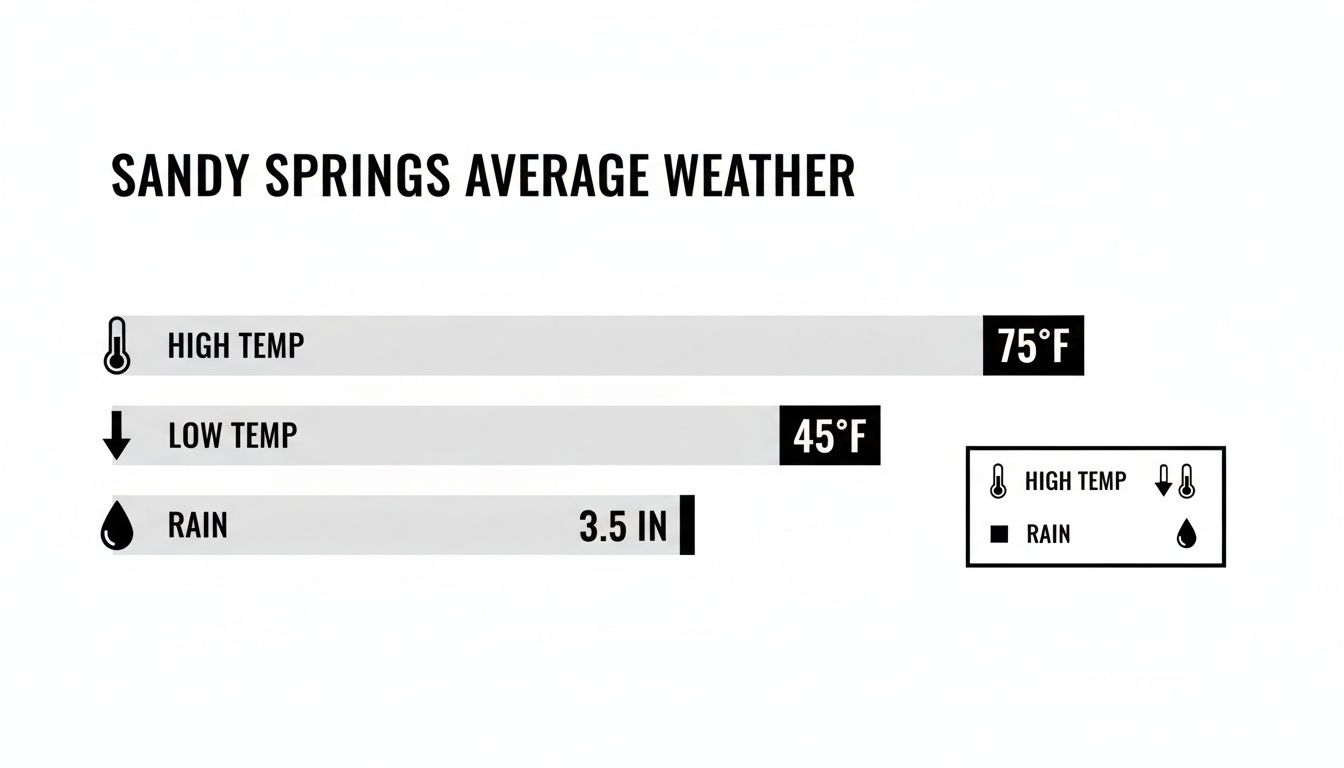
As shown, summers are hot and humid, while winters are cool but rarely severe. This climate allows for year-round operations but necessitates strategic scheduling to mitigate weather-related risks and costs.
Sandy Springs Monthly Weather Averages for Strategic Planning
For more granular, long-range planning, this table provides a month-by-month look at the average weather conditions in Sandy Springs. This data is invaluable for anticipating temperature ranges and precipitation likelihood when booking services that span multiple days or weeks.
| Month | Avg High (°F) | Avg Low (°F) | Avg Precipitation (inches) |
|---|---|---|---|
| Jan | 53 | 34 | 4.8 |
| Feb | 57 | 37 | 4.7 |
| Mar | 65 | 43 | 4.8 |
| Apr | 73 | 50 | 3.9 |
| May | 80 | 59 | 3.6 |
| Jun | 86 | 67 | 4.1 |
| Jul | 89 | 71 | 5.3 |
| Aug | 88 | 70 | 3.9 |
| Sep | 82 | 64 | 4.1 |
| Oct | 73 | 52 | 3.4 |
| Nov | 62 | 42 | 4.1 |
| Dec | 55 | 36 | 4.0 |
The data indicates that while July is the hottest month, rainfall is a consistent factor nearly year-round, with a notable peak in summer and a slight decrease in the fall.
To benchmark conditions against other key business hubs in the metro area, you can review our guide on Alpharetta's weather patterns for a useful operational comparison.
How Seasonal Climate Impacts Your Business Logistics
Knowing the local climate in Sandy Springs is a matter of asset protection and financial planning. The Sandy Springs, GA weather directly impacts logistics, especially when retiring sensitive IT equipment.
During hot and humid summers, protecting electronics from heat damage during transit and loading is critical. This is when climate-controlled transport becomes a necessity, not a luxury, to safeguard asset value. Conversely, our mild winters are opportune for scheduling year-round pickups, though vigilance is required for occasional freezes that can disrupt schedules and pose risks to hardware. For a deeper dive into these patterns, you can analyze the local data on WeatherSpark.
Temperature extremes are a major factor for asset disposition. With a typical low of 35°F in winter and highs reaching 89°F in summer, timing your pickups and transport around these conditions is key to protecting your hardware's integrity and value.
By understanding these seasonal rhythms, you can schedule bulk equipment disposals more effectively, minimize weather-related delays, and ensure your assets are protected from the elements every step of the way. For a look at a neighboring area, you can also see our guide on Johns Creek weather patterns for comparison.
Using Short-Term Forecasts for Daily Operations

While seasonal averages inform long-term strategy, daily operations hinge on real-time data. For any business that moves physical assets, the hourly and 3-day Sandy Springs, GA weather forecast is a primary tool for preventing costly errors and ensuring operational continuity.
Consider this: scheduling an on-site data center decommission involves moving high-value, sensitive electronics. A quick check of the forecast can prevent a team from hauling servers outdoors just as an unexpected thunderstorm arrives. It’s a simple risk-mitigation step that protects your assets and your project timeline.
Pro Tip: In logistics, even a small chance of rain necessitates a contingency plan. Identifying a dry window in the hourly forecast can be the difference between a smooth equipment pickup and a load of water-damaged hardware, which could represent a significant financial loss.
Staying on top of the weather allows you to coordinate effectively with partners and keep projects on schedule. We cover more scheduling advice in our guide to e-waste pickups in Atlanta, where we explain how crucial it is to stay in sync with your logistics team.
Managing Precipitation Risks for Electronics Recycling
The frequent rain in Sandy Springs creates a significant logistical hurdle for electronics recycling and IT asset disposition (ITAD). Even minimal moisture can damage sensitive IT assets, jeopardizing data security and diminishing hardware resale value. A sudden downpour during an on-site pickup can compromise entire pallets of equipment if they aren't properly protected.
High humidity presents a more insidious, but equally damaging, risk. It can cause condensation inside server chassis and other components, leading to short circuits or corrosion long after the equipment has been moved. This consistent ambient moisture demands proactive planning for every pickup.
The precipitation patterns in Sandy Springs are a major factor in our logistics. With an average of 5.34 inches of rain in a month like November, proactive measures are non-negotiable for protecting client assets. Read more about these local weather averages on WorldWeatherOnline.com.
For businesses required to meet strict compliance standards like HIPAA or SOC 2, keeping assets dry is about more than hardware value—it’s about data integrity and avoiding breaches. That’s why we utilize specialized, weather-resistant packing materials and maintain flexible scheduling to work around inclement weather, ensuring your equipment remains secure and compliant from pickup to final processing.
Severe Weather Preparedness for IT Asset Disposition
While businesses can plan for rain, the Sandy Springs, GA weather can also produce severe thunderstorms and tornadoes that demand a robust emergency protocol. For any company with an ITAD project on the schedule, these high-impact weather events create tangible risks, from road closures and power outages to immediate safety hazards for logistics crews and on-site staff.
When a severe weather alert is issued, our 'safety-first' protocol is activated. All on-site work is halted, and assets are secured. The safety of our team and yours is our absolute priority, taking precedence over project deadlines.
Proactive communication is critical. If we determine that conditions are unsafe for a scheduled service, you will be notified immediately to reschedule. We also recommend that your organization prepares its internal systems by using a solid disaster recovery testing checklist to ensure your own business operations remain resilient.
Ultimately, a trustworthy ITAD partner doesn't just react to problems; they anticipate them. It's about having a clear, professional plan to manage risk, ensuring your project is completed safely, securely, and correctly. You can learn more about navigating these local conditions in our complete guide to the weather in Sandy Springs, Georgia.
A Weather-Based Strategy for Data Center Decommissioning
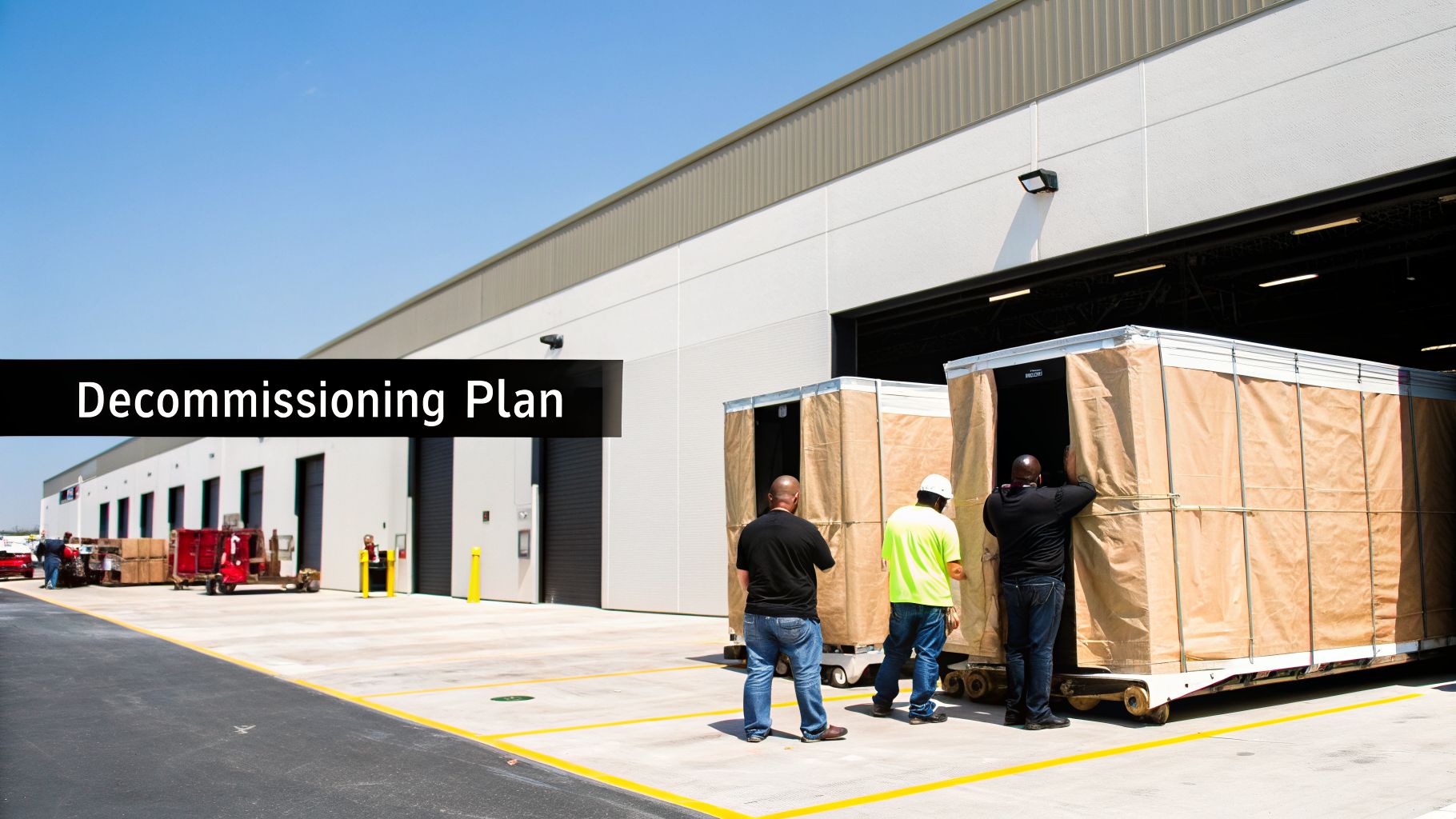
When managing a large-scale data center decommissioning, the Sandy Springs, GA weather is not a trivial detail—it's a critical variable in your project's success. These complex operations can be derailed by a sudden thunderstorm or a week of 95-degree days, leading to costly delays and increased risk.
Integrating seasonal climate patterns, the risk of pop-up showers, and the potential for severe storms into the project plan is essential for a smooth execution. A solid strategy anticipates adverse weather and includes predefined protocols to protect your valuable assets from start to finish.
A successful decommissioning hinges on proactive planning. By cross-referencing local climate data with project timelines, you can build a resilient schedule that minimizes disruptions and ensures project success, regardless of the season.
Pre-Project Weather Checklist
Before a single server is unplugged, your project plan should address these weather-related questions:
- What is the optimal season for a multi-day project that balances heat, humidity, and precipitation risk to minimize delays?
- What are our immediate contingency plans if a severe thunderstorm watch or warning is issued mid-project?
- How will we protect servers and other sensitive electronics during loading and transit if an unexpected downpour occurs?
These are not minor details; they are core components of risk management that prevent costly delays and equipment damage. To get a deeper look into how these large-scale projects are managed, check out our complete guide on data center decommissioning services in the Atlanta area.
Frequently Asked Questions: Weather and Your IT Pickup
When managing a complex project like an IT asset pickup or a full data center cleanout, the weather in Sandy Springs, GA is a real-world factor. We get it. IT managers and operations coordinators often ask how we handle the unpredictable Georgia climate to ensure their project stays on track and their assets remain secure.
Here’s a look at our process and how we plan for everything from a summer downpour to a sudden severe weather alert.
What Is the Best Time of Year for a Large IT Asset Pickup?
While we are equipped to handle projects year-round, the most operationally stable windows for large-scale pickups in Sandy Springs are spring (March to May) and fall (September to November). These seasons offer moderate temperatures, reducing the risks associated with extreme heat or ice.
Spring provides excellent working conditions for multi-day projects like a data center decommission, but it also brings a higher probability of rain, requiring built-in scheduling flexibility. Autumn is typically drier, offering a more predictable timeframe for efficient project execution.
For any major project, we recommend booking well in advance. This allows us to monitor long-range forecasts and collaborate with you to select optimal dates for a smooth, predictable service.
Ultimately, strategic planning allows us to work with the seasonal Sandy Springs GA weather, not against it.
How Do You Protect Our Equipment During Rain or High Humidity?
Protecting your assets from moisture is a non-negotiable part of our standard operating procedure. We use commercial-grade, weather-resistant materials, including heavy-duty shrink wrap and sturdy pallets, to shield all equipment during staging and loading. This creates a robust barrier against both rain and ambient humidity.
Once loaded, all equipment travels in fully enclosed, secure trucks, ensuring zero exposure to the elements during transit. If your facility has a covered loading dock, we will coordinate its use. If one is not available and inclement weather is a factor, our team will identify a clear, dry window in the hourly forecast to perform the pickup, guaranteeing your assets remain protected.
What Is Your Policy for Severe Weather Warnings?
The safety of our personnel and the security of your assets are our top priorities. If a severe weather alert—such as a Tornado Warning or Flash Flood Warning—is issued for the Sandy Springs area on a scheduled service day, our safety protocol is immediately enacted.
Our policy is to proactively contact you to reschedule the service, as we keep our crews and vehicles off the road during hazardous weather. Once the threat has passed, we will work with you to find the next available opportunity to complete your project with minimal delay. For ongoing, multi-day projects, all on-site work is paused and assets are secured until conditions are deemed safe.
When weather poses a risk to your operations, you need a partner with a proven mitigation strategy. Atlanta Computer Recycling combines secure logistics with proactive weather management to protect your IT assets at every stage. Learn more about our reliable ITAD services at https://atlantacomputerrecycling.com.