Planning Your IT Logistics Around Roswell GA Weather

For any business leader or IT manager in the Atlanta metro area, the Roswell GA weather is far more than small talk. It's a critical operational factor that directly impacts the security of your corporate data and the integrity of your hardware, especially during transit for IT Asset Disposition (ITAD).
Why Local Weather Is a Business Risk for IT Asset Disposition
When planning a data center migration, office decommissioning, or routine equipment refresh, your checklist is likely dominated by data security, logistics, and regulatory compliance. But what about the weather? Overlooking Roswell's humid subtropical climate introduces significant, unmitigated risks into your operation.
Consider the financial impact: sensitive servers left on a hot loading dock during a 90°F July afternoon. Or a truck carrying your company's retired hard drives caught in a sudden thunderstorm. These aren't hypothetical scenarios; they are daily operational risks that can lead to costly equipment damage, data breaches, and compliance failures.
This guide is designed for business decision-makers. We will analyze how Roswell's distinct seasons, from sweltering summers to occasional icy winters, create specific challenges for any commercial IT project. For any business handling sensitive electronics, understanding these weather patterns isn't just helpful—it's essential for risk management.
A proactive, weather-aware ITAD strategy is your best defense against project delays, moisture and heat damage, and a broken chain of custody that could lead to a data breach.
This isn't about fearing the forecast. It's about integrating weather realities into your operational planning. By doing so, you transform a potential liability into a logistical advantage, ensuring projects are completed on schedule and within budget, regardless of the weather.
Tying Weather Into Your ITAD Strategy
A true ITAD partner doesn't just provide a truck and a team. They function as a risk management consultant, helping you navigate all variables, including the local environment. A strategic approach includes:
- Scheduling pickups for cooler morning hours in summer to protect heat-sensitive servers and networking gear.
- Utilizing climate-controlled vehicles to shield assets from extreme temperatures and damaging humidity during transit.
- Executing on-site packing to ensure all electronics are securely containerized before being exposed to the elements.
When the Roswell GA weather is treated as a predictable project variable, you de-risk the entire operation. You can find more details in our complete guide on how Atlanta Computer Recycling turns these challenges into advantages, ensuring your projects succeed every time.
How Seasonal Weather Patterns Impact IT Logistics
As an IT leader in Roswell, you know that planning a major project—like an office cleanout or data center decommissioning—requires looking beyond the 7-day forecast. To protect your investment and maintain compliance, you must understand how local seasons create unique risks and opportunities for your IT logistics.
Roswell's climate presents two primary operational periods to plan around. First is the "hot season." With average highs reaching 88°F in July, you cannot afford to have sensitive hardware sitting on a sun-drenched loading dock or in an unventilated truck. Servers are designed for climate-controlled environments; that level of heat can cause immediate component failure, turning valuable retired assets into worthless scrap metal before they even leave your facility.
Planning for Roswell's Climate Extremes
Conversely, our "cool season" presents its own set of challenges. While major snow events are rare, the period from late November to early February brings frequent morning frost and cold snaps. This is a liability for equipment like LCD monitors, which can suffer screen damage or internal condensation when moved between temperature extremes. The objective isn't to halt operations; it's to operate smarter by planning for these known conditions.
This timeline illustrates how weather, logistics, and data security are interconnected in any ITAD project.
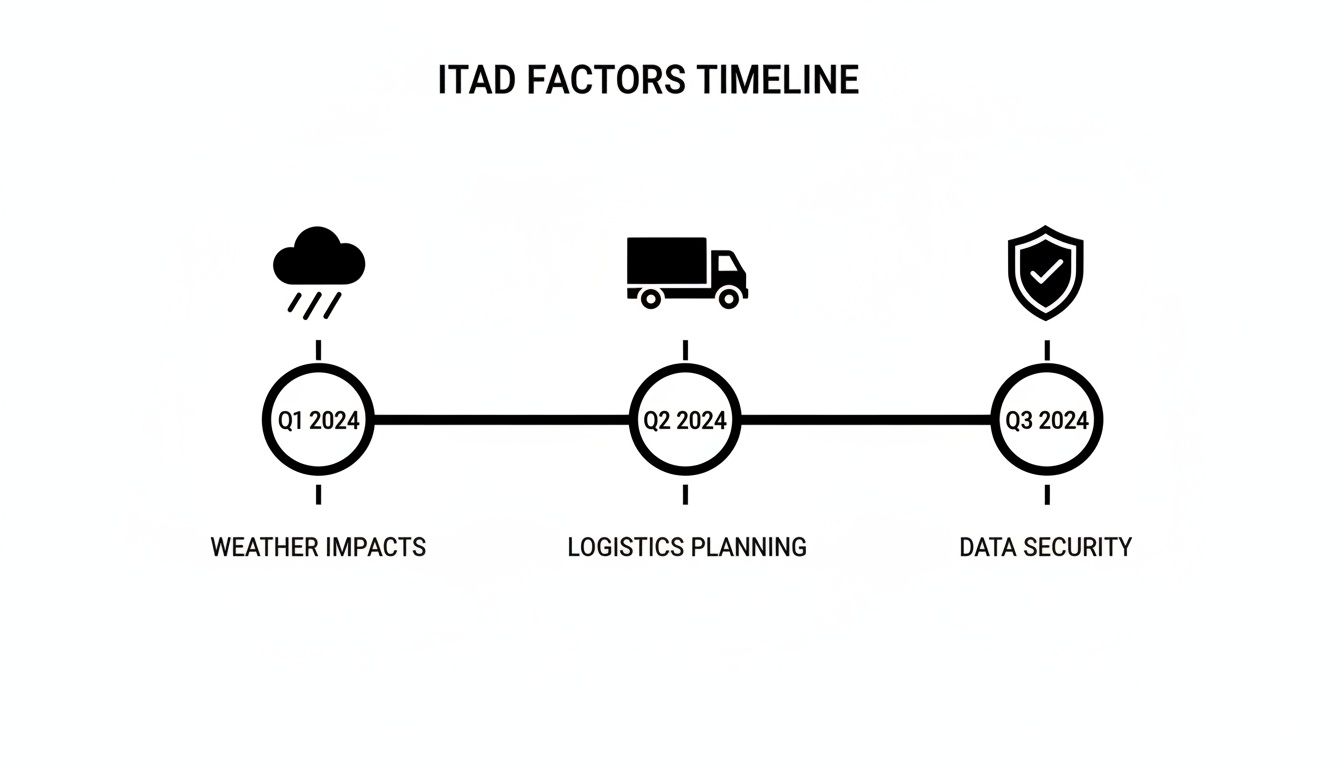
As you can see, weather is the first domino. It directly influences every subsequent logistical and security decision.
Turning Seasonal Challenges into Opportunities
The solution isn't to avoid pickups in summer or winter. It's to engage a logistics partner who understands how to adapt their fleet and scheduling to Roswell’s specific climate. This is how you convert a potential weather-related disruption into a predictable, seamless operation.
By identifying optimal scheduling windows, you can dramatically minimize weather-related risks. A flexible logistics partner is crucial for keeping your project on schedule and on budget, whether it’s a scorching summer day or a frosty winter morning.
Simple operational adjustments, like scheduling pickups for cooler morning hours or ensuring all assets are packed indoors before a truck's arrival, make a significant difference.
Roswell's 61.3°F annual average temperature enables year-round operations without the extreme disruptions seen in other regions. While July's heat and January's lows around 36°F require strategic planning for IT equipment moves, they rarely cause shutdowns. This makes our area a reliable place for business continuity. To better inform your project scheduling, you can review Roswell's detailed climate data and plan accordingly.
Mitigating Risks From Heat, Humidity, and Storms
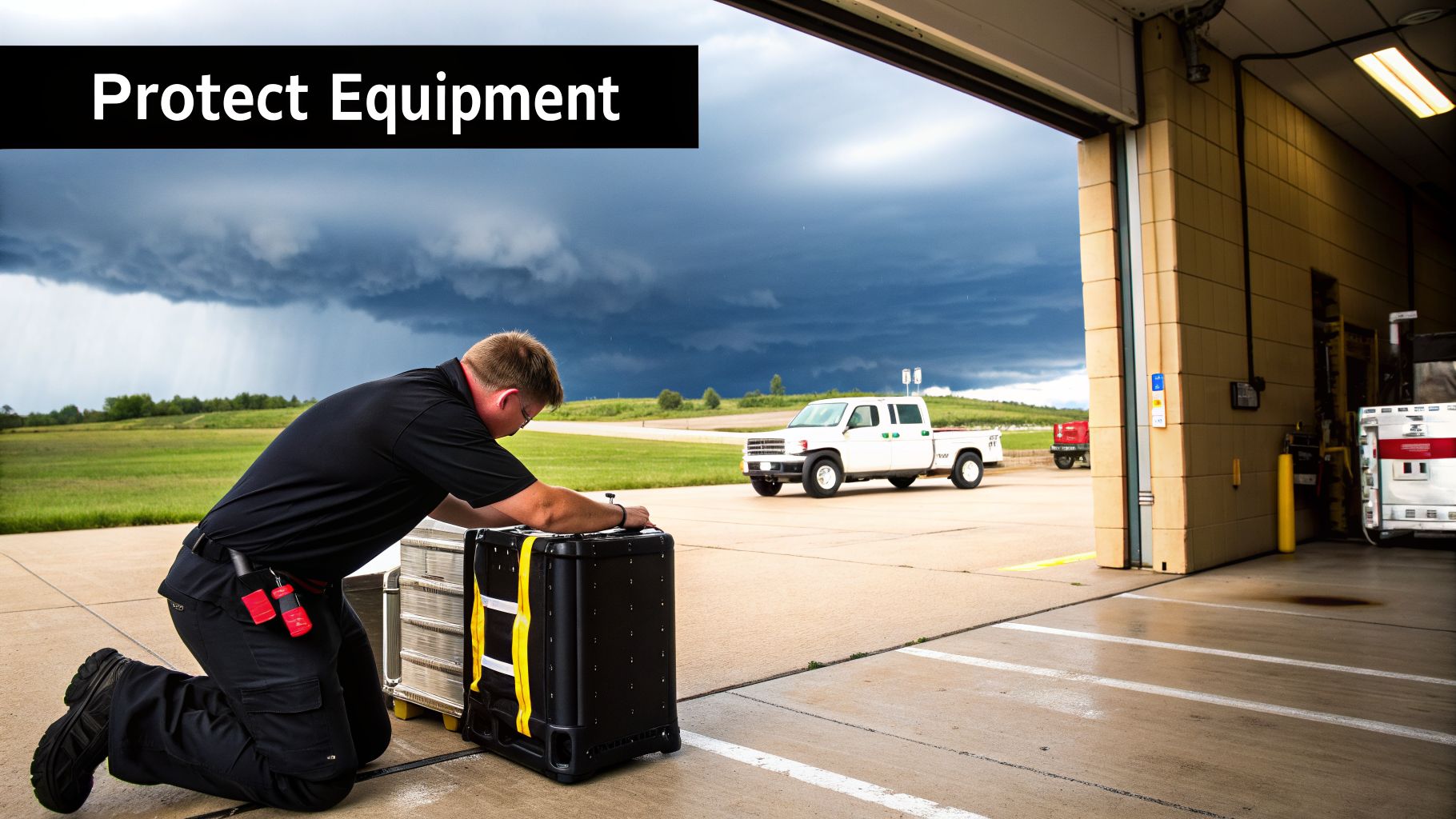
Understanding Roswell’s seasonal patterns is one step; actively protecting your IT project from them is what delivers business value. An effective mitigation plan is a hands-on playbook for safeguarding assets and data during an IT asset disposition (ITAD) project. The unique challenges of Roswell, GA weather demand a proactive, not reactive, risk management approach.
Imagine a sudden summer thunderstorm during a large-scale office decommissioning. Moisture is the enemy of electronics. A few minutes of rain exposure can cause irreversible damage to circuit boards, diminishing the recovery value of your assets and jeopardizing data retrieval.
A professional ITAD partner will never expose your equipment to the elements. Instead, all hardware is securely packed and inventoried inside your building before crossing the threshold. From there, it is loaded directly into sealed, enclosed transport vehicles. This creates a secure "logistics bubble" that shields everything from rain, humidity, and dust—all the way from your door to our secure facility.
Protecting Personnel and Equipment From Extreme Heat
Intense summer sun poses a dual threat. It can cause servers and networking gear to overheat on a loading dock, but it also creates serious safety risks for the technicians performing the de-installation. Heat exhaustion slows down projects and increases the likelihood of costly errors.
Intelligent scheduling is the best defense against Roswell's peak summer temperatures. By planning pickups and on-site work for cooler morning hours, our logistics team operates safely and efficiently. This simple adjustment protects both the personnel and your valuable equipment.
The value of a prepared partner is their ability to transform a potential weather disaster into a manageable, controlled procedure. It's about converting operational chaos into business predictability.
An experienced crew arrives with a clear, time-sensitive plan to de-install, pack, and load all assets before the afternoon heat becomes a factor. This foresight is critical for protecting your hardware, your data, and the people responsible for handling them.
Building a Resilient Logistics Plan
A robust ITAD plan must account for all local weather variables. A truly prepared partner has tested protocols for every scenario Roswell’s climate presents.
The table below outlines how we plan for common weather hazards to keep your ITAD project on track and your assets secure.
| Weather Hazard | Potential Impact on IT Assets & Logistics | Recommended Mitigation Strategy |
|---|---|---|
| Sudden Thunderstorms | Water damage to sensitive electronics, project delays, broken chain of custody. | Pack all assets indoors first; load directly into sealed, enclosed trucks. |
| Extreme Summer Heat | Equipment overheating, reduced asset recovery value, risk to personnel. | Schedule all pickups and on-site work for early morning hours to avoid peak temperatures. |
| High Humidity | Internal condensation and corrosion, leading to component failure. | Utilize climate-controlled transport to maintain stable temperature and humidity levels. |
| Flash Flood Warnings | Inaccessible routes, project delays, potential water exposure at ground level. | Monitor weather alerts; plan alternate routes and communicate schedule changes proactively. |
By addressing these hazards head-on, you ensure the integrity of your equipment and the security of your data. This proactive approach is fundamental to a successful ITAD project. To dig deeper into building this kind of resilience, check out our guide on supply chain risk management strategies.
Using Weather Data for Smarter ITAD Scheduling
Effective ITAD planning goes beyond checking the weather on pickup day. For any business leader overseeing an office closure or data center decommission, the 10-day forecast is a powerful strategic tool. It helps you convert the unpredictable Roswell, GA weather into a tangible logistical advantage.
For example, if you are decommissioning a data center, a forecast showing a week of clear skies and mild temperatures is a green light. That is the ideal window to schedule on-site de-installation, packing, and transport, dramatically lowering the risk of moisture damage or heat-related hardware failures. The key is to identify these optimal windows and secure them with your logistics partner.
An agile ITAD partner like Atlanta Computer Recycling is structured to react quickly and capitalize on these opportunities. This is especially vital for businesses in sectors like healthcare or finance, where operational disruptions must be minimized.
From Forecast to Action Plan
Translating a weather forecast into an actionable plan means analyzing recent patterns. Roswell's climate variability demonstrates why this is crucial for protecting sensitive hardware during transit and processing.
For instance, local weather history shows how quickly conditions can shift. Here in Roswell, on March 6, 2026, temperatures hit a humid 84°F with thunderstorms—weather that complicates packing and loading servers outdoors. Just weeks earlier, on February 24, 2026, the low dropped to a stark 22°F. Such cold requires protected storage for picked-up assets to prevent damage before their drives can undergo DoD 5220.22-M wiping. You can explore more historical data to better understand Roswell's weather patterns on Wunderground.
By monitoring both short-term forecasts and historical trends, you can pinpoint the safest and most efficient windows for pickups. This data-driven approach removes guesswork from logistics and helps secure your chain of custody from start to finish.
This level of planning also enhances documentation. As assets move through the disposition process, knowing that IT asset tracking software improves accountability provides a clear, auditable record of the entire lifecycle.
When severe weather threatens your IT infrastructure, a solid plan is your best defense. To prepare your broader operations for the unexpected, you can reference an ultimate disaster recovery checklist that outlines key steps for business continuity. Pairing this preparation with weather-aware scheduling creates an ITAD strategy that’s ready for anything.
Maintaining Data Security in Any Weather
During an IT asset disposal project in Roswell, a sudden thunderstorm represents more than an inconvenience—it's a direct threat to your data security. Unexpected weather delays can create logistical challenges, but more critically, they can open glaring security vulnerabilities that put your business at risk.
The longer your retired hard drives are in transit, the more they are exposed. Every extra hour on the road or sitting in a truck during a flash flood warning is another opportunity for a breach in the chain of custody. When those assets contain sensitive corporate or customer data, that exposure escalates into a major compliance liability.
This is why a documented chain of custody is non-negotiable. It is the auditable trail that proves who has handled your equipment at every step, from your facility to its final disposition.
A Weather-Resilient Security Strategy
A solid chain of custody is essential, but a premier ITAD partner doesn't just hope for clear skies. We engineer security into the process itself, creating solutions that are resilient regardless of the forecast.
Instead of leaving data security to chance, we offer services that neutralize risks at their source:
- On-Site Hard Drive Shredding: This is the gold standard for absolute data security. We bring our industrial shredders to your location, physically destroying data-bearing devices before they are transported. A storm cannot compromise data that has already been rendered into fragments.
- Secure, Documented Transport: For assets requiring intact transport, we pack them into sealed, locked containers and move them in GPS-tracked vehicles. This creates a secure environment shielded from both weather and unauthorized access.
- Certified Data Wiping: Upon arrival at our secure, climate-controlled facility, any remaining drives are wiped using processes that meet or exceed DoD 5220.22-M standards. This ensures complete data erasure and provides the necessary certification for your audit trail.
The key takeaway for any business leader is this: a true ITAD partner does more than move hardware. We are in the business of securing your data against every variable—including the weather—to protect your company from costly breaches and reputational damage.
When your partner focuses on these security protocols, a truck delayed by a storm is a manageable logistical issue, not a data security crisis. This process-driven approach is what separates basic pickup services from genuine information security partners.
You can learn more about how we implement these measures in our detailed guide to secure data destruction in the Atlanta area.
Planning a Data Center Move Around Roswell’s Weather
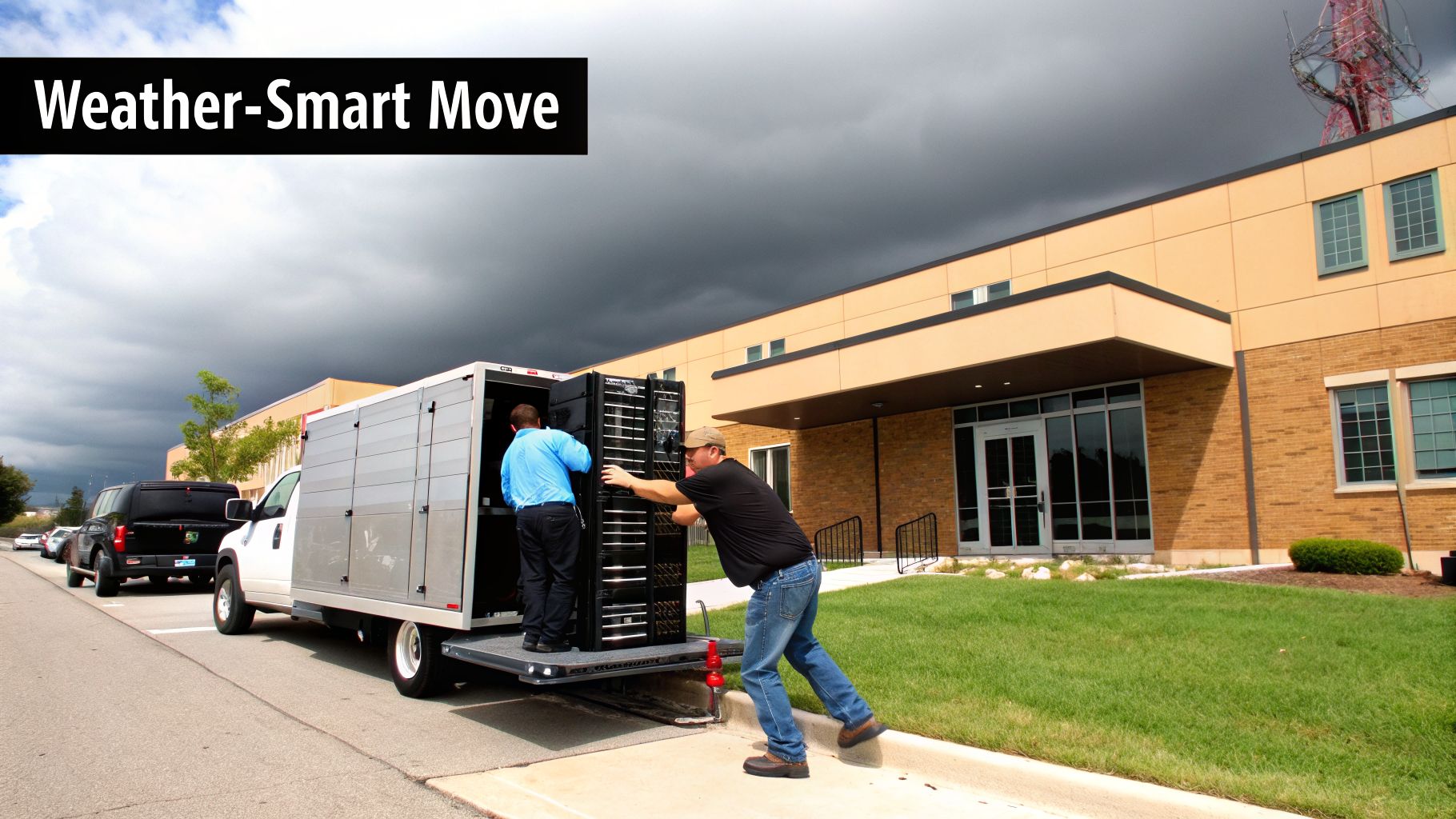
Let's examine a real-world application. A healthcare provider in Roswell must decommission a data center. The project is scheduled for spring, a season known for sudden thunderstorms and temperature fluctuations.
The IT director's first call is to their ITAD partner. The conversation centers not just on logistics, but on the Roswell GA weather. Together, they review the 10-day forecast to identify a clear window. They pinpoint a two-day period with no rain and moderate temperatures, creating the ideal opportunity to safely de-install, pack, and transport the sensitive server equipment.
Executing the Weather-Smart Plan
With the dry window confirmed, the team schedules on-site work to begin Tuesday morning and conclude by Wednesday afternoon. The timeline is deliberately compressed. This proactive approach ensures the entire physical move is completed just hours before a forecasted storm system arrives, transforming a potential crisis into a seamless operation.
As the project commences, every asset is packed and inventoried securely inside the building, eliminating any risk of moisture damage. The sealed trucks are loaded and dispatched with precision. By the time the first raindrops fall, all equipment is secure at the processing facility.
This is what weather-aware planning provides: it prevents water damage, eliminates chaotic schedule changes, and keeps a complex project on track and on budget. The local weather is transformed from an uncontrollable risk into a managed project variable.
The Business Value of Thinking Ahead
This strategic approach demonstrates the tangible value of working with a partner who understands local conditions. By integrating weather analysis into core logistics, the healthcare provider ensured regulatory compliance, protected high-value assets, and avoided costly operational disruptions. A detailed plan, like our data center migration checklist, is the key to executing this successfully.
Historical weather patterns are invaluable for this type of strategic scheduling. The cool season’s 2.9-month stretch from late November often provides an ideal window for moves. Simultaneously, knowing that past weather has included 84°F highs with pop-up thundershowers and 22°F lows underscores the need for a resilient logistics partner.
By analyzing this data for Roswell’s coordinates (34.02°N, 84.36°W), you can align projects with periods of milder weather and set your initiative up for success. To dive deeper, you can check out Roswell's average weather patterns from Weatherspark.com and inform your own timelines.
Frequently Asked Questions About ITAD and Weather
When planning an IT project, accounting for every variable is crucial for success—and in our region, the Roswell, GA weather is a significant one. Here are common questions from business leaders and IT managers regarding secure equipment disposition in our local climate.
What Is the Best Time of Year for a Large ITAD Project in Roswell?
Ideally, the milder spring (April-May) and fall (September-October) months are optimal. These seasons typically feature moderate temperatures and a lower probability of extreme weather, which simplifies the logistics for a large-scale office cleanout or data center decommission.
However, a professional ITAD partner makes any time of year viable. We plan around seasonal risks, using climate-controlled transport during summer heat and ensuring every asset is securely packed indoors to protect against pop-up thunderstorms and high humidity.
How Do You Protect Sensitive Electronics From Rain and Humidity?
Protection begins long before your equipment is exposed to the outdoors. Our entire process is designed to create a secure, weather-resistant bubble around your assets from start to finish.
- First, our team securely packs all electronics into weather-resistant containers while still inside your facility.
- From there, those containers are loaded directly into our fleet of enclosed, locked vehicles.
This methodology establishes an unbroken chain of custody that minimizes exposure to rain, humidity, or dust. It guarantees your electronics are shielded from the moment they leave your server room until they arrive at our secure processing facility.
Can Bad Weather Delay My Scheduled Pickup?
While we continuously monitor local Roswell forecasts to schedule around potential disruptions, safety is our primary concern. In the rare event of severe weather that makes travel unsafe—such as an ice storm or an official tornado warning—we may need to reschedule.
If this occurs, our logistics team will be in immediate contact with your designated point person. We will work to find the next available safe window to complete your pickup, ensuring minimal impact on your project timeline while keeping your assets and our team secure.
For a partner that builds weather resilience directly into your ITAD strategy, trust Atlanta Computer Recycling. Learn more about our secure, all-weather logistics at atlantacomputerrecycling.com.