Recycling Circuit Boards: A Strategic Guide for Businesses

The simple truth is that recycling circuit boards can turn your company's electronic waste from a liability into a tangible asset. Those old electronics gathering dust in a storage closet aren't just clutter; they're a rich source of recoverable materials. But handled improperly, they also represent a significant compliance and data security risk for your organization.
The Hidden Value in Your Business's E-Waste
Most businesses view retired IT assets as a disposal chore—a cost center occupying valuable space. This perspective overlooks the intrinsic value of the equipment. At the heart of every server, laptop, and network switch is a Printed Circuit Board (PCB), the electronic nervous system of modern technology.
These boards aren't just plastic and silicon. They are packed with valuable precious metals like gold, copper, silver, and palladium. Disposing of them in a landfill isn't just wasteful; it's a missed financial opportunity and a serious business risk.
Shifting from Waste to Asset
The challenge for any business is managing its IT asset lifecycle responsibly. Improperly disposing of old circuit boards can lead to severe consequences:
- Financial Penalties: Environmental regulations carry heavy fines for improper e-waste disposal. A simple operational mistake can quickly become a costly compliance failure.
- Reputational Damage: Today’s customers, partners, and stakeholders expect corporate responsibility. News of environmental negligence can tarnish a brand's public image and erode trust.
- Data Security Breaches: Devices containing circuit boards often store sensitive corporate or customer data. Without certified destruction, your company is exposed to massive security threats.
Choosing a certified partner for recycling circuit boards isn't just a disposal tactic—it's a strategic business decision. It mitigates compliance risks, protects your brand, and unlocks the hidden monetary value in your end-of-life technology. This process is a key component of IT Asset Disposition, or ITAD.
The market for recovering these materials is growing rapidly. The Printed Circuit Board (PCB) e-scrap recycling market was valued at USD 699.43 million and is projected to nearly double, reaching USD 1.37 billion by 2032.
Beyond asset recovery, exploring broader modernization for SMBs can enhance operational efficiency and sustainability efforts even further. By viewing e-waste through a strategic lens, you can transform a compliance headache into a smart, sustainable business advantage.
From Your Dock to Raw Materials: The Recycling Journey
Ever wonder what actually happens to a circuit board after it leaves your facility? It’s far more complex than simple disposal. Certified recycling of circuit boards is a secure, high-tech process that functions more like urban mining than waste management, designed to protect your data while recovering valuable commodities.
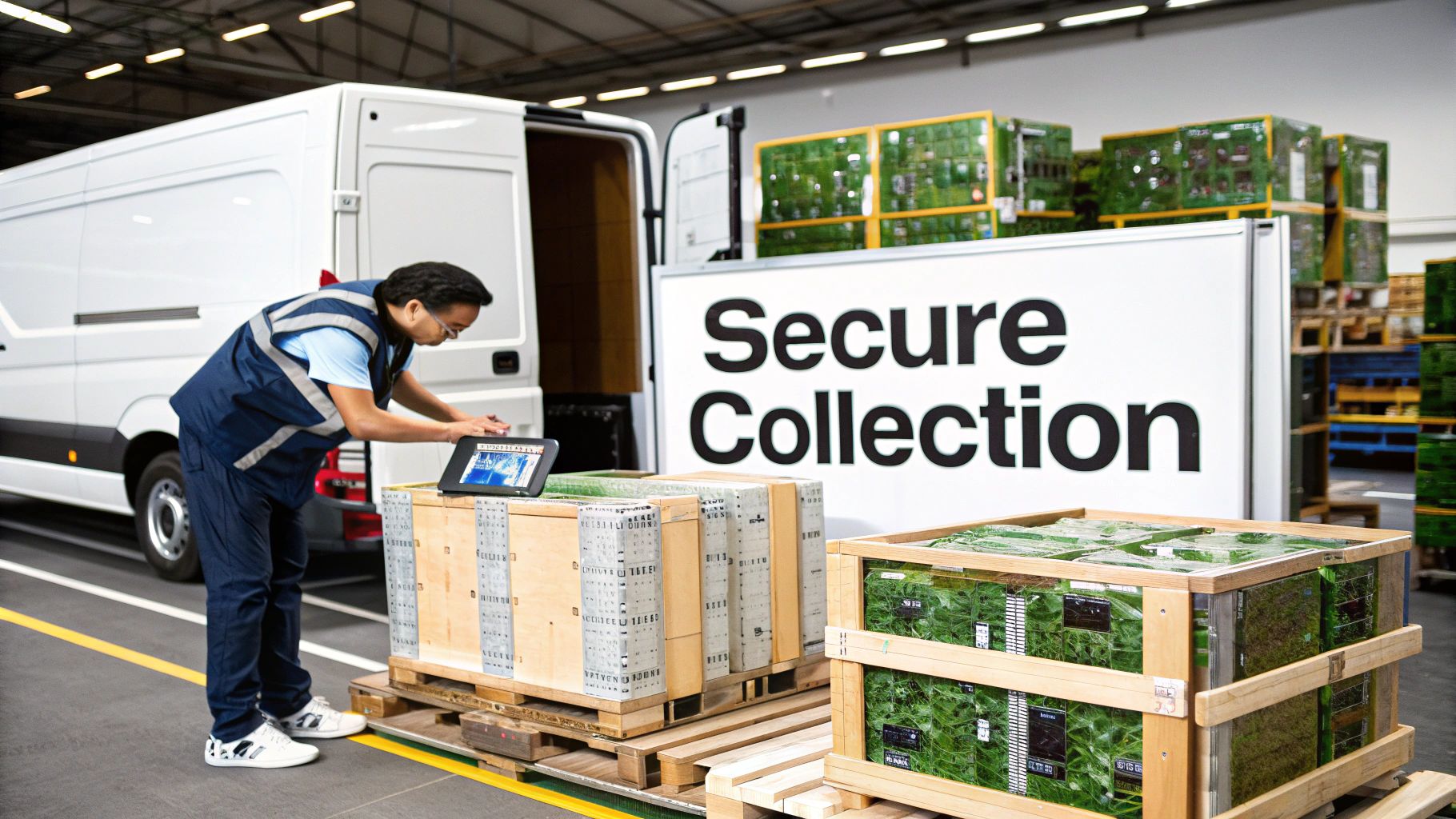
The entire journey is built on a foundation of security and transparency, beginning the moment our certified team arrives at your location. Secure collection and logistics ensure your retired IT assets are handled professionally from your loading dock to our processing facility, with a clear chain of custody established from the start.
This infographic illustrates the transformation of e-waste from a potential liability into a recovered asset.
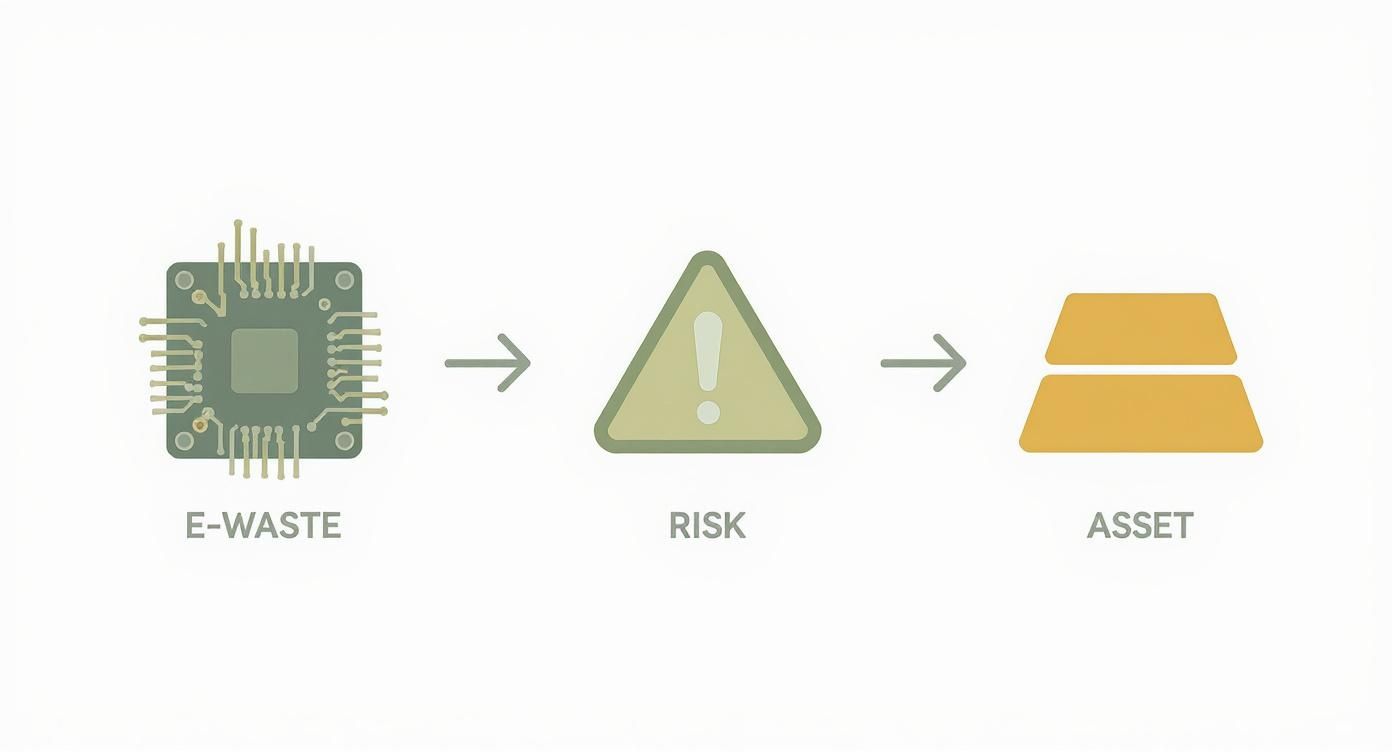
This flow highlights how a structured recycling process transforms a compliance and data security threat into a source of valuable raw materials.
The Initial Breakdown and Sorting
Once equipment arrives at the recycling facility, the first step is meticulous manual dismantling. This is not a brute-force operation; technicians carefully deconstruct devices to isolate specific components. Any hazardous materials, such as batteries or mercury-containing lamps, are immediately segregated for specialized handling to prevent environmental contamination.
Simultaneously, components viable for reuse or refurbishment are identified and separated. This initial sorting is critical for maximizing value recovery from each device and ensuring different material streams are processed efficiently. Our comprehensive electronic waste recycling services manage this entire lifecycle for Atlanta-based businesses.
Mechanical Processing and Material Separation
After initial sorting, the remaining material—primarily the circuit boards themselves—moves into the mechanical processing phase. This stage involves shredding the boards into small, uniform pieces, typically a few centimeters in size. This step is essential for physically liberating the various materials from each other.
These fragments then undergo a series of advanced separation techniques:
- Magnetic Separation: Powerful magnets extract ferrous metals like steel and iron from the material stream.
- Eddy Currents: This technology separates non-ferrous metals such as aluminum and copper, which are repelled by strong magnetic fields.
- Water Separation: Using density differences, water tables separate lighter materials like plastics and fiberglass from the heavier metal fragments, which sink.
This multi-stage separation process is the core of effective circuit board recycling. It systematically deconstructs a complex, integrated product into its constituent raw materials, preparing them for the final, most valuable stage of recovery.
Refining and Recovery
The final step is refining, where the concentrated streams of precious metals are sent to specialized smelters or hydrometallurgical facilities. Through precisely controlled chemical and thermal processes, elements like gold, silver, palladium, and copper are extracted with an extremely high degree of purity.
These recovered metals are now ready to be sold back into the global supply chain for manufacturing new electronic components. This closes the loop, converting your company’s retired equipment into the building blocks for tomorrow’s technology while reducing the need for new mining. The process ensures your assets are handled responsibly, every step of the way.
Why E-Waste Compliance Is a Non-Negotiable Business Strategy

Navigating the complex maze of environmental regulations is a significant challenge for any business. But when it comes to end-of-life electronics, willful ignorance is not a defense. For businesses, compliance is more than a procedural requirement—it’s a core component of risk management.
Legislation like the federal Resource Conservation and Recovery Act (RCRA) establishes a "cradle-to-grave" liability standard. In practical terms, your company is legally responsible for its electronic waste from its creation until its final, proper disposition. Handing it off to an uncertified hauler does not absolve you of this responsibility. If that equipment is later found in a landfill, the liability still traces back to your organization.
The Real Costs of Non-Compliance
The penalties for violating e-waste laws are severe. Fines can accumulate rapidly, reaching tens of thousands of dollars per violation. What may seem like a minor disposal shortcut can quickly escalate into a major financial liability.
But the damage extends beyond finances. A single news story about improperly dumped electronics bearing your company's asset tags can cause irreparable harm. The public backlash can damage your reputation, erode customer trust, and jeopardize key business relationships for years.
Partnering with a certified e-waste recycler is more than outsourcing a task; it's a strategic transfer of liability. A professional partner provides a fully documented, auditable trail that proves your due diligence and insulates your business from legal and reputational harm.
The choice between professional recycling and improper disposal carries significant weight. One path leads to security and compliance, while the other is fraught with unnecessary risk.
Risks of Improper Disposal vs. Benefits of Certified Recycling
| Area of Impact | Risk with Improper Disposal | Benefit with Certified Partner |
|---|---|---|
| Legal Liability | "Cradle-to-grave" responsibility remains with your company, even after pickup. | Liability is transferred to the certified vendor, with documentation to prove it. |
| Financial Cost | Risk of substantial fines for non-compliance and potential cleanup costs. | Predictable, controlled costs with no hidden legal or financial liabilities. |
| Data Security | High risk of data breaches from unsecured hard drives and storage media. | Guaranteed, certified data destruction protects sensitive company and customer data. |
| Brand Reputation | Potential for negative press and public backlash, damaging customer trust. | Demonstrates corporate social responsibility and enhances your company’s public image. |
| Environmental Impact | Toxic materials can leach into soil and water, causing long-term harm. | Materials are properly recovered and recycled, preventing pollution. |
Ultimately, working with a certified expert isn't just about avoiding penalties—it’s about safeguarding your business from every conceivable angle.
Understanding Your Shield: Key Certifications
How can you be certain your business is protected? Vet recyclers based on their adherence to top industry certifications. These are not mere logos; they are your assurance against compliance failures. The two gold standards to look for are R2 (Responsible Recycling) and e-Stewards.
A vendor holding these credentials guarantees they meet the highest standards for:
- Environmental Protection: Strict processes are in place to manage hazardous materials and prevent pollution.
- Worker Health and Safety: Employees are protected from the occupational risks of handling and dismantling electronics.
- Data Security: All sensitive data is completely and permanently destroyed, without exception.
Choosing a certified recycler provides you with documented proof that every circuit board and hard drive was managed correctly. You will receive official documentation, like a certificate of destruction for hard drives, that serves as your legal evidence of compliance. In the event of an audit, this documentation is your key defense.
The Financial Case for Recycling Circuit Boards
For many businesses, disposing of old electronics is viewed purely as a cost center. But a strategic approach to recycling circuit boards can do more than just avoid non-compliance fines—it can directly benefit your company’s bottom line.
This begins with a shift in perspective from disposal to asset recovery. Your retired IT equipment contains valuable, recoverable precious metals like gold, silver, copper, and palladium. When you partner with a certified recycler, these materials are extracted and sold into commodity markets. A portion of this value is often returned to your company, transforming a disposal cost into a revenue stream.
Turning Costs into Opportunities
Initially, you will realize savings from cost avoidance. Commercial landfill fees are continually rising, and e-waste often incurs surcharges due to its hazardous components. A formal recycling program eliminates these costs.
More importantly, it serves as an insurance policy against the significant financial repercussions of non-compliance. These include not only initial fines but also legal fees, mandated cleanup efforts, and the high cost of public relations crisis management. Strategic recycling is a cost-effective risk mitigation strategy.
A well-managed e-waste program is a direct investment in your company’s financial health and brand equity. It transforms a regulatory burden into an opportunity to recover value, reduce operational costs, and build a stronger, more marketable corporate identity.
This is not a niche concept—it’s a growing global economic trend. As more companies recognize the financial upside, the worldwide market for circuit board recycling machinery is projected to reach approximately $2.23 billion. You can gain deeper insight into this expanding market by reading the full research on circuit board recycling machines.
Boosting Your Brand and Attracting Talent
The financial benefits extend beyond direct returns and cost savings. In today’s competitive market, a demonstrated commitment to environmental stewardship is a powerful brand differentiator.
A robust sustainability program provides your marketing team with a compelling narrative, helping you connect with a growing segment of environmentally conscious customers. It also plays a crucial role in talent acquisition and retention. Top professionals increasingly seek to work for companies whose values align with their own. This investment in your brand's reputation pays long-term dividends, making responsible e-waste recycling a financially astute business decision.
How to Choose the Right E-Waste Recycling Partner
Selecting a partner for recycling circuit boards and other e-waste is not a standard procurement decision. This is fundamentally different from hiring a general waste hauler. The right partner becomes a fiduciary for your company’s data, legal compliance, and public reputation.
An incorrect choice can expose your organization to staggering data breach liabilities and severe environmental fines. This decision demands rigorous due diligence.
Look for Gold-Standard Certifications
When vetting potential recyclers, their certifications provide critical insight into their operational integrity. Do not simply accept claims at face value—demand proof. The credentials that carry the most weight are those audited by third parties, as they confirm a vendor's commitment to the highest standards of security and environmental stewardship.
Key certifications you should require include:
- R2 (Responsible Recycling): This is the comprehensive, all-encompassing standard. An R2-certified facility has demonstrated a robust management system covering environmental impact, worker safety, and data security.
- e-Stewards: Known for its stringent environmental protection requirements, e-Stewards is another top-tier certification. It strictly prohibits the export of hazardous e-waste to developing nations and uses GPS trackers for verification.
- NAID AAA Certification: For data security, this certification is non-negotiable. It verifies that a vendor adheres to the most rigorous protocols for data destruction, encompassing everything from hiring practices and facility security to the shredding process itself.
These are not merely website badges. They are your guarantee that a partner’s operations have been scrutinized and approved by an independent body. A vendor with these certifications has made significant investments in processes designed to protect your business.
Verify Their Downstream Accountability
Understanding a recycler's internal processes is only half the battle. You must also understand their downstream chain of custody—where your materials go for final smelting and recovery.
A transparent partner will provide a clear, documented audit trail. This chain of custody should track your assets from the moment they leave your premises to their final disposition.
Ask potential vendors pointed questions: "Can you provide a complete, serialized report of our assets?" and "Who are your downstream partners for smelting and material recovery, and are they also certified?" Vague responses are a significant red flag.
A reputable recycler will readily provide comprehensive documentation, including Certificates of Data Destruction and Certificates of Recycling. These documents are your legal proof of due diligence. For Atlanta-area businesses seeking to ensure every step is handled correctly, finding local computer disposal services near me with proven track records is the most effective approach.
Choosing the right partner means you’re not just disposing of e-waste; you’re investing in a secure, compliant, and responsible extension of your own operations. It’s a choice that protects your business, your data, and your brand from unacceptable risks.
The Future of E-Waste and the Circular Economy
The global volume of electronic waste is staggering and continues to grow annually. This trend is a major driver for the industry to adopt smarter, more sustainable methods for managing end-of-life technology. The future of recycling circuit boards is not merely about waste management—it’s about fundamentally rethinking the lifecycle of electronics.
Emerging technologies are already making recycling more efficient and environmentally sound. Innovations like robotic dismantling systems are being developed to automate the labor-intensive process of de-manufacturing devices. Concurrently, researchers are refining greener chemical processes, such as hydrometallurgy, to extract precious metals without the significant energy consumption of traditional smelting.
This shift is a global imperative. The Asia Pacific region, a major hub for circuit board recycling, generated over 24.9 million metric tonnes of e-waste, making it the world's largest contributor. You can review more data on this trend by checking out the findings from the Global E-Waste Monitor.
Embracing the Circular Economy
These technological advancements support a larger economic model: the circular economy. Unlike the traditional linear "take-make-dispose" model, a circular economy is designed to keep resources in use for as long as possible.
The objective of a circular economy is to eliminate waste by designing products and systems where materials can be endlessly recovered and regenerated. Every retired circuit board becomes a valuable source of raw materials for the next generation of technology.
When your business partners with a certified recycler, you are doing more than meeting a compliance requirement. You are actively participating in this sustainable industrial loop. Your old servers, computers, and networking equipment cease to be waste and instead become feedstock for new products. You can learn more about the broader environmental impact of electronic waste to understand the significance of these choices.
This forward-thinking approach demonstrates why strategic decisions today have long-term importance. Your company’s recycling program is not just a local action; it is a vital contribution to a global solution that positions your business as a responsible leader prepared for a more sustainable future.
Common Questions About Business E-Waste Recycling
Even with a clear understanding of the benefits, it is natural for business leaders to have questions before engaging a professional e-waste partner. Here are direct answers to the most common concerns regarding recycling circuit boards and other corporate electronics.
How Can We Be Sure Our Sensitive Company Data Is Destroyed?
This is the most critical question and should be your top priority. A certified recycler's entire process is architected around secure, verifiable data destruction. We adhere to strict industry standards like NAID AAA to guarantee your information is irretrievably destroyed. This involves physically shredding or degaussing hard drives and other storage media before they enter the recycling stream.
For your compliance records, you must always demand a Certificate of Data Destruction. This document is your official, legal proof that all sensitive information was permanently and securely eliminated.
What Electronics Actually Need Professional Recycling?
The short answer is nearly everything with a plug or a battery. If it contains a circuit board, it must be handled by a certified recycler. This includes obvious items like computers, servers, and phones, but the scope is much broader.
It also covers essential office equipment such as routers, switches, printers, and copiers. Even specialized, industry-specific equipment falls under these regulations. A comprehensive recycling program manages every electronic asset, ensuring your business remains 100% compliant.
The legal and financial risks of improper e-waste disposal are the same whether you're a five-person startup or a Fortune 500 company. Professional recyclers offer scalable services, making compliance a cost-effective and smart decision for any business.
What Kind of Documentation Should We Get?
A reputable recycling partner will always provide a clear and transparent audit trail. The two essential documents you must receive are a Certificate of Recycling and a Certificate of Data Destruction.
This is not mere paperwork—it is your official record proving due diligence. It confirms that all materials were managed in an environmentally responsible manner and that your data was securely destroyed. In the event of a compliance audit, these documents are indispensable.
Ready to implement a secure, compliant, and responsible e-waste strategy for your Atlanta-area business? Contact Atlanta Computer Recycling today to schedule a pickup and ensure your company's retired assets are handled with the highest standards of care. Visit us at https://atlantacomputerrecycling.com.