A Business Guide to Milton GA County Operations

If your business operates in Milton, understanding the local governance structure is non-negotiable. The City of Milton is located entirely within Fulton County, Georgia. It’s a city, not a county.
Getting this right is crucial for compliance and operational efficiency. This single distinction dictates everything from your tax obligations and property records to legal jurisdiction and how you manage the disposition of retired corporate assets.
Milton’s Place Within Fulton County
For business leaders, the hierarchy is clear: the City of Milton manages immediate local needs like zoning and city ordinances. Fulton County handles the larger, regional services that form the backbone of your operations, including courts, public health, and key infrastructure.
For any business, especially those managing sensitive IT assets, knowing which government entity is responsible for what is essential for streamlined operations and risk mitigation.
This diagram illustrates the simple administrative relationship.
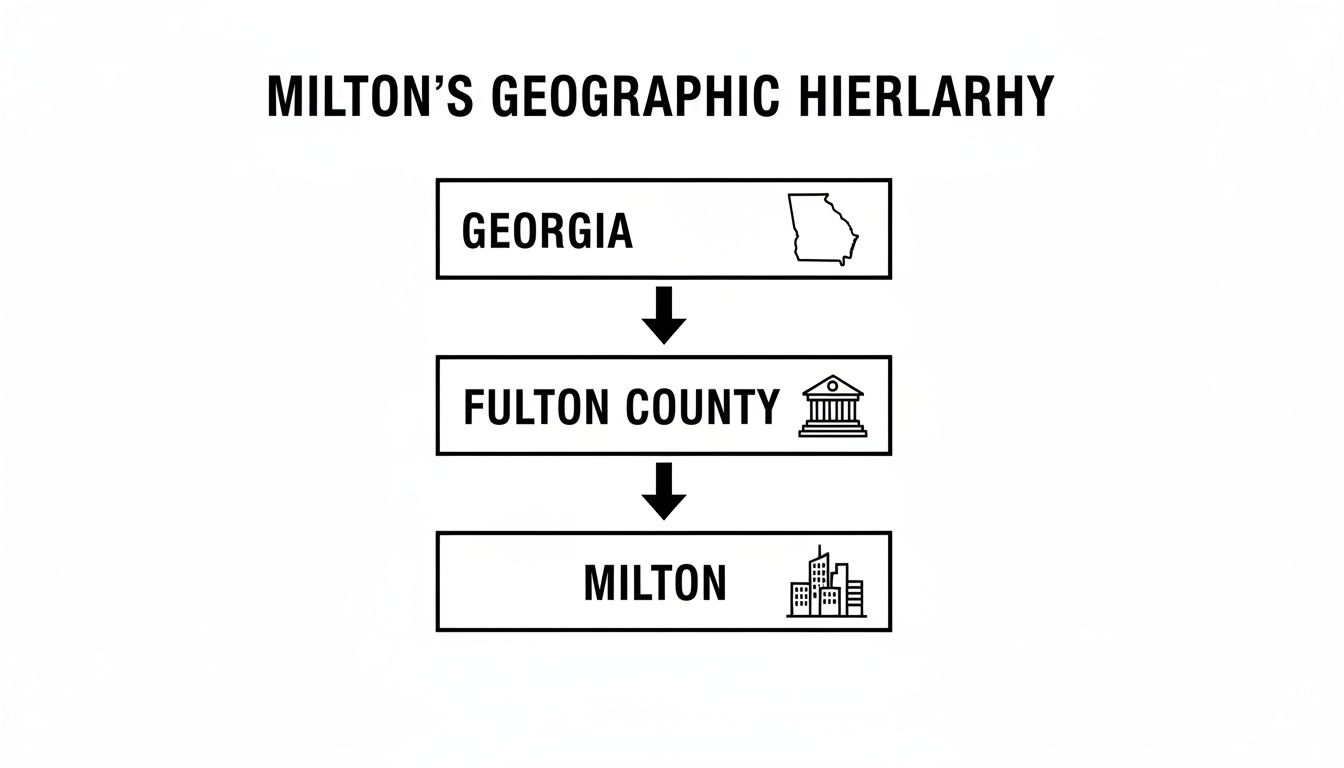
As you can see, Milton is a municipality operating under the Fulton County umbrella, which itself is part of the state of Georgia.
A Growing Hub for Commerce
Milton's strategic location in North Fulton has fueled explosive commercial growth. Since its incorporation in 2006, the city's population surged by 26.4% between 2010 and 2020 alone. This boom has transformed Milton into one of Georgia's most affluent and dynamic business centers.
For IT managers, COOs, and administrators at Milton’s expanding corporations, schools, and medical facilities, this growth creates a constant cycle of technology upgrades and equipment retirement.
More growth means more technology investment. As local companies expand, they continually refresh hardware, creating the challenge of securely and responsibly disposing of old computers, servers, and network gear. This is where partnering with a certified IT Asset Disposition (ITAD) provider becomes a critical business function—not just for data security, but for environmental compliance.
If your organization is managing this cycle, our dedicated services for businesses in Milton, GA are designed to help. The rest of this guide will break down how the city-county relationship impacts these critical operational requirements.
Navigating Fulton County Services for Your Milton Business
If you run a business in Milton, you're not just dealing with the city—you're operating within the jurisdiction of Fulton County. For any commercial operation, the county serves as the administrative backbone for everything from property taxes and building permits to legal compliance. Think of Fulton County as the regional operating system your business depends on.
The main digital front door for these services is the official Fulton County website.
Familiarizing your team with this portal is a strategic first step. It’s your gateway to the departments, records, and service requests fundamental to keeping your business running smoothly and compliantly in the Milton area.
Key County Departments for Milton Businesses
Whether you operate a data center, a corporate office, or a healthcare facility, a few key Fulton County departments will be critical to your operations. You will almost certainly interact with them for core business needs.
- Tax Commissioner's Office: This office manages commercial property taxes. All your company's physical assets and real estate fall under its jurisdiction, making it a primary contact for financial compliance.
- Department of Community Development: Planning an expansion or renovation? This department handles building permits, inspections, and zoning for the Milton GA county area, ensuring your facility is up to code.
- Courts and Legal System: The Fulton County court system is the governing body for contract disputes, liability cases, and other legal matters. Navigating this system effectively is crucial for risk management.
Let's be clear: navigating this bureaucracy isn't just paperwork; it’s a strategic part of running your business. Getting it right saves time, prevents costly fines, and ensures business continuity.
When you register a new business location, for instance, you'll be working directly with county channels to get your documentation in order. It’s a similar process for companies in other parts of the area, as we cover in our guide to Hapeville, GA county interactions.
By understanding which office to contact for a specific need, you can cut through red tape and focus on core business objectives. It’s a straightforward approach that’s essential for staying compliant and operational.
How Milton's Economy Fuels Your IT Refresh Cycle
Ever wonder why the pace of technology upgrades feels relentless in Milton? It's a direct result of the area's thriving economy. For companies here, the high expectations of both clients and employees mean the demand for the latest, most efficient technology never slows down.
This constant push for better performance creates a ripple effect. Corporate offices, healthcare providers, and financial institutions are all competing to attract top talent and serve a sophisticated clientele. That translates directly into frequent upgrades for servers, laptops, and networking gear. It’s less about waste and more about maintaining a competitive edge.
The Connection Between Demographics and Hardware Turnover
In the Milton, GA, county area, the link between local affluence and technology investment is undeniable. The median household income has climbed to an incredible $171,295, and 77.9% of adults hold a bachelor's degree or higher. Simply put, this is a market that demands and understands high-performance technology.
For IT managers, hospital administrators, and data center operators, this means one thing: a predictable, steady flow of retired assets. Laptops, servers, and network equipment are decommissioned more frequently to maintain peak performance, which creates a critical need for secure data destruction and responsible disposal.
This fast-paced cycle isn't a problem to be managed; it's an opportunity to optimize your asset lifecycle. You can see the full demographic picture that drives this trend on Georgia-Demographics.com.
Turning Tech Turnover into a Strategic Advantage
Every IT refresh is an opportunity to strengthen your data security posture and demonstrate corporate sustainability. In a high-growth area like Milton, treating asset disposition as an afterthought is a significant business risk. Finding a partner who understands local compliance and environmental regulations is essential.
It’s a forward-thinking approach that helps a business thrive, much like how iconic local businesses adapt and grow. For a great local story, check out our piece on how Scottsdale Farms became a Milton landmark.
For a smart organization, managing this cycle is a fundamental part of risk management. A professional ITAD partner ensures every retiring device is handled securely, protecting your company's reputation and its bottom line.
Managing IT Assets for Schools and Public Institutions
For IT leaders in education, healthcare, and government, operating within Fulton County presents a unique set of challenges, especially in Milton, GA. The sheer scale of public institutions demands a rock-solid strategy for managing technology—not just during deployment, but through its entire lifecycle to final disposition.
Take Fulton County Schools, for example. The district is tasked with managing thousands of devices for students and staff. This constant cycle of large-scale rollouts and end-of-life hardware creates a massive compliance burden. Every device decommissioned from a school must have its data destroyed in a manner fully compliant with the Family Educational Rights and Privacy Act (FERPA).
Meeting the Demands of a Growing Community
The need for a robust IT asset disposition (ITAD) plan extends far beyond the school system. Milton’s rapid growth directly impacts hospitals, libraries, and government offices, all of which must scale their technology infrastructure to keep pace.
The 2020 Census recorded a population of 41,296 residents, reflecting a diverse, high-income community that expects first-class public services. This means IT managers in public institutions face recurring operational challenges:
- Bulk Decommissioning: How do you efficiently and securely retire equipment from entire computer labs, server rooms, or hospital wings all at once?
- Data Security Compliance: You must ensure every hard drive and storage device is handled according to strict regulations, like HIPAA in healthcare and CJIS for law enforcement.
- Environmental Responsibility: Disposing of tons of e-waste must be done sustainably and with a clear audit trail to avoid steep environmental penalties and negative publicity.
Building a Secure Technology Strategy
For any public institution, managing IT assets often involves complex projects. A resource like a government SharePoint migration playbook can be invaluable for navigating those transitions and protecting data. However, the final step—disposing of the old hardware—is just as critical for mitigating risk.
A secure technology strategy doesn't end when a new server is installed; it ends when the old one is properly destroyed. This is about protecting sensitive citizen, student, and patient data from breaches and demonstrating responsible governance.
By partnering with a certified specialist, your organization gains assurance that every retired asset is handled correctly from start to finish. If you're managing large-scale equipment disposal, a well-defined IT asset disposition program provides the structure and security needed to protect your institution.
E-Waste And Data Destruction: Staying Compliant
For any business in Milton, disposing of old electronics is a significant liability. You cannot simply discard old computers or servers—it's not only an environmental hazard but also a clear violation of state and federal data privacy laws. Waste management in the Milton GA county area is under strict regulatory watch.
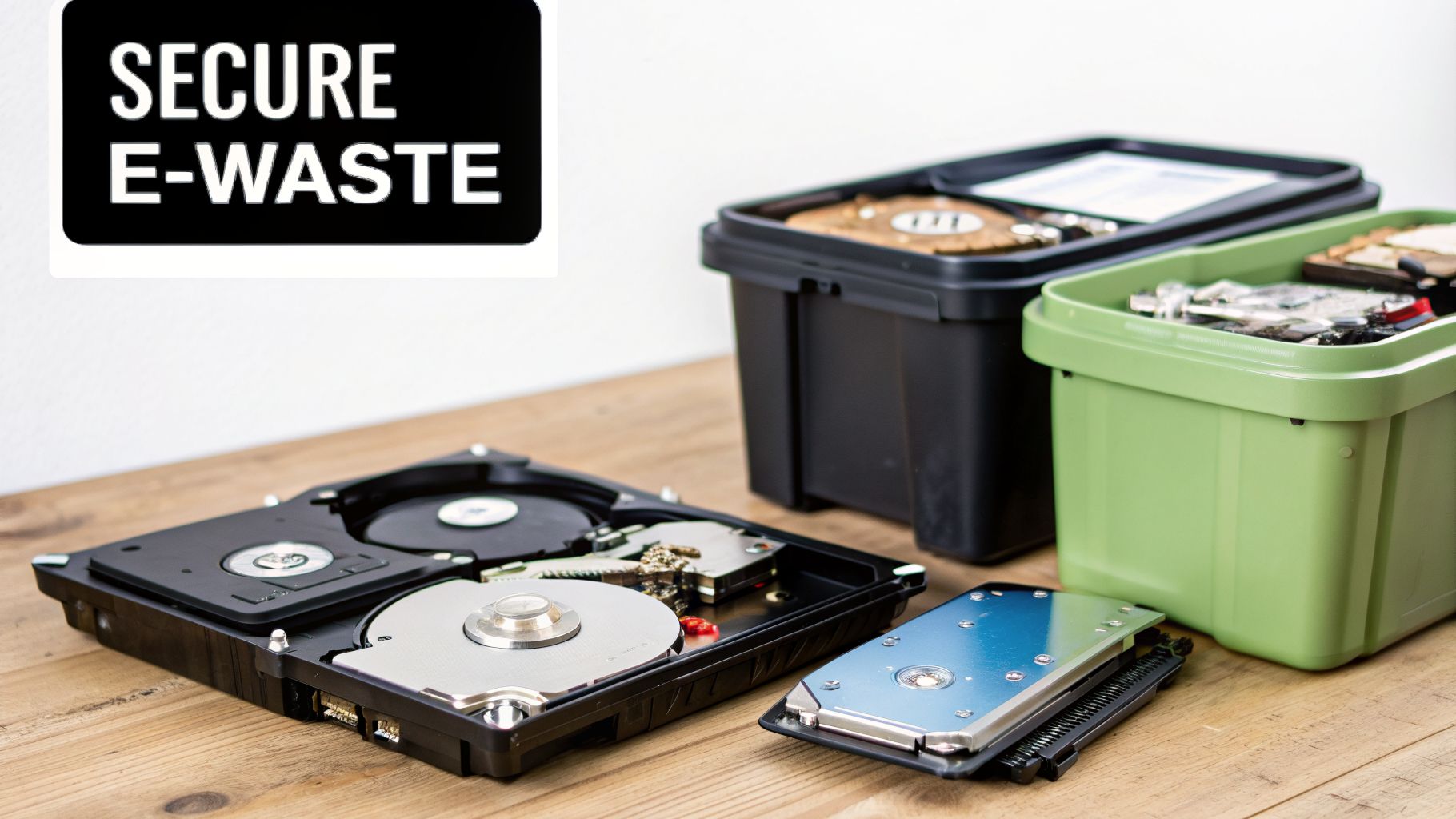
Think of an old hard drive as a filing cabinet packed with your company's most sensitive information: financial records, customer data, and intellectual property. Throwing it in a dumpster is like leaving that cabinet unlocked on the curb. The risk is incredibly high for organizations in finance, legal, and healthcare, where a single data breach can trigger devastating legal and financial fallout.
Understanding Data Destruction Standards
To be fully compliant, data on retired assets must be rendered completely unrecoverable. There are two primary methods, each offering a distinct level of security.
- Data Wiping: This software-based method overwrites existing information multiple times. The DoD 5220.22-M 3-pass standard is a widely trusted benchmark that guarantees data is thoroughly erased, often allowing the drive to be safely reused or resold.
- Physical Shredding: For hardware that is obsolete or has failed, physical destruction is the only way to guarantee 100% data elimination. The hard drive is fed into an industrial shredder that grinds it into tiny, unsalvageable pieces of metal, destroying the data permanently.
This process goes far beyond simple recycling. It’s about protecting your company from massive fines, reputational damage, and data theft while proving your commitment to corporate responsibility.
True data security also involves proactive strategies for preventing data loss across your entire operation. A critical piece of the puzzle is documenting every disposal. A Certificate of Destruction creates the essential audit trail you need to prove compliance.
Working with a certified specialist ensures every retired device is handled securely and in full accordance with all regulations. It's the only way to achieve total peace of mind and mitigate business risk.
Common Questions for Milton Businesses
For IT managers, compliance officers, and business owners in Milton, navigating local regulations is a key operational task. Here are straightforward answers to common questions about operating in the area.
Is Milton in Fulton County or its Own County?
This is a critical distinction for any business. Milton is a city located entirely within Fulton County; it is not a county itself.
This means your business will interact with two layers of government. You'll work with the City of Milton for local zoning and business permits, but you'll rely on Fulton County for larger services like the court system, public health, and, most importantly, property tax administration.
My Milton Office Is Moving. How Do We Get Rid of Our Old Computers?
Disposing of corporate electronics, especially devices that hold sensitive customer or financial data, is a regulated activity. You cannot simply throw them away due to strict state and federal laws.
The only compliant method is to partner with a certified IT Asset Disposition (ITAD) provider. This ensures every step meets regulatory requirements, from EPA environmental standards to data privacy laws like GLBA and SOX. A certified partner provides a Certificate of Destruction, giving you the official documentation needed to prove compliance and protect your business from risk.
What Is the Biggest Compliance Risk When Disposing of Hospital PCs in Milton?
For any healthcare organization in the Milton area, the answer is unequivocal: HIPAA compliance is the number one priority. Every single device that has ever stored or transmitted electronic Protected Health Information (ePHI) must have that data made permanently unrecoverable.
Simply deleting files or reformatting a drive is insufficient and will not withstand a HIPAA audit. You must engage a partner that offers certified, audited data destruction services, including:
- DoD-Standard Wiping: A multi-pass software process that thoroughly erases data from functional drives.
- Physical Shredding: The ultimate security measure that grinds the storage media into tiny, useless fragments, ensuring data is irrecoverable.
This is the only way to be absolutely certain your organization is protected from data breaches and the severe penalties that follow.
Do I Pay Business Taxes to Milton or Fulton County?
You will almost certainly pay both. The commercial property taxes for your business assets located in Milton are assessed and collected by the Fulton County Tax Commissioner's office.
Simultaneously, the City of Milton will have its own business licenses, permits, and fees that your business is responsible for. It is essential to consult with both government bodies to ensure you are fully compliant with all local and county tax obligations.
Are you managing a technology refresh or office move in Milton? Atlanta Computer Recycling offers secure, compliant, and responsible IT asset disposition for businesses, schools, and healthcare facilities. We ensure your data is destroyed and your hardware is recycled correctly. Visit us at https://atlantacomputerrecycling.com to learn more.