Fulton County IT Disposal Guide for Commercial Operations in 2026

For businesses across Fulton County, managing outdated IT equipment is a critical operational task involving data security, regulatory compliance, and corporate reputation. A formal IT Asset Disposition (ITAD) strategy isn't a luxury—it's a necessary component of risk management to shield your organization from significant financial and legal liabilities.
Why Fulton County Businesses Require a Strategic ITAD Partner
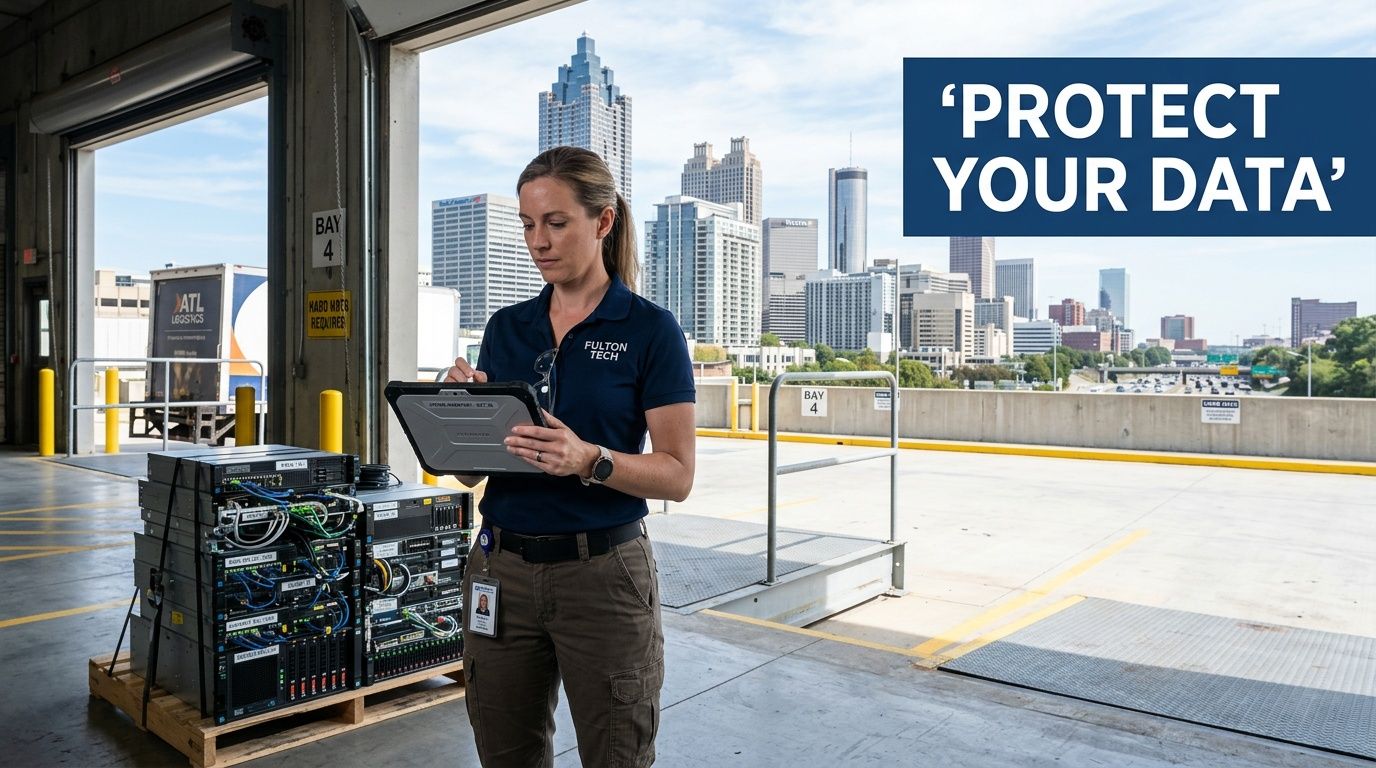
As Georgia's primary economic engine, Fulton County presents unique IT challenges for commercial entities. The rapid growth here drives constant technology refreshes, resulting in a continuous flow of retired computers, servers, and network hardware. For the county's thriving healthcare, technology, and financial sectors, improper disposal of this equipment is not a viable business option.
This constant churn of electronics increases e-waste volumes, magnifies data security risks, and heightens compliance pressures. A standard recycling plan is insufficient for protecting the sensitive corporate and client information stored on these devices.
The Business Risks of Improper IT Asset Disposal
Cutting corners on a formal ITAD process exposes your business to severe consequences. We consistently hear from IT executives in Atlanta, Alpharetta, and Sandy Springs—their primary concern isn't clutter; it's mitigating the risk of data breaches from improperly discarded hard drives.
Consider the potential business impact:
- Data Breaches: A single retired server drive could contain years of confidential customer data, employee records, or proprietary intellectual property.
- Compliance Penalties: Regulations like HIPAA and FACTA impose steep fines for failing to protect sensitive information, even on decommissioned devices.
- Environmental Fines: Improperly dumping electronics can lead to penalties for violating state and federal environmental laws, impacting your company's ESG (Environmental, Social, and Governance) standing.
- Reputational Damage: A public data breach can erode customer trust and brand equity, impacting your bottom line more severely than any fine.
A proactive ITAD strategy offers a competitive advantage. It transforms a logistical challenge into a secure, documented business process that protects your data, your clients, and your brand's integrity.
Growth Drives Commercial Demand
The county’s history is one of continuous expansion. Originally formed on December 20, 1853, a pivotal moment occurred on January 1, 1932, when it absorbed both Milton and Campbell counties, nearly tripling its size. Today, with a population of 1,066,710—a 15.9% increase from 2010—the demand for secure ITAD services from corporate offices, hospitals, and data centers has never been greater.
To provide a clear framework for Fulton County businesses, here’s a breakdown of common ITAD challenges and their strategic solutions.
Fulton County ITAD Challenges vs. Strategic Solutions
| Common Business Challenge | Strategic ITAD Solution |
|---|---|
| Risk of data breaches from retired hard drives and servers | Certified data destruction (shredding or wiping) with a complete chain-of-custody and certificate of destruction. |
| Heavy fines for non-compliance with HIPAA, FACTA, or other regs. | A documented, compliant process engineered to meet or exceed regulatory requirements for data security and e-waste. |
| Logistics of removing bulky equipment from a busy office or data center | Onsite de-installation and scheduled pickups managed by a professional team to minimize disruption to your business operations. |
| Uncertainty about environmental regulations for e-waste | Partnership with certified recyclers to ensure all materials are processed responsibly, meeting all local and state laws. |
| Lost value from retired but still functional assets | IT asset value recovery programs to identify remarketable equipment and recover capital to offset disposition costs. |
This table illustrates how a dedicated ITAD provider converts potential liabilities into managed, secure business processes.
For any organization operating in this fast-paced commercial environment—from downtown Atlanta to the growing corporate hubs in the south—a specialized partner is mission-critical. A professional ITAD provider understands the security mandates and logistical complexities of operating in a major metropolitan area. For instance, our work spans the entire county, including providing specialized services for businesses in the City of South Fulton. A professional approach transforms the challenge of equipment retirement into a streamlined, secure, and cost-effective operation.
Preparing Your Corporate Assets for a Seamless Pickup
A successful IT asset disposition project begins long before our truck arrives at your Fulton County facility. Proper preparation is the key to an efficient, secure, and minimally disruptive pickup. Simply accumulating old equipment in a storage room creates logistical bottlenecks, security vulnerabilities, and ultimately, higher labor costs.
This isn't about creating extra work for your IT department. It's about optimizing the process for operational efficiency. Following a few key steps will accelerate the entire engagement, minimize business disruption, and ensure every asset is accounted for from the moment it leaves your control.
Start with a Comprehensive Asset Inventory
Before any equipment is decommissioned, you need a clear inventory of what you have. A functional inventory serves as the foundation of a secure ITAD process. This doesn't need to be a complex, time-consuming audit—a simple but detailed spreadsheet is sufficient.
This list is the first link in your chain of custody, serving as the master document for tracking every device from your facility to its final disposition.
A robust inventory should capture:
- Asset Type: (e.g., Desktop, Laptop, Server, Switch)
- Manufacturer and Model: (e.g., Dell OptiPlex 7080, Cisco Catalyst 9300)
- Serial Number: This is the most critical identifier for individual asset tracking and reporting.
- Physical Location: (e.g., Office 301, Data Closet 2, Storage Room B)
Creating this list enables you to verify that every piece of equipment designated for disposal is collected. It also provides the necessary details for us to generate accurate chain-of-custody documentation and Certificates of Data Destruction.
Consolidate and Stage Your Equipment
With your inventory complete, the next step is consolidation. Gather all retired assets into a single, secure, and easily accessible location. Equipment scattered across multiple floors or buildings significantly slows down the pickup process, which is why a designated staging area is essential.
Business Case: We partnered with an Alpharetta-based financial services firm refreshing 150 workstations and decommissioning 20 servers. Instead of leaving the equipment at each desk, their IT team consolidated everything into a ground-floor conference room adjacent to the loading dock. This simple action converted a potentially disruptive multi-day project into a single, four-hour pickup, executed with zero impact on their daily business operations.
Select a location that is both secure and logistically practical for our crew. An unused conference room, a secure storage closet, or any ground-floor space near an exit or loading dock is ideal.
For businesses in high-traffic areas like midtown Atlanta, consolidating assets is particularly critical. It minimizes the time our vehicle needs to be parked at your facility, reducing operational disruption.
Disconnect and Disassociate All Devices from Your Network
This is a critical security step that must be completed before any equipment leaves your premises. Every device, from servers and desktops to VoIP phones, must be fully disconnected from your network and de-provisioned from any cloud management systems.
Overlooking this step can inadvertently leave a security vulnerability in your live network. It's imperative to ensure no retired device can "phone home" after it has been decommissioned.
Your pre-pickup checklist should include:
- Logical Disconnection: Remove all devices from Active Directory, Mobile Device Management (MDM) platforms, and network monitoring tools.
- Physical Disconnection: Unplug all ethernet cables, power cords, and peripherals. You can bundle cables with their corresponding devices or prepare them for separate recycling.
- Wipe Local Data (Optional): While we provide certified data destruction as a core service, some organizations have an internal policy to perform an initial data wipe. However, you can save significant staff hours by entrusting the certified destruction process to us.
These preparatory steps are invaluable for a seamless handoff. For IT managers seeking deeper logistical insights, our guide on IT equipment pickup services in Atlanta details our operational procedures. Proper organization upfront ensures that when our team arrives, we can execute the project efficiently, getting outdated assets out of your facility for good.
Mastering Data Destruction and HIPAA Compliance
For any organization in Fulton County—particularly in healthcare, finance, or legal services—data security is a legal and fiduciary responsibility. When you retire IT assets, the sensitive data they contain becomes a significant liability. Simply hitting 'delete' or formatting a drive is insufficient to protect your business from a data breach and its consequences.
The first step toward a compliant IT disposal process is understanding the differences between professional data destruction methods. The choice between data wiping and physical shredding depends on the media type, its condition, and your organization's internal security policies.
A little preparation on your end makes the entire process smoother and more secure.

Simply put, by taking the time to inventory, consolidate, and disconnect your assets, you are setting the stage for a perfect, auditable handoff for secure data destruction.
DoD Wiping: The Gold Standard for Data Erasure
When hard drives are functional and may have remarketing value, software-based data wiping is the preferred method. However, not all software is created equal. The industry benchmark, trusted by government agencies and security experts, is the DoD 5220.22-M 3-pass wipe.
This is not a simple delete command. The process overwrites every sector of a hard drive multiple times with specific data patterns, rendering the original information forensically unrecoverable.
- Pass 1: Overwrites the drive with a specific binary pattern.
- Pass 2: Writes the complement of the first pattern.
- Pass 3: Writes random characters and verifies the wipe was successful.
We provide complimentary DoD 5220.22-M wiping for every qualifying drive we process, ensuring a certified, auditable level of security that meets the most stringent industry regulations.
Physical Shredding: For Absolute Data Elimination
What happens when a drive cannot be wiped? Physical shredding is the only guaranteed solution for devices that are non-functional, damaged, or use solid-state media (SSDs), which can be resistant to software-based erasure. It is also the definitive method for destroying old media like backup tapes.
Our industrial shredders reduce hard drives, SSDs, and other media into small, irretrievable fragments. Data recovery is impossible. For businesses with maximum security requirements, we can provide on-site shredding services anywhere in Fulton County.
A Certificate of Data Destruction is non-negotiable. This document is your official, auditable proof—listing every asset by serial number—that your data has been properly sanitized or destroyed. It is your defense against future liability claims.
HIPAA Compliance: A Real-World Sandy Springs Business Case
Nowhere is this process more critical than in healthcare. The Health Insurance Portability and Accountability Act (HIPAA) imposes severe penalties for mishandling Protected Health Information (ePHI). Consider a common scenario we manage frequently.
A hospital in Sandy Springs needs to decommission 50 patient check-in kiosks, each containing sensitive data on its hard drive.
First, the hospital's IT director creates an inventory, capturing the serial number of every hard drive. This document establishes the basis for the chain of custody.
Next, our team arrives on-site. We audit the serial numbers against the hospital's list, and representatives from both parties sign the Chain of Custody form before any equipment leaves the facility.
Back at our secure processing center, functional hard drives are wiped using the DoD 5220.22-M standard. The few non-functional drives are designated for physical shredding.
Finally, the hospital receives a Certificate of Data Destruction. This certificate itemizes every serial number from their original inventory and confirms whether each drive was wiped or shredded, providing a complete, end-to-end audit trail. This documentation proves they fulfilled their due diligence to protect patient data as mandated by HIPAA.
Learn more about this vital service in our guide to HIPAA-compliant electronics recycling in Atlanta.
Your Guide to ITAD Documentation and Chain of Custody
When your old IT equipment leaves your facility, your liability does not. This is where the most critical phase of risk management begins. The documentation from your IT Asset Disposition (ITAD) partner is not just paperwork—it is your legal proof of compliance and your shield against future claims.
For any organization in Fulton County, from a startup in an Atlanta high-rise to a corporate campus in Alpharetta, this paper trail is non-negotiable. It proves you took every required step to secure sensitive data and dispose of e-waste responsibly. Without it, your organization is exposed to serious legal and financial risk.
The Cornerstone: Chain of Custody
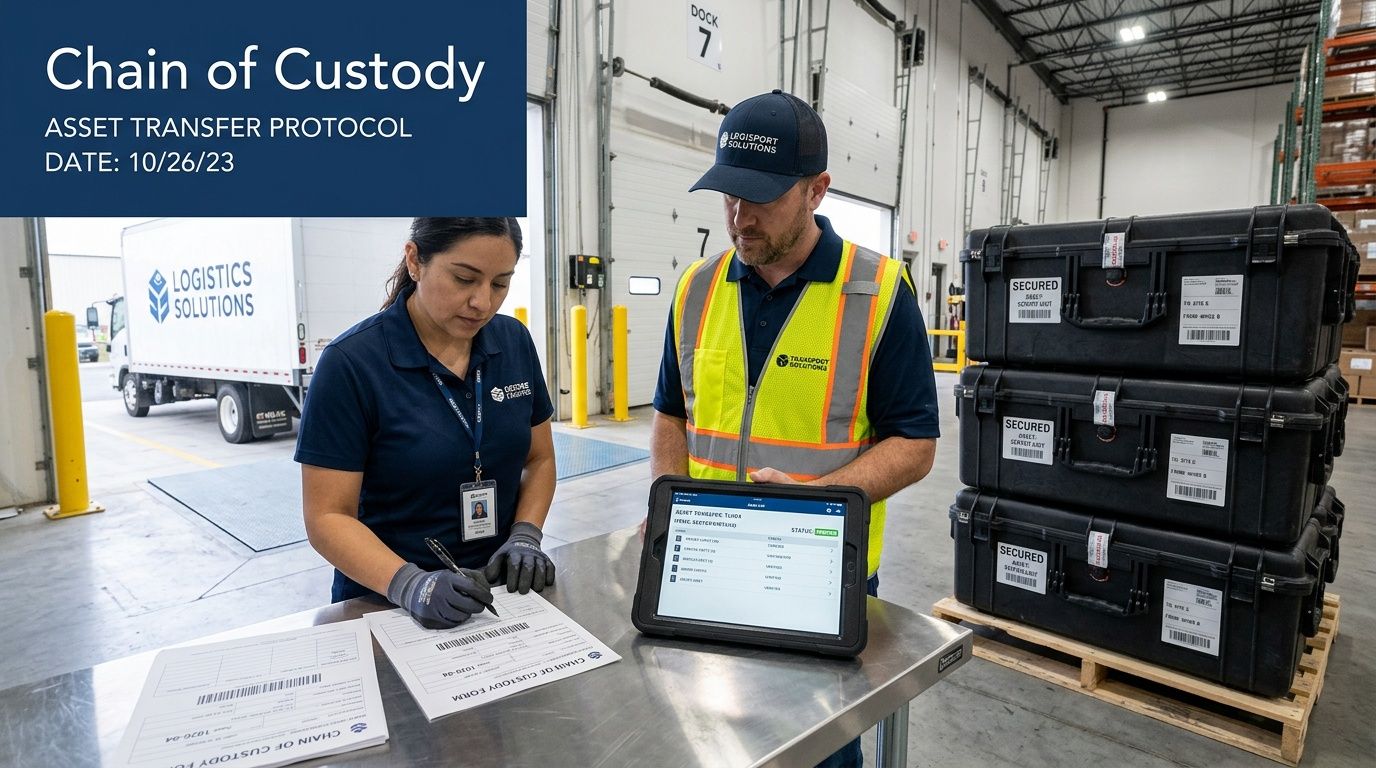
The Chain of Custody (CoC) is the single most important document in the ITAD process. It serves as a detailed manifest for your assets, tracking their journey from the moment they leave your possession to their final destruction or recycling. In any audit or legal proceeding, this document is your first line of defense.
A proper CoC begins the moment our team arrives on-site. We meticulously audit the equipment against your prepared inventory, capturing every serial number. Your company representative and our logistics manager co-sign the document on the spot, officially transferring liability for the assets to us. This creates an unbroken, auditable trail.
Decoding Your Certificates
Once your assets are processed at our secure facility, you receive final documentation that closes the loop on your ITAD project, providing verifiable proof for internal records and compliance audits.
- Certificate of Data Destruction: This document certifies that every data-bearing device has been sanitized or destroyed according to industry standards. It itemizes each hard drive and server by its unique serial number and specifies the method used—either a DoD 5220.22-M wipe or physical shredding.
- Certificate of Recycling: This certificate confirms that all non-reusable materials and e-waste components were processed in an environmentally responsible manner, compliant with federal, state, and local regulations. It is your proof of corporate environmental stewardship.
These two documents work in tandem. One proves data protection; the other proves environmental protection. For any Fulton County business, possessing both is essential for comprehensive risk mitigation.
A detailed Certificate of Data Destruction is not a "nice-to-have"; it is a legal shield. It formally proves that your organization's sensitive information was handled and eliminated according to established security protocols, protecting you from claims of negligence.
The Essential Documentation Checklist
When vetting an ITAD partner, you must demand specific, non-negotiable details in their documentation. A professional, compliant vendor will always provide the following.
Your documentation package must include:
- Your Company’s Name and Address: Clearly identifying your organization as the asset source.
- The Pickup Date and Location: Pinpointing the exact time and place of asset transfer.
- A Detailed Asset List: A complete inventory with makes, models, and—most importantly—unique serial numbers for every data-bearing device.
- Signatures from Both Parties: Your representative and the ITAD vendor must both sign the Chain of Custody at the time of pickup.
- Confirmation of Destruction Method: Your Certificate of Data Destruction must explicitly state whether each serialized device was wiped or physically shredded.
This level of detail creates an ironclad record that will stand up to any scrutiny. You can review a sample Certificate of Destruction form to understand its structure. Holding your vendor to this standard ensures your ITAD process is fully compliant and legally defensible.
What We Recycle: A Guide for Fulton County Businesses
When planning an IT asset disposition project, clarity on what is accepted is crucial for efficient execution. For busy IT managers in Fulton County, sorting out which electronics can be processed can delay the entire project.
This guide provides a clear breakdown of the corporate e-waste we handle, enabling you to prepare for your pickup with confidence.
The Corporate IT Assets We Process
Our expertise is centered on the business-class IT equipment that powers your organization. These are the assets that contain not only recoverable materials but, more importantly, the sensitive data we are certified to destroy.
The majority of equipment we recycle includes:
- Your entire fleet of computers and laptops. We accept desktops, workstations, and notebooks from any manufacturer, in any condition. Even non-working units contain valuable components.
- All types of servers, from individual rack-mounted units to entire blade systems. These high-density data devices are a top priority for secure processing.
- Networking gear is a core category. This includes switches, routers, firewalls, and other appliances from brands like Cisco, Juniper, and Fortinet.
- We accept all computer monitors, including modern LCDs and LEDs, as well as older CRT models, ensuring any hazardous materials are managed responsibly.
- Corporate-issued mobile devices, such as cell phones and tablets, are processed with the same rigorous data destruction standards applied to servers.
If a device was part of your corporate IT infrastructure, it is highly probable that we can accept it. This focus allows us to deliver a specialized service tailored to the security and compliance needs of businesses throughout the Fulton County area.
Our goal is to provide a single, secure solution for your primary IT assets. By focusing on business equipment, we ensure every device is processed with the highest standards of data security and environmental compliance.
What We Generally Cannot Accept
Equally important is understanding which items fall outside our specialized scope. Certain products contain unique materials or chemicals requiring different, dedicated disposal streams.
To avoid issues on pickup day, please note that we are not equipped to handle the following:
- Household Appliances: Items like refrigerators, microwaves, and air conditioners contain refrigerants and other substances requiring special handling.
- Standalone Batteries: While we process batteries within your electronics, we cannot accept loose consumer batteries (like AAs) or industrial lead-acid batteries.
- Light Bulbs: Fluorescent tubes and CFLs contain mercury and must be taken to a dedicated hazardous waste facility.
- Smoke Detectors: Most contain a minuscule amount of radioactive material and have specific recycling or mail-back programs.
- General Office Waste: This includes non-electronic items such as paper, furniture, plastics, or other standard recyclables.
These restrictions ensure safety and regulatory compliance. Co-mingling these materials with IT e-waste can contaminate the recycling stream and create environmental hazards. Our team can direct you to appropriate resources for these items, but our facilities are designed exclusively for business electronics.
For clarity, here is a quick reference table.
Quick Guide to Accepted E-Waste for Fulton County Businesses
| Accepted IT Assets | Restricted or Non-Accepted Items |
|---|---|
| Servers, Desktops, Laptops | Household Appliances (Refrigerators, Microwaves) |
| Network Switches, Routers, Firewalls | Standalone Batteries (Alkaline, Lead-Acid) |
| LCD, LED, and CRT Monitors | Fluorescent and CFL Light Bulbs |
| Corporate Cell Phones and Tablets | Smoke Detectors |
| Printers, Scanners, and Copiers | Liquids, Chemicals, or Pressurized Canisters |
| UPS Battery Backups | Office Furniture or General Trash |
This clear distinction helps our Fulton County clients stage their IT assets correctly, ensuring a faster, more efficient, and fully compliant pickup.
Answering Your Fulton County E-Waste Questions
When it comes time to manage retired IT assets, every business in Fulton County has questions regarding cost, logistics, and data security. The process can seem complex, but our goal is to provide direct, clear answers for our commercial clients.
This allows you to make a confident, informed decision for your organization's ITAD needs.
Is There a Cost for Business E-Waste Pickup?
The cost structure is directly related to the value of the equipment being recycled. For qualifying loads of valuable, reusable assets—such as recent-generation servers, enterprise networking equipment, or large quantities of laptops—the pickup is often free of charge. The value recovered from remarketing these assets typically covers our logistics and data destruction costs.
However, some projects may incur a fee. Costs might apply for jobs requiring significant on-site labor, such as a full data center de-installation involving rack disassembly and cable management. Fees can also apply for low-value or labor-intensive items, such as obsolete CRT monitors.
The most important principle is transparency. You will always receive a clear, itemized quote upfront. There will be no hidden fees or surprises, allowing you to budget accurately.
This flexible model allows us to offer a cost-effective solution for a wide range of organizations across Fulton County.
How Quickly Can You Schedule a Pickup in the Atlanta Metro Area?
We understand that freeing up valuable office or data center space is often a time-sensitive priority. Our scheduling is designed to be responsive to the demands of a fast-paced business environment.
For most standard office cleanouts in Fulton County, we can typically schedule a pickup within a few business days. Our logistics fleet operates continuously throughout the metro area, from North Springs to South Fulton, enabling rapid response times.
For larger, more complex projects like decommissioning an entire data center or a multi-floor office, advanced planning is recommended. Providing 1-2 weeks of notice allows us to allocate the appropriate team, vehicles, and resources for a seamless operation with minimal disruption to your business.
What Differentiates You From a General Scrap Hauler?
This distinction is critical and directly impacts your company’s security posture and legal compliance. A general scrap hauler's objective is to collect material by weight for its raw commodity value. In contrast, we are a dedicated data security and compliance partner.
The key differences are:
- Certified Data Destruction: A scrap hauler provides no guarantee of data destruction. Our service includes complimentary DoD 5220.22-M wiping and physical shredding, backed by full certification.
- Professional Documentation: We provide a complete, auditable paper trail, including a Chain of Custody and Certificates of Data Destruction and Recycling. This documentation is your legal proof of due diligence.
- Environmental Responsibility: We are committed to certified, responsible recycling that prioritizes reuse and adheres to a strict no-landfill policy. A hauler may transport your equipment to the nearest scrapyard, where it could be improperly exported or landfilled.
Choosing a scrap hauler may appear cheaper initially but exposes your business to significant risk. A partnership with a dedicated ITAD provider protects you from that liability. For more information on secure disposal, our guide to Atlanta, GA recycling services provides further details.
Should We Wipe Hard Drives Before You Arrive?
While you are free to perform your own data wiping, it is not necessary when working with us. A key benefit of our service is conserving your IT team’s valuable time and internal resources. Wiping hundreds of drives can take days, diverting skilled staff from core business functions.
Our service includes free DoD 5220.22-M wiping for all qualifying hard drives. This ensures the task is completed to a certified, auditable standard without impacting your team's workload. We then provide the documentation to prove it, giving you complete peace of mind and a verifiable audit trail for your compliance records.
If your business in Fulton County requires a secure, reliable, and documented solution for IT asset disposition, Atlanta Computer Recycling is your trusted partner. We provide a professional, end-to-end service designed to protect your data, your clients, and your brand.
Ready to schedule a pickup or request a quote? Visit us at https://atlantacomputerrecycling.com to learn more.