E-waste pickup Atlanta GA: Secure IT Asset Destruction for Your Business

For any business in Atlanta, managing retired IT assets is more than just decluttering; it's a critical part of your risk management strategy. A professional e-waste pickup in Atlanta, GA turns a complex compliance headache into a simple, secure process, safeguarding your sensitive data and reputation from the moment your assets leave your facility.
Why Secure E-Waste Pickup Is Critical For Atlanta Businesses

When your company upgrades its technology, what happens to the old equipment? Those servers, computers, and networking gear can't just be tossed out or forgotten in a storage closet. This outdated hardware, or e-waste, is a double-edged sword: it contains both your most sensitive company data and a host of hazardous materials.
Improper disposal isn't just irresponsible—it's a direct threat to your business's security, compliance, and public image.
Think about it. A single retired server could still hold thousands of customer records. If that server ends up in the wrong hands, the resulting data breach could be catastrophic. We're talking about millions in regulatory fines, legal fees, and lost business, not to mention the irreparable damage to customer trust.
The High Stakes of Improper Disposal
The risks of mishandling e-waste are immense, especially for organizations in regulated industries like healthcare, finance, or government. Simply running a basic wipe on a hard drive doesn't guarantee the data is gone for good, and it certainly won't satisfy a compliance auditor.
Here’s a quick look at the major risks Atlanta businesses face every day.
- Data Breaches and Reputational Damage: A single lost or improperly wiped hard drive can become a public relations nightmare. Customer loyalty is built on trust, and one breach can destroy it in an instant.
- Steep Compliance Fines: Regulations like HIPAA have strict rules for protecting sensitive information, even on retired devices. Non-compliance can result in fines that cripple a business, with penalties often scaling based on the number of records compromised.
- Environmental Liability: E-waste is full of toxic materials like lead, mercury, and cadmium. If dumped in a landfill, these substances can leach into our soil and water. Under federal laws like the Resource Conservation and Recovery Act (RCRA), your company maintains "cradle to grave" responsibility for its waste.
The bottom line is this: your business remains legally responsible for its electronic waste until it has been finally and compliantly disposed of. Choosing a certified partner for e-waste pickup in Atlanta, GA transfers that risk and ensures full accountability through a documented chain-of-custody.
The Professional Solution for Atlanta Companies
To help visualize these challenges, here’s a quick breakdown of common issues we see and how a professional service solves them.
Atlanta Business E-Waste Challenges and Solutions
| Common Business Challenge | Professional Pickup Solution |
|---|---|
| Old equipment with sensitive data sits in a storage closet, creating a security risk. | Secure, scheduled pickups remove assets from your premises promptly, eliminating internal threats. |
| IT teams are too busy to manage disposal, leading to backlogs and compliance gaps. | Logistics are handled for you, including packing, loading, and transportation, freeing up your internal resources. |
| Uncertainty about whether data has been truly destroyed, especially for HIPAA or PCI. | Certified data destruction (shredding or wiping) is provided with a Certificate of Destruction for your records. |
| The legal liability of improper disposal under environmental laws like RCRA. | A full chain-of-custody document transfers liability and proves responsible, compliant recycling. |
This professional approach is a necessity, not a luxury. It ensures every hard drive is verifiably sanitized, every piece of equipment is recycled responsibly, and your business is fully protected from regulatory and financial blowback.
Partnering with a specialized B2B e-waste service provider like Atlanta Computer Recycling eliminates these risks entirely. Instead of a liability, your retired IT assets become part of a secure, documented, and responsible disposition process built for commercial clients.
This is far more than just hauling away old computers. A true IT Asset Disposition (ITAD) partner provides a structured process that protects your organization at every turn. If you're curious about the broader ecological implications, you can learn more about the environmental impact of electronic waste in our detailed article.
Ultimately, it’s the smart, secure way to manage the end of your technology's lifecycle.
How to Prepare for Your Commercial E–Waste Pickup
A smooth and efficient e-waste pickup actually starts long before our trucks pull up to your Atlanta facility. A bit of proactive prep work not only makes the day of service faster but also helps you get the most accurate quote and locks in a secure chain of custody right from the start. For any IT or facilities manager, this planning is what minimizes the disruption to your daily operations.
Whether it’s an asset refresh, an office move, or a full data center tear-down, the sheer volume of retired electronics can be surprising. The first, most essential step is simply taking stock of everything that needs to go.
Create a Comprehensive Internal Inventory
Before you can schedule anything, you need to know exactly what you have. For any business we work with, creating an inventory list is a non-negotiable part of the process. It doesn't have to be some overly complex document, but it does need to be thorough.
A simple spreadsheet works perfectly. Just list the type of device (like laptops, servers, or monitors), the manufacturer, and a rough count of each. For high-value or data-sensitive equipment like servers and SANs, we always recommend including serial numbers as a best practice.
This inventory accomplishes two critical things:
- Accurate Quoting: It gives us the details we need to provide a precise quote. The final cost of an e-waste pickup in Atlanta, GA, often comes down to the volume, type, and weight of the equipment.
- Chain of Custody: It becomes the foundation for all chain-of-custody documentation. We reconcile this list against the items we pick up, guaranteeing every single asset is accounted for from your door to our facility.
You can get a better sense of how we manage different types of business equipment by reading about our commercial electronic recycling pickup service.
Consolidate and Stage Your Equipment
Once you have your list, the next job is to gather all the equipment in one place. Having our team hunt through various offices, storage closets, and server rooms adds a ton of time and labor to the job. The solution is to consolidate everything into a single, easily accessible staging area.
A ground-floor loading dock, a cleared-out conference room, or a designated spot in your warehouse are all perfect choices. The easier you make it for our crew to palletize and load your equipment, the faster we can get the job done and let you get back to business.
This is even more critical for large-scale projects, like decommissioning an entire data center. While our team is equipped to handle the on-site de-installation of servers from their racks, having a clear and accessible path to move the gear is absolutely essential for a timely and safe operation.
Segregate Assets by Data Sensitivity
Not all e-waste is the same. A pallet of monitors and keyboards doesn't carry the same security risk as a pallet of retired servers or employee laptops. The most important prep work you can do is to physically separate devices that contain sensitive data from those that don’t.
This simple act of sorting protects your organization and helps clarify exactly which data destruction services you’ll need.
Example Scenario: A Hospital IT Refresh
Let's say an Atlanta-based hospital is retiring 150 desktop PCs, 50 laptops, and 20 network switches.
- The PCs and laptops, which are full of electronic protected health information (ePHI), are segregated onto their own clearly labeled pallets. These assets absolutely require certified data destruction to meet HIPAA compliance.
- The network switches and other miscellaneous peripherals (monitors, keyboards, mice) are placed on different pallets. They'll be recycled responsibly, of course, but they don't contain the same level of sensitive data.
By separating the equipment this way, you can specify exactly which assets need DoD 5220.22-M data wiping or physical hard drive shredding. This ensures you only pay for the high-security services you truly need and provides powerful proof of due diligence—a key component of any compliance audit.
Understanding Data Destruction and HIPAA Compliance
For any Atlanta business that handles private data—think healthcare providers, law firms, and financial institutions—proper data destruction is more than a good idea. It’s a legal and ethical requirement. Arranging an e-waste pickup in Atlanta, GA is just the first step. The real work is ensuring every bit of sensitive information on your old equipment is gone for good.
This is where the technical details of IT asset disposition really matter. Not understanding the difference between data wiping and physical shredding can put your company at serious risk, especially when it comes to regulations like HIPAA.
Wiping vs. Shredding: What Your Business Needs to Know
Not all data destruction is the same. The method you choose will depend on your security policies, compliance needs, and whether your old gear has any resale value.
Let's break down the two main approaches we use:
DoD 5220.22-M Data Wiping: This is a software-based process where we overwrite every part of a hard drive with a pattern of ones, zeros, and random characters. The industry standard is a 3-pass wipe, which makes the original data impossible to recover with any software-based forensic tool. This is a great option for newer, working hard drives that you might want to resell or refurbish, as it preserves the hardware’s value while guaranteeing data sanitization.
Physical Hard Drive Shredding: It’s as straightforward as it sounds. We take your hard drives, SSDs, and other storage media and run them through an industrial shredder, which tears them into tiny, mangled pieces of metal and plastic. For drives that are broken or when your compliance policy demands absolute proof of destruction, shredding is the ultimate solution.
For any organization handling protected health information under HIPAA, choosing between wiping and shredding is a critical decision. While a certified software wipe is fully compliant, physical shredding provides undeniable visual proof that the media has been destroyed—something that can be a huge advantage during an audit.
A Real-World Scenario: A Hospital Retiring 200 Workstations
Let’s say a local Atlanta hospital is upgrading its technology and needs to dispose of 200 workstations. Every single one contains electronic protected health information (ePHI), so HIPAA compliance is the number one priority.
Here’s how we’d approach it with their IT manager.
- For the 150 newer, working workstations: We would likely recommend DoD 5220.22-M 3-pass data wiping. This allows the hospital to get some money back through remarketing while still meeting HIPAA’s strict data sanitization rules. We would log the serial number of every wiped drive for the final compliance report.
- For the 50 older or non-functional workstations: Physical shredding is the only way to go. You can't run a software wipe on a dead drive, so complete destruction is the only path to compliance. We would separate these drives, log their serial numbers, and shred them either on-site or at our secure facility.
A detailed, documented process like this is non-negotiable. For a deeper dive into the specific IT rules, see our complete guide on HIPAA compliance. Implementing comprehensive data protection strategies is crucial for protecting sensitive information at every stage, especially during disposal.
This flowchart maps out the basic process for getting your e-waste ready and deciding on the right level of security.

As you can see, separating your data-sensitive assets from the start is a key step that determines which destruction method is needed to stay compliant.
Your Proof of Compliance: The Certificate of Destruction
How do you prove to an auditor that you handled everything correctly? The answer is the Certificate of Destruction (CoD). This is much more than a simple receipt—it’s a legally binding document that serves as your official, auditable record of compliance.
Once we’ve processed your equipment, we issue a detailed CoD that includes:
- A unique project number
- The date the service was completed
- An itemized list of every serialized asset (like hard drives and servers)
- The exact destruction method used for each asset (e.g., "DoD 5220.22-M 3-Pass Wipe" or "Physical Shredding")
- A statement of compliance that transfers liability to us
This document is what officially closes the loop on your IT asset's lifecycle. It’s your confirmation that you’ve done your due diligence and that all data was destroyed according to federal and state laws, protecting your Atlanta business from the massive fallout of a data breach.
What to Expect on the Day of Your Pickup

After you've inventoried and staged your assets, our logistics team steps in to handle the physical removal. Knowing what to expect on the day of your e-waste pickup in Atlanta, GA helps everything run like clockwork, ensuring a smooth and secure operation from start to finish. Our mission is to work quickly and without getting in your way.
The process kicks off when our professional, uniformed crew shows up at your facility in a GPS-tracked vehicle. The first thing we do is check in with your designated point of contact—whether that's an IT manager, facilities director, or someone else you've assigned. This quick huddle is crucial for confirming the project scope, locating the equipment, and going over any site-specific rules or challenges.
On-Site Logistics and Coordination
Our team lead will do a walk-through with your contact, making sure the staged equipment matches the inventory list. This verification step is a simple but critical part of our process, guaranteeing every asset you want gone is accounted for before it leaves your property.
We know Atlanta businesses are busy, and nobody has time for disruptions. Our crew works cleanly and efficiently, using our own dollies, pallet jacks, and packing materials to get your assets ready for transport. We’re trained to operate safely and respectfully in any professional environment.
Scaling Operations to Your Project Size
The logistics of an e-waste pickup in Atlanta, GA can look very different depending on the scale of the job. We've built our approach to be flexible, adapting our crew size, equipment, and schedule to match your exact needs.
Here are a couple of common scenarios we handle all the time:
- Small Office Pickup: Imagine a law firm refreshing 50 laptops and a few dozen monitors. For a project like this, a small team can usually palletize the pre-staged gear and have the truck loaded in just a couple of hours. The goal is speed and minimal interruption.
- Data Center Decommissioning: A large corporation is retiring 10 full server racks. This is a much bigger lift, often a multi-day project that requires a specialized crew. We'll handle everything, including the on-site de-installation of servers, carefully disconnecting and pulling each unit before securely packing and scanning serial numbers right there on-site.
No matter the project's size, our core principles never change: work efficiently, maintain a secure chain of custody, and leave your workspace as clean as we found it. We manage the physical removal of your assets with the same high level of care you put into protecting the data on them.
The Loading and Departure Process
Once your equipment is professionally packed and palletized, our crew loads it onto our truck. Every pallet is shrink-wrapped to keep assets secure and prevent any shifting during transit.
For high-security projects, we can add serialized, tamper-evident seals to the pallets before they're loaded, giving you an extra layer of verifiable security. You can learn more about how we tailor our services by checking out our guide on commercial computer pickup services.
Our GPS-tracked vehicles give us constant visibility of your assets from the moment they leave your Atlanta facility to the second they arrive at our secure processing center. This documented journey is a key piece of the chain-of-custody report we provide. After loading is complete, our team lead will do a final walk-through with your contact to confirm all designated items are gone and the area is clear.
Navigating Project Costs and Timelines
When planning any IT project, the two biggest questions are always: "How much will this cost?" and "How long will this take?" It's no different for an e-waste pickup in Atlanta, GA. We believe in total transparency, giving you a clear look at our pricing and timelines so you can plan with confidence.
There's no single price for a commercial e-waste project. The final quote really depends on the specifics of the job. Understanding the factors that shape that number helps eliminate any surprises down the line.
Key Factors That Shape Your Quote
We build every quote around the unique scope of your project. When we put together an estimate, we're looking at a few key variables to figure out the labor, logistics, and any special handling needed to get the job done right.
These factors include:
- Volume and Type of Equipment: A single pallet of laptops is a lot easier to manage than a truckload of heavy server racks or old, bulky CRT monitors. The quantity and type of electronics are the biggest drivers of cost.
- On-Site Labor Requirements: If your gear is already palletized and sitting on a loading dock, the labor is minimal. But if our crew needs to de-install servers from racks in a live data center, that requires more hands-on time, which will be reflected in the quote.
- Specialized Data Destruction: Our standard service includes a secure DoD 5220.22-M 3-pass data wipe for all viable hard drives, and we don't charge extra for it. If your organization's policy requires physical hard drive shredding for total obliteration, that's a separate service with its own cost.
- Disposal of Hazardous Materials: Older electronics, particularly CRT monitors, contain hazardous materials like leaded glass. These items can't just be thrown away; they require special processing to be recycled safely, which comes with a disposal fee.
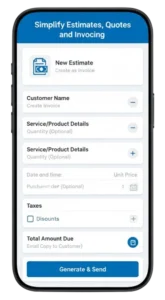
Understanding how we handle streamlined estimates, quotes, and invoicing helps simplify the financial planning for your entire e-waste project.
Realistic Timelines for Different Project Scopes
Just like costs, project timelines can vary quite a bit. The schedule depends entirely on the size and complexity of the job. We always work with you to find a window that causes the least disruption to your business.
A small office refreshing 20-30 workstations is pretty straightforward. If the equipment is already staged, our team can be in and out in just 1-2 hours, loading up and heading out with minimal impact on your day.
On the other hand, a full data center decommissioning is a major logistical effort. A project to remove 15 server racks with all their networking gear and UPS systems could easily become a multi-day job. It requires a dedicated crew for careful de-installation, serial number scanning, and secure transport.
What’s Included and What’s an Additional Cost
Good partnerships are built on transparency. We make it crystal clear what's included in our standard services and which services carry an additional charge.
Here’s a quick breakdown:
| Service or Item | Included (Free with Pickup) | Associated Cost (Itemized on Quote) |
|---|---|---|
| Data Destruction | DoD 5220.22-M 3-Pass Wipe | On-Site or Off-Site Physical Shredding |
| Accepted Equipment | Laptops, Servers, Phones, Networking Gear | CRT Monitors, Televisions |
| Logistics | Palletizing and Shrink-Wrapping | On-Site De-installation Labor |
| Documentation | Certificate of Destruction | Detailed Asset Value Recovery Reports |
Our goal is always to provide a straightforward and predictable experience. We offer a free e-waste pickup in Atlanta for qualifying commercial clients with bulk equipment, which you can learn more about on our site. By breaking down the costs and timelines upfront, we help you budget effectively and schedule with certainty.
Your E-Waste Questions, Answered
Even the most buttoned-up IT asset disposition plan comes with questions. When you're arranging a secure e-waste pickup in Atlanta, GA, you need to know every detail is handled correctly. We hear the same great questions from IT managers and business leaders all the time, so we’ve answered the most common ones here.
How Do You Ensure HIPAA Compliance for Our Medical E-Waste?
This is the first question we get from our healthcare clients, and for good reason. We guarantee HIPAA compliance with a process that's built around a rock-solid, documented chain of custody. It starts the second our team walks through your door.
Every asset is inventoried on-site, loaded into secure, GPS-tracked vehicles, and tracked all the way to our facility for final processing. Nothing is left to chance.
We provide two primary methods for certified data destruction, depending on your needs:
- DoD 5220.22-M 3-Pass Wiping: This is our standard for any functional hard drive. It completely overwrites the media, making software-based data recovery impossible. It’s a fully compliant method that also keeps the drive intact for potential resale, which can return value to you.
- Physical Shredding: For drives that are no longer working or when your internal security policy requires it, shredding is the answer. We can do this on-site at your location or off-site at our facility. The drives are physically destroyed into small, irrecoverable pieces, offering complete certainty that the data is gone for good.
Once the job is done, you’ll receive a legally binding Certificate of Destruction. This document details every single serialized asset we processed and the exact method used, giving you the official documentation you need for any compliance audit.
What Is the Process for a Data Center Decommissioning Quote?
A data center project is a different animal entirely. A simple list of equipment won't capture the full scope, so our process starts with a detailed consultation call. We need to understand the big picture—how many racks, servers, switches, and other components are involved.
From there, the next step is usually an on-site walkthrough of your Atlanta facility. This lets our project managers see the environment firsthand, spot any logistical hurdles like narrow hallways or freight elevator access, and figure out the exact team and tools needed for the de-installation.
A site visit is absolutely crucial. It’s what allows us to build a precise, itemized quote that covers everything from unplugging servers to safely packing and moving the assets. After that, we work hand-in-hand with your team to create a project timeline that causes the least disruption to your operations.
Do You Offer E-Waste Pickup for Residential Customers?
Our services are built specifically for commercial clients. We're set up to manage the large volumes of equipment and the stringent security requirements that come from businesses, schools, government agencies, and healthcare organizations. Everything from our quoting process to our on-site logistics is designed for B2B projects.
If you're an individual in the Atlanta area needing to recycle personal electronics, we suggest checking with your local city or county waste management office. They're the best source for information on residential drop-off sites or community collection events.
Are There Any Electronics You Do Not Accept?
We take almost all business and IT-related electronics. If it plugs into a wall or runs on a battery in an office environment, chances are we can handle it.
Here’s a quick list of what we typically accept:
- Computers, laptops, and servers
- Networking hardware (switches, routers, firewalls)
- Business phone systems and cell phones
- LCD and CRT monitors
- Printers, keyboards, mice, and other peripherals
The main things we can't accept are non-electronic items and certain hazardous materials. This means things like office furniture, appliances like refrigerators or air conditioners, or items containing radioactive sources, such as some smoke detectors.
If you’re not sure about a particular item, just add it to your inventory list when you request a quote. Our team will let you know right away if it's something we can process for you.
Ready to schedule a secure and compliant pickup for your business's retired IT assets? Contact Atlanta Computer Recycling today to discuss your project and get a transparent, no-obligation quote. Visit us at https://atlantacomputerrecycling.com to learn more.