What to do with old pc parts: Smart, Secure IT Asset Strategies

Every business eventually faces a growing pile of decommissioned desktops, servers, and components. This isn't just clutter; it's a mix of potential security risks, compliance liabilities, and untapped value. For organizations in Atlanta and beyond, knowing what to do with old pc parts is a critical operational decision that impacts data security, environmental responsibility, and the bottom line. This guide moves beyond simple disposal, providing 10 strategic, actionable pathways for businesses to manage their retired IT assets responsibly and profitably.
From navigating HIPAA-compliant data destruction to unlocking revenue through secondary markets, we will explore how a structured IT Asset Disposition (ITAD) plan is no longer optional. It's an essential component of modern enterprise management. Whether your goal is to liquidate assets, support community initiatives, or ensure bulletproof data security, the following options provide a clear roadmap for your organization.
This comprehensive listicle is designed for IT managers, data center operators, and compliance officers tasked with handling bulk technology retirement. We will cover everything from component-level harvesting and parts inventory management to certified e-waste recycling. For organizations preparing for a large-scale decommissioning, finding effective storage solutions for businesses is often a necessary first step to securely stage equipment before final disposition. This guide provides the practical details needed to transform outdated hardware from a logistical headache into a strategic asset, ensuring every component is handled securely, ethically, and intelligently.
1. Secure Data Destruction and Certified Recycling
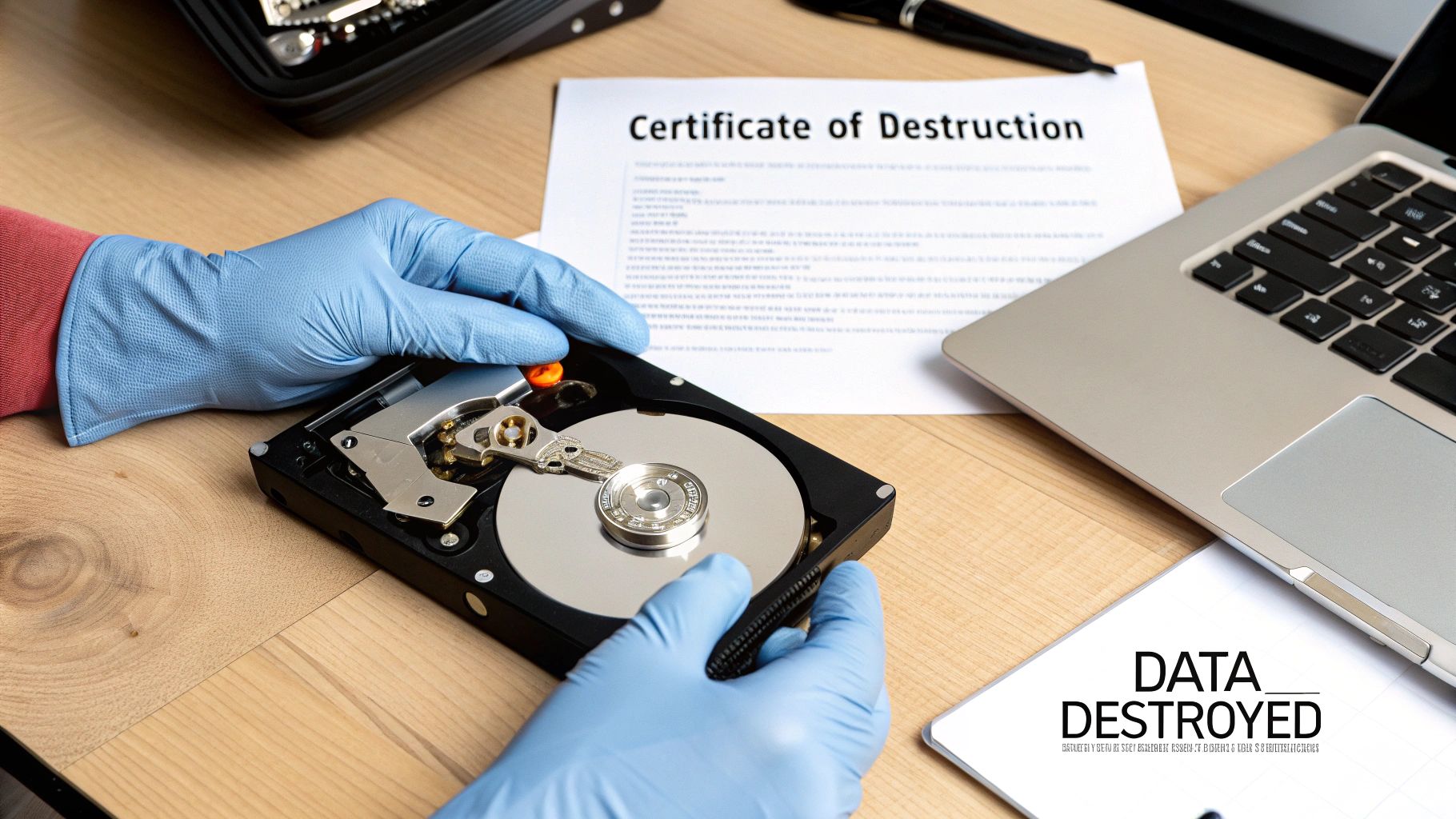
For any organization handling sensitive data, the first and most critical step when considering what to do with old PC parts is to ensure the absolute and permanent erasure of all information. Simply deleting files is insufficient; data can often be recovered. Secure data destruction involves professional-grade software wiping or physical destruction to render data completely irretrievable, a non-negotiable step for regulatory compliance and protecting your organization from breaches.
This professional process utilizes standards like the DoD 5220.22-M 3-pass method or NIST 800-88 guidelines, which overwrite data multiple times to sanitize the media. For the highest level of security, physical destruction through shredding or degaussing guarantees that storage devices and the data they hold are gone forever. This is essential before any hardware is recycled, resold, or donated.
Why This Is The First Priority for Businesses
For businesses, especially those in regulated industries, data security isn't just a best practice; it's a legal requirement. A single data breach from an improperly discarded hard drive can lead to catastrophic financial penalties, reputational damage, and legal liability.
- Healthcare Organizations: A hospital decommissioning servers must ensure all patient records (ePHI) are destroyed in a HIPAA-compliant manner to avoid severe fines.
- Financial Institutions: Banks retiring mainframes or workstations must eliminate all customer financial data to comply with regulations like GLBA.
- Government Agencies: Disposing of systems containing classified or sensitive public data requires a documented and certified destruction process to maintain national security and public trust.
Actionable Steps for Implementation
To implement a secure destruction process effectively, meticulous planning and documentation are key.
- Verify Vendor Certifications: Partner with an ITAD provider who holds certifications like R2, e-Stewards, and NAID AAA. These credentials ensure they follow strict protocols for both data security and environmental responsibility.
- Document Everything: Always request a formal Certificate of Destruction. This legal document serves as your proof of compliance for audits and internal records. You can learn more about the critical details included in a Certificate of Destruction to understand its importance.
- Plan Ahead: Integrate data destruction into your IT asset lifecycle management plan. Schedule the process before equipment is decommissioned to avoid logistical bottlenecks and security risks.
- Request On-Site Services: For maximum security, consider on-site hard drive shredding, where the provider brings a mobile destruction vehicle to your facility. This allows you to witness the entire process and maintain a clear chain of custody.
2. Bulk Equipment Donation to Schools and Non-Profits
After all sensitive data has been professionally destroyed, donating functional equipment is an excellent way to extend its lifecycle and provide a significant social return. Coordinating the refurbishment and donation of still-viable PCs, monitors, and peripherals to schools and non-profits supports community organizations that often operate with severely limited IT budgets. This is a key strategy when considering what to do with old PC parts that still have operational value.
This process involves more than just dropping off hardware. It requires a coordinated effort to ensure the equipment is genuinely useful to the recipient. Donating complete, tested systems is far more impactful than providing a collection of miscellaneous parts, empowering these organizations with the tools they need to serve their communities effectively, from a school computer lab to a non-profit’s administrative office.

Why This Is A Powerful Corporate Option
For businesses upgrading their technology, this approach offers tangible community benefits and potential tax advantages. It turns a logistical challenge into a powerful act of corporate social responsibility, directly supporting education and local initiatives while promoting a circular economy.
- Corporate Tech Refresh: A company refreshing its employee laptops can donate dozens of refurbished workstations to a local school district, establishing a new STEM lab.
- Community Partnership: Businesses can partner with organizations like the YMCA or Boys & Girls Clubs to set up technology training centers for underserved youth with donated desktop systems.
- Non-Profit Support: A small charity can upgrade its administrative infrastructure with donated equipment, improving efficiency and outreach without diverting funds from its core mission.
Actionable Steps for Implementation
A successful corporate donation program requires careful planning to ensure the equipment is a benefit, not a burden, to the recipient.
- Partner with a Logistics Expert: Engage an ITAD service that can manage the entire donation process, from refurbishment and testing to coordinating with appropriate non-profits.
- Provide Complete Systems: Whenever possible, donate whole units with keyboards, mice, and monitors. Include necessary power cables and any original OS installation media or license information.
- Coordinate Logistics: Contact potential recipients to understand their specific needs and align the donation timing with their capacity to receive and deploy the hardware. An ITAD partner can manage these logistics on your behalf.
- Request Documentation: Ask the receiving organization for a formal letter of appreciation or a donation receipt. This document is essential for your corporate records and for claiming any applicable tax deductions. You can see how this fits into the larger process when you donate a laptop or other equipment.
3. Refurbished Equipment Sales for Secondary Market
For organizations with still-functional but outdated hardware, another excellent option for what to do with old PC parts is to refurbish and resell them on the secondary market. This approach transforms depreciated assets into a revenue stream, extending the equipment's useful life and promoting a circular economy. The process involves systematically testing, cleaning, and repairing components or full systems to ensure they meet operational standards for resale.
This strategy is particularly effective for enterprise-grade equipment, which often retains significant value long after its initial deployment cycle ends. By recovering a portion of the original investment, businesses can offset the costs of new technology procurement. It is a financially savvy and environmentally responsible method for managing IT asset disposition.

Why This Maximizes Value for Businesses
Instead of being recycled for raw materials, functional hardware is given a second life, generating a much higher return on investment. This is especially true for components that are in high demand but may no longer be in production.
- Data Centers: A data center decommissioning servers can resell the high-performance CPUs, RAM modules, and enterprise-grade SSDs to smaller businesses or labs needing affordable computing power.
- Corporate Offices: An office upgrading its fleet of Dell or HP business laptops can refurbish and sell them to startups, educational institutions, or non-profits that require reliable machines at a lower cost.
- Educational Institutions: Universities can resell specialized graphics workstations from their engineering departments to design students or freelance professionals.
Actionable Steps for Implementation
To successfully resell refurbished equipment, a structured and professional approach is essential to attract buyers and maximize returns.
- Prioritize High-Value Assets: Focus your efforts on enterprise-grade servers, networking switches, and bulk quantities of identical business-class desktops or laptops. These items have a stronger and more predictable secondary market.
- Establish Rigorous Testing Protocols: Develop a detailed checklist for testing each component, including CPUs, memory, storage health, and port functionality. Document the condition and specifications of every unit accurately.
- Offer a Clear Warranty: Provide a limited warranty (e.g., 30 or 90 days) to build buyer confidence. A clear and fair return policy is crucial for establishing credibility in the secondary market.
- Partner with a Specialist: For large quantities, working with a certified ITAD provider with an established refurbishment and resale channel is often more efficient. They can manage testing, cosmetic grading, secure data wiping, and sales logistics for you.
4. Component-Level Harvesting and Parts Inventory
For organizations with equipment that is no longer valuable as a complete unit, a more granular approach is to systematically harvest and inventory individual components. This process involves disassembling non-functional or outdated systems to extract valuable parts like RAM, SSDs, GPUs, and power supplies. It is a strategic way to maximize the financial return on an IT asset portfolio by identifying and separating components that retain significant value on the secondary market or can be used for internal repairs.
This method transforms what might be considered e-waste into a structured, manageable inventory. Rather than disposing of an entire server, valuable enterprise-grade SSDs or high-capacity RAM modules can be recovered, tested, and cataloged. This approach is particularly effective for large-scale decommissioning projects where even small-value components, when aggregated, represent a substantial financial recovery.
Why This Maximizes Asset Value
Not every retired asset can be resold whole. A faulty motherboard might render a powerful workstation useless, but its high-end GPU, RAM, and SSD are still valuable. Component harvesting allows businesses to unlock this trapped value instead of writing off the entire asset.
- Data Centers: A decommissioned server cluster might have hundreds of enterprise-grade SSDs and registered ECC memory modules that are highly sought after for system upgrades and repairs.
- Educational Institutions: Retiring a computer lab of workstations allows for the harvesting of DDR4 RAM and 2.5-inch SSDs, which can be used to upgrade other systems across a school district, extending their lifecycle and saving budget.
- Creative Agencies: Workstations with powerful but aging CPUs can be stripped of their professional-grade GPUs (like NVIDIA Quadro series), which retain high resale value for individual designers or small studios.
Actionable Steps for Implementation
A successful harvesting program requires organization, technical skill, and a clear process to ensure quality and efficiency.
- Develop Standardized Testing: Create a clear, repeatable process for testing each type of component (e.g., memory tests for RAM, health checks for SSDs) to guarantee functionality and quality.
- Implement an Inventory System: Use a barcoding or SKU system to track every harvested part. This helps manage stock, set prices, and streamline sales or internal redeployment.
- Optimize Your Workflow: Once components are harvested, understanding processes like kitting in logistics can significantly improve the efficiency of managing and preparing them for future use.
- Partner with Specialists: For parts that cannot be resold, such as motherboards or complex circuit boards, a certified recycler is essential. Professional electronic circuit board recycling ensures that residual materials are handled in an environmentally compliant manner.
5. Data Center Decommissioning and Asset Recovery
For organizations with large-scale IT infrastructure, the question of what to do with old PC parts extends beyond individual workstations to entire server rooms and data centers. Data center decommissioning is a highly specialized, coordinated project that involves the systematic shutdown and removal of all assets, from servers and storage arrays to networking gear and cooling units. It’s a complex undertaking that demands meticulous planning to ensure business continuity, data security, and regulatory compliance.
This process is not merely about unplugging equipment. It encompasses project management, asset inventory, on-site data destruction, logistics, and certified recycling, all executed on a massive scale. A successful decommissioning project maximizes asset value recovery while minimizing operational disruption and risk, turning a logistical challenge into a structured, secure, and financially beneficial process.
Why This Is a Critical Service for Enterprises
When retiring an entire IT environment, the risks are magnified. A poorly executed decommissioning can lead to data breaches, operational downtime, and significant financial losses. For enterprises, managing this complex process in-house can divert critical resources from core business activities. Professional ITAD services are essential for large, sensitive projects.
- Healthcare Systems: A hospital retiring its legacy on-premise data center must ensure a flawless transition to a new system while guaranteeing that all patient health information (ePHI) on thousands of devices is destroyed according to strict HIPAA standards.
- Enterprise Cloud Migration: A corporation moving its infrastructure to the cloud needs to decommission its physical data center securely and efficiently, recovering value from the old hardware to offset migration costs.
- Government Agencies: A government entity consolidating multiple server facilities must follow a strict chain of custody and documented destruction protocol to protect sensitive public data and maintain compliance.
Actionable Steps for Implementation
A successful data center decommissioning requires a strategic, phased approach executed with precision.
- Create a Detailed Project Plan: Begin with a comprehensive inventory of every asset, including servers, racks, switches, and power supplies. Map out dependencies and create a clear timeline that aligns with new system implementation.
- Establish Security Protocols: Work with your security team and ITAD partner to define the data destruction plan. Determine whether on-site or off-site shredding is required and establish a clear chain of custody for all data-bearing assets.
- Coordinate Logistics in Advance: Plan for the physical removal of heavy equipment. This includes scheduling riggers, arranging secure transportation, and ensuring the facility is prepared for the de-installation process.
- Maximize Asset Value Recovery: A certified ITAD partner can test, grade, and remarket viable equipment. For a deeper look into the phases of this complex operation, you can review the complete data center decommissioning process to understand how value is maximized at every step.
6. Refurbishment and Resale to Small Businesses and Startups
Beyond individual part reuse, entire systems like desktops, laptops, and workstations often retain significant operational value. Refurbishing these assets to a like-new condition creates an excellent opportunity for resale, particularly to cost-conscious small businesses and startups. This strategy extends the hardware's lifecycle, generates a return on your initial investment, and provides an affordable alternative for growing companies.
The process involves professionally cleaning, testing, and upgrading components where necessary, such as installing fresh RAM or a solid-state drive. By certifying the equipment and offering a limited warranty, you can confidently market these systems as reliable, budget-friendly solutions for organizations that need capable computing power without the premium cost of new hardware. This is a key consideration when deciding what to do with old PC parts that are still functional.
Why This Is A Smart Business Move
For many organizations, recovering value from retired assets is a primary goal of their ITAD strategy. Selling refurbished equipment directly addresses this by turning depreciated hardware into a new revenue stream. It also supports the circular economy by keeping functional electronics in use and out of landfills.
- Atlanta Tech Startups: A local startup can purchase a fleet of 20 refurbished laptops for its development team at a fraction of the cost of new models, conserving crucial early-stage capital.
- Small Marketing Agencies: An agency can acquire powerful refurbished workstations for graphic design and video editing, gaining performance without overextending its budget.
- Non-Profit Organizations: A non-profit can outfit its administrative staff with reliable, professionally refurbished desktop systems, directing more of its funding toward its core mission.
Actionable Steps for Implementation
A successful refurbishment and resale program requires a structured approach to quality control and marketing.
- Establish Quality Standards: Define a clear refurbishment process. This should include data sanitization, hardware diagnostics, cosmetic cleaning, and potential upgrades to meet modern performance expectations.
- Develop a B2B Sales Channel: Target the small business market directly. Build relationships with local business networks, chambers of commerce, or co-working spaces to reach potential buyers.
- Offer Volume Discounts and Warranties: Create incentives for bulk purchases, such as tiered pricing for orders of 10 or more units. Providing a 90-day or 6-month warranty builds buyer confidence and sets your offerings apart.
- Partner with a Certified ITAD Provider: Engaging a provider like Atlanta Computer Recycling can streamline the entire process. They have the expertise to manage secure data wiping, professional refurbishment, and the sales channels to effectively market the equipment on your behalf.
7. Certified E-Waste Recycling Through Responsible Vendors
When PC parts are non-functional, obsolete, and cannot be resold or repurposed, the final and most responsible step is certified e-waste recycling. This process ensures that hazardous materials are handled safely and valuable resources are recovered, preventing environmental harm and fulfilling corporate social responsibility mandates. It involves partnering with a certified vendor to de-manufacture equipment and properly reclaim materials like precious metals, plastics, and glass.
Proper e-waste management is a cornerstone of a sustainable IT lifecycle. Certified recyclers adhere to strict environmental and safety protocols, ensuring that toxic components like lead, mercury, and cadmium do not end up in landfills. This approach is not just environmentally sound; it’s a critical component of regulatory compliance for any organization generating electronic waste.
Why This Is The Responsible End-of-Life Solution
For businesses, improper disposal of old PC parts can lead to significant environmental fines and damage to public perception. A certified recycling program provides a documented, transparent, and compliant pathway for managing end-of-life assets, turning a potential liability into a demonstrable commitment to sustainability.
- Tech Companies: A large tech firm decommissioning hundreds of servers can partner with a certified recycler to manage the entire e-waste stream, receiving detailed reports on material recovery and landfill diversion rates.
- Schools and Universities: Educational institutions disposing of old computer lab equipment can ensure all hardware is recycled responsibly, protecting both the environment and their reputation within the community.
- Hospitals: Obsolete medical computing equipment often contains both sensitive data and hazardous materials. Certified recycling ensures both are handled correctly post-data destruction.
Actionable Steps for Implementation
Implementing a certified recycling program requires due diligence to ensure your partner meets the highest industry standards.
- Verify R2 and e-Stewards Certifications: Only work with ITAD providers who hold current R2 (Responsible Recycling) and e-Stewards certifications. These are the gold standards, guaranteeing that the vendor follows safe, secure, and environmentally sound practices.
- Request Material Recovery Reports: Ask for detailed reports that document the types and weights of materials recovered from your assets. This documentation is valuable for corporate sustainability reporting and internal audits.
- Plan for Logistics: For large quantities of equipment, coordinate pickup schedules and logistical support. A professional ITAD partner can provide secure containers and transportation to manage the process efficiently.
- Budget for Recycling Costs: While some materials have commodity value, responsible recycling is a service. Factor the costs of proper disposal and recycling into your IT asset management budget to avoid surprise expenses.
8. Government and Educational Institution Surplus Programs
For organizations specializing in IT asset refurbishment and resale, tapping into government and educational surplus programs offers a structured channel for acquiring bulk quantities of decommissioned equipment. These formal programs collect old PC parts and complete systems from agencies and schools, then offer them for sale or auction to registered businesses. This creates a predictable and often large-scale supply chain for secondary market IT hardware.
These programs are designed to recover value from publicly owned assets in a transparent and compliant manner. Instead of dealing with individual departments, a certified ITAD provider or reseller can engage with a central surplus property agency. This streamlines the acquisition process, from federal GSA Auctions to state-level programs like those managed by the Georgia Department of Administrative Services, or even large school districts like Atlanta Public Schools, which periodically sell outdated computer lots.
Why This Is A Strategic Acquisition Channel
For IT resellers and refurbishers, these programs provide access to consistent, high-volume inventory that is difficult to source otherwise. The equipment often comes with a clear history and has typically been maintained to a professional standard, making it an ideal candidate for refurbishment and resale.
- ITAD Providers: Acquiring lots from a university system’s IT asset disposition auction allows a provider to process thousands of similar-model machines, creating efficiencies in data destruction, testing, and parts harvesting.
- Computer Refurbishers: A business that specializes in selling affordable computers can source thousands of desktops from a state government's decommissioned equipment sale to supply non-profits or budget-conscious consumers.
- Parts Resellers: Gaining access to federal agency surplus lots provides a valuable source for specific server components, RAM, and CPUs that retain high value on the secondary market.
Actionable Steps for Implementation
Engaging with these programs requires registration, diligence, and the ability to handle logistics for bulk acquisitions.
- Register as an Official Buyer: Proactively register your business with key surplus property programs. Start with the federal GSA Auctions platform and your state's official surplus property agency website.
- Monitor Auction Schedules: Regularly check auction listings and develop relationships with IT directors at large school districts or university systems. They can often provide advance notice of upcoming large-scale IT dispositions.
- Budget for Logistics and Refurbishment: When bidding, factor in the costs of transportation, secure data wiping (if not already performed), testing, and any necessary repairs to make the equipment market-ready.
- Maintain Compliance Documentation: If acquiring assets from government sources, ensure you maintain all necessary documentation. This is crucial for demonstrating a proper chain of custody and meeting any contractual obligations for handling the old PC parts.
9. Mining Valuable Materials and Metal Recovery Services
Beyond basic recycling, a more advanced approach for what to do with old PC parts involves treating them as a source of valuable raw materials. Specialized metal recovery services can extract precious metals like gold, silver, copper, and platinum from circuit boards, CPUs, and RAM, maximizing the financial return from electronic waste that would otherwise be scrapped.
This process, often called urban mining, uses sophisticated hydrometallurgical or pyrometallurgical techniques to separate and refine these materials from complex electronic components. For organizations with significant volumes of high-value e-waste, such as data centers or large corporate IT departments, partnering with a precious metal recovery specialist can transform a disposal cost into a revenue stream, capturing the inherent value locked within obsolete hardware.
Why This Is a Strategic Option for Enterprises
For businesses with large quantities of outdated enterprise-grade equipment, metal recovery offers a significant financial incentive that standard recycling does not. It aligns with circular economy principles by reintroducing valuable, finite resources back into the supply chain, enhancing corporate sustainability metrics while generating revenue.
- Data Center Operators: Decommissioning hundreds of servers at once can yield a substantial amount of gold from CPUs and circuit boards, making a partnership with a recovery firm highly profitable.
- Electronics Manufacturers: A company retiring old R&D equipment can recover precious metals from prototypes and testing components, offsetting the cost of new hardware.
- Government and Research Institutions: Large-scale upgrades of supercomputers or specialized lab equipment can result in a high-value stockpile of e-waste ideal for precious metal extraction.
Actionable Steps for Implementation
Successfully leveraging metal recovery requires careful planning, volume accumulation, and partnership with the right certified specialists.
- Segregate High-Value Components: Train your IT team to identify and separate components with high precious metal content, such as CPUs, server-grade RAM, and complex motherboards, from lower-value items like steel cases and cables.
- Accumulate Sufficient Volume: Precious metal recovery is a volume-based business. Stockpile components securely until you have a large enough quantity to make the logistics and processing costs worthwhile for a recovery partner.
- Partner with Certified Refiners: Work only with e-Stewards or R2 certified partners that specialize in precious metal recovery. This ensures all hazardous byproducts are managed responsibly and that you receive a transparent, fair-market value for the recovered materials.
- Monitor Commodity Prices: The value of your e-waste fluctuates with global metal markets. Time your engagement with a recovery service when prices for gold, silver, and copper are favorable to maximize your return.
10. Reuse and Repurposing into Alternative Computing Solutions
Before considering final disposal, organizations can extract significant value by creatively repurposing older hardware into dedicated, alternative computing solutions. This approach extends the lifecycle of IT assets, transforming what might be considered e-waste into functional tools for specific, non-critical tasks. It’s an innovative way to address niche operational needs without investing in new equipment.
Instead of scrapping a retired server or a batch of older workstations, they can be given a second life. A low-spec server can become a robust network-attached storage (NAS) system for internal file sharing, while older desktops can be configured as lightweight Linux development environments or testbeds. This strategy not only defers recycling costs but also fosters a culture of resourcefulness and technical creativity within the IT department.
Why This Fosters Innovation and Savings
For businesses, repurposing hardware is a strategic move that delivers tangible benefits beyond simple cost avoidance. It provides low-risk, low-cost platforms for experimentation, training, and internal development, directly supporting innovation without impacting the primary production environment.
- Educational Institutions: A school district can convert outdated lab PCs into dedicated kiosks for library catalog access or student sign-in stations, maximizing the utility of its existing inventory.
- Small Businesses & Startups: An old server can be repurposed with open-source software like TrueNAS to create an in-house file server, providing enterprise-level storage capabilities on a shoestring budget.
- Corporate IT Departments: Decommissioned workstations can serve as a sandboxed environment for junior administrators to practice network configurations or test new software deployments safely.
Actionable Steps for Implementation
A successful repurposing project requires clear goals and a structured approach to ensure the new solution is both reliable and secure.
- Identify Viable Use Cases: Start by inventorying retired assets and brainstorming potential, low-impact roles they could fill. Focus on tasks that don't require high performance or handle sensitive production data.
- Leverage Open-Source Software: Utilize free, robust operating systems like Linux distributions (e.g., Ubuntu Server) or specialized software (e.g., pfSense for firewalls) to minimize software licensing costs.
- Create Clear Documentation: Document the new configuration, purpose, and maintenance plan for each repurposed asset. This ensures the system can be managed effectively long after its initial setup.
- Partner for Community Engagement: Consider partnering with local schools or maker spaces to donate hardware for educational projects, such as building robotics or learning programming, turning old assets into community resources.
10-Way Comparison: Old PC Parts — Disposal, Reuse & Recovery
| Service | Implementation complexity 🔄 | Resource requirements ⚡ | Expected outcomes 📊 | Ideal use cases 💡 | Key advantages ⭐ |
|---|---|---|---|---|---|
| Secure Data Destruction and Certified Recycling | High 🔄 — certified wiping, chain-of-custody processes | Specialized equipment, trained technicians, secure transport; higher cost ⚡ | Complete data sanitization, certificate of destruction, regulatory compliance 📊 | Healthcare, finance, government decommissioning with sensitive data 💡 | Eliminates breach risk; documented audit trail; regulatory alignment ⭐ |
| Bulk Equipment Donation to Schools and Non-Profits | Medium 🔄 — refurbishment coordination and matching logistics | Functional units, volunteer/tech support, shipping/handling; moderate cost ⚡ | Extended equipment life, community impact, tax documentation provided 📊 | Donating PCs to K–12, non-profits, community centers 💡 | CSR benefits; tax deductions; sustainable reuse ⭐ |
| Refurbished Equipment Sales for Secondary Market | Medium–High 🔄 — QA, cleaning, listing and sales workflows | Testing rigs, refurbishment staff, inventory & fulfillment systems; sales channels ⚡ | Revenue recovery, reduced e-waste, resale warranties on select items 📊 | Selling to SMBs, resellers, bargain consumers, wholesale buyers 💡 | Monetizes assets; supports circular economy; predictable revenue streams ⭐ |
| Component-Level Harvesting and Parts Inventory | Medium 🔄 — standardized disassembly and testing procedures | Skilled technicians, parts-testing tools, storage and inventory systems ⚡ | Salvaged high-value components for resale or repair; steady parts supply 📊 | Harvesting RAM, SSDs, GPUs for repair shops and builders 💡 | Maximizes value from non-functional units; reliable parts source ⭐ |
| Data Center Decommissioning and Asset Recovery | Very high 🔄 — detailed project management and coordination | Large crew, heavy logistics, security, scheduling, expensive tooling ⚡ | Significant asset recovery, minimized downtime, full compliance documentation 📊 | Enterprise cloud migrations, campus consolidations, govt data center retirements 💡 | Comprehensive coordination; reduces operational risk; large value recovery ⭐ |
| Refurbishment and Resale to Small Businesses and Startups | Medium 🔄 — cleaning, upgrades, OS imaging and support | Tech staff, parts for upgrades, licensing and warranty support; inventory handling ⚡ | Affordable like-new systems, predictable B2B sales, environmental benefits 📊 | Small businesses, startups, non-profits needing reliable low-cost hardware 💡 | Cost savings for buyers; sustainable alternative to new purchases ⭐ |
| Certified E-Waste Recycling Through Responsible Vendors | Medium 🔄 — certification management and hazardous segregation | Certified recycling partners (R2/e‑Stewards), processing fees, documentation workflows ⚡ | Proper material recovery, regulatory and environmental compliance reporting 📊 | Disposal of non-repairable gear from regulated organizations (hospitals, banks) 💡 | Ensures safe hazardous handling; environmental compliance and auditability ⭐ |
| Government and Educational Institution Surplus Programs | Medium 🔄 — formal bidding, compliance and pickup scheduling | Registration, bidding capability, capacity for bulk refurbishment and transport ⚡ | Access to bulk, well-documented equipment lots; predictable supply streams 📊 | Acquiring surplus for resale/refurbishment; public-sector sourcing partners 💡 | Lower acquisition costs; transparent asset history; steady inventory ⭐ |
| Mining Valuable Materials and Metal Recovery Services | High 🔄 — chemical/mechanical extraction with strict safety controls | Specialized refineries or partners, hazardous‑waste handling, large volumes required ⚡ | Recovery of precious metals (gold, silver, copper); revenue tied to commodity prices 📊 | Large-volume e‑waste streams, manufacturers, data centers aggregating PCBs 💡 | Recovers high-value materials; reduces need for virgin mining; revenue potential ⭐ |
| Reuse and Repurposing into Alternative Computing Solutions | Low–Medium 🔄 — integration and open‑source configuration work | Technical know‑how, time for setup, minimal new parts; community resources ⚡ | Extended device lifespan, low‑cost home/educational systems, maker projects 📊 | Home labs, NAS/media centers, educational platforms, makerspaces 💡 | Low cost; high educational value; reduces e‑waste; flexible use cases ⭐ |
Your Next Step: Partnering for Smart and Secure IT Asset Disposition
Navigating the complex question of what to do with old pc parts is far more than a simple cleanup task; it's a critical business function with significant security, financial, and environmental implications. Throughout this guide, we've detailed a spectrum of strategic options, from component-level harvesting and secondary market sales to certified recycling and secure data center decommissioning. Each path offers unique benefits but also presents distinct challenges, especially when managed at scale.
The central takeaway is that a one-size-fits-all approach is ineffective and risky. A hospital system’s primary concern might be ironclad HIPAA-compliant data destruction, while a university may prioritize value recovery through bulk refurbishment programs. A corporate office closure requires meticulous logistics and asset tracking, whereas a data center refresh demands specialized expertise in recovering value from enterprise-grade hardware. Juggling these priorities internally drains valuable IT resources, introduces potential compliance gaps, and often fails to maximize financial returns on retired assets.
From Liability to Strategic Asset: The ITAD Advantage
The most significant shift in perspective for any organization is to stop viewing old equipment as a liability and start treating it as a managed asset. This is where a dedicated IT Asset Disposition (ITAD) partner becomes an indispensable extension of your team. A certified partner transforms a logistical headache into a streamlined, secure, and often profitable process.
Consider the intricate requirements we've discussed:
- Data Security: Ensuring every bit of sensitive data is irretrievably destroyed according to NIST 800-88 or DoD 5220.22-M standards is non-negotiable.
- Compliance and Documentation: Maintaining an unbroken chain-of-custody and receiving detailed certificates of destruction and recycling are essential for audits and regulatory peace of mind.
- Logistical Complexity: Coordinating secure on-site packing, transportation, and processing of hundreds or thousands of assets requires specialized infrastructure.
- Value Optimization: Identifying which components are best for resale, which can be refurbished, and which should be responsibly recycled requires deep market knowledge.
Key Insight: A comprehensive ITAD strategy does more than just dispose of old equipment. It protects your organization from data breaches, ensures environmental compliance, and uncovers hidden value in your retired technology assets, directly impacting your bottom line.
Your Path Forward: A Tailored Disposition Strategy
Attempting to piece together this puzzle with multiple vendors or internal teams can lead to costly inefficiencies and security vulnerabilities. The most effective solution is a single-source partner who can tailor a disposition plan to your specific operational needs. This unified approach ensures that every decision, from initial asset pickup to final reporting, aligns with your organization's goals for security, sustainability, and financial return.
By professionalizing your approach to what to do with old pc parts, you not only mitigate risk but also reinforce your organization's commitment to corporate social responsibility. You demonstrate a dedication to protecting customer and company data while contributing to a circular economy through responsible reuse and recycling. This strategic management of the IT lifecycle’s final stage strengthens your operational integrity and enhances your brand reputation.
Ready to transform your retired IT equipment from a complex problem into a secure, managed asset? Contact Atlanta Computer Recycling today to schedule a consultation and discover how our certified, end-to-end ITAD services can provide the secure, compliant, and efficient solution your organization needs. Visit us at Atlanta Computer Recycling to learn more.