Palmetto GA Weather: A Guide for Commercial IT & Operations Planning


For most, a weather forecast is a minor detail. But for operations, logistics, and IT managers, the weather for palmetto ga is a critical data point for high-stakes business continuity and commercial services. This guide details how to leverage local weather data to protect your assets, ensure operational uptime, and gain a competitive advantage.
Integrating Palmetto Weather into Your Commercial Operations
Adverse weather—be it rain, heat, or humidity—directly impacts the security of on-site data destruction, the safety of equipment transport, and the timeline for IT asset disposition (ITAD) projects. A proactive, weather-aware strategy is not just about convenience; it is a core component of risk management that protects capital assets, prevents costly delays, and ensures your operations remain on schedule.
Considering the forecast is a fundamental risk management exercise for any commercial operation. Imagine scheduling a certified on-site hard drive shredding service, only for a severe thunderstorm to materialize. The risk immediately escalates from a simple logistical delay to potential water damage to sensitive electronics, compromised chain-of-custody, and operational chaos. Integrating local weather into your strategic planning is essential for improving operational efficiency and building a more resilient enterprise.
A weather-aware approach transforms your IT and logistics planning from reactive to resilient. It’s about anticipating operational challenges—such as a sudden downpour during a data center equipment pickup—and having a documented contingency plan ready with your commercial services partner.
Understanding Palmetto’s Climate and Its Impact on Business
Historically, Palmetto's climate swings from an average low of 33°F in winter to a sweltering 90°F in summer. With annual precipitation averaging around 50 inches, these conditions present tangible risks for outdoor logistics, equipment de-installations, and asset transport.
This data is operational intelligence. Consider the following business implications:
- High Summer Heat: Sensitive electronics can suffer thermal damage inside transport vehicles not properly equipped for Palmetto's climate.
- Heavy Rainfall: Creates significant slip-and-fall hazards at loading docks and exposes unsecured assets to a high risk of water damage, potentially voiding warranties or destroying value.
- Unexpected Freezes: Can render roads treacherous, delaying critical IT asset pickups and jeopardizing project deadlines and budgets.
By understanding these patterns, your business can partner with a prepared service provider like Atlanta Computer Recycling to schedule projects intelligently. A proactive plan ensures your IT asset management remains secure and efficient, regardless of the forecast.
For more information on how we tailor our services for local companies, review our solutions for businesses in Palmetto, GA.
How Seasonal Forecasts Impact Your Commercial ITAD Strategy
When planning a commercial IT asset disposition (ITAD) project, looking beyond the daily forecast is crucial. Palmetto's distinct seasons introduce unique challenges that directly affect project timelines, budget adherence, and overall success. Strategically incorporating weather patterns into your plan transforms it from an operational detail into a key risk mitigation tool.
For example, Georgia's hot and humid summers pose a significant risk to sensitive electronics during pickup and transport. Scheduling a data center decommissioning in the middle of a July afternoon can expose equipment to damaging thermal stress, even when powered down. This simple scheduling adjustment protects asset remarketing value and prevents premature component failure.
Planning For Palmetto's Seasonal Extremes
Winter brings its own set of logistical liabilities. While significant snowfall is uncommon, the mere threat of ice can halt transportation, impacting fleet safety and site accessibility for your vendors. A sudden winter storm can delay an entire project, highlighting the importance of a flexible schedule and an ITAD partner with deep knowledge of local road conditions and contingency protocols.
This timeline highlights Palmetto's most important weather patterns for year-round operational planning.
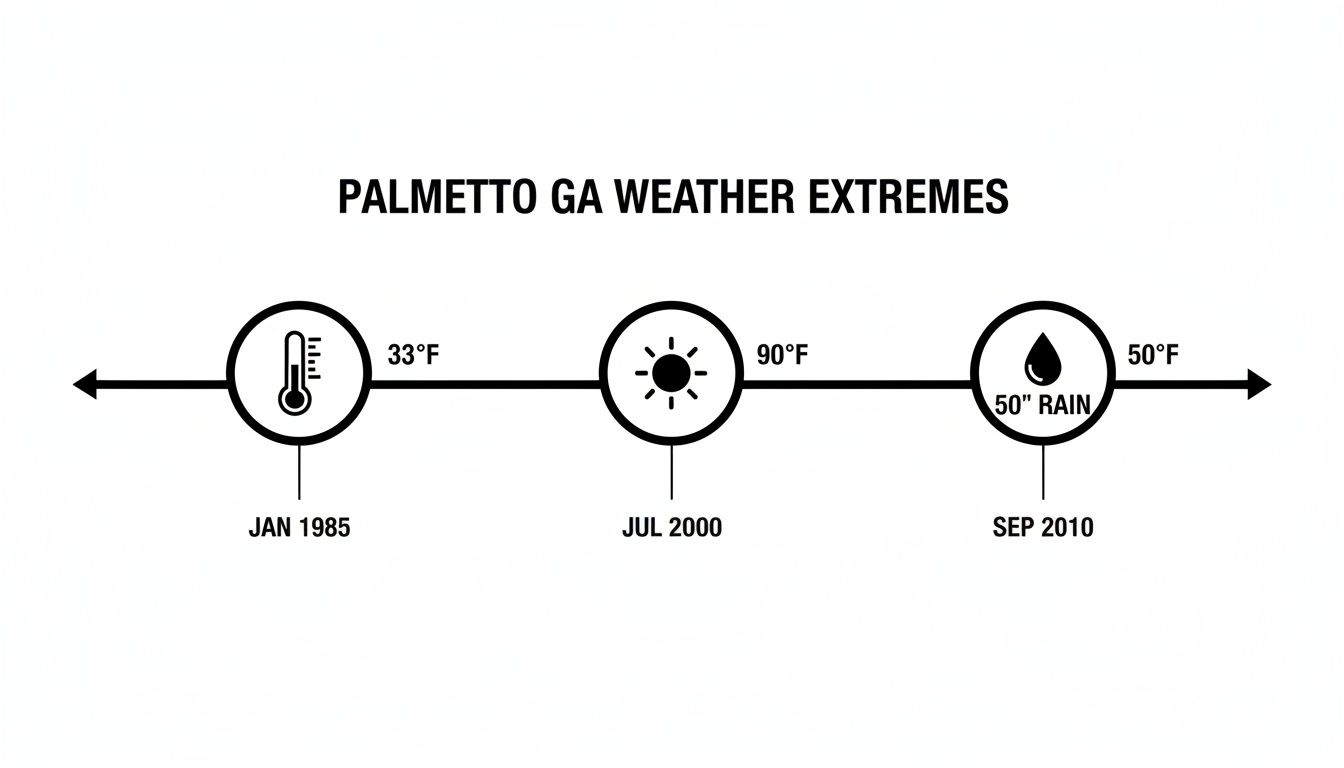
As shown, while occasional freezes occur, the most consistent challenges for commercial IT logistics in our region are intense summer heat and heavy annual rainfall.
The objective is not to avoid the weather—it is to anticipate it. A strategic ITAD plan accounts for seasonal probabilities, whether that means scheduling around July's afternoon thunderstorms or having a documented backup plan for a rare winter freeze.
To better visualize how seasonal conditions impact ITAD logistics, here is a breakdown of what to expect and how to prepare.
Seasonal ITAD Planning In Palmetto GA for Businesses
| Season | Primary Weather Concern | Recommended Action for Operations Managers |
|---|---|---|
| Spring | Unpredictable rain and thunderstorms | Confirm your ITAD partner has covered vehicles, a secure loading process, and flexible scheduling to mitigate downpours. |
| Summer | High heat and humidity, afternoon storms | Schedule pickups for early morning to avoid peak heat and protect asset value. Ensure equipment is staged in a climate-controlled area. |
| Fall | Generally mild; potential for tropical system remnants | This is the ideal season for large-scale projects, but monitor extended forecasts for significant rain events that could impact logistics. |
| Winter | Potential for ice, creating hazardous road conditions | Establish contingency dates for critical pickups. Verify your vendor's fleet readiness and safety protocols for slick conditions. |
This table helps translate seasonal weather data into an actionable checklist for your commercial ITAD projects, ensuring operational continuity regardless of the forecast.
Long-term data shows Palmetto’s annual snowfall is minimal, with a snow-free period typically running from March through November, offering a prime window for scheduling large-scale projects. However, with an average of 50 inches of rain per year and summer months often exceeding 4.5 inches, precipitation is a constant operational factor.
These same seasonal patterns affect operations across the metro area. You can see a similar analysis in our guide on how weather impacts business in Johns Creek.
Building a Weather-Resilient Business Continuity Plan
Severe weather in the Atlanta metro area is more than an inconvenience; it's a direct threat to your business continuity. A robust plan is what separates a minor operational disruption from a major financial crisis, shifting your organization from reactive scrambling to a proactive, controlled response.
Monitoring the weather for palmetto ga becomes a core component of your risk management strategy. Flash floods, severe thunderstorms, and tornado warnings can all impact data center uptime, disrupt supply chains, and bring daily operations to a halt. A truly resilient business continuity plan (BCP) anticipates these events and has clear, pre-approved protocols ready.
For example, a sudden storm represents a potential power outage that could take servers offline or compromise network access for your workforce. Your BCP should define protocols for backup power and establish clear communication channels to manage these events without incurring costly downtime. For a common threat like heavy rain, a critical step is understanding the flood insurance claims process to ensure you can recover financially and resume operations quickly.
From Logistics to IT Strategy
A robust BCP does more than just monitor the forecast—it integrates weather awareness directly into your corporate IT strategy. It establishes a framework where specific weather alerts automatically trigger pre-defined actions, ensuring your IT department remains ahead of potential disruptions.
A weather-resilient business continuity plan ensures that a tornado warning doesn’t just cause alarm. Instead, it triggers a pre-defined protocol for verifying off-site data backup integrity and confirming remote access for all essential personnel.
Key components to integrate into your plan include:
- Vendor Communication Protocol: Establish a clear protocol for contacting critical partners like ACR during weather alerts to confirm or reschedule service appointments without ambiguity.
- Strategic Project Scheduling: Schedule non-essential, high-impact projects, such as major hardware migrations, outside of the peak storm seasons in late spring and summer.
- Backup Integrity Verification: Implement regular, automated procedures to verify the integrity of off-site backups, ensuring they are accessible and uncorrupted in a site-down event.
By integrating these steps, you convert unpredictable weather from a constant threat into a managed operational variable. Our comprehensive business continuity planning checklist offers a practical framework to help you implement these strategies.
A Practical Checklist for Weather-Proofing Your Commercial IT Pickup
When you schedule an IT asset pickup, the last thing your business needs is a sudden storm causing delays or, worse, damaging valuable equipment. Proactive planning is the most effective way to ensure the weather for palmetto ga doesn't disrupt your operations. A few simple preparations can make all the difference.
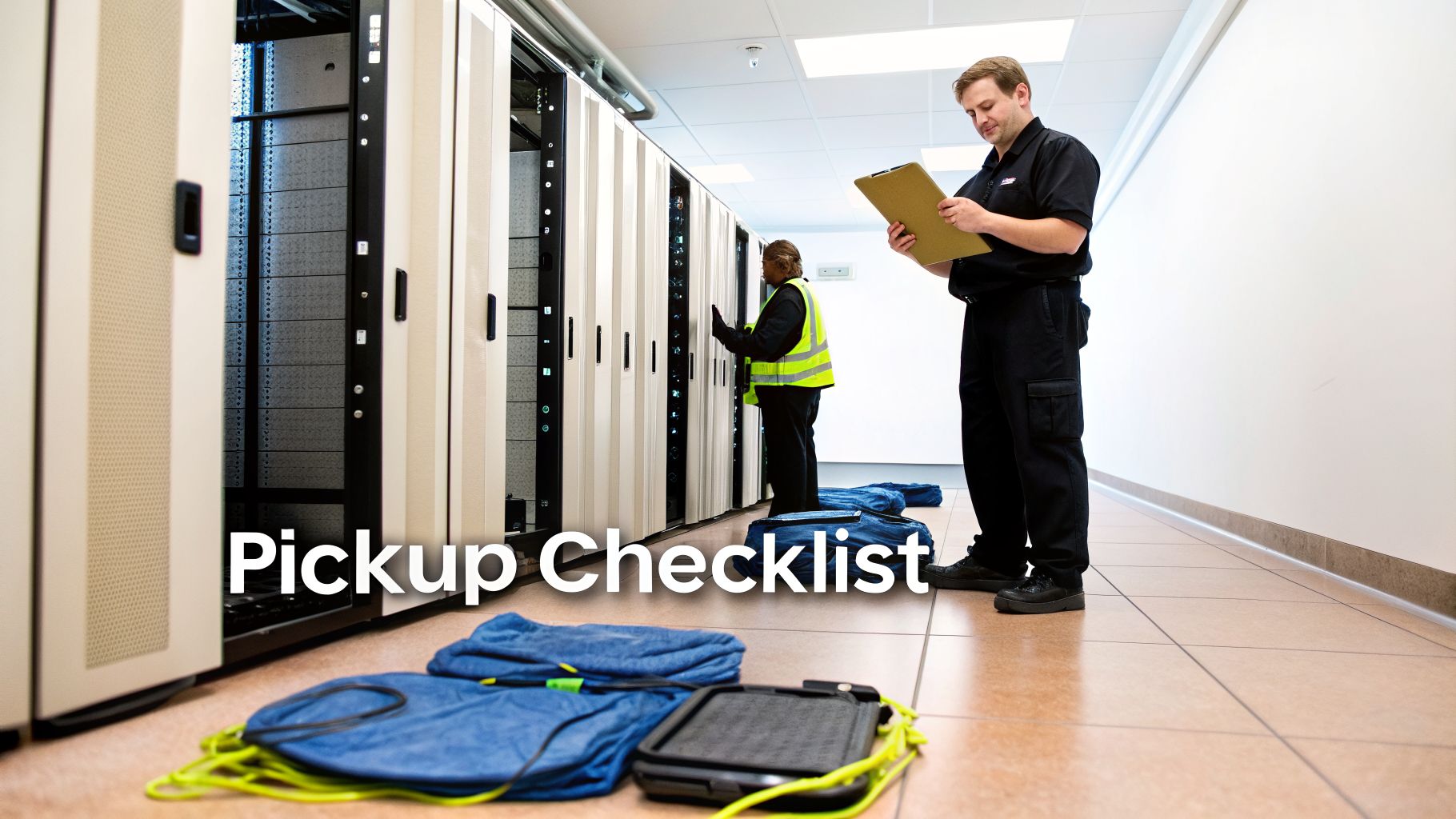
This planning phase begins long before our truck arrives at your facility. By addressing key logistical items upfront, you help ensure a smooth, safe, and efficient pickup for both your team and ours.
Preparing Your Site Before Service Arrival
The best practice is to physically walk the path your assets will take, from the data center or office to the loading dock. Identify potential choke points or hazards that could be exacerbated by adverse weather.
A simple pre-pickup checklist for your facilities or IT manager should include:
- Check the 72-Hour Forecast: Before confirming a pickup date, review the short-term forecast. If heavy rain or storms are predicted, scheduling for a clearer day is a prudent risk-mitigation step.
- Map a Secure & Dry Route: Ensure the pathway from your IT storage to the loading area is clear of obstacles and fully protected from the elements to maintain a secure chain of custody.
- Designate a Secure Staging Area: For on-site services like hard drive shredding, designate a secure, covered area. This keeps the project on schedule and protects assets from environmental exposure.
Communication is critical. If your loading dock is prone to pooling water or becoming slippery in the rain, inform our logistics team. This advance notice allows us to deploy the appropriate equipment to ensure safety and security.
Taking these precautions facilitates a secure and timely service. If you are planning a project and want to learn more, you can review our process for a commercial computer pickup.
Partnering For Proactive IT Logistics, Rain Or Shine
While you cannot control the weather for Palmetto, GA, you can control how your business prepares for it. This is where partnering with a professional logistics provider transforms an unpredictable risk into a managed component of your project plan.
When you engage a local logistics team, you gain a partner as invested in monitoring the forecast as you are. For a major data center decommissioning or a routine office hardware refresh, that proactive communication is invaluable. It is what keeps your project on schedule and your assets protected.
From Forecast To Action Plan
The right partner doesn't just react to a negative forecast—they anticipate challenges and build a plan around them. A team with deep knowledge of local conditions can recommend strategic scheduling adjustments or arrive with the proper equipment to mitigate issues before they escalate.
This forward-thinking approach delivers tangible business benefits:
- Flexible Scheduling: The ability to reschedule a pickup to avoid a severe thunderstorm or a day of extreme heat that could damage assets.
- Proactive Communication: Clear, consistent updates and documented contingency plans when weather threatens your project.
- On-Site Expertise: Crews trained to handle sensitive IT assets safely and securely, even in suboptimal conditions, ensuring compliance and safety.
Partnering with a logistics expert who anticipates weather challenges ensures your project isn't dictated by the forecast. It’s about building a resilient operation where your timelines and assets are always the top priority.
This proactive mindset is central to our comprehensive ITAD services in Atlanta, GA. Our processes are designed to provide your business with security, compliance, and complete peace of mind, no matter what the weather brings.
Planning Around Palmetto's Weather: FAQs for Businesses
When managing a commercial IT project, an unforeseen weather event should not derail your plans. Here are common questions from IT and operations managers regarding how we manage the unpredictable weather for Palmetto, GA to keep projects on track and assets secure.
What is the protocol if a severe weather alert occurs during a scheduled pickup?
The safety of your personnel and the security of your assets are our highest priorities.
If a severe weather alert is issued, our logistics team immediately contacts your designated point-of-contact to coordinate. For minor weather, we can often proceed using enhanced safety precautions. For significant events, we will work with you to reschedule for the next available window, providing clear communication throughout the process.
How far in advance should we analyze the forecast for a major IT project?
For large-scale projects like a full data center decommissioning, strategic foresight is key. We recommend analyzing seasonal weather patterns two to three months in advance to avoid scheduling during Palmetto’s peak storm or intense heat seasons.
As the project date nears, we actively monitor the 10-day and 3-day forecasts to finalize logistics. This proactive planning mitigates the risk of costly, weather-related delays.
Your assets never leave our secure chain of custody. If on-site work is paused due to weather, all equipment is immediately secured in our locked, GPS-tracked vehicles and remains under constant surveillance until work can safely resume.
Is my company's data at risk if rain interrupts an on-site shredding service?
Absolutely not. Data security is non-negotiable under all conditions. If an on-site shred cannot be completed due to weather, we implement a secure and documented alternative.
The media designated for destruction will be loaded into a locked, tamper-evident container and transported directly to our secure facility for certified destruction. The entire process is documented with an unbroken chain of custody, providing you with a clear audit trail for compliance and reporting.
Don't let a pop-up thunderstorm or a seasonal storm system disrupt your IT asset disposition strategy. When you partner with Atlanta Computer Recycling, you gain proactive, weather-aware logistics designed to protect your equipment, your timeline, and your bottom line.
Contact us today to build a resilient ITAD plan that’s ready for anything.