Environmental Impact of Electronic Waste: Key Business Concerns

The environmental impact of electronic waste isn't just an abstract threat to the planet—it's a direct risk to your business operations. Every discarded device can leach toxic heavy metals into our soil and water. Improper handling pollutes the air.
This creates a minefield of environmental hazards and corporate liabilities. It’s a growing problem that demands a proactive strategy, not just for the sake of compliance, but for smart financial and brand management.
The Escalating E-Waste Problem for Modern Businesses
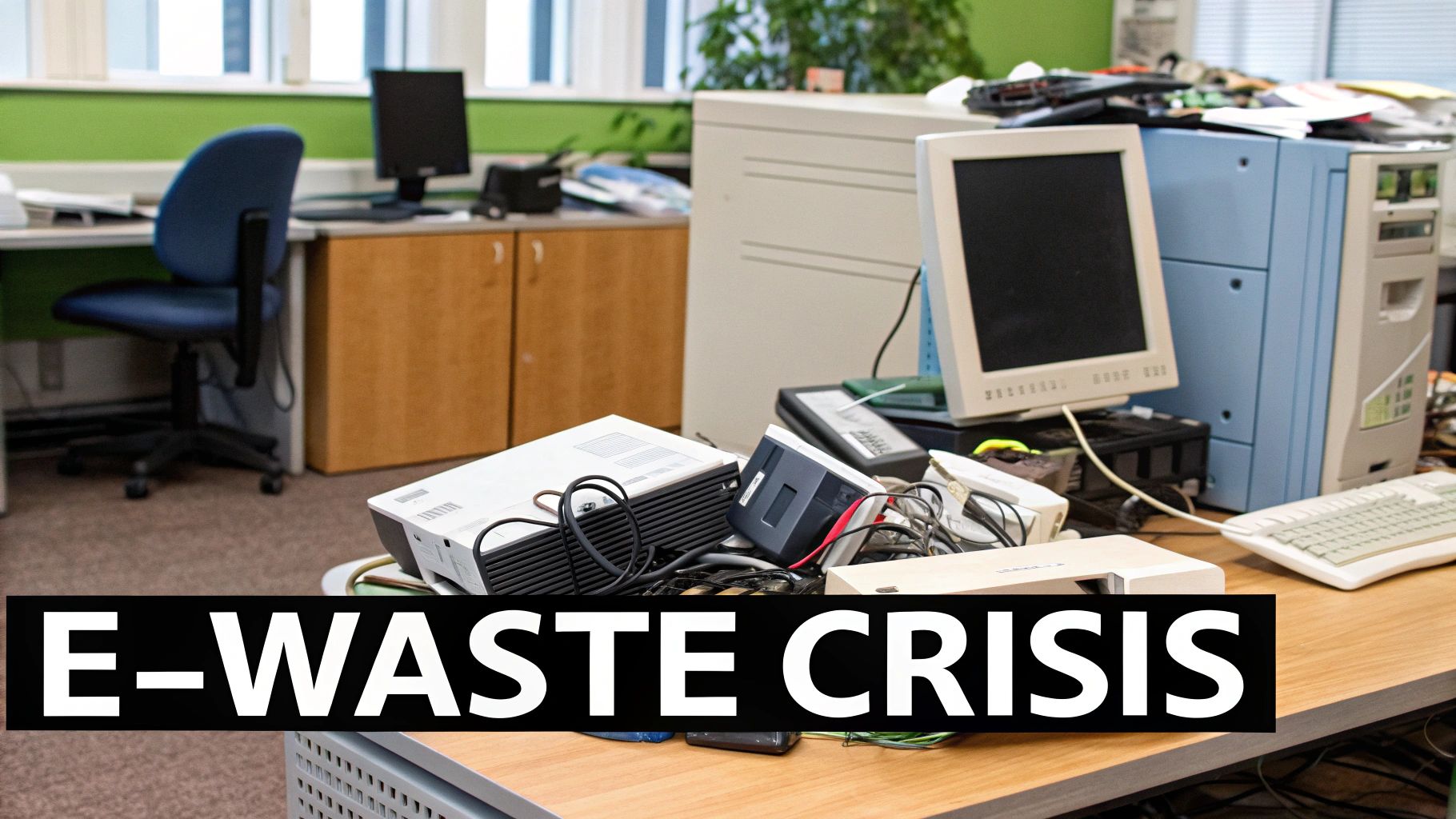
Picture a digital landfill where every old company laptop, server, and smartphone piles up. This isn't some far-off scenario; it's a rapidly growing reality. This mountain of electronics represents far more than just obsolete tech—it’s a stockpile of operational risks, wasted resources, and potential legal nightmares.
For any business, the environmental consequences of e-waste translate into tangible challenges. Botching the disposal process can lead to stiff regulatory fines for breaking environmental laws. Worse, a single incident of irresponsible dumping traced back to your company can permanently tarnish your brand's reputation, eroding the trust you've worked so hard to build.
Beyond Disposal: The Hidden Costs
The problem goes much deeper than just compliance. The components inside your old electronics, like lithium-ion batteries, are genuinely hazardous if not handled correctly. Mishandling these items can lead to fires and other serious safety incidents, creating workplace dangers and opening the door to liability claims. Understanding the dangers of exploding lithium-ion batteries is a non-negotiable part of any safe IT asset retirement plan.
On top of that, there’s a staggering financial opportunity being missed. Tucked away inside every discarded device are valuable materials—gold, silver, copper, and palladium. When these assets are tossed in a dumpster, your business is literally throwing away money that could be recovered through a certified recycling partner.
By framing e-waste as a core operational and financial issue, businesses can move from a reactive compliance mindset to a proactive strategy that protects their bottom line, enhances brand value, and promotes genuine environmental stewardship.
This shift in perspective has never been more critical. Electronic waste is now the fastest-growing waste stream on the planet, fueled by relentless tech upgrades and shorter device lifecycles. Global e-waste is projected to blow past 60 million metric tonnes by 2025, yet less than a quarter of it is formally collected and properly recycled. This surge puts immense pressure on companies like yours to get disposal right.
To put the scale of the issue into perspective, here’s a quick look at the numbers and what they mean for your business.
Key E-Waste Metrics and Business Implications
| Metric | Figure | Implication for Businesses |
|---|---|---|
| Global E-Waste Generation | Expected to exceed 60 million metric tonnes by 2025 | Increased regulatory scrutiny and pressure on businesses to adopt responsible disposal practices. |
| Formal Recycling Rate | Less than 25% of global e-waste is properly recycled | Creates significant risk of non-compliance, environmental damage, and negative public perception. |
| Value of Raw Materials | Over $62.5 billion annually in discarded e-waste | A massive, untapped revenue stream. Proper recycling recovers valuable materials, turning a liability into an asset. |
| Data Breach Risk | 40% of used devices sold online contain leftover sensitive data | Improper disposal is a direct threat to data security, exposing companies to breaches, fines, and reputational harm. |
These figures aren't just statistics; they represent real-world risks and opportunities. A proactive e-waste strategy is no longer optional—it's essential for any modern business looking to protect its assets, reputation, and the environment.
How Discarded Electronics Poison Soil and Water Systems
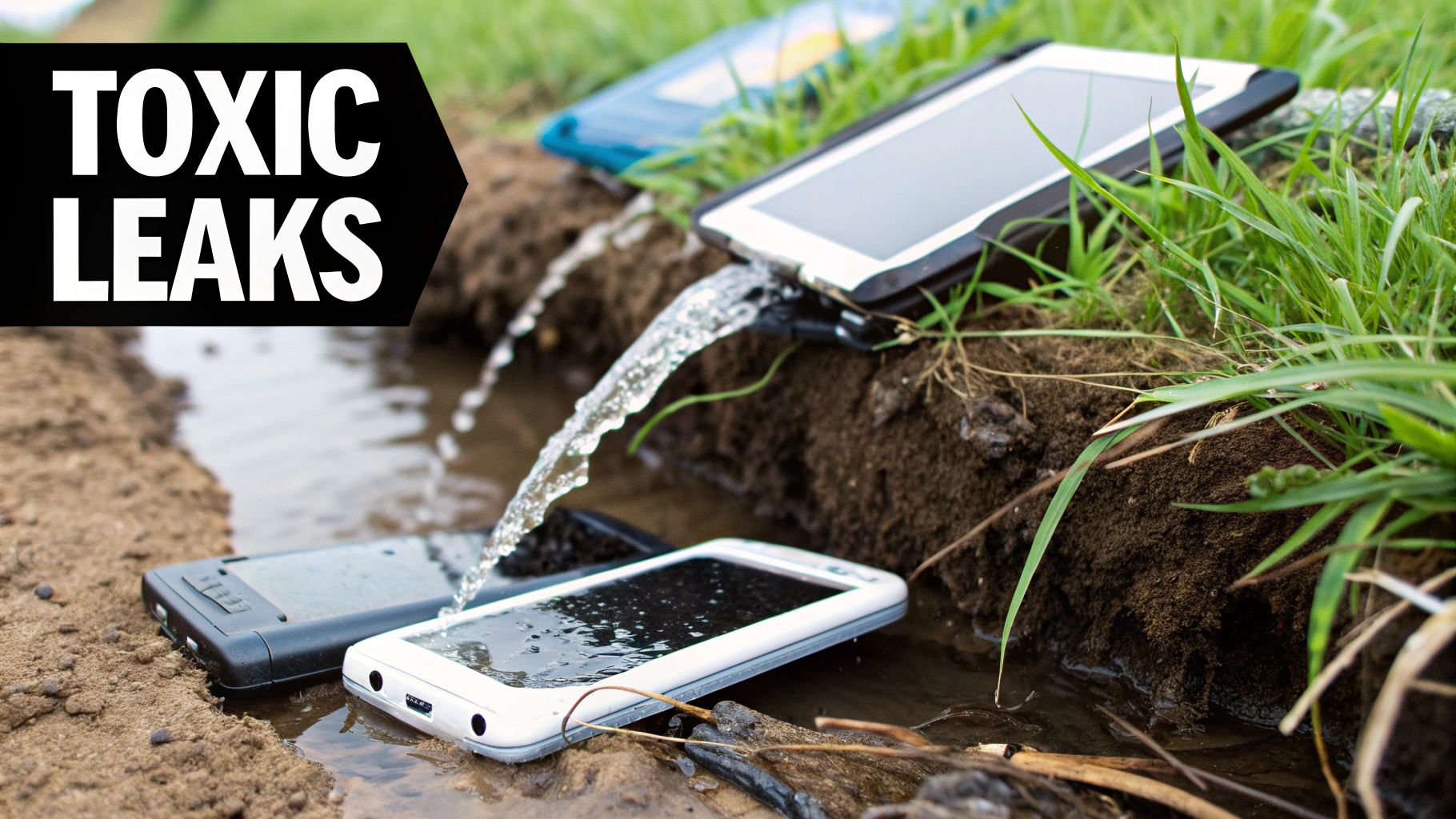
Tossing out old electronics might seem harmless, but it’s like burying a toxic time bomb in a landfill. That decommissioned server or box of old laptops may be out of sight, but it’s quietly leaking hazardous materials into the ground—creating a massive, long-term liability for your business.
The trouble starts when rain or moisture filters through the landfill. This creates a toxic liquid called leachate, which acts like a solvent, pulling heavy metals and chemicals out of the electronic components and carrying them deep into the earth.
From Your Old Laptop to the Water Supply
Think about a single company laptop thrown in a dumpster. Its circuit boards, batteries, and display are packed with a cocktail of dangerous substances. As the device inevitably breaks down, those toxins begin their slow, silent march into the ecosystem.
- Lead: Once common in old CRT monitors and solder, lead can seep into the soil, where it can cause nervous system damage and developmental problems in local wildlife.
- Mercury: Found in older flat-screen displays and batteries, mercury is a potent neurotoxin that contaminates water sources, building up in fish and moving right up the food chain.
- Cadmium: A toxic metal used in rechargeable batteries and semiconductors, cadmium can cause severe kidney and bone damage if it makes its way into the water supply.
This toxic journey doesn't just stop in the soil. These contaminants eventually find their way down into groundwater and the underground aquifers that supply drinking water to nearby communities. This creates a direct and dangerous line from your company’s old IT assets to public health.
Turning Environmental Impact into Business Liability
This isn't just an abstract environmental issue; it carries very real and severe consequences for businesses. When contamination is traced back to its source, the financial and reputational damage can be catastrophic.
A single incident of improper e-waste disposal can expose a company to immense risk, transforming an operational oversight into a full-blown crisis involving cleanup costs, regulatory fines, and lasting brand damage.
This is where the true cost of cutting corners becomes clear. A company found responsible for environmental contamination can face staggering liabilities that dwarf the initial cost of proper disposal. These penalties aren't just punitive—they’re designed to fund massive, expensive cleanup operations that can drag on for years.
The damage goes far beyond the financial hit. Being publicly tied to soil and water pollution can permanently tarnish a company's reputation. In an era where customers, partners, and employees all demand corporate responsibility, a scandal like this can shatter trust, drive away talent, and crush your bottom line. It’s a powerful reminder that a certified, transparent disposal chain isn't just an environmental choice—it's essential risk management.
The Invisible Threat of Air Pollution from E-Waste

While landfills pose a slow-burning threat, the air pollution from improper e-waste disposal is immediate and dangerous. This happens most often with uncertified, low-cost "recyclers" who resort to primitive and hazardous methods—like open-air burning—to extract valuable metals from your old equipment.
They burn plastic casings, wires, and circuit boards to melt away worthless materials, leaving behind trace amounts of copper and gold. This practice releases a toxic cocktail of pollutants directly into the atmosphere, creating a significant public health hazard.
The Dangers Hiding in the Smoke
When electronics burn, they release a plume of invisible poisons. This hazardous cloud can drift for miles, posing a serious threat to surrounding communities and ecosystems.
Key toxins released from burning e-waste include:
- Dioxins and Furans: Highly toxic compounds created when plastics and chlorinated substances burn. They are known carcinogens and can cause severe reproductive and developmental issues.
- Heavy Metal Particles: Metals like lead, mercury, and cadmium become airborne when heated. Inhaling these fine particles can cause severe respiratory diseases and long-term neurological damage.
- Polycyclic Aromatic Hydrocarbons (PAHs): Released from the incomplete combustion of materials, PAHs are a group of chemicals known to increase the risk of lung, skin, and bladder cancers.
A Major Supply Chain and Reputational Risk
For businesses, this type of air pollution creates a serious ethical and legal problem. If you partner with an uncertified recycler, you have zero control over how they dispose of your old equipment. Your company’s retired IT assets could easily end up in one of these burn pits, directly funding air pollution and public health crises.
Associating your brand with environmental negligence is a risk you can't afford to take. If your discarded electronics are traced back to an operation causing this kind of contamination, the damage to your reputation—and the potential legal fallout—can be massive.
Ensuring your e-waste partner is certified and follows a strict no-burn, zero-landfill policy isn’t just about checking a compliance box. It’s about protecting your brand from being tied to the devastating and highly visible consequences of air pollution. A responsible vendor guarantees your assets are processed safely, safeguarding both the environment and your company's good name.
Understanding the Massive Scale of Global E-Waste
To fully grasp the risks, you need to understand the scale of the global e-waste problem. This isn't a small issue; it's a worldwide crisis with direct economic consequences for your business. The sheer volume of discarded electronics points to a massive inefficiency in our global supply chain that certified recyclers are uniquely positioned to address.
The numbers are staggering. Global e-waste generation is increasing by 2 million tonnes every year and is on track to hit a projected 74.7 million metric tonnes by 2030. Since 2014, over 347 million metric tonnes of e-waste has gone unrecorded and unprocessed. For any company with a national or global footprint, this data highlights the urgent need for a cohesive IT Asset Disposition (ITAD) strategy.
Visualizing the Economic Loss
The scale of this problem gets even sharper when you put a dollar value on what’s being thrown away. The infographic below really drives home the disconnect between the massive amount of e-waste we create and the tiny fraction we actually recycle.

What this image shows is a huge opportunity cost. Businesses are literally throwing away billions of dollars in valuable raw materials because they lack a proper asset disposition process.
This isn't just trash; it's a colossal loss of recoverable resources. Every discarded server, laptop, and smartphone contains valuable elements like gold, silver, copper, and palladium—all essential for making new electronics.
When these devices end up in a landfill instead of a recycling facility, businesses are not only harming the environment but are also tossing out materials that could have been put right back into the supply chain. This old-school "take-make-dispose" model is totally unsustainable and, frankly, financially irresponsible.
A smart ITAD program is the key to turning these potential liabilities into recoverable assets, a topic we dive into in our other articles about responsible recycling.
For any organization operating on a national or global scale, these stats should be a clear call to action. Without a standardized, compliant e-waste strategy, a business opens itself up to all sorts of regulatory risks and misses out on the very real value hidden inside its retired IT assets. Shifting to a circular model isn’t just good for the planet—it’s just good business.
Your Framework for Responsible E-Waste Management
Understanding the environmental risks of e-waste is the first step. The next is implementing an actionable plan to manage retired electronics—one that protects your company from liability while maximizing asset value.
A robust corporate e-waste policy is more than a compliance document. It’s a strategic framework for safeguarding data, preserving your brand reputation, and strengthening your bottom line. It transforms a potential liability into a clear operational advantage.
The foundation of this framework is comprehensive IT Asset Lifecycle Management (ITAM). This means treating every device as a valuable asset from procurement to retirement. Tracking every laptop, server, and smartphone provides total visibility, simplifying decisions about whether a device can be repaired, redeployed internally, or must be securely recycled.
Partnering with Certified Recyclers
Once equipment reaches its end-of-life, your choice of disposal partner is critical. This is non-negotiable: you must partner with a recycler holding key industry certifications like R2 (Responsible Recycling) or e-Stewards.
These certifications are your assurance that the vendor adheres to the highest standards for environmental protection, data security, and worker safety.
An uncertified vendor offers no such guarantee. Your company's sensitive data could be exposed, and your old equipment could end up in a landfill, contributing to the very problem you are trying to solve. In contrast, certified partners provide a transparent chain of custody and issue a Certificate of Destruction—verifiable proof that your assets were managed responsibly.
For companies in Georgia, finding certified electronics recycling services in Atlanta GA is the first critical step toward secure and compliant IT asset disposal.
Choosing a certified recycler transforms e-waste disposal from a compliance checkbox into a powerful risk management tool. It safeguards your company against data breaches, regulatory fines, and the brand damage associated with improper disposal.
Comparing Corporate E-Waste Management Strategies
To make the best decision for your business, it helps to weigh the different approaches to handling old electronics. This table breaks down the pros and cons of common strategies, from simple disposal to embracing a full circular economy model.
| Strategy | Environmental Benefit | Business Advantage | Key Consideration |
|---|---|---|---|
| Simple Disposal | Minimal to none; often contributes to landfill waste. | Quickest and easiest short-term solution. | High risk of data breaches, non-compliance, and brand damage. |
| Basic Recycling | Reduces landfill waste; some materials are recovered. | Meets basic compliance requirements. | Risk of improper handling if vendor is uncertified. |
| Certified Recycling | High; ensures responsible material recovery and data security. | Strong compliance, data protection, and brand reputation. | Requires due diligence to select a certified partner. |
| Circular Economy | Highest; minimizes waste by prioritizing reuse and repair. | Significant cost savings and value generation. | Requires internal processes for repair, refurbishment, and redeployment. |
As you can see, investing in a more thoughtful strategy like certified recycling or a circular model provides far more benefits—and far less risk—than simply discarding old tech.
Embracing the Circular Economy
A truly effective e-waste strategy goes beyond just recycling. It’s about fully embracing the principles of the circular economy by putting reuse and refurbishment first. Instead of defaulting to disposal, a forward-thinking IT department actively looks for ways to keep assets in service longer.
This approach doesn't just cut down on e-waste; it can unlock significant financial value for your company.
Implementing programs for repair, refurbishment, and internal redeployment can drastically reduce how much new equipment you need to buy. That's a huge cost-saver.
- Repair Programs: Fix malfunctioning devices instead of immediately replacing them.
- Refurbishment: Upgrade and restore older assets to extend their usability for other departments or less demanding tasks.
- Redeployment: Reassign functional equipment from one employee to another, squeezing every bit of value from its lifecycle within the company.
When you adopt these practices, your IT department stops being just a cost center and starts generating real value. This circular model cuts waste, slashes expenses, and aligns your business with the kind of sustainable practices that modern customers and employees care about.
The Business Case for a Sustainable IT Strategy
Tackling electronic waste isn't just about managing risk anymore—it's a massive strategic opportunity. A smart, sustainable IT policy has moved from being an operational expense to a genuine business asset that drives growth, strengthens your brand, and attracts top talent.
Let's face it: today's consumers and employees care about the environment. They actively choose to support companies that show a real commitment to sustainability. By being transparent and responsible with your e-waste, your brand can win over these audiences, building the kind of loyalty that gives you a serious edge in a crowded market.
From Compliance to Competitive Advantage
Adopting a circular economy model for your IT is a direct investment in your company's long-term health and innovation. The numbers tell a sobering story. In 2022, global e-waste ballooned to a staggering 62 million metric tonnes, which is an 82% increase since 2010. Even more shocking, only 22.3% of it was properly recycled, meaning businesses are literally throwing away billions in recoverable materials while contributing to pollution. Discover more insights about these e-waste trends.
This is where a sustainable IT strategy really shines. When you prioritize reuse and refurbishment, you extend the life of your hardware, which means you don't have to buy new equipment as often. That directly cuts your capital spending. This isn't just about checking a compliance box; it's smart financial management.
Managing e-waste responsibly is a direct investment in your brand’s future. It demonstrates corporate stewardship, builds trust with stakeholders, and positions your company as a leader in a world that increasingly values sustainability.
Putting this strategy into action often starts with a simple step: understanding the full lifecycle of your devices. For instance, knowing the environmental benefits of opting for used mobile phones can reshape how you buy and redeploy equipment, shrinking your environmental footprint even further.
Ultimately, a solid framework for managing your electronics turns a potential liability into a clear-cut advantage. To get started creating a program tailored to your company's needs, learn more about our IT equipment disposal services for Atlanta businesses.
Frequently Asked Questions About Corporate E-Waste
When it comes to corporate e-waste, business leaders usually have a few critical questions about security, cost, and compliance. Getting straight answers is the only way to make smart decisions that protect your company and the environment. Here are some of the most common concerns we hear every day.
What Happens to Our Company Data on Discarded Devices?
This is, without a doubt, the biggest security risk on the table. A truly reputable e-waste partner must guarantee that every last bit of sensitive information is gone for good before any recycling or resale happens. This isn't just about hitting "delete"—it's about using military-grade data destruction methods, like cryptographic erasure or physically shredding hard drives into tiny, unreadable pieces.
Once the job is done, they absolutely must provide a Certificate of Destruction. Think of this as your legal proof of compliance. It’s your best defense against a data breach that could devastate your business. You can learn more about our secure processes by reviewing our approach to data security.
Is Responsible E-Waste Disposal a Major Expense?
It’s easy to see this as just another line item, but it’s much better to view certified disposal as an investment in risk mitigation. The potential fines for improper disposal, the catastrophic cost of cleaning up a data breach, and the lasting damage to your brand’s reputation will always be far more expensive than a professional service fee.
Beyond that, many IT Asset Disposition (ITAD) programs actually offer value recovery. Newer or still-functional equipment can often be refurbished and resold, creating a revenue stream that can significantly offset, or in some cases, completely cover your disposal costs.
How Can We Be Sure Our E-Waste Recycler Is Legitimate?
Never just take a vendor’s word for it—always ask for proof. The single most important thing to look for are third-party certifications like R2 (Responsible Recycling) or e-Stewards.
These certifications are your guarantee that a recycler meets the highest industry standards for environmental protection, data security, and worker safety. Ask to see their current certificates, find out how they audit their downstream partners, and confirm they operate under a strict zero-landfill policy.
Managing the environmental impact of electronic waste requires a trusted partner. Atlanta Computer Recycling provides certified, secure, and responsible ITAD services to protect your business and our community. Contact us today to build your custom disposal plan.